Ryan sat in the back corner of my classroom, right in front of the doorway. He may not have been fully engaged in the lesson of the day, but he never disrupted class either. In fact the subject was race hate, the rise of Fascism, and the emergence of Adolf Hitler as fuhrer by 1933. This particular discussion concerned, antisemitism and Hitler’s diatribe, Mein Kampf.
The young junior raptly examined a scab on his hand while his right heel bobbed up and down in nervous boredom. “Ryan,” I directed toward him. His hands froze, his foot paused, still.
“Yeah,” the boy replied in his perfect central London English.
“Can you tell these kids about the Irish question in England?” I flatly inquired.
“I don’t know anything about that,” Ryan answered dismissively, returning to his blood trickling fist.
I didn’t let him off easily. “You know Ry–the Irish Republican Army, Sinn Fein? They have targeted the British forever, because of the British occupation of their land.”
Now Ryan is clearly becoming annoyed with me, as all the kids are looking his way. His lax teenage cover was in the process of being blown. “Yeah. Like, I know about it, but it doesn’t effect me here in the states.”
“Sinn Fein actually killed Prince Phillip’s brother, Louis Mountbatten with a bomb,” I add for effect. “Londonderry is very dangerous between Protestants and Catholics. They commit reprisals all the time over the British presence, and have forever,” I repeat. “Right, Ryan?”
This English-American teenager has jumped to his feet, pumping his file finger accusingly at me. “You shut up!” he yells. “You don’t know what you’re talking about!”
At his reaction, I look at the horror-stricken faces of the other 35 kids and calmly explain, “That’s nationalism . . .blood and belonging. Sorry Ryan, I didn’t mean to rile you up. But, these kids have no notion of how distinct cultural groups see themselves and other outside groups. They know nothing of the burning hatred and venom one group holds for another.”
He stood silently for a moment, then slumped back into his desk, shaking his head doubtfully. Now I felt kind of bad for making use of his English background to make a point. “It’s okay, Ryan thinly smiled.”
Later that year, for Christmas, he gave me a beautifully wrapped gift. “Open it,” the boy insisted. So I did. Inside was a GI Joe, George Washington doll. Complete with uniform, a pistol and, a saber. I still laugh when I think about it.
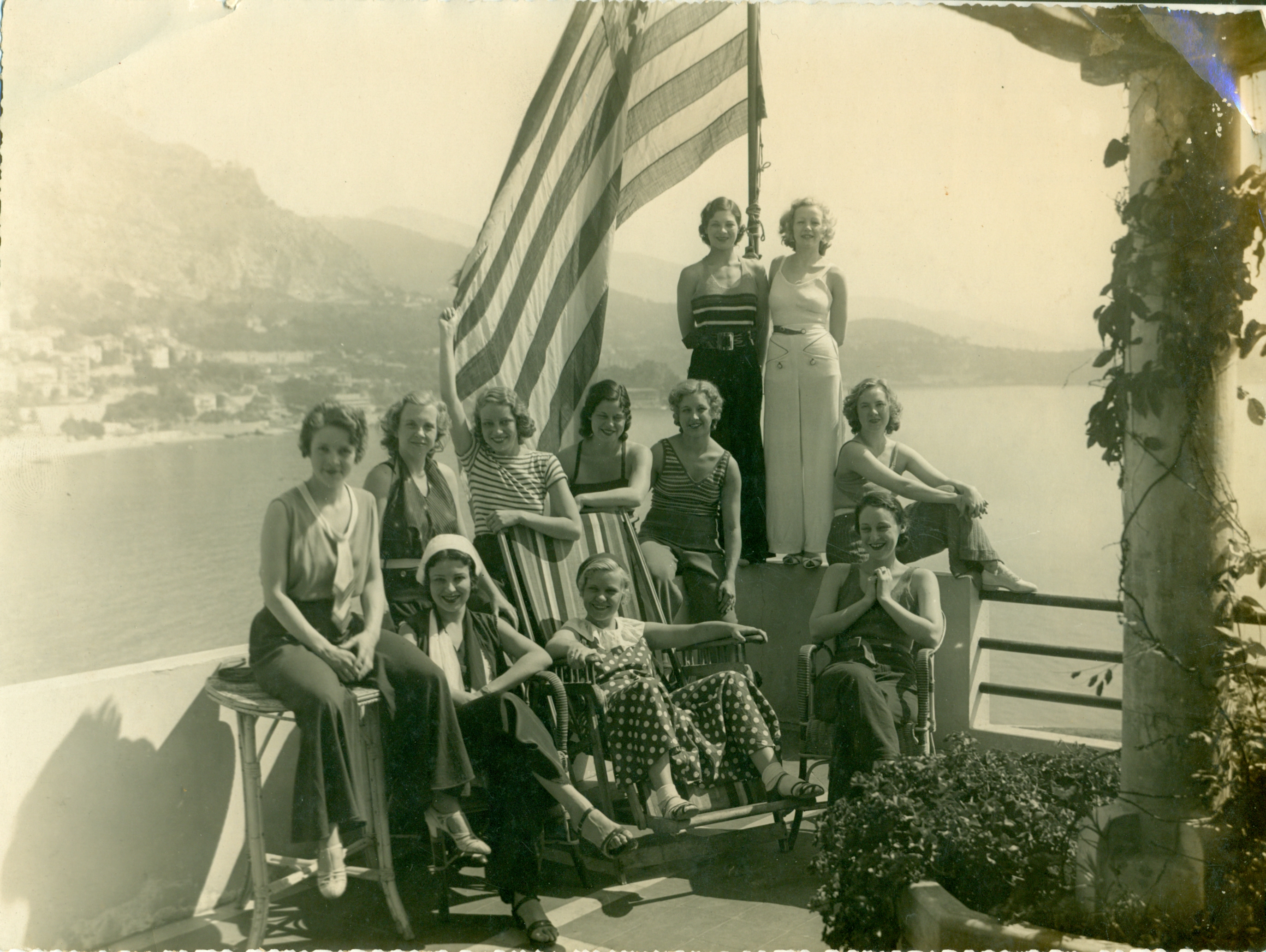
Helen actually toured Europe during those years of upheaval between the wars. The chill of fascism touched her life particularly in Rome and Milan. Her friends from the dance company attempted to work in Germany, only to find their presence unwelcome, and their stay cut short.
Hitler jokes bounced from stage to stage, cast party to cast party.
A Jewish boyfriend of Helen’s worked night and day to build a photography business, driving the length and breadth of the continent to establish satellite offices. He was first stymied in Berlin when investors “suddenly” bowed out, and unable to travel to Madrid due to the Spanish Civil War raging by 1936.
In so many modern respects, despite enormous international changes since World War Two, we Americans still manage to lack an understanding of our world neighbors. Americans still choose to be willfully isolated–an isolation that deprives us an accurate understanding of other people and cultures.
 Gail Chumbley