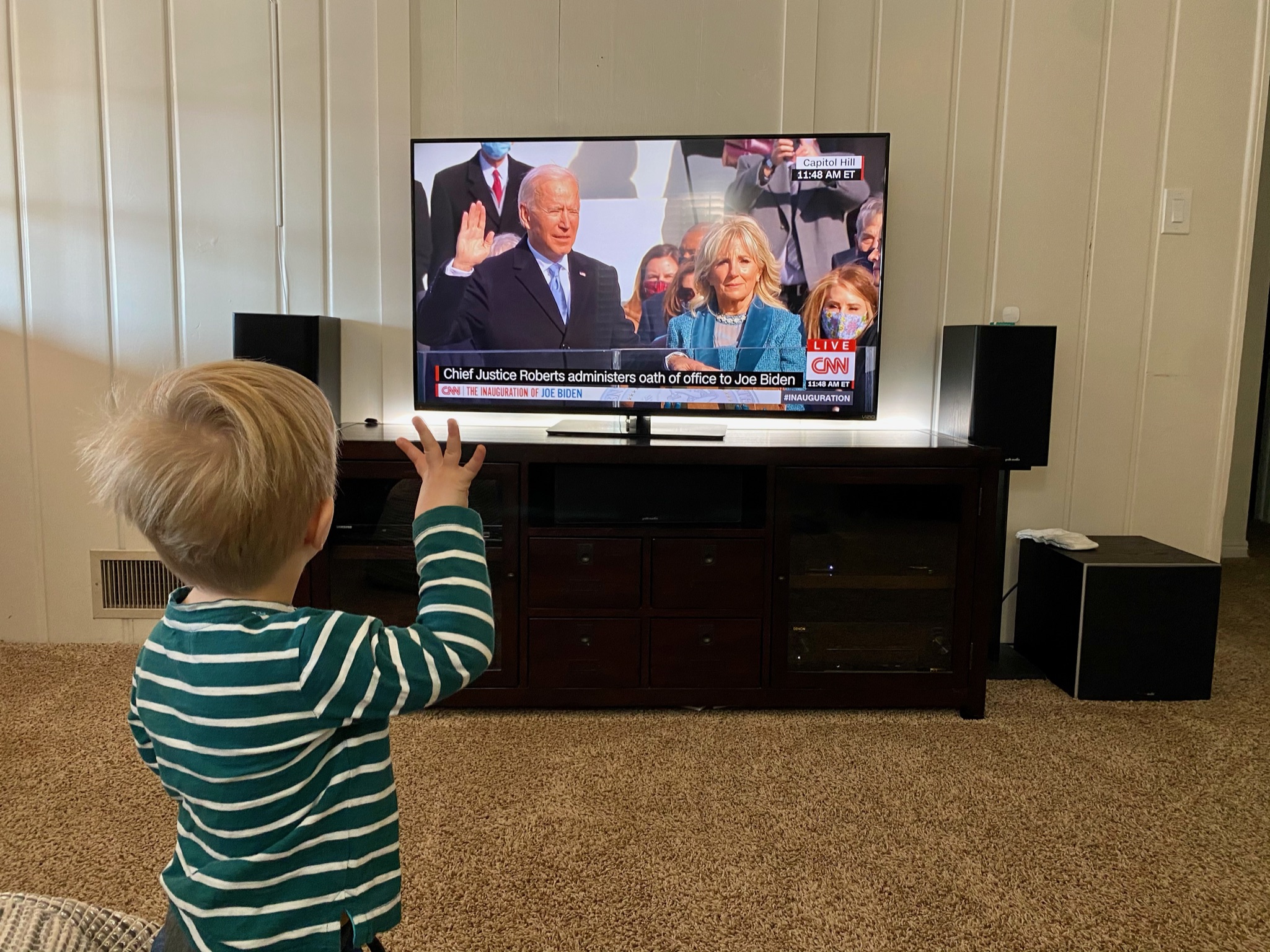
My grandson. He inherits the promise that is America.

The military choir filed out of the Entrance Hall in a precise formation, trailed with a warm wave of applause. The President had enjoyed the evening performance, and bristled that no reporter had stayed to detail the concert for the public. “This is the kind of story real Americans would like to see on the news,” he complained, as he shook hands and chatted with departing well-wishers.
The grand chamber soon emptied and the White House staff swept in, quickly stacking chairs, breaking down risers, and disconnecting sound equipment. The President turned from the racket, and headed toward the white Doric columns separating the hall and staircase. And it was there, beside an alabaster column, that the President stumbled upon a most unexpected visitor.
Lounging against the smooth white marble leaned a tall, lanky gentleman dressed in an antiquated silk dressing gown, white hose, and embroidered slippers. The man cooly assessed the stunned President.
“Are you familiar with the story of John Peter Zenger” the intruder murmured in a soft drawl.
“Why are you still here? The entertainment left that way,” the President snapped, thumbing toward the side entrance.
“Zenger, a German immigrant, edited and printed a newspaper in New York,” the visitor continued, calmly shifting his position against the pillar. “Zenger had published an unflattering editorial of New York’s Colonial Governor, and the testy royal had the journalist jailed, charged with libel.”
The President, annoyed by the imposition, wanted to hurry up the stairs to his living quarters, but his legs remained stubbornly rooted in place.
“Well, that Zenger character deserved it, he barked, unable to control his tongue. “Reporters need to watch what they write, and who they offend—like me. I’m the President, and they say terrible things about me, all lies and more lies.”
The tall figure crossed his arms and looked evenly at the President. “A jury of Zenger’s peers acquitted him, opining that if truth was stated, there is no libel,” the stranger subtly smiled. “That particular case established freedom of the press in this country, a principle I later insisted appear in the Bill of Rights.”
“Do you understand how much I could accomplish if . . .”
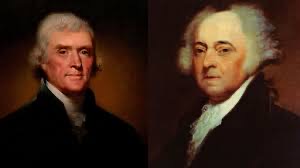
The apparition spoke quietly over the President. “I, too criticized a president bent on stifling free expression” the visitor thoughtfully paused. “President John Adams supported passage of the Sedition Act in 1798 to silence critical voices such as mine.”
The oddly dressed gentleman began drifting through the pillars into the Entrance Hall, as if floating on a sudden breeze. Unwillingly, the President followed. “I’m particularly fond of this room,” the visitor whispered, “it was the only finished room in my time.”
“The press wants to destroy my administration,” this time the President spoke over his visitor. “With their unlimited snooping, the constant leaks, and the treasonous things they say about me on cable tv.”
The apparition appeared indifferent to the President’s complaints. “A particular writer, James Callender, cast enough aspersions upon Mr. Hamilton and Mr. Adams, that he found himself jailed under the Sedition Act. Once I moved into this House, I pardoned Callender, and hired him to again take up his poison pen.” The spirit seemed sadly amused, “when I refused to appoint Callender to a government post, his pen turned full force upon me, exposing my deepest, most safeguarded secret.”
“The Sedition Act. I like that,” the President beamed, indifferent to the visitor’s revelation. “What’s the matter with my lawyers. They never told me we have that law.”
Instantly the apparition jutted his face directly into the startled President’s. “You must not respond,” he breathed. “You must ignore what is written and reported regarding your administration. Never, never challenge the freedom of the press, to do so diminishes the office of chief executive, exposing you as petty and small.”
“But the Sedition Act says . . .” the President squeaked, unnerved.
“Is unconstitutional,” the visitor finished the sentence. “I, too, resented what appeared in the press, besmirching my personal life, and my family. However, I resolutely remained aloof to the reports. And so must you.”
The visitor began to sound weary, worn by the conversation. “I once stated that if I had to choose among the freedoms enumerated in the First Amendment, I would preserve Freedom of the Press. With that liberty secure, all others are assured.
As the visitor finished his statement, he lifted his eyes to some mysterious point above, and vanished.
Dismayed by the experience, the President scrambled up the stairs.
Gail Chumbley is the author of the two-part memoir “River of January,” and “River of January: Figure Eight.” Both books available on Kindle, or at http://www.river-of-january.com.
gailchumbley@gmail.com
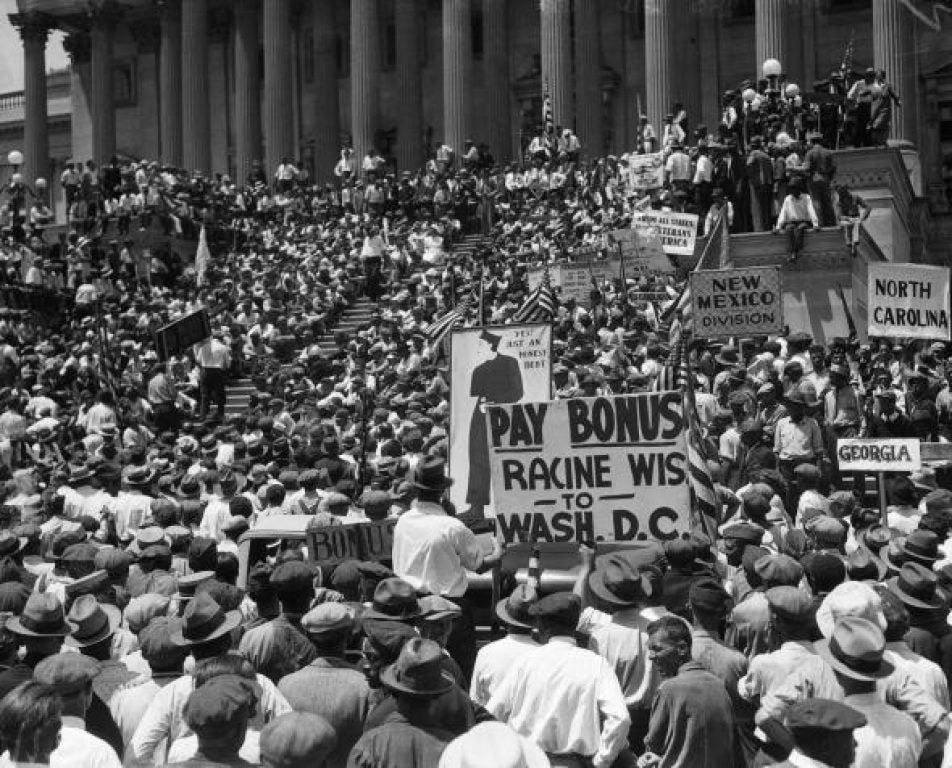
The creed of States’ Rights is all smoke and mirrors; a cover for the selfish interests of local napoleons, and the politicians they bankroll. When claimed as the only answer to the country’s problems, beware, States’ Rights never solved a thing.
Not in America.
Ours is a one of a kind, federal system of concurrent powers. Centralized authority layers and folds, meshing with state and local governments.This dynamic has functioned for over two hundred years and the bonds are subtle and sometimes conflicting. The most lethal confrontation between state and federal powers clashed in the Civil War, 1861-65. But that particular catastrophe was certainly not the first.
During the Revolution, state delegations, in an attempt to unify the embattled nation, drafted a national blueprint called the Articles of Confederation. Attending representatives squabbled endlessly to defend their own local interests, rejecting any language that bound state autonomy. So jealous were the original Thirteen of one another, political leaders dragged ratification out, while barely a step ahead of pursuing Redcoats. The Continental Congress dashed across Pennsylvania, into Maryland, and back, still resistant to real, national authority.
John Dickinson of Delaware, drafted some elements into this fledgling plan, but his model wasn’t helpful. General Washington still had to beg Congress for recruits and soldier pay, and Congress, in turn, had to beg States to fill those needs. One bright note is Congress did agree to dispatch diplomats, like Franklin and Adams, who continued the begging game across the Atlantic.
Meanwhile States such as New Jersey, and Pennsylvania, happily traded with coin-rich Brits, filling their personal coffers, while ignoring the needs of the war effort. The prospects of an American victory grew grim, as each state dug in, defending their own turf. In fact, the Confederation Congress was so toothless, the document itself failed ratification until a month before Yorktown.
Historians often use the term “rope of sand,” to describe the deficiencies and impotence of this early attempt at self governance. Lacking any real prestige, inevitable bloodshed quickly ensued among these thirteen quarreling kingdoms. Navigation rights, interstate trade, and clashes over currency, nearly ended the budding union. At that critical moment Alexander Hamilton and James Madison jointly called for a new convention to “revise” the Articles. Both men, in reality, intended to dump them for a different, stronger plan. Recently retired George Washington agreed with both men, and chaired this new convention, assembling in Philadelphia the summer of 1787, and a determined Constitutional Convention worked hard to remedy many of the new nation’s ills.
This lesson from the past remains relevant. My state, for example could never bear the seasonal costs of road construction, nor of fire fighting. The former administration’s Covid-19 policies have proven, again the futility, and folly of every state scrambling for themselves.
The events of January 6, 2021, and now with the Texas legislature attacking both voting rights, and a woman’s right to choose, similar concerns arise. Is American law no more than a vulnerable rope of sand in the hands of the states?
Fellow Americans, do not buy into the so called advantages of States’ Rights. Hidden interests cloaked in virtuous words distract us from national needs, while the favored few push their political agendas. It’s not an overstatement to say States’ Rights again threatens the good order the Framers labored to establish.
Gail Chumbley is the author of the two-part memoir, “River of January,” and “River of January: Figure Eight.” Both titles available on Kindle or at http://www.river-of-january.com.
gailchumbley@gmail.com
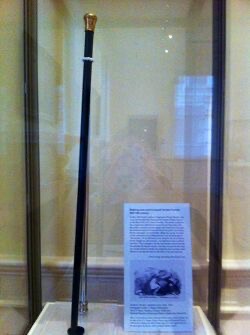
The man in the portrait is mid-19th Century Senator Charles Sumner of Massachusetts.
A fierce opponent of slavey, Sumner delivered a scathing speech titled, “The Crime Against Kansas,” denouncing the proposed addition of a new slave state from Nebraska Territory. After his two-day denunciation of the “peculiar institution” the Senator was beaten in the Senate chamber, nearly to death, by a defender of slavery.
This symbol of slavery, waved by a domestic terrorist is especially repulsive.
And this Judas has no idea.
Gail Chumbley is the author of the two-part memoir, “River of January,” and “River of January: Figure Eight.” Both titles available at http://www.river-of-january.com, or on Kindle. Chumbley has penned three plays, Clay, Wolf By the Ears, and Peer Review. These works examine critical moments in American History.
gailchumbley@gmail.com
2020.
Are the awful events of these last twelve months a once-off, bad patch of misfortune? Or is there a deeper explanation for the emergence of Trump, Covid, economic disaster, and civil unrest?
American History is steeped in a collection of pivotal moments, episodes that molded the nation’s continuing path. Can the events of 1776 stand alone as a turning point, or of 1865?
A long metaphoric chain links one scenario to the next, marked by momentary decisions, government policies, or beliefs, that surface at one point in time, and voila, America’s story fleshes out to the future.
Add chance circumstances to the narrative and predictability flies out the window.
Does 2020 stand alone as a singular event, or an inevitable outcome seeded somewhere in the past? Surely the march of history can be much like a chicken-egg proposition.
Mention 1776 and thoughts gravitate to the Continental Congress, the Declaration of Independence, and the emergence of General George Washington. But that struggle for freedom actually began at the end of the French and Indian War.
As for 1865, when the guns silenced at Appomattox Courthouse, Robert E Lee’s surrender affirmed America as a nation-state. But thirty years earlier, President Andrew Jackson’s administration had sparked the eventual war over the issue of slavery. Thinly disguised as the doctrine of states’ rights, the intractable argument of slavery festered. The “Peculiar Institution” is, was, and always be the cause of that bloodbath. In point of fact the fury of one man, John C Calhoun, South Carolina Senator, and former vice president, lit the fuse of war thirty years before Fort Sumpter.
As to the folly of Trumpism, arguably the roots are deeply burrowed in America’s collective past. Author, and historian Bruce Catton, wrote about a “rowdyism” embedded in the American psyche. Though Catton used that term in the context of the Civil War, his sentiment still resonates in the 21st Century, i.e., Proud Boys, and the like.
Closer to today, the Cold War seems to have honed much of the Far Right’s paranoia. The John Birch Society, for example, organized in the late 1950’s escalating anti-Communist agitation. Senator Joe McCarthy rode to fame on that same pall of fear, (with Roy Cohen at his elbow) only to fail when he went too far.
But the presidential election of 1964 seems to mark the most distinct shift toward the defiant opposition that fuels Trump-land.
Vietnam, in 1964 had not blown up yet. JFK had been murdered the previous fall, and his Vice President, turned successor, Lyndon Johnson was the choice of a grieving Democratic Party. The GOP fielded four major candidates in the primaries: three moderates and the ultra conservative, Barry Goldwater of Arizona. Senator Goldwater gained the nomination that summer with help from two men, conservative writer Richard Viguerie and actor Ronald Reagan.
Viguerie broke political ground through his use of direct mailing, and target advertising (what today is right wing news outlets). Reagan, once a New Deal Democrat, crossed the political divide and denounced big government in “The Speech,” delivered on behalf of Senator Goldwater. These two men believed Conservatism, and Laissez Faire Capitalism had been wrongly cast aside for liberal (lower d) democratic causes.
Their efforts struck a cord with legions of white Americans who felt the same resentment. The Liberal Media and Big Government from the Roosevelt years were Socialistic and anti-capitalistic. No urban problem, or racial strife or poverty appeared in their culdesacs or country clubs. And taxes to support Federal programs squandered and wasted personal wealth.
So many other issues shaped the modern New Right. Communism, the Cold War, Civil Rights, Vietnam, and progressive politics alienated the wealthy class.
But here’s the rub. Ultra conservative ideology is unworkable, an ideal that awards only a small, exclusive few, (today’s 1%). So 2020, and 2016 both have roots running deep in the core of the American experience.
2020 isn’t about this moment, not really.
Gail Chumbley is the author of “River of January,” and “River of January: Figure Eight,” a two-part memoir available at http://www.river-of-january.com and on Kindle. Also the stage plays, “Clay,” and “Wolf By The Ears” (the second in progress.)
gailchumbley@gmail.com
With only days until Christmas 1776, General Washington watched the snow fall and the ice thicken as his suffering army melted away. Earlier that year, in July, that same Army had been humiliated by the Red Coats, chased off Long Island, pursued through Manhattan, barely escaping across the Hudson River into New Jersey.
The General had been flanked by overwhelming British forces and his inexperienced Patriot army simply panicked and ran. Furious at their conduct Washington threatened to lead another assault himself, however, cooler heads prevailed as his staff convinced him otherwise.
Amongst King George’s red coated regulars were legions of Hessians, hired guns from the German kingdom of Hesse-Cassel. Their presence on the field infuriated the Americans, as if the King couldn’t bother to keep the conflict British. These mercenaries were especially brutal, taking a psychological toll on Washington’s volunteer army by making use of flashing, saber-like bayonets.
But Washington had a few cards of his own to play. Contemplating retreat while still on Long Island General Washington had ordered Colonel John Glover, a New England mariner, to collect enough vessels to ferry his surviving soldiers west to Manhattan, then over the Hudson into New Jersey. With campfires blazing to fool the redcoats, Washington successfully evacuated his army waiting to board for the last boat.
The inexperienced American army was preserved.
Still, demoralized, and outgunned, the Continental Army appeared defeated and despondent. The general consensus among all was the war was hopeless, a lost cause, the Patriots esprit de corps vanished.
By winter, Washington’s command appeared to be unraveling. Inadequate food, too few supplies, and support sapped the army’s endurance. Worse the Brits, flush with currency, settled into cozy New York accommodations and enjoyed the hospitality of the city’s loyalists community.
With circumstances conspiring against him-the weather, scarcity of supplies, and outgunned by enemy Hessians, Washington had to act as he faced a critical moment. Writing to his cousin, Lund, the General poured out his anguish.
. . .your immagination can scarce extend to a situation more distressing than mine—Our only dependance now, is upon the Speedy Inlistment of a New Army; if this fails us, I think the game will be pretty well up . . .
Out of desperation Washington confessed what he termed as the “clarity of despair.” He had to act.
First Washington sent for an operative who sold provisions to the nearby Hessians. This Patriot spy came into camp and apprised Washington on the disposition of King George’s contracted killers billeted in nearby Trenton. These Germans were settled in for a Christmas celebration, assured that the Americans were all but defeated.
In his second order, Washington commanded Colonel John Glover, once again, to requisition every boat the yankee seafarer could find. Between the intelligence report and vessels secured, his men were mobilized for a surprise Christmas morning assault on Trenton.
Once again, Glover pulled off a miracle amphibious operation. And once again, General Washington was the last man on the last boat. In two files the suffering Continental Army marched, braving more than just the weather.
His forces arrived by first light.
The unsuspecting Hessians were throughly routed in the surprise assault, that in the end provided the Patriot cause with a desperately needed victory.
The revolutionary cause again breathed life.
So as you enjoy the warmth of the season, remember those who struggled before that the people could have a new nation. On Christmas in 1776 Washington’s army marched through the inky, icy cold, hungry, fretting for their families, yet committed to the long game of founding a nation.
We have done this before. Much like General Washington our desperation makes our choices clear. Recent scholarship estimates that during the Revolutionary War only 1/4 of the American population supported independence. There are more of us holding to Constitutional norms today. Stay the course this moment isn’t the last.
Merry Christmas.
Gail Chumbley is the author of the two-part memoir, “River of January,” and “River of January: Figure Eight.” Both titles available on Kindle. Gail has recently completed a stage play, Clay, on the life of Henry Clay, Peer Review, where four former presidents meet 47, and Wolf By The Ears, an examination of the events leading to chattel slavery.
Let me be brief. What the GOP is attempting with this frivolous lawsuit concerning the 2020 election is dangerous and cynical. Party fidelity is certainly an American hallmark, but not at the cost of our political system. This dangerous precedent, pursued in a moment of expediency chips away at the foundation of our traditions.
The Constitution quite clearly established the rules on elections, and has endured since 1788. This moment of danger is more crucial to our nation than any excuse for undermining the transfer of power.
Clearly the steps taken by the Republican Party reveals an organization with nothing to offer. Ruthless partisanship is as much an epidemic as any virus.
Each state has verified no irregularities in voting exist, choosing instead to act on one fallible man’s loose talk. The Framers did not dedicate their lives and fortunes to establish a government that dissolves on the whims of any person or moment. The United States relies on people of good will to respectfully honor election results.
As reluctant as I feel about using this analogy, Adolf Hitler was elected chancellor in 1933 in a free election, only to turn around and outlaw free elections.
Stop this now. Your party will lay in ruins if you forget who we are as a people. The process in presidential elections could not be clearer than stated in Article 1.
Gail Chumbley is the author of the two-part memoir, “River of January,” and “River of January: Figure Eight,” and the stage play, “Clay.”
He looked an awful lot like Andrew Jackson. A long, craggy, narrow face, a shock of white brushy hair, and an irascible temperament. That was my paternal grandfather, Kurtz Olson. Despite his throwback, no-nonsense, narrow persona I found him endlessly interesting and somehow quite endearing.
The youngest of seven children to Swedish immigrants Peter and Matilda Olson, Kurtz was born in Wing River, Minnesota in 1905. Though I don’t know much about his early Minnesota upbringing, I do know that he had a mercurial temperament, no attention span, and restless feet. Grandpa frequently uprooted his family, first moving house to house, then state to state, reaching the Pacific coast.
During the worst of the Depression years Grandpa worked as a welder, and scrap metal dealer. My dad like to remind us that with so many people jobless, Kurtz had lots of work repairing and parting out junked automobiles. One of my favorite snapshots from his early years is Grandpa and another man posing with axle grease below their noses. The two were making sport of Hitler, who in the 1930’s was still viewed as an object of jest. Grandpa Kurtz is smirking, knowing he’s naughty, and thoroughly enjoying himself.
During the Second World War, he and my grandmother moved the family to Tacoma, Washington. With the “Arsenal of Democracy” in full swing, Kurtz had plenty of metal work on the coast. After 1945, he again uprooted and moved his family to Spokane, Washington, where cheap hydro power had opened plenty of post-war employment.
Still, Minnesota remained the holy land. Always impulsive, Grandpa would hop in his truck and make sudden pilgrimages home, blowing straight through Montana and North Dakota, usually 24 hours or so to reach the open arms of his Minnesota family.
For Kurtz it was as if traveling from Paris to Versailles, but a hell of lot further.
Unlike my immediate family, where I was the only girl, Kurtz lived in a decidedly female home. My aunt and grandmother typically sat for hours at the kitchen table, reading the Enquirer and movie magazines while talking shit about nearly everyone else in the family. Poor old Grandpa. Those two women tied that poor man into knots, riling him up with nonsense and fantom outrage.
It wasn’t that my Grandfather was unkind by nature, but he was easy to wind up, perceiving the world in black and white, dictated by those two judges presiding at the kitchen table.
Fortunately, despite those women bad-mouthing me, my brothers and the rest of the extended family he liked me. And I liked him.
In a fleeting, incomplete memory I see him waiting under street lights at the Spokane Greyhound bus depot. We all must have been meeting a relative from Minnesota or Seattle. In a burst of joy I remember shouting “Grandpa,” as I sprinted to him, where he scooped me up into a hug. Another vivid moment I recall was his truck pulling up in front of our house, and Kurtz coming to the door wearing nothing but that smirk, and bright red long johns, with laced Red Wing boots. What a character.
Speaking in a NorthAmerican Scandinavian cadence (yah, you betcha) made some of his comments worth remembering.
“First they call it yam, and then they called it yelly, now they call it pree-serfse.”
And Kurtz always had a dog. There had been Corky, Powder and Puff, Samantha, and Cindy among many others. Samantha was an especially smart Border Collie. After finding herself thrown on the floor of Grandpa’s truck one too many times, she figured out how to brace herself on the dashboard. He would roar up to yellow traffic lights, then stand on the brakes to avoid a red light. My god it was perpetual. My guess is he needed a new clutch about every three months, casualties of his Mr Magoo style of driving. At any rate, Samantha his wise co-pilot learned to watch the traffic lights and prepare for impact.
Pulling up to his house on some forgotten errand I saw my grandpa splitting wood in the backyard. Across the fence, next door, a neighbor dog set up a ruckus barking my way. I called out, “You be quiet over there,” to which my grandfather observed, “He doessent underschand you. It’s a Cherman Shepard.” Then he laughed, and so did I.
My children didn’t know Kurtz. And for that I’m sorry. They missed a true original. I suppose that is my job, and the job of all of us Boomers to share these kind of stories. We bridge the years between that Depression-era, World War Two generation to our Millennial children and our grandkids. They won’t know if we don’t tell the story. And since it’s December, I’ll sign off with this Kurtz Olson Christmas anecdote.
On Christmas Eve in about 1936-37, my grandpa packed up the family for an evening service at the Lutheran Church. Being good Swedes they had placed traditional candles balanced on the boughs of their live Christmas tree. Somehow in the bustle they left some candles lit. By the time they returned the house was gone replaced by a fully engulfed fire lighting up the night.
They lost everything. In an ironic twist my grandfather the welder somehow overlooked the flames of his yule-tree. That incident remained an inflection point in Olson family lore.
Now he’s long gone, as is my dad and other family members. But through the written word he remains as vivid as his humor, his voice, and his presence in my memory.
Merry Christmas.
Gail Chumbley is the author of the two-part memoir, “River of January,” and “River of January: Figure Eight” three plays on history topics, and a screenplay based on her books.
“Princes’ don’t immigrate” opined the 19th Century American magazine, Puck. The subject of the quote concerned the multitudes of immigrants flooding both American coastlines. Newcomers hailing from Asia and Southern Europe had alarmed American Nativists who considered the influx as nothing more than riffraff, and a danger to good order. Unfortunately this view of the foreign-born still endures today.
News footage over the last few years has chronicled the plight of the dispossessed amassing along southern tiers of both Europe and the US. Frequently victims of repressive governments, criminals, and crippling poverty, risk dangerous journeys, refugee camps, and even cages to escape hardships.
The earliest immigrants to American shores shared similar pressures, escaping the unacceptable familiar for an unknowable future. A brief look at the American Colonial period illustrates this enduring dynamic.
16th and 17th Century England targeted dissident groups in much the same way; exiling nonconformists, petty criminals, while others were lured by the hope of riches and a fresh start.
These emigres shared one common thread-remaining in England was not an option.
Religious challenges to the Catholic Church set in motion a veritable exodus of refugees fleeing England. As the Protestant Reformation blazed from Europe to the British Isles, the bloody transformation of the English Church began. In the 1535 English Reformation, King Henry VIII cut ties with the Vatican, naming himself as the new head of the English Church. This decision triggered a religious earthquake.
The Church still closely resembled Catholicism, and the disaffected pressed for deeper reforms, earning the title, “Puritans.” Ensuing religious struggles were long, bloody, and complicated. Ultimately the discord culminated in the violent repression of Puritans.
Two phases of reformed believers departed Great Britain for the New World. First was a small sect of Separatists led by William Bradford. These Protestants believed England to be damned beyond redemption. This band of the faithful washed their hands entirely of the mother country. Settling first in Holland, Bradford and other leaders solicited funding for a journey to Massachusetts Bay. Americans remember these religious refugees as Pilgrims.
Nearly a decade later another, larger faction of Puritans followed, making landfall near Boston. More a tsunami than a wave, the Great Puritan Migration, brought thousands across the Atlantic, nearly all seeking sanctuary in New England.
Lord Baltimore was granted a haven for persecuted English Catholics when that faith fell under the ever swinging pendulum of religious clashes. Maryland aimed for religious toleration and diversity, though that ideal failed in practice.
The Society of Friends, or Quakers, made up another sect hounded out of England. Britain’s enforcement of social deference, and class distinction, ran counter to this group’s simple belief in divine equality. Quakers, for example, refused to fight for the crown, nor swear oaths, or remove hats encountering their ‘betters.’ That impudence made the faith an unacceptable challenge to the status quo.
William Penn (Jr.) became a believer in Ireland, and determined the Crown’s treatment of Quakers unjust. After a series of internal struggles, King Charles II removed this group by granting Penn a large tract of land in the New World. Settling in the 1660’s, “Penn’s Woods,” or Pennsylvania settled the colony upon the egalitarian principles of Quakerism.
Scot settlers, known as Scots-Irish had resisted British hegemony for . . ., for . . ., well forever. (Think of Mel Gibson in Braveheart.) First taking refuge in Ireland, this collection of hardy individualists, made their way to America. Not the most sociable, or friendly bunch, these refugees ventured inland, settling along the length of the Appalachian Mountains. Tough and single-minded, this group transformed from British outcasts to self-reliant backcountry folk.
Virginia, the earliest chartered colony, advanced in a two-fold way; as an outpost against Spanish and French incursions, and to make money. At first a decidedly male society cultivated tobacco, rewarding adventurers and their patrons back home by generating enormous profits. Ships sailed up the James and York Rivers depositing scores of indentured servants, not only to empty debtors prisons, but to alleviate poverty and crime prevalent in English cities.
Transporting criminals across the Atlantic grew popular. The Crown issued a proprietary charter to James Oglethorpe, for Georgia. Oglethorpe, a social reformer, envisioned a haven for criminals to rehabilitate themselves, and begin anew.
All of these migrants risked dangerous Atlantic crossings for the same reason. Parliament and the Crown considered the Colonies as a giant flushing toilet. England’s solution to socially unacceptable populations, was expulsion to the New World.
Caution ought to guide current politicians eager to vilify and frame immigrants as sinister and disruptive. No one lightly pulls up roots, leaving behind all that is familiar. (Consider the human drama on April 1, 2021 where two toddlers were dropped over a border wall from the Mexican side).
Americans today view our 17th Century forebears as larger than life heroes, but their oppressors saw these same people as vermin–as dispensable troublemakers who threatened good social order. This human condition remains timeless, and loose talking politicians and opportunists must bear in mind the story of the nation they wish to govern.
*The Middle Passage was the glaring exception of those wishing to emigrate.
Gail Chumbley is the author of the two-part memoir, River of January, and River of January: Figure Eight. Both titles available on Kindle.
gailchumbley@gmail.com