A Special News Report

I hesitate to reblog a recent post, but in light of tonight’s events with the firing of the acting Attorney General, this seems appropriate.

gail chumbley's avatarGail Chumbley

cvpz8vzwyaa7p-7

I won’t kid you, I was scared. We, my girlfriends and I, were watching ABC’s Saturday Night Movie in their basement when stiff slanted letters intruded on the flickering screen. A Special NewsReport. “We interrupt this broadcast to bring this breaking news,” explained Harry Reasoner in his musical voice.

“FBI agents have sealed the office of the Special Prosecutor Archibald Cox.”

I sat up from my prone position on the couch, trying to orient myself to the images on that black and white picture tube. The information didn’t make sense, Cox was the guy ferreting out the facts behind the Watergate scandal, and he should have been left alone to do his job. A sense of bewildered loss of gravity made me uneasy as I watched agents string crime tape across an office door, and around file cabinets.

I needed to go home; this movie could wait.

At…

View original post 555 more words

Dancers and the Lady Pilot


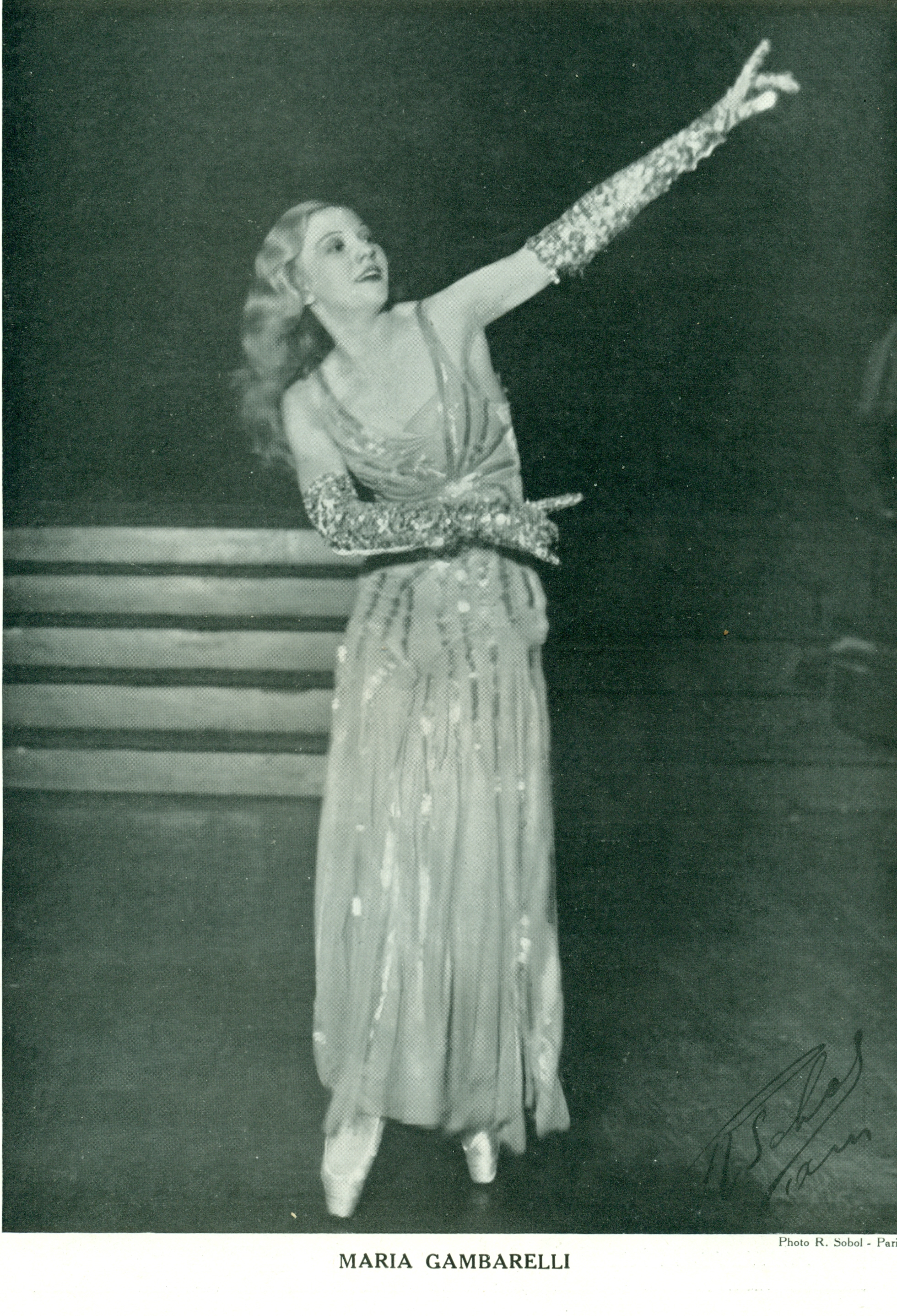
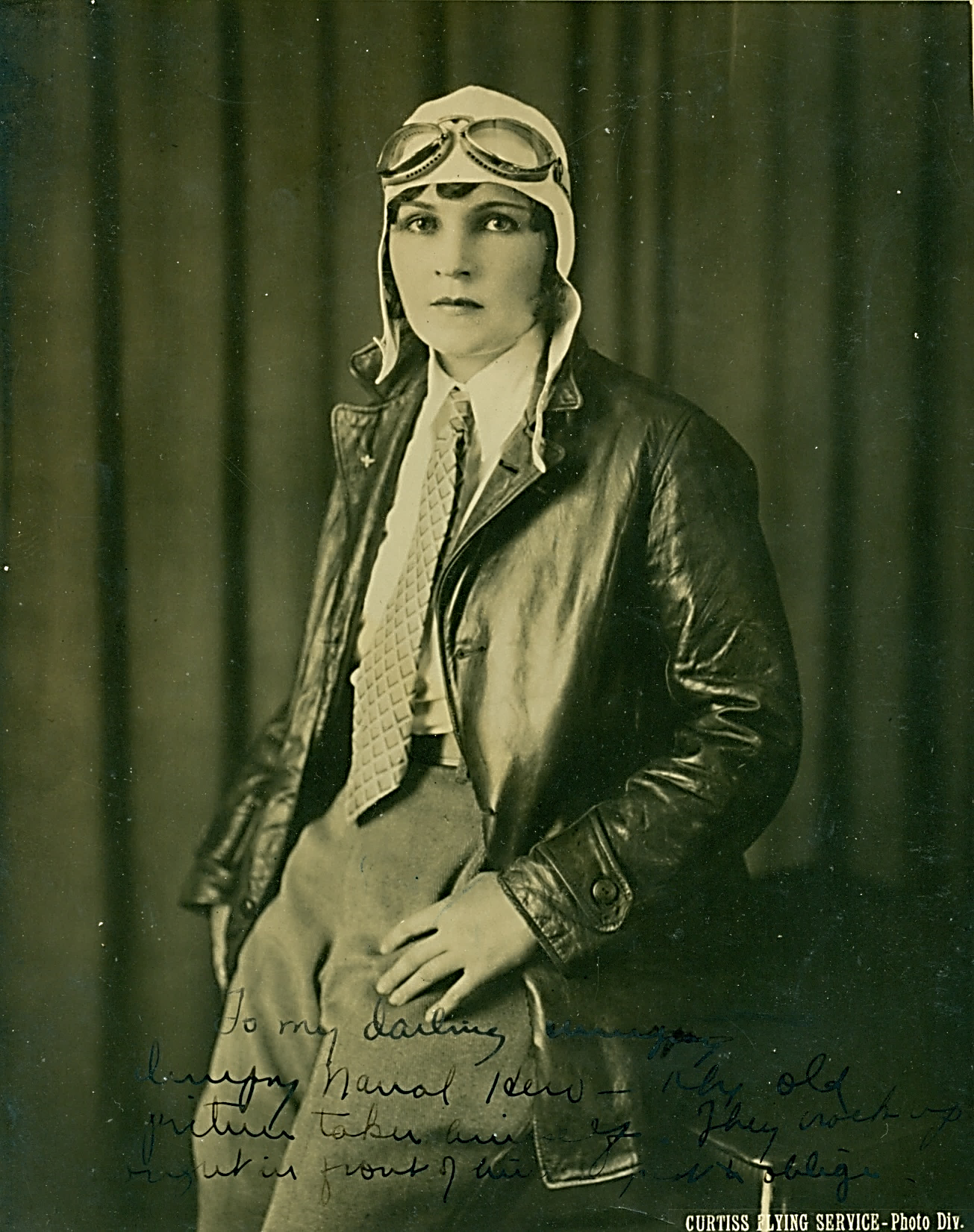
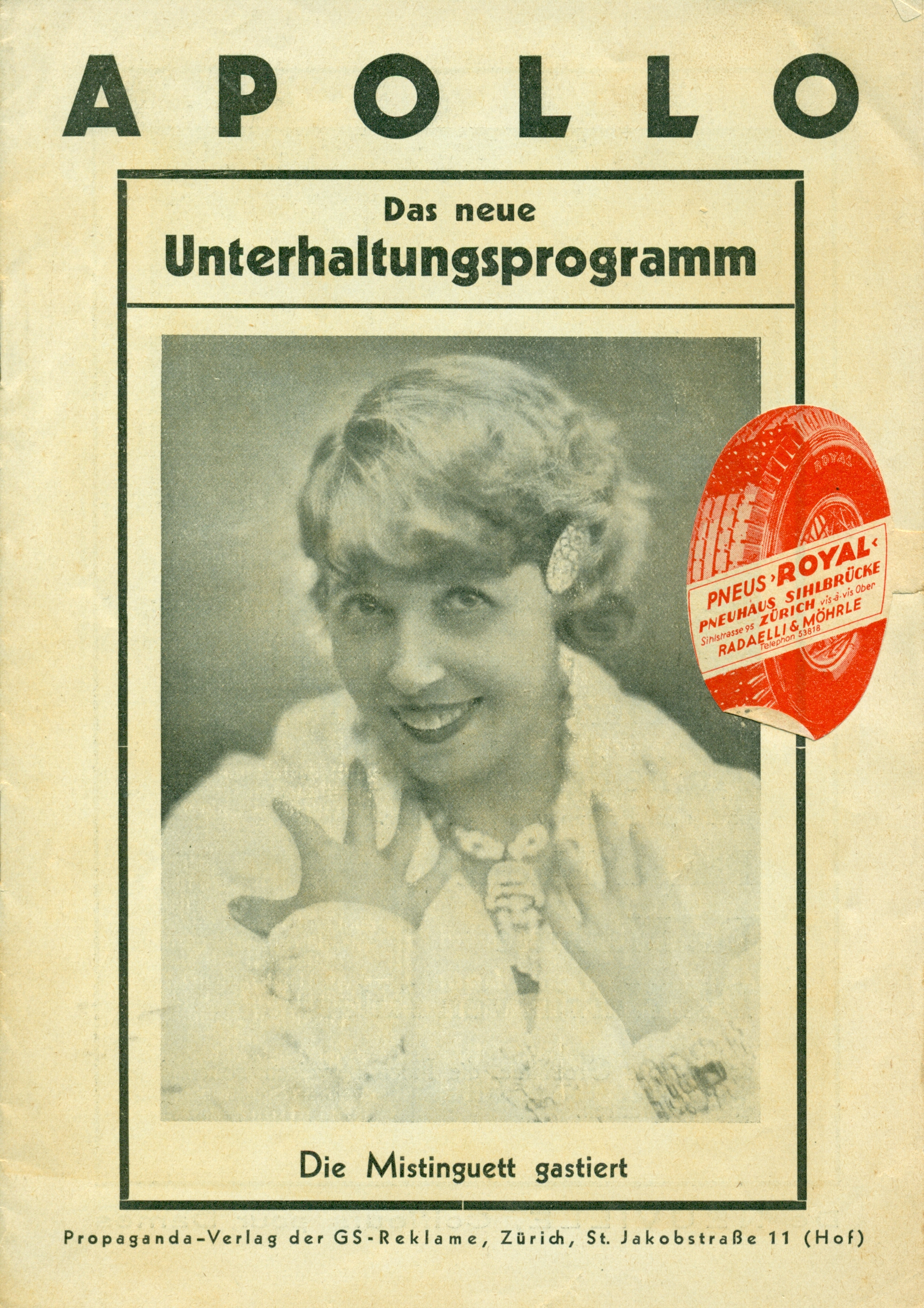
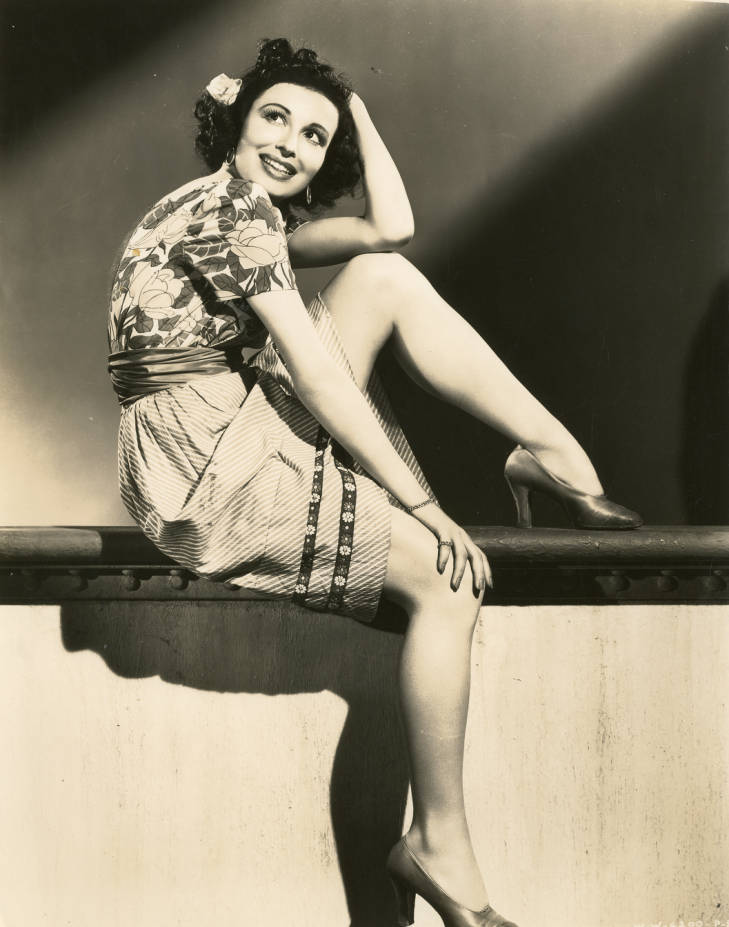
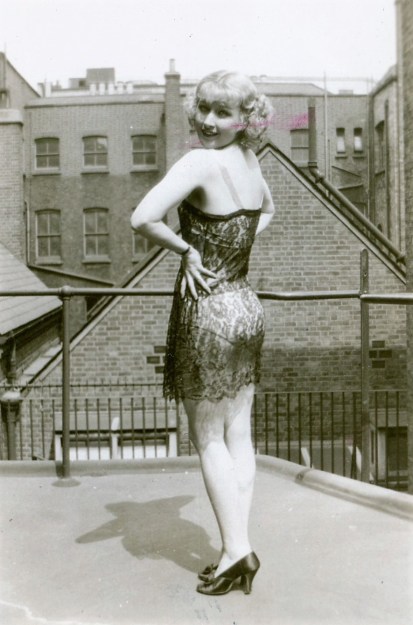
Their names were Carmen Morales, Maria Gambarelli, Mistinguett, and Frances Harrell Marsalis. These four women carved out professional careers, achieving various levels of fame, in an early 20th century largely dominated by men. All four figures also weave into my first book, River of January, as friends and employers of my main characters. It has been an interesting journey, filled with pleasant surprises, plus an honor to revive their names, and present these women to 21st Century readers.

All four women lived life on their own terms.

Frances Harrell Marsalis, an ambitious, Texas-born wife, left her husband and children, relocating to New York’s Roosevelt Field. Obsessed with aviation, Frances dutifully put in her time, honing the specialized skills necessary to aviation until she, too, finally strapped into the cockpit.

Allying with other women pilots at the famed airfield, Frances joined in forging The Ninety Nines, a sorority of women flyers, electing Amelia Earhart the organizations first president. These women formed a tight-knit association, attracting endorsements from advertisers, (usually for products like cosmetics) to earn enough money to stay in the air.

In a 1934 Dayton, Ohio air race, Frances met her demise while rounding a pylon, trapped in wing-to-wing congestion. Another plane bumped hers, and flying low Frances launched into a fiery cartwheel. She survived in the wreckage, but died shortly after.

Frances Harrell Marsalis entered the pages of River of January as Mont Chumbley’s first serious love.

Rich in Old World sensibilities, Carmen Morales and Maria Gambarelli embodied excellence in the performing arts.

Gambarelli, American-born, of Italian descent, rose to fame as a celebrated New York ballerina. Renowned for her devotion to dance, Gambarelli promoted American ballet with a missionary’s zeal. In 1932 the prima ballerina agreed to headline a European tour featuring talented American ballerinas. Twenty-year-old Helen auditioned, made the cut, and joined this company of ingenue dancers, soon crossing the Atlantic aboard the SS Ille de France. Once in Paris, an unexpected dispute erupted between Gambarelli and the tour producers over creative authority. The prima ballerina either quit or was fired—Helen’s letters indicate the girls weren’t sure. Gambarelli returned to America embroiled in a lawsuit with the promoters.

Born in Spain’s Canary Islands, lovely Carmen Morales found her way to culturally vibrant New York City by 1930. Like Helen, Carmen earned a spot in Gambarelli’s 1932 European tour. An accomplished dancer, she and Helen developed a warm friendship underscored with daily rehearsals, nightly performances, cheap hotel rooms, cheaper food, and endless hours on rail cars.

The bond between the two lasted a lifetime.

In Monte Carlo, Carmen met and fell in love with an American hoofer, Earl Leslie. The couple quickly married in Marseilles, and Carmen, with her new husband, left the show in 1933. The newlyweds accepted a position managing a string of German nightclubs from a central office in Berlin. Unfortunately, visits from Adolf Hitler’s paramilitary Brownshirts quickly convinced Carmen and her husband, to resign and escape the country.

The marriage with Leslie didn’t last much longer either, and Carmen left Earl while performing in Buenos Aires, Argentina.

Making her way to Los Angeles in the late 1930’s, Carmen settled in Sherman Oaks, and pursued a career in motion pictures. Director John Ford signed Morales to star in Warner Brothers, The Long Journey Home with John Wayne in 1940. Following that release, Carmen appeared in other features, and later took roles on television. She died in Sherman Oaks in 2000.

The most famous of the four was French entertainer, Mistinguett. Though not well known in America, this music hall icon is still revered by generations of French devotees of the stage. By the time Helen became acquainted with “Miss,” as she referred to the celebrity, the songstress was well into middle age; her beauty beginning to fade. Nonetheless, when Miss signed the American ballerinas to her variety show, following the Gambarelli fiasco, Helen and her fellow dancers were fascinated by their new boss.

Rumors abounded in the dressing room regarding the grand lady’s legendary love affairs, especially with French heart-throb, Maurice Chevalier. Though significantly older than Chevalier, Mistinguett had engaged in a torrid affair years earlier, when Chevalier had been a mere chorus boy.

But all gossip fell silent when the grand lady took the stage—no one spoke, nor laughed. They instead watched and listened in rapt awe and admiration. “Miss’s” signature song, Mon Homme, reliably brought the house down, with teary-eyed audiences clamoring for more. By the way, Mon Homme translates to My Man, first made popular in America by Ziegfeld girl, Fanny Brice, then again by Barbra Streisand in Funny Girl.

River of January, for me, lived up to its promise of adventure. My journey of discovery led back to an inspiring, adventurous era, where women dared fortune equal to their male counterparts.

For more about these fascinating ladies read River of January, and River of January: Figure Eight, by Gail Chumbley. Visit www.river-of-january.com. Also available on Kindle.

gailchumbley@gmail.com

Music and Story

Happy Dr. King Day. For your viewing pleasure here is the official book trailer for River of January. Kudos to Robert Frazier of Solid Media–he did the magic.


River of January, and River of January: Figure Eight is available at www.river-of-january or at amazon.com/author/gailchumbley

A Special News Report

cvpz8vzwyaa7p-7

I won’t kid you, I was scared. We, my girlfriends and I, were watching ABC’s Saturday Night Movie in their basement when stiff slanted letters intruded on the flickering screen. A Special News Report. “We interrupt this broadcast to bring this breaking news,” explained Harry Reasoner in his musical voice.

“FBI agents have sealed the office of the Special Prosecutor Archibald Cox.”

I sat up from my prone position on the couch, trying to orient myself to the images on that black and white picture tube. The information didn’t make sense, Cox was the guy ferreting out the facts behind the Watergate scandal, and he should have been left alone to do his job. A sense of bewildered loss of gravity made me uneasy as I watched agents string crime tape across an office door, and around file cabinets.

I needed to go home; this movie could wait.

At the backdoor of my house, I could hear the television blaring. My parents were watching the reports, too. Good. Rounding the corner, there again appeared Harry Reasoner, sounding as confused as I felt. But my Dad knew right away something very shady was underway. He never liked Nixon, buying into that “Tricky Dicky” moniker coined back in the Fifties. So, he assumed the worst—and that was good enough for me.

The crisis deteriorated further. By the next morning, a Sunday, with all of America viewing, we found out Nixon ordered Archibald Cox fired, pronto. But the Attorney General wouldn’t do it, so Nixon fired him, instead. The second at the Justice Department wouldn’t carry out Nixon’s bidding either, opting to resign. The third in line, Robert Bork did fire Cox, and obeyed his President’s rather stunning orders.

I thought America was in the middle of a coup. Again, I was pretty scared.

The rest of this tragic tale is well documented, common knowledge. The public freaked, and the Nixon people freaked, and then the Nixon house of cards came a tumbling down. By August, 1974, less than a year after the “Saturday Night Massacre,” President Nixon resigned, the first chief executive to do so in our history.

The thing is, we all knew there was something dark about Richard Nixon. He looked like he was up to no good, and those who denied this quality were turning themselves inside out to deny it. Nixon always said the right things, “tough on crime,” “support our troops,” bleeding-heart Liberals,” pressing the correct conservative buttons. But he betrayed the trust of conservatives, and it took a man of quality, Gerald Ford, Nixon’s Vice President, to restore some kind of equilibrium to the GOP.

Today, Tuesday, January 10, 2017, some shady business is transpiring on Capitol Hill. Another hurried process to fast track Trump nominees for cabinet positions. We’ve got to ask ourselves, what’s the hurry? To whose benefit is the rush job.

And Trump isn’t about a Hundred Day Congress to aid the lives of Americans. Like Nixon, there is a darkness, and a craving for power that serves only one man. This plutocrat is all about buttressing his position, and ramming through his will as fast as possible. That should send up red flags across both houses of Congress and across the expanse of America.

I’m scared again. Watergate left us all reeling, and trust in government has never really returned. I don’t think any one person should have to endure two rancid presidencies in one lifetime.

The only solution is vigilance and persistence. Don’t listen to a word any of these characters utter. Instead watch what they do. Despots on their way up say what they must to get what they want. Watch what Trump and company actually do. Get your Senator on the phone, and press them with “what’s the rush?” We all want good government; government for all Americans.

If there appears to be an almighty hurry, history tells us it’s time to slow down. The Trump people are up to something.

We, the people and the press, need to insist on answers, and demand explanations for the big fat rush. Again, who gains from this fast tracking? And America doesn’t need another secret government.

Senate Switchboard (202) 224-3121, ask for your Senators office.

A Brief Word (Once Again)

New York,1942

New York

1942

twilinghelen0001

Eileen pounded on the door to Helen’s apartment, down one flight from her own. “Have you ever been ready on time? We’re gonna be late for rehearsal.”

The lock popped and the door squeaked inward. Eileen continued her rant. “That war bond rally is going on in Times Square—the mayor’s there. We’ll have a crowd to get through. Rehearsal, Helen!”

“I’m hurrying, Sis. Keep your socks on. Just trying to find my skating sweater.” Helen fled down the hall to her bedroom.

Throngs of servicemen clad in navy blue or army khaki filled the streets and sidewalks. The Thompson sisters weathered a persistent barrage of catcalls, whistles, and hopeful winks. Red, white, and blue Civil Defense signs loomed along the girls’ route, directing them and the rest of New York to the nearest subway entrance in case of an emergency. Air raid wardens, their helmets bearing the CD insignia, were posted near the signs, ready to take control.

Flags of every description fluttered from office buildings and apartments. From countless apartment windows, silk banners bearing a single blue star notified passersby that a son, brother, or father had enlisted in the service. If the flag happened to field a gold star instead, Helen looked away; it meant a loved one had died battling the enemy. Automatically she thought of Chum, who had left that morning to wing his way to some undisclosed, classified destination. Peering down the narrow brick canyon to the docks, Helen detected the waving lines of maritime flags—navy troopships preparing to ship out. Though distant, those colorful standards added to the vibrant, festive atmosphere of bustling Midtown.

Half a block from Center Theater, Eileen began chuckling. Helen’s thoughts still on the gold stars, she grumbled, “What’s so funny?”

“Well, if I were to actually do everything advertised on the way over here—you know, join the armed forces, plant a garden, donate my girdle to make tires, and sew something for victory—I’d be a gun-toting, green-thumbed, bulging Betsy Ross.” Eileen giggled again.

“Did you miss the one that told you not to talk? Loose Lips Sink Ships? There’s one you could start right now.”

Eileen lunged. But Helen, feeling cheerier, dodged away and sprinted toward the dressing room—big sister in hot pursuit.

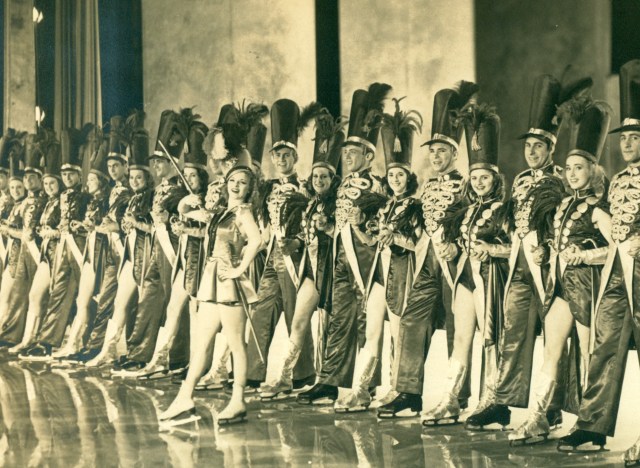
Following the success of last season’s It Happens on Ice, Sonja Henie’s new production at Center Theater, Stars on Ice, was several weeks into rehearsal. Both sisters skated four pieces in Act I, including a jitterbug finale titled “Juke Box Saturday Night.” In Act II, they accompanied headliners, blade-dancing the samba and rumba in a Latin-flavored number, “Pan-Americana.” The second act culmination was the all-cast, patriotic “Victory Ball,” with its signature song “Big Broad Smile.”

After rehearsal, the chorus gathered at the Latin Quarter on Forty-Seventh Street, toasting their first round to a successful, productive rehearsal.

“Sometimes I wonder if we’re doing enough for the war effort. Maybe other women are doing more meaningful work.” Helen tapped her nails thoughtfully against her bourbon and water.

“I don’t know, honey,” fellow skater Patsy O’Day answered. “Mayor LaGuardia thinks we’re doing our bit. Did you see the notice he placed in the new program thanking us for keeping up morale?” She sipped her cocktail. “Surely you’ve seen the soldiers and sailors in the seats. Those boys love our show.”

“Chum doesn’t like what you’re doing as it is,” Eileen chimed in. “Wouldn’t he be tickled to hear you’ve volunteered for more?”

Helen ignored her sister’s sarcasm and replied to Patsy, “I’ll have to look at that playbill tomorrow. I’d like to think morale is as important as munitions work, or joining the WAVES. Still, I don’t know how working women manage—especially mothers with small children—with their husbands away in uniform.”

Kay Corcoran, another line skater at the table, nodded in agreement. “I suppose if the woman is lucky, she has a mother or mother-in-law to help her out.”

“Right.” Helen looked thoughtful.

*

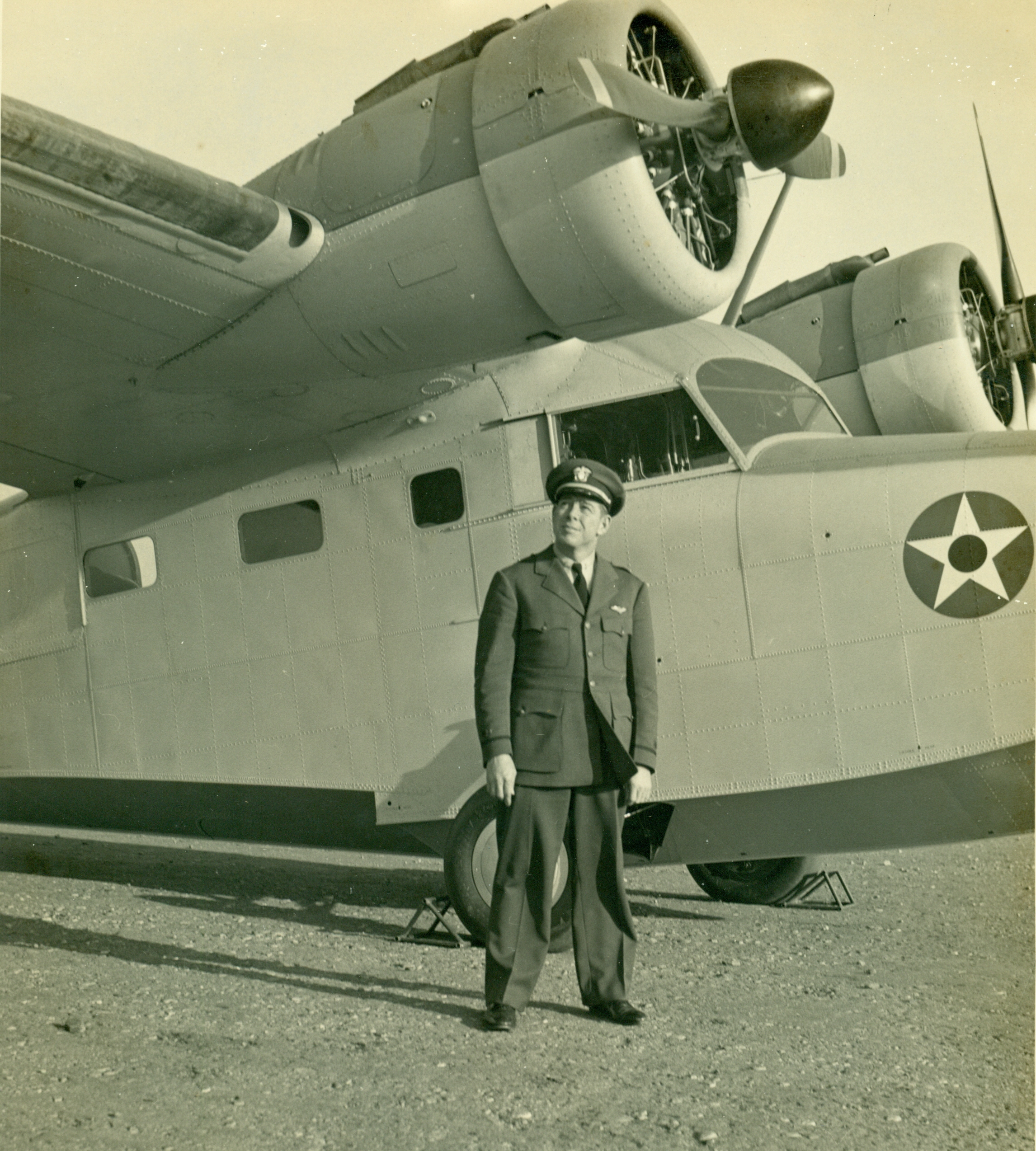
After an initial salute, Chum sparked the ignition switch and took off from Floyd Bennett Field, carrying a lieutenant and his aide to nearby Red Bank Field in New Jersey. He and his passengers passed a silent, fifteen-minute hop over New York Harbor. Leveling the nose on his Howard GH-1, Chum smoothly rolled onto the landing strip, slowing to a controllable speed to cross to a navy gray hangar.

A crew chief was watching them from the shade of the facility, and after the passengers departed, he marched over to greet Chum. “Afternoon, sir,” the mechanic saluted. “In case you haven’t heard, Lieutenant, the Japs have done it again.”

“How’s that?”

“Well, sir, they’ve hit us—this time the airstrip on Midway Island. Just came across the wires. Struck Dutch Harbor in the Aleutians too. As we speak, Jap carriers are launching waves of Zeros and Nakajimas.”

Aghast, Chum fought his impulse to leap back into that little Howard, open the throttle, and soar all the way to the Pacific. Forced by duty, and reality, he instead paced the hangar until the two commuters eventually returned. Still, rushing back to New York changed nothing, just another field to pace. The carrier battle raged on thousands of miles away, and no one could do much of anything but wait.

For three anxious days reports trickled in from the Pacific, dispatches that were spotty, vague, and inconclusive. When details emerged of this first-ever clash in the sky, the United States Navy found much to celebrate and, tragically, as much to mourn.

The particulars surfaced days after the attack, presenting a clearer picture of the Battle of Midway. At a morning briefing, base personnel learned firsthand the events surrounding this aerial showdown. “The Imperial Japanese Navy,” began an officer Chum recognized as Lieutenant Commander Kirby, “in an attempt to eliminate US forces on Midway Island, launched multiple airborne assaults. The number of enemy aircraft carriers present in the attack has convinced the Department of War that the Japanese military intended to occupy the island in order to menace US installations farther west in Hawaii.” Kirby paused, somberly measuring his words. “The Empire of Japan has utterly failed in their effort.” The lieutenant commander smiled faintly. “Of the six Japanese carriers under Admiral Yamamoto’s command, four now sit at the bottom of the central Pacific.”

For a moment, the gathering seemed to hold its collective breath, pondering the lieutenant commander’s words. When the full significance sank in, the men jumped to life, roaring in satisfied approval. After the shouting and fraternal backslapping, the crowd finally stood together in a rousing standing ovation.

Kirby couldn’t help but grin at the enthusiastic response, but quickly quelled the celebration with a brief “As you were.” When everyone was seated again, he continued. “Ahem. Yes, this is good news, good news.” Glancing down at his notes and taking a deep breath, he said, “Gentlemen, this great triumph has come at a grim price for the navy. Fellas, we have lost the USS Yorktown. An enemy sub took the old girl down. She was too disabled from the Coral Sea campaign to maneuver away. Our losses so far are sobering—over three hundred casualties at latest count.”

Kirby’s eyes scanned the crowd. “Among the dead, five squadrons of Devastator torpedo bombers from both the USS Enterprise and the USS Hornet. These bombers were utterly blown from the sky while executing attacks on Japanese vessels. The Department of the Navy verified the few who survived the shelling were slaughtered in the water by the enemy rather than rescued. Initial reports from Honolulu indicate that Wildcat fighters, assigned to protect these torpedo bombers, lost all contact, leaving the Devastators hopelessly exposed to Japanese ordnance. Boys, we lost them all, all of our torpedo bombers and pilots—but one, a pilot from Texas.”

The room fell silent, as if there had been no good news at all, no victory in the Pacific. Kirby concluded the briefing with, “Their brave sacrifice made it possible for the rest to find and sink those Japanese carriers.”

Seated among his fellow pilots, Chum shook his head sadly, reminded of a conversation nearly fifteen years before, when he was just a boy—a Seaman, First Class. After a morning of training—of war games—he and a buddy were perched on stools at the base canteen in Panama. Flying his torpedo bomber yards from service vessels had left him unsettled, and he said to his friend, “We approach in low formation, drop our payload and bank, while dangerously showing our undersides to the enemy. We’d be lucky to keep our asses dry, Win. Makes me wonder what desk genius dreamed up this idea. It’s a suicide mission.”

“A suicide mission,” he repeated, in a hopeless whisper, coming out of his reverie.

“Permission to speak, sir,” came a voice from the rear of the hall.

Kirby responded, “Permission granted.”

“How does a sailor go about transferring to the Pacific, sir? With all due respect to our mission here in New York, I want to whip those Japs bad.” Murmurs of agreement swept across the room.

“Fill out the proper paperwork, son.” The lieutenant commander sounded weary. “Complete with your commanding officer’s signature.”

*

Helen quietly turned her key and gently opened the door. Tiptoeing through the dark living room, she saw a stripe of light beaming from under the bedroom door. No wonder it’s quiet—Chum’s awake, no snoring. Entering the lighted room, Helen saw her husband sitting on the bed with an open file folder in his hands. “Honey? Can’t you sleep? I didn’t wake you, did I?”

He smiled her way. “No sweetheart. I thought I would wait up. We haven’t seen each other in a few days. Good crowd tonight?”

Helen smiled back, equally glad to see her husband. “And how! A marvelous audience tonight. Uniforms everywhere—and they gave us a standing ovation.”

“Ha. No kidding! I was part of one of those today myself.” Chum laughed quietly.

“It is so grand to see you awake, Chum. I’ve missed you terribly.”

“Me too.” He paused, choosing his words. “Helen, honey, I stayed up to have a little talk about my . . . about our future. Now, don’t look so panicked,” he added, watching her face drain to pale. “It’s nothing too terrible, honeybunch.” He reached over and patted her arm. “Did you hear the radio reports today—the big brawl out in the Pacific?”

“Of course,” she mumbled, slumping down on the bed. “The radio is always on in the dressing room. No one has the heart to switch it off. We listened to the updates on WCBS. Some of the girls’ husbands have shipped out.” She frowned.

“I want you to know that I am going to talk to Vice Admiral Andrews,” Chum said. “I want . . . I need a transfer to the Pacific too.” Helen stared at her lap. “Honeybunch, please don’t be sad. The navy is fighting back hard . . . I’m not sure how I can explain this so that you’ll understand. Those villains have to be stopped. I owe it to my country, to you, and to myself. Those bastards attacked American soil. Oh, please don’t cry, darling. Please.”

Her voice hitched as she slowly replied, “You told me once that I would have to be brave. You said I needed to trust you, and not to worry. And I have been trying, Chum, really, really hard. I know the country is at war and you have a duty to perform. And, well, I want you to know that I understand how you feel. I—I want to contribute my part too. Even if that only means waiting for you to safely come home and skating to make audiences happy.”

Chum frowned. “You don’t have to keep ska—”

“Yes, I do. It makes me happy too,” she snapped. “People need the distraction now more than ever.”

He sighed—this talk wasn’t going the way he had intended. “Fair enough, Helen. You keep skating. I only wanted to share my intentions, because you need to know. And I am determined to ship out as soon as I can. Helen . . . I want an operating squadron, honey. That means flying fighters—Corsairs, Hellcats, Wildcats, and the like.” He paused a moment in thought. “Frankly, almost everyone on base is bucking for a Pacific transfer after today’s briefing. Look, we—the navy—can whip those devils. We’ve now proven we can beat them in the air.”

Chum took a deep breath before continuing. “I understand that protecting New York is essential, but honestly, the Germans have been restricted. They’re not able to do too much close to shore. We’re in far more danger on the West Coast, and I want in. But”—he shook his head—“first I wanted to talk things over with you . . . and I still have to get the go-ahead from the vice admiral. What he’ll say is anyone’s guess.”

Helen could feel her heart growing numb. With a heavy sigh, she said, “So, you want to go after the enemy.” Her voice became flat. “To fight the Japs in the air. Never mind that you could be killed. Never mind that even if you didn’t die in the air, you’d likely drown in the ocean.” A solitary tear trickled down her cheek.

“Helen, it’s my job. And believe me, sweetheart, I have no particular death wish. Flying is my job, and I think about the risks every time I prepare for takeoff.”

That said, they both grew silent, lost in thoughts words couldn’t phrase. Finally, Chum murmured, “You know, it’s funny—”

“No it’s not,” Helen snapped.

“I suppose ironic is a better word. It strikes me that this argument must be going on all over the country—of wives asking why husbands have to go.”

*

Lieutenant Chumbley remained beside a Lockheed Lodestar, cigar in his teeth, flight plans to Anacostia in his hands. The vice admiral and his aide, Captain Henry Mullinix, had not yet arrived for their flight to Washington and the Department of the Navy. I’m going to ask today. He seems to like me enough to listen. Chum looked up from the documents as the two officers approached, striding side by side to the aircraft.

“Morning, sir. Welcome aboard.” Chum gave a crisp salute as Vice Admiral Andrews climbed into the aircraft.

“Good morning, Lieutenant,” the vice admiral replied in passing. “Let’s keep this plane in the air and absolutely no turbulence. That’s an order.”

“Yes, sir,” Chum said with a chuckle.

“Captain Mullinix.” Chum greeted Andrews’ aide with a salute too, as he climbed up the steps.

“Beautiful day for a flight, wouldn’t you agree, Lieutenant?” Mullinix smiled.

“Yes, sir. The tower reports high, scattered clouds, with unlimited visibility. Will you be joining me in the cockpit, sir?”

“Roger that, Lieutenant.”

Upon reaching altitude, Chum turned the Lodestar over to the captain, a mutually agreed upon arrangement, but only until picking up radio contact for landing. He then relaxed for the hour-plus flight to Washington.

“I’m meeting with Secretary Knox first,” said the vice admiral. “Did I mention that, Captain?”

“Affirmative, sir. A transport vehicle is waiting at the field. We’ll head directly to the navy yard, sir.”

“Very good, Captain.” The vice admiral settled back in the cabin, and with a deep sigh, closed his eyes.

This isn’t the time to ask for any favors, Chum thought, maybe on the way back. There’s time.

The Lockheed descended squarely onto the Anacostia landing strip, soon circling in the direction of the hangar. A large, blue sedan with stenciled white stars on the doors idled nearby, awaiting the high-ranking visitor. Chum grew confused when Andrews, unbuckling his harness, remarked, “Come on with us, Chumbley. Mullinix here needs some company while I breathe the rare air of the Operations conference room.”

“Me, sir?”

“Yes, you, Lieutenant,” Mullinix answered. “I have a set of checkers in my briefcase. These meetings can last forever.”

The three officers stepped into the newer model Cadillac, doors punctually opened by a stiffly saluting chief petty officer. Andrews returned a lackluster gesture to the driver, and the sedan headed toward the city. From the backseat, Chum caught sight of the massive Capitol Building, with the Washington Monument rising in the foreground. But still his thoughts focused on his objective. Maybe I should open the subject with Captain Mullinix first. He’s a real nice gentleman, and could maybe approach Andrews on my behalf.

“How are you at checkers, Lieutenant?” The captain interrupted Chum’s musing.

“Fair, sir, fair. But I haven’t played in a long time.”

“Well, Lieutenant, Mullinix does not extend charity when it comes to checkers, or war for that matter. He plays to win.” Andrews grinned, winking at Henry Mullinix.

Chum smiled in return. “Thanks for the advice, sir.”

The chauffeur braked at the Latrobe Gate outside the navy yard. The driver opened the vice admiral’s door, again formally saluting. The captain reached for his own door handle, stepping out with no pomp. Chum followed suit. Immediately surrounded by subordinates, Andrews walked directly to the entrance, leaving Mullinix and Chum to fend for themselves.

“Let’s head to the canteen, Lieutenant. I’ll call upstairs and let them know where to find us when the vice admiral is ready.”

It wasn’t long before both men were leaning over a Formica table, studying the red and black grid. Mullinix lorded over small stacks of red discs he had captured, while Chum defended the few he had left on the board.

Chum decided to speak up. “Captain, I was hoping for some advice.”

“Now, what more could a pilot with a terrific assignment need?”

“Well, sir, I am rather anxious for active duty . . . out in the Pacific.”

Jumping two of Chum’s checkers, Mullinix smiled sheepishly, snapping the pieces off the board. “You and the rest of the boys in the Eastern Sea Frontier. Most of the paperwork we’re processing comes from fellows just like you—all sailors gunning for Tojo.”

Chum jumped a black disc to crown another.

“Ha. I think you’ve been sandbagging me, Lieutenant.” The captain chuckled. “If you are seriously intending a transfer out to Honolulu, talk to Andrews directly. He’s a reasonable man, and he likes you.” Chum smiled at that. “But that can work against you too, Chumbley.”

Chum’s smile faded. “I don’t understand, sir.”

“The vice admiral is approaching retirement this coming year. He hasn’t been particularly well and is only staying on until the U-boat situation has been satisfactorily eliminated from coastal waters. My guess is that he’s happy with you as his pilot and would want to keep you on his staff. Very hard to predict what Andrews might say. But I will let you in on one tidbit.” Both players unconsciously sat straighter, the game between them temporarily forgotten. “I’m to receive my flags soon, becoming a vice admiral myself.”

After a moment’s pause, Chum felt he should say something. “Congratulations, sir. You have certainly earned the promotion.”

“Yes, thank you, Lieutenant. I will post to the Pacific within the next eight or nine months. The scuttlebutt is I’ll first take command of the Saratoga. As you know, she’s coming out from refitting and heading back to the Solomon Islands. So if you can wrangle a transfer west, I’ll see that you get the duty you want.”

“You would, sir? With an operating squadron?”

“Fighter pilot, huh? I thought you liked this transport-chauffeur service, Chumbley.”

“It is an honor, sir. And I have enjoyed the job enormously. But after Midway . . . well, I too want to settle some scores with those sneaky rascals.”

“Get yourself out to ‘The Show,’ Lieutenant”—the captain sighed—“and I’ll take care of you. How does that sound?”

“That sounds grand, sir.” Chum smiled, relieved.

Resuming their game, Captain Mullinix proceeded to beat Lieutenant Chumbley four games out of six.

grummondgoose

River of January: Figure Eight, pps. 200-212.

Gail Chumbley is the author of the River of January series.

Also available on Amazon.com

Gail Chumbley


It’s An Icetravaganza!

Skating sensation, Sonja Henie took America by storm following her Gold Medal success in the 1936 Berlin Olympics. Appearing in a number of Hollywood films, Miss Henie also produced The Hollywood Ice Review in Los Angeles, performing at an open-air rink in Westwood.

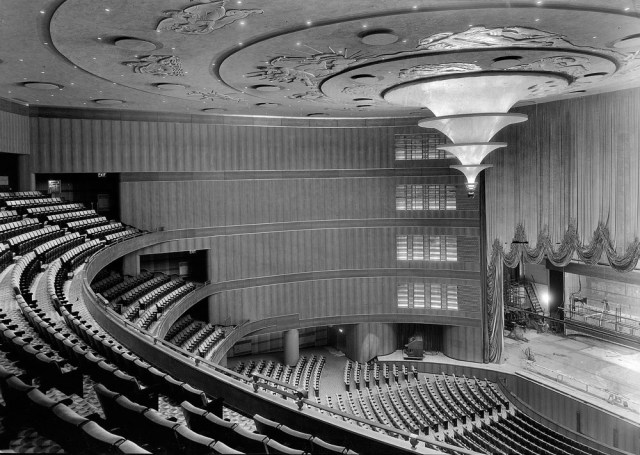
By 1940, with financial assistance from the Rockefeller family, Miss Henie and business partner, Arthur Wirtz, opened the first ice theater in the world–Center Theater. Located at Rockefeller Center in Manhattan, It Happens on Ice, Henie’s first New York offering, premiered in October, 1940 to great acclaim.

Helen Thompson, the other major character in River of January: Figure Eight, skated in the Center Theater productions throughout the war years.

centertheatreint

Center Theater

helenskates0001

Helen Thompson (Chumbley)

Gail Chumbley is the author of River of January and River of January: Figure Eight

Find more at amazon.com/author/gailchumbley

http://www.river-of-january.com

The Hawaii

marslogbook0001

On July 6, 1945 Mont Chumbley, one of the subjects from “River of January: Figure Eight,” trained and flew the Martin Mars. The Mars was the largest amphibious plane built by the Glenn L. Martin Company located at Middle River, Maryland. However, one month later the bombings of Hiroshima and Nagasaki rendered deployment of the Mars to the Pacific unnecessary.

Enjoy the footage of Chum Chumbley and his crew at the helm. Thank goodness for old newsreels. Enjoy!

marstraining0001


Gail Chumbley is the author of the nonfiction series, “River of January,” and “River of January: Figure Eight.”

*note new blog address, chumbleg.blog


From “Normalcy” to “Bigly”

125926-004-f7b8e7b5


Looking for historic parallels to the outcome of the 2016 election, has left me thrashing about. For past comparisons, it seemed easier to piece parts from several different elections, than pin down any one year.

In 1796, for example, the very thinned-skinned John Adams took office, and outraged by rising criticism coming from his own party, plus more from Jefferson’s growing opposition party, Adam’s shepherded the Alien Act that targeted immigrants. (These newcomers tended to join Mr. Jefferson’s Republican Party). On the heels of the Alien statute came the Sedition Act, that aimed to silence critics from the press.

Or, decades later, Henry Clay’s horror in 1828, witnessing the meteoric rise of demagogue, Andrew Jackson, though Clay knew for certain that he alone was the smartest, and most deserving guy in the room.

Another episode that fits was the seismic swing of competence is 1860–from inept James Buchanan to the majesty of Abraham Lincoln—only to return to another nincompoop in bungling Andrew Johnson in 1865.

But, sifting through all these presidential races, 2016’s fiasco resembles most the election of Warren Harding in 1920.

Much upheaval predated the 1920 contest. The three previous administrations; Theodore Roosevelt, William Howard Taft, and the Democrat, Woodrow Wilson brought about an avalanche of progressive reforms. The first Roosevelt used his “bully pulpit” to preserve millions of acres of public lands, through both the National Park Service, and in designating wilderness protection. TR wielded his “Big Stick” to force mine owners to negotiate with a miner’s union in the 1902 Anthracite Coal Strike, siding with the strikers. “Teddy” further whipped on big business, especially JP Morgan’s untoward interests in the Great Northern Railroad, ultimately breaking up Morgan’s monopolistic power.

William Howard Taft, with a strong background in law, (he later became Chief Justice of the Supreme Court) completed the breakup of John D. Rockefeller’s Standard Oil Trust, and busted up US Steel for good measure. But the lion share of America’s transformation came about during Woodrow Wilson’s two terms, 1912 and 1916.

The Federal Reserve Act, Federal Income Tax, Direct Election of Senators, Prohibition, and Women’s Suffrage all became law during the Wilson Administration. An advocate of good government, including more voters in the electoral process, Wilson championed political reforms, such as the secret ballot, the use of initiative, referendum, and recall, and curbing the influence of political machine bosses; all designed to strengthen democracy. Wilson’s most well-known came in 1917 when the president requested a declaration of war against Germany in 1917. He articulated to Congress that his sole aim in entering The Great War, was to “Make the World Safe for Democracy,” (export the American political system). At the end of that conflict, in 1918, Wilson drew up his visionary Fourteen Point Plan, featuring the League of Nations, a forerunner to the United Nations.

By the time the election of 1920 rolled around, the American public had had enough change. Too much had happened, too much upheaval, all too fast. And an international organization committing the US to a permanent membership found no traction with the populace. To his credit, (stubbornness?) Wilson didn’t give up on his lofty world aims. When the Senate rejected his altruistic Treaty, Wilson responded that they had “broken the world’s heart.” In that same spirit, President Wilson characterized the 1920 election a “Solemn Referendum,” on his League.

For its part, the Republican Party couldn’t agree on any candidate in 1920, when they convened in Chicago. Frontrunner, General Leonard Wood, faced fierce inter-party opponents, and after nine ballots, Ohioan, Warren Gamaliel Harding, an undistinguished, but amiable candidate emerged to gain the nomination. Republican machine handlers forbade Harding to campaign, and told him to essentially say nothing, and do so from his front porch. Considering the candidate’s singular statement using the non-word “normalcy,” staying quiet was probably good advice That following November, the power of inertia won when Harding was elected over Democrat, James Cox, a Wilson man. (a young FDR ran as Cox’s vice presidential candidate)

The Harding administration resumed their version of “normalcy” at once. Two immigration restriction laws were passed by Congress—the Quota Laws of 1921 and 1924. The message quickly spread. Italian anarchists, Sacco and Vanzetti were found guilty of a Boston robbery and murder, despite questionable evidence and a crooked trial. White supremacist, Madison Grant added to the intolerance with his diatribe titled, “The Passing of the Great Race,” and the Klan resumed its reign of terror targeting blacks, despite the hard work of the newly founded NAACP. (Lynching’s spiked; 110 between 1921-22).

The economy once again lapsed back to an unfettered affair, into the hands of laissez faire capitalists. The stock market began a steep rise fueled by “on-margin buying,” (10% down, the balance financed by easy credit from unregulated banks). Wall Street insiders enjoyed a field day employing shady practices that included “painting the tape,” artificially inflating stock prices to record highs, then dumping the same stocks after reaping fabulous profits. Working class investors, assuming the growth was legitimate, bought in, and were left holding the devalued stocks. That free-for-all came to a halt with the Crash of 1929.

Under Harding’s unwatchful eye, federal oil reserves in Teapot Dome, Wyoming, and Elk Hills, California were leased for lucrative kickbacks, to private oilman, Harry Sinclair of Stinker fame. And labor found no friend in the Harding administration, where strikes were viewed as Communist-inspired, and a minimum wage law died with the Supreme Court ruling in Adkin’s V. Children’s Hospital, (1923). Speaking of Communists, following the 1917 Russian Revolution, a Red Scare was underway and Soviet leader, Vladimir Lenin vowed in the Comintern to topple Western, and American capitalism.

Today, despite his personal approval ratings, it appears that the changes brought about in the Obama years are facing a similar type of reaction. The Affordable Care Act, the Obergeffell decision upholding gay marriage, the Black Lives Matter movement, have extended the blessings of liberty to the rest of us. The President’s middle ground treaty, forged with the Iranians, has, so far, avoided any additional armed confrontation in the Middle East, that critics seem keen to nullify.

It’s unfortunate that the working poor will not see any advantage from their hopeful votes for Donald Trump. Those left behind in America’s transformation to a service economy will never realize jobs that, for economic reasons, have shipped overseas. Even if the label says Trump, it also says Made in Somewhere Else—that is the reality of 21st Century manufacturing. Moreover, a national minimum wage for those same hard working poor, looks doubtful with a quick glimpse at Trump’s plutocrat-filled cabinet. The most unfortunate outcome from the campaign, was the free use and acceptance of racist, homophobic, xenophobic, and sexist rhetoric. As before in 1920, the temperament reflected in the new administration emboldened the forces of reaction and hate.

A lot changed for America with the election of our first black president. But the message of the administration spoke of hope and forbearance. Those among us who shared this philosophy looked ahead with optimism. But if the past is a reliable guide, and I believe it is, this recent swing toward the overly male, wealthy, Caucasian, Right cannot, and never has governed well. An administration that plots a course based on exclusion, has never found measurable success. That faction owns a lot, and looks out for their interests. That guiding principle leaves out the rest of us in this roiling mass of diversity that is the real America.

Gail Chumbley is the author of the memoir series River of January and River of January: Figure Eight. Both available on Amazon and at www.river-of-january.com