Peer Review One: A Play

Peer Review One

__________________________

10 Minute Play

By Gail Chumbley

SCENE 1

The stage lights rise. Two wingback chairs sit closely on the stage, and a table. Two men, both marines, stand on either side of the stage apron. The sounds of voices are heard off stage. The stage lights shift to blue as a man, The President, steps onstage. The Marines salute, and the president salutes impatiently. The guards disappear in darkness.

THE PRESIDENT
I can hear them. Tourists. Here to see where I, their President lives.

Three girls enter giggling and taking cell phone pictures. The president fusses with his hair.

THE PRESIDENT

And where are you girls from?

The girls move on without noticing him.
Wait! I’m here. Your president. I’m here.

A couple appear looking about, pointing toward “walls,” chatting quietly. The president straightens his tie, and again touches his hair.

THE PRESIDENT
Welcome to my White House. Wanna a picture with your President?

The couple murmurs quietly, indifferently looking around. They turn and stroll offstage. The president follows a few steps.

THE PRESIDENT

You people deaf? What is wrong with you? This is disgraceful. I’m President of the United States, for god’s sake.

A man appears on stage left. He wears a top hat, mustache, pince-nez spectacles and cutaway jacket with tails. He carries a cane. The man approaches the president from behind. He speaks in a patrician voice.

THE MAN

Am I to understand that you are a New Yorker?

The president startles.

THE PRESIDENT
Um, hello. Are you here with a tour group? Bet you want a picture with me, your president.

THE MAN
I ask a simple question, and you reply with a question. I understand you are a New Yorker. Are you or are you not?

The President attempts to walk to no avail. The man stands uncomfortably close.

THE PRESIDENT (Looking around)

I can’t move! My feet are frozen to the floor! Where is my security detail! Where are my marines?

THE MAN
We have all been watching you, and even Mr. Nixon is appalled. Once again, are you a New Yorker? Speak up when I’m addressing you.
THE PRESIDENT

Mr. Nixon? How did you get in here? Are you a re-enactor?

The muted sound of tourists continues off stage.

Yes. Yes. Everybody knows me. I made my fortune in New York real estate, if you must know. I’ve heard many people say I’m the best businessman ever . . .

The man begins to pace and speak at the same time.

THE MAN
From my understanding you are nothing beyond a scoundrel from the wealthy criminal class. I made a career of exposing popinjays like you.

THE PRESIDENT
Well, you’re a nasty piece of work. I am the President of the United States. I won the election by the biggest margin in American hist . . .

THE MAN
Poppycock! We have come to find that result came about due a mere tilt in the electoral count, and foreign interference. Russians, no less. After the revolutionary stirrings in 1905, I feared Russian unrest would spread to the United States. Conditions in mines, shops and factories here were inexcusable. Strikers shot down in the Pullman Rail Strike, vile conditions in Chicago’s meatpacking industry, sweatshops forcing 12 hour work days. Labor agitators pushed for reform, and I agreed. In Russia, Bolsheviks never did extend justice to the working class, only more oppression. They were not, and are not America’s friend, and intend only to destabilize this nation. Through your absence of character, and love of money they have succeeded.

THE PRESIDENT

You are wrong. That’s a lie. A lie.

THE MAN
You foolish pip. Inviting Russians into the West Wing? Unacceptable! Never should foreign adversaries be permitted to enter the inner sanctum, nor rioters in the Capitol. Mr. Lincoln will have more to say on that particular travesty.

The President appears shocked. He mouths “Lincoln.”
You have besmirched America before the world. I’d say you are a compromised pawn of foreign meddlers, and their graft. You give not one whit for America.

THE PRESIDENT
You can’t talk to me like that. My security will be back and you’ll be thrown out.

THE MAN

Sergey Witte.

THE PRESIDENT

What? Who? Just get out!

THE MAN

Hold your tongue! When you are in the presence of a gentlemen, behave accordingly. Witte was a Russian, so you will approve. The Japanese inflicted the most impressive defeats upon the Tsar’s navy in 1904-05. America then had no quarrel with Japan or Russia, however, I was asked to arbitrate peace negotiations. My view of the Russians changed with Witte. What a crude, unmannered man, unlike the thoroughly well- mannered Japanese delegation who comported themselves so gracefully! This so-called “diplomat” grew belligerent during peace talks insisting Russia be awarded more largess from the treaty. That villain stalled and argued for adding more claims, despite losing the war. I gave that knave a piece of my mind.

The man removes his top hat and sets it on a table, and checks his pocket watch.

Good I have time.

THE PRESIDENT
Time? Don’t stay on my account. I’m a busy man. Meetings, briefings.

THE MAN

Sit down this instant.

The president instantly sits. Looks alarmed.

Witte is the point! The Russians only look out for Russia, not you, the bankrupt fool who fell backward into the presidency.

THE PRESIDENT
I’m being pranked. Some a-hole is filming this. Where is the camera? I hate pranks. Meadows is going to hear about this.

The muffled sound of passersby continues. The president sits uncomfortably, and shuts his eyes.

I’m dreaming. That’s it, I’m asleep. When I open my eyes he’ll be gone.

To the man.

I’m opening my eyes now and you better not be here.

The man leans over the sitting president. He opens his eyes face to face with the man. The president startles again.

THE MAN

I am not finished.

The man again paces and speaks.
Bribery does not belong in foreign policy. And America still has a grand future on the world stage. We show strength through integrity–not by shaking down America’s allies for political favors.

THE PRESIDENT

Stop right there, that was a perfect phone call . . .

THE MAN
In foreign affairs we must make up our minds that we are a great people and must play a great part in the world. Nothing less.

The man turns toward an imaginary window. The president attempts to stand, but only succeeds in moving the chair a little. He utters a grunt.

THE PRESIDENT
I have great knowledge of foreign policy. And despite what some people say, I was always against the war in Iraq, and a lot of people weren’t.

The man shakes his head in disbelief. The President continues.
Look, Obama left a foreign policy of one disaster after another. We don’t win anymore. . .We’re going to win big now.

The man looks around the Blue Room.

THE MAN
Talleyrand, Napoleon’s minister once remarked that though President Jefferson loved France, he was still an American first. I do not believe you are first loyal to America, only to your feral, financial instincts.

THE PRESIDENT

TalleyWho? Everyone knows I am the greatest Americ. . .

The man sighs, and with a turn of his hand silences the President.

THE MAN
It appears you have no pets. Quite revealing that-regarding a man. We moved into this house with dogs, cats, and other pets, including a pony. How the boys loved their animals. Our pets were considered part of the family. They and the children’s presence made the White House feel like home.

The man returns his gaze to the president, and smiles.
I would play a bear, and my two youngest would hide under the bed. I pawed and growled, and they giggled and shrieked for joy.

The president is defensive. He speaks.

THE PRESIDENT
Kid’s. The hardest thing about raising kids is time. I know men who leave their businesses so they can spend more time with their children, and I say, ‘Gimme a break!’ My children couldn’t love me more if I spent fifteen times more time with them.

The man watches the president doubtfully.

THE MAN
No pets. Not even for your youngest. And it appears the boy and his mother live separate lives. Your adult children keep their distance, as well. You have squandered a man’s real treasure for an artificial image.

The president wiggle-walks his chair still stuck.

THE PRESIDENT
First of all, I would feel like a phony having a dog. I don’t like dogs. And, so you know, my children love me, and my wife, too. They are so proud of me, so proud. I’m President. And most Americans love me. Those liberals are the problem.

The man snaps, waving his cane.

THE MAN
Is that why thousands of migrant children were separated from their families? Caged? Liberals are not, as you say, the problem!

The man clears his throat, and quietly speaks.

President Grant requested I touch upon the subject of military service. My father did not serve in the War between the States, leaving me a confused boy. I could not understand why. For me soldiering is the highest service a patriot can perform.

THE PRESIDENT
And now you’re going to tell me how great the military is. I really don’t care. Look, Sean Hannity is calling my office.

THE MAN
His decision concerned my mother. Lovely woman, my mother, she hailed from Georgia, and her brothers were serving the Confederacy. You see, my father loved her–simply loved her. He hired a substitute in his place, and aided President Lincoln in other ways.

The man taps his cane and smiles.

Still. I idolized him. He believed so much in public service. He cared about children, orphans living on the streets. Father founded the Newsboys Lodge, the Children’s Aid Society, and the American Museum of Natural History. The last he did for me.

The man strokes his mustache lost in thought.

THE PRESIDENT

On Central Park West?

The man nods.
Been there. Your father had it built? Seems like a big waste of money to me. Bunch of bones and dead animals.

THE MAN
Serving others is our obligation to the less fortunate. To me bad trusts exploited the poor for profits. We regulated fair rail rates for farmers, passed the Meat Inspection Act, and the Pure Food and Drug Act, to make all Americans safer.

The president looks bewildered.

THE PRESIDENT

Why? There’s a lot of money in big pharma.

THE MAN

Not listening.
As president, I never made a decision without wondering what my father would think.

THE PRESIDENT

Yeah, me too.

The president chuckles. The man shakes his head.

THE PRESIDENT
Still, I don’t care. Times have changed. Gotta get what you can when you can.

The man whips around.

THE MAN

Which is why I am here.

The President’s smile disappears.

THE MAN
All four of my sons served in the Great War, and fulfilled their duty. We paid the ultimate cost-our youngest, Quentin, in an aerial fight over Germany. So difficult to lose such a dear, sweet boy.

The man draws close to the president.
And Quentin was neither a sucker nor a loser! He believed in America, they all believed. Quentin held fast to the tenets of our noble land and answered the call.

The man flashes disgust toward the President, then becomes thoughtful.
In 1898, I, too, served as soon as I could. President McKinley named me under-secretary in the Department of the Navy, until I resigned to join the war against Spain. That decision led me to assemble the Rough Riders and ship out to Cuba. Most exhilarating. My father would be proud, of that I’m certain.

THE PRESIDENT
I’d like to do my duty too. But the political establishment trying to stop us is the same swamp responsible for our disastrous foreign policies.

The man frowns, then and continues.

THE MAN
We were on foot in Cuba, a cavalry without horses. We lined up at the base of Kettle Hill, and charged. The moment jolted electric, and my crowded hour began. Lifting my carbine in the air, I rallied from the front, showing the men they had nothing to fear.

THE PRESIDENT
And see, that’s the problem. That is why the military is a chump’s game.

The man shakes his head.
And who needs soldiers? I can do foreign policy, it’s easy. I know because I have a very good brain. I am very rich, people admire me.

The man gives the President an incredulous glance.

THE MAN
Are you deranged? Tossing about words, making no sense? And as for rich, I understand your father earned the fortune, and you have frittered away much of it.

THE PRESIDENT

Wrong. Lies.

THE MAN
Nouveau riche, new money. Gaudy, vulgar, pretentious, and hungry for the validation and acceptance that you will never receive.

The president audibly snores. The man continues to speak over the noise.

When I held office I used my “bully pulpit” in the best sense of the term. Once I believed as you, that the natural world existed to enrich man. But that is false. In my administration Congress approved five new national parks, protected bird sanctuaries, and game preserves. The intrinsic value of our land cannot be found in stock indices or business transactions.

The president snorts
Nowhere else in any civilized country is there to be found such a tract of veritable wonderland made accessible to all visitors, not only the scenery, but wild creatures of the parks are scrupulously preserved.

THE PRESIDENT
Well mister tree hugger I have gutted much of your precious protection and opened land for logging, mining, and drilling. Say goodbye to the Grand Staircase in Utah, well, half of it, anyway. Roads are being cleared as we speak, and off-road vehicles are roaring in. And that goody two shoes, Barack Hussein Obama created the Bears Ears National Monument. I chopped it up for developers. Because that is profit. Profit is real.

THE MAN
You are nothing new, but the only plunderer to reach the presidency. New York City has produced a long line of blackguards such as yourself, criminals like Boss Tweed, and George Washington Plunkitt. Driven by greed and power these men fleeced the public.

The man walks around the chairs still looking about. He speaks.

For the benefit and enjoyment of the people.

THE PRESIDENT

I’d enjoy getting the hell out of here.

He snores louder

THE MAN
Quiet you insolent twit. Those words are inscribed on the arch at Yellowstone Park. Now you shall no longer interrupt.

The man gestures, watching the president who is now unable to speak.
I, too enjoyed a life of affluence. However, with that wealth came obligations to the less fortunate. Doors down from our home on 57th Street the poor struggled in wretched poverty. And much like my father I possessed a troubled conscience.

The man strolls with his cane, and continues.

As Commander in Chief, our charge is to work for the people. All the people. Withholding aid to states you did not carry is a dishonorable breach of that trust.

The man touches the president’s chest with his cane, then resumes his pacing.

My love of justice and fair play may sound naive to you. But your blatant cheating, while pretending you haven’t, is shameless.

The man strikes the president’s chair with his cane. The president sits straighter.
My administration was known as the “Square Deal,” and we, my cabinet and I, kept that promise.

The man taps his cane on the floor again.

My father once counseled me to look after my morals, my health, and my scholarship. And that, I did. And your father? Raised you to love money and value nothing. Had you not been desperate to become president, you might have continued to lead this predatory life of grift and debauchery.

The president fixes his eyes on the man. Angry.

Much like King Midas, or a Greek tragedy, this fatal flaw, your infinite vanity, will now cost you your liberty.

The president struggles, mutely hopping his chair a bit.
You should not have run for office, where dignity and tight scrutiny are the norm. Unable to resist the lure of power, you are the catalyst of your own downfall.

The man puts on his top hat, and gestures. The president bursts free from his chair.

It’s time for me to leave, the others will join you presently.

THE PRESIDENT

Others?

THE MAN
Most assuredly. And the name of that national park is pronounced Yo-sem-i-tee.

As the man stroll off in one direction, the President runs off the other. The stage goes dark.

The Dramatists Guild of America was established over 80 years ago, and is the only professional association which advances the interests of playwrights, composers and lyricists writing for the living stage. The Guild has over 6,000 members nationwide, from beginning writers to the most prominent authors represented on Broadway, Off-Broadway and in regional theaters. To learn more about the Dramatists Guild of America, please visit http://www.dramatistsguild.com

Gail Chumbley is the author of the two-part memoir, “River of January,” and “River of January: Figure Eight.” Both are available on Kindle. In addition Chumbley has written two full-length plays, “Clay,” and “Wolf By The Ears.”
Stay The Course

1864 was an election year, and an apprehensive President Lincoln believed he faced certain defeat. Despite victories at Gettysburg and Vicksburg the endless lists of casualties had left Northern families weary of war. Two years prior the Democrats gained 27 seats in the House, as critics bashed emancipation and the draft riots in New York. As the President privately despaired, “The bottom is out of the tub.” 

Lincoln’s greatest frustration centered on finding a general who could and would defeat General Robert E. Lee and his Army of Northern Virginia. A series of Union generals, all lackluster, had failed the President repeatedly. Irvin McDowell’s troops ran at Bull Run, Ambrose Burnside presided over a bloodbath at Fredericksburg, and “Fighting Joe Hooker” was roundly flanked at Chancellorsville. But the most troublesome of this difficult brood was General George Brinton McClellan.

On paper General McClellan had all the attributes of a winner. Studious, McClellan graduated 2nd in his class at West Point, joined the Army Corps of Engineers, and served in the Mexican War. Following a brief stint in the private sector McClellan returned to service when the war thundered to life at Ft. Sumter. Following a couple of minor victories in western Virginia, President Lincoln brought McClellan to the Capitol appointing him commander of the Army of the Potomac.

In Washington McClellan did whip his army into fine condition, and his men loved him in return. The difficulty the President faced was that McClellan would not fight. Over many months, with growing frustration at the army’s inaction, Lincoln stooped to sarcasm, composing a request to borrow McClellan’s army to go south, since the General wasn’t using them. McClellan returned the rancor referring to Lincoln as a “well meaning baboon,” and rudely rebuffing the President when Lincoln paid a house call. 

Other McClellan gems include:

“By some strange operation of magic I seem to have become the power of the land.”

“Who would have thought, when we were married, that I should so soon be called upon to save my country?” (To his wife.)

and, reminiscent of a current blowhard candidate,

“I can do it all.”

During the greatest national emergency since the Revolutionary War, Mr. Lincoln, with so many other demands, had to cope with a difficult, obstinate officer. As the nation watched, the President could not get the man to budge. In one instance McClellan, in Virginia, argued he couldn’t move his forces as the horses were fatigued. Lincoln asked what could the horses have done to be fatigued?

McClellan needed to be replaced, but Lincoln hesitated to do so. Considering the love the Army of the Potomac held for “Little Mac” may have stayed the President’s hand. And there were no other officers suitable to replace him. 

Later, after the Battle of Antietam in 1862, Lincoln fired the reluctant warrior after he permitted General Lee and his army to slip away.

As for the election of 1864, the President fully understood he was growing quite unpopular. He had spoken with General Grant on how to tie up the war before inauguration day when he would surely have to leave the White House. In an unexpected twist of irony Northern Democrats convening in Chicago, nominated their candidate to challenge Mr. Lincoln. They chose George Brinton McClellan.

Defeating the rebels grew even more urgent if that imperative was possible, for McClellan made clear his intention to negotiate a peace with slavery intact. 

It is difficult to imagine the President’s anguish in such an impossible situation.

So it is a remarkable thing that Abraham Lincoln emerged from the contest victorious. Severe Northern opinion hadn’t softened, the press relentlessly criticized Lincoln’s war policies, so how did this miracle happen?

Credit the Army of the Potomac.

Though the men did admire their former commander, they knew President Lincoln remained committed to the cause they shared: freedom and Union. Oceans of blood had been spilled, uncountable hardships endured, and still Union forces and the President stayed the course. These comrades-in-arms kept the faith with their president, in a war for America’s future. 

Lincoln had their backs, and these men fully understood their duty.

Today, as America approaches the election of 2024 Americans of good will must also vote for the President who solidly supports their interests. Mr. Biden’s successes include The American Rescue Plan, a stimulus bill, Build Back Better, an infrastructure spending act, and a bill lowering drug costs, such as capping insulin for diabetics, demonstrates Biden’s priorities. Like 1864, the opposition party has nothing to offer but a self-deluded windbag who has proven himself more ineffectual, and delusional than General McClellan, who at least had a real resume. Nonsense is nonsense.

An advocate for all we hold dear, voters must remain as faithful to our ideals as Joe Biden, our Chief Executive. Today the task of preserving America is as crucial as the crucible of the Civil War

We have an obligation to defend our national laws, and the ideals that shaped them. Americans, yet unborn are counting on us.

Gail Chumbley is the author of the two-part memoir River of January, and River of January: Figure Eight, both available on Kindle. Chumbley has also authored “Clay,” and “Wolf By The Ears,” two historically-set plays.

Splintered

This post is part of an essay from May, 2016.

So what can we make of this 1860 fiasco today, after 2016? If I could attempt a bit of divination I would suggest that the political party that can present the most united front will prevail in the general election. If current Republican candidates continue to employ such wide-ranging, and scorching tones to their rhetoric, and stubbornly defend the innocence of their loose talk, the party may run head long into oblivion, as did the Democrats of 1860. If the roaring factions, currently represented by each GOP aspirant goes too far, the fabric of unity will shred, crippling the Republican’s ability to field serious candidates in the future.

Looking at the past as prelude much is at stake for the unity of the GOP. In 1860 party divisions nearly destroyed the Democrats, propelling the nation into a bloody civil war. And though Republicans at that time elected our greatest Chief Executive, Abraham Lincoln, the Democrats suffered for decades, marginalized as the party of rebellion. And even the best lessons left by the past are still forgotten in the heat of passion, by those who know better. (The Democrats shattered their party unity once again a hundred years later, splintered by the Vietnam War.) This is truly a cautionary tale for today’s turbulent Republican Party.

Zealots do not compromise, and leading GOP candidates are spouting some pretty divisive vitriol. As southern Democrats self righteously rejected their national party 1860, certain it no longer represented them, and ultimately silenced the party of Jefferson and Jackson for decades. The lesson is clear for today’s Republicans. By tolerating demagoguery, extremism, and reckless fear-mongering in their field of contenders, the RNC may indeed face a similar demise.

Though it is true that no party can be all things to all citizens, malignant splinter groups should not run away with the party.

The American public demands measured and thoughtful candidates—and both parties are expected to field candidates of merit and substance.

We deserve leaders worth following.

Gail Chumbley is the author of the two-part memoir, River of January, and River of January: Figure Eight, both on Kindle. Chumbley has written two plays, “Clay” regarding the life of Henry Clay, and “Wolf By The Ears,” a study of racism and slavery.

Atomic Toothpaste

The recent news concerning Republican reluctance to fund Ukraine’s defense against Vladimir Putin is a stunning turn of policy. More disconcerting is that reluctance has come from the party of once hardline cold warriors, the GOP. When asked, Margery Taylor Greene remarked, “Under Republicans, not another penny will go to Ukraine,” and “President Volodymyr Zelenskyy, who is Jewish, has a “Nazi army.”

WWII ended in Europe in May, 1945. Almost at once America shifted from Hitler’s defeat, to curtailing the Soviet Union. Figures like General George Patton insisted the Communist threat required serious attention. General, turned President, Dwight Eisenhower had no love for Stalin, nor his ultimate successor, Nikita Khrushchev. 

During the war Soviet operatives in the United States had collected sensitive intelligence regarding the A-Bomb, and later the Hydrogen Bomb. Though the United States had allied with Stalin during the war, he trusted no one, least of all the Americans.

Thus began the second Red Scare. (Yes, there was a first.) 

Senator Joe McCarthy of Wisconsin made his name in Washington as a fearless Commie fighter. Senator McCarthy (along with counsel Roy Cohn) accused the US Army of harboring Communists until his alcohol driven antics destroyed his career. 

Another Republican hardliner, Richard Nixon of California, joined the House UnAmerican Activities Committee (HUAC) exposing other suspected Liberals. Nixon gained national exposure sniffing out academics, artists and federal employees. This California representative sent Alger Hiss, a left leaning aide of FDR’s to jail. The Hollywood Ten were a subpoenaed to testify before the Committee regarding their political activities. Many had their careers and lives ruined as most ended up on a black list of actors and writers.

Russian aggression solidified the backdrop of my childhood, as well. The Cuban Missile Crisis in 1962 (I remember studying my saddle shoes in a crouched position) through the fall of the Soviet Union in 1991. Those were turbulent years of the Iron Curtain, the Berlin Airlift, and later the Soviet shooting down of the KAL Flight 007 over the northern Pacific. 

In 1991 the world celebrated the collapse of the Soviet regime hoping it would usher in a new era of amity, and peace. Republican Presidents Reagan and George HW Bush are credited with the downfall of Communist Russia.

The conflict unfortunately, had not ended.

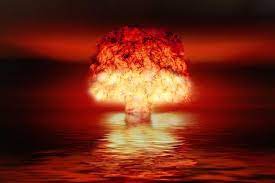
The dangerous arms race that had pitted the United States and the Soviet Union still remained. Over the years of escalation has challenged our very existence. As stockpiles of nuclear arms increase in numbers and size the world is as vulnerable as ever. The atomic toothpaste is out of the tube. New terms have developed during the modern era, such as Mutually Assured Destruction, Nuclear Winter, Brinkmanship, and the chilling advent of the Doomsday Clock, all characterizing the uncertainty that still exists. 

And even now the arms race continues to intensify across the globe. 

A quick glance at the America’s arsenal looks to be somewhere around 4,000 warheads and bombs. In Russia the estimate is nearly 6,000. And remember these radioactive weapons are either stored or deployed, and that would be a catastrophe. The one-upmanship is clearly ongoing.

The stockpile is no longer limited to Russia and America. China, the UK, France, India, Pakistan, and North Korea all have or will have completed weapons of their own.

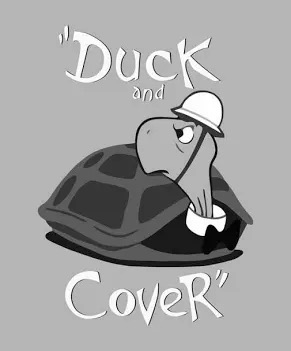
Proxy wars flamed up after World War Two, with large conflicts in Korea and Vietnam. Battling the Russians permeated American culture. Examples of this phenomena include bomb shelters, Dr Strangelove, duck and cover, James Bond films, and even Boris and Natasha. And there were spies, on both sides, the CIA’s Aldrich Ames, and Robert Hanssen of the FBI come to mind.

In my dad’s time the Korean War witnessed over 30,000 American deaths, and in Vietnam 58,000. Some of the best of my generation and before, stood up for America in freezing winters and insufferable jungles. The majority came home with physical and psychological disorders to serve us. We are obligated to remember and honor that sacrifice.   

So understand the rest of us who lived through these perilous years. Watching clips of an American president cozying up to a Russian strongman in Helsinki, and pronounced that autocrat did not hack our elections, based on Putin’s denial, or when he invited a group of Russian operatives into the Oval Office to show off, is jarring to say the least, a real gob smack.

So the warm fuzzies Republican President Trump extended to the Russian President are shocking betrayal. First, in Langley, he whined to CIA operatives in a speech regarding, what else, himself. Later the old boy absconded with a library of national security documents and refused to relinquish them to the National Archives. 

The greatest and most egregious failure of the GOP is kneeling to an immoral Trump, as he kneels to serial murderer Putin. Richard Nixon remarked, “The Cold War isn’t thawing; it is burning with a deadly heat. Communism isn’t sleeping; it is, as always, plotting, scheming, working, fighting.”

The Republicans have forgotten what they stand for, and have become the betrayers.

Gail Chumbley is the author of a two-part memoir “River of January,” and “River of January: Figure Eight.” Chumbley has also penned two stage plays, “Clay” regarding the life of Statesman Henry Clay, and “Wolf By The Ears,” regarding slavery and racism.

The Patriotic Long Game

When reflecting on my career as a public classroom teacher I hold on to many fond memories. The subject, American History, provided a lot of fascinating stories to share with teenagers coming of age in America. The kids came from varying backgrounds and abilities but once the door closed we focused on a subject that linked us together as one people.

One memorable lesson concerned the Second Continental Congress and adoption of the Declaration of Independence. Together we unpacked the document, followed by guided questioning to clarify the contents. Thomas Jefferson lists the extraordinary circumstances that brought about the decision to split with Britain. Part of the substance listed the abuses of the King and measures colonials had to take to be heard. Toward the end of the lesson I asked the class who they thought Jefferson might be addressing with his lengthy explanation. One boy cautiously raised his hand, an astonished expression on his face, and in a surprised voice he answered  “me.”

Indeed.

Toward the end of the academic year the kids were assigned to sit down with an elder and interview the person about their recollections of life in an earlier time. Students had studied a lot of decades which prepared them for those recordings. In a particularly powerful interview a boy contacted his uncle, a Vietnam veteran, and asked him to tell about his tour of duty in that bygone war. This veteran had not spoken of his service to anyone since returning in the late 1960’s. And although this poor man wept through the recording he apparently cleansed his soul for after decades of self-imposed isolation the uncle began to join family get-togethers.

My student said it was a miracle.

Lessons from the past such as these are vital to understanding America’s present. Though the course required a great deal of writing and analysis, a sense of accomplishment filled the room with an aura of confidence, and national belonging.

Today, over a decade has passed since my retirement, and much has changed in American classrooms. Rather than sanctuaries of learning classrooms have become battle fronts in the culture wars. A small, but loud minority has succeeded in chipping away at the foundation of public education, ironically something Mr. Jefferson promoted as vital to freedom. Sadly those misguided assaults imperil our nation’s ability to survive intact. 

The underlying cause appears to concern social class, power, and money. To educate all requires tax dollars, dollars fewer want to pay. Further, education implies looking toward the future, providing hope that the promise of America will pass on to new generations. Making money now and keeping it is more important than any investment in other people’s kids. Besides the upper classes can afford to educate their children, and believing they must shelter them from the lower classes. That attitude runs counter to America’s motto: E Pluribus Unum, Out of Many, One. Education is a promise that opens up a world of possibilities. That power and possibilities the well-heeled wish to hoard.

Take, for example, Betsy DuVos appointed by Trump 1.0. She took the job as Secretary of Education for the sole purpose of defunding and dismantling public schools. This is not hyperbole. As Secretary of Education, she made no secret of her contempt for public education. In her official role she pushed for school vouchers, charter schools, private institutions, all designed to ensure gated-community education. Stripping down federal education statutes and funding marked her time in Washington.

With Trump 2.0 even the Department of Education is gone. Critics attacking public education lack serious understanding of our public system, and that threatens our national viability.

History could not be more clear regarding the obligation to America’s youth. After the Revolutionary War as land opened up in the Great Lakes area, Congress passed the Northwest Ordinance (1787). This law organized a numbered survey grid mandating revenue from section 16 of the survey be earmarked for public education.

In the years after the Civil War waves of immigrants from Eastern and Southern Europe flooded upon America’s shores. To aid the newcomers settlement houses, such as the Neighborhood Guild in New York City, and Chicago’s Hull House, children attended classes to learn to be American. Too bad we can’t rally the same enthusiasm for all our kids today.

Now self-appointed curriculum experts pack local school board meetings, demanding removal of books, blaming and bullying over-worked teachers which isn’t helpful. Understandably many educators leave after only a few years, while the rest bravely persevere. What our teachers need is meaningful support as they shoulder the duty of classroom instruction plus all the distractions of behavior problems, lockdown drills, bomb threats, and active shooter protocols.

This is an issue of national self interest. There is nothing sentimental or saccharine about how it takes a village. It does take all of us. We all bear responsibility to all of our kids, for they cannot do this for themselves.

Leave teachers alone and let them continue to weave that same magic I experienced for all of our students. We have and will continue to turn potential into reality.

Whether a parent or an educator, or a retired senior, we are depending on you all to protect the patriotic long game.

Gail Chumbley is the author of the two-part memoir “River of January,” and “River of January: Figure Eight,” co-writer of the screenplay, and “Dancing On Air” based on those books. She has penned three stage plays on history topics, “Clay” on the life of Senator Henry Clay, “Wolf By The Ears” examining the beginnings of American slavery, and “Peer Review” where 47 is confronted by specters of four past presidents.

The Gadget

FDR had an agreement with Winston Churchill. Though the Japanese had hit Pearl Harbor in the Pacific, the two leaders prioritized the European theater. Meeting on the HMS Prince of Wales, the two men met face to face (for the first time) agreed defeating Hitler’s Germany was job number one.

The US economy transformed quickly. America took the position as the arsenal of democracy for our allies. Jeeps, halftracks, Higgins boats, aircraft, and munitions were produced, largely, all largely produced by thousands of women on assembling lines. The United States was in full warfare mode. Some of these wartime innovations are still around today; ranging from radar to M&M’s to penicillin.

One such innovation came from the work of refugee physicists, Enrico Fermi and Leo Szilard. Both refugees had escaped Hitler’s antisemitic reach. Fermi was a pioneer in nuclear fission, Hungarian-born Szilard, embraced Fermi’s calculations. But Szilard knew he needed assistance to get this theory into the hands of President Roosevelt. Enlisting the help of a former colleague, Szilard contacted Albert Einstein. Though a pacifist, Hitler’s treatment of Jews, moved Einstein to use his celebrity to reach out to the White House. 

Events moved quickly after FDR read Einstein’s communication, and that was the genesis of the Manhattan Project. J. Robert Oppenheimer, a physics professor at UC Berkeley was tapped to head the program. He had argued that a remote central laboratory was essential for security and secrecy. New Mexico’s Los Alamos had been a childhood haven for his family and the US Army agreed to the proposed site. Subsequently, universities across the country began to noticed colleagues disappearing from science departments. Gone in secrecy these people were sent by rail to New Mexico.

The horror of Hitler and the Nazi regime fueled the furnace of urgency in the New Mexican desert. The pace itself became a force of its own. The work never ceased. A genocidal German dictator controlled Europe and this weapon became essential to end the war. Eventually in July, 1945 the “Gadget” as the device was nicknamed, stood ready for a test.

Of course the detonation was successful in a culminating in a horrific, frightening cataclysm. 

But by July 1945 the war in Europe was over, and Hitler dead.

FDR too had passed, and Churchill would soon no longer serve as Prime Minister of Great Britain. Suddenly the vice president, Harry Truman found himself President. Inundated with intelligence and war measures, Truman, later remarked he felt as if the moon and stars had fallen upon him. That briefing included the status of the Manhattan Project still frantically underway in Los Alamos.

The rest of the story is known. A new film has been released on the project and on Oppenheimer. To speak plainly the atom bomb was intended for Germany, but dropped upon Japan-twice. And this weapon certainly proved effective in ending the war in the Pacific. 

But bombs did not go away. Along with synthetic rubber, flu vaccines, and even computers, the atomic bomb still looms large. Science melded with military matters into what Eisenhower would call “the military industrial complex.” This Cold War triggered an arms race as the bombs grew in scope and in size, leaving all of America in a state of frightened readiness.

As for Oppenheimer, he lingered the rest of his life a tormented man. The why of the effort was never considered during the frenzied development of the weapon. However, once witnessed, in all of its glorious horror, the physicist lived in perpetual agony 

In his own words the physicist anguished “I have become death.”

Gail Chumbley is the author of the two part memoir, “River of January,” and “River of January: Figure Eight.” In addition Chumbley has penned two plays, “Clay” a study of Statesman Henry Clay, and “Wolf By The Ears,” exploring the underpinnings of racism.

National Longevity

Titled the National Defense Education Act of 1958, this federal legislation aimed to set more rigorous standards for American public schools, and low rate loans for college students. Curricular revisions set out by the act focused primarily on math and science so America could maintain its technological preeminence across the globe.

Spurred by the launch of the Soviet-made satellite, Sputnik, panicked lawmakers believed American schools faced the danger of falling woefully behind our Russian adversaries, and the U.S. had to catch up.

Sputnik had followed a series of Cold War crises focusing on Communist threats at home and Communist aggression abroad.

Labor activist, Gene Dennis served five years in prison for his public association in the American Communist Party, while Josef Stalin kept the Red Army in East Germany, and blocked the Autobahn (freeway) into the free sector of West Berlin. Through Soviet agents the Russians had absconded with America’s hydrogen bomb secrets, and in 1953 Julius and Ethel Rosenberg were executed as Soviet spies..

Perhaps today this lone Soviet satellite would alarm no one, nor trigger such alarm, but at that perilous moment the Russians were the first to launch a hostile electronic eye in the sky. Understandably when newspapers screamed “Do you want a Soviet moon orbiting America?” President Eisenhower, and the American public answered in unison a decisive no.

In my Spokane elementary school we practiced “duck and cover” drills to offer the veneer of protection in the event of a nuclear attack, and endured Wednesday noon air-raid tests that blared throughout the city’s neighborhoods, as they did in every American city in that era. Inside the lobby of my grandparents apartment building yellow and black Civil Defense signs pointed residents to a basement bomb shelter, to hopefully ride out a nuclear holocaust.

Though termed a Cold War, fear and anxiety simmered, permeating every aspect of national life.

Urgency filled the halls of Congress, members certain Soviet schools were producing higher level mathematicians and physicists. American schools, in the minds of legislators had to buckle down to compete in the Atomic Age. 

The crucial piece of this narrative concerning the launch of Sputnik? The United States came together as one and and met the challenge.

Our leaders wished to protect and preserve America for generations to come, and the best means of doing so centered on public schools. The United States would continue forward and American children educated so that one-day as adults, they would assume their places for a new generation..

To educate inherently implies a future–that learning is a vital investment and tomorrow will come. Education is an act of faith in America and continuity.

Sadly that period of purpose and unity is long gone.

The Department of Education is no more, universities are under siege, and public schools underfunded. No longer are students encouraged to buckle-down for their own personal, national, or existential longevity. There is no vision of a future for many of our kids.

Facts, understanding, and open inquiry is viewed as subversive.

Today’s blaring sound isn’t an air raid siren. A bellowing of conspiracists and deniers, plus the politicians who coddle them undermine our ability to effectively meet this generation’s challenges.

The dangerous years of the Cold War were scary. National defense colored every facet of our lives, especially in the classroom. JFK encouraged us to “do for our country,” and we were inspired by the challenge. Today is far less certain. Poverty, hunger, and the wealth gap smothers hope and squanders our greatest asset, our children, and that loss dims America’s longevity.

On a personal note New Math became the bane of my existence. Even today algebra and the like trigger stress and self doubt. That being said I did my best because I knew I had a future in a country that cared.

Gail Chumbley is the author of the two-part memoir, River of January, and River of January: Figure Eight. In addition Chumbley has penned two plays: Clay regarding the life of Senator Henry Clay, Wolf By The Ears, an examination of racism and slavery, and Peer Review where 47 converses with four past presidents.

Life Experience

I present history talks here and there, most recently focused on American presidents. The thesis for these programs looks at how each brought their life experiences to the presidency. For George Washington, a man who did his duty, for Andrew Jackson, his iron will, Abraham Lincoln’s push for opportunity, and Theodore Roosevelt’s sense of purpose.

This analysis rests on the old Hamilton/Jefferson dichotomy, particularly views on the proper size of government. Washington supported the supremacy of federal power, crushing the 1794 Whiskey Rebels by force, in Western Pennsylvania. Jackson had an inconsistent record on federal power. He was tough on South Carolina’s refusal to collect a new tariff, threatening to send in the military, as well. Oddly, at the same time, Jackson, without a blush, sided with the state of Georgia in removing the Cherokee and other indigenous people west. Lincoln embraced the Union, waging war, over allowing to let the government fail. Last, Theodore Roosevelt grew the size of government, and placed the federal government as the defender of righting wrongs. Set aside were National Parks, tracts of wilderness and game preserves. TR, protected America’s natural beauty for American’s for all time. Not to forget consumer protections in food and medicine.

For now, I haven’t gone beyond those four individuals, but with that premise as a guide, how do 20th, and 21st Century presidencies stand up to analysis?

Like Washington, Dwight D Eisenhower too, operated from a deep sense of duty. One of seven sons, Ike sought and received an appointment to West Point. A man of conviction, Dwight Eisenhower, as President, sent 101st Airborne to Little Rock, Arkansas to desegregate Central High School. Though not a progressive when it came to civil rights, he still enforced the law. And as a side note, Ike promoted the Federal Aid Highway Act of 1956, creating America’s first interstate freeways system. This piece of legislation came about from Ike’s early days in the army. In 1919, Lieutenant Colonel Eisenhower commanded a cross-country convoy of Army vehicles, Atlantic to Pacific, spending more time pushing rigs out of the mud than making forward progress. A lesson he never forgot.

A child of affluence, John F. Kennedy had to overcome considerable health problems and the expectations of his prominent father. Like Theodore Roosevelt, or Franklin Roosevelt, for that matter, Kennedy spent a lot of his youth ill, and hospitalized. Besides, “Jack” wasn’t meant to be the presidential nominee from the Kennedy clan, it had been his older brother, Joe Jr., his father’s first choice. Sadly Joe Jr. perished in a secret mission when his aircraft exploded over England in 1944. JFK, too, had nearly lost his life in the South Pacific, but survived, inheriting his father’s ambition.

After a brief stint in the Senate, Kennedy faced off against Richard M. Nixon for the White House. Prevailing in the 1960 contest, with his father’s sponsorship, JFK entered office and soon faced down Soviet aggression. This young president weathered a thirteen-day crisis when the Russians were detected building IRBM missile sites in Cuba. The Kennedy Administration successfully negotiated a stand down to Soviet aggression. This President, despite his medical ailments, and injured spine (from the war) most certainly fulfilled his father’s purpose.

As had Lincoln before, Bill Clinton and Barack Obama promoted opportunity. Both men rose from modest beginnings, and possessed keen minds. Clinton had been a Rhodes Scholar, and Obama a constitutional lawyer. Both men pushed for public health insurance, and the Dreamers Act protected children of Mexican nationals providing opportunity for education. Clinton was the first president to address the plight of LGBTQA in the military, (the first chief executive to utter those words). 

And not to be forgotten, opportunity was heavily woven into LBJ’s Great Society objectives.

As for Jimmy Carter, duty seemed to shape his administration. After Nixon’s scandals, and Gerald Ford’s presidential pardon, prospects dimmed in 1976 for the GOP. As president, Carter labored long to warn Americans about dependence on fossil fuels, appearing on television to discuss America’s malaise. However, the country had no interest in belt tightening, and Carter found himself replaced by Ronald Reagan. 

Reagan, HW Bush, and George W Bush are interesting commanders-in-chief. All three were nice, decent men, as well as patriots. A Navy man, Bush senior flew in the Pacific in WWII. Young Bush showed leadership in the aftermath of 911. However, in comparison to the four presidents in my programs these gentlemen aren’t as easy to label. The three were financed by large-monied interests, oil producers, and powerful lobbyist to lift regulations on business. In an interesting side note, Reagan’s own favorite president had been the 30th, Calvin Coolidge. Silent Cal once stated, “The business of America is business,” and Reagan felt the same. 

Each individual brought a unique imprint on the presidency. Extending federal power, or paring down central control. Life experiences shaped the character of each administration. Current President, Joe Biden looks out for middle and working class Americans, as he was raised in that community. Biden, looking out for the rest of us pushed the infrastructure bill and succeeded in lowering health care and drug costs for all Americans.

The last guy made it his duty, purpose, will, and opportunity, as cover for lining his own pockets and launch a coup against America.

Just saying.

Gail Chumbley is the author of the two-part memoir, River of January, and River of January: Figure Eight. Chumbley has also penned two plays “Clay,” concerning the life of Statesman, Henry Clay, and “Wolf By The Ears” an examination of racism and slavery in America.

Lost Their Way

In spite of fascist aggression in Europe the Republican Party of the 1930’s opposed foreign intervention even in the face of world war.

Staunchly isolationist, Republican members of Congress, particularly Senators William Borah of Idaho and Arthur Vandenberg of Michigan, carefully crafted legislation to block aid to democracies under Nazi threat. When World War Two did erupt in 1939 and blitzkrieg shrouded Europe isolationists refused to act. While England stood alone and fearfully vulnerable Franklin Roosevelt sent Churchill what he legally could, but certainly not enough.

Not until December, 1941 did Congress approve a declaration of war, however, not against Germany. The warlords of Japan had launched a direct air assault upon US bases on the island of Oahu, and only then did America rise to the moment.

Ironically, one week after Pearl Harbor it was Hitler who declared war against the US, and that freed FDR to channel significant aid to Great Britain, and to new ally, the Soviet Union.

Four long years of bloody trial and sacrifice finally ceased with the detonation of the Fat Man Bomb over Nagasaki. Hitler was dead, Mussolini was dead, and the Japanese islands quelled.

The war years left in its wake massive changes reshaping America. In point, no group emerged more transformed than the Republican Party. The postwar GOP fully embraced internationalism, no longer obstructing foreign aid, either military or humanitarian.

A fateful change in the aftermath of war was America’s important wartime alliance with the Soviet Union. In an ominous move Josef Stalin did not, and would not withdraw his Red Army dominating Eastern Europe. Any hope of a peaceful postwar world quickly faded. A paranoid despot, Stalin flatly refused aid from the United States for Russia and Eastern Europe, though the entire region had been shattered.

In place of the alliance a perilous atomic arms race, a Cold War, commenced between the two nations.

However, this time around a bipartisan Congress took action.

When Russian expansion threatened Greece and Turkey, President Truman quickly dispatched money and matériels, as did later President Eisenhower, who extended US support to Southeast Asia, and the Middle East.

In Congress no group took the fight against Russian aggression more seriously than the Grand Old Party. Chastened Republicans had learned well the lessons of prewar isolation and stepped up aggressively to check Soviet expansion around the globe.

Influenced by Secretary of State John Foster Dulles, and red baiter, Senator Joe McCarthy, the Republican Party pursued a dogged response to Russian aggression at home and around the globe. Risking a nuclear showdown America went toe to toe with the Soviets from the 1948 Berlin Airlift to Korea, to Vietnam.

American presidents and leaders in Congress kept up the pressure until Presidents Ronald Reagan and George HW Bush aided the 1989 fall of Russian and Eastern European Communism, ending the Cold War.

Through all of these episodes and so many others, the GOP stood tall in the fight against all foreign foes threatening the United States.

Where once Dwight Eisenhower faced down the Russians, and Nixon defended America directly with Beijing and the Kremlin, Republicans now kneel before a man who, in Helsinki, privately had unrecorded talks with the current despot of Russia, and publicly took sides with Putin at the cost of American security. Moreover, this same man, a grifter, attempted to extort Ukraine’s new President, Volodymyr Zelenskyy in order to smear his own stateside political rival. After the end of his first term the freeloader stole thousands of sensitive intelligence documents from Washington, wedging American secrets among toilet paper, plungers, and plumbing fixtures.

It’s a bit of a gob smack that older hands, men who lived through the Cold War years, Senators Mitch McConnell, Lindsay Graham and Chuck Grassley, among others, excuse and downplay 47’s outrageous, dangerous, and treasonous conduct.

So it’s easy to understand mainstream America’s distress over today’s Republican stances. (Especially Putin’s aggression into the Crimea and the war in Ukraine.)

Welcomed by the GOP, cyber interference from Russia continues to spread misinformation to undermine our elective democratic process. This party and its messiah has opened the inner sanctum of national security inviting thugs into the Capitol, and outsiders to destabilize the United States.

Where once Republicans defended America from all foreign threats they are today passively holding open the door. The party of Eisenhower and Reagan is filled with cold opportunists coddling an overgrown toddler with neofascist leanings.

The Kremlin has not changed, nor have the Chinese. And though symbolized by an elephant this Republican Party has clearly forgotten who they are.

They have lost their way.

Gail Chumbley is the author of River of January, and River of January: Figure Eight. Chumbley has also penned two historical plays, Clay and Wolf By The Ears. A third play, Peer Review.

A Silent Genius

In mid-September a few years back, I chanced upon news of James Castle Days in Crouch. The name didn’t ring any bells, but a banner over the old arts center announced the schedule of festivities. A curator from Boise drove up to share Mr. Castle’s life and work with our community, the place Castle too, called home. My dear friend who specializes in art history, joined me at the talk.  

We attended that presentation at the Community Center, and became acquainted with James Castle’s unique story that began here, in Garden Valley.

Born in 1899, young Castle appeared to have joined the world profoundly deaf. He never spoke or learned to read or write, though he attended a school in Gooding. But the boy could draw. As a child, he produced drawings and objects crafted from materials he scavenged around the family homestead in Garden Valley. To view the original location of his home, it was set on the west side of the Middlefork between the new, white barn entrance, and the Seventh Day Adventist Church. Later the family relocated to a farm in Star, then to a home near Hill Road down in Boise. Despite the moves, James pursued his art, every day from garbage inspection, to finished compositions. 

Like poet Emily Dickinson, Castle shared only a few of his works with family and others. For the most part he squirreled away pieces in unlikely spaces at each location. Behind walls, under floorboards, and any other secreted hideaway he could find. Like Beethoven, James worked in the utter silence of his internal fortress. Instead of symphonies, Castle produced images of his world.

Wrappers, labels, cardboard, blank pages from books, and even old Christmas cards were among the organic materials that made up Castle’s preferred medium. What most people considered trash, Castle manufactured into his vision of his universe. The curator explained, in her presentation, that though he was given sketch pads, and art pencils, the silent artist kept up his scrounging ways, perhaps finding unusual materials a part of his creative process. 

The artist made use of stove soot he scraped from a wood stove firebox, then mixed it with his saliva, drawing with sharpened, pointed sticks. Interiors, exteriors, letters and lists, anything that happened to catch Castle’s eye. Through other small bits of debris, he fashioned mobile objects, and though his works may appear primitive, it is his artistic experience we embrace as authentic. 

Somehow James Castle’s style appears flat, and boxy, bordering on Rocky Mountain Byzantine, but that impression is misleading. His compositions were not only complex, but depicted the interiors of empty matchbooks or canned food labels. This artist managed to duplicate what he saw into precise, complex, miniature representations.

In particular, Castle played with letters and numbers. In some pieces the precisely drawn symbols are in some kind of familiar sequence. Using small memo books the artist depicted tiny ink calendars in a conventional format, but Castle’s letters and numbers often lack a familiar order. Perhaps in his world, it is not sequence that has meaning, but atheistic precision in duplicating the shapes.  

In the 21st century, a time of aggressive social media, artists compete for attention in the overcrowded cyber world. The market is fierce. So it is almost a miracle that Castle’s creations were discovered at all. One source maintained that his work would have been, without a doubt, relegated to unappreciated oblivion if Castle hadn’t given some of his creations to his immediate family. Castle found fame due to a nephew attending art school in Oregon. This young man showed his instructor a smattering of Castle’s work, and this event introduced Castle to the art world. 

The teacher, intrigued, requested more of the collection, and an exhibit opened in Portland, then moved on to Seattle. Castle’s anonymity in the art world ended.

Still, this artist didn’t create for the critics, or for any recognition at all. True to his expression, Castle created art for its own sake, and would have continued working either way. His surrounding world remained his muse where the substance of his vision concerned recording the life he observed around him.

After his 1951 discovery, Castle’s pieces appeared in the Philadelphia Museum of Art, The Whitney in Manhattan, and even in Madrid. The Smithsonian American Art Museum has exhibited a lion share of Castle’s art, in the museum’s folk collection. Another art exhibit is in Boise, located in the last house in which he dwelled.  The beauty of the collection is that it is open to the public, meaning we all can share the vision of an extraordinary artist born along the Middlefork. Here in Garden Valley and we have the privilege of living in the same locale, along the same river, the same trees, and the same mountains that inspired Castle. 

James Castle’s life spanned through the 20th Century, America’s formative years. Wars and economic hard times ebbed and flowed, and he created. Man landed on the moon, and James continued to create. We met the Beatles, and watched color television, and Castle explored his soundless world, generating the visual snapshots he perceived in his Idaho landscape. 

At the end of the curator’s presentation, she introduced two bearded men in bibbed overalls. These elderly gentlemen were two of Castle’s nephews, and grew up with their Uncle James in the house. They mentioned that Castle happened to enjoy The Red Skelton Hour on CBS. Other than that Tuesday night slot Castle showed little interest in other shows. That struck me as rather interesting, since I, too, liked Skelton. And the difference? The comedy hour rested on Skelton’s amusing pantomime skits. So, of course Castle tuned in with the rest of the family—he could laugh along. 

The surprise of Castle is how he transcended place and time. For a child born in a tiny settlement in the Idaho mountains to emerge as an accomplished artist is remarkable. Though hearing impaired at birth, and forever silent, James Castle’s story is our unexpected Garden Valley treasure.

Gail Chumbley is the author of “River of January” and “River of January: Figure Eight. Chumbley also has written two plays, “Clay” exploring the life of statesman Henry Clay, and “Wolf By The Ears” examining the origins of racism and slavery in America.

gailchumbley@gmail.com