King of the Hill

General Washington had not yet been appointed commander of the Continental Army. Nonetheless, the conflict against Great Britain, though running hot after Lexington and Concord, remained an informal, isolated brushfire in the eyes of the Crown. Still, the very presence of soldiers grated Bostonians, enough that outraged patriots plotted retaliation.

June 16th, after dark, these Sons of Liberty acted, digging in on Breeds Hill located near Bunker Hill, north of the city in Charles Town. All that night these newly minted Minutemen stacked preloaded-muskets, entrenched, and waited for sunrise. At first light, the startled Redcoats scrambled to form lines and launch an offensive against the rebels. Though holding the line through three assaults, the Bostonians, low on gunpowder, were forced to melt away into the surrounding area. The shocked Brits decided to call the contest a victory.

But as one royal officer candidly admitted, “if we win anymore like this, we’ll lose this war.”

That is the lesson of Bunker Hill, hold the high ground, and draw the fight uphill to a well-defended position.

General George Washington arrived in Boston the next month, taking command of the motley Continental Army. Positioning his inexperienced troops on the heights surrounding the city, Washington bluffed his military strengths. When actual heavy guns finally reached Washington, the Redcoats had had enough, and on March 17, 1776, all the King’s men evacuated to Canada.

Two philosophers on warfare, China’s Sun Tzu, and Prussian, Carl von Clauswitz had committed to paper their respective views on the value of the high ground. Sun Tzu in the 6th Century, and Clausewitz in the early 19th Century argued its significance. Much like that game, “King of the Hill,” we played as kids, the advantage belongs to the person on top. That essentially defines both tacticians principles.

Yet, physically holding a hill doesn’t go far enough. Both philosophers argued that a moral high ground is equally essential, an armed force must be clad with a virtuous cause. 

A higher moral purpose fills the sails to victory.

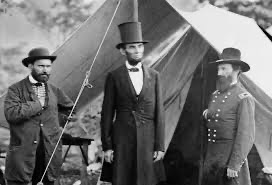
In 1860, Republican candidate Abraham Lincoln won the presidency, becoming America’s 16th President. That moment weighed with foreboding, as Southern States, one by one, chose to secede from the United States. The new President viewed this idea as impossible–statehood was not a revolving door. In his inaugural address. Lincoln spoke plainly, “In your hands, my dissatisfied fellow-countrymen, and not in mine, is the momentous issue of civil war.”

Then Lincoln, and the the rest of the nation watched and waited. On April 12, 1861 guns thundered from Charleston, South Carolina, smashing into Fort Sumter, a federal installation in the harbor.

Boom, done and done.

The Rebs drew first blood, and Lincoln, by default, seized the moral high ground. After a duration of four long, bloody years, the rebellion collapsed, and slavery ended.

Both the attack on Pearl Harbor in December 1941, and the terrorist attack on September 11, 2001, elevated America’s retaliation as morally justified, drawing the nation into both World War Two, and the War on Terror.

Everyone around the world is watching the Ukrainian people standing tall against a mystifying invasion by Russia. Ukrainian President Zelensky has brilliantly executed the lessons of Sun Tzu and von Clausewitz. His articulate, moral leadership, and courage has more than won the moral high ground test. In contrast, Vladimir Putin has proven his lack of preparation, and barbarity, assuring the Russian President an international pariah.

These principles are timeless and universal, not only in America, but in past conflicts like Thermopylae in the 5th Century, and the Warsaw Ghetto uprising in 1940.

Whether the Ukrainian President, is aware or not, he has benefitted from the teachings of Sun Tzu and von Clausewitz, and this is Ukraine’s finest hour.

The possession of high ground may decide a battle, war or the fate of a nation.

Carl von Clausewitz

Gail Chumbley is a history educator, and writer.

gailchumbley@chumbleg

Rebellions

The Republican Party emerged in 1854 as a voice for liberty, and of opportunity. Forged in sectional controversy, members dedicated themselves to one overriding priority, no slavery in America’s western territories. On that point the fledgling party stood firm.

A lawyer in Springfield, Abraham Lincoln, joined the growing party early concerned, as were others, with escalating tensions between the North and South.

In 1860, Lincoln threw his very tall hat into the ring, and declared his candidacy for President. Defying considerable odds, Lincoln prevailed over other, more prominent Republicans at the GOP Convention in Chicago. Lincoln grasped the nomination. 

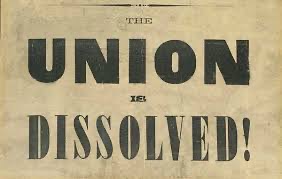
The South responded as one. If Lincoln won the Presidency, they would bolt the Union. He did win, and tried to reason with Southern States through his inaugural address. “In your hands, my dissatisfied fellow-countrymen, and not in mine, is the momentous issue of civil war.”

The sticking point of course, slavery. 

By the time Lincoln took the oath of office, eight Southern States had voted to secede from the Union. This president understood the fears of the South, and knew what drove the secessionists. He didn’t hate them, he did not want them punished. During the last year of the war Lincoln, in his second inaugural address gently offered an olive branch stating, “With malice toward none; with charity for all.”

Lincoln’s lasting legacy held that the Civil War meant more than reunification of the states. His  “new birth of freedom” implied a higher ideal, the turmoil meant something more honorable, and timeless: the cause of humanity. The Emancipation Proclamation came first, then the 13th Amendment, forever freeing those held in bondage. This president took no credit for prevailing over the Rebels, hoping only to heal the divisions that fueled the rage.

His martyrdom on April 15,1865 left the GOP imprinted with Lincoln’s goodness, modesty, and nobility. This first Republican President endured four years of national hell, and never forgot his mission.

Lincoln met the Rebellion, and vanquished it.

America today hears no soaring rhetoric from the GOP, nor elegant prose, only hate speech and bellyaching. The GOP has severed the cords of duty to country, replacing patriotic obligation with an unapologetic lust for power, and self interest. 

For four years the taxpayers have been fleeced, and minorities targeted, the kind of intolerance Lincoln abhorred. Long standing alliances were cast aside as a self-serving dunce cozied up to America’s enemies. The Republican members of Congress have forsaken their obligation to country first, pretending and excusing that all was normal in the turbulent White House. 

The greatest harm perpetrated by, and enabled by the current GOP, is the violent attack on the heart of our democracy: the United States Capitol on January 6, 2021.

The irony is rich. As the Republican Party grew from a rebellion, it will now perish from another.

Two Witnesses

“I began to think that all was not right. He said that with two hundred men he could drive congress, with the president at its head, into the river Potomac, . . .and he said with five hundred men he could take possession of New York….”

Colonel John Morgan, written testimony, 1807, the Burr Conspiracy

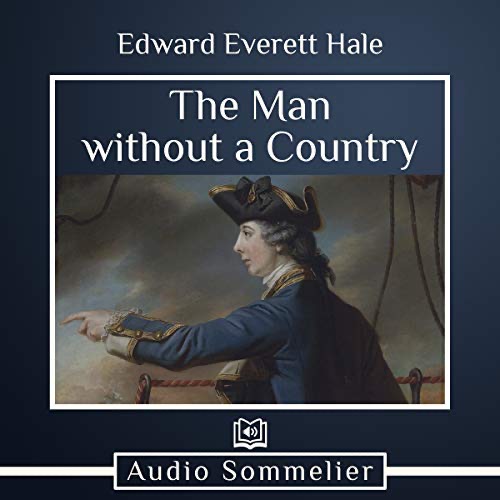
In grade school we watched a film titled, “The Man Without A Country.” Taken from a story by Edward Everett Hale, the tale tells of an American soldier named Philip Nolan. Nolan, a fictitious character had been arrested as a conspirator in a scheme to seize a chunk of the Louisiana Purchase and secede from the Union. At his trial an angry Nolan pitched a fit and shouted “Damn the United States! I wish I may never hear of the United States again!”

The presiding judge agreed with Nolan’s outburst and sentenced him to never hear of, nor set foot in the United States again. Serving his time, Nolan spends the rest of his days transferred from one Naval vessel to another, never permitted to see the shoreline again. By the end of this sad tale, Nolan grieves his error, and Hale has him express his regrets, and the majesty of our democracy.

Though just a little kid, that film struck me as a nightmare, a true horror story. (I was a history-geek before I knew I was a history-geek). The sadness remains with me now.

Hale set his patriotic tale against an actual event, the Burr Conspiracy, (1805-1807). Aaron Burr, Thomas Jefferson’s rival and Vice President had killed Alexander Hamilton in 1804, and resigned as Vice President in 1805. Heading west beyond the Appalachians, Burr allegedly hatched a plot to capture a southern piece of the Louisiana Purchase, and Mexican Texas. It was said Burr planned to install himself as a sovereign of a new nation, with New Orleans as his capital. A co-conspirator, General James Wilkinson, turned on Burr, and spilled the beans to President Jefferson. The outraged President promptly dispatched soldiers to apprehend Colonel Burr.

In a Virginia court Burr was indicted for treason, and soon put on trial in Richmond. The Judge, Chief Justice John Marshall presided. 

Burr remained serene throughout the trial, and denied the charges against him. Jefferson, meanwhile breathed fire, demanding Justice Marshall convict. Marshall, a brilliant student of American Law, subpoenaed the President to testify, and that pissed off Jefferson even more. 

In a letter to the court Jefferson insisted British Common Law sufficed for conviction. That advice would place Burr in the vicinity of a seditious act, and lead to a quick guilty verdict. Marshall, however, relied on the recent Constitutional definition.

Article III, Section 3, Clause 1,

Treason against the United States, shall consist only in levying War against them, or in adhering to the Enemies, giving them Aid and Comfort. No Person shall be convicted of Treason unless on the testimony of two Witnesses to the same overt Act, or on Confession in open Court.

At the end of this saga Burr was acquitted, Jefferson’s opinion irrelevant to US Law. Without fear nor favor Marshall abided by the Constitution. Lacking eyewitness testimony to the act, Burr walked. Neither Wilkinson’s nor Colonel Morgan’s letters proved relevant.

This case, complicated, and circumstantial, tested the new Constitution, and the Constitution prevailed. Fictitious Nolan should perhaps have held his temper in check, but then there wouldn’t be a story.

For MAGA insurrectionists, inculpatory evidence is stacking up. We all  bore  witness to the ransacking of the Capitol, and the rest of the plot is coming to light. Archival documents, emails, phone conversations, sticky notes, fake electoral papers, and incompetent lawyers litter the January 6 landscape. 

This time, under the language of Article III, there is no doubt of treason. 

As Philip Nolan lay dying aboard a Navy vessel, he tells his comforter “Here, you see, I have a country!” A map of the United States is pinned to a wall at the foot of his bed. Nolan begs his visitor to draw in new states admitted since his long ago trial. A tragic yarn of regret to be sure.

In the end Aaron Burr faded into the fog of time. Due to a certain Broadway musical he has resurfaced. Did Burr engaged in treason? We’ll never know for certain. That he faded is important. America is more resilient than any one of us.

Though Philip Nolan is a character of fiction, and Burr an enduring mystery, the January 6th hoard will not fade. You aided another would-be tyrant, and you failed. Like Pearl Harbor, and 911, your treason will live in infamy, to borrow a phrase. 

Gail Chumbley is the author of the two-part memoir, “River of January,” and “River of January: Figure Eight. Both titles are available on Kindle. Chumbley has also penned two plays, “Clay,” regarding the life of Senator Henry Clay, and “Wolf By The Ears” a look at American slavery and it beginnings.

chumbleg.blog
Redundant

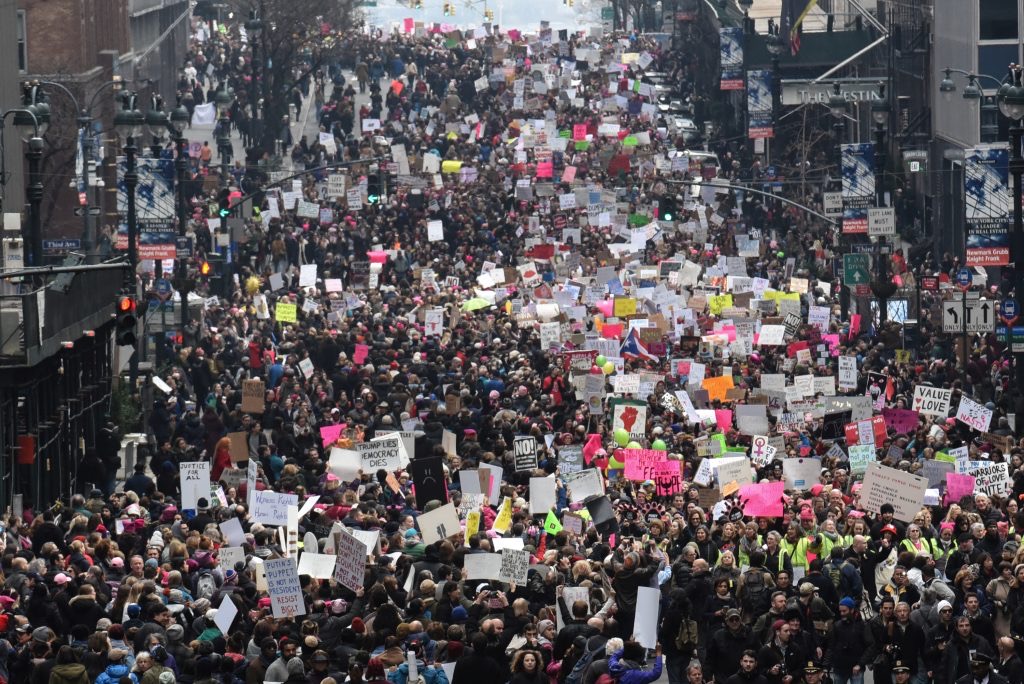
The last five years bear proof that voting is a precious right, made real through two centuries of courage, and bloody violence. The extension of the vote, the collective voice of our political will, did not expand without difficulty or sacrifice. 

In the early days of the Republic, the founders struggled to strike a balance between their own political interests, and those of the public. The founders considered citizens as too mercurial, too easily swayed, to be trusted with the vote. Only men of standing, knowledge, and property were qualified to cast ballots.

As populations moved westward, new states allowed all white males voting rights. Making use of “poll taxes,” farmers and tradesmen paid a fee to participate in elections. The money indicated that the voter had some means, and a stake in the community. Still, voting at that time was a boisterous affair, as men publicly announced their choices to officials. That practice, combined with hard liquor guaranteed election day ended with a bloody fight or two.

Political machines, like New York’s Tammany Hall, lined up voters like soldiers each election day. Bosses such as William Marcy “Boss” Tweed maintained power manipulating elections like clockwork, assuring outcomes before the votes were ever counted.

Women labored long and fruitlessly for the vote. Seeking rights of citizenship, women wanted not only the franchise, but the equal legal standing before the law. The forces of inertia and sexism held fast, believing ladies must stay home where they “belonged.” Politics was seen as too complex an issue for the female brain, as they were smaller, (I kid you not). More custom than written law, the practice of “coverture” considered the call for women’s suffrage as redundant. Women, as dependents, like their children, were legally “covered” by their husbands’ vote. He, as head of the family voted for the entire household.

Not until 1919, after a century of ridicule and abuse, did women earn the right to vote. And even then just barely. Once the 19th Amendment reached the Tennessee legislature for ratification, the bill passed by a single representative’s vote, making the state the 36th and last state to approve.

The path to black suffrage provides the most perilous story. Considered property in antebellum America, branded 3/5’s of a human being in the Constitution, these people faced impossible hurdles after the Civil War. While Union soldiers remained in the South as occupiers, black men voted, per the 13th, 14th, and 15th Amendments. However, once the blue coats with their bayonets left, that moment of possibilities passed.

Black codes, a carryover from pre-war slave codes, and violence at the hands of homegrown terrorist (KKK, and the Knights of the White Camelia), a black man risked his life attempting to cast a ballot. After 1876, marking the end of Reconstruction, Southern society returned to “normal” with blacks clutching the lowest rung.

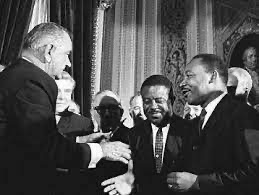
It took a World War to breathe life into the Civil Rights Movement. Even then white resistance pushed back against the movement. Through the courts, the NAACP argued that case law favored black suffrage. Falling back on the 14th and 15th Amendments, attorneys like Thurgood Marshall jousted against white supremacy at all levels of society. In 1964, Freedom Summer introduced a massive voter registration drive, garnering enough leverage to pass the 1965 Voting Rights Act.

Old school Redeemers, like today’s Senator Mitch McConnell watched and waited to gut the law after the election of President Obama. McConnell argued with a black president, no need remained for the ’65 Act.

So where does that leave black and brown Americans today? Outraged. States, largely in the South are once again purging black voters from precinct rosters. Why? Because white supremacists in the South still feel they must suppress those voters to maintain white power.

Now that is redundant.

Gail Chumbley is the author of “River of January,” and “River of January: Figure Eight.” Both titles are available on Kindle. Chumbley also penned two history plays, “Clay” and “Wolf By The Ears.”

gailchumbley@gmail.com

Jenkins Hill

For teachers who are poor, but like to travel, nothing is better than hosting student tours. Truth is these trips are a lot of fun. Really. The kids make it fun. I led a number of tours over the years and still hold wonderful memories of the historic sites, our numerous guides, the bus drivers, my students, and the bustling itineraries that delivered us everywhere.

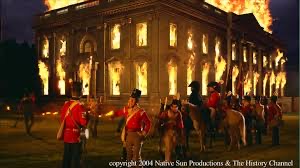
Out of the classroom, and away from home, students encountered much of what we had covered in history class, up close. On one stop at the US Capitol a guide opened a small door off a corridor revealing a narrow, circular stairway. Bygone soot and some damage remained down that steep passage, evidence of the War of 1812, when invading Brits set fire to the building. Our docent elaborated. A redcoat on horseback had urged his horse up those cramped stairs, only to be shot by American defenders waiting at the top. That anecdote caused a bit of a stir, as we all absorbed the horror.

Peeking into the Old Senate chamber, (much smaller than today’s grand affair) prompted another story of another clash, from another era. In this original legislative hall Massachusetts Senator, Charles Sumner had suffered a severe beating at the hands of a furious South Carolina Congressman. At issue, the fiery debate over the spread of slavery.

Bus drivers sometimes got into act, and added a few gems of their own. Before leaving the Capitol, he grabbed the microphone and shared a story.

George Washington had been inaugurated as America’s first president in New York City. But a site for a permanent national capitol had been selected. And it was President Washington, himself who laid the first cornerstone for the structure on a rise called Jenkins Hill. Why, the driver asked, did Washington turn the first spade, and set that brick of sandstone? Of course we all thought the honor went to Washington as the President. Wrong.

The President had been asked to set the stone, because he was a stone mason.

Who’d a thought!

On the bus we loudly debriefed, the chatter sounding much like gossiping about Justin Bieber, or the Kardashians. The narrative may have been a century or two old, but still very much alive–resurrected by students in the Twenty-first Century.

There are many such stories of American school kids touching our collective past, and many adults who made that happen. Somehow we all came away better people. Perhaps we’re all reminded we are part of a much bigger picture, and we all fit somewhere within the frame.

On January 6, 2021, Americans across the nation watched domestic terrorists violate the inner sanctum of democracy. I wondered what thoughts crossed the minds of those same former students to witness this tarnishing of democratic majesty.

Not everyone can afford to send their kids on trips like these. I couldn’t. But understand this, every public school in the country teaches American History. The public must understand this story tells of a unique nation, and democracy grows fragile when ignorance rules the times.

Gail Chumbley is the author of the two-part memoir “River of January,” and “River of January: Figure Eight.” Both titles are available on Kindle. Chumbley has written two historic plays, “Clay,” “Wolf By The Ears,” and “Peer Review.”

Inheritance

Harry Truman understood the gravity of his duty right off. When FDR died in April, 1945, the newly installed Vice President got the word he was now president. And what a Herculean task he had before him. A world war to end, conferences abroad, shaping a new post-war world, and grappling with the human rights horrors in both Europe and in the Pacific. Add to all of that, he alone could order use of the newly completed Atomic Bomb.

On his White House desk, President Truman placed a sign, “The Buck Stops Here.” With that mission statement Harry Truman stepped up to his responsibilities despite the formidable challenges he faced.

Did Truman inherit the worst set of circumstances of any new president? Maybe? But it is open to debate.

America’s fourth President, James Madison, found himself  in one god-awful mess. His predecessor, Thomas Jefferson had tanked the US economy by closing American ports to all English and French trade. Those two powerful rivals had been at war a long time, and made a practice of interfering with America’s neutrality and transatlantic shipping. Despite Jefferson’s actions the issue of seizing US ships and kidnapping sailors never stopped. By 1812 President Madison asked for a declaration of war against England that, in the end accomplished nothing but a burned out White House and defaced Capitol.

Following the lackluster administrations of Franklin Pierce, then James Buchanan, Abraham Lincoln stepped into a firestorm of crisis. Divisions over the institution of slavery had reached critical mass, and Lincoln’s election was enough for Southern States to cut ties with the North. So hated was Lincoln, that his name did not appear on the ballot below the Mason-Dixon. And the fiery trial of war commenced.

The Election of 1932 became a referendum on Herbert Hoover, and the Republican presidents who had served since 1920. Poor Hoover happened to be in the White House when the economic music stopped, and the economy bottomed out. And that was that for Hoover. His name remained a pejorative until his death. 

Franklin Roosevelt prevailed that 1932 election, in fact won in a landslide victory. Somehow Roosevelt maintained his confident smile though he, too, faced one hell of a national disaster. 

In his inaugural address the new President reassured the public saying fear was all we had to fear. FDR then ordered a banking “holiday,” coating the dismal reality of bank failures in less menacing terms-a holiday. From his first hundred days the new President directed a bewildered Congress to approve his “New Deal.” 

The coming of the Second World War shifted domestic policies to foreign threats as the world fell into autocratic disarray. FDR shifted his attention to the coming war. When President Roosevelt died suddenly, poor Harry Truman was in the hot seat. But that is where I want to end the history lesson.

If any new President has had a disaster to confront, it is Joe Biden. Without fanfare or showboating Biden, too, has stepped up to the difficulties testing our nation. 

Much like Truman and Lincoln before, 46 is grappling with a world in chaos, and a divided people at home. In another ironic twist, like Madison, Biden witnessed, a second violent desecration of the US Capitol.

To his credit, though his predecessor left a long trail of rubble, Biden understands the traditional role of Chief Executive, while clearly many Americans have forgotten, or worse, rejected. Biden is addressing the issues testing our country, not only for those who elected him, but those who did not. An American President can do no less.

Gail Chumbley is the author of the two-part memoir “River of January,” and “River of January: Figure Eight.” Both titles are available on Kindle. She has completed her second play, “Wolf By The Ears.”

gailchumbley@gmail.com

Custodians of Now

Gratitude underpins America’s oldest quasi-secular holiday,Thanksgiving. In the 21st Century it is rather easy to scoff at a quaint observance that predates the founding of the country, and today’s America is a bit too cynical, busy, and self involved for meaningful reflection.

Separatists in 1621 Plymouth had risked all to worship freely in the New World. Suffering starvation and disease, the Mayflower survivors managed a successful harvest with the essential aid of local Natives. In an outpouring of gratitude the newcomers organized a potluck of sorts, and invited their benefactors to pause, count their blessings, savoring both the moment and the food.

General Washington announced a day of Thanksgiving after the fortuitous American victory over the British at Saratoga, and again after the Constitutional Convention in 1787. Moments of mutual gratitude implied a common bond, and an acknowledgment of common sacrifice. 

Later, in 1863, America, once again, faced a crisis of unity.

A grisly Civil War had raged for two years, when emboldened Confederate forces crossed north into Pennsylvania. Soldiers of the Blue and the Gray clashed at the crossroads town of Gettysburg. After a three-day struggle, the tide shifted in favor of the Union, and soon after Confederate troops retreated back into Virginia.

In the aftermath, President Lincoln delivered his Gettysburg Address, and shortly after called for a national day of Thanksgiving. Lincoln set aside Thursday, November 26th for the observance, calling for contemplation and gratitude. Later, in the aftermath of the Pearl Harbor attack, President Franklin Roosevelt signed into law a permanent observance of Thanksgiving to the fourth Thursday of November. 

Aside from roasted turkey, televised parades, football, relatives, and tryptophan-induced naps, this day is meant for reflection; a national respite from other distractions. As Americans we remember those who struggled through their American moment, and refresh our personal obligation to our communities, and to our nation. 

Whatever spirit guides our personal devotion, on this day we place ourselves second to something much greater-the United States of America. We recommit to our highest aspirations as a fortunate and free people; a people who respect what came before, and resolve to protect our democracy for the future.

This Thursday remember we are the custodians of now, and unity is not easy with such diverse and noisy citizens. Still the responsibility remains, carried forward from earlier generations. We Americans have an obligation to nurture solidarity over discord, amity over selfishness. 

All Americans can resolve to preserve this hard-won gift of democracy to those not yet born.   

Gail Chumbley is the author of the two-part memoir, “River of January,” and “River of January: Figure Eight.” Both titles are available on Kindle. She has also completed the play, “Wolf By The Ears,” a historic look on the advent of American Slavery.

gailchumbley@gmail.com

Insulting The Past

The first time a parent challenged my teaching in history class, took place my first year. The topic concerned the creation of the Constitution, and the era of the Early Republic. I introduced the three branches, and separation of powers, census, representation, and that type of basic information. Definitely the bare bones of Civics.

During that lesson I explained how Electors were determined, and role the Electoral College played in choosing the president. End of lesson. The following day the topic moved to ratification and the addition of the Bill of Rights. From out of nowhere a hand shot up, and an upset student blurted, “My dad says you’re a liar!”

Yep, a liar. 

That was my baptism into the sliding scale of historic facts, and that initial chill of suppression stopped me in my tracks. Following that episode, censorship never strayed far from my thoughts. It was the beginning of a caution that lasted the whole of my career.

Fast forward 30 years in history education, when a similar event repeated.

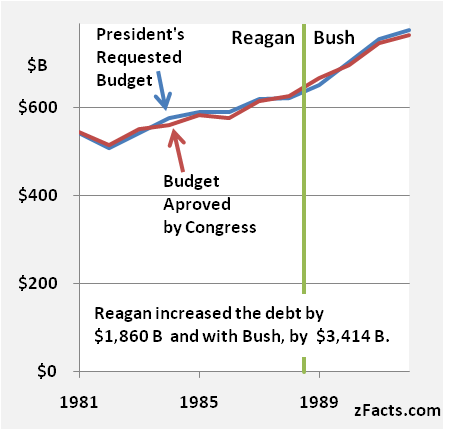
The topic this time concerned the Reagan Revolution, and the events surrounding those years. 

Students learned about the Evil Empire, “Mr. Gorbachev, Tear Down This Wall,” Perestroika, Glasnost, Reaganomics, Laffer Curve, Trickle Down, etc . . .

Foreign policy topics covered Central America and the Middle East, particularly Nicaragua and Iran. Reagan officials were selling weapons to America’s enemy Iran, using the funds to put down a Marxist insurgency in Nicaragua. A privatized foreign policy if you will.

The calls came the following day. “How could I teach such nonsense in a public school! My student came home and shared her notes, textbook and graphs. This is not right, Ronald Reagan is the beloved champion of conservatism!”

The principal called me in and wanted to know what caused the dust-up. Flustered, I didn’t know where to start. Quickly I explained the general outline of the unit, and, well, he didn’t have the time to listen to the details. And he shouldn’t have. He hired me to do that job.

The episode sort of blew over, though that parent did call me at home a number of times over that summer. Weird behavior for sure, like the dad couldn’t let it go. 

For me the matter became philosophical; either educators prepare kids for the path, or parents attempt to manipulate that path for their kids.

Touchy parents revising America’s story to force their current politics on schools does nothing less than highjack education. Talented people leave the classroom endangering the US’s most essential institution. Worse, the exertions and sacrifice of those who came before, are papered over to suit today’s furor.

America’s lifeblood is our shared story, it’s what defines us as a distinct people. We must understand those central principles from our past to move forward as a healthy nation.

To those students whose parents challenged the historic record, it’s unfortunate they cannot let go just a little, and trust public education. This is our kids birthright.

And know this-I wasn’t lying.

Gail Chumbley is the author of the two-part memoir, “River of January,” and “River of January: Figure Eight.” Both titles are available on Kindle. Chumbley has also written three stage plays, “Clay,” regarding the life of Senator Henry Clay, “Wolf By The Ears,” an exploration into American slavery, and Peer Review where 47 meets four earlier presidents.

The Forgotten Cause

In 1938, old men aided by young volunteers shuffled off of trains and cars arriving from both sides of the Mason-Dixon Line. For the most part these gents were in their early 90’s, and looked forward to reminiscing, comradeship, and scheduled ceremonies.

Organizers had planned three full days of tours, music, and ceremony, complete with a flyover and fireworks. The Battle of Gettysburg’s 75th commemoration had begun.

There had been an earlier anniversary event, in 1913, but this time visitors knew this gathering would be the last. Those in attendance understood, as did the elderly guests of honor, that those who hadn’t fallen on that Pennsylvania battlefield in 1863, would soon join the brethren who had. 

After this commemoration, the narrative would pass from eye witness accounts into America’s collective memory.  

No longer wielding rifles, many maneuvered the grounds pushed about in wheel chairs, walkers, and canes. Old men brandished ear trumpets to catch the orations of the many visiting dignitaries. The men listened as President Franklin Roosevelt delivered remarks dedicating the Eternal Light Memorial, located near the “Bloody Angle.” Battlefield tours transported veterans, and well-wishers from Cemetery Hill, to Seminary Ridge, Little Round Top, the Devils Den, and finally the exposed fields of Picketts Charge.

There, at the stone fence, gray old men in blue, and others in gray and butternut, shook hands in reconciliation.

Ironically, left uninvited were the scores of African Americans who had harbored such hope for new lives after emancipation and the war’s end. Unfortunately, the era of Reconstruction left little to show for racial progress or Civil Rights. Instead Freedmen found a new enslavement, recognizable in every aspect, but iron chains.

Forty Acres and a Mule had never materialized, as promised by victorious Union commanders. Now relegated to tenant farming, Freedmen struggled in the same conditions as before, but now as sharecroppers. Stuck in a never-ending cycle of poverty, black farmers found insufficient harvests debited into the next season, and then the next, in an endless cycle of debt.

The Supreme Court’s 1896 ruling in Plessy V Ferguson legalized segregation by insisting any negative correlation attached to feelings of inferiority lived only in the minds of Blacks. Separate water fountains, parks, transportation, and schools worked just fine for the elderly veterans from the North and South.

The moral force of the Civil War had died as thoroughly as the nearly 7 million who had perished upon the scattered battlefields of that bloody conflict. Those veterans who reunited in 1938 Pennsylvania found white identity and brotherhood far outweighed any new birth of freedom envisioned by President Lincoln 75 years earlier.

The current occupant of the White House has made it his mission to once again assert white supremacy in an effort to rewrite American history. His feelings had been hurt by our first black President and now he seeks revenge. Of course this foolish attempt will fail, as is his custom in all things, because we know the truth of equality and this time will never forget.

Gail Chumbley is the author of the two-part memoir “River of January,” and “River of January: Figure Eight.” Both titles available on Kindle. Ms Chumbley recently completed her second stage play, “Wolf By The Ears.”

gailchumbley@gmail.com

The More They Stay The Same

This poem surfaced after the end of the Civil War. The sentiment speaks for itself. Despite the passage of time, America is again dealing with those who still cling to grievances held for nearly a century and a half.

(*Note The Freedman’s Bureau was a government agency that aided newly freed people of color. **Pardons were granted to those who swore an oath of loyalty to the Union after the war.)

The past is rather instructive, as we find ourselves still dealing with the same raw hate.

Play the link at the bottom of this post, and follow along with the words.

O I’m a good old rebel,
Now that’s just what I am.
For this “fair land of freedom”
I do not care a damn.
I’m glad I fit against it,
I only wish we’d won,
And I don’t want no pardon
For anything I done.

I hates the Constitution,
This great republic too,
I hates the Freedmans’ Buro,
In uniforms of blue.
I hates the nasty eagle,
With all his braggs and fuss,
The lyin’ thievin’ Yankees,
I hates ’em wuss and wuss.

I hates the Yankees nation
And everything they do,
I hates the Declaration,
Of Independence, too.
I hates the glorious Union-
‘Tis dripping with our blood-
I hates their striped banner,
I fit it all I could

I rode with Robert E. Lee,
For three year near about,
Got wounded in four places
And starved at Point Lookout
I caught the rheumatism
A campin’ in the snow,
But I killed a chance o’Yankees
I’d like to kill some mo’.

Three hundred thousand Yankees
Is still in Southern dust,
We got three hundred thousand
Before they conquered us.
They died of Southern fever
And Southern steel and shot,
I wish they was three million
Instead of what we got.

I can’t take up my musket
And fight ’em now no more,
But I ain’t going to love ’em,
Now that is sarten sure,
And I don’t want no pardon
For what I was and am.
I won’t be reconstructed,
And I don’t care a damn.

Gail Chumbley is the author of the two-part memoir, “River of January,” and “River of January: Figure Eight.” Both titles are available on Kindle. Gail also has penned “Wolf By The Ears,” a play in two acts.

gailchumbley@gmail.com