Life Experience

I present history talks here and there, most recently focused on American presidents. The thesis for these programs looks at how each brought their life experiences to the presidency. For George Washington, a man who did his duty, for Andrew Jackson, his iron will, Abraham Lincoln’s push for opportunity, and Theodore Roosevelt’s sense of purpose.

This analysis rests on the old Hamilton/Jefferson dichotomy, particularly views on the proper size of government. Washington supported the supremacy of federal power, crushing the 1794 Whiskey Rebels by force, in Western Pennsylvania. Jackson had an inconsistent record on federal power. He was tough on South Carolina’s refusal to collect a new tariff, threatening to send in the military, as well. Oddly, at the same time, Jackson, without a blush, sided with the state of Georgia in removing the Cherokee and other indigenous people west. Lincoln embraced the Union, waging war, over allowing to let the government fail. Last, Theodore Roosevelt grew the size of government, and placed the federal government as the defender of righting wrongs. Set aside were National Parks, tracts of wilderness and game preserves. TR, protected America’s natural beauty for American’s for all time. Not to forget consumer protections in food and medicine.

For now, I haven’t gone beyond those four individuals, but with that premise as a guide, how do 20th, and 21st Century presidencies stand up to analysis?

Like Washington, Dwight D Eisenhower too, operated from a deep sense of duty. One of seven sons, Ike sought and received an appointment to West Point. A man of conviction, Dwight Eisenhower, as President, sent 101st Airborne to Little Rock, Arkansas to desegregate Central High School. Though not a progressive when it came to civil rights, he still enforced the law. And as a side note, Ike promoted the Federal Aid Highway Act of 1956, creating America’s first interstate freeways system. This piece of legislation came about from Ike’s early days in the army. In 1919, Lieutenant Colonel Eisenhower commanded a cross-country convoy of Army vehicles, Atlantic to Pacific, spending more time pushing rigs out of the mud than making forward progress. A lesson he never forgot.

A child of affluence, John F. Kennedy had to overcome considerable health problems and the expectations of his prominent father. Like Theodore Roosevelt, or Franklin Roosevelt, for that matter, Kennedy spent a lot of his youth ill, and hospitalized. Besides, “Jack” wasn’t meant to be the presidential nominee from the Kennedy clan, it had been his older brother, Joe Jr., his father’s first choice. Sadly Joe Jr. perished in a secret mission when his aircraft exploded over England in 1944. JFK, too, had nearly lost his life in the South Pacific, but survived, inheriting his father’s ambition.

After a brief stint in the Senate, Kennedy faced off against Richard M. Nixon for the White House. Prevailing in the 1960 contest, with his father’s sponsorship, JFK entered office and soon faced down Soviet aggression. This young president weathered a thirteen-day crisis when the Russians were detected building IRBM missile sites in Cuba. The Kennedy Administration successfully negotiated a stand down to Soviet aggression. This President, despite his medical ailments, and injured spine (from the war) most certainly fulfilled his father’s purpose.

As had Lincoln before, Bill Clinton and Barack Obama promoted opportunity. Both men rose from modest beginnings, and possessed keen minds. Clinton had been a Rhodes Scholar, and Obama a constitutional lawyer. Both men pushed for public health insurance, and the Dreamers Act protected children of Mexican nationals providing opportunity for education. Clinton was the first president to address the plight of LGBTQA in the military, (the first chief executive to utter those words). 

And not to be forgotten, opportunity was heavily woven into LBJ’s Great Society objectives.

As for Jimmy Carter, duty seemed to shape his administration. After Nixon’s scandals, and Gerald Ford’s presidential pardon, prospects dimmed in 1976 for the GOP. As president, Carter labored long to warn Americans about dependence on fossil fuels, appearing on television to discuss America’s malaise. However, the country had no interest in belt tightening, and Carter found himself replaced by Ronald Reagan. 

Reagan, HW Bush, and George W Bush are interesting commanders-in-chief. All three were nice, decent men, as well as patriots. A Navy man, Bush senior flew in the Pacific in WWII. Young Bush showed leadership in the aftermath of 911. However, in comparison to the four presidents in my programs these gentlemen aren’t as easy to label. The three were financed by large-monied interests, oil producers, and powerful lobbyist to lift regulations on business. In an interesting side note, Reagan’s own favorite president had been the 30th, Calvin Coolidge. Silent Cal once stated, “The business of America is business,” and Reagan felt the same. 

Each individual brought a unique imprint on the presidency. Extending federal power, or paring down central control. Life experiences shaped the character of each administration. Current President, Joe Biden looks out for middle and working class Americans, as he was raised in that community. Biden, looking out for the rest of us pushed the infrastructure bill and succeeded in lowering health care and drug costs for all Americans.

The last guy made it his duty, purpose, will, and opportunity, as cover for lining his own pockets and launch a coup against America.

Just saying.

Gail Chumbley is the author of the two-part memoir, River of January, and River of January: Figure Eight. Chumbley has also penned two plays “Clay,” concerning the life of Statesman, Henry Clay, and “Wolf By The Ears” an examination of racism and slavery in America.
Splendid Little War

1374687_orig.jpg

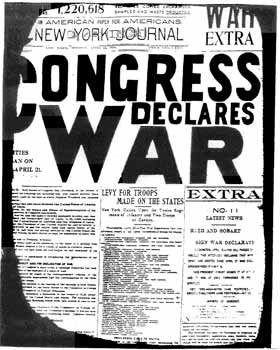
Precise beginnings to recognizable endings, that is how American wars are recorded and remembered. ‘The Shot Heard Round the World’ to Yorktown, Fort Sumter to Appomattox, Pearl Harbor to Hiroshima; all in sequential order from the opening salvos, to the tense calm of ceasefire. And this arrangement has worked well for classrooms, historical fiction, television documentaries, and films. Still this approach has its limits, failing to consider the intricate causes, and lingering effects that set the stage for the next war. Here is an example from the past that isn’t commonly recalled—The Spanish American War (1898).

The island of Cuba blazed in revolt. Throughout the 1890’s local freedom fighters, including Jose Marti and Maximo Gomez, struggled to end 400 years of Spanish conquest. Alleging atrocities at the hands of their colonial oppressors, of burning villages and starving civilians, rebels monopolized banner headlines across America. Enterprising publishers Joseph Pulitzer and William Randolph Hearst mobilized their own forces, dispatching droves of journalists to the war-torn island.

Reporters soon filed embellished, sensationalized stories, and circulation quickly boomed. Hearst illustrator, Frederick Remington sailed to Havana, promptly cabling his boss that he had found no war. Hearst famously, and cynically countered, “you furnish the pictures, I’ll provide the war.”

The resulting flood of salacious, skewed features gave birth to the “Yellow Press,” of tabloid journalism. Facts didn’t trouble these news editors, they were too busy raking in profits. American newspaperman also found assistance in the Cuban rebels themselves. Ensuring that America would intervene in the struggle, Cuban insurgents torched acres and acres of American-owned cane fields. Absentee-American sugar planters, losing revenues, railed for war, accosting McKinley to act. 

As the last US President to have experienced battle, William McKinley hesitated to draw America into another armed conflict. But, in the face of fiery Cuba, the pressure grew fierce. Jingoists like Theodore Roosevelt, impatient to flex American muscle, demanded immediate action.

Still McKinley hesitated, understanding, what the young could not. A veteran of the Civil War, the President grasped the real cost of war, measured in blood, treasure, and humanity. Nonetheless, following the sinking of the US gunboat “Maine,” moored in Havana harbor, the President relented, and the Spanish American War began.

In the years that followed, the President’s worst fears were more than realized.

Characterized as a “Splendid Little War,” this conflict, contested at the dawn of the 20th Century, reaped endless bounty for mainland business interests.

The US annexed: Puerto Rico in the Caribbean, Guam, and the Philippine Islands in the Pacific.

To many, this step into world affairs proved worth every penny and every drop of American blood. The pace of American factories to produce goods far outstripped domestic consumption. Overseas markets quickly absorbed stockpiled goods, and in turn secured further demand. Besides, it was argued at the time, if America didn’t move quickly Great Britain, Russia, Japan, or France would gladly take over.

However, expansionist quickly faced an unexpected moral and legal dilemma. Were the native people living in these newly-American owned possessions protected by Constitutional law? Should the US government follow mainland custom, and promise eventual statehood for these far flung islands? Prior Indian policy provided no guideline, as islanders were in the majority, not residing in small, isolated pockets. 

The Supreme Court soon obliged and settled this legal predicament. In a series of Court opinions beginning in 1901, the Insular Cases established a principle that despite America’s authority over island people, they could expect no civil protections. Essentially the Court ruled that “Rights don’t Follow the Flag.” 

In the aftermath, Pacific and Caribbean islands became US territories, but Cuba did not. After ‘liberating’ the island from Spain, decorum prevented an out and out American takeover. Still, the embattled island could not be set free–too much had been expended in the conflict, and Cuba was too valuable.

In 1898 the Teller Amendment established a US military installation at Guantanamo Bay, followed in 1901 with the Platt Amendment, authorizing extended American control of Cuban affairs.

In the far Pacific, the McKinley administration opted to annex the Philippine Islands, rather than granting Filipino independence. This decision backfired triggering a bloody, colonial uprising. American Marines hunted resolute guerrilla insurgents in sweltering Filipino jungles; both sides perpetrating horrific atrocities (six decades before a similar war in Vietnam). American businessmen had designs on nearby China, and the Philippines offered deep natural harbors for passing American Vessels. 

The US soon plunged into a world-wide race to carve up China. American business and political interests demanded an equal share of the Open Door to Chinese markets. By 1899 this multi national intrusion exploded into another bloody revolt, the Boxer Rebellion.

Young Chinese outraged by foreign exploitation; the trade in opium, the depletion of gold to pay for the opium, opium addiction, and western missionaries insisting on ‘saving’ the Chinese became too much. In the three year struggle 100,000 perished, foreign and Chinese.

In the end, there is no end. The hunger for colonies quickened into a global frenzy. An international arms race ensued, navies competing to outstrip their rivals for dominance. Countries with few colonies jumped into the fray scooping up whatever low fruit remained. Germany, Austro-Hungary, and Italy, relatively late on the imperial scene, headed into the Balkans and to Africa.

By 1914 the strain of fierce rivalry reached critical mass, engulfing first Europe, and then America into the horror of the First World War.

Beginnings and ends work in placing historic events, but with war there is only an endless sweeping pendulum.

Gail Chumbley is the author of the two part memoir, River of January and River of January: Figure Eight. Available at http://www.river-of-january.com and on Kindle.