The Business of America

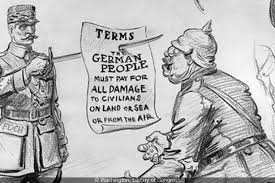
President Calvin Coolidge once famously proclaimed “The business of America is business,” which meant his administration would pursue a “hands off” approach toward the business sector over the interests of the American people. In office from 1923 to 1929 President Coolidge kept to his pro-business principles that, in turn charged the roar into the Roaring Twenties.

By the end of October 1929, six months into the new Hoover Administration, Coolidge’s lax policies came due dropping the Dow Jones Industrial into free fall. This financial catastrophe capped off a decade of easy money made through frenzied and unregulated trades, not only by wealthy holders, but by regular folks taking stock tips from friends or newspapers.

A large portion of these everyday newbies purchased shares “on-margin,” meaning 10% down with 90% on credit, usually borrowed from private banks. The only collateral required was the promise of certain and endless gains. And why not? The market had grown at an astounding rate from $27 billion in the mid-1920’s to $87 billion by 1929. 

Coolidge’s free-market detachment produced a carnival atmosphere with everyday people hot in the market game.

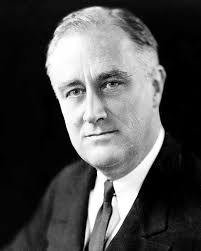
By 1932 the party was over. The now suffering nation had had enough of hands off and predatory money practices. Massive unemployment, thousands of bank failures, hunger, homelessness, and a Dust Bowl in the heartland brought America to its knees, and Democrat Franklin Delano Roosevelt to the White House.

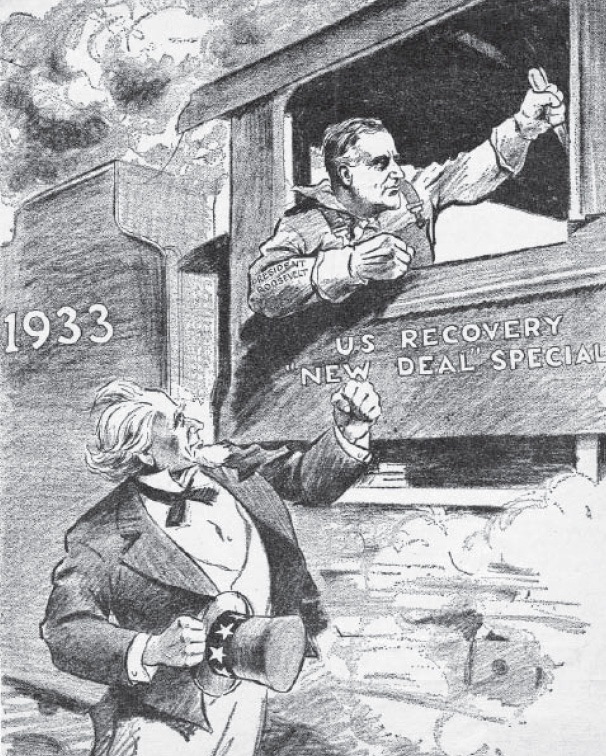
Seeing nothing beneficial for the American people in catering only to the rich, FDR brought an end to GOP policies. His administration instead offered a New Deal for economic revival. Through a massive legislative agenda Roosevelt and Congress intended to not only meet the emergency, but restore economic growth, and eliminate the conduct that led to the Depression in the first place.

One of the most popular New Deal relief programs was the Civilian Conservation Corps. Unemployed young men were put to work throughout the nation building trails and campsites in forests like the Great Smokey Mountain National Park, and urban building projects like the River Walk in San Antonio, Texas. (Consider that idle young men in Germany at the same time donned Black and Brown Shirts and broke heads for Hitler.)

Addressing the chaotic banking system FDR proposed systematic changes. Some 6000 banks had failed between 1930 and 1933 before the new president took office. Panicked depositors waited in long lines to demand their money until banks simply ran out of cash and locked their doors. Confidence collapsed. 

In his first days Mr Roosevelt announced a Bank Holiday where banks closed for four days to stop panic withdrawals. Auditors then inspected banking institutions across the country and surprisingly many banks were deemed solvent and reopened. Not finished with banking, FDR also took to the radio to explain the banking system, and with his cheerful confidence encouraged the public to take cash out of their mattresses, coffee cans, and backyard holes and return deposits to local banks. Thousands did just that. 

In order to prevent another such economic catastrophe the Glass-Steagall Act (1933), was passed by Congress to protect the public from high risk banking practices. One piece of the law was the Federal Deposit Insurance Corporation, FDIC, which is still in effect today. Depositors had the backing of the federal government to protect their funds from any loss. Moreover the Roosevelt Administration was determined to keep people in their homes, many of whom were facing foreclosure. The Home Owners Refinancing Act provided federal assistance to those who had paid their mortgages in good faith, but now faced eviction. 

In the first hundred days of Roosevelt’s New Deal 77 laws in total were passed by Congress, all aimed at restoring the health of the country. To the majority of Americans it felt like this president truly cared about their wellbeing. Roosevelt’s ascendency to the White House, next to Abraham Lincoln’s certainly stands as the most consequential in America’s continuing experiment in self government.

On a side note Franklin Roosevelt suffered from polio and could not walk, though he believed he’d walk again. FDR never gave up. And the truth of the matter is it took a man in a wheelchair to put the United States back on its feet. Franklin Roosevelt, unlike his predecessors knew that the business of America is “We The People.”

Gail Chumbley is a history educator, author, and playwright. Her work includes River of January, River of January: Figure Eight, both available on Kindle, plays Clay on the life of Senator Henry Clay, Wolf By The Ears a study of American slavery, and Peer Review where Donald Trump meets four past presidents.

If you like, please share this on social media.
An Open Letter To NBC

NBC News is my media outlet of choice. Integrity and journalistic excellence has made for my confidence in the network. Adding Rona McDaniel as a consultant runs counter to the very qualities that built the network.

By allowing a documented source of misinformation (lies) as a consultant, NBC legitimizes that position as valid. 

It is not.

Lincoln would not treat with the Confederates, nor FDR with Hitler. Do not permit Ms McDaniel a seat of legitimacy in a world dependent on facts.

I would encourage your anchor line-up to a work stoppage, and  I will change the channel.

Post script-This goes for DJT as well. During the campaign you covered him easily 3:1 over the VicePresident. Give us all a rest. Don’t sell out our democracy for ratings.

Gail Chumbley, Idaho

A Rendezvous

One central  philosophy guided my years of American history instruction. The story had to feel personal to each student, after all it is their country. For the unit on World War Two, I aimed to act as a bridge between my grandparents generation to the kids seated before me. While growing up, my grandparents played a large part in shaping my world view, as the old folks often shared their life experiences. Each had a unique tale on how they committed to fight totalitarianism abroad in the 1940’s, and defend democracy at home. 

All the following accounts involved inconvenience, sacrifice, and interruptions to family life. At that singular moment all they knew was to serve their country, and defeat foreign tyranny. 

A new dark age lay in America’s defeat.

This is Ray Turner, born in 1905 in Hammond, Illinois. This young man migrated west, joining family members in Northern Idaho. Ray soon found his way to Spokane, Washington, where he found work as a postal carrier. Stopping for lunch along his mail route he met a waitress in a downtown cafe, Ailene Peterson, a single mother of one, and after a while they fell in love. Marrying in the fall of 1941, the newly weds, while on a Sunday drive caught a breaking news bulletin on the car radio that the Japanese had attack on Pearl Harbor in Hawaii. Ray turned his automobile around, motored back to Spokane, and joined the Coast Guard the next morning. Stationed out of Willapa Bay in Tokeland, Washington, Ray and the crew of the USS Manzanita patrolled the extensive, rugged Pacific coastline of Washington and Oregon monitoring for Japanese vessels. And it was aboard the Manzanita that Ray remained until August,1945 when he mustered out of the service and returned to Spokane. After a life of grandkids, holidays, and fun on his lake property, he retired from the US Postal Service, passing away in 1974.

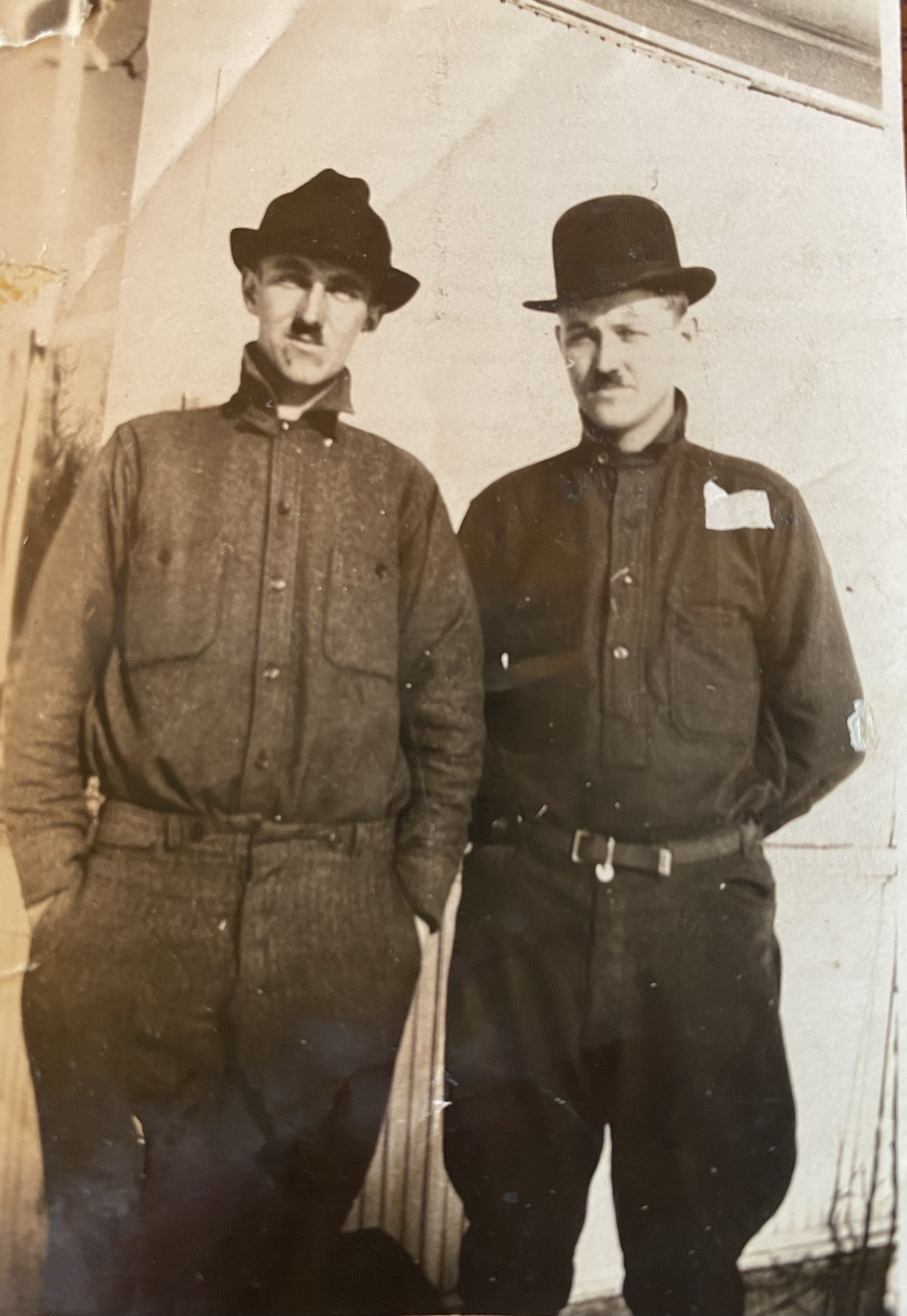
Kurtz Olson hailed from Wing River, Minnesota, born on a frigid day in January, 1905. Kurtz, as the youngest of seven children took up welding as a young man, and made a fair living during the difficult Depression years. This photo, take in the 1930’s, (Kurtz on the left) indicates that Hitler was considered harmless and laughable. That certainly changed in 1939, and after the Pearl Harbor attack brought America into the war, Kurtz packed up his wife and family and traveled west to Tacoma, Washington in search of war work. Kurtz spent his days dismantling scrap metal in a welding yard preparing the steel for conversion to ships, planes, tanks, and other war materiel. After the war Kurtz moved his family to Spokane, where he welded, owned a series of mutts, cut firewood with his son, and grandson’s. Kurtz passed on in 1989. 

IMG_0791

This GI is Joe Tucker, this snapshot taken somewhere in France around 1944. Born in Craig County, Oklahoma in 1907, Joe found himself back in uniform at the ripe old age of 37, much older than the 18 and 19 year-olds in his outfit. Joe had actually been in the army until 1939, receiving his first discharge before the war. Making his way to the Pacific Northwest he too, settled in Spokane where he met and married a widow with three children. His daughter from his first marriage lived in the city, as well, and he wanted to remain near her. Working for the Northern Pacific Railroad, with his new, larger family, Joe joined the Washington National Guard for the extra pay guard duty brought in. After Pearl Harbor the US Government nationalized the Washington Guard, and off he went to war. After training stateside, then stationed in the south of England, Joe found himself on Normandy Beach on June 7, 1944, D+1. Surviving those first days he and his fellow Guardsmen suffered through the Battle of the Bulge, finally winding their way to Germany. On one particular night, Joe stood guard duty somewhere in Germany. He heard his sergeant grouse was the soldier on duty asleep? The reply was no, it’s Tucker, and he’s awake alright. (Joe liked telling that story). Eventually Joe shipped home to reunite with his family in 1945.

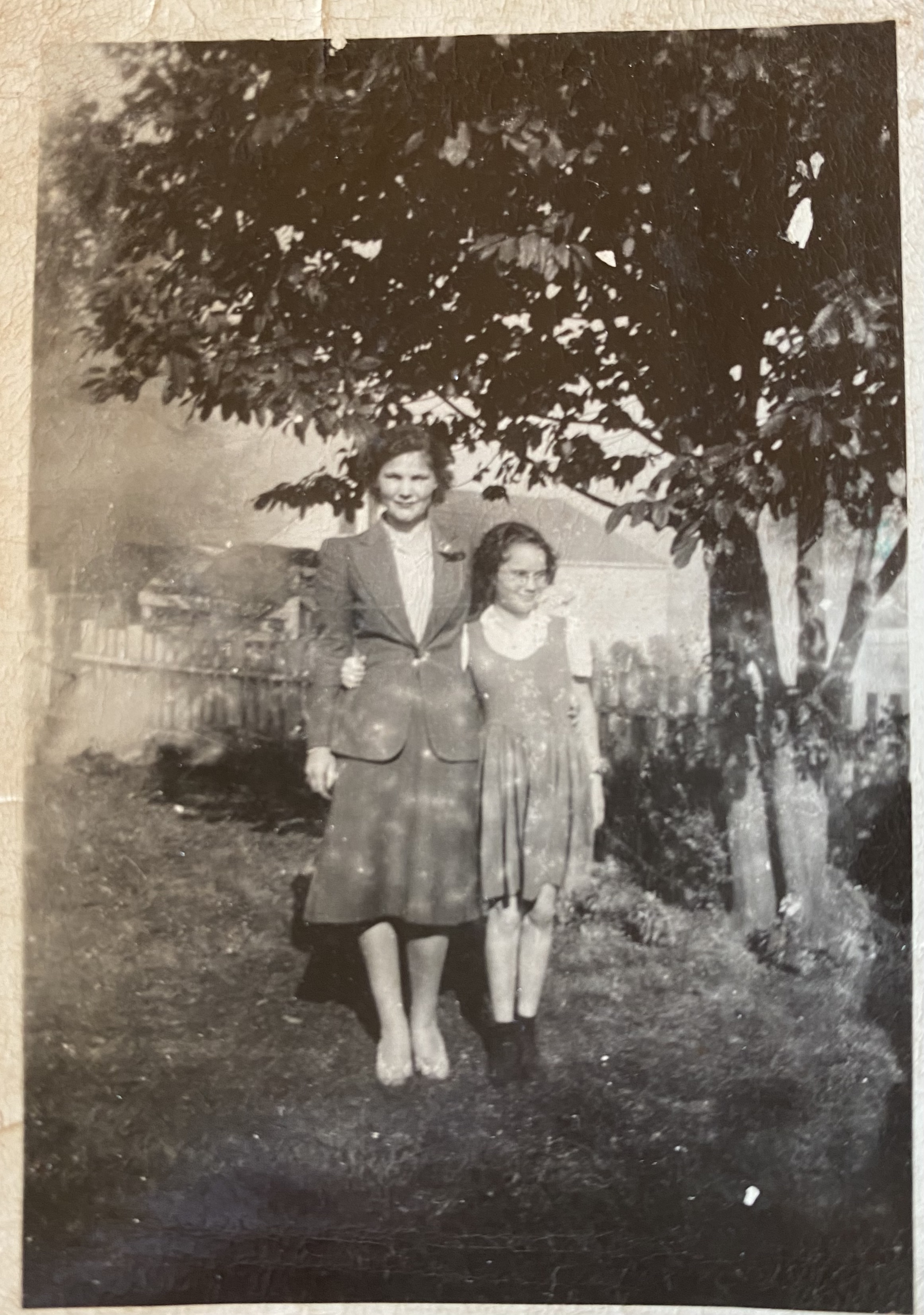
From her waitressing job, Ailene Peterson, turned Ailene Turner followed her new husband Ray to the Washington coast. Traveling with her young daughter Ailene looked for war work as well. Born in 1914, in Clinton, Minnesota, Ailene had married quite young, desperate to leave her father’s stump farm in North Dakota. Husband #1, Joe Tucker had failed her, and with her young daughter in tow, sought refuge with family members in Spokane. It was in Bremerton, Washington that she found employment wiring mine sweepers for America’s Russian allies, (she said they were very rude). In later life, Ailene proudly mentioned that her work never had to be redone. She always wired it right the first time. In an operators cab of a crane, Ailene noticed the girls below waving their arms and jumping about. Shutting down the motor she heard them yell that the Japanese had surrendered, and the war was over. Ailene scrambled down from her seat, and joined the victory celebration. She, too, along with Ray returned to Spokane until her death in 1990.

Besides being my grandparent’s, and generously sharing their remarkable stories with me, what else did these people share in common? They put aside their personal lives to step up in defiance of fascism and authoritarianism. They knew that service to America, to our democracy, was their first duty.

Retelling my grandparent’s war-time sacrifices to my history students added a vividness to the coursework that encouraged the kids to do the same with their elders. That, once again is how I bridged the war years to now, making it personal for students. 

President Roosevelt had characterized that moment as America’s “Rendezvous with Destiny,” and those people rose masterfully to the challenge. And despite all the hostility to democracy today, we cannot surrender to those forces, and betray our forebears who stood up to defend our way of life.

Perhaps now is our “Rendezvous with Destiny,” and this time all we have to do is vote for the Democrat over the wannabe dictator.

Once again, a new dark age lay in America’s defeat. 

Gail Chumbley is the author of the two-part memoir, “River of January,” and “River of January: Figure Eight.” Both are available on Kindle. Chumbley has also penned two history stage plays, “Clay,” and “Wolf By The Ears.” She is the co-author of “Dancing On Air,” and feature length screenplay, and is working on “Peer Review,” for the stage, a series of short plays where DJT meets real presidents from the past.

gailchumbley@gmail.com

Atomic Toothpaste

The recent news concerning Republican reluctance to fund Ukraine’s defense against Vladimir Putin is a stunning turn of policy. More disconcerting is that reluctance has come from the party of once hardline cold warriors, the GOP. When asked, Margery Taylor Greene remarked, “Under Republicans, not another penny will go to Ukraine,” and “President Volodymyr Zelenskyy, who is Jewish, has a “Nazi army.”

WWII ended in Europe in May, 1945. Almost at once America shifted from Hitler’s defeat, to curtailing the Soviet Union. Figures like General George Patton insisted the Communist threat required serious attention. General, turned President, Dwight Eisenhower had no love for Stalin, nor his ultimate successor, Nikita Khrushchev. 

During the war Soviet operatives in the United States had collected sensitive intelligence regarding the A-Bomb, and later the Hydrogen Bomb. Though the United States had allied with Stalin during the war, he trusted no one, least of all the Americans.

Thus began the second Red Scare. (Yes, there was a first.) 

Senator Joe McCarthy of Wisconsin made his name in Washington as a fearless Commie fighter. Senator McCarthy (along with counsel Roy Cohn) accused the US Army of harboring Communists until his alcohol driven antics destroyed his career. 

Another Republican hardliner, Richard Nixon of California, joined the House UnAmerican Activities Committee (HUAC) exposing other suspected Liberals. Nixon gained national exposure sniffing out academics, artists and federal employees. This California representative sent Alger Hiss, a left leaning aide of FDR’s to jail. The Hollywood Ten were a subpoenaed to testify before the Committee regarding their political activities. Many had their careers and lives ruined as most ended up on a black list of actors and writers.

Russian aggression solidified the backdrop of my childhood, as well. The Cuban Missile Crisis in 1962 (I remember studying my saddle shoes in a crouched position) through the fall of the Soviet Union in 1991. Those were turbulent years of the Iron Curtain, the Berlin Airlift, and later the Soviet shooting down of the KAL Flight 007 over the northern Pacific. 

In 1991 the world celebrated the collapse of the Soviet regime hoping it would usher in a new era of amity, and peace. Republican Presidents Reagan and George HW Bush are credited with the downfall of Communist Russia.

The conflict unfortunately, had not ended.

The dangerous arms race that had pitted the United States and the Soviet Union still remained. Over the years of escalation has challenged our very existence. As stockpiles of nuclear arms increase in numbers and size the world is as vulnerable as ever. The atomic toothpaste is out of the tube. New terms have developed during the modern era, such as Mutually Assured Destruction, Nuclear Winter, Brinkmanship, and the chilling advent of the Doomsday Clock, all characterizing the uncertainty that still exists. 

And even now the arms race continues to intensify across the globe. 

A quick glance at the America’s arsenal looks to be somewhere around 4,000 warheads and bombs. In Russia the estimate is nearly 6,000. And remember these radioactive weapons are either stored or deployed, and that would be a catastrophe. The one-upmanship is clearly ongoing.

The stockpile is no longer limited to Russia and America. China, the UK, France, India, Pakistan, and North Korea all have or will have completed weapons of their own.

Proxy wars flamed up after World War Two, with large conflicts in Korea and Vietnam. Battling the Russians permeated American culture. Examples of this phenomena include bomb shelters, Dr Strangelove, duck and cover, James Bond films, and even Boris and Natasha. And there were spies, on both sides, the CIA’s Aldrich Ames, and Robert Hanssen of the FBI come to mind.

In my dad’s time the Korean War witnessed over 30,000 American deaths, and in Vietnam 58,000. Some of the best of my generation and before, stood up for America in freezing winters and insufferable jungles. The majority came home with physical and psychological disorders to serve us. We are obligated to remember and honor that sacrifice.   

So understand the rest of us who lived through these perilous years. Watching clips of an American president cozying up to a Russian strongman in Helsinki, and pronounced that autocrat did not hack our elections, based on Putin’s denial, or when he invited a group of Russian operatives into the Oval Office to show off, is jarring to say the least, a real gob smack.

So the warm fuzzies Republican President Trump extended to the Russian President are shocking betrayal. First, in Langley, he whined to CIA operatives in a speech regarding, what else, himself. Later the old boy absconded with a library of national security documents and refused to relinquish them to the National Archives. 

The greatest and most egregious failure of the GOP is kneeling to an immoral Trump, as he kneels to serial murderer Putin. Richard Nixon remarked, “The Cold War isn’t thawing; it is burning with a deadly heat. Communism isn’t sleeping; it is, as always, plotting, scheming, working, fighting.”

The Republicans have forgotten what they stand for, and have become the betrayers.

Gail Chumbley is the author of a two-part memoir “River of January,” and “River of January: Figure Eight.” Chumbley has also penned two stage plays, “Clay” regarding the life of Statesman Henry Clay, and “Wolf By The Ears,” regarding slavery and racism.

The Gadget

FDR had an agreement with Winston Churchill. Though the Japanese had hit Pearl Harbor in the Pacific, the two leaders prioritized the European theater. Meeting on the HMS Prince of Wales, the two men met face to face (for the first time) agreed defeating Hitler’s Germany was job number one.

The US economy transformed quickly. America took the position as the arsenal of democracy for our allies. Jeeps, halftracks, Higgins boats, aircraft, and munitions were produced, largely, all largely produced by thousands of women on assembling lines. The United States was in full warfare mode. Some of these wartime innovations are still around today; ranging from radar to M&M’s to penicillin.

One such innovation came from the work of refugee physicists, Enrico Fermi and Leo Szilard. Both refugees had escaped Hitler’s antisemitic reach. Fermi was a pioneer in nuclear fission, Hungarian-born Szilard, embraced Fermi’s calculations. But Szilard knew he needed assistance to get this theory into the hands of President Roosevelt. Enlisting the help of a former colleague, Szilard contacted Albert Einstein. Though a pacifist, Hitler’s treatment of Jews, moved Einstein to use his celebrity to reach out to the White House. 

Events moved quickly after FDR read Einstein’s communication, and that was the genesis of the Manhattan Project. J. Robert Oppenheimer, a physics professor at UC Berkeley was tapped to head the program. He had argued that a remote central laboratory was essential for security and secrecy. New Mexico’s Los Alamos had been a childhood haven for his family and the US Army agreed to the proposed site. Subsequently, universities across the country began to noticed colleagues disappearing from science departments. Gone in secrecy these people were sent by rail to New Mexico.

The horror of Hitler and the Nazi regime fueled the furnace of urgency in the New Mexican desert. The pace itself became a force of its own. The work never ceased. A genocidal German dictator controlled Europe and this weapon became essential to end the war. Eventually in July, 1945 the “Gadget” as the device was nicknamed, stood ready for a test.

Of course the detonation was successful in a culminating in a horrific, frightening cataclysm. 

But by July 1945 the war in Europe was over, and Hitler dead.

FDR too had passed, and Churchill would soon no longer serve as Prime Minister of Great Britain. Suddenly the vice president, Harry Truman found himself President. Inundated with intelligence and war measures, Truman, later remarked he felt as if the moon and stars had fallen upon him. That briefing included the status of the Manhattan Project still frantically underway in Los Alamos.

The rest of the story is known. A new film has been released on the project and on Oppenheimer. To speak plainly the atom bomb was intended for Germany, but dropped upon Japan-twice. And this weapon certainly proved effective in ending the war in the Pacific. 

But bombs did not go away. Along with synthetic rubber, flu vaccines, and even computers, the atomic bomb still looms large. Science melded with military matters into what Eisenhower would call “the military industrial complex.” This Cold War triggered an arms race as the bombs grew in scope and in size, leaving all of America in a state of frightened readiness.

As for Oppenheimer, he lingered the rest of his life a tormented man. The why of the effort was never considered during the frenzied development of the weapon. However, once witnessed, in all of its glorious horror, the physicist lived in perpetual agony 

In his own words the physicist anguished “I have become death.”

Gail Chumbley is the author of the two part memoir, “River of January,” and “River of January: Figure Eight.” In addition Chumbley has penned two plays, “Clay” a study of Statesman Henry Clay, and “Wolf By The Ears,” exploring the underpinnings of racism.

Life Experience

I present history talks here and there, most recently focused on American presidents. The thesis for these programs looks at how each brought their life experiences to the presidency. For George Washington, a man who did his duty, for Andrew Jackson, his iron will, Abraham Lincoln’s push for opportunity, and Theodore Roosevelt’s sense of purpose.

This analysis rests on the old Hamilton/Jefferson dichotomy, particularly views on the proper size of government. Washington supported the supremacy of federal power, crushing the 1794 Whiskey Rebels by force, in Western Pennsylvania. Jackson had an inconsistent record on federal power. He was tough on South Carolina’s refusal to collect a new tariff, threatening to send in the military, as well. Oddly, at the same time, Jackson, without a blush, sided with the state of Georgia in removing the Cherokee and other indigenous people west. Lincoln embraced the Union, waging war, over allowing to let the government fail. Last, Theodore Roosevelt grew the size of government, and placed the federal government as the defender of righting wrongs. Set aside were National Parks, tracts of wilderness and game preserves. TR, protected America’s natural beauty for American’s for all time. Not to forget consumer protections in food and medicine.

For now, I haven’t gone beyond those four individuals, but with that premise as a guide, how do 20th, and 21st Century presidencies stand up to analysis?

Like Washington, Dwight D Eisenhower too, operated from a deep sense of duty. One of seven sons, Ike sought and received an appointment to West Point. A man of conviction, Dwight Eisenhower, as President, sent 101st Airborne to Little Rock, Arkansas to desegregate Central High School. Though not a progressive when it came to civil rights, he still enforced the law. And as a side note, Ike promoted the Federal Aid Highway Act of 1956, creating America’s first interstate freeways system. This piece of legislation came about from Ike’s early days in the army. In 1919, Lieutenant Colonel Eisenhower commanded a cross-country convoy of Army vehicles, Atlantic to Pacific, spending more time pushing rigs out of the mud than making forward progress. A lesson he never forgot.

A child of affluence, John F. Kennedy had to overcome considerable health problems and the expectations of his prominent father. Like Theodore Roosevelt, or Franklin Roosevelt, for that matter, Kennedy spent a lot of his youth ill, and hospitalized. Besides, “Jack” wasn’t meant to be the presidential nominee from the Kennedy clan, it had been his older brother, Joe Jr., his father’s first choice. Sadly Joe Jr. perished in a secret mission when his aircraft exploded over England in 1944. JFK, too, had nearly lost his life in the South Pacific, but survived, inheriting his father’s ambition.

After a brief stint in the Senate, Kennedy faced off against Richard M. Nixon for the White House. Prevailing in the 1960 contest, with his father’s sponsorship, JFK entered office and soon faced down Soviet aggression. This young president weathered a thirteen-day crisis when the Russians were detected building IRBM missile sites in Cuba. The Kennedy Administration successfully negotiated a stand down to Soviet aggression. This President, despite his medical ailments, and injured spine (from the war) most certainly fulfilled his father’s purpose.

As had Lincoln before, Bill Clinton and Barack Obama promoted opportunity. Both men rose from modest beginnings, and possessed keen minds. Clinton had been a Rhodes Scholar, and Obama a constitutional lawyer. Both men pushed for public health insurance, and the Dreamers Act protected children of Mexican nationals providing opportunity for education. Clinton was the first president to address the plight of LGBTQA in the military, (the first chief executive to utter those words). 

And not to be forgotten, opportunity was heavily woven into LBJ’s Great Society objectives.

As for Jimmy Carter, duty seemed to shape his administration. After Nixon’s scandals, and Gerald Ford’s presidential pardon, prospects dimmed in 1976 for the GOP. As president, Carter labored long to warn Americans about dependence on fossil fuels, appearing on television to discuss America’s malaise. However, the country had no interest in belt tightening, and Carter found himself replaced by Ronald Reagan. 

Reagan, HW Bush, and George W Bush are interesting commanders-in-chief. All three were nice, decent men, as well as patriots. A Navy man, Bush senior flew in the Pacific in WWII. Young Bush showed leadership in the aftermath of 911. However, in comparison to the four presidents in my programs these gentlemen aren’t as easy to label. The three were financed by large-monied interests, oil producers, and powerful lobbyist to lift regulations on business. In an interesting side note, Reagan’s own favorite president had been the 30th, Calvin Coolidge. Silent Cal once stated, “The business of America is business,” and Reagan felt the same. 

Each individual brought a unique imprint on the presidency. Extending federal power, or paring down central control. Life experiences shaped the character of each administration. Current President, Joe Biden looks out for middle and working class Americans, as he was raised in that community. Biden, looking out for the rest of us pushed the infrastructure bill and succeeded in lowering health care and drug costs for all Americans.

The last guy made it his duty, purpose, will, and opportunity, as cover for lining his own pockets and launch a coup against America.

Just saying.

Gail Chumbley is the author of the two-part memoir, River of January, and River of January: Figure Eight. Chumbley has also penned two plays “Clay,” concerning the life of Statesman, Henry Clay, and “Wolf By The Ears” an examination of racism and slavery in America.

Earned Wall Space

Poking around the basement in my mom’s house I unearthed a framed black and white portrait of Franklin Delano Roosevelt. The picture had been in a stack with other effects from one set of grandparents or the other. Certain this pic would probably end up in a dumpster, I packed it in my suitcase and brought it home. Our 32nd President is on display among other WWII pieces I’ve collected over the years.

What was it about Roosevelt and his times, that earned him premier wall space during the Depression and war years? Today the idea of commemorating a political leader with a  wall display seems odd and quaint.

So again, why did my grandparents include FDR in their home decor?

Admiration may be one reason. FDR appeared bigger than life. The man seemed to have it all: looks, money, and a pedigree that stemmed back to the early Dutch in America. His distant cousin, who also acted as his uncle-in-law, Theodore Roosevelt, still loomed large in American memory. That Franklin Roosevelt wished to carry on the tradition, especially in a time of economic collapse felt assuring.

The laissez faire policies of previous Republican administrations made for widespread fraud, especially on Wall Street. The 1920’s had been a heady time of speculation on the Dow, with banks making reckless loans on high risk investments. When the frenzy crashed and burned in October of 1929, the sitting Republican President, Herbert Hoover, suffered all the blame.

That fact raises another strength of President Roosevelt. The public trusted him. While autocracies generated “cults of personality,” Stalin, Mussolini, and Hitler, this candidate earned his office promising America a “New Deal.” He assured the country that they had not failed, the system had forsaken them, and as their new President he meant to correct those abuses.

The choice to hang Roosevelt’s portrait came from genuine respect, not fear or blind partisanship. The people elected FDR because he meant to be of use to all the American people.

This President brought energy and purpose to the Executive Branch reaching Americans personally in their daily lives. New Deal legislation quickly translated into action with legions of new programs all designed to get folks working again. The public felt a connection to the White House that perhaps hadn’t existed before that time. Mail arrived in daily landslides, mirroring FDR’s earlier political victory. Most letters requested a “hand up,” not a hand out, and that any financial help would be repaid to the government. R.E.P.A.I.D!

FDR brought electricity to rural America, lighting the night and powering radios that broadcast his Fireside Chats. Bridges, schools, and other large engineering projects connected the nation as never before. It’s a sure thing your town or city still bears an imprint of FDR’s time in office.

So it is with respect and gratitude that I have placed Franklin Delano Roosevelt on my living room wall. He set the bar for what a Chief Executive ought to be.

And after all, it’s a family tradition.

Gail Chumbley is the author of the two-part memoir, “River of January,” and “River of January: Figure Eight.” Both titles are available on Kindle. Chumbley has also authored three historical plays: “Clay” on the life of Senator Henry Clay, and “Wolf By The Ears,” concerning the evolution of racism and slavery in America, and Peer Review, where four long ago presidents speak with 47.

gailchumbley@gmail.com

The Long Haul

After the 1929 Market Crash the world fell into regional, nearly feudal isolation, and international trade quickly dried up. America, too, focused inward largely due to the nation’s earlier participation in the Great War in Europe.

Across the Pacific the Japanese Empire aimed to take advantage of global disinterest promoting its own national interests. Sold to other Asian countries as the “Co-prosperity Sphere,” hyper-nationalistic Japan intended to expand across the region, especially toward vulnerable, resource rich China.

Great Britain as well, struggled alone in a financial malaise, as did the French across the channel; both nations saddled with debt to American banks from the previous war. Germany, the defeated nation struggled with their own war debt demanded by the British and French.

The shroud of economic depression hung like a millstone over Europe and the rest of the world.

As the financial, and political fallout grew wildly unstable, regimes hunkered down and hoped for better times. However the climate instead became chaotic, bringing anti-democratic demagogues to power.

The Italians were first, producing a Fascist strongman, Benito Mussolini. El Duce, as he was known suppressed political diversity, harnessed economic efficiency, and soon, like the Japanese, pursued colonial inroads into Libya, and later the conquest of Ethiopia.

Germany soon flirted with its own style of fascism, with a meaner, violent credo. In a reaction to impossible debts, and national pride, Adolf Hitler, a feckless dreamer, stood on beer hall tables, and passionately spoke of national betrayal. Hitler revealed his malicious intentions by blaming Bolsheviks, Capitalists, and Jews for the hated Armistice of 1918, and war debt owed to the Allies.

Yet America, unlike the rest of the world, clung with all their might to the national system of Constitutional norms. At the same time Germany elected Hitler in 1932, the U.S. found their champion in Franklin Roosevelt. 

A popular Roosevelt Coalition steered the country through those hard years holding America together. FDR’s New Deal and Fireside Chats broadcasts kept at bay the fears of a nation. That’s not to say there weren’t kooks, to borrow Lindsay Graham’s phrase, but Americans faced the long haul together, believing better days had to be ahead.

The current President is no Franklin Roosevelt. And his autocratic tendencies, strongly echo those in the 1930’s.

In Project 2025 Trump aims to raise tariffs, shut down borders, all done to economically and politically isolate America. Using the same playbook of past despots specific groups are targeted as the problem. The guilty include immigrants, the LGBTQ community, liberals, educators, women, and the rule of law all in the crosshairs. All done to divert and distract while he lines his pockets.

And his tactics, so far have succeeded making half of the electorate real mean.

So, here is the question. Can America survive?

Can Americans remain bound to the framework of our 238 year old republic as it did in the Great Depression? Or will this nation forsake our financial, social, and political traditions and turn to petty retribution and scapegoating?

Will we, as a nation withdraw from the world and exchange our democracy for a strong man who insists he has all the answers?

The signs are clear. When this national crisis has passed will there be enough of us left who stood resolute for our democracy? That is the question of this historic moment. 

Gail Chumbley is a writer and history educator.