Only Good News

I attended college in the mid-1970’s, starting around the end of the Vietnam War, and Nixon’s resignation. A restless atmosphere permeated campus as antiwar radicalism faded, leaving time to address other pressing dangers.

Newspaper headlines told the story. Ohio’s Cuyahoga River had caught fire, the blaze feeding upon nothing more than sewage laced with flammable sludge. Developers in upstate New York broke ground for a planned community over a topsoil-covered chemical waste dump. Later the “Love Canal” housing project reported residents dying from leukemia in alarming numbers. A nuclear plant chemist in Oklahoma, Karen Silkwood, turned whistleblower, testifying before the Atomic Energy Commission, regarding the dangerous levels and exposure of radiation at the facility.

Silkwood later died in a suspicious car accident.

As Americans focused on ending the war in Southeast Asia, sustainable life visibly deteriorated in America. As we protested the effects of Agent Orange in Vietnam, we missed the incessant dumping of chemical runoff into Florida’s Everglades. Car exhaust, and acid rain doused the “Rust Belt” region surrounding the Great Lakes. 

Some politicians stepped up to the moment, like Georgia Governor, Jimmy Carter. Carter, a Democrat, ran for and won the 1976 Presidential Election. For many, Carter presented a serious, intelligent and incorruptible problem-solver. Grasping the petroleum bull by the horns, President Carter prioritized America’s need to conserve energy. He pointed out that domestic transportation literally depended on the whims of Middle Eastern cartels who bore no love for the United States. Addressing the crisis, Carter appeared on prime time, wearing a sweater, imploring the country to turn down the heat to 65 degrees, and cut back on driving.

Though he was right, Carter served only one turbulent term, replaced by smiling Ronald Reagan. The Reagan campaign understood Americans wanted to hear only good news, and how exceptional Americans inherently were.

This changing guard had no love for Federal bureaucracy, quickly dispensing with environmental restrictions. James Watt served as Interior Secretary, and Anne Buford Gorsuch at the EPA. Both ignored Congressional environmental statutes, slashing budgets, cutting staff, and relaxing regulations on private logging rights and clean water standards.   

In the 1990’s another voice rose to school Americans on the reality of environmental decay; former Vice President, Al Gore. In his 2006 film, “An Inconvenient Truth” Gore presented a compelling case highlighting the ravages of climate change, and global warming. At the end of the film the Vice President adopted an encouraging tone. Now that American’s understood this impending threat, we would act as one to save our home planet.

For his stance, George H.W. Bush anointed Al Gore “Captain Ozone.” Pappy Bush was, after all, an oil man from Texas.

The kicker is that we knew in the 1970’s which way this story would end. 

Today Lake Mead hosts more dead bodies than boaters, while vast catastrophic fires incinerate the Red Woods. Endless 100 degree-plus days extend longer every summer, and floods flow through the arroyos of the Desert Southwest. In the highest latitudes polar ice shelves calve mountains of glaciers raising the ocean levels globally. 

If the purpose of politics is to nurture dim, aggrieved consumers, the GOP has accomplished that, in spades. But the crisis is real, and the GOP is not helping.

In point of fact, the Trump Administration referred to global warming as a hoax. The US formally withdrew from the Paris Climate Agreement, ratified during the Obama years. According to the Washington Post, under Trump’s watch, over 125 Obama era protections were reversed, loosening regulations on endangered species and oil spills.

For those of us of a certain age, we have watched this crisis evolve over fifty years. Buck passing, unfettered capitalism, combined with political postering renders this moment impossible to fix. If pursuit of wealth and hubris outweighs preservation, greed is our undoing.

Gail Chumbley is the author of the two-part memoir “River of January,” and “River of January: Figure Eight.” Chumbley has also written two plays. “Clay” deals with the life of Senator Henry Clay of Kentucky, and “Wolf By The Ears,” explores the beginnings of racism and slavery.

gailchumbley@gmail.com

Catch Up

A radical change in imperial policy between Great Britain and her American Colonies marked the beginning of the Revolutionary Era.

Well before the American Revolution an amiable, and profitable arrangement existed between the Colonials and Parliament. This mutually profitable connection quickly terminated after the French and Indian War, 1754-1763. That conflict, though a victory for the British, had cost the Royal Treasury plenty, and the Crown abandoned friendly relations by coercing Americans to share in settling that war debt .

Parliament began by imposing a number of taxes, all designed to force Americans to pay up. The Sugar Act, Stamp Act, and Townshend Duties, among other measures, had been designed to force Americans to cover the royal debt. Once proud to be British, Colonials were shocked to realize the Crown viewed them as a source of revenue, and nothing more.

Colonials had a long running smuggling network, importing cheaper commodities from the French islands, thus evading British tariffs. Those caught and arrested found fast acquittal by colonial juries of their peers, as locals were also customers of the accused. In Boston, tensions soon turned to bloodshed, followed later with tea spilled into the Harbor. The Crown, not amused, soon forbade traditional trials, and transported accused Americans to military courts, in particular to Nova Scotia. Next, British Red Coats were deployed to the New England colonies to impose martial law, and Parliament decreed American’s had to house and feed their own oppressors.  

These matters were met with vehement dissent, Colonials protesting they had no representative in Parliament, and would not tolerate taxation without their consent. “No Taxation Without Representation” and “Resistance to Tyranny is Obedience to God,” rang throughout Colonial America.

Tensions ripened, finally coming to a bloody confrontation in April of 1775, and the rest we mostly remember from school. 

Tasked with scribing a Declaration of Independence at the Second Continental Congress, Thomas Jefferson vented American grievances through his quill. Working alone, Jefferson defended the violent actions carried out by Americans, and took pains to explain the radicalism. . . . “a decent respect to the opinions of mankind requires that they should declare the causes which impel them to the separation.” And for six years the Continental Army persevered.

In 1787, the subsequent creation and ratification of the U.S. Constitution set an enduring national blueprint of settled law. The Framers designed a government derived from the people, meaning we all are equal, and guaranteed representation in shaping law.

That brings this story to today. 

The election of a president from an opposing party is not a radical, nor sudden change of policy. Rather, this cyclic American ritual is as normal as the singing the Star Spangled Banner before a game. American voters have chosen our leaders in this manner since George Washington’s name first appeared on the ballot. 

To all of you who attacked our Capitol, it’s well past time for you to catch up. Put away those symbols of rebellion; of coiled snakes, hangmen gallows, and Viking horns. The Revolution ended two and a half centuries ago. The story of America is well underway.

In point of fact, those January 6th insurrectionists themselves attempted a radical change in American tradition. In pursuit of violence and chaos, these terrorists attempted a savage disruption of our deepest democratic traditions. Now that is unAmerican. In point of fact, we all have political representatives, and a right to a jury of our peers, and nary a soldier is found lounging on the couch.

Grow up and stand down.  

Gail Chumbley is the author of the two-part memoir “River of January” and “River of January: Figure Eight.”

Chumbley has also penned two plays, “Clay” exploring the life of Henry Clay, and “Wolf By The Ears,” an examination of American slavery and racism.

chumbleg.blog

A Scandalous Life

And I didn’t include GW Bush

A video blog. Forgive the quality, but the point is clear.

Gail Chumbley is the author of the two-part memoir “River of January,” and “River of January: Figure Eight.” Both titles available on Kindle. In addition Chumbley has complete two plays, “Clay,” on the life of Senator Henry Clay, and “Wolf By The Ears” exploring the beginnings of racism and slavery.

The Long Haul

After the 1929 Market Crash the world fell into regional, nearly feudal isolation, and international trade quickly dried up. America, too, focused inward largely due to the nation’s earlier participation in the Great War in Europe.

Across the Pacific the Japanese Empire aimed to take advantage of global disinterest promoting its own national interests. Sold to other Asian countries as the “Co-prosperity Sphere,” hyper-nationalistic Japan intended to expand across the region, especially toward vulnerable, resource rich China.

Great Britain as well, struggled alone in a financial malaise, as did the French across the channel; both nations saddled with debt to American banks from the previous war. Germany, the defeated nation struggled with their own war debt demanded by the British and French.

The shroud of economic depression hung like a millstone over Europe and the rest of the world.

As the financial, and political fallout grew wildly unstable, regimes hunkered down and hoped for better times. However the climate instead became chaotic, bringing anti-democratic demagogues to power.

The Italians were first, producing a Fascist strongman, Benito Mussolini. El Duce, as he was known suppressed political diversity, harnessed economic efficiency, and soon, like the Japanese, pursued colonial inroads into Libya, and later the conquest of Ethiopia.

Germany soon flirted with its own style of fascism, with a meaner, violent credo. In a reaction to impossible debts, and national pride, Adolf Hitler, a feckless dreamer, stood on beer hall tables, and passionately spoke of national betrayal. Hitler revealed his malicious intentions by blaming Bolsheviks, Capitalists, and Jews for the hated Armistice of 1918, and war debt owed to the Allies.

Yet America, unlike the rest of the world, clung with all their might to the national system of Constitutional norms. At the same time Germany elected Hitler in 1932, the U.S. found their champion in Franklin Roosevelt. 

A popular Roosevelt Coalition steered the country through those hard years holding America together. FDR’s New Deal and Fireside Chats broadcasts kept at bay the fears of a nation. That’s not to say there weren’t kooks, to borrow Lindsay Graham’s phrase, but Americans faced the long haul together, believing better days had to be ahead.

The current President is no Franklin Roosevelt. And his autocratic tendencies, strongly echo those in the 1930’s.

In Project 2025 Trump aims to raise tariffs, shut down borders, all done to economically and politically isolate America. Using the same playbook of past despots specific groups are targeted as the problem. The guilty include immigrants, the LGBTQ community, liberals, educators, women, and the rule of law all in the crosshairs. All done to divert and distract while he lines his pockets.

And his tactics, so far have succeeded making half of the electorate real mean.

So, here is the question. Can America survive?

Can Americans remain bound to the framework of our 238 year old republic as it did in the Great Depression? Or will this nation forsake our financial, social, and political traditions and turn to petty retribution and scapegoating?

Will we, as a nation withdraw from the world and exchange our democracy for a strong man who insists he has all the answers?

The signs are clear. When this national crisis has passed will there be enough of us left who stood resolute for our democracy? That is the question of this historic moment. 

Gail Chumbley is a writer and history educator.

Without Justice

So many students had dropped the class, the professor had us meet in his office. The course, (a 300 level?) concerned the history of Eastern Europe, and though challenging, I sucked it up and remained.

Exotic names such as Moldova, Herzegovina, and Macedonia evoked mystical places barely touched by the Renaissance or Enlightenment. The prof tossed around these names as an American would with Oklahoma or Nevada. 

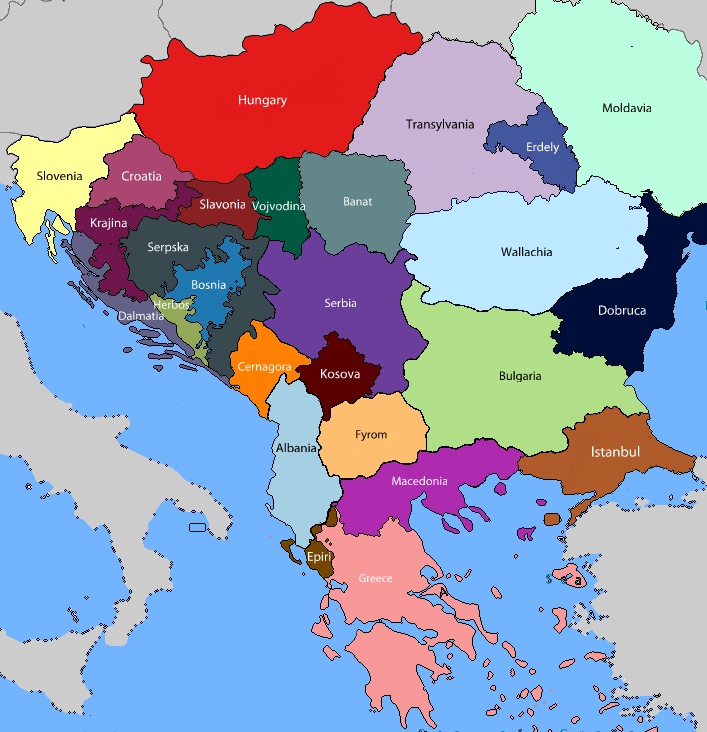
He spent a great deal of time lecturing on the Balkan region. This mountainous peninsula is situated south of both Slavic Ukraine, and the Magyars of Hungary. This area, I learned, suffered an especially turbulent past, and for that matter still does today. One book on the course list, “Land Without Justice,” by Montenegrin, Milovan Djilas starkly described and reiterated that point. 

Seated around a small table, our teacher introduced the Slavic folk who embraced the Orthodox faith of Byzantium. while the Croats to the northwest remained Catholic. For good measure, the Ottoman Turks rode hard northward, flashing scimitars of enforced conversion or butchery through remote pockets of alpine settlement. 

Violence tinted the region red, scarring the inhabitants through generations of fierce reprisals.

The people of South-Central Europe appeared to have been dragged pillar to post in the religious chaos of competing Kings and Sultans.

In the wake of Turkish conquest, the youngest boys were systematically abducted from Orthodox villages up and down the rugged terrain. Raised in the Islamic faith, these children grew into fearsome warriors, eventually unleashed back on their former homes. These Janissaries coldly delivered Ottoman violence upon their own kinsmen. 

Mired in blood, rulers like Vlad the Impaler, the inspiration for Bram Stoker’s Dracula eliminated his many enemies by impaling victims on wooden stakes. Most were Muslim.

I don’t recall my grade in that course, but I was mesmerized. Enough remained with me to pass on to my history students. For example, as America fought their Civil War, a Medieval system still restrained Eastern European society. Blood feuds raged through the mountain terrain pitting Croats against Serbs, against Albanians, against Bulgars, and on and on. By the end of the 19th Century the Balkans acquired a new moniker, “the powder keg of Europe.”

The ignition of World War One began in Sarajevo, the center of Bosnia Herzegovina. As the Ottoman Empire eventually receded southward, the Austro-Hungarian Empire aimed to absorb Bosnia as their own. Hapsburg Emperor, Franz Joseph sent his nephew on a good will mission to picturesque Sarajevo. For the nephew, Franz Ferdinand, this would be his last royal duty. A Serb teenager waiting on the processional route shot the Hapsburg heir, and his wife, too. From that incident came “The War to End All Wars.”

This essay barely scratches the full history of Eastern Europe. Russia, Ukraine, Hungary, Bulgaria, Yugoslavia, Poland, and Kosovo, all hold eons of collective history, enough to study a lifetime. 

Still much like an unfinished jigsaw puzzle with scattered and missing pieces, an incomplete picture of the region remains. World War Two, the frigid tension of the Cold War, and the Balkan Wars of the mid-1990’s all continue to pull the world in, as if a black hole.  

I stuck with that college class, in that professor’s office, and as a result understand why NATO, including US peace-keeping forces, still must remain in the “Land Without Justice.”  

Gail Chumbley is an author, and history educator. Her two books, “River of January,” and “River of January: Figure Eight,” both available on Kindle. In addition Gail has composed two plays, “Clay” and “Wolf By The Ears.”

King of the Hill

General Washington had not yet been appointed commander of the Continental Army. Nonetheless, the conflict against Great Britain, though running hot after Lexington and Concord, remained an informal, isolated brushfire in the eyes of the Crown. Still, the very presence of soldiers grated Bostonians, enough that outraged patriots plotted retaliation.

June 16th, after dark, these Sons of Liberty acted, digging in on Breeds Hill located near Bunker Hill, north of the city in Charles Town. All that night these newly minted Minutemen stacked preloaded-muskets, entrenched, and waited for sunrise. At first light, the startled Redcoats scrambled to form lines and launch an offensive against the rebels. Though holding the line through three assaults, the Bostonians, low on gunpowder, were forced to melt away into the surrounding area. The shocked Brits decided to call the contest a victory.

But as one royal officer candidly admitted, “if we win anymore like this, we’ll lose this war.”

That is the lesson of Bunker Hill, hold the high ground, and draw the fight uphill to a well-defended position.

General George Washington arrived in Boston the next month, taking command of the motley Continental Army. Positioning his inexperienced troops on the heights surrounding the city, Washington bluffed his military strengths. When actual heavy guns finally reached Washington, the Redcoats had had enough, and on March 17, 1776, all the King’s men evacuated to Canada.

Two philosophers on warfare, China’s Sun Tzu, and Prussian, Carl von Clauswitz had committed to paper their respective views on the value of the high ground. Sun Tzu in the 6th Century, and Clausewitz in the early 19th Century argued its significance. Much like that game, “King of the Hill,” we played as kids, the advantage belongs to the person on top. That essentially defines both tacticians principles.

Yet, physically holding a hill doesn’t go far enough. Both philosophers argued that a moral high ground is equally essential, an armed force must be clad with a virtuous cause. 

A higher moral purpose fills the sails to victory.

In 1860, Republican candidate Abraham Lincoln won the presidency, becoming America’s 16th President. That moment weighed with foreboding, as Southern States, one by one, chose to secede from the United States. The new President viewed this idea as impossible–statehood was not a revolving door. In his inaugural address. Lincoln spoke plainly, “In your hands, my dissatisfied fellow-countrymen, and not in mine, is the momentous issue of civil war.”

Then Lincoln, and the the rest of the nation watched and waited. On April 12, 1861 guns thundered from Charleston, South Carolina, smashing into Fort Sumter, a federal installation in the harbor.

Boom, done and done.

The Rebs drew first blood, and Lincoln, by default, seized the moral high ground. After a duration of four long, bloody years, the rebellion collapsed, and slavery ended.

Both the attack on Pearl Harbor in December 1941, and the terrorist attack on September 11, 2001, elevated America’s retaliation as morally justified, drawing the nation into both World War Two, and the War on Terror.

Everyone around the world is watching the Ukrainian people standing tall against a mystifying invasion by Russia. Ukrainian President Zelensky has brilliantly executed the lessons of Sun Tzu and von Clausewitz. His articulate, moral leadership, and courage has more than won the moral high ground test. In contrast, Vladimir Putin has proven his lack of preparation, and barbarity, assuring the Russian President an international pariah.

These principles are timeless and universal, not only in America, but in past conflicts like Thermopylae in the 5th Century, and the Warsaw Ghetto uprising in 1940.

Whether the Ukrainian President, is aware or not, he has benefitted from the teachings of Sun Tzu and von Clausewitz, and this is Ukraine’s finest hour.

The possession of high ground may decide a battle, war or the fate of a nation.

Carl von Clausewitz

Gail Chumbley is a history educator, and writer.

gailchumbley@chumbleg

Rebellions

The Republican Party emerged in 1854 as a voice for liberty, and of opportunity. Forged in sectional controversy, members dedicated themselves to one overriding priority, no slavery in America’s western territories. On that point the fledgling party stood firm.

A lawyer in Springfield, Abraham Lincoln, joined the growing party early concerned, as were others, with escalating tensions between the North and South.

In 1860, Lincoln threw his very tall hat into the ring, and declared his candidacy for President. Defying considerable odds, Lincoln prevailed over other, more prominent Republicans at the GOP Convention in Chicago. Lincoln grasped the nomination. 

The South responded as one. If Lincoln won the Presidency, they would bolt the Union. He did win, and tried to reason with Southern States through his inaugural address. “In your hands, my dissatisfied fellow-countrymen, and not in mine, is the momentous issue of civil war.”

The sticking point of course, slavery. 

By the time Lincoln took the oath of office, eight Southern States had voted to secede from the Union. This president understood the fears of the South, and knew what drove the secessionists. He didn’t hate them, he did not want them punished. During the last year of the war Lincoln, in his second inaugural address gently offered an olive branch stating, “With malice toward none; with charity for all.”

Lincoln’s lasting legacy held that the Civil War meant more than reunification of the states. His  “new birth of freedom” implied a higher ideal, the turmoil meant something more honorable, and timeless: the cause of humanity. The Emancipation Proclamation came first, then the 13th Amendment, forever freeing those held in bondage. This president took no credit for prevailing over the Rebels, hoping only to heal the divisions that fueled the rage.

His martyrdom on April 15,1865 left the GOP imprinted with Lincoln’s goodness, modesty, and nobility. This first Republican President endured four years of national hell, and never forgot his mission.

Lincoln met the Rebellion, and vanquished it.

America today hears no soaring rhetoric from the GOP, nor elegant prose, only hate speech and bellyaching. The GOP has severed the cords of duty to country, replacing patriotic obligation with an unapologetic lust for power, and self interest. 

For four years the taxpayers have been fleeced, and minorities targeted, the kind of intolerance Lincoln abhorred. Long standing alliances were cast aside as a self-serving dunce cozied up to America’s enemies. The Republican members of Congress have forsaken their obligation to country first, pretending and excusing that all was normal in the turbulent White House. 

The greatest harm perpetrated by, and enabled by the current GOP, is the violent attack on the heart of our democracy: the United States Capitol on January 6, 2021.

The irony is rich. As the Republican Party grew from a rebellion, it will now perish from another.

Riverside, 1973

Before the 1974 Expo in my hometown of Spokane, Washington, the city’s downtown area was divided by social class. Riverside Avenue ran east to west, crossed by an arterial called Division, that ran north to south. That intersection literally cut the area in half. West of Division the downtown looked like the shopping scene in “A Christmas Story.” Magical tableaus filled each department store window, creating an elegant still-life to allure shoppers. To the east of Division sat run down bars, a rescue mission, and adult-only theaters dotting the grim sidewalks of despair. Consumerism connected both worlds.

In my senior year of high school, I worked at an ice cream shop situated smack dab on the dividing line. Attempting to capture the “good old days” ragtime music looped endlessly in the shop, and we all wore white dresses, and plastic skimmer hats. The clientele largely represented the reality of Riverside. Affluent shoppers, and business owners rolled in for lunch during the day, and the dispossessed wandered in at night.

The lunch rush is where the shop made money, and all waitresses were on the floor. Each day I left my high school around 11:00am arriving about 30 minutes before the onslaught. By noon we rushed table to table, chatting with the regulars, and earning pretty healthy tips.

Weekends were different, unpredictable, and the Saturday night shift catered to a different world. After dark, homeless men asked for water, while others scrounged up change to buy a cup of soup. Heartbreaking.

A late spring night in particular, stands out in my memory.  Warm, with a light breeze, the shop felt like summer, leaving me restless, and anxious for graduation. The glass door facing Riverside opened, and a clutch of young women poured in, chatting and giggling like school girls. Sex workers all.

Preparing for their night, these girls crowded around the ice cream freezer, more like teenagers than high risk ladies of the night. The group was close, sharing a camaraderie that spoke of strong ties. 

In the middle of the party towered a long, bronze, African-American woman. God, she was gorgeous, honestly runway material. Fascinated I watched her among her peers, laughing with the rest, while she gracefully perused the glass covered ice cream selections. 

Honestly, this beauty could out Grace Jones, Grace Jones. 

The starkness of her night’s work vaguely crossed my mind, but I was in the moment. Oblivious, unapologetic, she and her friends had no shit’s to give.

Weeks later I graduated, and at the end of summer headed off to college. The memory of that  lithe beauty and her friends faded. The following summer, when I returned to Spokane, the face of downtown had been completely transformed. The railroad tracks, the bums, the skin flicks, and the girls had all vanished. The exciting facelift for Expo ‘74 displaced the rundown skid row of my childhood.

It’s now that I’m retired that that ice creamery, and the beautiful girl again live in my memory. I know now that I had choices, I had support, and a college education. But those residents of east Riverside, those belles of the street? It is impossible to know how life played out for them. Surely these people of the night were displaced, migrating where rail tracks, and sex workers could ply their trade, out of site, and away from the gentry. 

I hope life turned out better than it probably did for these marginalized folk. But that warm spring night still holds a magical quality; one of beauty and of bleakness. A grim reality of a life I never lead.

Gail Chumbley is the author of the two-part memoir “River of January,” and “River of January: Figure Eight. She has authored two plays, “Clay,” about the life of Senator Henry Clay, and “Wolf By The Ears,” a narrative of slavery in America.

gailchumbley@gmail.com