White Man’s Burden

Here, in my state a showdown is brewing between the LGBT community and legislators in the capitol.

Idaho passed a Human Rights Act a number of sessions ago believing their votes showed what good folks they were.  They won’t discriminate against women, Jews, Blacks, or Japanese Americans who were interned here during WWII.  There will be no genocide, no back of the bus, nor will camps hold citizens.

These largely white, male reactionaries didn’t realize they had opened a Pandora’s Box of outcomes.  Where they thought they had passed an ‘everybody wins,’ warm and fuzzy law, the residents of Idaho took the lawmakers at their word.

That brings our story to today.  The LGBT community has nearly begged lawmakers to ‘Add the Words’ to the previous Act.  Four words to be precise.  The gay community insists that Sexual Orientation and Gender Identity amend the law as it stands currently.  However, lawmakers will not permit any hearing or even tolerate such an incomprehensible notion.  That is this conflict in a nutshell.  The majority of rural-dwelling, agrarian conservatives cannot fathom that alternative sexuality is real.  Roosters like hens, steer like cows, billy’s like nanny’s.  It’s very simple.  For the religious right, they look to multiple translations and versions of the Bible, and Adam and Eve reads clearly.

The problem centers on real life and real people.  Whether most farm animals (most) behave according to expectations, humans are something more.  Sexuality isn’t a black and white issue like race relations.  And the gay community is real and is suffering.  Simply because those in power refuse to recognize reality–physical bashing, job and housing discrimination, bullying, it is happening.  Haters know what lawmakers refuse to see.  By taking no action the Idaho legislature has condoned persecution.

I am reminded of a story of Queen Victoria.  It was the late 1800’s in London and Jack the Ripper was waging terror in the impoverished White Chapel neighborhood.  However, the Queen refused to recognize the crimes because she did not believe prostitution was real.  How could there be prostitutes murdered when the profession did not exist.  End of problem.

The LGBT community is real.  Even if law makers refuse to recognize the demographic, everybody else in society does.  That’s why the discrimination and abuses are carried out.  Legislators may not believe in alternative lifestyles, and in return we are certainly losing our belief in our legislators.

There are gay characters in my book, River of January, and though it wasn’t my business to out them, I could see they suffered.  One in particular lost his career and died very young after an unhappy, unfulfilled life.

This is, in America, and in my state, the last acceptable prejudice.  Those who govern the people must govern for all the people, whether or not they personally approve of alternative lifestyles.  E Pluribus Unum, Out of Many Come One.

The Poetry of Protest

ImageAlice Paul

Today’s posting has nothing to do with my book.  Instead I am moved to comment on today’s news.

The news of Pete Seeger’s passing is popping up everywhere on all my personal media settings.  And I, as millions of others loved the music of Pete Seeger.  I always have.  The beauty of his voice alone, or with his group, “The Weavers” still echoes compellingly in my mind.

Yet, today, with his passing, I’m not thinking of the silenced music.  As essentially American as his voice and lyrics resonated, the lessons I learned from Pete Seeger are more linked to political conviction and courage.  His was the voice of the non-conformist, the social and political critic who challenged conventional beliefs.

Seeger served in uniform during World War Two.  Though he was a young man when he soldiered, his participation says a great deal about the justness of America’s struggle against totalitarianism.  But after the war, Seeger seems to have instantly grasped the politics of the Cold War for was it was, an excuse to stifle the voice of opposition.  Seeger suffered for his convictions.  When popular thought demanded unified anti-Communist behavior, Seeger did not comply.  It was justice he sought, and in the days of racism and blind war mongering, Seeger would not close his eyes and pretend America practiced equality and liberty.  And his beliefs landed him in political hot water.

His banjo and singing voice were his only sword and sidearm– yet still he made himself a dangerous man to an American government that demanded wall to wall consensus.  This troubadour appeared to be fearless in expressing his thoughts, singing anywhere and everywhere he saw injustice.

The Vietnam War provided Seeger and a growing segment of Americans a broader platform to protest Johnson-Nixon policies in Southeast Asia.

I remember that he was to appear on “The Smothers Brothers Comedy Hour,” and sing Waist Deep in the Big Muddy, an anti-war song.  Such a powerful message!  The lyrics at bottom called out the man in the White House as a “big fool.”  CBS pulled Seeger from the show out of fear of retribution from stock holders, sponsors and hawkish politicians.  To their credit, the Smothers Brothers refused to go on until Seeger was allowed back on the show.  CBS caved, Seeger appeared, the feelings of America soured more on the war, and for a wide variety of reasons America withdrew from that nightmarish miasma.

This blog is a tribute to other voices of opposition across many generations of Americans.  The list is long of patriotic citizens who understood the First Amendment meant what it said.  We should honor the lives of those who resisted the tyranny of a majority they believed misguided.

William Lloyd Garrison, Frederick Douglass, Sojourner Truth, Margaret Fuller, Elizabeth Cady Stanton, Helen Hunt Jackson, Homer Plessy, Jacob Riis, Henry George, Lewis Hine, “Mother” Mary Harris Jones, Ida Tarbell, Ida B. Wells, Eugene V. Debs, Alice Paul, Big Bill Haywood, Phil Ochs, Mario Savio, Cesar Chavez, Bobby Kennedy, Diane Nash, Bayard Rustin, Daniel Ellsberg, Harvey Milk, and the other thousands of names left off this list.

Hoist one tonight for Pete Seeger and the multitude of others who braved the currents of popular thought, for there is nothing more American than to question the status quo.

Memories of Telephones Past

Image

My parents kept a beige wall phone when I was growing up.  The ring could wake the dead.  Both sides of grandparents settled for basic black, one a desk phone the other fixed to their kitchen wall.  If my paternal grandparents were expecting a long distance call we all waited in the living room, reverently, as though it was God calling.  And God help you if you made any noise while my grandmother was on that phone, conversing with her relatives back in Minnesota.  Those calls were an almost holy occasion.

Their phone exchange was Fairfax, ours, on the other side of town, was Keystone.  My husband remembers their phone exchange began with Plaza, and his mother, Helen, growing up, used the famous prefix, Murray Hill in New York City.  I think that’s the same one actress, Barbara Stanwick requests in one of her old movies.

It is my understanding that many rural Americans had a phone installed before even electricity was available in vast tracts of the country.  My Minnesota relatives, for example, didn’t have an indoor toilet until the early 1960’s, yet had that telephone on a doily covered end table as early as the 1920’s.  Chum recalled that their phone on the farm had a different ring for each home connected along a party line.  He remembered that the different rings didn’t matter because everyone eavesdropped on everyone else.

Operators, or “hello girls,” as they were known, plugged connections on regional calls offering choices for long distance service.  There was “Station to Station,” which meant you talked to anyone at the number dialed.  Then came “Person to Person,” where you hailed a specific individual.  I remember dialing collect calls, which were long distance too, connected through a live operator, costing my parents a bundle if they accepted.  And they always accepted.

The telephone of yore was a mysterious device.  The phone company, AT&T held a monopoly and innovated very slowly.  I recall when the clockwise dial was replaced by gray push buttons.  Then there was the desk phone offered in green and red, as well as black and beige.  I vaguely remember “Ma-Bell,” as we irreverently referred to the company, marketing blue, white and pink “Princess Phones,”.  Geez, how sexist.

But what telephones held then, which is gone now, was a sense of mystery.  When that device rang it was a crap shoot who waited on the other end.  We could only call on land lines, and if no one answered there was no evidence of our call.  If that certain someone called me, and I missed it, well, I missed it.  We had no call waiting, no answering machines, and certainly no ‘missed call’ record.

And long distance calls were fashionable and expensive, folks largely opting to stay in touch through less expensive letters.  While Helen toured Europe from 1932-33, she had no cause to use a telephone.  If Elie wrote to her and scheduled a call, she would take it at the prescribed time at her hotel.  But calling her mother back in the states was never an option.

Public phones could be found on nearly every city block as I grew up.  Now they are as scarce as manual typewriters.  Formality, phone etiquette, the necessity of saying hello to mother’s or father’s who picked up, are all gone.  I would sit in the stairway of our house for some telephone privacy, because my family was everywhere, my brothers especially snoopy and irritating.  Even that modicum of supervision is gone for teenagers.  They can call, text, Facetime, use Facebook, stay connected all day everyday.

Perhaps the extra effort required for telephone calls gave them a higher value.  Our capacity for electronic interaction is nearly effortless today, but also somehow has cheapened a once-regarded gesture.

Before War Was Cool

Image

The protagonist in River of JanuaryMont Chumbley, or “Chum,” as we called him, pined to join the Navy in 1927.  In fact Chum knew that the Navy was his destiny from the time he witnessed a barn-stormer, (stunt pilot) fly miracles across the rural Virginia sky.  What the boy didn’t count on in his hopes was the resistance he met from his own family.

The Chumbley’s were not alone in their disgust with the military.  All of America suffered from a giant hangover after the Great War (World War One), convinced Americans that their participation had been a horrible mistake.  Though not fully true, the US still viewed itself as a simple republic, not an empire builder bound for global influence.  That policy came later, after World War Two, in the Cold War.

President Wilson staked his own presidency on his Treaty of Versailles and League of Nations, which would have bound the country to Europe in a forerunner to the United Nations.  The public, through their Senators voted the Treaty down, killing it as dead as the soldiers who would never come home.  Books were written after 1919 that discredited war as nothing but a fools errand.  “Johnny Got His Gun” was one such novel, and Erich Maria Remarque‘s “All Quiet on the Western Front” was another.

Folks stateside strongly regretted sending Doughboys across the Atlantic to battle the Kaiser and his evil Hun army.  By the year Chum pushed to join the Navy, the US had negotiated a treaty with the French, called the Kellogg Briand Pact, which outlawed war as an alternative in international conflict.  (“Don’t plant that mine, if you can’t do the time?”  Seriously?)

The Nye Commission, a House investigating committee was charged to find out why America joined the war.  In the end these law makers judged money was the culprit.  War manufacturers, such a poison gas producers the Dupont Corporation and financiers,The House of Morgan, were condemned for their roles in fanning the flames while counting their profits.

It was in this cultural/political atmosphere that Chum wanted to join the Navy.  When his father and aunt objected, they simply parroted the opinion of a nation that believed the military was only for scoundrels and suckers.  If Chum succeeded in enlisting he would draw shame on the family’s name.

Now, I am a child of the Vietnam era and understand the power of public opinion concerning war.  Too many young men came home to condemnation for rendering their duty to their country.  Many were already angry from their combat experiences, especially if they were drafted in the first place.  War protestors vented their fury on those boys who did nothing more than complete their mission.

Still for many young people, such as Chum in the 1920’s, the service still offers training and opportunity.  Perhaps it would benefit us all to remember to separate the advantages of military training, from the poor use of young people deployed for uncertain, poorly planned political agendas.

Chum did meet his service obligations, later after Pearl Harbor.  But he would agree, I think, that he gained more from his service in the Navy, than he returned.

Servicemen have never been suckers, and decision makers must never lightly treat them as such.

Requiem For A Beauty

Image

This is part of a snapshot taken in Rome in 1932.  Helen, the subject of my book, River of January stands above wearing the white fur-collared coat.  Posing next to her, in the white cap is dancer, Carmen Morales, another member of the “American Beauties,” an American ballet company.  The two girls met when both were cast in this troupe booked to dance across the cities of Europe.  They remained the closest of friends until Helen’s death in 1993.

I have perused countless pictures of Helen’s European tour, closely, (close as with a magnifying glass) the faces of her fellow dancers.  And I have decided that of all the girls in the show Carmen, next to Helen of course, was a classic  American Beauty.

From the little I could find on the internet Carmen was born in the Spanish Canary Islands around 1914, and came to the US where her father had business interests.  She trained in ballet, and after an audition was booked to tour with dance mistress, Maria Gambarelli.  On the ship’s crossing to Le Havre the girls fused together into a solid little unit, and to trouble one meant facing the wrath of all.

During their travels, Carmen met a fellow American dancer, Earl Leslie and the two fell in love.  Earl and Carmen soon married in Marseilles, and left the show when Earl received a better offer.  A German businessman wanted him to manage a string of nightclubs out of Berlin.  They took the job to give their new life together a chance.  But history was conspiring against Carmen and her new husband when Nazi authorities harassed the two and pressured them out of the country.  That was in 1934.

The couple again joined their old dance company, but by that point Helen had returned to New York.  Meanwhile Earl, Carmen and the rest of their company signed contracts to play in Argentina into 1935-36.  It was in Buenos Aires that Earl Leslie began an open love affair with another dancer and broke Carmen’s heart.

Carmen returned to New York, divorced Leslie and moved to Los Angeles to resume her show business career.  Her big break came in 1940 when she was cast by director John Ford to play in “The Long Voyage Home,” starring John Wayne.  I’m not sure how many films Carmen made, but she quickly fell into a type-cast, that of the femme fatale–a far cry from her sweet, sensitive nature.

Making her home in Sherman Oaks, California by the 1950’s, Carmen began the transition to television.  Well into the 1960’s she appeared in minor roles on a number of prime time dramas, still taking the time to step on local stages for live productions.

Through all those decades, Carmen and Helen remained great friends.  If Helen didn’t travel to Los Angeles for a visit,Carmen flew to Miami.  My husband recalls the fun his mother had entertaining her good friend, sitting around the little kitchen table, drinking bourbon on the rocks, jangling charm bracelets emphasizing the light spirits, and smoking cigarettes.

I am not sure when Carmen died.  I don’t know if it was before or after Helen.  But Carmen truly deserves to be remembered for her own journey through the twentieth century.  She lived an epic life and had stories to tell.  Sadly we will never hear them.  Except for those few with an encyclopedic knowledge of film, Carmen Morales has been left to disappear into the past.

So, when you hoist one tonight, make the toast in the memory of a real American Beauty, the lovely Carmen Morales.

Gail Chumbley is the author of River of January, available now.

Exploitation?

My husband and I have talked a lot about how his mother and aunt supported their own mother when they were girls.  By the time Helen’s father died in 1925, Helen was forced by circumstances to become a professional dancer.  She would have followed that path anyway, but had to make the decision sooner than any of them expected.  The fatherless little family desperately needed the income and the mother didn’t work outside the home.

The City of New York enforced what were called the “Gerry Laws,” age restrictions for children in show business.  The minimum age for child performers was set at 16, though Helen danced plenty before legally permissable.  With the right application of make-up and her mother along at auditions, confirming the girl was of age, she landed two contracts  still closer to 14 years-old than 16.  Helen did a little modeling for romance magazines, too, costumed in lingerie more suitable for a 20 year old.

It felt easy to judge her mother for exploiting Helen’s talent for her own financial benefit.  But after more research for the book, River of January, I found the practice of pushing children on to the stage was more common and egregious than anything concocted by Helen’s mother.

Many small children acts crossed the vaudeville stage.  These precocious kids forfeited an ordinary childhood to support their ambitious parents.  Some of the more famous child acts included Sammy Davis Jr, “Baby” June Havoc from Gypsy fame, Bobby Short, and  “Baby” Rose Marie.   These children were no more than preschoolers and unable to say no, or make any of their own decisions.  And the laws were on the books in most cities to protect children from these exploitative adults.

For the parents of these children violations meant jail time, if they were caught.  And mothers or fathers spent  as much effort dodging law enforcement as they did in promoting their little ones’ careers.

I started out this piece to honor those champions of child welfare.  I believed these reformers battled for vulnerable children, who had no one looking out for their best interests.  Then it hit me that other small children at the exact same time were more brutalized in other sectors of the economy.  These same “Gerry Laws” did nothing to spare those little kids from the hazardous mines and mills of America.

I’ve decided that these “do-gooders” chose to target theaters because the stage was so visible.  While these so-called reformers made names for themselves crusading in the theater district, other children faced greater threats laboring as virtual slaves.  Young children suffered perilous dangers, becoming victims of accidents, crushed below ground in coal mines, or mangled in the machinery of filthy factories.  Those abuses were committed out of the public eye.

The city fathers looked quite virtuous to the public, as did the police in ferreting out vaudeville’s exploitation of young children.  Bad, self-serving parents either paid big fines, or served time, satisfying the community’s outrage.

It may appear at first glance that Helen was misused by her widowed mother by going to work so young.  But in comparison to say, 4-year-old Baby Rose Marie, or the multitudes of tiny children facing 60-hour weeks in textile mills, Helen’s experience was more a joy than a sacrifice for her family.

Support Our Troops?

Image

The armistice ending World War One, also known as the “Great War” was signed on this day in 1918.  The idea behind Armistice turned Veterans Day, was to remember the price paid by servicemen living and dead.  A visit to Arlington Cemetery provides a sobering, powerful lesson in the extraordinary price paid by those who gave ‘Their Last Full Measure’, to quote President Lincoln.

Row after  exact row, rank and file marble headstones arc the green, rolling acreage of Mary Custis Lee’s childhood plantation. Surveying this overwhelming vista, proof of the price paid by those in arms raises a difficult, perhaps unanswerable question. How can Americans best provide solace, comfort and justice for our fighting men and women?

One option is pictured above.  While I was still in the classroom, my History Club provided Christmas gifts for those on duty overseas. We wrapped, labeled, and itemized customs slips–mailing the boxes to APO addresses nearly everywhere.  The soldiers pictured expressed their appreciation by sending this group photo, letting us know the packages had made it on time. Oddly enough, I don’t think they even cared what the boxes contained, it was simply being remembered while serving so far away. One soldier thanked us for adding a hometown newspaper sports section. It was the link to home that meant so much.

Support Our Troops,” bumper stickers scold incessantly next to exhaust pipes. Do gift packages overseas meet that test?  What about promised services, and psychiatric aid from the Veterans Administration to those returned?  Is it enough to purchase artificial poppies from elderly veterans planted in front of grocery stores on this day?  Honestly how can we best “Support Our Troops?”

A former student visited my classroom after serving a double tour in Iraq.  He bore that “Five Hundred Foot Stare,” so common to soldiers scarred by the horror of battle.  In an earnest voice he explained, “We build schools for them (the Iraqis) during the day, and they try to kills us at night.”  This sweet, insulated, middle class boy, born in Idaho, raised on John Wayne movies, could not comprehend the absence of welcome from the Iraqi people.  They not only failed to show gratitude, but lashed out in lethal hostility. How do I support him?

I am reminded of two messages that resonate from two memorable episodes in my career.  The first came from the Chaplain of the House of Representatives in his opening prayer at the World War Two Memorial dedication in Washington. This minister reminded the gathering “that peace is not the absence of war, but the nearness of God.”  I felt not only wise calm in his words, but a new truth in his prayer.

Then there was the sage Chinese philosopher of war, Sun Tzu who has offered his own advice from ancient times. This brilliant military strategist observed that “the best wars are those not fought.”

Gail Chumbley is a historian and author of River of January, her new memoir.


The Diva?

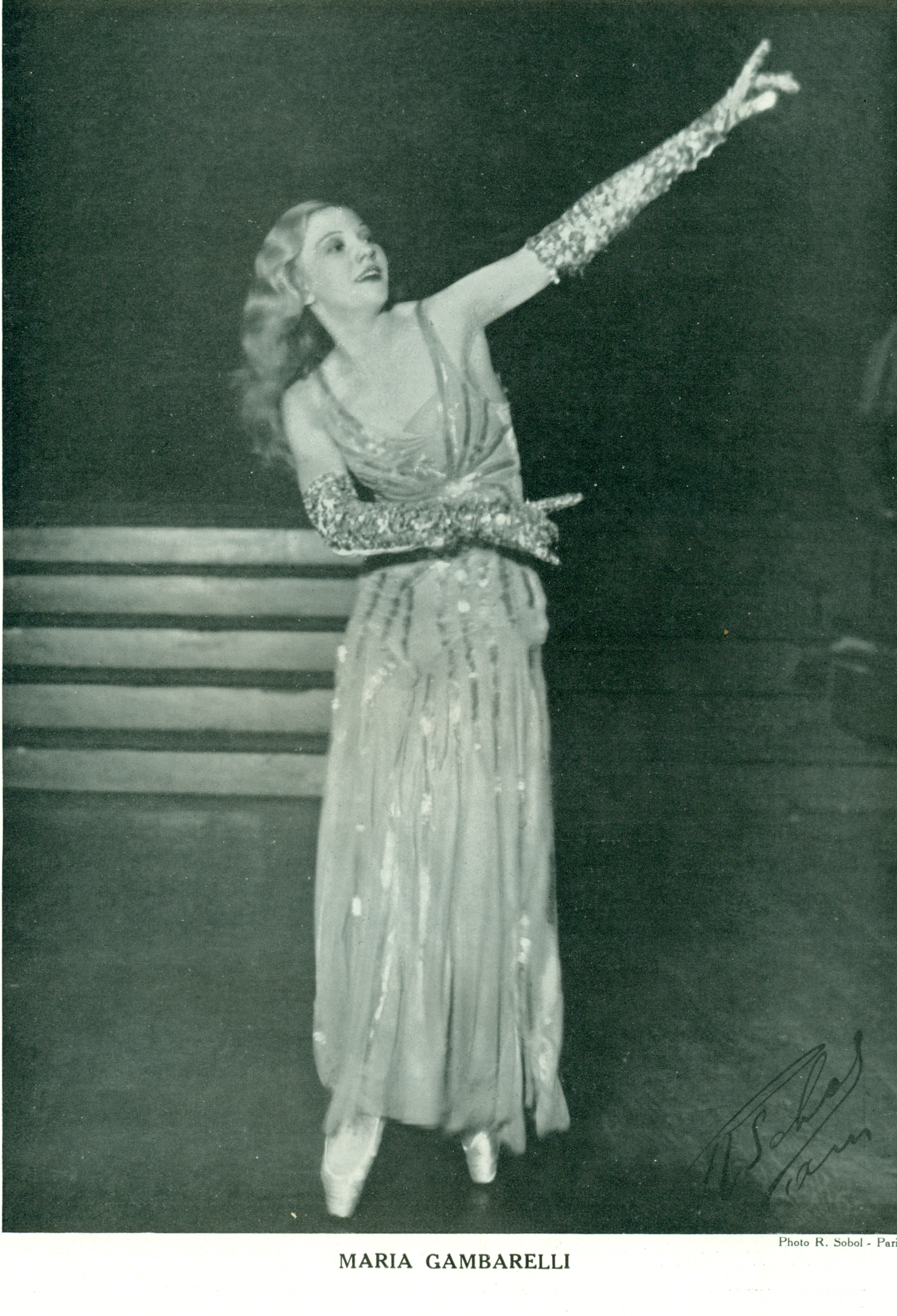
ImageAt the risk of sounding too teacher-ish, I’d like to write a bit on the woman pictured above.  However, before I discuss Maria Gambarelli, it is fitting to mention that she is just one of many interesting characters I ran across researching River of January.  It is also fair to say that Helen’s audition for Miss Gambarelli altered the course of Helen’s early career.

Born in the US to Italian parents , Miss Gambarelli began classical training at a young age.   Crossing the Atlantic she studied ballet under famed Russian dancer, Anna Pavlova.  Once back in New York, Miss Gambarelli performed with acclaim on American stages.  After an appearance on a New York radio show, Gambarelli grew to be a celebrity among audiences not interested in ballet.  In her interviews she shared stories of Italian origin, along with related folk songs.  The host, Roxy Rothafel soon made Miss Gambarelli a regular on his program, raising her profile as a dancer.

Rothafel was the man behind the construction of the Roxy Theater, which opened in New York in the late 1920’s.  Miss Gambarelli began a long term contract at the theater, performing for audiences with her company of principal ballerina’s called the Roxy-ettes.  As you may have guessed, that dance line most likely evolved into the famed Radio City Rockettes.  At least that’s the story I found.  Nailing down the past is a dicey proposition, competing with numerous other theories.  However, it does seem to flow.

This ties into my book because Helen danced for Miss Gambarelli in 1932.  The soloist had been engaged by investors to lead a dance company on a tour of European cities.  The company titled “The American Beauties,” was slated to perform first in Paris, then to Brussels, Monte Carlo, and ending in Erba, Italy.  I found in Helen’s papers that the backers worked through the William Morris Agency in New York, in conjunction with the Lartique Agency on the Champs Elysee in Paris.

Helen successfully won a spot with the troupe, and began rehearsals with ten other girls in New York.  Then the dancers experienced a near mythical crossing on the SS Ile de France to Le Havre, and by rail to Paris–all in Miss Gambarelli care.

After the endless training, all of the traveling, all of the money spent in promotion–the tour faced failure.  After only two weeks of performing at the “Le Ambassadeurs” club in Paris, Miss Gambarelli quit the tour.  And not only did she quit, she turned around and sued Lartique for breech of contract.  Miss Gambarelli wasn’t being treated up to her expectations, nor was she allowed to maintain control over the music, or the  choreography of the production.  So she quit.

When I wrote about this episode in the book I needed to find the right word to describe Miss Gambarelli’s behavior.  I couldn’t use diva, because that’s a term that didn’t become a pejorative until today.  Prima-donna is a tough one too.  In fact spell-check doesn’t even recognized Prima-donna, let alone touch on its meaning.

But, if anyone fitted the term, it was Maria Gambarelli.

In the end the tour carried on without it’s star, and evolved over time into a broader variety program.  A new headliner re-tooled the production adding more song and dance, enjoying great success by the time Helen left for New York in 1933.

The show must go on.

American Bliss

Ryan sat in the back corner of my classroom, right in front of the doorway.  He may not have been fully engaged in the lesson of the day, but he never disrupted class either.  In fact the subject was race hate, the rise of Fascism, and the emergence of Adolf Hitler as fuhrer by 1933.  This particular discussion concerned, antisemitism and Hitler’s diatribe, Mein Kampf.

The young junior raptly examined a scab on his hand while his right heel bobbed up and down in nervous boredom.  “Ryan,” I directed toward him.  His hands froze, his foot paused, still.

“Yeah,” the boy replied in his perfect central London English.

“Can you tell these kids about the Irish question in England?” I flatly inquired.

“I don’t know anything about that,” Ryan answered dismissively, returning to his blood trickling fist.

I didn’t let him off easily.  “You know Ry–the Irish Republican Army, Sinn Fein?  They have targeted the British forever, because of the British occupation of their land.”

Now Ryan is clearly becoming annoyed with me, as all the kids are looking his way.  His lax teenage cover was in the process of being blown.  “Yeah.  Like, I know about it, but it doesn’t effect me here in the states.”

“Sinn Fein actually killed Prince Phillip’s brother, Louis Mountbatten with a bomb,” I add for effect.  “Londonderry is very dangerous between Protestants and Catholics.  They commit reprisals all the time over the British presence, and have forever,” I repeat.  “Right, Ryan?”

This English-American teenager has jumped to his feet, pumping his file finger accusingly at me.  “You shut up!” he yells.  “You don’t know what you’re talking about!”

At his reaction, I look at the horror-stricken faces of the other 35 kids and calmly explain, “That’s nationalism . . .blood and belonging.  Sorry Ryan, I didn’t mean to rile you up.  But, these kids have no notion of how distinct cultural groups see themselves and other outside groups.  They know nothing of the burning hatred and venom one group holds for another.”

He stood silently for a moment, then slumped back into his desk, shaking his head doubtfully.  Now I felt kind of bad for making use of his English background to make a point.  “It’s okay, Ryan thinly smiled.”

Later that year, for Christmas, he gave me a beautifully wrapped gift.  “Open it,” the boy insisted.  So I did.  Inside was a GI Joe, George Washington doll.  Complete with uniform, a pistol and, a saber.  I still laugh when I think about it.

Helen actually toured Europe during those years of upheaval between the wars.  The chill of fascism touched her life particularly in Rome and Milan.  Her friends from the dance company attempted to work in Germany, only to find their presence unwelcome, and their stay cut short.

Hitler jokes bounced from stage to stage, cast party to cast party.

A Jewish boyfriend of Helen’s worked night and day to build a photography business, driving the length and breadth of the continent to establish satellite offices.  He was first stymied in Berlin when investors “suddenly” bowed out, and unable to travel to Madrid due to the Spanish Civil War raging by 1936.

In so many modern respects, despite enormous international changes since World War Two, we Americans still manage to lack an understanding of our world neighbors.  Americans still choose to be willfully isolated–an isolation that deprives us an accurate understanding of other people and cultures.

Tell Us About Yourself

There is a living Hell known as the first teacher work day of a school year.  Teachers all gather in the cafeteria, drink coffee, chatter, have some laughs, that is, until the principal calls us to order.  I scan down the agenda, and invariably about three items in, it reads, Introduction of new staff members.  Each new, poor soul, who only knows the administrator that hired them, hears the words, “Stand up and tell us something about yourself.”  The responses can be pretty routine.  “Just got married, I’m new to the area, I’m a graduate of _________ University, (fill in), and so on . . .  I feel confident that this ritual is fairly standard across the business world, and any other kind of office setting, and is just as mortifying.

I, myself have endured that terrifying moment, having to publicly sum up my existence before a crowd of strangers.  The people around actually do look friendly, and try to make the humiliation a little lighter.  But the trick of the exercise is grappling for the words that provide some plausible description of my identity.  Without exception I blurt out some lame particulars, turn red, and sit down.  There I relive the trauma, echoing the dumb things I said over and over in my head.

The core substance of what makes up an identity is far more nebulous.  Describing characters in my book, River of January, has challenged me to present these people with more than a limited, predictable persona.  For example, Helen, the main protagonist is deceptively easy to classify as a blond beauty.  However, limiting her traits to one or two superficial qualities misleads the reader in underestimating her strengths.

If Miss Thompson stood up and introduced herself she would have much to tell.

In 1932 Helen auditioned in New York for a classical ballet troupe scheduled to travel Europe for three months.  The ballet mistress who conducted the audition was a notable Italian/American dancer by the name of Maria Gambarelli.  Miss Gambarelli had studied under legendary ballerina, Anna Pavlova, and became a famous artistic figure in her own right. 

As fun, lighthearted, adventurous, and easy going as Helen was, she was also a disciplined, inspired, and talented ballerina, too.  Gambarelli noted Helen’s professional skill and serious work ethic, adding the girl quickly to the company.  Incidentally the final twelve dancers selected  became known as, “The American Beauties,” who demonstrated to Europeans, in the following months, the grace and excellence of classical dance in America. 

Helen could have shared that little story about herself.