
The Patriotic Long Game

When reflecting on my career as a public classroom teacher I hold on to many fond memories. The subject, American History, provided a lot of fascinating stories to share with teenagers coming of age in America. The kids came from varying backgrounds and abilities but once the door closed we focused on a subject that linked us together as one people.

One memorable lesson concerned the Second Continental Congress and adoption of the Declaration of Independence. Together we unpacked the document, followed by guided questioning to clarify the contents. Thomas Jefferson lists the extraordinary circumstances that brought about the decision to split with Britain. Part of the substance listed the abuses of the King and measures colonials had to take to be heard. Toward the end of the lesson I asked the class who they thought Jefferson might be addressing with his lengthy explanation. One boy cautiously raised his hand, an astonished expression on his face, and in a surprised voice he answered  “me.”

Indeed.

Toward the end of the academic year the kids were assigned to sit down with an elder and interview the person about their recollections of life in an earlier time. Students had studied a lot of decades which prepared them for those recordings. In a particularly powerful interview a boy contacted his uncle, a Vietnam veteran, and asked him to tell about his tour of duty in that bygone war. This veteran had not spoken of his service to anyone since returning in the late 1960’s. And although this poor man wept through the recording he apparently cleansed his soul for after decades of self-imposed isolation the uncle began to join family get-togethers.

My student said it was a miracle.

Lessons from the past such as these are vital to understanding America’s present. Though the course required a great deal of writing and analysis, a sense of accomplishment filled the room with an aura of confidence, and national belonging.

Today, over a decade has passed since my retirement, and much has changed in American classrooms. Rather than sanctuaries of learning classrooms have become battle fronts in the culture wars. A small, but loud minority has succeeded in chipping away at the foundation of public education, ironically something Mr. Jefferson promoted as vital to freedom. Sadly those misguided assaults imperil our nation’s ability to survive intact. 

The underlying cause appears to concern social class, power, and money. To educate all requires tax dollars, dollars fewer want to pay. Further, education implies looking toward the future, providing hope that the promise of America will pass on to new generations. Making money now and keeping it is more important than any investment in other people’s kids. Besides the upper classes can afford to educate their children, and believing they must shelter them from the lower classes. That attitude runs counter to America’s motto: E Pluribus Unum, Out of Many, One. Education is a promise that opens up a world of possibilities. That power and possibilities the well-heeled wish to hoard.

Take, for example, Betsy DuVos appointed by Trump 1.0. She took the job as Secretary of Education for the sole purpose of defunding and dismantling public schools. This is not hyperbole. As Secretary of Education, she made no secret of her contempt for public education. In her official role she pushed for school vouchers, charter schools, private institutions, all designed to ensure gated-community education. Stripping down federal education statutes and funding marked her time in Washington.

With Trump 2.0 even the Department of Education is gone. Critics attacking public education lack serious understanding of our public system, and that threatens our national viability.

History could not be more clear regarding the obligation to America’s youth. After the Revolutionary War as land opened up in the Great Lakes area, Congress passed the Northwest Ordinance (1787). This law organized a numbered survey grid mandating revenue from section 16 of the survey be earmarked for public education.

In the years after the Civil War waves of immigrants from Eastern and Southern Europe flooded upon America’s shores. To aid the newcomers settlement houses, such as the Neighborhood Guild in New York City, and Chicago’s Hull House, children attended classes to learn to be American. Too bad we can’t rally the same enthusiasm for all our kids today.

Now self-appointed curriculum experts pack local school board meetings, demanding removal of books, blaming and bullying over-worked teachers which isn’t helpful. Understandably many educators leave after only a few years, while the rest bravely persevere. What our teachers need is meaningful support as they shoulder the duty of classroom instruction plus all the distractions of behavior problems, lockdown drills, bomb threats, and active shooter protocols.

This is an issue of national self interest. There is nothing sentimental or saccharine about how it takes a village. It does take all of us. We all bear responsibility to all of our kids, for they cannot do this for themselves.

Leave teachers alone and let them continue to weave that same magic I experienced for all of our students. We have and will continue to turn potential into reality.

Whether a parent or an educator, or a retired senior, we are depending on you all to protect the patriotic long game.

Gail Chumbley is the author of the two-part memoir “River of January,” and “River of January: Figure Eight,” co-writer of the screenplay, and “Dancing On Air” based on those books. She has penned three stage plays on history topics, “Clay” on the life of Senator Henry Clay, “Wolf By The Ears” examining the beginnings of American slavery, and “Peer Review” where 47 is confronted by specters of four past presidents.
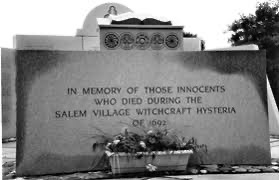
Hysteria and Martyrs

I didn’t care what my students thought. Their opinions were no business of mine. That they knew how to express those ideas, using factual information, was my business.

To introduce point of view, and critical thinking a quick textbook analysis did the trick. In groups (I assigned) students researched various history texts to spot biases in the presentation of historic facts. 

Over the years, a collection of comped survey books had accumulated on my classroom shelf. I used them for my own preparation, but decided to teach the same techniques to the kids. The task was pretty simple. All groups were asked to look up the two same topics: The Salem Witch Trials of 1692, and John Brown’s Raid at Harpers Ferry in 1859. They noted the title of the text, the authors, the publication date, and any particular word choices used to explain or describe each episode.

This was the first day of school, mind you, and holy cow the results rocked these 15-year-olds orderly world.

When each group reported their conclusions, skewed viewpoints abounded. In other words the same facts drew decidedly different conclusions.

One book blamed the Witch Trials on tensions stemming from continuous Native attacks. Another blamed simmering resentment over social class, inheritance disputes, and property ownership. Moldy grain was to blame according to the Prentice Hall book. The good people living north of Boston were tripping on ergot fungus, a hallucinogen spreading on damp wheat baked into bread.

Nearly all texts made use of the terms “fear,” and “hysteria.”

The John Brown case provided even more interesting results. If the book had been published before 2001, Brown generally came off a saint. If after, the language use grew more sinister. In pre-911 America, fighting slavery had a righteous, noble language, that justified the violence. Something to the effect that, in the name of the mighty Jehovah, Brown martyred himself to strike a blow against evil. By contrast, books published after the collapse of the Twin Towers dismiss Brown’s means as unfortunate, though slavery was still bad.

By the end of this exercise students often seemed flummoxed asking “who can we believe?” 

“Yourself, of course, and your analysis skills,” I always replied.

Gail Chumbley is the author of the two-part memoir “River of January,” and “River of January: Figure Eight.” Both titles available on Kindle.

For more explanation on this lesson email at gailchumbley@gmail.com

An America To Believe In

Religion in politics presumes all citizens essentially hold to the same beliefs. This premise also insists that religious conformity assures civic virtue and good order. However, in practice theocracies actually run counter to effective government, because invoking God in public debate stymies any exchange of thoughts. Without a “free market of ideas,” our society cannot advance, condemning the nation to decline, (See Middle Ages).   

The Constitution’s framers did not lightly pen any Article, Section, or Clause without study or debate, and that especially includes the later admission of the Bill of Rights. James Madison, in particular, examined other government systems, from the Greek City States through the Age of Reason. What Madison discovered was politics combined with religion inevitably sows public conflict; damaging both political and religious institutions. Madison’s purposeful language in drafting the First Amendment, (free exercise and establishment clauses) signaled that the United States would not repeat those fruitless mistakes. 

Lessons existed in America’s past, as well. In Colonial New England Puritan dissenters, such as Roger Williams, and Anne Hutchinson publicly rejected mandatory church compliance. Williams, later exiled to Rhode Island, defended his religious principles writing,

Enforced uniformity confounds civil and religious liberty and denies the principles of Christianity and civility. No man shall be required to worship or maintain a worship against his will.

As the first Catholic-Presidential candidate, John F Kennedy later echoed the same idea stating,

. . .it is apparently necessary for me to state once again not what kind of church I believe in — for that should be important only to me — but what kind of America I believe in.

And that was the point. American citizens must choose to worship freely, or not. That is the essence of American liberty. Law cannot dictate conscience, as our individual thoughts are as unique as our finger prints.

Despite the secular legacy of American law, religious prerequisites still surface from one era to another. In the earliest years of the Republic a fervor of evangelism blazed hot, recognized today as the Second Great Awakening. Beginning around 1800, and lasting until the Civil War, endless, exhausting revivals criss-crossed the country.

Choosing a faith among many began early and today is an American tradition.

Loosely paralleling “The Age of (Andrew) Jackson,” politics followed a similar evangelicalism, giving every person a choice in both their faith and their vote. As Americans migrated west voting rights followed, extending to the lower classes. Increasing numbers of farmers and tradesmen could cast their ballots and follow their understanding of Jesus with the same passion. 

Another unexpected outcome of the Second Great Awakening came in the form of countless spinoffs. Rural isolation cultivated a veritable Garden of Eden in new Protestant sects. For example William Miller of upstate New York forecasted the return of Christ as urgently imminent. He, and his followers believed Jesus would reappear sometime between 1843-1844. After the dates passed with no rapture, the church regrouped becoming today’s Seventh Day Adventists.

Methodists dispatched “circuit riders” into America’s interior. Men like Peter Cartwright, the epitome of a frontier “stump speaker,” could preach the Word of God, while beating the hell out of any heckler. 

Presbyterians split a couple of times before the Civil War. First, regarding whether or not untrained missionaries could lead revivals, or only seminary trained ministers. This controversy tore believers apart.

The schism for Presbyterians and other denominations sprouted from the controversy over slavery. North of the Mason-Dixon Line believers felt their duty was to take action and cleanse America of this national sin. Southerners, however countered that God made no mistakes, and it was God who appointed masters, and placed the slaves beneath them. Rather a handy absolution, that. It took a war to change the politics of slavery, but churches first led the way.

Perhaps the best advice on separation of church and state came from Justice William O Douglas in the court’s ruling, Engel V Vitale, 1962.

“once government finances a religious exercise it inserts a divisive influence into our communities.”

Dictating conscience is a fools errand, and a liberated conscience is the essential foundation of America.

Oh, and Christian Nationalism is neither Christian nor national. Quite to the contrary, that brand of absolutism does not promote public virtue, nor good order, but does lead to national decline, (see Holy Roman Empire)

Gail Chumbley is a history educator, blogger, and author of the two-part memoir, “River of January,” and “River of January: Figure Eight. Both titles are available on Kindle. Chumbley has authored three stage plays, “Clay,” “Peer Review”, and Wolf ByTheEars.” examining America’s past and present.

Englishman’s Foot

Englishman’s Foot is a non-native plant introduced by English settlers to the New World. The plant sprouted from manure droppings from equally non-native cattle. It spread unabated throughout New England, and metaphorically named by the native people.

The story is a familiar one. Dissenters of the Church of England, disciples of reformer John Calvin, departed for Holland, washing their hands of what they viewed as English apostasy. After a time among the Dutch, these expatriates watched in horror as their children came of age in the secular world of the Continent. Alarmed, William Bradford and other Separatist leaders determined to leave Holland as well, to take their chances in the New World. 

Bradford, later explained this decision in On Plymouth Plantation, deciding it was better to lose their offspring to the tomahawk than to lose their mortal souls to God. 

You know the next part of this story. 

Pilgrims, The Mayflower, Plymouth Rock, Samoset, Squanto, Corn, Thanksgiving, shoe buckles, etc . .

But this story concerns those already inhabiting the New World, the indigenous peoples of America. In truth, white men had been poking around the shores of early America well before the Mayflower sailed. Explorers, trappers, and fishermen had already encountered native people, trading goods, microbes, cultural practices, and language. Some indigenous folk spoke a bit of English, or the French they had acquired from couriers du bois.

In 1621, the Pokanoket peoples of the Wampanoag Confederacy observed the arrival of the Pilgrims to Massachusetts Bay. Their sachem, or leader, Massasoit, made the decision to cautiously welcome these newcomers, rather than force them back into the sea.

Dispatching the English-speaking native, Samoset, Massasoit hoped to learn the intentions of these outsiders. His own people weakened especially by small pox, and perpetual warfare, influenced his decision to feel out an alliance with these gun-toting English settlers, in particular, against the Narragansett of nearby Rhode Island. Massasoit’s peaceful reception forged an uneasy pact that helped the Separatists survive their “starving time.”

After Massasoit’s death in 1661, followed soon by his eldest son, his second son, King Philip, became the new sachem of the Wampanoag.

Philip’s time witnessed a massive expansion of British New England. Ships from East Anglia seemed to appear daily on the horizon, emptying thousands of new settlers to the Bay Colony. Plymouth Separatists welcomed the influx of these new colonists. The Massachusetts Bay Colony soon pressed hard on native lands, and it wasn’t long until Philip’s tolerance for the English reached a breaking point. By 1675, King Philip determined to take the action his father had avoided-force the English off Native land.

It was a forlorn hope, and Philip ultimately met his end at the hands of a fellow-Wampanoag, an informer. The sachem’s corpse was mutilated, his torso drawn and quartered, and his head posted on a pike in Plymouth as a warning to all others. Philip’s head remained on that pike for decades. 

In the end, and it truly was the end, Philip’s wife and son were sold into slavery in the Caribbean.

Ironically the offspring lost were in fact Wampanoag, not English. And King Philip’s War set a bloody pattern repeated frequently in the colonial period and after.

Enjoy the turkey, but remember the cost paid by the vanquished.

Gail Chumbley is the author of “River of January,” and “River of January: Figure Eight,” a two-part memoir. Both titles are available on Kindle. Chumbley additionally authored three stage plays: Clay regarding the life of statesman Henry Clay, Wolf By The Ears delving into American slavery, and Peer Review where 47 meets four previous presidents.

gailchumbley@gmail.com

En