
From New York
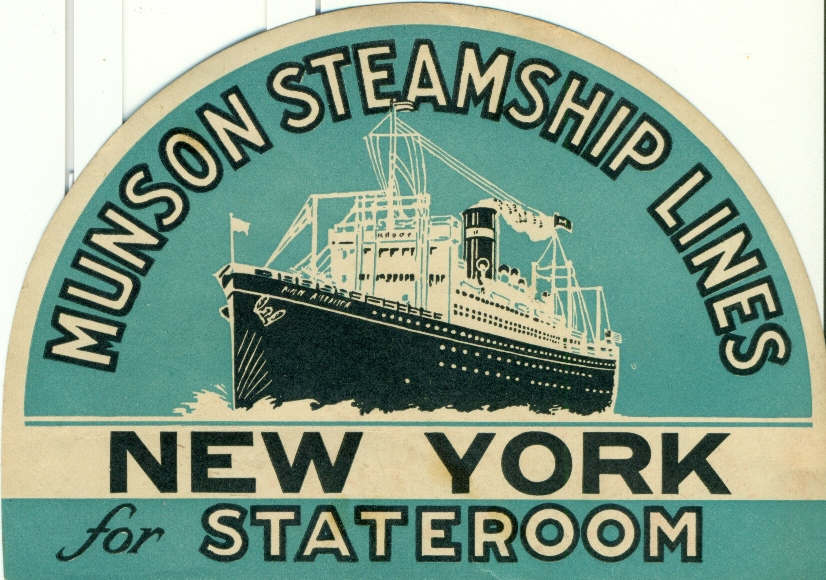 To Rio de Janeiro

Journey by air, rail, and sea!

From New York
To Rio de Janeiro
Journey by air, rail, and sea!
Excerpt from River of January
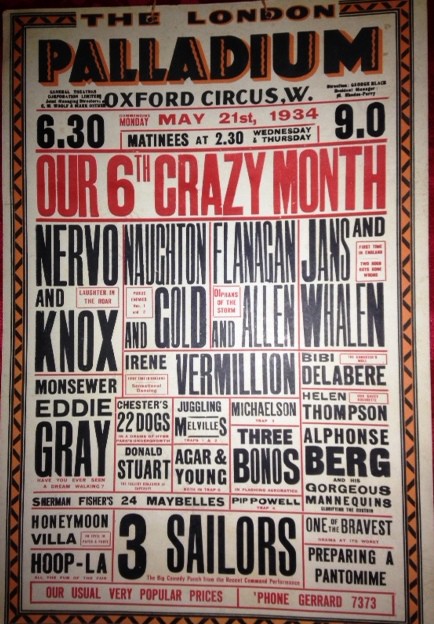
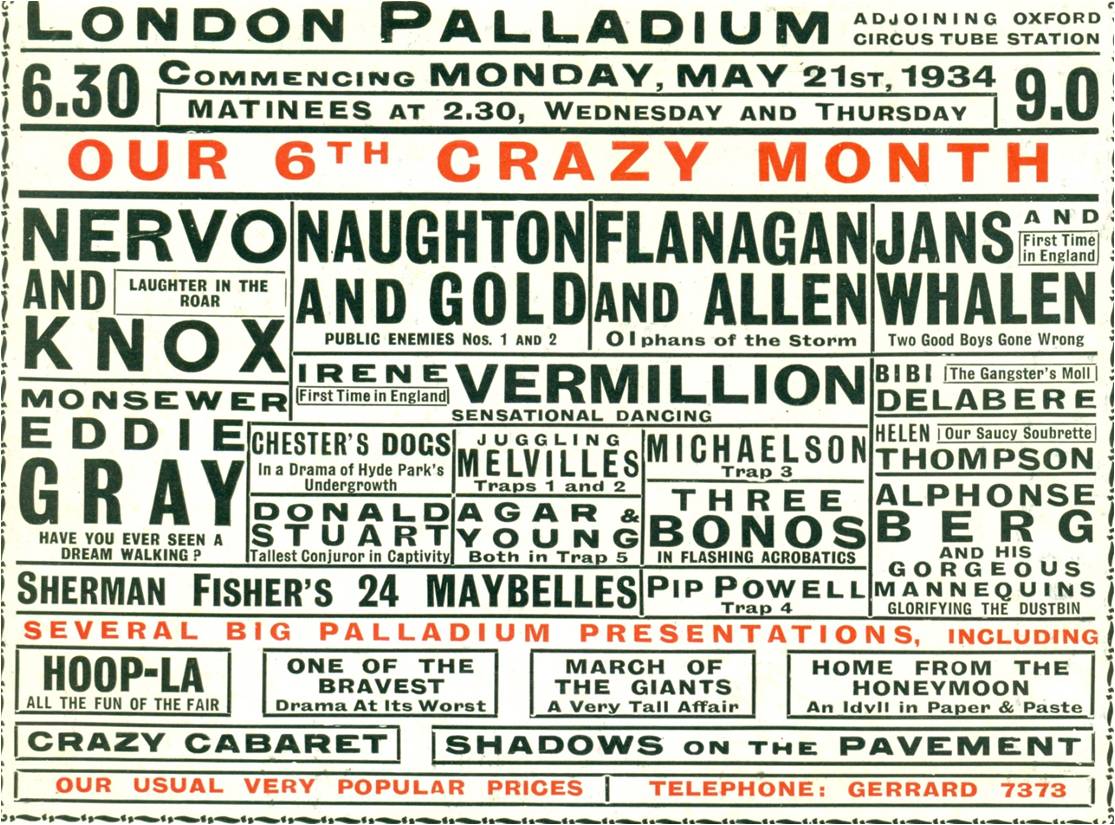
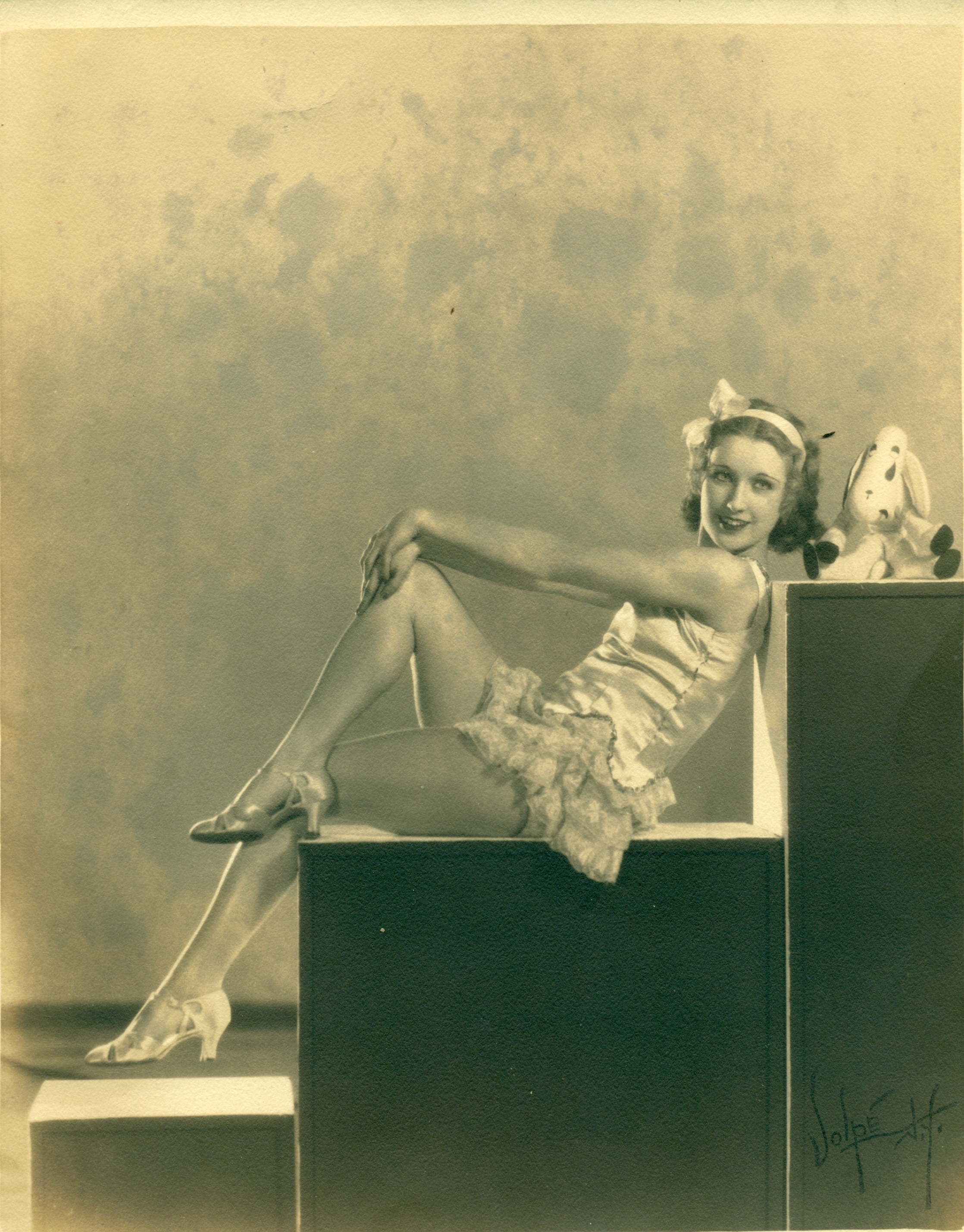
. . . “We made our first trip to the Palladium, they lettered my name on the billboard “Helen Thompson, Our Saucy Soubrette” whatever that means. I thought it was cute. Anyhow, we entered the theater through the back entrance and met a lot of the cast. Such nice people, too. They told us that “The Crazy Show,” that’s what they call it, has been coming back to the Palladium for years. This group of comedians is known, together, as the “Crazy Gang” and made us feel very welcome. They explained that the same crowds return each season to see their old friends in the show. We felt pretty excited opening night when Jans and Whalen took the stage after the all-cast extravaganza and began their routine. Harry Jans told the one about the soldier who had survived mustard gas and pepper spray becoming a seasoned veteran. No one laughed. The audience hated them. No one booed, and they clapped a little when Jans played and sang, “Miss Porkington Would Like Creampuffs.” Remember that silly song? Other than that polite response, not a snicker sounded in the whole house. Then I went on stage and performed a widow comedy monologue; black gown, the whole bit, and I bombed too. With all those spotlights trained on me, if it hadn’t been for the coughing and murmuring I would have thought the theater empty. It was horrible— nauseating— I couldn’t believe how miserably we failed. WE LAID AN EGG!
After the show some of the regulars took us out for drinks. I wanted to run back to the hotel and hide. They led us to a nice pub, but I felt so shook up I could hardly light my cigarette. They explained that English audiences often don’t understand American humor. In particular, my widow act seemed more offensive than funny. “Too many widows after the Great War,” one comedian named Eddie Gray told me. “Not funny to families with loved ones who died in the trenches.”
River of January is available at www.river-of-january.com or at Amazon.com
The following is an excerpt from River of January, Crossing The Atlantic
Dear Dorothy,
I am sorry to write to you in a crisis, but I have dreadful news. Please keep what I’m about to tell you a secret—not a word to my Mother or my sister, please. We’ve been fired! I know—it’s horrible. I don’t know what we’ll do. Jans says he can fix it, but I’m not so sure. I may have to come home early. I am writing to you because I can’t say a thing to my Mother—you know how she gets. But I may need a little money to get home. I do promise to pay you back when I get on my feet.
We made our first trip to the Palladium, they lettered my name on the billboard “Helen Thompson, Our Saucy Soubrette” whatever that means. I thought it was cute. Anyhow, we entered the theatre through the back entrance and met a lot of the cast. Such nice people, too. They told us that “The Crazy Show,” that’s what they call it, has been coming back to the Palladium for years. This group of comedians is known, together, as the “Crazy Gang” and made us feel very welcome. They explained that the same crowds return each season to see their old friends in the show.
We felt pretty excited opening night when Jans and Whalen took the stage after the all-cast extravaganza and began their routine. Harry Jans told the one about the soldier who had survived mustard gas and pepper spray becoming a seasoned veteran. No on laughed. The audience hated them. No one booed, and they clapped a little when Jans played and sang, “Miss Porkington Would Like Creampuffs.” Remember that silly song? Other than that polite response, not a snicker sounded in the whole house.
Then I went on stage and performed a widow comedy monologue; black gown, the whole bit, and I bombed too. With all those spotlights trained on me, if it hadn’t been for the coughing and murmuring I would have thought the theater empty. It was horrible— nauseating— I couldn’t believe how miserably we failed. WE LAID AN EGG!
After the show some of the regulars took us out for drinks. I wanted to run back to the hotel and hide. They led us to a nice pub, but I felt so shook up I could hardly light my cigarette. They explained that English audiences often don’t understand American humor. In particular, my widow act seemed more offensive than funny.
“Too many widows after the Great War,” one comedian named Eddie Gray told me. “Not funny to families with loved ones who died in the trenches.”
That never crossed my mind, Dot. It’s been almost 15 years, for goodness’ sake. So we were ready to make the changes the boys in the cast suggested. No prohibition jokes, no dead jokes, more songs, and lighter skits. When we arrived for rehearsal the next morning letters were pinned to the dressing room doors that we were to clean our things out—that the management would no longer honor our contract. By the way, the Times critics gave us a lambasting, too. I got to feel mortified all over again.
So, dear Dorothy, that is how the situation stands. Whalen won’t come out of his room. Jans is ready to murder the guy in the front office, and I may drag out my trunk and mail myself home. Just let me know if you can cover my passage. But, don’t do anything yet.
Thanks oodles and oodles and mum’s the word.
Helen
My Dear Friend Dorothy,
Salvation! We have been kept on the bill, at least for a couple of small bits. So thanks for agreeing to help me home, but Jans did take care of things. I swear, Dot, Harry Jans could coax the English rain back into the gray English clouds.
It all happened so quickly, but this is how events turned. We were shocked, and then worried, as I’m sure you could tell. Then Jans remembered that our contract explicitly stated we were to make $1000 dollars a week regardless of circumstances. He marched into the manager’s office and wouldn’t leave until he received a check for $4000 dollars, or our reinstatement to the show. The manager balked and then Jans reiterated that the contract was clear. My partner gets a little fierce when he’s riled and I think he scared the fellow. The manager said he’d discuss it with his investors.
But that’s not the best part. The whole cast refused to go on until we were back on the billing! Their leader, Teddy Knox, told the manager that one night wasn’t fair, and that until we went on again, they would wait. All of them! Bless their hearts! Guess they are crazy. Later, I caught up with Teddy Knox in the green room and told him how grateful I was. I guess I just hugged him and cried.
So all is well, and Bertha still calm. I will tell her, but will word my letter so that she doesn’t blow her stack. Thanks again, Dot. You are such a swell friend!
Helen
Dear Bert,
We have had quite a hectic week. We opened on Thursday night and were fired Friday morning. Can you believe that? But don’t panic, we’re back on the bill now. It was all a misunderstanding; apparently people in England and people in the States laugh at different things, so we changed our act a bit. Should be all right now. Jans and Whalen are keeping a close eye on me so don’t worry. I will send a money order in my next letter and hopefully more news. Don’t worry Mother. Things here are fine. Love to Eileen.
Love,
Wellen
Helen,
I don’t understand how you could take firing lightly. If there are any further problems you catch the first ship home. You tell Harry Jans that I mean it. Now take care, and make sure you keep me informed of any other issues.
Mother
Dear Mother,
I hope that you aren’t too cross with me. We won’t be gone long, and I will be home very soon. The three of us are back in the lineup. Jans and Whalen play toreadors in the opening number, and I am in a black and white feather costume complete with white boots. The outfits are very snazzy. We sing the show’s theme song, “Come Round London with Me,” then “God Save the King.” We had to rehearse them both, and the audience stands up and sings along when “God Save the King” begins. Can you believe it?
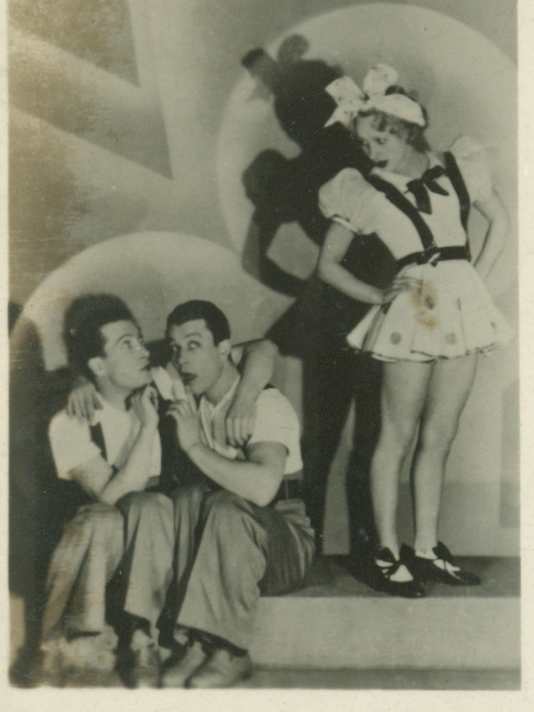
Jans and I finally are doing our own skit. I wear my tap shoes, a short flared skirt with suspenders and a huge pink bow in my hair. On cue I timidly step to center stage (everyone can hear each tap). Under the spotlight Jans, says “Did you come out to sing a song for the nice people?”
I point to my throat and croak out “l-a-r-y-n-g-i-t-i-s.”
Jans answers, “Oh, that’s a shame we all were looking forward to your number.”
I lean over and whisper into Jans’ ear. Jans then says loudly “You want to whisper the words to me, and I sing the song? Yes, yes, a grand idea! I would love to!” He announces “This song is called “Where on Earth could all the Fairies Be?”
I whisper in his ear, he sings a line, next whisper, he sings, and then Jans finishes, arms opened wide belting the out the refrain, “Where on Earth could all the Fairies Be?”
A spotlight quickly hits Jimmy Naughton, (he’s a Brit) planted up in the balcony who calls out in an effeminate voice,
“Oh, my, where aren’t they?” The lights cut to black and the crowd roars with laughter. Cute, huh?
Did you receive the money I mailed?
It won’t be long now,
Little Sister
It was the night of February 9, 1964, a Sunday, when my older brother and I had to make a crucial decision. We were both over stimulated, frantic, not one of our four feet remaining long on the floor. The house vibrated with our excitement and the weight of our impossible dilemma. For starters our birthday was the following day–the 10th, (though we’re not twins–he’s a year older). Still, that pre-birthday fuse had already ignited and by the 9th the two of us were banking off the walls.
The quandary we faced that Sunday night was whether to watch “Davy Crockett at the Alamo,” starring Fess Parker on Disney (The Alamo!), or the Beatles on Ed Sullivan. This was that first historic Beatles broadcast, live on American television, and we agonized between the two choices.
In 1964 there were no video players, no DVD players, no home computers, or dvr’s, in fact televisions were the size of Volkswagen’s and transmitted in glorious, flickering black and white. This difficult decision counted because there was no rewind, there were no do-overs. One gain meant one loss.
We liked Davy Crockett an awful lot. We had watched all the previous episodes, and Davy biting the dust in San Antonio was the much anticipated grand finale. But, oh, the Beatles! And the adoration was real, palpable, an injection of adrenaline without the needle. We worshiped at the warmth of our bedroom radios, perpetually tuned in to our local AM radio station. Reverent silence accompanied replays of “She Loves You,” and “I Want To Hold Your Hand.”
What could two grade schoolers, sick with anticipation do with such a weighty conundrum? It was 1964 and we had to choose.
Before the proliferation of electronic media, this little girl of the 1960’s viewed momentous events as they beamed across the screen. MLK’s elocution at the Lincoln Memorial, President Kennedy’s inaugural address, his assassination, and the escalating war in Southeast Asia–all experienced as reported at that moment.
In an earlier era, when Chum flew in his air race, and Helen danced in Rio at the Copacabana, there were no camcorders or Iphones. His signature landing and Helen’s near disastrous opening night grew silent as the applause subsided, then faded in time. Much like my brother and myself in 1964, they lived life forward, one opportunity at a time.
Silent photos and written records are all that remain verifying Chum’s aerial dash through darkened skies, and Helen’s energetic dance routines. They lived life forward, embracing events as they unfolded–experienced once, then gone. I would love to see footage of Chum’s Waco airplane lifting off at dusk, or watch Helen spring across the stage. But those wishes are pipe dreams, never to happen. No vintage film or recording, (except one I found by accident) exist in the historic record. The best I can do for myself, and for readers, is try to recreate the magic of the first time around in the pages of my River of January.
Oh, by the way, I’ve never seen “Davy Crockett at the Alamo.”
 Gail Chumbley is the author of the memoir, River of January. Also available on Kindle.

She is bent over a small Mercury outboard, hoisting the little motor in and out of the water. Her hair is wrapped in a kerchief, much as it had been when she wired mine sweepers at the Bremerton shipyards during the war. Ailene has a cigarette in her pressed lips, Humphrey Bogart style. Her black and white knit shirt has a small pocket on the left sleeve, over her bicep, and tucked inside is a pack of cigarettes–her brand, Kent. At the end of her day on the lake, my grandmother regularly downed a couple of high balls of Canadian Club, on the rocks.
My life with my grandmother has aided tremendously with the writing of River of January. and the sequel, The Figure Eight. She, like Helen and Chum held lifetime memberships in the “Greatest Generation,” so her attitudes, word choices, and music preferences shape my thinking while I write. Sadly she died in January, 1990, of lung cancer no less, taking a piece of me with her.
As for smoking and drinking, Chum appears as one of the few alum from that era who tended to nurse a beer, rather than chug, and chewed his cigar more than drawing a lung full. Helen, however, much like my grandmother, relished her bourbon every evening, garnished by a lit Chesterfield, and proceeded to enjoy a whale of a good evening.
Smoking and drinking blended into American culture in the 20th Century, unlike the prior or later era’s that demonized the practices. As I researched River, sifting through voluminous piles of documents, I encountered alcohol and tobacco ads placed next to those for baby formula and Ivory Soap, among other consumer goods. Liquor ads filled theater playbills on both sides of the Atlantic, nearly always featuring a shiny, sleek bottle bearing some stylish label. The message rang clear, drinking and smoking represented the height of sophistication, glamor, and sex appeal. Both my grandmother and Helen’s mementos, verified the truth that the party never stopped.
Casablanca, the celebrated 1942 film has struck me as the epitome of romantic culture in the late 30’s on into the war years. The gowns, the cosmopolitan style of understated and clipped dialog, and a perennial sense of righteous duty embraces that era. Americans lived hard and played hard, performing extraordinary feats while hungover at the least, or still intoxicated. These remarkable Americans handled drill presses, explosives, welding equipment, and other heavy industrial machinery, not to forget the operating end of an M1 rifle in a fox hole.
Out dancing, working a graveyard shift, partying, or fighting–all done with a cigarette resting, smoldering on virtuous, patriotic lips.
Gail Chumbley is the author of River of January, a memoir. Also available on Kindle.
 Gail Chumbley