Marking Time

2020.

Are the awful events of these last twelve months a once-off, bad patch of misfortune? Or is there a deeper explanation for the emergence of Trump, Covid, economic disaster, and civil unrest?

American History is steeped in a collection of pivotal moments, episodes that molded the nation’s continuing path. Can the events of 1776 stand alone as a turning point, or of 1865? 

A long metaphoric chain links one scenario to the next, marked by momentary decisions, government policies, or beliefs, that surface at one point in time, and voila, America’s story fleshes out to the future.

Add chance circumstances to the narrative and predictability flies out the window. 

Does 2020 stand alone as a singular event, or an inevitable outcome seeded somewhere in the past? Surely the march of history can be much like a chicken-egg proposition.

Mention 1776 and thoughts gravitate to the Continental Congress, the Declaration of Independence, and the emergence of General George Washington. But that struggle for freedom actually began at the end of the French and Indian War. 

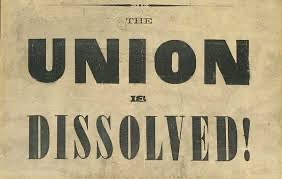
As for 1865, when the guns silenced at Appomattox Courthouse, Robert E Lee’s surrender affirmed America as a nation-state. But thirty years earlier, President Andrew Jackson’s administration had sparked the eventual war over the issue of slavery. Thinly disguised as the doctrine of states’ rights, the intractable argument of slavery festered. The “Peculiar Institution” is, was, and always be the cause of that bloodbath. In point of fact the fury of one man, John C Calhoun, South Carolina Senator, and former vice president, lit the fuse of war thirty years before Fort Sumpter.

As to the folly of Trumpism, arguably the roots are deeply burrowed in America’s collective past. Author, and historian Bruce Catton, wrote about a “rowdyism” embedded in the American psyche. Though Catton used that term in the context of the Civil War, his sentiment still resonates in the 21st Century, i.e., Proud Boys, and the like. 

Closer to today, the Cold War seems to have honed much of the Far Right’s paranoia. The John Birch Society, for example, organized in the late 1950’s escalating anti-Communist agitation. Senator Joe McCarthy rode to fame on that same pall of fear, (with Roy Cohen at his elbow) only to fail when he went too far.

But the presidential election of 1964 seems to mark the most distinct shift toward the defiant opposition that fuels Trump-land.

Vietnam, in 1964 had not blown up yet. JFK had been murdered the previous fall, and his Vice President, turned successor, Lyndon Johnson was the choice of a grieving Democratic Party. The GOP fielded four major candidates in the primaries: three moderates and the ultra conservative, Barry Goldwater of Arizona. Senator Goldwater gained the nomination that summer with help from two men, conservative writer Richard Viguerie and actor Ronald Reagan.

Viguerie broke political ground through his use of direct mailing, and target advertising (what today is right wing news outlets). Reagan, once a New Deal Democrat, crossed the political divide and denounced big government in “The Speech,” delivered on behalf of Senator Goldwater. These two men believed Conservatism, and Laissez Faire Capitalism had been wrongly cast aside for liberal (lower d) democratic causes. 

Their efforts struck a cord with legions of white Americans who felt the same resentment. The Liberal Media and Big Government from the Roosevelt years were Socialistic and anti-capitalistic. No urban problem, or racial strife or poverty appeared in their culdesacs or country clubs. And taxes to support Federal programs squandered and wasted personal wealth.

So many other issues shaped the modern New Right. Communism, the Cold War, Civil Rights, Vietnam, and progressive politics alienated the wealthy class. 

But here’s the rub. Ultra conservative ideology is unworkable, an ideal that awards only a small, exclusive few, (today’s 1%). So 2020, and 2016 both have roots running deep in the core of the American experience. 

2020 isn’t about this moment, not really.  

Gail Chumbley is the author of “River of January,” and “River of January: Figure Eight,” a two-part memoir available at http://www.river-of-january.com and on Kindle. Also the stage plays, “Clay,” and “Wolf By The Ears” (the second in progress.)

gailchumbley@gmail.com
The Clarity of Desperation

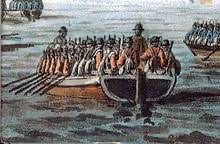
With only days until Christmas 1776, General Washington watched the snow fall and the ice thicken as his suffering army melted away. Earlier that year, in July, that same Army had been humiliated by the Red Coats, chased off Long Island, pursued through Manhattan, barely escaping across the Hudson River into New Jersey. 

The General had been flanked by overwhelming British forces and his inexperienced Patriot army simply panicked and ran. Furious at their conduct Washington threatened to lead another assault himself, however, cooler heads prevailed as his staff convinced him otherwise. 

Amongst King George’s red coated regulars were legions of Hessians, hired guns from the German kingdom of Hesse-Cassel. Their presence on the field infuriated the Americans, as if the King couldn’t bother to keep the conflict British. These mercenaries were especially brutal, taking a psychological toll on Washington’s volunteer army by making use of flashing, saber-like bayonets. 

But Washington had a few cards of his own to play. Contemplating retreat while still on Long Island General Washington had ordered Colonel John Glover, a New England mariner, to collect enough vessels to ferry his surviving soldiers west to Manhattan, then over the Hudson into New Jersey. With campfires blazing to fool the redcoats, Washington successfully evacuated his army waiting to board for the last boat.

The inexperienced American army was preserved.

Still, demoralized, and outgunned, the Continental Army appeared defeated and despondent. The general consensus among all was the war was hopeless, a lost cause, the Patriots esprit de corps vanished. 

By winter, Washington’s command appeared to be unraveling. Inadequate food, too few supplies, and support sapped the army’s endurance. Worse the Brits, flush with currency, settled into cozy New York accommodations and enjoyed the hospitality of the city’s loyalists community. 

With circumstances conspiring against him-the weather, scarcity of supplies, and outgunned by enemy Hessians, Washington had to act as he faced a critical moment. Writing to his cousin, Lund, the General poured out his anguish. 

. . .your immagination can scarce extend to a situation more distressing than mine—Our only dependance now, is upon the Speedy Inlistment of a New Army; if this fails us, I think the game will be pretty well up . . .

Out of desperation Washington confessed what he termed as the “clarity of despair.” He had to act.

First Washington sent for an operative who sold provisions to the nearby Hessians. This Patriot spy came into camp and apprised Washington on the disposition of King George’s contracted killers billeted in nearby Trenton. These Germans were settled in for a Christmas celebration, assured that the Americans were all but defeated. 

In his second order, Washington commanded Colonel John Glover, once again, to requisition every boat the yankee seafarer could find. Between the intelligence report and vessels secured, his men were mobilized for a surprise Christmas morning assault on Trenton. 

Once again, Glover pulled off a miracle amphibious operation. And once again, General Washington was the last man on the last boat. In two files the suffering Continental Army marched, braving more than just the weather.

His forces arrived by first light. 

The unsuspecting Hessians were throughly routed in the surprise assault, that in the end provided the Patriot cause with a desperately needed victory.

The revolutionary cause again breathed life. 

So as you enjoy the warmth of the season, remember those who struggled before that the people could have a new nation. On Christmas in 1776 Washington’s army marched through the inky, icy cold, hungry, fretting for their families, yet committed to the long game of founding a nation. 

We have done this before. Much like General Washington our desperation makes our choices clear. Recent scholarship estimates that during the Revolutionary War only 1/4 of the American population supported independence. There are more of us holding to Constitutional norms today. Stay the course this moment isn’t the last.

Merry Christmas.

Gail Chumbley is the author of the two-part memoir, “River of January,” and “River of January: Figure Eight.” Both titles available on Kindle. Gail has recently completed a stage play, Clay, on the life of Henry Clay, Peer Review, where four former presidents meet 47, and Wolf By The Ears, an examination of the events leading to chattel slavery.

Steal This Letter

If you feel like contacting your Republican Senators copy and paste this one. Tweak it for your own state and issues.

Senator,

Donald Trump’s stubborn refusal to face the reality of his election loss is as dangerous an assault on our nation as 911, and much more damaging than Pearl Harbor.

This election fiasco flies in the face of American traditions. General Washington sacrificed much of his personal happiness to found our nation. As America’s first president, he placed our republic above any personal comfort, and Washington’s legacy bears that out. When his officers suggested he take the reins of power, the general declined and went home to Mt Vernon.

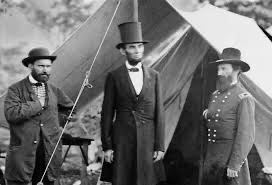
In 1860 Abraham Lincoln preserved what Washington had begun, our Union. And though it cost him his life, the United States was Lincoln’s primary concern.

Both men, a founding father, and the savior of the Union, counted their interests as secondary, because America mattered more than any one man. Now, through a series of events, that responsibility has fallen to you. The GOP majority in the Senate can end this assault on our heritage, and you can make that happen. 

Your forebears would be proud.

The Republican Party came into being on a noble, decent premise. It is the Party of Lincoln, not a lout from Queens.

*Please don’t patronize me with excuses.

Gail Chumbley is the author of the two-part memoir, “River of January,” and “River of January: Figure Eight.

gailchumbley@gmail.com

The Unforgivable Curse

Many of us have read JK Rowling’s Harry Potter books and/or watched the films. The author created a wondrous world of spells, incantations, and even included law and order via three unforgivable curses. 

There are guardrails in this tale, and a bit of a messiah storyline. Harry willingly sacrifices himself, as had his parents and many others before. However, the “Boy Who Lived,” does, and returns to fight and vanquish wickedness. 

Love, too, permeates the storyline, and the righteous power of good over evil. 

But that’s not my take.

As a career History educator I came to a different conclusion; Harry Potter told me that failing to understand our shared past can be lethal. And that was the metaphor I preached to my History students.

Harry rises to the threat and defends all that is good and valuable in his world. If he didn’t, Harry could have been killed and his world destroyed.

It’s so apropos at this moment in our history to grasp our collective story as Americans.

Honest differences within the confines of our beliefs is one thing. Obliterating the tenants of democracy is quite another. 

Americans cannot surrender our country to this would-be dictator, the things that have cost our people so dearly. Freezing soldiers at Valley Forge did not languish to enable DJT to trademark his brand to hotels, steaks or a failed university. The fallen at Gettysburg, and the suffering in Battle of the Bulge was not to pave the way for DJT to get us all killed from a ravaging plague. The girls who perished in the Triangle Shirtwaist Fire, the miners murdered in the Ludlow Massacre, or humiliated Civil Rights workers beaten at the Woolworth’s lunch counter was not for Donald Trump to validate racism and sexism and undo labor laws. 

He doesn’t know our nation’s history, and as George Santayana warned us, we are condemned to sacrifice all over again. 

Vote. 

Gail Chumbley is the author of the two-part memoir, “River of January,” and “River of January: Figure Eight.

gailchumbley@gmail.com

Endurance

14e7ea2b2fd17c16e45990ee1dd21a8edb4ddd40.jpeg


Three early American documents are often lumped together in our collective memory, though each is quite different from the others; The Declaration of IndependenceThe Articles of Confederation, and the enduring US Constitution. Citizens generally know something of the Declaration due to a certain celebration we observe each summer. The Articles of Confederation are a bit more elusive, and not nearly as recognized. The third, the US Constitution is revered, but its beginnings, and purpose is also shrouded in time. 

Here is a quick explanation of each missive, particularly the sequence, and the significance of each.

The Declaration of Independence: July 4, 1776. A product of the Second Continental Congress, this revolutionary document was ratified as an instrument of rebellion, after all other measures to avoid war with England had failed. In reality, the shooting had begun a year earlier in Lexington, Massachusetts, but the Declaration formalized hostilities. Debated and delayed, this document was finally adopted in July of that year. Congress made crystal clear their reasons and resolve to free themselves from King George’s arbitrary rule. Penned by Thomas Jefferson, the Declaration began with a guiding statement about “Natural Right’s” shared by all humanity, and that people had the obligation to free themselves from unjust tyranny. The rest of the epistle read as a legal document condemning the King and his despotism. This document is the first of the three in forging the United States of America. 

The Articles of Confederation: September, 1777. The Articles provided America’s first national charter of government. Approved by the same Second Continental Congress in 1777, the Articles attempted to unify the original states under one government. Through this document, Congress sent diplomats abroad, including Benjamin Franklin and John Adams, to (beg) obtain financial support from European powers. However, at home, this framework failed miserably. More a Confederation of independent principalities, Congress had to plead for money and men from each state, who often said no. There was no power to tax, no centralized currency, and the Articles weren’t even ratified by all 13 states until a month before the war ended at Yorktown. Each state jealously guarded its own interests over any unified cooperation. Congress could do next to nothing to aid General Washington and his army. Chaos ensued after the war ended, as well. Trade wars flared, disagreements among the states spilled over into violence, and rebellions within states promised more turbulence. The ability of America to govern itself appeared doomed. The English were sure America’s failure was imminent, and they could, once again, swoop in.

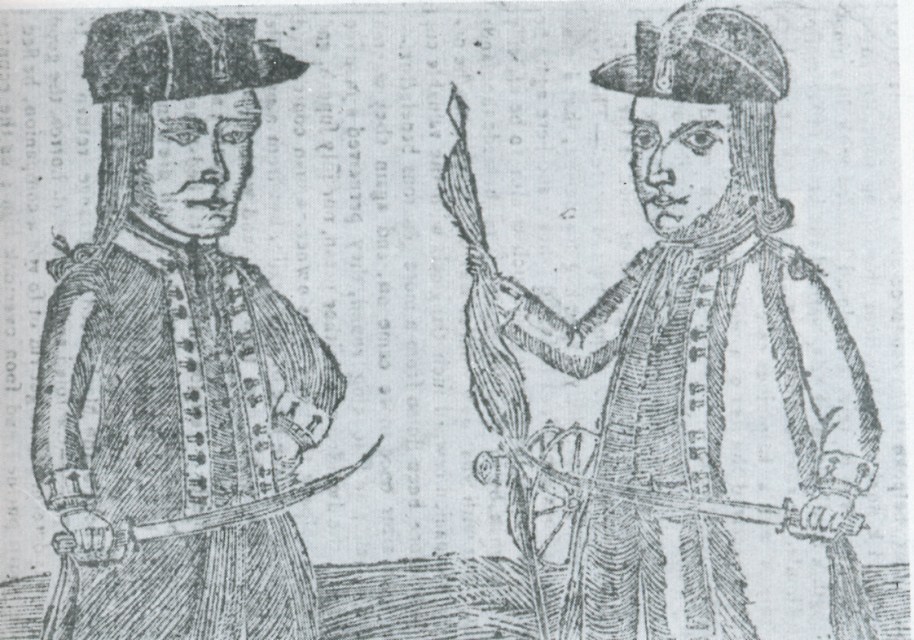
The United States Constitution: May to September, 1787. Born from an earlier 1786 meeting between Alexander Hamilton and James Madison in Annapolis, MD, the Constitutional Convention was organized and slated for Philadelphia in May. Both founders understood that without persuading Washington to attend this new Convention, any success was remote. Washington, tending his home at Mount Vernon, was hesitant, and tired. However, when news reached the General of an uprising in Western Massachusetts, (Shays Rebellion), Washington agreed to attend. Fifty-five delegates from all the states except Rhode Island, reported to the Pennsylvania Statehouse in Philadelphia. Most were lawyers, sprinkled with many Southern slave holders. Virginian, James Madison came prepared with a plan to replace the feeble Articles of Confederation. Much of Madison’s Virginia Plan became the basis of the Constitution. Designed for endurance, this new charter vested authority in the Central government, and the states. Termed Federalism, powers under this frame of government are shared between both authorities simultaneously. The tooling of the document, employing separation of powers, and checks and balances is brilliant, and worked well until 2016.

Gail Chumbley is the author of the two-part memoir, “River of January,” and “River of January: Figure Eight,” both on Kindle.

gailchumbley@gmail.com

A Learning Curve


George Washington came of age immersed in the culture of Tidewater Virginia. To join the higher echelons of society there were set requirements, in particular vast property holdings.

This lust for land had crossed the Atlantic with the first ships from Great Britain. Only gentlemen of the highest social station possessed “parks” to use the British term; bucolic sanctuaries where aristocrats, and their guests could hunt, and fish, with enough acreage left for tenancy. Landed Cavaliers to Virginia immediately assumed a sense of equality to any aristocrat residing in Old England. (The “All Men Are Created Equal,” passage in the Declaration of Independence affirms Jefferson’s sentiment.)

Washington’s older, half-brother, Lawrence, the heir of their deceased father’s estate, had the land, the title, the rank, and the education that George could never realize. But, Lawrence did try to help the twenty-year-old establish himself. Lawrence first tried to secure a naval commission for his younger brother. But that didn’t work out.* With no money or prospects, young Washington settled on a career as a land surveyor, a noble calling for the time. 

Making use of his father’s instruments, and with  help from a neighbor, Lord Fairfax, George gained an appointment to the Virginia Militia, and a chance to put his vocation to use.

The year was 1754 and a fateful clash awaited the untested soldier-surveyor.

Virginia’s original charter claimed virtually all western lands, north by northwest of the colony, theoretically to the Pacific. At roughly the same time the French too, had staked claim to that same interior region. At a site known now as Jumonville Glen, in the Ohio River Valley, Washington and his party detected then attacked an encampment of French Canadiens. In the melee a Native scout with Washington, called Half King, killed a Frenchman, who, as it turned out was a diplomatic courier. That was, and still is, an international no-no. 

In retaliation soon after, French reinforcements from Fort Duquesne, (Pittsburgh) pressed down on Washington’s party, where the untested and panicked militia officer made a colossally poor decision. In the ensuing “Battle of Fort Necessity,” Washington was easily whipped and forced to surrender when his hastily erected stockade filled with rain, making defense impossible. 

Thoroughly humiliated, Washington surrendered to the French on July 4, 1754. In the capitulation treaty, young George unwittingly admitted he had allowed a French diplomat to be assassinated at Jumonville Glen. His lack of education was exposed. Washington couldn’t read French and didn’t know what he had signed. His humiliation was complete, his blunder igniting the French and Indian War. 

Fast forward forty years to 1794 and a return to the site of old Fort Duquesne, the scene of Washington’s infamous disgrace. For Washington much had changed. As Commander of the Continental Army, Washington had nobly defeated the British in the Revolutionary War, and became the first President of the United States.

The once awkward Virginian was fully redeemed in the eyes of the new nation. Despite his rough start, Washington had grown up. Still, his misadventures decades earlier still stung. Despite universal accolades, the nods and winks of those who remembered Jumonville Glen remained.

As for old Fort Duquesne? The settlement had become the growing commercial center of Pittsburgh. 

And it was in the proximity of Pittsburgh, near the site of his former humiliation, that President Washington faced a new conflict.

The new Congress has passed an excise bill on distillers of whiskey, as a means for the federal government to settle war debt. Secretary of the Treasury, Alexander Hamilton had proposed this tax on spirits as a way for the Treasury to settle its financial difficulties. But distillers around Pittsburgh stubbornly refused to pay. In fact Whiskey Rebels rose up, and attacked tax officials who attempted to collect. By summer of 1794, one collector had been tarred and feathered, and another was burned out of his home by a violent mob.

The Revolution was over, and President Washington had had enough. No more domestic violence, especially not from the Ohio Valley. He requested Congress to raise an army, placed Hamilton at the head, and sent them to the site of his earlier disgrace. These agitators melted away like snow in April.

Washington flexed federal power in what was the Constitution’s real first challenge. That Washington felt some sense of personal absolution, considering his military history is understandable.

And what does this episode mean to us in the long run? Don’t piss off George Washington? Maybe. But more importantly the new Constitution was the law, and as chief executive, he enforced that law.

Washington had grown up, and the country needed to do likewise.

*Washington’s mother said no.

Gail Chumbley is the author of the two-part memoir, “River of January” and “River of January: Figure Eight.” Both available on Kindle.

Peer Review #2

Strutting through the broad, gilded doors, bearing the black and gold insignia of his building, the President acknowledged well wishers, reporters, and staff. Happy to be back in New York, he looked forward to his familiar apartment and comfortable bed. The President felt it a hardship to live in such an old structure in Washington, though the prestige made it tolerable.

He aimed directly toward the elevator, his closest aides and Secret Service agents in tow. The Chief Executive marched into the lift, with a triumphant gait, gracing photographers with a last thumbs up, as the golden doors silently sealed.

Soon enough, the elevator car slowed to a silent halt, the opening doors revealing an opulent penthouse. His entourage emptied first into the golden rooms, Secret Service staff sweeping for any dangers that might threaten the Commander in Chief. After the officers cleared the master bedroom, the President loosened his tie, slipped off his suit jacket and kicked off his designer shoes. Exhaling onto his grand bed, a sudden movement caught his eye.  

A tall man, of regal bearing stood by the window, surveying Midtown from on high. Attired in a blue uniform, trimmed with buff lapels and cuffs, the man’s hair looked powdery white, and was bound in a queue at the nape of his neck. 

Stunned, gasping at this extraordinary vision, the President froze, too astonished and frightened to speak.

“I’m very fond of New York,” the officer began. “During the War for Independence I remained in the vicinity waiting to reclaim it from British occupiers.” He glanced at the frightened man, now burrowing under his bedclothes. “As Chief Executive, I served both terms of office here in New York.”

The President could hear his heart pounding, and idly worried about his blood pressure.

“I, too, struggled with temptation,” the officer continued. In my youth I pined for the advantages of wealth that surrounded me.” The apparition glanced at the President. “Land, military rank, social standing, . . . these were the empty ambitions I embraced as valuable.”

The President slowly began to feel his heart rate slow, the adrenaline somewhat dissipating, and found the courage to speak. “Ho, . . . how did you get in here?” 

But the soldier did not reply, turning again toward the view of Manhattan. 

“Over time, particularly once the war commenced, I discovered my assumptions slowly crumbling. The sacrifices endured by the fine men in my command taught me that there were more important ideals than fleeting treasure,” the apparition sighed, emotion emphasizing his revelation. “You must realize,” the officer turned again toward the President, eyes blazing with conviction, “all a man truly possesses is reputation. In the end, that is all that matters.” 

Dread again filled the President, clutching tightly his golden comforter, finding no comfort. He wished the specter gone, praying with all his might that a staffer would hear and rescue him.

“You must understand,” the visitor continued, “I, too, struggled to master my avarice and envy. It was through a determined practice of self-restraint, a mastering of my baser desires, that I learned to be of service to more than myself.” The soldier paused a moment, studying the frightened man grasping his bedding. “Did you know that Article Two in the Constitution was written for me?” 

Hearing this, the President forgot his fear for a moment. 

“For you?” he managed to murmur. 

“When I relinquished my command after the war, and returned to my home in Virginia, Congress judged my character upright. In truth I was weary, lonely for my family, and yearning for a peaceful life,” the General smiled sadly. “However, when I gave up power I earned honor, trust—a good name—and contentment.”

“Why are you bothering me? You should leave,” the President moaned, wishing he had flown instead to Florida. But his visitor seemed not to hear. 

“When the Constitutional Convention set to work, only one day was devoted to defining the role of president. One day,” the visitor repeated. “You see, the delegates wanted no more of arbitrary rule, believing only those of good character would occupy the office.” The apparition looked directly at the President,”

“Please go,” the President whimpered. “I’ll call my men . . .”

The General interrupted, “they are not yours, Sir. And therein lies the problem, and the purpose of my visit.” The soldier frowned deeply. “These deputies work for the American people, as do you, sir. The presidency is a position of service and trust.” He paused. “We have all noted your general deficiency in this aspect.”

“We all?” gasped the President, concerned with his pumping heart.

The General approached the vast bed, the President shrinking deeper with each step. “The President is entrusted with formidable powers, that must not be corrupted. In this you have fallen short.”

“As I am remembered in the annals of America for quiet dignity and fidelity to country, you will only be recalled as a cynical moneychanger who profited from foreigners and plutocrats.”

A knock at the bedroom door startled the cocooned President, breaking the spell. His elaborate, golden bedroom was empty.

Gail Chumbley is the author of the two-part memoir, “River of January,” and “River of January: Figure Eight.” Both are available on Kindle or in hardcopy at http://www.river-of-january.com.

gailchumbley@gmail.com