The New Frontier

MomDad1[1]

These are my folks. Today is their 62nd anniversary, and unlike my last anniversary post, mom and dad are still alive and kicking, arguing about the same trivial nonsense in the same house where I grew up.

Example-Dad:We drove to Minnesota in ’68 in that black Chevy. It’s just before we bought the white one.

                  Mom: (condescendingly) Dave, you had sold that truck already, we drove the white one.

And so it still continues, even into their eighties. It’s that kind of banter that seems to keep them young. And it’s funny, but that is how they endure in my memory, as young parents, with small children. Though I was one of the brood of four, the two of them remain youthful, and optimistic in my mind’s eye, raising their family in the heady years of JFK’s New Frontier.

After their almost teenage marriage, Dad and Mom bought a modest house on a modest street. My dad worked shifts at Kaiser Aluminum, sweating over pots of white-hot molten ore, spewing the kind of heat that would have made Andrew Carnegie happy. If my father could snag a “double,” stay on for an extra shift to earn more cash, he would jump at the opportunity. Dad wasn’t really a workaholic, because he was foremost a family man, and played as hard as he labored. Still, at the same time he sought financial security, and knew ‘all blessings flowed’ from contract negotiations, remaining a proud member of the Steel Workers Union.

In contrast my mother preferred staying home. She still does. Her home has been, and always will be her sanctuary. She is an interesting individual. As a teacher I can state for certain, if there had been aptitude testing for school children in the 1930’s, my mother would have qualified for a gifted and talented program. No joke–if we analyzed the hours the woman has spent reading, her eyes have scanned print more than looking at my dad. Mom’s face is available in both hard cover and paperback, (no e-book format yet). I think that if she couldn’t read, my mother would wither up and blow away.

Well, after some difficulties in those early years, my older brother arrived on February 10, 1954. And they named him Dale for my mother’s uncle. The next year, I showed up on February 10, 1955. It seemed to make some sort of cutesy sense that I should be called Gail. The timing of our precisely dated births convinced my mother, and maybe even my dad, that all God’s children naturally arrived on February 10th. (You’d think birthday parties would have been easier to plan, but my mom says no).

The path they have tread through the years was not exactly paved with gold. My dad’s employer, Kaiser Aluminum semi-regularly initiated lay offs as the metals market waned. But, was he daunted? Not by a long shot–he had a trick or two up his plaid flannel sleeve. My father, at heart, was not a factory drone, he was an outdoors man, a tree expert to be precise, equipped with winches, come-alongs, Swede saws, augurs, and thermoses of bad coffee. Dad just started his own business, a tree removal and yard clean-up enterprise. And though he actually made more money than at the plant, his practical, family-man side, the side that considered his wife and children, sent him back for the medical insurance and a retirement pension.

My dad always knew how smart my mother was, and instead of feeling intimidated, he was proud. Even today the woman can clear the board on “Jeopardy,” faster than Alex Trebeck with his cheat sheet. In the early years of the 1960’s, he convinced her to challenged the Postal Civil Service Exam, which she passed in spades. Instead of resenting Mom going to work, he encouraged her natural smarts and her remarkable abilities as a positive thing.

Now my mom wasn’t as convinced. Like I said before, she liked being a haus frau. However, her talents shined from the beginning, drawing attention from the postal hierarchy, who saw her as management material. So, after the birth of my youngest brother in 1962, mom entered the workplace and blossomed, eventually becoming a supervisor and working, for the most part with air mail at the airport. She memorized every air route, every airport designation, every schedule, with few mistakes. Her memory skills are almost scary. (I don’t know why he still bothers to argue with her).

So today my young, Kennedy-era parents are celebrating their 62ned wedding anniversary. They will eat dinner at 4:00, and chat about some earlier vacation . . . perhaps the Mesa Verde, the Custer Battlefield, or the semi annual holy pilgrimage to Minnesota, the land of his people. Maybe they’ll reminisce about the time I dropped her diamond watch into the toilet, or the chronic illness that plagued my younger brother through his childhood. Maybe they’ll laugh about the sauna they built, proud to have imported the authentic stove all the way from Sweden. After waiting weeks for the package to arrive it finally came by post. Opening the box they read it was made in Bellevue, Washington, five hours away by interstate.

I think their marriage just might be a good one.

Gail Chumbley is the author of the memoir River of January.

Plastics

From August, 2013

gail chumbley's avatarGail Chumbley

One-Word-Plastics

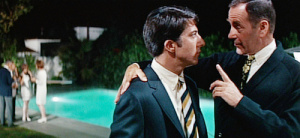
In Mike Nichols classic, The Graduate, Dustin Hoffman’s character is the guest of honor at his own graduation party.  Shaking hands, thanking well-wishers, one attendee herds him outside and says, “One word.  Plastics.”  There is no context or warning for the advice, and the exchange is well timed–very funny.

Turns out that the recommendation from the film was sage advice.

My husband was diagnosed with throat cancer back in the spring of 2010.  Following seven weeks of daily radiation, and powerful opiates, combined with a freighter load of other drugs, his colon ruptured by August.  Simultaneous to the colon perforation, chaos erupted as well.  The next twelve fateful hours involved a life-flight trip on a helicopter over the mountains, life and death surgery, followed by eight harrowing days in the hospital ICU.  In summary his recovery took better than three years, as he was literally coming back from the…

View original post 553 more words

Retirement

To my brave colleagues who soldier on.

gail chumbley's avatarGail Chumbley

No doubt that one of the primary reasons I retired was burn out.  I had worked in secondary classrooms the length of my adult life and struggled the last couple years largely due to growing political pressure.  You see, I bought into the idea that hard work paid off and found out that I was dead wrong.  My hard work didn’t matter.  None of my colleagues hard work mattered. My student performance outcomes, though well above the national average didn’t matter.  Nothing moved policy makers except that they could hire two new teachers for the price of me, and many of my fellow staffers.

When the mortgage market imploded in 2008, Southwestern Idaho flat-lined economically.  While teachers, such as myself, fought draconian budget cuts the legislature didn’t listen.  They didn’t care.  The brutal impact on classroom numbers and lack of materials made no difference, their ears were closed.  In fact…

View original post 214 more words

What I Heard

images

Ken Burns has done it again–hit another historical piece of film over the wall. I’ve enjoyed Burns work for decades, beginning with “The Civil War,” through “Baseball,” to “Jazz.” He has consistently combined solid historical research with the subtle beauty of an artist. But in his new “Mark Twain” biography I made a discovery I once believed impossible. I watched the film without any historical analysis or comment.

For the first time since publishing “River of January,” I watched simply from a writer’s perspective. In the film, scholars discussed how Clemens didn’t find his unique American voice until well after “The Innocence Abroad,” and “The Prince and the Pauper” were published. Twain’s masterpiece, “Huckleberry Finn,” came after years of hesitation until that singular voice could no longer be kept tethered.  The author reached deeply from his childhood–a bigoted world of ignorance, poor grammar, and slang with a twang. He defaulted to what he knew best, his inner core and colorful life.

That resonated with me in my own struggle for voice. I have come to realize that a personal truth has to come off the page to remain in the manuscript. If the story line, or flow of dialog doesn’t resonate, it has to go. There must be a truth to tell. The obstruction of a badly worded sentence, or contrived  idea hangs uneasily in my psyche. I have to write what I know to be authentic. It’s a weird dynamic too, and takes concentration to pull off. I put myself in the scene–whether it’s a cockpit, or a dressing room. From that bit of time travel I can survey the setting, describing it both physically and emotionally. I understand the importance of familiarity.

In another tidbit from the documentary, Ken Burns examined Clemens daily writing regimen.

At his home in Hartford (I’ve been there, it’s so cool) Twain worked in an upstairs room, away from everyone, committing his tales to paper. Each evening Clemens gathered his family and friends to listen to  his day’s bounty. I found that intriguing–not as a historian, but as a writer. (Twain had many notables among his friends, President Ulysses Grant for one.)

Samuel Clemens made writing his day-job, and used his household as an audience. Something I find I am unable to follow. However, my ears were carefully adhering to that writing schedule revelation, contemplating his patterns.

I too, need quiet and solitude, but don’t produce the same way. My engine needs to rev up before any writing session. I think and think and think (like Winne the Pooh) then inspired fire up the old laptop. The historic record can spark my thought processes, and the Chumbley archives also can prompt a productive writing session. All in all, a “fits and starts” style best describes my method. Both “River of January” and the new one “Figure Eight,” have come to life through my haphazard style.

Mark Twain can stand alone as a historic figure, apart from his brilliance as a man of letters. He belonged to a political group known as the “Anti Imperialist League,” opposing unrestrained immigration, especially from China and the Philippines. He disapproved of  John D. Rockefeller and other greedy Robber Barons, making no friends among the elite. All that I all ready know, and taught for years. The astounding thing is I watched the program hearing only the literary journey of an American lion.

Another View

ImageI’m back.  I’ve spent the last couple of days visiting my folks and checking out some mom and pop bookstores.  It’s my hope to find some speaking opportunities to promote my forthcoming book, River of January, and perhaps sell a few.

Again, I have posted Lincoln’s picture as I did in my last post, because today is our 16th President’s 206th birthday.  I like Lincoln.  A lot.  I am what one would call a “Lincoln-ista.”  As I write, my standup cardboard Lincoln is presiding over the dining room table.  It is after all his birthday!

A life lesson Mr. Lincoln seemed to apply frequently was understanding other points of view.  He and his wife were both born in the border state of Kentucky.  Slavery was legal in Kentucky until the Thirteenth Amendment abolished the practice.  Lincoln understood the mindset of slave owners, he grew up among them.  He knew the agricultural imperative of forced labor and the violent defense by planters who would lose their customary way of life.  However, Lincoln disapproved of slavery.  To him the issue was not only a moral one, but an economic wrong as well.  He believed all men should enjoy the fruits of their own labor.  Still Lincoln didn’t point fingers and shrilly condemn his Southern brethren–that would have been foolish and frankly unLincoln-like.

Lincoln tended to avoid resentments and harsh judgements.  Doris Kearns Goodwin’s Team of Rival’s recounts an incident where Lincoln was to represent a railroad company in a Chicago trial.  When he arrived to court, Lincoln found he had been fired and a “real lawyer,” Edwin M. Stanton was arguing for the company.  Stanton made a snide comment about Lincoln’s crude and hayseed appearance within his hearing.  Still, Lincoln remained in court as an observer, believing he could learn something from a Harvard trained attorney.  Later, Lincoln made Stanton his Secretary of War.  No offense taken, so none festered.  As a member of the Cabinet, Stanton became deeply devoted to this uniquely principled president.

Now how does an examination of two qualities in President Lincoln have anything to do with my book?  Well, more than you might think.  Though Chum never had the stomach for unjustifiable character attacks, he didn’t waste his energy holding resentments.  From my time in his company he never, ever gossiped or spoke badly of anyone that I can remember. His only remark close to snide, was the time he said Howard Hughes kept the Kleenex business booming.  (Anyone who’s seen the DiCaprio movie understands).  Helen however, seemed to be able to take criticism well.  It was a must, a part of the business.  She was a performer and required to stay sharp.  From my study of her letters, Helen often attended other productions to see what she was up against as an artist.  If she read poor reviews the girl took it in stride and learned.  She improved her skills.

I, too would love to be free of resentments and to see the other person’s viewpoint without spite.  Society is a collection of individuals with limitless opinions on limitless subjects. Believing that we are all absolutely right, and refuse to hear otherwise, does little in the way of progress.  Chum didn’t let the obstacles of his time and place discourage him.  Instead he was polite, courteous, and left the naysayers behind.  Helen saw opportunity in adversity.  She tenaciously used criticism and competition as guideposts to her success.

Not one among us have the market cornered on truth.  But, as Lincoln knew, self righteous blowhards who refuse to bend, eventually break.

Update


Image


Leaving town and my computer behind.  I’ll get back on this site next week. 

The book is slowly taking shape.  Early reviews surprisingly acceptable.

If you know of times and places I can present the story and book, respond on this site.

Remember Lincoln on the 12th.

Happy February.

The Team

Preparing for my husband’s homecoming took a bit of pre-planning.  We had airlifted out of the woods and all we owned was still up there, in the mountain cabin.  This situation called for my own impossible mission team, and they quickly materialized.  Headed by my son’s boyfriend, my daughter and a group of their kind friends a late summer Saturday turned into moving day. 

We met at a U-Haul center, rented a trailer, breakfasted at the McDonald’s next door, then off to the mountains.  By the time my mother arrived to care for Chad, the bed was neatly placed in the downstairs living room.  He had access to a bathroom two steps away, and enough room to use a walker to retrain his shriveled legs. 

None of those preparations would have been possible without “a little help from my friends.” 

Even at school all of my students, colleagues, parents and administration cut me huge swaths of slack.  I realized in the midst of the whirlwind that somehow I was living in a state of grace.  Chad was alive, my family provided support, and my school community couldn’t help enough. 

A couple of days before the state football championship, our school’s team came to the house to visit the invalid-football fan.  They signed a ball for him and sat a while, taking pictures and bringing youth and joy to his sick room

It still remained that he was quite ill, and pitifully fragile.  It became my custom to stand over his bed each morning, listening for him to breath, verifying Chad had survived the night.  And we still had a number of hospital runs ahead of us.  An obstructed bowel, a collapsed lung, pneumonia, and finally his bowel resection.  Still, despite my fears, despite all the chaos and confusion, I sensed an element of direction and purpose.

All of us, my parents, my children, my friends, students, and neighbors seem to form a team of our own.  It was a team of humanity, of support, of prayer, of goodness, and of determination.  I wouldn’t go back to that difficult time for anything, but I can savor from the distance of time that miracle of common cause. 

Fifteen Minutes

A number of years ago I attended a seminar on President Lincoln.  The title of the course was “Controlled by Events.”  That name puzzled me when I first read the brochure.  Abraham Lincoln, in my mind, was the most dogged, determined figure in American History. Because of his resolve, the Union was saved.  I later learned that the title came from a moment when the President admitted that he couldn’t manage outcomes once the dogs of war were released, just grapple with the aftermath. Now, after our battle with cancer and my husband’s close brush with death, I realize what our 16th president meant.

Through rigorous exertion Chad, my husband, succeeded in sitting up for fifteen minutes-a significant milestone. Soon after, his doctors determined he was ready for transfer to a rehabilitation hospital. This move was designed to teach Chad how to function again.  Seriously, the man could not lift a styrofoam cup, brush his teeth, shave, or comb what was left of his hair.

The nurse notified us by nine in the morning that he was scheduled for transport to the new facility sometime before lunch. Of course that meant the orderlies arrived around two in the afternoon, and Chad was tucked into his new bed in the new hospital by three. Not too bad for hospital time.  But what we heard at the new facility left me despondent, and Chad frightened and frustrated.

One by one, therapists visited us until six that evening. They introduced themselves, and gently informed us that sitting up for fifteen minutes was only the beginning. His relearning would test his endurance, reaching new levels of exertion. Critically frail, Chad grew deeply stressed because what they were asking seemed impossible. I vicariously felt his fears, and could do nothing to allay them.

I couldn’t do anything about anything.

I bumped along the currents of endless medical advice. After all, he couldn’t come home until he reclaimed something of his former body.

There he lay, bag of feces on his belly, an open, seeping surgical cut, from his naval to his groin, and the hospital was forcing him to get up and live again.

The looming deadline ahead for me was school starting again. There was no question that I had to work. We had to have the insurance, and the income if we were to survive this disaster financially. The medical bills were piling up, and I had no choices but to accept my nightmare. Then events, for a change, turned for the better.

One of my students lived behind our home, and I had hired her to tend our dogs while I spent days at the hospital. It turned out her mother was a registered nurse, who, just steps away, could be at our house within minutes. Wow, what a miracle for when he came home. Secondly, my seventy eight-year-old mother informed me she was coming to care for Chad so I could return to work. Honest to God, I didn’t want to bother other people, but had no other options. And both our neighbor and my mother assured me it was no bother, and they were glad to help. Both parties kindly offering the gift of their time and skills.

After two more excruciating weeks in rehab, I got to bring him home.  That night my mother chauffeured by my brother arrived at our door. I was sure my husband looked so much better after four weeks of hospitals and treatment. But when the both of them came in, and their faces betrayed shock by his poor condition.

In the end, unlike Lincoln, my husband survived our intense, little war. Trapped in the maelstrom, careening from one disaster to another we had no future.

Events controlled us.

Gail Chumbley is the author of “River of January,” and “River of January: Figure Eight,” a two-part memoir. Available at http://www.river-of-january.com and on Kindle.

gailchumbley@gmail.com