“Slave owners and white racists were afraid that the world they had always known was slipping away from them. Fear was a great motivator—fear of change, fear of losing power, fear being that they were wrong. The roots of white anxiety over threats to enslavement and to legalize white supremacy ran deep.”
John Meacham, And There was Light. Random House, 2022, page 55.
Reading this passage last night stunned me. A myriad of thoughts rushed at once, promptly crystallizing into one central truth; racial dynamics in America have not changed. Not. One. Bit.
Meacham’s book, a biography of Lincoln, focuses on the shaping events that made Lincoln arguably America’s greatest President. However, those same circumstances left the Southern slave power angry, and lethally dangerous. This metastasizing rancor ultimately exploded into Civil War, and to Lincoln’s 1865 murder.
The Missouri Compromise triggered the first alarm below the Mason-Dixon Line. That slavery could be limited through any federal legislative act left slavers touchy and suspicious. Sensitive to any criticism Southern owners (as Mr. Meacham pointed out), viewed any outside opposition to their standing as a dishonorable insult.
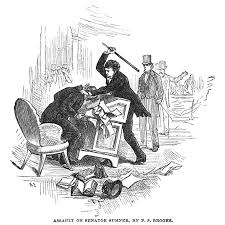
Congressmen and Senators frequently squared off years before soldiers manned battle lines. A Massachusetts Senator suffered a severe beating on the Senate floor for an anti-slavery address. So volatile became the rhetoric that the House chamber finally adopted a “gag rule” prohibiting any mention of slavery in any deliberations.
As Northern abolitionists grew more strident, Southerners grew more militant. A flash of arms became only a matter of time.
Any abolitionists tracts, or books, such as Uncle Tom’s Cabin quickly landed in the trash bin, tossed out by local Southern officials.
The politics of race entered houses of worship with church leaders twisting the Bible inside out to oppose or justify slavery. Today the Southern Methodist and Southern Baptists churches are evidence of the war before the war.
After the guns silenced, into the Reconstruction era the newly emancipated found protection only through Yankee bayonets. Outraged and unrepentant Southern whites waged guerrilla warfare with violence and terror. The Ku Klux Klan, the Knights of the White Camelia, and the White League galloped through the night spreading fear and intimidation to any black-man who dared claim the blessings of liberty.
Contrasting the 21st Century to the 19th provides strikingly similar dynamics.
In 2008 Barack Obama became 44th President of the United States, and white power interests again lost their minds.
Though at first it appeared that America had turned a positive corner in race relations, Senator Mitch McConnell quickly reacted decreeing the GOP would not work with the new president. Soon after the Congressional Republicans sunsetted a clause in the 1965 Voting Rights Act. Signed into law by Lyndon Johnson, the act protected black voters from discrimination at the polls. McConnell’s handy work placed the onus on the voter to prove they were illegally denied. (Much like the old poll tax and literacy tests days.)
Once again white supremacist perceive their alpha-position slipping away, and they, too, are suspicious and lethally dangerous. The hate group names have changed, but not the mission. Proud Boys, Oath Keepers, neo-Nazi’s, MAGA, and Christian Nationalists gallop now through the internet on the dark web, surfacing to attack as was done on January 6th, 2021.
The signs are all there, fear of a changing America, fear of being wrong, and fearful of losing control.
Those who witnessed the dissolution of the Union believed their blood-soaked sacrifice had settled for all time the issue of race in America. But that is clearly false.
But then is now. Now is then. Eras are intricately and forever intertwined. This nation has remembered nothing and again defaulted to the same old norms of hate and boastful ignorance.
And though those same feelings run deep, and they are still wrong.
The only thing new in the world is the history you don’t know. Harry Truman
Chumbley is the author of the two-part memoir, River of January, and River of January: Figure Eight. She has penned two stage plays, “Clay,” exploring the life of Henry Clay, “Wolf By the Ears,” a study of racism in America, and “Peer Review,” where 47 is confronted by four past presidents.
 Gail Chumbley