This is a letter of support recently send to newspapers across Idaho. With Kamala Harris named as Biden’s running mate today, it is clear good government awaits America in 2021.
Joe Biden has my enthusiastic support for president. Joe is humble, compassionate, and has dedicated his career to America. His experience in foreign affairs will fortify our country against unfriendly powers; those foes across the sea who would like to see the US collapse from within.
Domestically, the VicePresident honors our legacy of rights, balanced with the courage to tell us when we must reach out for the common good.
Biden’s experiences reflect our own. We have also lost loved ones, lived paycheck to paycheck, and most importantly he understands that America is about people, not just about racking up wealth. There is a proportion in Joe Biden’s character, and he listens in order to understand the difficult situations we all face.
As our first President, George Washington knew he was no orator, nor a writer. But he was honest like Joe, and knew himself. Washington surrounded himself with the brightest; Hamilton, Jefferson, Henry Knox, and others, setting the nation we have today into motion.
On Twitter, Senator Ted Cruz, R-Texas, and Congressman Louis Gohmert, R-Texas have been been busy disseminating political fiction.
Both have tweeted on the Democratic Party as the perpetrators of the Civil War, racism, and other misleading accusations.
Were these two guilty of sleeping through their history classes, or purposefully spreading propaganda to other former classroom snoozers?
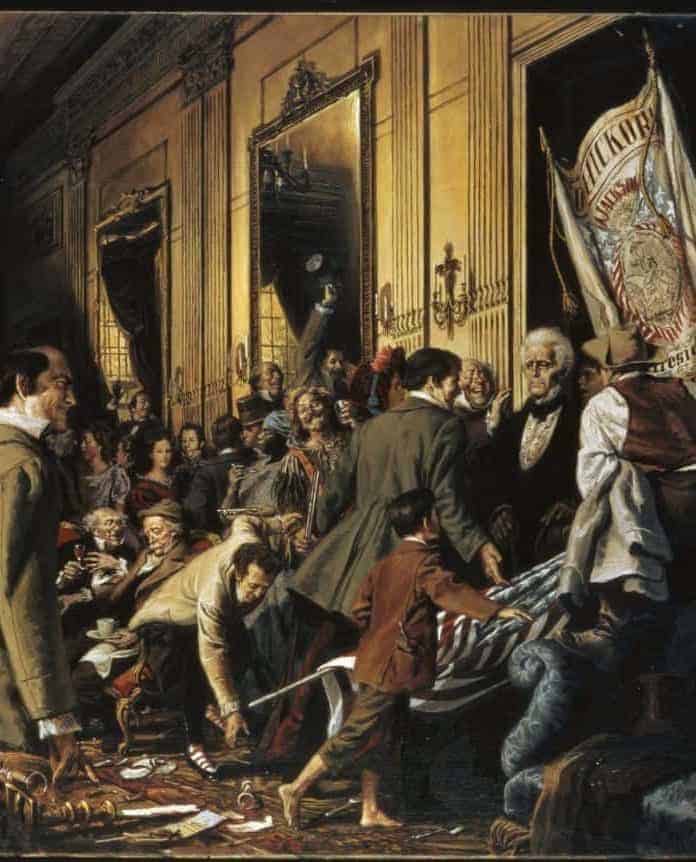
The Democratic Party evolved from Thomas Jefferson’s opposition to the US Constitution. Jefferson had been abroad during the Constitutional Convention and upon his return quickly made his objections known. A planter and slave master, this “natural aristocrat” resisted any higher form of government that checked his own authority.
Jefferson rejected the notion that a distant power knew better than he, the master of Monticello. He favored a small, disinterested government that coordinated foreign affairs, trade, and not much more. Men such as himself could better govern localities than any distant political power.
As America’s third president, Jefferson envisioned a Republic of “farmers,” like himself, running their own fiefdoms across the continent. (That is until he bought Louisiana, where he stretched the Constitution plenty).
That’s about it. That was the essence of the 18th, and early 19th Century philosophy supporting the Democratic Party. Oh, and the party shuffled names over that time, as well, though never wavering from the belief that local government served democracy best.
First, called Antifederalists, for opposing the Constitution, then Jeffersonian-Republicans, opposing Hamilton’s Federalists. Later, after the War of 1812, the name became Democratic-Republicans, then simply Democrats under Andrew Jackson. Still the philosophy endured; curb centralized economic, and other domestic investments and maintain local control.
The late 20th Century’s Civil Rights movement and the Vietnam War brought about yet another rebranding of the party. Ronald Reagan’s election moved the Solid South from Democratic to Republican.
Reagan’s famously asserted that big government wasn’t the solution, but the problem. And that suited former southern Democrats just fine. Less government, less in taxes, and more local control. Relaxing economic regulations, and starving domestic programs rounded out the 1980 agenda.
When Ted Cruz and Louis Gohmert spout off on the villainy of the Democratic Party, don’t be fooled. Remember that these sons of the South embrace the same old Jeffersonian ideology today, neatly packaged under the now-eroding GOP.
Gail Chumbley is the author of the two-part memoir, “River of January,” and “River of January: Figure Eight.” Both titles are available on Kindle.
The lights rise on an empty stage. The back curtain ripples with an image of the American flag, circa 1824. “Hail to the Chief” plays in the background. Only a table and two chairs rest at stage left, with a liquor bottle and two glasses. Clay enters from the wings. As Clay speaks the image and music fades.
CLAY A festive atmosphere greeted the 1824 election season. And some apprehension, as well.
Clay pours a drink, leaning against the table.
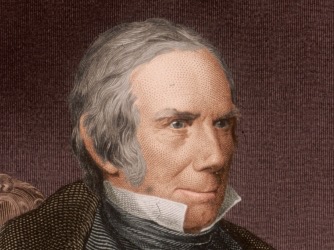
CLAY Secretary of War John C. Calhoun hoped he might find enough political momentum to land the highest office, but discovered little, outside his home state. Though I never forged a warm friendship with Calhoun, we shared common cause promoting a protective tariff and investment in the American system.
He sips his drink.
CLAY As electioneering heated up, reports circulated in Washington City that the frontrunner, Georgia’s William Crawford, had fallen perilously ill. Initially, details were scarce, but in due order, a diagnosis arrived suggesting apoplexy. His allies vowed to continue the race, though Crawford’s prospects appeared dim.
Clay ponders a moment before continuing.
CLAY My old associate, John Quincy Adams, entered as well, with support from the whole of New England, including dispersed Yankees throughout the North. His supporters detested slavery, and as it happened, me, the slave holder. Resolving the Missouri crisis did nothing to gladden our fellow citizens of the North. Such is the thankless plight of public resolutions.
He smiles sadly, and sips. A melody, “My Old Kentucky Home,” increases in volume.
CLAY Despite my very public stance on gradual emancipation, the Adams people were not moved a whit. Their fierce intransigence gave me pause.
Clay stares a long moment. The music fades.
CLAY Then there was Andrew Jackson.
He issues a mirthless laugh.
CLAY As Jackson waited to enter the 1824 race, the Tennessee legislature elected “Old Hickory” to the United States Senate. Taking great pains to avoid any public positions, the honor must have horrified him. Jackson had to publicly commit to policy votes, and vote he did. Bills for the protective tariff, and for funding internal improvements. Hrrumph! But he had nothing to fear. Jackson’s reputation remained firm with his states rights’ proponents. I believe he could have shot someone in the lane and preserved his support.
Clay refreshes his drink while sitting at the table. He rises.
CLAY I too, craved the presidency. Forgive my repetition, but the so-called “American System” program was too vital to tolerate an ignoramus in the White House.
He pauses.
CLAY Celebrity is no guarantee of competence.
Gail Chumbley is the author of the two-part memoir, “River of January” and “River of January: Figure Eight.” She is also the writer of Clay, and 3-act play, and Scenes Of A Nation, in progress. Both books are available on Kindle.
Three early American documents are often lumped together in our collective memory, though each is quite different from the others; The Declaration of Independence, The Articles of Confederation, and the enduring US Constitution. Citizens generally know something of the Declaration due to a certain celebration we observe each summer. The Articles of Confederation are a bit more elusive, and not nearly as recognized. The third, the US Constitution is revered, but its beginnings, and purpose is also shrouded in time.
Here is a quick explanation of each missive, particularly the sequence, and the significance of each.
The Declaration of Independence: July 4, 1776. A product of the Second Continental Congress, this revolutionary document was ratified as an instrument of rebellion, after all other measures to avoid war with England had failed. In reality, the shooting had begun a year earlier in Lexington, Massachusetts, but the Declaration formalized hostilities. Debated and delayed, this document was finally adopted in July of that year. Congress made crystal clear their reasons and resolve to free themselves from King George’s arbitrary rule. Penned by Thomas Jefferson, the Declaration began with a guiding statement about “Natural Right’s” shared by all humanity, and that people had the obligation to free themselves from unjust tyranny. The rest of the epistle read as a legal document condemning the King and his despotism. This document is the first of the three in forging the United States of America.
The Articles of Confederation: September, 1777. The Articles provided America’s first national charter of government. Approved by the same Second Continental Congress in 1777, the Articles attempted to unify the original states under one government. Through this document, Congress sent diplomats abroad, including Benjamin Franklin and John Adams, to (beg) obtain financial support from European powers. However, at home, this framework failed miserably. More a Confederation of independent principalities, Congress had to plead for money and men from each state, who often said no. There was no power to tax, no centralized currency, and the Articles weren’t even ratified by all 13 states until a month before the war ended at Yorktown. Each state jealously guarded its own interests over any unified cooperation. Congress could do next to nothing to aid General Washington and his army. Chaos ensued after the war ended, as well. Trade wars flared, disagreements among the states spilled over into violence, and rebellions within states promised more turbulence. The ability of America to govern itself appeared doomed. The English were sure America’s failure was imminent, and they could, once again, swoop in.
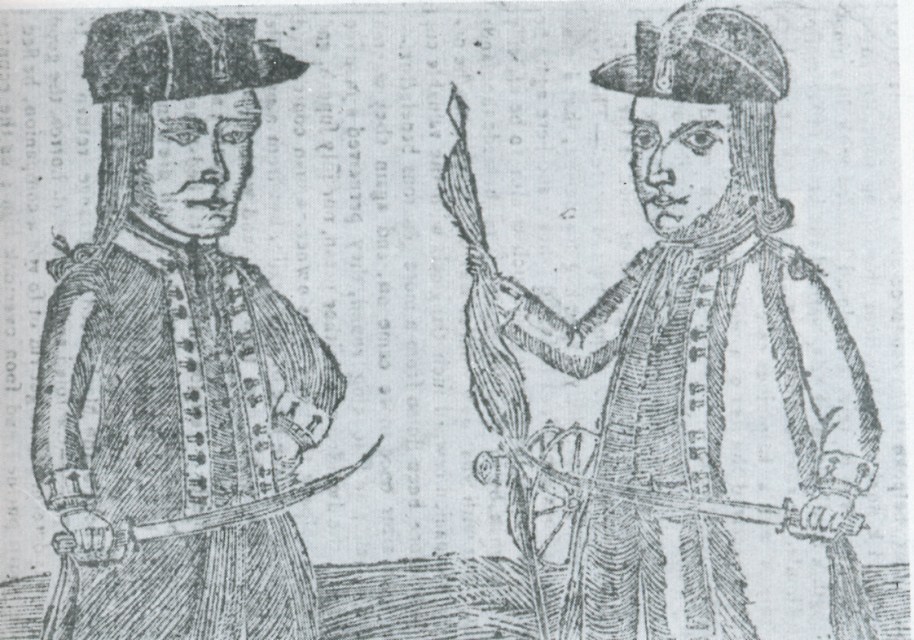
The United States Constitution: May to September, 1787. Born from an earlier 1786 meeting between Alexander Hamilton and James Madison in Annapolis, MD, the Constitutional Convention was organized and slated for Philadelphia in May. Both founders understood that without persuading Washington to attend this new Convention, any success was remote. Washington, tending his home at Mount Vernon, was hesitant, and tired. However, when news reached the General of an uprising in Western Massachusetts, (Shays Rebellion), Washington agreed to attend. Fifty-five delegates from all the states except Rhode Island, reported to the Pennsylvania Statehouse in Philadelphia. Most were lawyers, sprinkled with many Southern slave holders. Virginian, James Madison came prepared with a plan to replace the feeble Articles of Confederation. Much of Madison’s Virginia Plan became the basis of the Constitution. Designed for endurance, this new charter vested authority in the Central government, and the states. Termed Federalism, powers under this frame of government are shared between both authorities simultaneously. The tooling of the document, employing separation of powers, and checks and balances is brilliant, and worked well until 2016.
Gail Chumbley is the author of the two-part memoir, “River of January,” and “River of January: Figure Eight,” both on Kindle.
His political career was none too stellar, except for that one moment he seized history.
This dapper-looking fellow is President Chester Alan Arthur, (1881-1885). Arthur was considered a dandy, pursuing an opulent lifestyle filled with fine food, drink, and expensive suits; largely paid for from the public trough.
Arthur came of political age in the post-Civil War Gilded Age, a world of political machines, graft and corruption. When a supporter helped their man get elected, position and profit rained down in return.
This dubious system functioned rather well for victorious elective candidates through countless election cycles. The political universe of Chet Arthur and his band of Republican cronies became expert skimmers from the public trough and the public trust. In the Republican Party this faction was christened Stalwarts, and Stalwarts liked their well-oiled approach to public service very much, indeed.
Arthur, himself, had been named Collector for the New York Customs House during the Grant Administration, and money from this lucrative Customs House flowed to Arthur’s friends and political operatives. His particular patron was the powerful New York Senator, Roscoe Conkling, a master in Senate handiwork.
Opposing this Old Guard of money changers were the crudely titled, Half-breeds. This oddly pejorative moniker (too common in that era) represented a growing group of reformers in the GOP who aimed to clean up the corrupt practice of patronage. Senator James G. Blaine of Maine believed government jobs should be based on merit, not connections, and Blaine promoted the use of Civil Service Exams. In other words, Half-breeds endorsed qualified government workers over payola for their friends. The Stalwarts were horrified.
In the 1880 Presidential Election the Republicans, in a heated convention, split the ticket with candidates of both wings. For President, James Garfield, a Half-breed, and for Vice President, Stalwart, Chester Arthur, crony of Sen. Conkling. The Party felt it had fused the differences between the two factions, and the fat cats believed they could continue to prey. Then came the Garfield assassination.
In July, 1881, President Garfield, a distinguished Union general, and a former member of the House of Representatives, appeared at the Baltimore and Potomac Rail Station in Washington DC. In the crowd waited Charles Guiteau, an unhinged, office-seeking Stalwart. Guiteau approached the President in the crowd, shooting him at close range. Garfield died two months later from his infected wounds.
Guiteau had shouted, after opening fire, that he was a Stalwart, and would now get a government job. He didn’t. In fact, all Guiteau received was a date with the hangman, carried out in June, 1882.
And what of Chester A. Arthur? He assumed the presidency in a charged atmosphere of national grief. So changed was Arthur, that he promoted passage of the Pendleton Act of 1883. This act created the Civil Service Commission, and mandated written exams for classes of government jobs. The Stalwarts were horrified, but politically could do nothing. Garfield had been made a martyr for reform, and Arthur took the high road, making that reform real.
Oh, and by the way, the Mugwumps were another reforming splinter of the GOP. So appalled by the legacy of bribery and corruption, they bolted the party in 1884 for Democrat, Grover Cleveland.
Wonder how the 2020 Election will reshape the current GOP?
Gail Chumbley is the author of the two-part memoir, “River of January,” and “River of January: Figure Eight.” Both books are available on Kindle.
George Washington came of age immersed in the culture of Tidewater Virginia. To join the higher echelons of society there were set requirements, in particular vast property holdings.
This lust for land had crossed the Atlantic with the first ships from Great Britain. Only gentlemen of the highest social station possessed “parks” to use the British term; bucolic sanctuaries where aristocrats, and their guests could hunt, and fish, with enough acreage left for tenancy. Landed Cavaliers to Virginia immediately assumed a sense of equality to any aristocrat residing in Old England. (The “All Men Are Created Equal,” passage in the Declaration of Independence affirms Jefferson’s sentiment.)
Washington’s older, half-brother, Lawrence, the heir of their deceased father’s estate, had the land, the title, the rank, and the education that George could never realize. But, Lawrence did try to help the twenty-year-old establish himself. Lawrence first tried to secure a naval commission for his younger brother. But that didn’t work out.* With no money or prospects, young Washington settled on a career as a land surveyor, a noble calling for the time.
Making use of his father’s instruments, and with help from a neighbor, Lord Fairfax, George gained an appointment to the Virginia Militia, and a chance to put his vocation to use.
The year was 1754 and a fateful clash awaited the untested soldier-surveyor.
Virginia’s original charter claimed virtually all western lands, north by northwest of the colony, theoretically to the Pacific. At roughly the same time the French too, had staked claim to that same interior region. At a site known now as Jumonville Glen, in the Ohio River Valley, Washington and his party detected then attacked an encampment of French Canadiens. In the melee a Native scout with Washington, called Half King, killed a Frenchman, who, as it turned out was a diplomatic courier. That was, and still is, an international no-no.
In retaliation soon after, French reinforcements from Fort Duquesne, (Pittsburgh) pressed down on Washington’s party, where the untested and panicked militia officer made a colossally poor decision. In the ensuing “Battle of Fort Necessity,” Washington was easily whipped and forced to surrender when his hastily erected stockade filled with rain, making defense impossible.
Thoroughly humiliated, Washington surrendered to the French on July 4, 1754. In the capitulation treaty, young George unwittingly admitted he had allowed a French diplomat to be assassinated at Jumonville Glen. His lack of education was exposed. Washington couldn’t read French and didn’t know what he had signed. His humiliation was complete, his blunder igniting the French and Indian War.
Fast forward forty years to 1794 and a return to the site of old Fort Duquesne, the scene of Washington’s infamous disgrace. For Washington much had changed. As Commander of the Continental Army, Washington had nobly defeated the British in the Revolutionary War, and became the first President of the United States.
The once awkward Virginian was fully redeemed in the eyes of the new nation. Despite his rough start, Washington had grown up. Still, his misadventures decades earlier still stung. Despite universal accolades, the nods and winks of those who remembered Jumonville Glen remained.
As for old Fort Duquesne? The settlement had become the growing commercial center of Pittsburgh.
And it was in the proximity of Pittsburgh, near the site of his former humiliation, that President Washington faced a new conflict.
The new Congress has passed an excise bill on distillers of whiskey, as a means for the federal government to settle war debt. Secretary of the Treasury, Alexander Hamilton had proposed this tax on spirits as a way for the Treasury to settle its financial difficulties. But distillers around Pittsburgh stubbornly refused to pay. In fact Whiskey Rebels rose up, and attacked tax officials who attempted to collect. By summer of 1794, one collector had been tarred and feathered, and another was burned out of his home by a violent mob.
The Revolution was over, and President Washington had had enough. No more domestic violence, especially not from the Ohio Valley. He requested Congress to raise an army, placed Hamilton at the head, and sent them to the site of his earlier disgrace. These agitators melted away like snow in April.
Washington flexed federal power in what was the Constitution’s real first challenge. That Washington felt some sense of personal absolution, considering his military history is understandable.
And what does this episode mean to us in the long run? Don’t piss off George Washington? Maybe. But more importantly the new Constitution was the law, and as chief executive, he enforced that law.
Washington had grown up, and the country needed to do likewise.
*Washington’s mother said no.
Gail Chumbley is the author of the two-part memoir, “River of January” and “River of January: Figure Eight.” Both available on Kindle.
Typically, the second chapter of most US History textbooks cover 16th Century exploration. Columbus gets his cash from Queen Isabella, then sails off in command of the Nina, Pinta, and Santa Maria. After landfall somewhere in the Bahamas, Columbus initiated the 1492 hemispheric transaction known as the Columbian Exchange.
In my classroom I strayed a bit from the “discovery” aspect of European conquest, opting instead to focus on the consequences of imperial contact. In particular we examined the exchanges between the Old and New World: precious metals, agricultural goods, livestock, and infectious diseases. For example, corn and potatoes crossed to Europe, while horses and barley were introduced to the Americas.
Other things, both seen and unseen, passed between the conquistadors and the native peoples, forever redefining both. Religion, racism, rape and disease set the narrative for hundreds of years.
From Dias, to Magellan, to Cortez, ocean routes linked far-flung corners of the globe back to Spanish ports. Though the voyages were perilous, mortality rates high, and the impact upon indigenous people fearsome, vast fortunes were realized, and Spain grew wealthy.
It is hard to pinpoint which explorer first grasped the deadly impact of small pox on native populations. What is known is that Hernando deSoto, in particular, recognized the dynamic quickly. Leading his band of mercenaries, complete with packs of dogs, deSoto tromped through what are today the Gulf States. His band of conquistadors passed through native villages, and recrossed them again, searching for riches. Upon retracing their steps utter desolation greeted the returning Spaniards. Dead and dying men, women, and children-all succumbed to small pox. deSoto, a quick study, deliberately weaponized pestilence, spreading virus wherever his war party advanced.
This disease literally scorched North America, extinguishing human life in its path. By the time the Declaration of Independence (1776) was signed in Philadelphia, small pox had already exterminated countless coastal peoples from Puget Sound to Cook Inlet in the Gulf of Alaska.
In what is present-day New Mexico, the Pueblo people inadvertently protected themselves against the virus for ten years. In Pope’s Revolt, a decisive 1680 battle against Spanish forces, the inhabitants defeated the invaders and preserved their lives from contagion for a time.
The 1918 Spanish Flu pandemic didn’t actually begin in Spain. One story tells how the virus began among Doughboys training at Fort Riley, Kansas, once America entered World War One.
Soldiers swapping microbes in military camps is nothing new. During the Revolution General Washington took measures to see his army inoculated from smallpox. Washington ordered a staggered rotation of inoculations, so that only a portion of his troops were ill at one time. When his army finally came out of winter camp in Morristown, New Jersey, they were armored with immunity to English-borne germs. (By the way, inoculations required a small cut in the skin, followed by wiping live pus into the incision.)
During the Civil War “camp fevers” were a persistent problem. In Ken Burns “Civil War,” one account describes the coughing of waking soldiers drowning out reveille. The truth is more Rebs and Yanks died from communicable diseases than lead slugs.
In the case of the Spanish Flu the viral cocktail sailed aboard troop ships to England. One theory holds that an encampment situated on a rail stop ignited the spark that led to millions dead worldwide. British soldiers had established gardens dating from the beginning of the war in 1914. Not only were vegetables available from these patches, but also swine and poultry. The viral combination from Fort Riley and further transference from pigs at the rail stop exploded into a rare strain of contagion.
All too soon these exposed soldiers were shipped across to France, and into the trenches. German veterans later accused the Americans of unleashing germ warfare upon them, forcing the November, 1918 Armistice.
In the end we all are still pawns to the Columbian Exchange. As New World tomatoes, and Old World wheat make pizza, microbes swirl and mutate, rendering deadlier fare. The passage of time makes no difference to our fragile susceptibility to disease. Though viruses travel faster than wooden ships, there is no alteration to the deadly outcome.
Gail Chumbley is a history educator, and the author of the two-part memoir, “River of January,” and “River of January: Figure Eight.” Both are available on Kindle.
Following his celebrated success in the Darkness Derby, Chum found his charter business more hectic than ever. Student pilots, passengers, and acquaintances from the nearby press office, particularly from United Press International, and International News Photos, crowded the Waco Office looking to hire Chum.
In early September, 1933, a reporter tasked with covering a train derailment near Elmira, New York, hired Chum for a middle of the night flight. It was dark, and a wet, thick fog had settled over Roosevelt Field. Filled with doubt, Chum only reluctantly agreed to take the fare from the desperate reporter, and very soon regretted his decision to fly.
An impenetrable cloak of fog, blending into a thick darkness, confronted the pilot as he prepared to land near Elmira. Probing his way down, Chum set down hard and immediately slid across the drenched airstrip. Slipping over the edge of the field his Waco thudded hard against a power pole, damaging one side his biplane. The reporter had a waiting automobile at the airfield, and sped away to the train derailment, leaving Chum to sort out the accident. He deduced his Waco was still airworthy, and later in the morning returned with his passenger to Long Island facing an expensive fix. Ten days later, adding insult to injury, he opened a letter from Associated Gas & Electric charging him $16.30 for repairs to the power pole. Lesson learned . . .almost.
Two weeks after the mishap in Elmira, Chum took another risky flight. His friend and patron from the Stock Exchange, (see part one of this article) had given notice that Chum was to keep Monday, September 25th open for passenger trip. This wealthy investor was an avid horse enthusiast, and Chum had shuttled the gent to various racetracks around the northeast. On this particular day a last minute phone call sent Chum hurrying from Roosevelt Field to Red Bank, New Jersey, and his waiting client.
Three men climbed aboard Chum’s Waco Cabin near Newark, breathlessly directing him to aim for Havre de Gras’ Racetrack, near Baltimore. These men had a horse on the race card, and were anxious to reach their destination before post time. As the Waco neared the track his passengers grew increasingly impatient. Chum’s patron insisted that instead of landing on a nearby rural field, the pilot needed to land directly on the infield of the horse track. Chum balked at the idea, but his client insisted, vowing to pay for any damage or fines that might result. Folding under pressure, the pilot threw good sense to the wind, and again lowered the nose of his aircraft for a risky landing.
Connecting with the grassy infield, the Waco bumped down the entire length of the infield. By the time Chum rolled to a stop, track officials and the police had surrounded the Waco. In the end, with a lot of fast talking from his influential friend, and perhaps a little cash changing hands, the biplane was allowed to remain. In fact, he and his passengers spent a glorious day enjoying the races. Later, after the stands were emptied of spectators, Chum rolled up the length of the racetrack returning to the sky and home
For Chum night flying became a particular pleasure. He mentioned in a later interview how peaceful he found the experience. In March, 1934, when Howard Ailor asked him to deliver a new Waco C to West Palm Beach, Chum gladly took the overnight job. Coursing through the twilight he made his way south from New York. Landing in Richmond, Fayetteville, Charleston, and Jacksonville, Chum eventually touched down in West Palm Beach by late morning.
A bit worn, the pilot unbuckled and completed his log of the flight. Still seated in the cockpit, he noticed a tall gentleman come out of a hangar and head toward the biplane. Chum instantly recognized the man, as he was a famous aviator in his own right. It was Howard Hughes, and the millionaire was not happy.
Hughes wasted no time in telling Chum that the engine in this biplane was used, and that he wouldn’t buy it. For his part, the young pilot assured Hughes that that simply wasn’t the case, but that Hughes would have to take it up with Howard Ailor back at Roosevelt Field. With that, the exchange of telephone calls between Florida and New York ensued. Back and forth the two businessmen squabbled. As the war of long distance calls heated up, Chum repeatedly requested a ride to the train station. He told Hughes that he, too, had a business to run, and needed to return to New York. After a day of back and forth, Hughes informed Chum he wouldn’t buy the Waco Cabin, but he would hire Chum to come work for him. Astonished, Chum agreed with the unexpected offer, lured by Hughes prominence and by the good salary.
For two weeks Chum worked at Hughes West Palm hangar. The other mechanics were easy to know, and he enjoyed watching Hughes and his entourage come and go. The only sticking point to this new job was that there was nothing to do, except watch Hughes. The new Waco Cabin sat inside Hughes hangar without any resolution.
After two weeks of inactivity, salvation arrived in the form of a long distance phonecall. Called to take the call in Hughes empty office, Chum issued a polite hello. The voice on the other end belonged to Hugh Perry from the Waco Factory in Troy, Ohio. Momentarily taken aback, the young pilot discovered that Perry wanted him for a sales position in South America. Pleased, Chum couldn’t say yes fast enough. And not waiting around to give Hughes notice, Chum simply walked to the train station and bought a ticket for New York.
He never knew the fate of that Waco Cabin. (#NC 13402)
Chum set sail on the Munson Cruise Liner The Western World in April of 1934. To say Chum was thrilled doesn’t do justice to his excitement. The farm boy from the foothills of the Allegheny’s, caught in the worst economic crash in memory, boarded a luxury ship for Brazil. He felt on top of the world.
After two weeks at sea, the pilot arrived in Rio de Janeiro and set to work at once. The Brazilian Air Ministry had shown some interest in the Waco CTO, complete with Browning machine guns mounted on the wings. He later said he couldn’t understand why the country needed such armaments, but the customer was always right, and Brazil was the customer.
Mont Chumbley took his first flight over Rio on May 4, 1934, piloting another Waco C. By the 7th he was testing and demonstrating other models, including the CTO. Becoming acquainted with officers from the ministry, he learned the government was determined to develop the vast jungle interior of the country, answering his unspoken question of why machine guns might be needed. Obstacles stood in the way deep in Amazonia. In the end the ministry opted not to make the purchase, though other biplanes met their approval.
Chum did very well in sales to the government of Brazil, and also in Argentina.
Chum lived and worked in Rio for almost three years. In that time he earned his reputation as one of the most successful Waco sales representative in the company’s history. However, by spring of the 1936 he had met, and become engaged to a beautiful American dancer, Helen Thompson and decided to leave South America. Chum later said he left Waco in the fall of 1936 to find a more predictable job in aviation, one more suitable for a married man.
By the end of October, 1936, Chum returned to New York for good. He had considered a job offer from Pan American, but declined when he learned he’d have to train at Dinner Key, Florida, Pan Am headquarters for a year.
The next month Chum returned to Waco, but this time stateside.
Gail Chumbley is the author of River of January and River of January: Figure Eight. Both available on Kindle.
His was a storied life of potential and opportunity.
With damn good luck and perseverance Mont Chumbley forged a career in the earliest days of aviation. And that he became a pilot at all stood in stark contrast to his rustic, Virginia beginnings.
Born in 1909, young Mont spent his childhood on a farm more 19th Century than 20th. As the eldest son of the eldest son, Mont, as a matter of custom, was expected to follow his father as the next heir of the operation—as had scores of Chumbleys in prior generations. But to the patriarch’s displeasure, the son showed little interest in tending fields.
Instead young Mont discovered other passions; school, sports, girls, and the excitement of town. This lack of enthusiasm for farming generated enough animosity, that the boy had to run away from the farm in 1924.
Mont was 14.
Following a horrifying ordeal in the depths of a West Virginia coal mine, the shaken young teen caught a train back to Virginia, but not the farm. Rather he found sanctuary in his aunt’s opulent home in town. Grateful for his unexpected deliverance, Mont blossomed, graduating from Pulaski High School in 1927, lettering in football and class valedictorian.
Through his academic and athletic achievements, Mont’s opportunities appeared endless, and he knew exactly what he wanted.
While still a little tyke Mont had witnessed a barnstormer set down a biplane in nearby fields. Hearing the roar of the plane’s engine, glimpsing the spinning prop as the aircraft winged above the fields, Mont discovered his calling. Inspired with this childhood memory, Mont set his cap on entering the United States Naval Academy in 1928.
However, he couldn’t crack admission exams, so his hopes for Annapolis vanished, leaving Mont only one option–enlisting as a seaman recruit.
As straightforward as that path appeared, the young man ran into an immediate hurdle; his father had to sign his enlistment papers, and that the old man would not do. If the heir did not want to farm, the father would not help.
This family impasse did not resolve until Mont’s mother stepped in and threatened her husband with legal action. Mont’s mother, sure to her word hired a lawyer and prepared to seek consent from a judge. The father stunned by her defiance knew he was beat, and reluctantly endorsed his son’s enlistment papers, allowing Mont to enter the US Navy in 1928.
A hardy boy, the rigors of Naval training proved no problem for Seaman Recruit Mont Chumbley. He easily adapted to drilling and training, initially pleased with the life he had chosen. What he didn’t expect was his first assignment below deck aboard a Navy collier, (coal-burning vessel). Shoveling endless black filth wasn’t what he had envisioned. Mont aimed for the sky.
The Navy of the 1920’s had no regulations excluding enlisted men from flight, but still the odds were daunting. How the young man earned a spot in Naval aviation beggars belief. Through a series of chance encounters, Mont soon served as a babysitter for the Commander of Schools at Norfolk Naval Station. Through tending this officer’s children, Mont developed a son-like attachment to the Commander, and felt courageous enough to ask for help. That single connection made all the difference, and Mont, now called “Chum” by his fellow enlistees, progressed to flight elimination exercises at Hampton Roads.
The short version of this tale is Chum survived flight-elimination trials competently handling amphibious Curtiss NC4’s. The next year, he and his compatriots, Class 37C, found themselves soaring over the Gulf in Pensacola, this time in wheeled aircraft. Later his class received their first assignment, shipping out to Coco Solo, Panama.
Life in the Canal Zone was a jungled universe of its own. Military bases dotted the nearly 50 mile stretch of canal, in a mix of both Naval and Army installations. Coco Solo, anchored by the Navy, commanded the Atlantic side, and trained largely in T3M’s, Martin Torpedo Bombers. In simulated war games, the pilots descended until parallel with the sea, then Chum and his fellow pilots would release virtual “payloads” into surface vessels.
In later interviews, an elderly Chum expressed his reservations about the maneuver as far too hazardous for aircraft.
Suddenly, in 1933, Chum up and decided to leave the Navy, though he remained in the Reserves. When asked why, after so much trouble to join, he admitted, “I didn’t much like taking orders.”
Shipping an old Chevy he had purchased in Panama, Chum steamed into New York Harbor in May, 1933. Optimistic and eager to find work, he paid calls on various air carriers from Eastern Transport to National Airways. But no one was hiring. No one. The country and the world, deep in Depression had nothing to offer the young pilot.
Disappointed, Chum rumbled out to Roosevelt Field on Long Island, for a chance meeting with a figure who would change his life.
Howard Ailor, sales representative for Waco Aircraft, took a shine to the young pilot. Repeating the same gloomy job forecast Chum heard elsewhere, Ailor counseled him to make his own luck. The silver-tongued salesman, said what Chum needed was his own equipment, and talked him into buying a brand new Waco C cabin biplane.
And that purchase transformed young Mont’s life.
Next time the Transcontinental Air Race.
Class 37-C, Mont Chumbley is on the far left
Gail Chumbley is the author of River of January, and River of January: Figure Eight. Both titles are available at http://www.river-of-january.com and on Kindle.