New York, 1933

HOWARD-AILOR HOWARD-AILOR-SALES-CORP

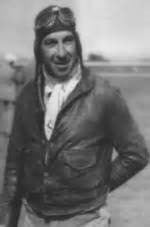
“So you’ve been to see all the big boys, eh?” commented a sales representative from Long Island who was seated behind a battered old desk. Airplane distributor Howard Ailor of Waco Aircraft studied the young man’s face. “And by the looks of you they all turned you down.”
“That is about right, Mr. Ailor.” Chum responded, trying to look confident. “I was hoping you might know of something out here, maybe something at Roosevelt Field.”
“I don’t know you, son, but let me give you some advice. Don’t dawdle around hoping for that phone call. This is no economy to sit by and wait for miracles. You’ll starve first. Push your way into the air business with your own equipment, that‘s what I say, and I can help you with that. We have some beauties right here on site.”
Chum listened to the silver-tongued salesman, surprised that he agreed with all Ailor had to say.
Chum also realized that he had returned to an America deep in the throes of financial depression.
Economic life in the 1920s had played out as a frenzied, unregulated party. By all appearances the country had embraced infinite prosperity. Insider trading and other shady practices reigned on Wall Street, where market manipulators pooled cash and bought up stock, artificially driving up values. Regular folk, believing they were on to something big, bought these tainted stocks as crooked investors dumped them, reaping fabulous profits.
Indiscriminate buying, using easy credit, pumped the overblown Dow Jones to ballooning artificial heights. Even private banks joined the frenzy, wagering the savings of their account holders to increase their own bottom line.
This facade of spreading affluence ensured the “hands off” economic policies accepted in Washington. Then the market imploded. On October 29, 1929, “Black Tuesday,” the savings of a nation disappeared with the steepest financial crash in American history. Thousands upon thousands of people were ruined and the enterprise of a nation dried up.
Young Mont Chumbley had resigned from the Navy without another job, and now found there were none. The pilot’s only and best assets were his optimism, his pluck, and an old Chevy.
“Over here,” Ailor directed Chum, as they walked toward a hangar housing a red-with-black-trim Waco cabin biplane. “This baby’s a real beauty, right? We can take it up for a spin, if you like, but you can’t have this one—it’s spoken for. Still cough up a down payment and we’ll order you a new one. It’d be here in only six weeks.
“I came here looking for a job—and you want to sell me an airplane?” Chum blurted in disbelief.
Ailor continued to rattle on as though the pilot had not spoken. “Hell! I’m feeling generous. I’ll even let you rent office space right here on Roosevelt Field for a percentage of whatever you earn as you get your footing.”
Chum realized he had never encountered such a smooth operator. Ailor finally faced the boy. “Look, you can’t negotiate with reality, son. And the reality is that there are no jobs. The country’s flat busted.”
Chum knew his mouth hung open in reaction to the salesman’s bald audacity. But he also knew he agreed. Ailor was absolutely right.
Chum needed to find a way to buy that airplane. It appeared to be the only real option open to him. With little money left from his dwindling resources, he found a Western Union office and cabled his mother in Pulaski for help. He hadn’t written or visited much since joining the service and felt badly his note only asked her for money. However, Martha didn’t complain or hesitate.
“I’ll run down to our bank in town—still solvent, doors open,” she wired him right away. “A thousand, Mont? Is that enough? Where should I wire it?” Martha would still do anything to help her boy.

River of January by Gail Chumbley available at www.river-of-january.com and Amazon.com

Roxy’s Friend

Maria GambarelliThis lovely lady is Maria Gambarelli, prima ballerina. Miss Gambarelli was well known to New York audiences in the 1930’s for her dazzling performances at the Roxy Theater. In addition, she regularly appeared on Roxy Rothafel’s popular radio program, “Roxy’s Friends.” In 1932 the dancer organized a troupe of New York ballerinas for a grand tour of European cities, to promote America’s cultural image. Helen auditioned for Miss Gambarelli and won a part in the production.

Arriving in Paris the company, christened the “American Beauties,” opened at the exclusive “Le Ambassadeurs” dinner theater to favorable reviews. However, in a contract dispute with the William Morris Agency in New York, in association with the Lartique Agency in Paris, Miss Gambarelli abruptly quit. The eleven American ballerinas were left abandoned, facing an uncertain future on the continent.

For more of the story read River of January, available at www.river-of-january.com

Partly The Mob

sept291931

The room was hot, and humid, but the old man would not turn on the air. He said that it cost too much money.  The fact that this was Miami and July made no difference,that ancient swamp cooler remained silent in the living room window. To emphasize his granite determination to deny Florida Power and Light an extra penny, Chum dressed each morning in long pants, a belt, and a long sleeve shirt, cuffs buttoned. Mont Chumbley did not project the South Beach image favored by the city’s Chamber of Commerce.

However his strict rules of economy were cast aside the summer I flew down to record his story. And I do mean record, as in tape recorded interviews which lasted, in all, five days. And when I needed quiet the most (for quality purposes,) he decided to switch on that neglected, thundering swamp cooler, providing a Phil Specter-esque ‘wall of sound’ which muffled his fascinating story.

We were both nervous. I hadn’t been married to his son long, and my husband hadn’t come along on this trip. It was just the two of us: new father-in-law talking with new daughter-in-law. But I couldn’t let the awkwardness get in the way, I had traveled three time zones to get the story, and we had to soldier on despite our mutual jitters.

I hit record on the tape player, and immediately he began anxiously whacking a nearby phone book with a pencil. We now had a beat to the swamp cooler’s roar. And he did that for my comfort. How courteous.

I tried to play back the sessions right away to transcribe the contents. It’s safe to say that deciphering his voice from the background clatter grew to be a problem. Imagine the musical “Stomp,” with people trying to converse over crashing trashcan lids.

After a couple of days of this fidgeting he settled down, and to be completely honest, I did too. Chum even forgot to turn on the air once or twice. And his story in aviation began to unfold, carrying us away from noisy appliances; to days before there were such things as air conditioners–to the skies of another era.

Wow.

One story that made it into the book tells of his hair raising landing on the infield of a Maryland horse track. Later I had to hit the replay button a half dozen times to get the name right, listening hard to his phonetic pronunciation, buried beneath screeching layers of white noise. Shaped by his Virginia drawl, I deciphered, Har-Day-Graw.

I typed HardayGraw into a search engine. “Do you mean Havre de Grace?” quickly popped up . Hmm. Well, I guess I do. Maybe.

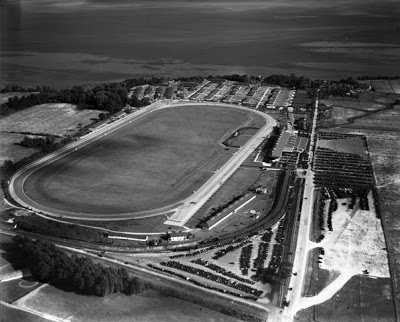
Lo and behold, Havre de Grace was a horse racing track between Washington DC and Philadelphia, tucked into the Maryland countryside. The web site indicated that this track evolved as a joint venture, owned partly by the town of the same name, and partly by the mob.

Partly by the Mob? Are you serious? And everybody knew? I had to look a little deeper.

Apparently in an agreement with the Governor of Maryland, and a former congressman, in a partnership with mobster, Arnold Rothstein, Havre de Grace came to life. And this was no small time nag fest, either. Among the thoroughbreds who graced, Havre de Grace were legends, Man ‘o War, his son, War Admiral, and the indomitable, Seabiscuit, You can’t make this stuff up.

That week in hot, sticky Miami has grown into one of the most pivotal of my life. I felt like Wendy clasping Peter’s hand for her flight to Neverland. But in my case Chum piloted the yoke to “Yesteryearland.”

This Havre de Grace anecdote, with Arnold Rothstein, and a hair raising unauthorized landing from the sky, merged with many, many other episodic rivulets that flowed into this fascinating river of narrative. This “River of January.”

Gail Chumbley is the author of the memoir, River of January

#riverofjanuary

Spud Manning

th

Only six years had passed from Lindbergh’s Atlantic flight, when Chum won the cross-country Darkness Derby in October of 1933. Public wonder and oodles of press coverage followed aviators across the country, and around the world. Pilots were viewed as rustic pioneers risking the unforgiving rules of gravity. Hustling for every penny, Mont Chumbley used his rare talent for more than business, offering lessons during the week, and moonlighting weekends entertaining an aviation-crazy public.

County fairs proved a reliable source of pocket money, and he beat the bushes to find well attended events. In good weather he could charge $5 dollars for three passes over local fairgrounds; enough for gas, dinner and a little left over for his time.

It was on today, May 16, back in 1933 that Chum flew his Waco biplane to a fair in Binghamton, New York. He traveled north from New York looking for a little fun, and maybe a few extra bucks. He hit gold that day when he met up with famed parachute jumper, Spud Manning. Now Spud was a young guy, too, and much like Chum, had to make his luck to survive in Depression-era America. So what this enterprising gent challenged, was jumping from airplanes.

With Chum soaring at 15,000 feet, Manning, harnessed in his chute, clutched a bag of flour to his chest. In his fall Manning released the contents to trace his descent. The 25 year old’s shtick was to risk death by falling until the last possible moment, somewhere around 1000 feet, to pull his ripcord. He succeeded to scare the hell out of patrons and they paid him to do it again.

Presumably Spud carried out his jump the same way on that May 16th in Binghamton New York. Leaping for profits, Spuds and Chum performed the stunt as long as it paid. Spuds leaped into the sky, likely accumulating a dusty, white face as the flour plumed up from his arms. Rolling on the ground, grappling with his chute, he jumped to his feet delighting the dazzled crowds.

That May 16th must have left hundreds of Binghamton fair goers in awe. Clear blue weather, excited customers, viewing their landscape from the Waco in three memorable passes; all capped off by the heart stopping jumps of Spud Manning.

Sadly, Chum’s afternoon associate had less than four months to live. Spud was killed that September when, as a passenger on experimental aircraft, he crashed into Lake Michigan. His body and two others washed up on shore ending a massive search over the water.

Chum clearly understood death accompanied each flight, but he loved flying more than dwelling on his fears. Presumably Spud Manning too, resigned himself to the possible price of repeated defiance to the forces of gravity.

Somehow the miracle of the sky rendered the hazards irrelevant.

Gail Chumbley is author of memoir River of January

The Outside World

My mom took a job in the early sixties with the US Postal Service. At first it was part-time, mostly needed at Christmas, but by 1966 she hired on full time. 

There were four kids, a house, and a yard, and Mom probably was pretty overwhelmed—something today I fully understand. For help my parents decided to host a student each term who attended a secretarial school in Spokane, called Kinman Business University. Lord knows what kind of credential awaited these young ladies after completion, but students did acquire skills such as shorthand, typing, filing, and other tasks.

The first girl who who came to stay with us was named Corrine. I can’t remember exactly the year, most likely around 1965 or 1966. I was in fourth grade. 

Corrine came to us from Alaska, and I remember she told me she was part Filipino or Native American, or both. I thought that pretty cool, Corrine to me symbolized the wonder of the outside world. 

Our house was constantly in a state of chaos, with quarrels, messes, a blaring TV, with people coming and going—chaos. But to walk into Corrine’s small quarters felt like a completely different world. All of her things were neatly stowed away, her bed carefully made, and the space even smelled differently than the rest of the house. I loved visiting her room, as it felt like an oasis of tranquility in a sea of crazy disarray. And it was in her little sanctuary that serene Corrine shared her life with me just a little.

A picture sat on her dresser of a boy. When I asked who he was, she told me his name was Ty, and that they planned on getting married in a few years. Married! I never knew a girl who had plans to get married! The only people I knew who were married were parents, and they were boring. 

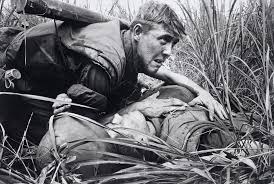
He was called Ty, short for Tyrone, and he was visiting Spokane soon. Ty had received his draft notice and following basic training in the Army, he would ship out to a country called Vietnam. Corrine clearly missed him very much, and was anxious to see Ty before he flew to Southeast Asia.

My memories of his first visit are a little vague. I do recall that they sat on the couch in our living room and held hands in front of my parents. That moment struck me as fascinatingly real. 

Looking back I am sure that there were much deeper emotions at play, but whatever vibes filled the room zoomed over my 10-year-old radar.

And then Ty was gone.

The school term ended, and Corrine packed up most of her things and returned to Cordova for the summer. I’m not sure of the details or decisions, but she did return to us the next fall. Once again her room became that wonderful respite from the anarchy of the rest of the house. Ty’s picture again graced her dresser. 

Letters began to arrive to our house written on onion-skin parchment, marked AIR MAIL, bearing Corrine’s name. I’d never seen stationary like that, and she explained that was the cheapest way she and Ty could exchange letters. The paper was light blue, and felt like stiff tissue, but held its shape without creasing. Corrine had stacks of it, both fresh and received—the only sign of clutter in her neat little world.

Finally Ty came back to our house, and this visit was very different from the first meeting. The couple did not sit on the couch and hold hands. Not this time. My pre-teen sensibilities were shocked to see a grown man lying across her lap on the couch sobbing like his heart had broken. 

Poor Corrine! She, too, was dissolved in tears; red, puffy eyes behind her glasses. Ty couldn’t seem to help himself,  or compose himself, and he wouldn’t let go of her. The whole situation felt very surreal. I didn’t understand. How could this orderly girl, and her once orderly fiancé come apart like this, and in front of all of us?

That chapter occurred a very long time ago. My mother still worked, and there were other girls we housed. Still sweet Corrine and Ty live on in my memory as if only yesterday.

I grew up, went away to college, earned a degree in American History, becoming a teacher. 

For years and years I taught a unit on the Vietnam War to high school juniors. I recited the facts surrounding America’s entrance into that long, long, conflict. But in all my experience with those lesson plans, the veterans who visited my class describing their personal war, the analysis by historians we studied, nothing affected me more than the tragic transformation of that broken young man from Alaska.

Gail Chumbley is the author of the two-part memoir “River of January,” and “River of January: Figure Eight.”

Chumbley has also authored two stage plays, “Clay” on the life of Statesman Henry Clay, and “Wolf By The Ears” an exploration of American racism and slavery.

gailchumbley@gmail.com

Polyphoto International

Polyphoto2

While composing “River of January,” I spent much of my time searching and analyzing family papers. These letters, pictures, and news clippings, along with other souvenirs, make up an enormous archive which spans over seventy years of the twentieth century. Along with Chum and Helen, many secondary individuals are mentioned in the papers, and when I stumbled upon those names, curiosity sent me on the hunt for more information. One of the characters who rose from the stacks was a proper young Belgian named Elie Gelaki.

Elie made quite an entrance into Helen’s life, and subsequently into the pages of “River of January.” His romantic introduction into the story is reminiscent of a 1930’s Hollywood musical. While taking in the premier of “Voila Paris,” at the Palace Theater in Brussels, Elie spotted the girl of his dreams gracing the stage in a solo act. Apparently the smitten young gent quickly scanned the playbill and decided that the girl must be the dancer named Lillian. In an impulse of ardent infatuation Elie sends a note back stage to Lillian inviting her to meet him after the show. Alas, Lillian doesn’t respond and fails to appear at Elie’s appointed location.

The following night the resilient young man again attends the production. Again he watches, thoroughly enchanted, by the vision that is, he thinks, Lillian, Insistent in his attentions, Elie, this night sends flowers and a typed letter composed earlier that day. Again he implores the dancer to rendezvous at a preselected spot. And happily for Elie, this time she materializes out of the dark snowy night.

The girl seems, Elie notices, amused somehow by his attentions. Then he finds out why. The dancer he believed was Lillian in fact was Helen, and that Lillian had a boyfriend back home, in New York. He is embarrassed by the mix up, but more than that, Elie is charmed by the American girl. After drinks at a late night cafe, he asks to see Helen the following day. And so began the courtship of Elie Gelaki with the breathtaking blonde from New York.

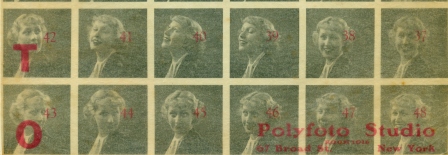
Bringing light to this man, lost to anonymity was an true pleasure. Searching through the volumes of primary sources and the internet, I discovered Elie was born in 1906 in Palestine. Further research, this time reading his avalanche of correspondence (to Helen) revealed that he supported two sisters and a mother in Brussels. Elie proudly shared with Helen his deepest ambition as a businessman, founding a company he intended to expand around the world. He had named the firm, “Polyphoto International,” and confidently assured her that the unique processes he developed would change professional photography forever.

I have thought a lot about this enamored young man, (he was only 28 when they met) and I have ransacked the archive many, many times looking for any picture that might be this steadfast suitor. I’ve never found one. His letters were so loving, so personal, that I had to ask myself why Helen, who kept every other slip of paper had no picture of Elie.

He actually complained about this scarcity as well.

In 1936, four years after they met in Europe, Elie writes Helen in New York begging her for an updated photo. He laments, “If it weren’t for the one (picture) you gave me Brussels, I would have forgotten what you looked like.” Apparently the shortage went both ways.

I had to ask myself why? Why would Helen go out of her way to omit “Elie pictures” from her vast collection of mementos? Then I chanced upon a letter Helen sent to her mother in the middle of her 1932-33, European tour. She goes out of her way to assure her mother that she would never marry a Jew. Now this might sound harsh to modern ears, but I think that Helen felt torn by her denial and his Jewish heritage. From current family members who knew Helen, she once admitted she had a “thing” for Elie, using the word “heartthrob.”

At the time she met the young man, antisemitism was on the up tick, and not only in Europe–but in America as well. What I believe pressured Helen to write such things, was placating her mother. Any single girl worth her salt knows what to say to mother when it comes to “boys.” For Helen, at that time and that place, a rejection was much easier than the truth. And her words belie her actions. She must have given the young man reason enough to continue his amorous pursuit for four long years. He pursued Helen across the world . . .  and by the end of the book, across two oceans.

This continental gentleman, this Elie Gelaki, carefully, and thoughtfully laid out his future. He aimed to achieve financial success in the business world, and he aimed to make the American girl his wife. He wrote her constantly and sailed over the Atlantic to see her when he could. In “River of January” the last readers hear from Elie is in a letter from Kobe, Japan, dated 1936. He explains to Helen that “I hope to conduct Polyphoto business in this city, (Kobe).” And that is it, he is gone. Elie just vanishes.

I know, and readers understand, that all of his plans and dreams and hopes and ambitions mattered not a bit. A war is coming. A war of explosive magnitude, fueled by hate and violence and war crimes. A war against the Jews. Elie’s individualism, his personal ambitions, his entire world was devastated in the massive cataclysm of World War Two.

Uncovering this young man left me troubled. I felt as if Helen had been compromised, as were so many others, to sacrifice her natural regard for the young man in order to conform to conventional thought. Though only an episode in the bigger picture of “River,” this ardent suitor, this diligent businessman, deserves the dignity of recognition and remembrance.

What If?

th

My students loved to play “what if,” following lessons on monumental events in my history classes. For example; what if Washington had been captured–or worse–by the British Army during the Revolution? What if the Senate had ratified the “Treaty of Versailles” at the end of World War One? Would there have been a World War Two? Or what if FDR hadn’t contracted polio? Would a walking FDR been as affective? And so on. Following these bird walks into conjecture they would look to me for some definitive answer on alternate outcomes. But I wasn’t much help. Teaching what actually happened was tough enough for this history instructor,

Still, on the 150th anniversary of President Lincoln’s death, “what if’s” might have a place . . . might provide some insight into what might have been.

We all know the story. President Lincoln, in an especially festive mood, joined his wife at Ford’s Theater for a performance of “Our American Cousin.” The nightmare of Civil War had essentially been settled with General Lee’s surrender, a week before, at Appomattox Courthouse, Virginia. The Union had been preserved, and the President had much to celebrate. Plus as many “Lincolnistas” know, our 16th president loved the theater. Stage productions became a place where a troubled Lincoln became so absorbed in performances, others couldn’t catch his attention. (As a Lincoln-lover myself, I hope “Our American Cousin” so captivated the President that he never felt a thing in his final hours).

Wilkes Booth, the pea-brained zealot who murdered Lincoln had no idea he had also killed the South’s best defender against a vengeful Congress. Had this lunatic-actor paid attention to anything besides the insanity in his head, Booth would have recognized the President as a moderate–a leader who yearned for true national unity with “Charity for all, Malice toward none.”

So, what if Lincoln, this moderate, had survived, or better yet, never been harmed? What would post-bellum America have looked like with President Lincoln at the helm? Tough to judge, but a closer look at the political situation on April 14, 1865, could provide some direction.

First of all, America would have been spared the accession of Andrew Johnson to the presidency. Bum luck for the nation to say the least. Johnson had been selected as Lincoln’s running mate in 1864 because he was a Southerner from Tennessee  who had remained loyal to the Union. Essentially a small minded, white-trash bigot, Johnson despised both the rebellious planter-elite but also newly freed slaves. On the one hand, he wanted former masters to grovel at his feet for presidential pardons, and simultaneously opposed any law that provided aid to former slaves. Where most Americans had come to trust Lincoln in varying degrees, informed Southern leaders like Alexander Stephens, freed slaves, and reluctantly, the Republican leadership in Congress, Andrew Johnson in short order alienated the whole lot.

To be fair, Lincoln was in trouble himself, with his party by 1865. But he did have some momentum going his way after General Grant’s success in Virginia. And though he pocket-vetoed a bill backed by vindictive Radical Republicans in the House and Senate, Lincoln recognized he had some compromises ahead, to settle down his critics. But, of course Lincoln died at the hands of a Southerner, unleashing zealotry on all sides.

Had Lincoln lived, harsh avenging laws aimed at punishing the South, may have taken a lighter tone. The Military Reconstruction Act, that established a military occupation of the South, the 14th and 15th Amendments may have been less forceful and strident. As an astute politician, Lincoln certainly would have avoided the ordeal of impeachment endured by Johnson at the hands of the Radicals.

Yet, there is still  much to say about the legacy of Abraham Lincoln and the “what if’s” of history. He died on Good Friday, as had Jesus, a point that wasn’t lost on the American public in 1865. Lincoln died for the cause of freedom. He died for the virtuous notion that “All Men are Created Equal.” Lincoln was crucified for the goodness in all of us, his “Better Angels of our Nature.” However, without Lincoln’s martyrdom later legislation may not have found a place in Constitutional law. The Radicals ran roughshod over Andrew Johnson’s stubborn resistance, overriding presidential vetoes that resulted in the 14th Amendment and it’s definition of citizenship with equal protection, and the Fifteenth Amendment’s guarantee of male suffrage.

Unfortunately, these amendments and other less enduring pieces of legislation were often ignored by unrepentant rebels who exacted their own punishment on freedmen. Still the body of law existed and found enforcement one hundred years later. And this same body of law came into existence because Lincoln died on Good Friday, 1865.

So perhaps the “what if” game ought to be left alone. The course of events that actually transpired built an articulate foundation of freedom, premised on human rights, that could have been otherwise absent from our nation’s history. Much as President Garfield’s murder in 1881 brought about Civil Service Reform, and JFK’s murder brought about the Civil Rights Acts of 1964 and 1965, Mr. Lincoln’s death truly gave America a “New Birth of Freedom.”

Gail Chumbley is the author of River of January available at www.river-of-january.com

This is no Fluke

Heading north to see the folks tomorrow. Thought this piece was worth a repeat.

gail chumbley's avatarGail Chumbley

Image

I spent a couple of days with my folks in Washington State, where I grew up.  It’s always good to go, and even more imperative as they age.  However, the part I seem to forget when I visit, is that time portal called their front door.  When I step through, the world suddenly changes, and I have traveled back in time.  The atmosphere inside, at the latest, is around 1970.  That’s the truth–you can ask any of my childhood friends.  Nixon unfortunately is still in the White House, and they still speak of John F. Kennedy with reverence.

Two of my brothers came over and we settled into the family room to answer questions on Jeopardy.  My dad has his evening viewing schedule locked up.  After Final Jeopardy, he flips over to MeTV for an old rerun of MASH.  It isn’t a very humorous episode.  Hawkeye and company are…

View original post 310 more words

La marchande de frites

la marchande de fritesThe time was August, 1932. The place was Monte Carlo. This little gem is a menu from an eatery patronized by Helen and her fellow ballerinas, the “American Beauties.” Though the cover is a print, the interior meal selections were meticulously   penned in an ultraviolet flourish.

Helen collected a dozen or so such menus on her year-long excursion; pocketed from bistro’s, pubs, and cafe’s across Europe.  It is hard to say if management frowned upon this custom, or offered menus willingly for advertising purposes. Regardless, the simple beauty of the artwork and flowing cursive recalls a commitment to elegance and style long since abandoned.


la marchand menu

Gail Chumbley is the author of River of January, a non-fiction memoir.