How Many Presidents Are You?

220px-William_Howard_Taft_1909

A life can be measured in a variety of ways. Most customary are calendar years, but except for birthdays, Driver’s Licenses, Voting, Social Security, and Medicare that approach is hardly an increment that shapes all people. Haphazard events, personal, national, or global can chisel changes as permanent, and indelible as any wrinkle or gray hair.

In River of January my central characters celebrated long lives filled with extraordinary adventures. Montgomery “Chum” Chumbley came of age in an uncertain world of rural isolation. His was a harsh environment of feast or famine, drought or flood, butchering livestock for food, and cruel, sweaty labor. His life offered narrow and limited opportunities–still trapped in the unchanging mold of the 19th Century.

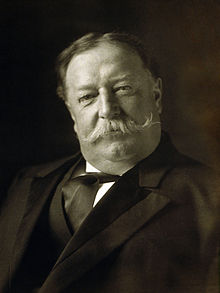
William Howard Taft presided over the White House the year Chum was born. There were no niceties like electricity or indoor plumbing in his world. In fact the White House itself had barely installed electricity, running water, or a shelter for automobiles. Yet, by the time of Chum’s death in 2006, George W. Bush had ordered spying satellites and drones over Iraq, and NASA’s Space Shuttle program was headed into retirement. The last years of his life, Chum used a computer to keep up with his friends, and along with his television, he was current on world affairs.

Taft to Bush, seventeen presidents. He lived seventeen presidents. I’ve only lived through eleven. My parents thirteen so far, and my  own kids, five.

How old are you in president years?

What I Heard

images

Ken Burns has done it again–hit another historical piece of film over the wall. I’ve enjoyed Burns work for decades, beginning with “The Civil War,” through “Baseball,” to “Jazz.” He has consistently combined solid historical research with the subtle beauty of an artist. But in his new “Mark Twain” biography I made a discovery I once believed impossible. I watched the film without any historical analysis or comment.

For the first time since publishing “River of January,” I watched simply from a writer’s perspective. In the film, scholars discussed how Clemens didn’t find his unique American voice until well after “The Innocence Abroad,” and “The Prince and the Pauper” were published. Twain’s masterpiece, “Huckleberry Finn,” came after years of hesitation until that singular voice could no longer be kept tethered.  The author reached deeply from his childhood–a bigoted world of ignorance, poor grammar, and slang with a twang. He defaulted to what he knew best, his inner core and colorful life.

That resonated with me in my own struggle for voice. I have come to realize that a personal truth has to come off the page to remain in the manuscript. If the story line, or flow of dialog doesn’t resonate, it has to go. There must be a truth to tell. The obstruction of a badly worded sentence, or contrived  idea hangs uneasily in my psyche. I have to write what I know to be authentic. It’s a weird dynamic too, and takes concentration to pull off. I put myself in the scene–whether it’s a cockpit, or a dressing room. From that bit of time travel I can survey the setting, describing it both physically and emotionally. I understand the importance of familiarity.

In another tidbit from the documentary, Ken Burns examined Clemens daily writing regimen.

At his home in Hartford (I’ve been there, it’s so cool) Twain worked in an upstairs room, away from everyone, committing his tales to paper. Each evening Clemens gathered his family and friends to listen to  his day’s bounty. I found that intriguing–not as a historian, but as a writer. (Twain had many notables among his friends, President Ulysses Grant for one.)

Samuel Clemens made writing his day-job, and used his household as an audience. Something I find I am unable to follow. However, my ears were carefully adhering to that writing schedule revelation, contemplating his patterns.

I too, need quiet and solitude, but don’t produce the same way. My engine needs to rev up before any writing session. I think and think and think (like Winne the Pooh) then inspired fire up the old laptop. The historic record can spark my thought processes, and the Chumbley archives also can prompt a productive writing session. All in all, a “fits and starts” style best describes my method. Both “River of January” and the new one “Figure Eight,” have come to life through my haphazard style.

Mark Twain can stand alone as a historic figure, apart from his brilliance as a man of letters. He belonged to a political group known as the “Anti Imperialist League,” opposing unrestrained immigration, especially from China and the Philippines. He disapproved of  John D. Rockefeller and other greedy Robber Barons, making no friends among the elite. All that I all ready know, and taught for years. The astounding thing is I watched the program hearing only the literary journey of an American lion.

You Will Use It Every Day

images

My computer was on the blink, and a friend came over to fix it. We are lucky to have such a friend because this guy is an IT guru as well as a great neighbor. While waiting for some data to load we got to talking about all the world’s problems, and the discussion moved to kids and education. He had just left a math position at an alternative high school, and I had just retired after a long career in the classroom. We found we agreed on many, many points.

In particular he became exasperated by the constant line, “I’ll never use this (Algebra) again. Why should I have to learn it? Now believe me, there was a time that I would have joined the complaining ranks, because math was not, and has never been my thing. Today however, I’ve changed my mind about the age old gripe, realizing it wasn’t about the subject matter. With new eyes I looked at my math-computer friend and replied, “You were simply trying to teach him how to think–how to problem solve.”

And that is the purpose of educating young people. To nurture cognitive growth, skills and insights in order to progress into purposeful adulthood. If we as teachers and parents don’t expect anything from our kids beyond showing up to class, staying awake, and complying with instructions, how can a young person stretch themselves and mature. If we expect nothing from our kids, that is what we’ll get. Nothing.

I spent half of my career, before retirement, teaching AP US History, and Sophomore Honors History. My teaching assignment began to change my philosophy of education almost at once. It no longer meant a chronology of facts, not that those aren’t vital. The facts were something like bricks, or lego, or whatever, and students were required to line those up and draw conclusions. Let me illustrate. In a simple compare/contrast question the kids had to examine the expansionist policies of Jefferson and James K. Polk.

First of all they pre-wrote every fact about both presidents in a T-square. Next they looked at those facts: Louisiana Purchase through a treaty with France, Lewis and Clark Expedition, War with Mexico, land acquisitions of the Mexican Cession, opening of California, etc . . . With all that unloading the kids should have been able to make some assumptions from the historic record. After some analysis they could make some observations regarding Jefferson’s diplomacy in his negotiated real estate deal, versus Polk’s blatant military aggression. Also they should have added a personal opinion in there somehow for analytic flair– both presidents wanted the same thing, land, but Jefferson’s approach was more peaceful or principled (or something like that).

Now that process takes discipline and tons of practice. And some kids simply wouldn’t push themselves, and their grades reflected that lack of  effort. Some parents balked, believing we teachers shouldn’t ask that much of their young ones. But most students truly grew after getting the hang of connecting these dots.

I was, in reality teaching the same thing as my friend, the Algebra teacher. We were both trying to show the kids how to process information and formulate conclusions. In a sense there are no “A’s” in this approach to education. How can one grade intellectual depth? Instead the aim was to foster a sense of self-agency and autonomy, skills useful in a democratic society and a purposeful life. If our young people can think, and teach their kids to think, the Republic is secure.

Meet The New Boss, Same As The Old Boss

images

There was a documentary years ago titled “Blood and Belonging.” It was an examination of primarily Eastern European ethnic groups, and the power of splinter nationalities. According to the film these groups, from Bosnians to Ukrainians hold their identities above any other affiliation–above any other allegiance. There was some discussion of group history, persecution, and twentieth century experiences from WWI to the present.

Now all of these people and their mini-revolutions appear virtuous on the surface, and members of these factions sound as justified as redneck Obama haters after their fourth beer. And there is no doubt that harms and war crimes have been committed against these same minorities. One only has to look to the Armenians during the First World War, or the Kurds under Saddam Hussein. In the recent past the Balkan Wars have provided the most harrowing of modern day slaughters, not to forget Rwanda or other such atrocities. Genocide carried out in the name of freedom fighting.

Here’s the problem. These numerous brush fires, these countless struggles are now prosecuted in a much smaller world. A world with heat-seeking missiles, smart bombs, and gulp . . . atomic weapons. Localized grievances can explode, literally, targeting disinterested victims who just happened to fly over a particular airspace. But to these subgroups on the ground, (because they are inherently good) violent ends more than justify the murderous means.

Somehow sectarian or religious splintering doesn’t appear too healthy for the rest of us. Suit wearing warlords, gang leaders, thugs, inflaming heavily armed followers simply puts the rest of us in more peril by insuring more violence.

President Wilson referred to such strong arm leadership as “criminal.” And I think I’m with Old Woodrow on this one.

Confessions Of An Aging Teenybopper

images

Culling through pictures, playbills, luggage tags and every sort of memento in the Chumbley archive, I discovered some odd newspaper clippings. This small sheaf of articles stood out because they had no bearing on show business, airplanes, or any other achievement of my principle characters in “River of January”. The collection, clipped together was titled, “Love and Marriage.” “Love and Marriage?” Helen was a career girl, a professional! Yet she had carefully cut them out of the paper, and valued the advice enough to keep them for over seventy odd years.

Helen was, in reality, a romantic girl, a girl who dreamed of an ideal ‘happily ever after.’
Like me.
Yes, I am a closet romantic. Despite all the years spent teaching wars, treaties,and politics, I still hold on to my teenage heart.
The boy pictured in this essay is Mark Lindsay of Paul Revere and the Raiders. The band wasn’t my favorite by any means, but he was so cute. His smile on a show, “Where the Action Is,” cut me to the core. I was infatuated, as were most seventh grade girls in America.
My hair hung straight, fortunate at a time of when straight hair was the thing, wore A-line dresses called Tent dresses, and cute little round toed pumps with crazy designed stockings. Preferred lipstick came from Yardley, an English brand, or for us poor girls, Avon. The color was frosted white, or subtly pink.
And I liked boys. Boys were the ideal “them,” the unfathomable other, the male prepubescence sirens that dominated my thoughts, and permeated all conversations with my girlfriends.
Just the opening bar to the Beatles, “Night Before,” sent me into a tail spin. Paul wanted me to love him. Sigh. And the Young Rascals asked, “How Can I be Sure?” And that tore me up. My heart and mind was an explosive combination of fantasy, adrenaline, hormones, and electric guitar riffs.
It’s still a jumble in my mind, those long ago days. But I think that is somehow the right way to remember. There was a war, (in Vietnam), riots, (in Watts), and students rising up across college campuses with an unrest detectable in my seventh grade classroom.
Most of the upheaval I processed in terms of cute boys. There, I admit it. But that was certainly a long time ago, and today those glamorized notions have been replaced with a deeper understanding of the historic record, and a trail of broken relationships. And maturity.
It hasn’t been seventy years of saving the “Love and Marriage” columns, but young girls and romantic idealism remains a constant. Younger girls are more transparent, expressing their romantic enthusiasm, but we older girls haven’t forgotten.
Just check out my playlist on itunes.

Liberty Tree

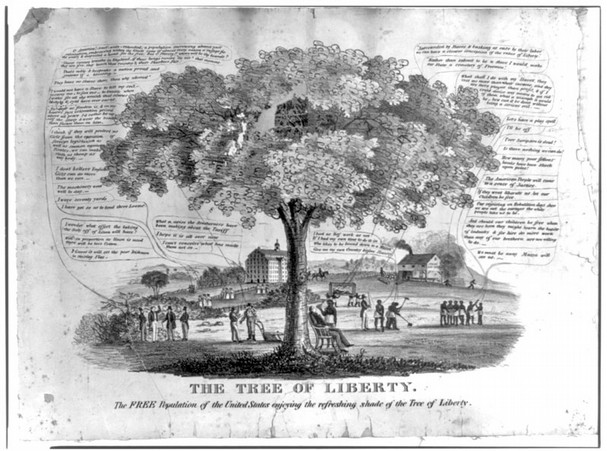
ImageOne symbol, endless interpretations. That is the age old condition of American Freedom. It is a messy affair with so many choosing to see their personal freedom as finite property. If another individual, or group realizes a gain, others record a loss.

If the Liberty Tree (above) represents that nebulous idea of freedom, the metaphor is easier to see. Made up of mostly white males, working class boys, the Sons of Liberty were the foot soldiers in the struggle for freedom. Those young men had access to guard the grounds around the trunk, and decide who could approach the tree.

Then came Scott V. Sanford, 1857 and the court ruled that slaves were slaves and absolutely prohibited  from the grounds where freedom stood.

The Fourteenth Amendment, known as the “Second Bill of Rights” guaranteed equal protection under the law to ALL Americans. Theoretically everyone was now protected under that mighty elm.

In Plessy V. Ferguson, 1896, Black Americans were allowed to peek at the tree, but only from far outside the vicinity, away from whites. If blacks felt inferior from the “Separate, but Equal” decision, that was their own problem. (Read the decision, it really says that)

Women too, steadily circled the grounds of the green–their collective eyes determined to examine the quality of the wood. Soldiers such as Elizabeth Cady Stanton, Dorothea Dix and others demanded the promise of American self-agency. Then came World War One, and women would wait no longer. Under the duo leadership of moderate Carrie Chapman Catt, and radical Alice Paul, the Nineteenth Amendment was ratified and women joined the male-dominated electoral process. These girls advanced toward their prize, though not yet able to explore the texture of the trunk.

Of course, through those many years, male interest in women’s reproduction remained paramount. “Coveture,” was a legal principle–women as property, covered by their men’s standing. Women only experienced that tree in a token sense, with permission from their father or spouse. Those brave enough to challenge the status quo, those who spoke out on reproductive rights, or even voting rights found themselves in jail. Take a look at the lives of Susan B. Anthony and Margaret Sanger. Those two women dared to touch the tree and were caught, shamed, and punished.

Roe V Wade, 1973 changed the subjugation of women for ever. In addition to the introduction of birth control pills, the girls not only circled the trunk, but were finally climbing the branches! Women could wait to start families. They could pursue education, fly airplanes, trek to the North Pole. The view from the tree top was fabulous.

But the powers of inertia, the sense of lost freedom pervaded the ranks of those who believed they were losing in this zero-sum game. Their freedom was diminished by that gained for Black Americans and women. The pull came, the courts listened, and the ropes went up again around the trunk.

In light of recent Court decisions, women are again relegated to the curb around the green. They can see the tree, but others who tout their stronger claim to freedom guard the grass. The personal proclivities of some trump the claim to self agency of others. Margaret Sanger, Mrs. Stanton, Frederick Douglass, for that matter, and Alice Paul would not be too happy with the backward turn in women’s standing concerning their autonomy. (Plus the hacking away at the Civil Rights Act of 1965)

That historic tree must spread its roots and grow to remain healthy. The reach of its branches are limitless, and no one loses freedom by sharing it’s blessings with all born to its legacy.

Happy Fourth of July.
 

Sharing Stories

Image


We spent Saturday and Sunday under a white tent at our local mountain golf course. The setting was an annual Art & Wine Festival and many attendees came by to talk about and purchase River of January.

Now this community, at first glance, seems sparse and hidden among the trees and peaks. But promote a fun public event, sell some food and drink, cooperative weather of blue alpine skies, and the crowds materialize. I recognized more people–more than I ever believed I knew here, swapping a story or two and catching up from last time we spoke. Some who passed by shared epic stories of their own about their family members or friends from the past. So many of us have memories that need only a spark to reignite.

It occurs to me that meaningful bonds are forged by shared experiences. One fellow who came by our display has become a real ally in promotion of “River.” We first met him when we moved up from the city in 2007 when we knew no one. My husband and I agreed to host a party for this gentleman at our new cabin, as he was running for public office. Now, between his earlier political campaign and my book, we are friends, we share a past.

Another passerby was a woman I worked with in education, and she was great. She stood under the tent and just beamed at me, repeating, “I’m so proud of you. So proud.” We indeed go way back, fighting the good fight for eradicating ignorance among the young. There is no need to explain, or promote, or sell her on anything, we know each other. She and I are on the same team.

Clearly a shared past binds people together, without the fuss of selling oneself. Sharing a previous experience gives us all a basis to reconnect in a real way. That is why I think family is great. That history is deep and transcends words or behaviors–the family unit goes way back. No explanations, no rationalizing, diapers have been changed here.

America was founded on a shared story. Colonies, Revolution, Constitution, Slavery, Civil War, etc. . . Actually in Lincoln’s first inaugural he appealed to Southerners to recall that shared history with the Union. “Mystic chords of memory,” were the words the new president selected. And perhaps that is the central issue that divides Americans as I write this blog. We struggle to find a common narrative of who we are. Which story is the common connection that brings the American public together? Is it next week on the Fourth? Does that holiday mean the same thing to each American? Or has a common past become too remote and too brittle to bind Americans together as a people?

My book “River” is an attempt to remember. The work is a celebration of Helen and Chum extraordinary story. Even my own family keeps a narrative of who we are which comes up regularly when we gather. I believe we are strengthened and revitalized as individuals when we find our place among others–with family, with friends, and as citizens.

It’s the common stories that gifts to us our perspective, proportion, and place.

Read River of January.


Sailing to Rio

Sailing to Rio

First Chum, then Helen traveled to South America via the Munson Line. A couple of names come to mind, “The Western World,” and the “American Legion.” “River of January” carries the reader back to an earlier glamorous, and wondrous world.