Lines

I have been mulling around the concept of lines as connections.  In River of January, the term lines was emerging into common usage with more modern transportation.  Helen sailed on the Cunard Lines from New York to Le Harve, later to London, and finally the Munson Line to Rio de Janeiro.  Both Helen and Chum rode on rail lines, from state to state, and across the country.  With aviation’s development, air routes were served by the growth of new airlines. 

These lines, all moving people, mail, and goods shortened space and time.  One end of a line, say from New York, where both protagonists lived before they met, tied Chum to Los Angeles, to West Palm Beach Florida, and finally to Rio.  His choice of lines tied him to people, places, and events which defined and shaped his life. 

Helen’s lines transported her to the West Coast too, but also to Canada, Texas, Paris, Vienna, and later on to Rio.  She appeared in some Hollywood movies, danced in changing theaters, and became a solo act at the Copacabana.  Her path profoundly shaped her professionalism, and her outlook.

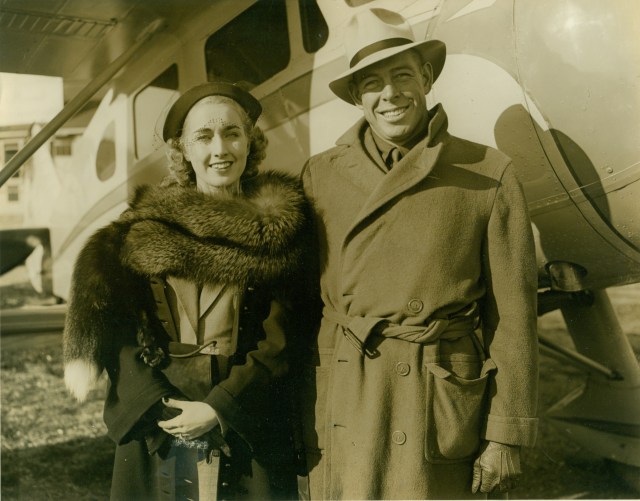
Their movement on those busy lines finally crossed in 1936, when Chum and Helen found themselves in the same spot at the same time.  That connection altered both of their lives permanently.

Lines in the modern world are electrically instantaneous.  Through texts, Facebook, or Twitter, people cross and recross others lives with mixed outcomes, and often operating from isolated locations.  Helen and Chum’s lines may have been slower, and more unreliable, but it seems that the effort had a more dynamic and glamorous quality.

Women-Relying on the Kindness of Others

Sifting through the stacks of Chumbley mementos, especially scrapbooks and journals, I sensed a distinct female flavor to the materials.  Women, arms around each other, posed in front of fences, on steps, on porches, at the beach, waiting it seems for a man to lead them home. 

In my book, River of January, a California relative married a physician, presiding over a grand home.  The rootless women in her family gravitated west to live with her, and it appears there were no questions asked.  Women without husbands found sanctuary with married family members, as a matter of course. 

Helen, the protagonist in River supported her mother from childhood on, performing across stages in North America, South America, and Europe.  This reverse support system, the daughter financially carrying her parent raised no eyebrows.  The mother expected care.  

Once Helen married, the arrangement became a problem for her new husband. 

Times were changing.     

Ethical Story-Telling

One of the toughest obstacles I faced writing River of January, was assuming I knew the family story best.  These people were real and left a rich paper trail of their dramatic lives.  I was lucky enough have recorded interviews, stories graciously shared by family members, and volumes of letters, mementos, and photographs. The internet, too, has been helpful.

Still, I struggled with the presumptuous notion of interpreting Helen and Chum’s lives through my understanding.  After agonizing for a good year over the arrogance of committing their lives to paper, I experienced a moment of clarity.

These two deserve to be remembered.  If that task was placed in my novice hands, so be it.

I have since spent the last three years learning how to write, because this story must be told, their adventures pieced together into a more coherent picture.

I hope to share more regarding the events that led to this book in future blogs.

River of January, how it happened when I wasn’t looking

I never saw this book coming.  I certainly didn’t go looking for such an ordeal, either.  But life assigned custody of the tale into my inexperienced hands and there began my challenge.  I’ve never written before.

This story concerns the lives of two ambitious individuals, born in the early years of the 20th Century, Mont Chumbley and his love Helen Thompson Chumbley.  This first volume examines their lives from childhood to excellence in the fields of aviation and show business, and how both attained success.

However, River is a true story and not all was elegance and achievement.  Both hailed from difficult families and beginnings.  Though Helen and Chum enjoyed adulation separately, together the issues of family, especially Helen’s mother, threatened their bond.

How the story came to me, in all it’s unlikely circumstances is covered in the pages of the book.  However, I do plan to explain the background details and examples from the narrative in later blogs.