Endurance

14e7ea2b2fd17c16e45990ee1dd21a8edb4ddd40.jpeg


Three early American documents are often lumped together in our collective memory, though each is quite different from the others; The Declaration of IndependenceThe Articles of Confederation, and the enduring US Constitution. Citizens generally know something of the Declaration due to a certain celebration we observe each summer. The Articles of Confederation are a bit more elusive, and not nearly as recognized. The third, the US Constitution is revered, but its beginnings, and purpose is also shrouded in time. 

Here is a quick explanation of each missive, particularly the sequence, and the significance of each.

The Declaration of Independence: July 4, 1776. A product of the Second Continental Congress, this revolutionary document was ratified as an instrument of rebellion, after all other measures to avoid war with England had failed. In reality, the shooting had begun a year earlier in Lexington, Massachusetts, but the Declaration formalized hostilities. Debated and delayed, this document was finally adopted in July of that year. Congress made crystal clear their reasons and resolve to free themselves from King George’s arbitrary rule. Penned by Thomas Jefferson, the Declaration began with a guiding statement about “Natural Right’s” shared by all humanity, and that people had the obligation to free themselves from unjust tyranny. The rest of the epistle read as a legal document condemning the King and his despotism. This document is the first of the three in forging the United States of America. 

The Articles of Confederation: September, 1777. The Articles provided America’s first national charter of government. Approved by the same Second Continental Congress in 1777, the Articles attempted to unify the original states under one government. Through this document, Congress sent diplomats abroad, including Benjamin Franklin and John Adams, to (beg) obtain financial support from European powers. However, at home, this framework failed miserably. More a Confederation of independent principalities, Congress had to plead for money and men from each state, who often said no. There was no power to tax, no centralized currency, and the Articles weren’t even ratified by all 13 states until a month before the war ended at Yorktown. Each state jealously guarded its own interests over any unified cooperation. Congress could do next to nothing to aid General Washington and his army. Chaos ensued after the war ended, as well. Trade wars flared, disagreements among the states spilled over into violence, and rebellions within states promised more turbulence. The ability of America to govern itself appeared doomed. The English were sure America’s failure was imminent, and they could, once again, swoop in.

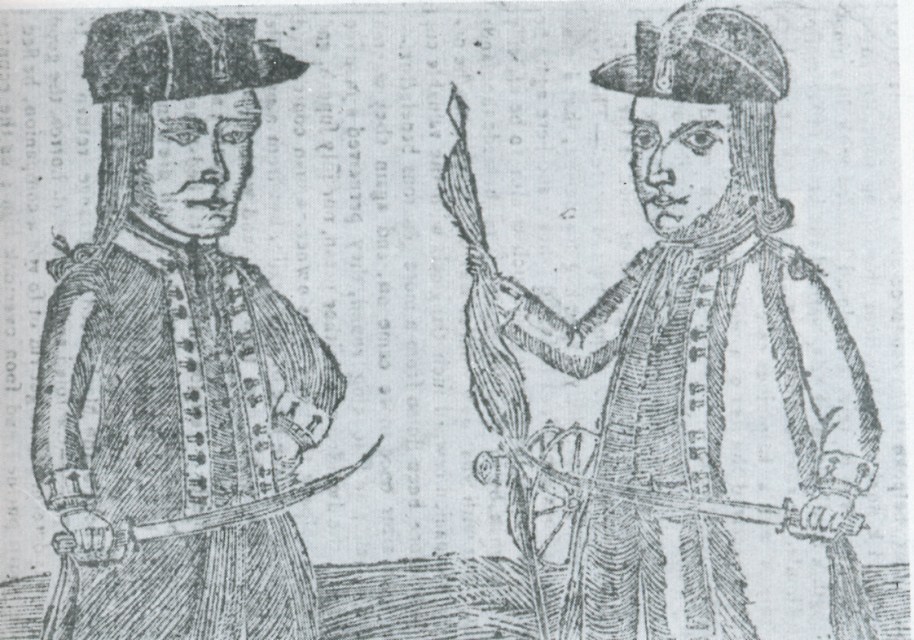
The United States Constitution: May to September, 1787. Born from an earlier 1786 meeting between Alexander Hamilton and James Madison in Annapolis, MD, the Constitutional Convention was organized and slated for Philadelphia in May. Both founders understood that without persuading Washington to attend this new Convention, any success was remote. Washington, tending his home at Mount Vernon, was hesitant, and tired. However, when news reached the General of an uprising in Western Massachusetts, (Shays Rebellion), Washington agreed to attend. Fifty-five delegates from all the states except Rhode Island, reported to the Pennsylvania Statehouse in Philadelphia. Most were lawyers, sprinkled with many Southern slave holders. Virginian, James Madison came prepared with a plan to replace the feeble Articles of Confederation. Much of Madison’s Virginia Plan became the basis of the Constitution. Designed for endurance, this new charter vested authority in the Central government, and the states. Termed Federalism, powers under this frame of government are shared between both authorities simultaneously. The tooling of the document, employing separation of powers, and checks and balances is brilliant, and worked well until 2016.

Gail Chumbley is the author of the two-part memoir, “River of January,” and “River of January: Figure Eight,” both on Kindle.

gailchumbley@gmail.com

My Rock, My Refuge, My Library

It wasn’t yet 10:00am, but parking spaces were filling up fast. The library would open soon.

Be-bopping up the sidewalk, dressed completely in black, ear buds stuffed under his knitted cap, came the happiest Goth in high-tops. A young mother followed behind, a stack of books awkwardly balanced under one arm, and a wiggly baby in the other. The time was 9:58.

Older folks, hipsters, Lexus drivers, the tattooed poor–all queued together for their morning stop at the public library. How remarkably American.

When the doors finally did slide open, this society of seekers disappeared inside, striding with purpose to stake their domain. A no-nonsense aura filled the air as each card holder claimed their chair, booth, or computer to commence their business.

If ever there existed a reflection of perfect democracy it is America’s neighborhood library.

Visits make a lot sense. The facility is clean, climate controlled and the interior is well lit for reading and research.

More, public libraries offer a multitude of services for the community. The unemployed  gets out of the house, and can search job openings on the internet, maybe check out a DVD or two at no cost. For the housing insecure, the interior offers sanctuary, a chance to safely close one’s eyes or relax and catch up on some reading. Mothers toting little ones make use of programs such as story-time, organized games and crafts, providing a diversion from hours at home.

My own elderly parents used to check out their book limit every two weeks. The librarian knew them well, suggested titles, and bagged up their books. They, too, waited in the parking lot. When those doors glided apart, canes in hand, they hobbled inside, joining the democratic wave claiming library privileges.

It was Benjamin Franklin who modeled this fixture in America’s beginnings. Franklin knew national longevity demanded literacy, and in that spirit he established the first lending library in Colonial Philadelphia. A true visionary, Dr. Franklin set the course for public good by founding these centers of learning. If he could see what I saw in that library parking lot, Franklin would rest a gratified patriot.

Next to public schools, a library card is the ultimate equalizer–from the richest to the poorest among us. No amount of status or money can elbow us out. My access is equal to yours.

To politicians fearful of books on the shelf, you strike a blow not only against the First Amendment, but to all the connecting tissue of American society. A misguided, self-righteous streak exposes a dark agenda which should give us all pause. Attacking libraries attacks us all. 

Gail Chumbley is the author of two books, “River of January,” and “River of January: Figure Eight.” Both titles available on Kindle. Chumbley has also authored two stage plays, “Clay,” and “Wolf By The Ears.”

gailchumbley@gmail.com

Idle Observations

Foreign oppression has, more than once, moved American policy makers at home to react with oppression. From the French Revolution to today, overseas upheavals frighten those in power enough, to prompt the same repression at home.

For example:

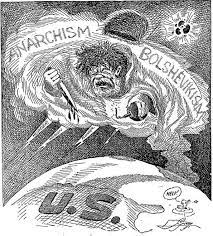
Immediately after World War One, the US endured a period of destabilizing fear–America’s first Red Scare. The U.S., bitter over entering the Great War, grew intolerant of unorthodox political views and worked to silence dissent. Radicals, both homegrown and immigrants from Europe, felt the wrath of political crackdowns. Anarchists, such as emigres, Emma Goldman, and Alexander Berkman, found themselves on trial, then deported back to Russia, while a home grown Socialist, Eugene V. Debs ended up in prison. Scores of other political agitators were targeted by the Justice Department for printing radical views, and voicing public opposition.

Why the oppression?

The reaction began following the bloody 1917 Revolution in Russia. The murder of the last Romanov Tsar, with his family, paved the way for the world’s first Marxist-Leninist government, the USSR. Vladimir Ilyich Ulyanov, (Lenin) seized the reins of the Bolshevik Party, and abolished all political opposition, outlining the aims of this new workers utopia, to overturn Capitalism worldwide.

The response in the U.S. came quick and harsh. Labor organizers, the leftest union, The Wobblies, and any other radical group deemed un-American was quashed. The U.S. government viewed dissent as treason, and Congress shaped specific legislation to silence protest. First passed and signed into law came The Espionage Act, in 1917, shortly followed by the Sedition Act the next year. No public speech, publications, nor use of the U.S. Mail to criticize government policy would be tolerated. Period.

In two test cases, the Supreme Court upheld the constitutionality of both laws. The majority ruled in the first case that nonconformists and draft-resistors presented a “clear and present danger” to the US. In the second opinion the Court ruled much the same, but this time with an important dissent. Justice Oliver Wendell Holmes, wrote, ” . . . the ultimate good desired is better reached by the free trade in ideas . . .”

Still, non-conformists and dissidents endured government suppression.

The courts, the government, and public opinion merged to outlaw what they feared–an all-powerful, biased social/economic system, much like the restraint simultaneously underway in the Soviet Union.

This was not over.

After Hitler’s death in April, 1945, and the ending of WWII in Europe, Soviet leader, Joseph Stalin kept his Red Army in East Germany and Eastern Europe, nixing a promised democratic Polish government in favor of his puppet Communist regime in Warsaw. And that was just for starters. A frightening Cold War ensued between the Soviets and the West, that by 1963 witnessed the construction of an actual partition, aka, an Iron Curtain. 

In America a political fever seethed, and Congress responded. Establishing HUAC, the House Un-American Activity Committee, to sniff out citizens who leaned to the left, ruining careers and lives in the process. This second Red Scare elevated the careers of Senator Joe McCarthy, and Congressman Richard Nixon.

This post originally intended to discuss the War on Terror. The objective to cast light on the American Taliban; those promoting God, Guns, and Gasoline. But now, with Russia up to its old tricks, all of us again, have a decision to make. Will Americans excuse Putin, grow complacent and emulate his corrupt oligarchy? That path is wide open, visited upon us via the former guy. He proudly rubbed shoulders with that murderer, and publicly praised Putin’s integrity. 

But, at this very moment, another, clearer choice stands before the American public. President Zelensky has conducted a master class on the real cost of freedom.  The Ukrainian people have lain down their lives to remind us we, are the original heirs of freedom.

In that spirit, this upheaval in the Ukraine is one we must emulate here at home. When Putin attacks Ukraine, he attacks us all. We are Americans, it’s time to take a stand for our liberty. This is not a drill.

Gail Chumbley is the author of “River of January,” and “River of January: Figure Eight.” Both titles are available on Kindle. Gail has authored two historic plays, “Clay,” concerning the life of Senator Henry Clay, and “Wolf By The Ears,” examining the foundation of American Slavery.

gailchumbley@gmail.com