A Surreal Landscape

In a scene from Hitchcock’s The Birds locals are gathered in a cafe eating and chatting. An attractive blonde is on the telephone explaining that children at the local school were dive-bombed by attacking crows. An elderly lady in a beret and smoking cigarettes lectures the other diners that crows don’t behave in such an aggressive manner and that there has to be another explanation. The woman identifies herself as an ornithologist and holds forth explaining crows and even seagulls do not do such things. Immediately after her expert testimony all hell breaks loose outside the cafe window, with masses of birds swooping down on passersby. The scene is chaotic and bloody leaving no doubt these attacking birds are in fact lethal. As the nightmare scene ebbs, the camera catches the bird expert, her head bowed in grief and bewilderment, stunned everything she knew and believed no longer applied to any bird in her understanding.

That woman resembles this lifetime American history educator. I’m a fairly decent generalist in subjects ranging from PreColumbian America through today, give or take minutia. But I too, am stunned by the surreal landscape of what I believed about democracy has been easily undone by a vulgar man-child and a compromised and opportunistic Republican Party.

It feels like all my understandings of my country no longer apply. The epic and fraught-filled struggle of forging the Constitution, the furnace of Civil War, the reforms of the Progressive Age, the promise of the New Deal, and Great Society are gone, rapidly destroyed by sinister design. A totalitarian despot has seduced a once noble political party rendering the valiant patriotism of those whom came before moot. Simply writing this lament is difficult, as all I once believed and explored is no longer valid.

An online troll explained it as “no one cares about that anymore.”

That means the principled determination of General Washington to serve our nation doesn’t matter. The misguided genocide of the Five Civilized Tribes upon the Trail of Tears doesn’t matter. With nearly 700,000 deaths, the crucible of Civil War no longer matters. Those brave GI’s on Omaha Beach, (including my own grandfather) and at the Battle of The Bulge no longer matters. Those brave students who occupied lunch counter stools in the face of racial violence did so for nothing. Those boys who perished in the Vietnam War are irrelevant. In point of fact no veteran matters anymore.

American history and all the sacrifice of our forefathers and mothers doesn’t count.

That 47 can fly in a foreign “gift” aircraft with a classified budget is a good thing to do with our tax money. That he remodels a room in the White House in a golden gilt is a good thing. Who really cares if former medicaid recipients suffer.

Suck it up buttercup, these are the new rules of Trump’s America.

That he has done away with investments in the Arts and Humanities is a positive. That he has placed incompetent sycophants from Fox News in high Federal positions is good. Forget he stole top secret intelligence documents. The country elected him anyway. That he has drastically shifted the tax burden onto the middle class and off of the super wealthy is how God wants it, just ask today’s Christians.

That old white men rape girls is a good thing. 

The GOP bows at his feet and gleefully ratifies every stab-wound of domestic legislation is now to be celebrated, so pop a cork. In fact destroying America for profit is now simply wholesome and righteous. 

America’s heroes, like Sergeant Alvin York in the Argonne Forest, or Colonel Joshua Lawrence Chamberlain at Gettysburg endured their generations difficulties so that Trump can plow up Mrs Kennedy’s rose garden for a putting green. Suffragette Alice Paul who went on a hunger strike and endured the torture of forced feeding did so that the current president can manipulate votes is just fine. The murders of JFK, Dr King, Harvey Milk, or the murder of Minnesota State Senator Melissa Hortman is merely a part of the 24/7 news cycle.

Indeed nothing of our past story matters because Mr 47 has disqualified all of it to make money, and more money because that’s all that matters today. Plus of course he is a convicted felon and is terrified of going to jail where he belongs.

So when you see this disoriented American History educator with her forehead in her hand, much like the bird expert in the movie, please understand the gravitational pull of her entire life’s work is today rendered null and void. 

Gail Chumbley is the author of the two-part memoir “River of January,” and “River of January: Figure Eight,” co-writer of the screenplay, “Dancing On Air” based on those books. She has penned three stage plays on history topics, “Clay” on the life of Senator Henry Clay, “Wolf By The Ears” examining the beginnings of American slavery, and “Peer Review” where 47 is confronted by specters of four past presidents.
A Theory

He proclaimed “it’s morning in America,” in a political commercial reassuring citizens the country’s best days still lay ahead. Responding to four gloomy years of oil shortages and the American hostage taking in Iran, the nation, in 1980, enthusiastically turned from Jimmy Carter’s malaise to genial Ronald Reagan’s magnetic smile.

Reagan had campaigned hard against what he viewed as an intrusive and bloated Federal bureaucracy. After his landslide victory in November of that year, President Reagan, repeated that theme in his inaugural address remarking, “it is no coincidence that our present troubles . . .are from . . .the growth of government.” The new president added that “government is not the solution to our problems, government is the problem.” Conservatives and Blue Dog Democrats were giddy to see federal entitlement programs cut, or at least significantly pared down. 

In the spirit of shrinking domestic spending, the Reagan Administration shepherded Congressional bills to cut services to poor and disabled Americans. Federal education programs went under the ax, as well as reductions of Medicaid, and Social Security. These entitlements suffered steep cuts by restricting eligibility, and removing many from the federal rolls. 

Mr. Reagan operated under the theory of “trickle down economics,” a belief that tax cuts for the rich would naturally benefit lower income brackets. New economic opportunities would emerge as reinvested wealth would find its way to employing the lower classes. Also known as “supply-side” economics, Reagan proceeded to slash not only taxes on the rich, but also loosened federal regulations on businesses, environmental protection, and opening federal lands to private interests. 

As Reagan’s personal hero, Calvin Coolidge, once stated, “the business of America is business.” And this President catered to business.

However cut and slash as he might, the anticipated economic outcomes didn’t quite pan out. Though social programs saw budgets diminished, military spending at the same time spiked, diverted to high ticket stealth technology development, and the fated Strategic Defense Initiative. The rich did become richer, but no benefit managed to trickle down.

With relaxed oversight the New York Stock Exchange finally crashed in 1987 through eased SEC regulations, and a myriad of shady practices that benefitted Wall Street insiders. One of the more egregious examples of this malfeasance concerned the Savings and Loan fiasco of 1986.

And the real cost for Americans? Middle class taxes bailed out insolvent, shady S&L’s, while at the same time reduced social programs inflicted real hardship upon the least among us. Congressional passage of the Mental Health Systems Act of 1981 was one such law. This bill mirrored one implemented earlier in California when Reagan served as governor of that state. The law essentially “streeted” mental health patients residing in psychiatric hospitals across the country. That type of direct care was not within the provenance of government support.

In explanation, the Reagan Administration argued that newer and better psychotropic drugs would offset the need for in-patient treatment, and those who still needed in-patient mental health care could be looked after by local communities and families.

However, that assumption never worked out as local communities and families did not, or could, not step up.

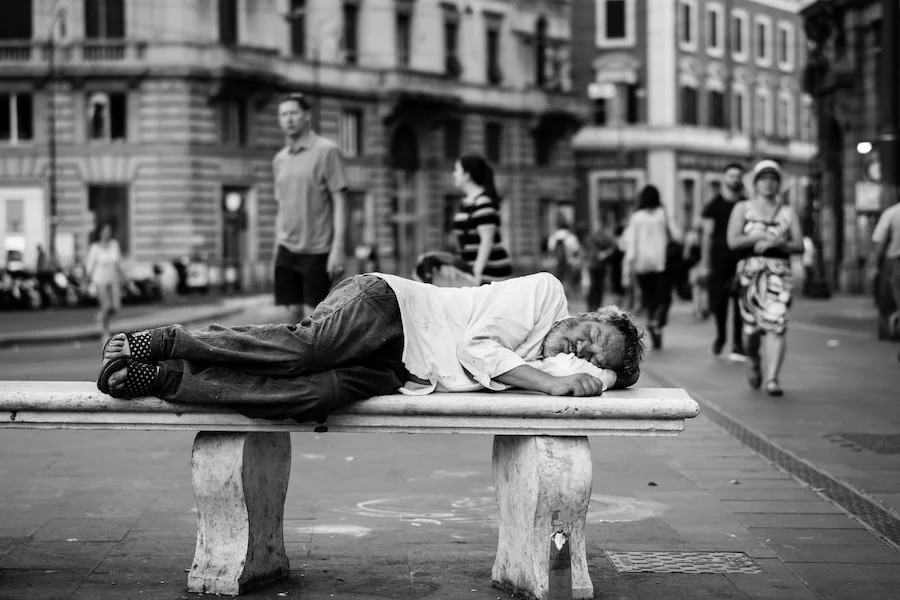
Today we see the fallout of the Mental Health Systems Act in real time. Among the homeless are those hardest hit by financial trouble, both the mentally ill, and the dispossessed. The victims collect throughout urban areas, housed in tent encampments, huddled under bridges, seeking refuge in hospital emergency rooms, or public buildings, or sleeping in parks and alleys. Many are veterans, addicts, and untreated victims of assorted psychiatric disorders.

Left uncomfortable and angry, America doesn’t seem able to understand how this massive uptick in homeless populations exploded across the nation.

In the richest country in the world citizens seem unable and/or unwilling to demand our political leaders find solutions. No one seems keen to fight the disdain, and stigma of permitting homeless shelters anywhere, particularly near residential areas. The failure is visible in every urban area in the nation. And if there is anyone to blame for this slow-motion humanitarian disaster, look no further than the so-called “Reagan Revolution.” 

The kicker is that the Reagan Administration did not save a cent despite entitlement cuts. Instead of reducing expenditures the federal deficit tripled from $930 billion in 1981 to $2.8 trillion by 1989.

So much for theories.

Gail Chumbley is the author of the two-part memoir, “River of January,” and “River of January: Figure Eight.” Both titles are available on Kindle. Chumbley also has written three historical plays: “Clay” exploring the life of Senator Henry Clay, “Wolf By The Ears” a study of American slavery and racism, and Peer Review, a fanciful piece where 47 converses with past presidents.

gailchumbley@ymail.com

A Different Code

“He has created a false public sentiment, by giving to the world a different code of morals for men and women, by which moral delinquencies which exclude women from society, are not only tolerated but deemed of little account in man.”Elizabeth Cady Stanton, Declaration of Sentiments 1848.

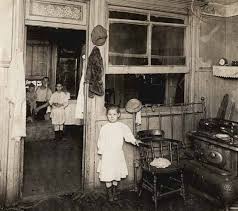
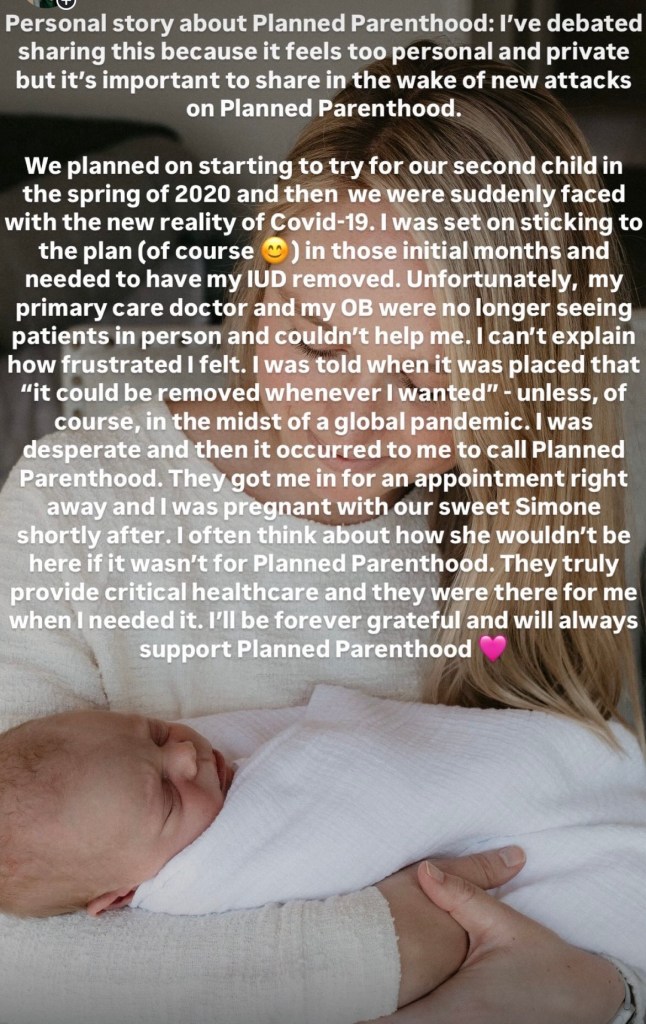
Nurse Margaret Sanger related an experience that inspired her career in family planning. Called to a dilapidated tenement building, Sanger found a pre-teen immigrant girl writhing in the throes of childbirth.

Attempting to assist the child, Sanger soon recognized the girl was slipping away, bleeding out on a filthy mattress. Indifferent, the girl’s family crowded nearby in a small parlor seemingly resigned to the life and death drama in the next room. 

Soon the bloody battle ceased, as both girl and infant were no more.

A mother herself, Sanger built her life’s work in promoting a woman’s right to choose if, or when to bear a child. 

As for Sanger, she found herself under arrest in 1916 for advocating sex education and birth control through the mail. The charge sheet read that her actions were indecent. Despite that legal setback, a determined Sanger founded Planned Parenthood later that same year.

June 24th, 2022 the Supreme Court ruled women no longer have physical autonomy. The government claims an overriding interest in American women’s reproduction. Plainly females are once again set aside as second-class citizens, leaving men free of any culpability for their actions. For one moment think if men were required a reversible vasectomy at age 16. No male would tolerate such a law, and this is the same invasion of privacy women are forced to obey.

Justice Alito, in his majority opinion, stressed moral judgement over legal arguments when the issue is reproduction. 

In fact, in overturning Roe, women are stripped of the most consequential of life decisions, reinforcing Mrs Stanton’s phrase in 1848, that “a different code” is still alive and well. Women cannot be trusted with their own bodies.

That Planned Parenthood offers so many other services is not the point. That neonatal disorders portend a fatal, and agonizing death for newborns isn’t the point, either.

One of the most precious American underpinnings is the right to privacy. And remember that Prohibition, too, attempted to police private practices. That fiasco resulted in an uptick of violent crime, and corruption because like it or not, people drink. The same is true of abortion. The procedure has not been halted in the country, but made more risky.

The Supreme Court has not ended abortion in America. 

This isn’t over.

*Justice Thomas indicates he would go after birth control next. Does he realize he opens a pandora’s box that could threaten overturning Loving V. Virginia

The Little Things

If you love . . .

Protecting a dim-witted, would-be dictator from legal consequences,

Suppressing a woman’s right to self-actuation and privacy,

Expediting white, unqualified patriarchs to the Supreme Court,

Rendering the US Senate inert,

Legislating so the wealthy have no tax burden,

The open targeting of Americans of color to brutality and murder,

The whole-sale destruction of the planet, and the rape of natural resources 

Abetting political misinformation and conspiracies through social media,

Targeting those of differing sexuality 

Pushing religion into American government,

Aligning apportionment and voter suppression to disenfranchise the poor, and people of color,

Withholding health care to the few with means,

The wholesale flood of firearms into civilian hands,

Cruelty dispensed upon desperate immigrants,

Coddling of white offenders over those of color,

Predatory treatment of consumers,

Blocking legislation to meet the dangers of the above list, and otherwise accomplishing nothing,

Vote for today’s Republican Party

Gail Chumbley, frustrated American History Educator.

Why We Try

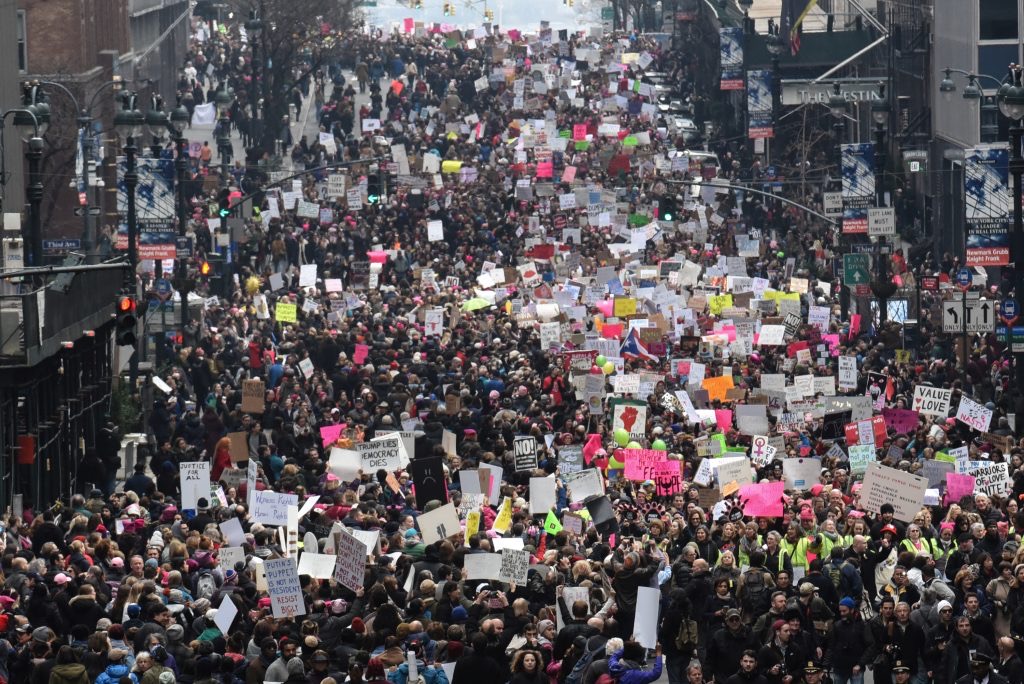
2017 Women’s March

When I first began this essay it ripened to nearly five hundred words to share one idea. Why I am a life-long Democrat. 

The original essay discussed the New Deal, the creation of the United Nations, the Marshall Plan, the GI Bill, and how strengthening Labor Unions evoked a sense of common purpose; how the economy boomed, and the middle class flourished.

Now all I want to impart is that Ronald Reagan was wrong. Big government is not the problem. Big government checked by regulations works remarkably well. 

I am a Democrat because with all its flaws, we stand equal in the eyes of Constitutional Law.* People made the Constitution, and we must preserve it. In general, States’ Rights is no more than a distraction perpetrated by selfish insiders who legislate their own interests. Residents are convinced through a wink and a nod, that the enemy (Big Government) must be defied, using catch phrases like “our values,” and “real conservative.”

In truth, the Federal Government can do more for all of us than any individual state, or any individual citizen can do for themselves. As I write, Idaho’s governor has asked for, and been granted federal funds for drought aid. Talk about biting the hand that feeds the State.

I am a Democrat because I’m inspired by the nobility of America’s past champions; the persistence of General George Washington, the compassion of Abraham Lincoln, the purpose of Alice Paul, and the articulate vision of Barack Obama. I am a Democrat because James Madison instructed us to create “A More Perfect Union.” Without that persistence, compassion, purpose, and vision America cannot continue as “the world’s last best hope,” as Lincoln also described us.

At bottom I am a Democrat because I know not one of us is perfect. We just keep trying. 

*Just heard the headline regarding the reversing of the Roe decision. Time to gather 4,600,00 of my best friends (2017 Women’s March) and organize.

Inheritance

Harry Truman understood the gravity of his duty right off. When FDR died in April, 1945, the newly installed Vice President got the word he was now president. And what a Herculean task he had before him. A world war to end, conferences abroad, shaping a new post-war world, and grappling with the human rights horrors in both Europe and in the Pacific. Add to all of that, he alone could order use of the newly completed Atomic Bomb.

On his White House desk, President Truman placed a sign, “The Buck Stops Here.” With that mission statement Harry Truman stepped up to his responsibilities despite the formidable challenges he faced.

Did Truman inherit the worst set of circumstances of any new president? Maybe? But it is open to debate.

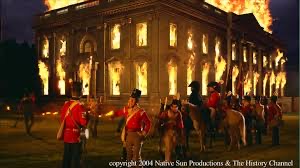
America’s fourth President, James Madison, found himself  in one god-awful mess. His predecessor, Thomas Jefferson had tanked the US economy by closing American ports to all English and French trade. Those two powerful rivals had been at war a long time, and made a practice of interfering with America’s neutrality and transatlantic shipping. Despite Jefferson’s actions the issue of seizing US ships and kidnapping sailors never stopped. By 1812 President Madison asked for a declaration of war against England that, in the end accomplished nothing but a burned out White House and defaced Capitol.

Following the lackluster administrations of Franklin Pierce, then James Buchanan, Abraham Lincoln stepped into a firestorm of crisis. Divisions over the institution of slavery had reached critical mass, and Lincoln’s election was enough for Southern States to cut ties with the North. So hated was Lincoln, that his name did not appear on the ballot below the Mason-Dixon. And the fiery trial of war commenced.

The Election of 1932 became a referendum on Herbert Hoover, and the Republican presidents who had served since 1920. Poor Hoover happened to be in the White House when the economic music stopped, and the economy bottomed out. And that was that for Hoover. His name remained a pejorative until his death. 

Franklin Roosevelt prevailed that 1932 election, in fact won in a landslide victory. Somehow Roosevelt maintained his confident smile though he, too, faced one hell of a national disaster. 

In his inaugural address the new President reassured the public saying fear was all we had to fear. FDR then ordered a banking “holiday,” coating the dismal reality of bank failures in less menacing terms-a holiday. From his first hundred days the new President directed a bewildered Congress to approve his “New Deal.” 

The coming of the Second World War shifted domestic policies to foreign threats as the world fell into autocratic disarray. FDR shifted his attention to the coming war. When President Roosevelt died suddenly, poor Harry Truman was in the hot seat. But that is where I want to end the history lesson.

If any new President has had a disaster to confront, it is Joe Biden. Without fanfare or showboating Biden, too, has stepped up to the difficulties testing our nation. 

Much like Truman and Lincoln before, 46 is grappling with a world in chaos, and a divided people at home. In another ironic twist, like Madison, Biden witnessed, a second violent desecration of the US Capitol.

To his credit, though his predecessor left a long trail of rubble, Biden understands the traditional role of Chief Executive, while clearly many Americans have forgotten, or worse, rejected. Biden is addressing the issues testing our country, not only for those who elected him, but those who did not. An American President can do no less.

Gail Chumbley is the author of the two-part memoir “River of January,” and “River of January: Figure Eight.” Both titles are available on Kindle. She has completed her second play, “Wolf By The Ears.”

gailchumbley@gmail.com