A Surreal Landscape

In a scene from Hitchcock’s The Birds locals are gathered in a cafe eating and chatting. An attractive blonde is on the telephone explaining that children at the local school were dive-bombed by attacking crows. An elderly lady in a beret and smoking cigarettes lectures the other diners that crows don’t behave in such an aggressive manner and that there has to be another explanation. The woman identifies herself as an ornithologist and holds forth explaining crows and even seagulls do not do such things. Immediately after her expert testimony all hell breaks loose outside the cafe window, with masses of birds swooping down on passersby. The scene is chaotic and bloody leaving no doubt these attacking birds are in fact lethal. As the nightmare scene ebbs, the camera catches the bird expert, her head bowed in grief and bewilderment, stunned everything she knew and believed no longer applied to any bird in her understanding.

That woman resembles this lifetime American history educator. I’m a fairly decent generalist in subjects ranging from PreColumbian America through today, give or take minutia. But I too, am stunned by the surreal landscape of what I believed about democracy has been easily undone by a vulgar man-child and a compromised and opportunistic Republican Party.

It feels like all my understandings of my country no longer apply. The epic and fraught-filled struggle of forging the Constitution, the furnace of Civil War, the reforms of the Progressive Age, the promise of the New Deal, and Great Society are gone, rapidly destroyed by sinister design. A totalitarian despot has seduced a once noble political party rendering the valiant patriotism of those whom came before moot. Simply writing this lament is difficult, as all I once believed and explored is no longer valid.

An online troll explained it as “no one cares about that anymore.”

That means the principled determination of General Washington to serve our nation doesn’t matter. The misguided genocide of the Five Civilized Tribes upon the Trail of Tears doesn’t matter. With nearly 700,000 deaths, the crucible of Civil War no longer matters. Those brave GI’s on Omaha Beach, (including my own grandfather) and at the Battle of The Bulge no longer matters. Those brave students who occupied lunch counter stools in the face of racial violence did so for nothing. Those boys who perished in the Vietnam War are irrelevant. In point of fact no veteran matters anymore.

American history and all the sacrifice of our forefathers and mothers doesn’t count.

That 47 can fly in a foreign “gift” aircraft with a classified budget is a good thing to do with our tax money. That he remodels a room in the White House in a golden gilt is a good thing. Who really cares if former medicaid recipients suffer.

Suck it up buttercup, these are the new rules of Trump’s America.

That he has done away with investments in the Arts and Humanities is a positive. That he has placed incompetent sycophants from Fox News in high Federal positions is good. Forget he stole top secret intelligence documents. The country elected him anyway. That he has drastically shifted the tax burden onto the middle class and off of the super wealthy is how God wants it, just ask today’s Christians.

That old white men rape girls is a good thing. 

The GOP bows at his feet and gleefully ratifies every stab-wound of domestic legislation is now to be celebrated, so pop a cork. In fact destroying America for profit is now simply wholesome and righteous. 

America’s heroes, like Sergeant Alvin York in the Argonne Forest, or Colonel Joshua Lawrence Chamberlain at Gettysburg endured their generations difficulties so that Trump can plow up Mrs Kennedy’s rose garden for a putting green. Suffragette Alice Paul who went on a hunger strike and endured the torture of forced feeding did so that the current president can manipulate votes is just fine. The murders of JFK, Dr King, Harvey Milk, or the murder of Minnesota State Senator Melissa Hortman is merely a part of the 24/7 news cycle.

Indeed nothing of our past story matters because Mr 47 has disqualified all of it to make money, and more money because that’s all that matters today. Plus of course he is a convicted felon and is terrified of going to jail where he belongs.

So when you see this disoriented American History educator with her forehead in her hand, much like the bird expert in the movie, please understand the gravitational pull of her entire life’s work is today rendered null and void. 

Gail Chumbley is the author of the two-part memoir “River of January,” and “River of January: Figure Eight,” co-writer of the screenplay, “Dancing On Air” based on those books. She has penned three stage plays on history topics, “Clay” on the life of Senator Henry Clay, “Wolf By The Ears” examining the beginnings of American slavery, and “Peer Review” where 47 is confronted by specters of four past presidents.

Symmetry

This reactionary-looking gent is Marylander Roger Brooks Taney, an Andrew Jackson appointee to the Supreme Court. History remembers Justice Taney as the author of the Court’s most infamous ruling in Scott V Sandford (1857).  

Before his rise to the Court, Taney had made no secret of his opinion on slavery and citizenship, insisting that blacks in the country had no rights white men were bound to respect. A free black had requested documents for overseas travel that Roger Taney, as then US Attorney General, rejected. Taney declared his view that blacks were not citizens, and never would be. Travel documents for this man of color were denied.

Another important element in this story concerns the Missouri Compromise of 1820. Settled eight years prior to the election of Andrew Jackson, this legislation directed that, with the exception of the new state itself, slavery would be forbidden westward along Missouri’s southern border. Most Americans hoped that this Compromise Line would endure forever, clearly delineating for posterity new slave states from free.

By the time the Scott case wound its way to the highest court, violence and bloodshed had erupted on those very western lands, on the Kansas prairie. Emigrants raced from both northern and southern states, dead set to vote upon the status of slavery in the new state’s pending constitution. A volatile mix of invading, pro-slave Missouri Ruffians assaulted Free-State Jayhawkers near Lawrence, sparking deadly violence across the region. Unrepentant slaveholders demanded their 5th Amendment property rights (meaning slaves) be allowed any place slaveholders settled. At the same time, equally fervent opponents contended the “peculiar institution” would remain only where it existed, never to pollute new territories, or America’s future.

Justice Taney, as Chief Justice, took umbrage at these incessant attacks, and at those Northern rabble rousers who would not obey the law. When the Dred Scott case entered deliberations it appears Taney intended to settle the question for all time, silencing forever those interfering, and self-righteous Yankees. When the Court finally issued its ruling in 1857, Justice Taney’s opinion rang out with certainty, and finality.

Taney wrote

I Despite Dred Scott once residing in free territory with his master, he was still a slave.

II As a slave, Dred Scott was not a citizen and had no standing in court.

With those two main points established, Taney could have ended his decree, but the Chief Justice had some personal venom to add.

III Congress had exceeded its authority in legislating the Missouri Compromise in 1820, and the 1820 law was unconstitutional. 

IV Movable property, (slaves) could not be restricted by boundary lines or by popular vote. Property was protected by law.

Believing he had settled the dispute, Justice Taney had, in fact, only stoked a more massive inferno.

Indeed the Civil War exploded within four years of Taney’s ruling, and blazed for four bloody years. In the aftermath, an interesting turn of symmetry, the Fourteenth Amendment was submitted for adoption, flipping all of Taney’s arguments, provision by provision. 

I By virtue of birth in the United States, one was a citizen. 

II As a citizen a person was due all rights and immunities, with equal protection under the law. 

This amendment reads as if the Scott Decision acted as a template for reversal.

Fast forward to 2008. 

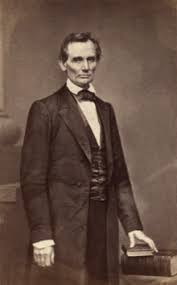
President-Elect, Barack Obama, in a conscious effort to mirror the sequence of fellow Illinoisan, Abraham Lincoln’s inaugural, deliberately followed the 1861 Lincoln festivities. The Obamas rode the same train route as had the Lincoln’s, breakfasted on the same meal inauguration day, and when the moment came for the swearing in, President Obama chose the same Bible as touched by Abraham Lincoln’s right hand in 1861.

In this last twist of symmetry that Bible belonged to Justice Roger B Taney, the man who decreed blacks were not citizens and never would be. A very satisfying turn, indeed.

Gail Chumbley is the author of the two-part memoir, “River of January,” and “River of January: Figure Eight.” Both are available on Kindle. Chumbley has also penned three stage plays, “Clay,” “Wolf By The Ears,” and “Peer Review.” She has cowritten “Dancing On Air,” a film script.

gailchumbley@ymail.com

Life Experience

I present history talks here and there, most recently focused on American presidents. The thesis for these programs looks at how each brought their life experiences to the presidency. For George Washington, a man who did his duty, for Andrew Jackson, his iron will, Abraham Lincoln’s push for opportunity, and Theodore Roosevelt’s sense of purpose.

This analysis rests on the old Hamilton/Jefferson dichotomy, particularly views on the proper size of government. Washington supported the supremacy of federal power, crushing the 1794 Whiskey Rebels by force, in Western Pennsylvania. Jackson had an inconsistent record on federal power. He was tough on South Carolina’s refusal to collect a new tariff, threatening to send in the military, as well. Oddly, at the same time, Jackson, without a blush, sided with the state of Georgia in removing the Cherokee and other indigenous people west. Lincoln embraced the Union, waging war, over allowing to let the government fail. Last, Theodore Roosevelt grew the size of government, and placed the federal government as the defender of righting wrongs. Set aside were National Parks, tracts of wilderness and game preserves. TR, protected America’s natural beauty for American’s for all time. Not to forget consumer protections in food and medicine.

For now, I haven’t gone beyond those four individuals, but with that premise as a guide, how do 20th, and 21st Century presidencies stand up to analysis?

Like Washington, Dwight D Eisenhower too, operated from a deep sense of duty. One of seven sons, Ike sought and received an appointment to West Point. A man of conviction, Dwight Eisenhower, as President, sent 101st Airborne to Little Rock, Arkansas to desegregate Central High School. Though not a progressive when it came to civil rights, he still enforced the law. And as a side note, Ike promoted the Federal Aid Highway Act of 1956, creating America’s first interstate freeways system. This piece of legislation came about from Ike’s early days in the army. In 1919, Lieutenant Colonel Eisenhower commanded a cross-country convoy of Army vehicles, Atlantic to Pacific, spending more time pushing rigs out of the mud than making forward progress. A lesson he never forgot.

A child of affluence, John F. Kennedy had to overcome considerable health problems and the expectations of his prominent father. Like Theodore Roosevelt, or Franklin Roosevelt, for that matter, Kennedy spent a lot of his youth ill, and hospitalized. Besides, “Jack” wasn’t meant to be the presidential nominee from the Kennedy clan, it had been his older brother, Joe Jr., his father’s first choice. Sadly Joe Jr. perished in a secret mission when his aircraft exploded over England in 1944. JFK, too, had nearly lost his life in the South Pacific, but survived, inheriting his father’s ambition.

After a brief stint in the Senate, Kennedy faced off against Richard M. Nixon for the White House. Prevailing in the 1960 contest, with his father’s sponsorship, JFK entered office and soon faced down Soviet aggression. This young president weathered a thirteen-day crisis when the Russians were detected building IRBM missile sites in Cuba. The Kennedy Administration successfully negotiated a stand down to Soviet aggression. This President, despite his medical ailments, and injured spine (from the war) most certainly fulfilled his father’s purpose.

As had Lincoln before, Bill Clinton and Barack Obama promoted opportunity. Both men rose from modest beginnings, and possessed keen minds. Clinton had been a Rhodes Scholar, and Obama a constitutional lawyer. Both men pushed for public health insurance, and the Dreamers Act protected children of Mexican nationals providing opportunity for education. Clinton was the first president to address the plight of LGBTQA in the military, (the first chief executive to utter those words). 

And not to be forgotten, opportunity was heavily woven into LBJ’s Great Society objectives.

As for Jimmy Carter, duty seemed to shape his administration. After Nixon’s scandals, and Gerald Ford’s presidential pardon, prospects dimmed in 1976 for the GOP. As president, Carter labored long to warn Americans about dependence on fossil fuels, appearing on television to discuss America’s malaise. However, the country had no interest in belt tightening, and Carter found himself replaced by Ronald Reagan. 

Reagan, HW Bush, and George W Bush are interesting commanders-in-chief. All three were nice, decent men, as well as patriots. A Navy man, Bush senior flew in the Pacific in WWII. Young Bush showed leadership in the aftermath of 911. However, in comparison to the four presidents in my programs these gentlemen aren’t as easy to label. The three were financed by large-monied interests, oil producers, and powerful lobbyist to lift regulations on business. In an interesting side note, Reagan’s own favorite president had been the 30th, Calvin Coolidge. Silent Cal once stated, “The business of America is business,” and Reagan felt the same. 

Each individual brought a unique imprint on the presidency. Extending federal power, or paring down central control. Life experiences shaped the character of each administration. Current President, Joe Biden looks out for middle and working class Americans, as he was raised in that community. Biden, looking out for the rest of us pushed the infrastructure bill and succeeded in lowering health care and drug costs for all Americans.

The last guy made it his duty, purpose, will, and opportunity, as cover for lining his own pockets and launch a coup against America.

Just saying.

Gail Chumbley is the author of the two-part memoir, River of January, and River of January: Figure Eight. Chumbley has also penned two plays “Clay,” concerning the life of Statesman, Henry Clay, and “Wolf By The Ears” an examination of racism and slavery in America.

Fighting Bees

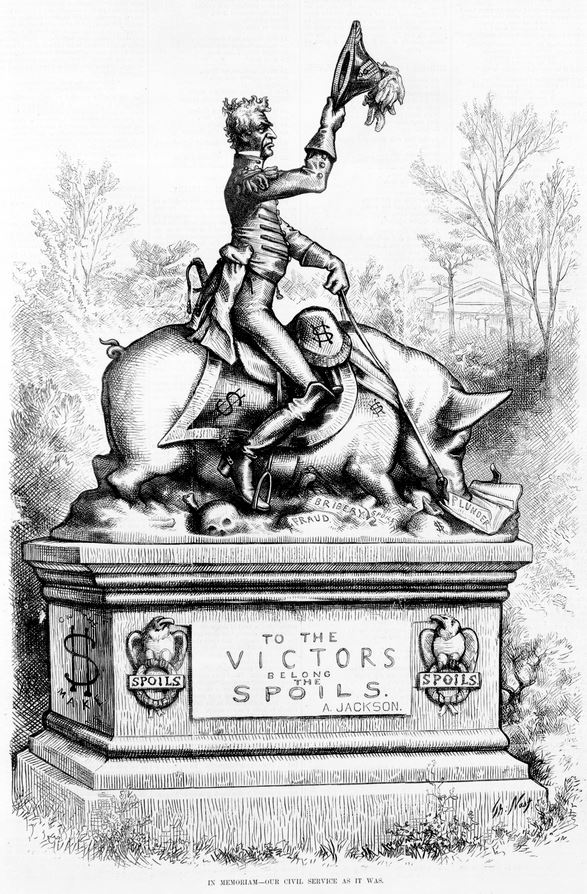
Young Abraham Lincoln came of age, politically speaking, during the administration of Andrew Jackson. And the rough, aspiring frontier politician did not approve of the Democratic Party and their blind, cult-like dedication to “Old Hickory.” Speaking first in New Salem, Illinois, then in Springfield, Lincoln held forth on the subject of Jackson’s arbitrary and autocratic style compared to his man, Senator Henry Clay of Kentucky.

Young Mr. Lincoln viewed Henry Clay as a true statesman. He admired Senator Clay for his rational, stable economic plans to nurture a growing America bursting with potential.

Central to Clay’s program was a bank, a central depository to finance new infrastructure projects like roads, canals, and railroads. Senator Clay championed the Federal Government as the best instrument to plan and carry out public works, improving commercial activity across the young nation.

To Lincoln scratching out a life in a muddy, stump-ridden western wilderness, Clay’s American System of improvements was welcome. Clay’s platform would bring order, jobs, prosperity, and hope to Lincoln’s own rough-hewn region.

Young Lincoln also shared Clay’s conviction that slavery did not belong in new western territories. All Lincoln wanted was a fair chance for all Americans, and that slavery impeded human talent, and he believed, like Clay, that slavery also devalued free labor. Free market capitalism and slavery could not co-exist.

To Lincoln, President Jackson’s mercurial style of leadership did not serve America’s future either. Jackson not only vetoed many improvement bills, arguing one state benefiting from federal funds was unfair to others, he in one instance vetoed a road bill because the project lay entirely in Kentucky, Henry Clay’s home state.

Excessive emotional discord in politics caused more problems than it remedied, and impeded national growth. Nation building wasn’t a sectional competition, a personal challenge, nor a game to pit political egos.

At the time of Jackson a religious revival burned hot across the country. Known today as the Second Great Awakening this movement, foaming over with emotion, had drenched politics as well, with candidates often taking on an evangelical, absolute tones.

Lincoln’s once joked he didn’t much like these stump orators unless they looked like they were “fighting bees.” To Lincoln, such emotional public displays had no value in advancing America.

So what did Lincoln believe? In the founders ideals of the United States of America. Embracing presidents as religious, messianic manifestations had no purpose, and produced only the tainted fruit of extremism.

Lincoln was, above all else, a moderate, logical, and measured man. His inspiration, his convictions, centered on a secular faith in the ideals of America.

Mr. Lincoln like to think of the Declaration of Independence as a golden apple, (equality and rights) set in the silver frame of the Constitution (the law). In other words certain inalienable rights protected by We the People.

Former President Obama exemplified Lincoln’s America in so many ways; relying on his cabinet, advisors, or his own formidable intellect to govern. And Lincoln’s Jackson nightmare repeated when a dumber version of Old Hickory proclaimed America is a terrible place.

Today the United States’ perpetual election cycle keeps emotions raw, but accomplishes little else. Mr. Lincoln would take a dim view of today’s constant political turmoil, arguing that we need to keep our wits about us and vote with our heads.

More infrastructure needs attention as well as national security, civil rights, and climate change. Instead a thin-skinned ego maniac welcomes billionaires to pilfer and taint good government. And the computer age has presented a complicated network neither Lincoln nor Clay could have imagined. We rely on those cooler heads to prevail, making policy, and conducting the people’s business, or we end up paying homage to wannabe dictator who is as arbitrary as he is vacuous.

Today, at this moment, in a country full of pointless Jacksons, be a thoughtful Lincoln. There is no need to fight bees all of the time, over and over, when the real work of America needs to be done.

Gail Chumbley is the author of “River of January,” and “River of January: Figure Eight.” Chumbley also penned two stage plays, “Clay,” examining the life of Senator Henry Clay, and “Wolf By The Ears,” a study of racism and slavery in America. Currently Chumbley is working on “Peer Review.” This piece is a cross of Dickens A Christmas Carol converges with presidential history.

chumbleg.blog

A Mandate

Theodore Roosevelt endured a childhood haunted by ill health. Orphaned by age 15, Andrew Jackson struggled for survival in the Carolina back country. Born the first son of a second marriage, George Washington aspired to rise above his inferior social rank. Abraham Lincoln, a child of the frontier, transformed himself through sheer hard work, and perseverance.

Before they were men these four presidents encountered enormous obstacles in order to reach America’s highest office.

This is the topic of four programs I’m presenting this spring. The idea of exploring future presidents childhoods seemed an interesting approach to understanding the past. What I didn’t expect was the anxiety churned up researching Andrew Jackson. 

Rereading Chernow’s Washington A Life proved an enjoyable review. Washington was not perfect, and certainly a man of his time. But that he overcame his avarice and ambition makes Washington an affirming subject.

On Lincoln, Douglas Wilson’s Honor’s Voice did no less. The man’s goodness, compassion, and intelligence came directly from overcoming his rustic beginnings. The Rise of Theodore Roosevelt, by Edmund Wilson, plumbs the depths of Roosevelt’s chronic childhood illnesses, and the directive from his father to overcome his frail body through exercise and sports. 

Then there is Andrew Jackson. 

HW Brands work, Andrew Jackson His Life and Times, is an oldie but goody; a book I enjoyed a lot. But that was before Donald Trump. Picking up Andrew Jackson, American Lion has been an ordeal. Jon Meacham describes a man who honestly believed he alone could save America by consolidating all power in the White House. Only Jackson spoke for the people, not Congress and certainly not the Courts. And the most distressing element? The Seventh President got away with his autocratic coup because voters let him. 

How does his childhood figure into his administration? Jackson never had limits. The early demise of his family, left the boy unsupervised in the backcountry, shuttled from one relative to the next. Somehow his rootless beginnings left in Jackson a volatile temperament of him against the world. 

The General murdered scores of Native Americans, and brought home a Creek boy he’d made an orphan. Brutality and tenderness, compassion and racism, love or hate. 

For Jackson all issues of state were personal, and loyalty the foundation of all his relationships. In that vein Trump resembles Jackson, plus the vile racism. 

What separates Andrew Jackson from Trump is a numbers game. President Jackson, for better or worse did win 55.5% of the popular vote in 1828, 54.2% in 1832. (Each election included four or more candidates) Our seventh President did earn an actual mandate from the people. 

Trump did not, and loses more ground every day

Gail Chumbley is the author of the two-part memoir, “River of January,” and “River of January: Figure Eight.” Chumbley has written two plays, “Clay” about the life of Henry Clay, and Wolf By The Ears, an examination of slavery and racism.

Nothing Happened

A small article about Kevin McCarthy caught my eye yesterday. Apparently the Speaker, with a perceived mandate from the country is looking to expunge at least one of Trump’s impeachments. 

To expunge means to remove the vote from the Congressional Record as though it never happened.

And this isn’t the first time a president has forced his will on the legislative branch.

The first candidate to manipulate Congress, Andrew Jackson lived with a perennial chip on his shoulder. The frontrunner of the Democratic-Republican Party, he knew he had won the popular vote in 1824, yet lost in the Electoral count. The explanation is complicated, but suffice it to say Jackson was pissed off.

Crying Corrupt Bargain Jackson stewed until 1828, then won the presidency with a decisive victory in both the popular and electoral vote.  

In 1832 Jackson stood for reelection, campaigning with the precision of a military operation. Long smoldering fury stoked Jackson’s rage—after all he was General Andrew Jackson, Indian fighter, victor over the English, and slave master. 

Jackson believed he championed the American people.

The Second Bank of The United States stood in the crosshairs of Jackson’s second term. This half Federal, half private institution contained all government receipts, making loans to states, to individuals, and issuing paper money. Truth be told, Jackson, especially detested the Bank’s director, Philadelphia patrician, Nicholas Biddle.

In a remark at the time, Jackson told his Vice President, “The bank, Mr. Van Buren, is trying to kill me, but I will kill it.” And the President’s word was his bond. Political opponents in Congress were aghast, convinced that Jackson wouldn’t dare carry out such a disastrous act. But, Jackson did dare. He promptly vetoed the recharter of the Second Bank of the United States before election day.

As for the election of 1832? Andrew Jackson, enormously popular, again received a mandate from the electorate.This victory he interpreted as approval for destroying the Bank.

Promptly, Federal funds were removed from the Philadelphia Bank, then distributed among state banks termed “pet banks.” Over time, these small, unregulated operations made high risk loans and when faced with a 1836 monetary contraction, were forced to call in those loans. Debtors could not repay, paper money dried up, and gold bullion grew scarce. The economy bottomed out into a long depression called the Panic of 1837.

Opponents in the Senate accused Jackson as behaving like an autocrat, King Andrew I. Outraged, Senators passed a resolution that officially censured Jackson for his misguided policies regarding the Bank. 

For four years Jackson allies in the Senate worked to expunge that censure. By 1837, with only months until the end of Jackson’s administration, partisans in the Senate finally succeeded. A black line crossed out the censure as if it never happened. 

People suffered due to nothing. Never happened.

America has witnessed a similar calamity these past few years. But instead of Corrupt Bargain, the rallying cry became Stop The Steal, or as it’s better known the Big Lie

The lesson between past and present boils down to this: blind allegiance to one man is dangerous, and no substitute for competency and even-handed governance. 

Kevin McCarthy does no service to the country because the former guy wants his crimes officially erased. Our country teetered on the edge of a fascist regime, but Kevin and his cronies want it forgotten.

One other thing, you have no mandate.

“There is nothing new in the world except the history you do not know.” Harry Truman

gailchumbley@chumbleg

Author of two books, “River of January,” and “River of January: Figure Eight,” Chumbley has also written two stage plays, “Clay”and “Wolf By The Ears.” Both works concern historical figures and their times.

Symmetry

This is one of my favorite twists in American history.

Gail Chumbley is the author of the two-part memoir “River of January,” and “River of January: Figure Eight.” Chumbley has penned two plays, as well. “Clay” on the life of Senator Henry Clay, and “Wolf By The Ears,” exploring the beginnings of racism and slavery.

Don’t Sit Down

In the political world there are two definitions for the term filibuster. The most common understanding concerns talking bills to death in the Senate, and the other is an unsanctioned invasion of a country to take it over. What both meanings share is a determination to wear out the opposition until the matter is settled. A siege of sorts—never giving up.

Famous uses of the filibuster include Andrew Jackson’s 1818 foray into Spanish Florida. Playing a little loose with his orders, Jackson entered the poorly defended territory, claiming to hunt down runaway slaves, and thump the Seminoles who provided sanctuary.

This extra legal foray caused an international incident. An American general, invading a weaker  target, under questionable authority. In the end, this filibuster paid off. Washington informed Madrid they supported Jackson’s invasion and the US took control of the peninsula from Spain. Done and done. 

The moral to this filibuster story is—never blink, never give up, never excuse.

In 1957, and in 1964, Southern Democrats, made use of the filibuster to talk Civil Rights legislation to death. In the ’57 debate South Carolina Senator, Strom Thurmond nattered on for 24 hours, and 18 minutes, still a standing record. And again in 1964, with Senator Robert C. Byrd of West Virginia, who droned on for 14 hours and 13 minutes. Despite obstructionist resolve, both bills did squeak through with assistance of compromising northern Republicans.

What America is facing at his very moment is a Trump-style filibuster, containing both meanings. His insufferable, boorish delaying tactics, unblinking lies, and frivolous lawsuits have characterized this nincompoop’s newest version. He is certain he can hold out against America.

And I am tired— we all are tired, sometimes to the point of despair. But, friends this struggle against malignant arrogance, greed, and hate is a filibuster we cannot lose. Not only for a place called America, but for the enlightened spirit of our country. Our legal traditions must be protected from this fallible, flawed, would-be autocrat.

Trump has filibustered his whole life for something he’s never found nor earned—blind adoration. And that doesn’t meet our traditions or expectations for elected leaders. They work for us. In a real sense our country has suffered an unauthorized invasion of our government, a hostile take over, and the man’s filibuster continues, unabated.

Poet, Langston Hughes speaks to our moment in a portion of his 1922 poem, Mother To Son.

“So boy, don’t you turn back;
Don’t you sit down on the steps, 
’Cause you finds it’s kinder hard;
Don’t you fall now— 

And Hughes is right. We can not fall. We must stay vigilant and wait this immediate threat out.

Gail Chumbley is the author of the two-part memoir, “River of January,” and “River of January: Figure Eight.”

gailchumbley@chumbleg

An America To Believe In

Religion in politics presumes all citizens essentially hold to the same beliefs. This premise also insists that religious conformity assures civic virtue and good order. However, in practice theocracies actually run counter to effective government, because invoking God in public debate stymies any exchange of thoughts. Without a “free market of ideas,” our society cannot advance, condemning the nation to decline, (See Middle Ages).   

The Constitution’s framers did not lightly pen any Article, Section, or Clause without study or debate, and that especially includes the later admission of the Bill of Rights. James Madison, in particular, examined other government systems, from the Greek City States through the Age of Reason. What Madison discovered was politics combined with religion inevitably sows public conflict; damaging both political and religious institutions. Madison’s purposeful language in drafting the First Amendment, (free exercise and establishment clauses) signaled that the United States would not repeat those fruitless mistakes. 

Lessons existed in America’s past, as well. In Colonial New England Puritan dissenters, such as Roger Williams, and Anne Hutchinson publicly rejected mandatory church compliance. Williams, later exiled to Rhode Island, defended his religious principles writing,

Enforced uniformity confounds civil and religious liberty and denies the principles of Christianity and civility. No man shall be required to worship or maintain a worship against his will.

As the first Catholic-Presidential candidate, John F Kennedy later echoed the same idea stating,

. . .it is apparently necessary for me to state once again not what kind of church I believe in — for that should be important only to me — but what kind of America I believe in.

And that was the point. American citizens must choose to worship freely, or not. That is the essence of American liberty. Law cannot dictate conscience, as our individual thoughts are as unique as our finger prints.

Despite the secular legacy of American law, religious prerequisites still surface from one era to another. In the earliest years of the Republic a fervor of evangelism blazed hot, recognized today as the Second Great Awakening. Beginning around 1800, and lasting until the Civil War, endless, exhausting revivals criss-crossed the country.

Choosing a faith among many began early and today is an American tradition.

Loosely paralleling “The Age of (Andrew) Jackson,” politics followed a similar evangelicalism, giving every person a choice in both their faith and their vote. As Americans migrated west voting rights followed, extending to the lower classes. Increasing numbers of farmers and tradesmen could cast their ballots and follow their understanding of Jesus with the same passion. 

Another unexpected outcome of the Second Great Awakening came in the form of countless spinoffs. Rural isolation cultivated a veritable Garden of Eden in new Protestant sects. For example William Miller of upstate New York forecasted the return of Christ as urgently imminent. He, and his followers believed Jesus would reappear sometime between 1843-1844. After the dates passed with no rapture, the church regrouped becoming today’s Seventh Day Adventists.

Methodists dispatched “circuit riders” into America’s interior. Men like Peter Cartwright, the epitome of a frontier “stump speaker,” could preach the Word of God, while beating the hell out of any heckler. 

Presbyterians split a couple of times before the Civil War. First, regarding whether or not untrained missionaries could lead revivals, or only seminary trained ministers. This controversy tore believers apart.

The schism for Presbyterians and other denominations sprouted from the controversy over slavery. North of the Mason-Dixon Line believers felt their duty was to take action and cleanse America of this national sin. Southerners, however countered that God made no mistakes, and it was God who appointed masters, and placed the slaves beneath them. Rather a handy absolution, that. It took a war to change the politics of slavery, but churches first led the way.

Perhaps the best advice on separation of church and state came from Justice William O Douglas in the court’s ruling, Engel V Vitale, 1962.

“once government finances a religious exercise it inserts a divisive influence into our communities.”

Dictating conscience is a fools errand, and a liberated conscience is the essential foundation of America.

Oh, and Christian Nationalism is neither Christian nor national. Quite to the contrary, that brand of absolutism does not promote public virtue, nor good order, but does lead to national decline, (see Holy Roman Empire)

Gail Chumbley is a history educator, blogger, and author of the two-part memoir, “River of January,” and “River of January: Figure Eight. Both titles are available on Kindle. Chumbley has authored three stage plays, “Clay,” “Peer Review”, and Wolf ByTheEars.” examining America’s past and present.