What’s My Motivation?

Image


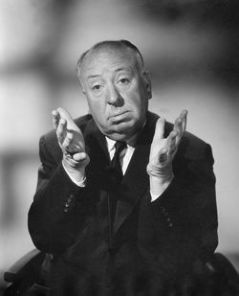
Alfred Hitchcock answered his actors succinctly when they posed the above, titled question.  The film maker glibly snapped, “your salary.”  Witty, yes, charming, of course–it’s vintage Hitchcock.  But he held a director’s secret, he understood his own vision and the contribution each player made to the overall story.  

In the midst of promoting River of January, I have been trying to find moments to scratch out ideas for the sequel. The effort isn’t as easy as I hoped. Attempting to work out the characters choices and actions has become puzzling and complicated. It’s not difficult to track what they did and when they did so, but the why is shrouded in speculation. This mystery is annoying, because I am the writer and need to fully understand the ‘why’s” behind the protagonists behavior. And, well, honestly I sometimes don’t know why I do what I do, today. The human heart frequently confounds reason.

So, Hitchcock’s snide retort isn’t very helpful to my current situation. The passionate nature of the characters in River have dropped a monumental job on my thinking processes. I assumed that prior patterns of behavior in the first book, continued into the second. But the archives indicate another story.

The first act in book one, is only a prelude to the intensity of book two, and I need to get a handle on these people before they push me over the edge.

So, what was their motivation?  I’ll let you know when I know.

Coming Soon!

Image

Happy Friday. 

A suggestion was made (by my daughter) that I ought to post my speaking engagements. Clearly the March 22nd date has come and gone, but more are in the offing. It’s fun to talk about River of January–there are so many dimensions to the story, so many avenues to explore!

My program has been designed as a multimedia affair, with music, slides, and discussion.  And yes, wine, if the setting is right for libations.

We are still in the discussion-stage with other bookstores and libraries.  As soon as those dates are set, I will update the times and locations.

March 22, 2014 @ the Garden Valley Center for the Arts.  6:00 PM in Garden Valley, Idaho

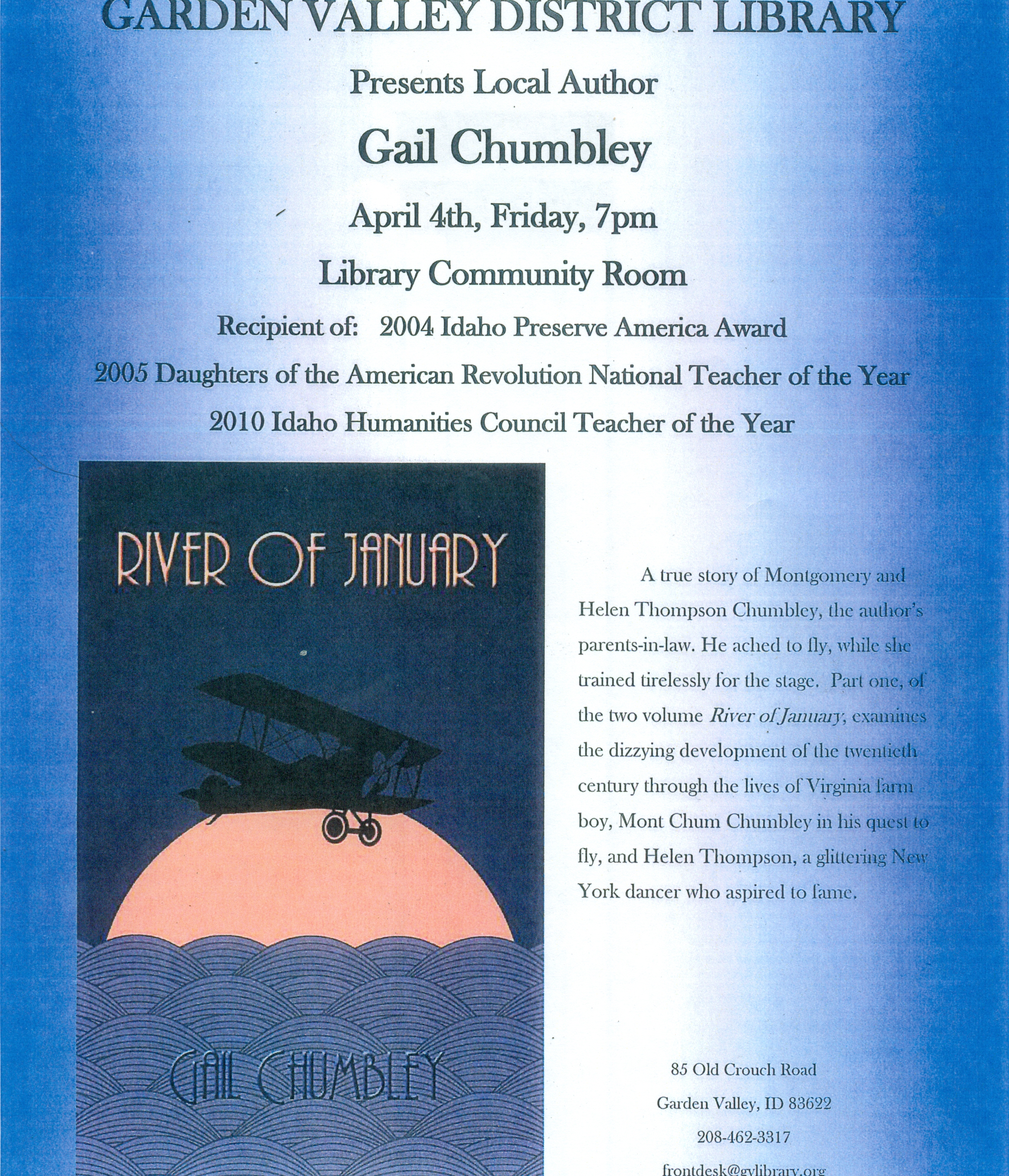
April 4, 2014 @ the Garden Valley Library.  7:00 PM in Garden Valley, Idaho

April 15, 2014 @ Aunties Books. 7:00 PM in Spokane, Washington

April 26, 2014 @ Hyde Park Books.  1:00 PM to 4:00 PM in Boise, Idaho

May 5, 2014 @ the Shadle Park Public Library.  7:00 PM in Spokane, Washington

May 12, 2014 @ the South Hill Public Library.  6:00 PM to 8:00 PM in Spokane, Washington

May 20, 2014 @ the McCall Public Library.  7:00 PM in McCall, Idaho

Idle Observations

Foreign oppression has, more than once, moved American policy makers at home to react with oppression. From the French Revolution to today, overseas upheavals frighten those in power enough, to prompt the same repression at home.

For example:

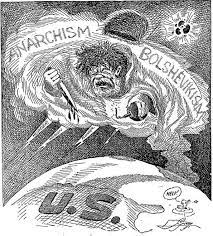
Immediately after World War One, the US endured a period of destabilizing fear–America’s first Red Scare. The U.S., bitter over entering the Great War, grew intolerant of unorthodox political views and worked to silence dissent. Radicals, both homegrown and immigrants from Europe, felt the wrath of political crackdowns. Anarchists, such as emigres, Emma Goldman, and Alexander Berkman, found themselves on trial, then deported back to Russia, while a home grown Socialist, Eugene V. Debs ended up in prison. Scores of other political agitators were targeted by the Justice Department for printing radical views, and voicing public opposition.

Why the oppression?

The reaction began following the bloody 1917 Revolution in Russia. The murder of the last Romanov Tsar, with his family, paved the way for the world’s first Marxist-Leninist government, the USSR. Vladimir Ilyich Ulyanov, (Lenin) seized the reins of the Bolshevik Party, and abolished all political opposition, outlining the aims of this new workers utopia, to overturn Capitalism worldwide.

The response in the U.S. came quick and harsh. Labor organizers, the leftest union, The Wobblies, and any other radical group deemed un-American was quashed. The U.S. government viewed dissent as treason, and Congress shaped specific legislation to silence protest. First passed and signed into law came The Espionage Act, in 1917, shortly followed by the Sedition Act the next year. No public speech, publications, nor use of the U.S. Mail to criticize government policy would be tolerated. Period.

In two test cases, the Supreme Court upheld the constitutionality of both laws. The majority ruled in the first case that nonconformists and draft-resistors presented a “clear and present danger” to the US. In the second opinion the Court ruled much the same, but this time with an important dissent. Justice Oliver Wendell Holmes, wrote, ” . . . the ultimate good desired is better reached by the free trade in ideas . . .”

Still, non-conformists and dissidents endured government suppression.

The courts, the government, and public opinion merged to outlaw what they feared–an all-powerful, biased social/economic system, much like the restraint simultaneously underway in the Soviet Union.

This was not over.

After Hitler’s death in April, 1945, and the ending of WWII in Europe, Soviet leader, Joseph Stalin kept his Red Army in East Germany and Eastern Europe, nixing a promised democratic Polish government in favor of his puppet Communist regime in Warsaw. And that was just for starters. A frightening Cold War ensued between the Soviets and the West, that by 1963 witnessed the construction of an actual partition, aka, an Iron Curtain. 

In America a political fever seethed, and Congress responded. Establishing HUAC, the House Un-American Activity Committee, to sniff out citizens who leaned to the left, ruining careers and lives in the process. This second Red Scare elevated the careers of Senator Joe McCarthy, and Congressman Richard Nixon.

This post originally intended to discuss the War on Terror. The objective to cast light on the American Taliban; those promoting God, Guns, and Gasoline. But now, with Russia up to its old tricks, all of us again, have a decision to make. Will Americans excuse Putin, grow complacent and emulate his corrupt oligarchy? That path is wide open, visited upon us via the former guy. He proudly rubbed shoulders with that murderer, and publicly praised Putin’s integrity. 

But, at this very moment, another, clearer choice stands before the American public. President Zelensky has conducted a master class on the real cost of freedom.  The Ukrainian people have lain down their lives to remind us we, are the original heirs of freedom.

In that spirit, this upheaval in the Ukraine is one we must emulate here at home. When Putin attacks Ukraine, he attacks us all. We are Americans, it’s time to take a stand for our liberty. This is not a drill.

Gail Chumbley is the author of “River of January,” and “River of January: Figure Eight.” Both titles are available on Kindle. Gail has authored two historic plays, “Clay,” concerning the life of Senator Henry Clay, and “Wolf By The Ears,” examining the foundation of American Slavery.

gailchumbley@gmail.com

Do You Understand Now?


Image


My book, River of January is not, I repeat, not a romance novel. Does it contain a love story? Yes indeed, and a good one too.  However, the two destined to find each other, Chum and Helen, meet later in the book.

The manuscript has made a small circle of rounds, either for review or because someone felt they could help promote the work. And of all the folks who have read it, only two readers complained that the romantic part didn’t come soon enough in the story.  I have to admit that was frustrating to hear, because so much cool stuff transpires before they meet in the book.  Paris, London, Rome, Vienna, dancing, singing, and ocean liners for Helen. Tragedy, endurance, ambition, aviation, air racing, and adventure for Chum.  And all of the action is true and verifiable. What do these readers think?  Is real life no more than a love story?  Is their life no more than a love story?

I understand enough to say that these folks are looking for a marketable formula. They look for the effort to possess the elements that sell in fiction. However my work is creative nonfiction and follows no predictable pattern, just like any persons life. These two people pursued avenues that opened to them, as we all do.  It’s just that their paths included vaudeville stages, the silver screen and the golden age of aviation. Isn’t that enough?  I wrote the book to chronicle two actual lives. If the work sells on that merit, that will be wonderful. My limit is changing the story up to fit a commercial template. To even think of shuffling the events around feels sleazy and unethical.

It was my son, my sage, who reduced the conundrum down to a simple truth. He explained that once I commit the words to paper I lose control of how readers perceive them. And he is right. After the telling, the tale belongs to each individual and their unique interpretations.  And that means letting go of the outcome.