
We have a book cover!
We have a book cover!

I spent a couple of days with my folks in Washington State, where I grew up. It’s always good to go, and even more imperative as they age. However, the part I seem to forget when I visit, is that time portal called their front door. When I step through, the world suddenly changes, and I have traveled back in time. The atmosphere inside, at the latest, is around 1970. That’s the truth–you can ask any of my childhood friends. Nixon unfortunately is still in the White House, and they still speak of John F. Kennedy with reverence.
Two of my brothers came over and we settled into the family room to answer questions on Jeopardy. My dad has his evening viewing schedule locked up. After Final Jeopardy, he flips over to MeTV for an old rerun of MASH. It isn’t a very humorous episode. Hawkeye and company are falling apart, dreaming of home, away from freezing Korea. So I attempt some lighter conversation. But no one is listening to me, they are glued to Colonel Potter while he dreams of his childhood horse.
The spell eventually breaks and we talk a bit. My older brother describes another rerun of the Jack Benny Show which was so funny he had to turn it off. It was too soon after his stomach surgery and it hurt to laugh. We’re talking about Jack Benny, not How I Met Your Mother.
The next verbal tussle involved the first episode of All In The Family that dealt with homosexuality. My younger brother argues that the gay guy was played by Charlton Heston, and I know he wasn’t. So we go back and forth arguing about that. He wants to bet five bucks. But, I’ve got him. I have my iPhone and internet service. I find a clip of that particular show and he grows quiet.
I can’t really fault my family for their desire to remain in a past time. Dad loves his Nelson Eddy movies, and figuring out the vocalists in big band pieces. It seems that talking played a bigger role in family life and socializing in 1970. Nobody could end the verbal give and take with substantiating, electronically generated facts.
I get it. I can see easily why I became a History instructor. I can understand why River of January was a temptation too irresistible to let go. I came by my passion honestly. And here, in my mountain house? I’d say it’s about 2005. I know I’m still pissed about the invasion of Iraq, House reruns occasionally flicker from the small screen in the living room, and in a guilty pleasure my Sirius Radio station is set to “Classic Vinyl.”
What year is it at your house?
One question raised about River of January is,”Are my characters brushes with the famous true?” The short answer is yes. Helen dined with Maurice Chevalier, and they performed on the same stage. Chum crossed paths with Amelia Earhart regularly at Roosevelt Field. The celebrity passages are factual. I have their pictures with the famous, references from documents, and proof in aviation logbooks.
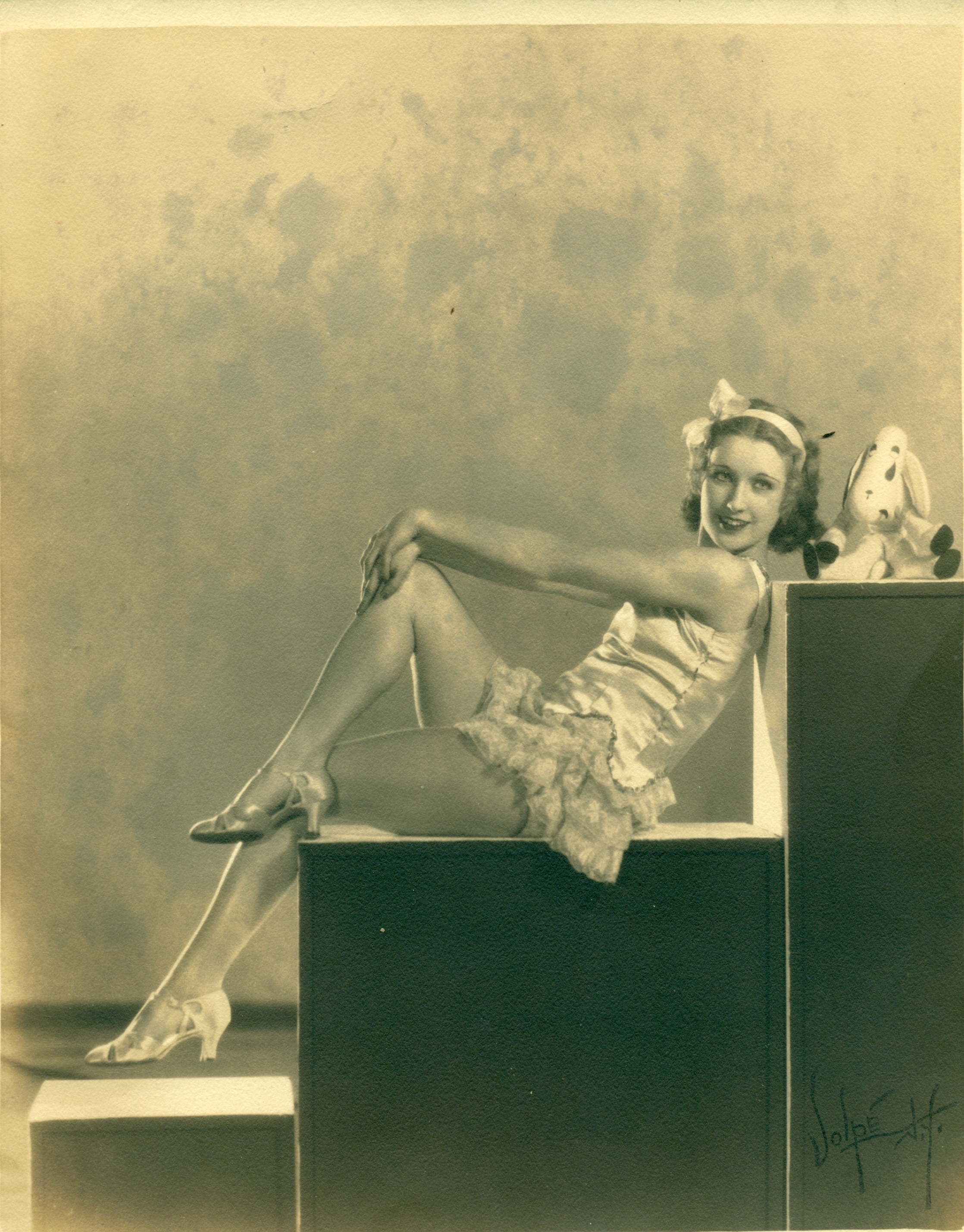
Creative non-fiction appears to be a new genre in search of defining itself. Where exactly is the line between creative and non-fiction? Though I need to tell this story, I certainly wasn’t alive at the time. Frankly who knows what the characters precisely uttered to one another at any given time. I tried to rely on personal and business letters, quoting at length when I could, to add tone, cadence and a feel for the era. I am adding a lot of pictures for readers to visually connect to the characters, and the sights they photographed on their travels. Additional color had to come from my imagination, with clues found in the archive of family memorabilia.
My personal preference in reading is non-fiction history. I have lived on a strong steady diet of biographies and general histories. Still I wonder how any scholar concludes their work without feeling uneasily incomplete. The subtleties of human interaction, the nuances of personal connection are more than left out. We simply can’t know all facets of historic lives. Our only alternative is to flesh out the tale with what we understand about the human condition. And of course every writer struggles with their own blinders, biases, and preconceived notions.
For example the age old question of General Washington’s taciturn exterior has intrigued historians for two centuries. Was he grave and somber because his teeth hurt? Possibly. Did he wish to hide his false teeth due to the fact they were unsightly, fashioned out of a number of materials–ivory to human–to wood. Are both theories wrong? Did Washington remain stoic in appearance to evoke nobility and dignity? Maybe. In fact, all of the above could pass scrutiny. Different historians have differing opinions.
I am not too troubled about shaping feelings in ways I think makes sense. I’ve fallen in love, held my own in arguments, and felt more regrets than I care to claim. That is the truth I rely upon to craft the creative element in this historical narrative.
I think all biography and history possess an element of the unknown. Whether the history is filtered through professional scholars such as Robert Remini, Doris Kearns Goodwin, or Miss Nobody Gail in her Idaho cabin, we are analyzing viable evidence to apply shape and logic to past lives.
Did Helen meet Sophie Tucker. Yes. She told us in a letter. What did she say to her? How did she act around her? I ask myself what would I have said as an American to another famous American performing in London? That’s the creative portion of this non-fiction format.
All things considered, creative non-fiction is an exciting new canvas for writing. I feel like a kid in a candy store each time I turn over another photo or letter.

This just in. My first reviewer LIKED my book!

The book’s progress is coming along. At this writing, we are looking at the end of March for publication. Cross your fingers. There are details still dangling such as a book cover, interior design, inserting pictures and printing hard copies. I’m not sure about Kindle or Amazon ebooks, but my publisher seems to think those options are do-able.
Marketing seems to be the real work. Any of you that have published in the past are most likely aware of the immensity of the task. I would love to hear from readers of any venue, mom and pop bookstores, reading groups, service groups, or any organization that would enjoy a book talk. I am open to suggestions and compiling a list of likely outlets.
I live near Boise and can drive to most locations in the Pacific Northwest. For other locations some planning would be necessary, and books shipped ahead.
I believe in River of January. The story did not fall into my lap by accident and I have nothing but respectful awe for my protagonists, Helen and Chum. Their story deserves to be told. It must be told. They did things in their lives I’m not sure can be repeated today. In the earliest days of show business and aviation one needed heart and guts, not a masters degree. Added to the tale is the compelling story of America during 20th century, a hundred years of growth, change and world leadership.
I thank you for sticking to the blog all these months, and the kind support you have extended.
This writer is open to (nice) suggestions.
“Women of All Nations,” was a 1931 Twentieth Century Fox film, starring Victor Mclaglen and Greta Nissen. Helen Thompson, a central figure in the two-part memoir “River of January,” and “River of January: Figure Eight,” appeared in a number of scenes in this film, including this closeup.
Helen had made her way to Los Angeles and auditioned for every studio possible in Depression-era Hollywood. Here Helen appears as the harem girl without the veil. The sheik is played by the legendary Bela Lugosi, the Silver Screen’s original Dracula. Bogart appeared in this film somewhere too, but isn’t readily identifiable.
It’s the only film footage of Helen that I can find.
Enjoy.

Gail Chumbley is the author of the two-part memoir “River of January,” and “River of January: Figure Eight.” Books are available at http://www.river-of-january.com and on Kindle.
gailchumbley@gmail.com
It was the night of February 9, 1964, a Sunday, when my older brother and I had to make a crucial decision. We were both over stimulated, frantic, not one of our four feet remaining long on the floor. The house vibrated with our excitement and the weight of our impossible dilemma. For starters our birthday was the following day–the 10th, (though we’re not twins–he’s a year older). Still, that pre-birthday fuse had already ignited and by the 9th the two of us were banking off the walls.
The quandary we faced that Sunday night was whether to watch “Davy Crockett at the Alamo,” starring Fess Parker on Disney (The Alamo!), or the Beatles on Ed Sullivan. This was that first historic Beatles broadcast, live on American television, and we agonized between the two choices.
In 1964 there were no video players, no DVD players, no home computers, or dvr’s, in fact televisions were the size of Volkswagen’s and transmitted in glorious, flickering black and white. This difficult decision counted because there was no rewind, there were no do-overs. One gain meant one loss.
We liked Davy Crockett an awful lot. We had watched all the previous episodes, and Davy biting the dust in San Antonio was the much anticipated grand finale. But, oh, the Beatles! And the adoration was real, palpable, an injection of adrenaline without the needle. We worshiped at the warmth of our bedroom radios, perpetually tuned in to our local AM radio station. Reverent silence accompanied replays of “She Loves You,” and “I Want To Hold Your Hand.”
What could two grade schoolers, sick with anticipation do with such a weighty conundrum? It was 1964 and we had to choose.
Before the proliferation of electronic media, this little girl of the 1960’s viewed momentous events as they beamed across the screen. MLK’s elocution at the Lincoln Memorial, President Kennedy’s inaugural address, his assassination, and the escalating war in Southeast Asia–all experienced as reported at that moment.
In an earlier era, when Chum flew in his air race, and Helen danced in Rio at the Copacabana, there were no camcorders or Iphones. His signature landing and Helen’s near disastrous opening night grew silent as the applause subsided, then faded in time. Much like my brother and myself in 1964, they lived life forward, one opportunity at a time.
Silent photos and written records are all that remain verifying Chum’s aerial dash through darkened skies, and Helen’s energetic dance routines. They lived life forward, embracing events as they unfolded–experienced once, then gone. I would love to see footage of Chum’s Waco airplane lifting off at dusk, or watch Helen spring across the stage. But those wishes are pipe dreams, never to happen. No vintage film or recording, (except one I found by accident) exist in the historic record. The best I can do for myself, and for readers, is try to recreate the magic of the first time around in the pages of my River of January.
Oh, by the way, I’ve never seen “Davy Crockett at the Alamo.”
 Gail Chumbley is the author of the memoir, River of January. Also available on Kindle.
In my dating days I employed the habit of acting the way my dates expected. There I said it. I submerged my identity for a guy. Now if you are reading this post thinking “what a bimbo,” take a moment to recall your own dating history. We lose weight, we drink less, we put makeup on for an evening of television, we attempt to be funny and charming–we wear a mask. You know, the Bridget Jones school of dating.
I’m not absolute about this, but I think Helen always remained Helen in her single years. Back reading for River of January I got the sense that she didn’t play any coquettish games to land an evening out. My observation of this girl was that men saw what they wanted in her, attached their own sense of who she was. And their frustration trying to put a ring on her finger stemmed from a deep misunderstanding of Helen Thompson.
Aside from the reality that her mother called the shots in Helen’s life, three men attempted to win her heart, and take her for their own. And I suppose we could start by looking first at the last, Mont Chumbley.
The young pilot became infatuated with Helen nearly from the first time he laid eyes on her. Those spotlights hitting the stage, in hues of blue, pink, yellow, and white can intensify an already dazzling girl. Once he decided he loved her, he posted himself every night at the club until her contract ended. If any drunk (or sober) patron made advances, Chum intervened assuring her safety. And that is how he saw himself, her protector until she could leave show business. It never seemed to occur to him that she loved performing and had no intentions of giving up her art. That caused big problems later.
Her middle admirer, the boy who courted her the longest, across continents, was Elie Galeki. Now Elie was a person who lived life systematically and deliberately. He worked hard to establish his own photography business, caring for his mother and sisters in Brussels. His suits were pressed, his appointment book organized, his expectations orderly. However, with Helen he had his hands full. To is way of thinking, once he met “the one” she would naturally love him back, and they would marry. Elie, too, expected Helen would give up the stage and settle down as his dutiful wife. That wasn’t actually Helen’s style, and she knew he wasn’t the right guy.
Her earliest boyfriend, and vaudeville partner, Grant Garrett, was an entirely different sort of character. He was a comedy writer, dancer, and singer, and Helen did respond to his charms. Grant was ready with a zinger, usually targeted at Helen’s intransigent mother. He was smooth in style and rough in attitude. He liked to fight for money around bonfires in hobo camps, and he drank hard. Of all three blokes, he may have been temperamentally the best suited to Helen. He treated her as an equal, and understood her drive and ambition for the stage. She was a professional, and so was Grant. They shared their love of performing.
I don’t believe Helen submerged her personality for any of these three suitors. But Grant was the one her understood her the best. Mostly they saw what they wanted in her beauty, grace, and bubbly sense of fun. I suppose that if any of these gentlemen became frustrated with the girl, they only had their illusions to blame.
This is a clip of Bing Crosby singing the song that inspired the title of my book, River of January. Try to stay warm!
Creative Non-Fiction. That is the category that River of January will market under. I am comfortable writing in that genre because of the latitude I have in stringing together the story. I don’t know exactly who said what to whom, through all those years, except for the letters that have been left for my keeping. And those letters concern limited stretches of time. So the story outcome is a combination of actual episodes and creative glue to keep the story cohesive
This approach has worked well . . .until now. The major difference for writing in book two (yes, there is a second volume) are Chum’s logbooks. The ramifications of possessing some twenty-odd logbooks, is that I know exactly where he was, and when he arrived and departed. That exactness poses a problem for the creative side of composition. Let me explain.
I placed my protagonists in Virginia at Thanksgiving, 1936. But Chum’s logbook doesn’t put them there until the next month–Christmas of 1936. I had to ask myself, ‘How anal is this process?’ And the answer was, Creative Non-Fiction. I can place them loosely where I need them to keep the flow of the narrative moving. But those damn logbooks really like to argue with me, demanding things that they are.
His literal trail is fascinating to read. Chum carefully noted each flight he flew, the equipment, passengers, time in the air, where and when he landed. He or should I say I can account for his whereabouts from the time he boarded his first aircraft in 1928. The war years offer a particularly revealing journal of wartime aviation. Added to his own notations are his official Navy orders, which are neatly attached together in a vertical file.
In so many ways Chum’s logbooks provide a connect-the-dots composition of his adult life. Where he landed on any given day, where he was when big events took place around the globe, where he was the day I was born. His notations provide a fine straightedge where his life took measure.
By the way there are mysteries in those logs. He and his crew had some hush-hush missions during the war, and the logbook reflects that security. For destinations he scribbled in some cryptic nonsense. The only reason that I know the nature of those flights was because he told me later in taped interviews. Thank Goodness for that.
There are some pretty cool names of places that I’d never heard of before. Nanty Glo, Pennsylvania, Havre de Grace, Maryland, Fitler, Mississippi–FITLER! And the war years mention islands beyond my geographic knowledge; Espirito Santo, Suva, and Numea.
I guess we would all benefit from a life logbook tracing where we have been, how long we stayed and when we left. A picture would assuredly materialize, accounting a good deal for who we are now.

