Like Mice

The winter weather lay heavy upon the freezing soldiers on a kind of night even the smallest creature burrowed under, seeking warmth. But for General Washington the driving wind and snow presented a rare strategic opportunity.

Dividing his poorly clad troops into two wings, General Washington planned a pincer attack against German mercenary forces holding the town of Trenton, in New Jersey. This operation, set for Christmas night, 1776, aimed to alarm the British Crown, and to assure Americans that  the war for independence was by no means over. Not only the cold played ally to Washington’s attack, it was also Christmas night, usually a time of respite from hostilities.

As a one-time Colonel in the French and Indian War, Washington had learned a thing or two about guerrilla warfare from Native Americans. The attack on Trenton became the fruit of that learning curve.

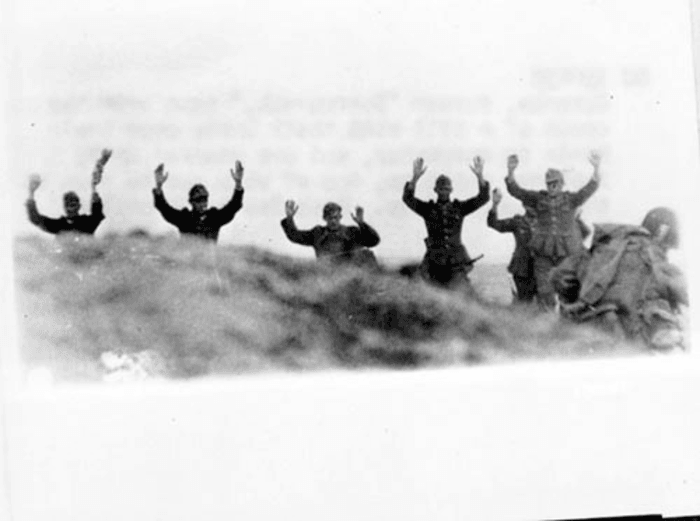
While his army floated silently over the Delaware River, boatsmen poled into the freezing water, pushing ice floes left and right to reach the far bank. At dawn, through purple and gray skies his forces approached mercenary-held Trenton, opening musket fire upon dozing sentries, and unprepared Hessian soldiers.

In roughly an hour and a half General Washington and his Continental Army prevailed.

The Battle of Trenton did not defeat the King’s men by any means, no diplomats sat around a table in negotiations. Still Washington and his army proved controlling the place and time of engagement proved the key to defeating their Red-coated oppressors.

Whether he realized it or not, General Washington had effectively made use of what is called a Fabian strategy.

Quintus Fabius Maximus a 3rd Century Roman General lent his name, Fabian, to a military tactic of ceding space for time. Fabius made use of his philosophy to wear down invading Carthaginians in the Second Punic War. Fabius picked away at the enemy through hit and run tactics, avoiding direct battle, opting instead to wear down the invaders. Though not popular among Roman leadership Fabius’ approach proved effective in destroying the Carthaginian army under Hannibal, leader of Carthage.

Another example of a Fabian policy concerns Vietnam.

The French occupied Vietnam around 1858 ostensibly to protect Catholic missionaries in the region. Over time France began solidifying its colonial control laying claim to the land and its resources. Soon the French extended authority over adjacent Laos and Cambodia. The entire area was named French Indochina, where the French government held sway until 1940, when France surrendered and was occupied by the Nazi’s. With approval from the Reichstag Japanese forces invaded Vietnam and remained until 1945 and the end of the war.

After the war France insisted they could take Vietnam back as a colony, and for a number of reasons the western allies agreed.

However, no one consulted the Vietnamese people, and they had other ideas. General Nguyen Giap and his Vietminh, later Vietcong forces stood with revolutionary leader, Ho Chi Minh. Together they implemented a guerrilla strategy to defeat the returning French. Similar to General Washington’s America, the Vietnamese simply wished to be liberated from foreign occupation. Thus commenced a long, drawn-out resistance, that by 1954 ended in defeat for the French. Near the city of Dien Bien Phu, in the northern part of the country, the exhausted colonial occupiers surrendered. 

(In a side note, General Giap’s forces hauled heavy artillery by hand, up steep embankments without the French military detecting their movements. Giap then summarily blew the French out of the valley).

The United States, now neck-deep in Cold War politics raised the alarm. No longer viewed as  freedom fighters, Giap, Ho Chi Minh and the Vietminh army became America’s enemy. The US Government was certain Vietnam was controlled by Communist China, and that could not go unchallenged.

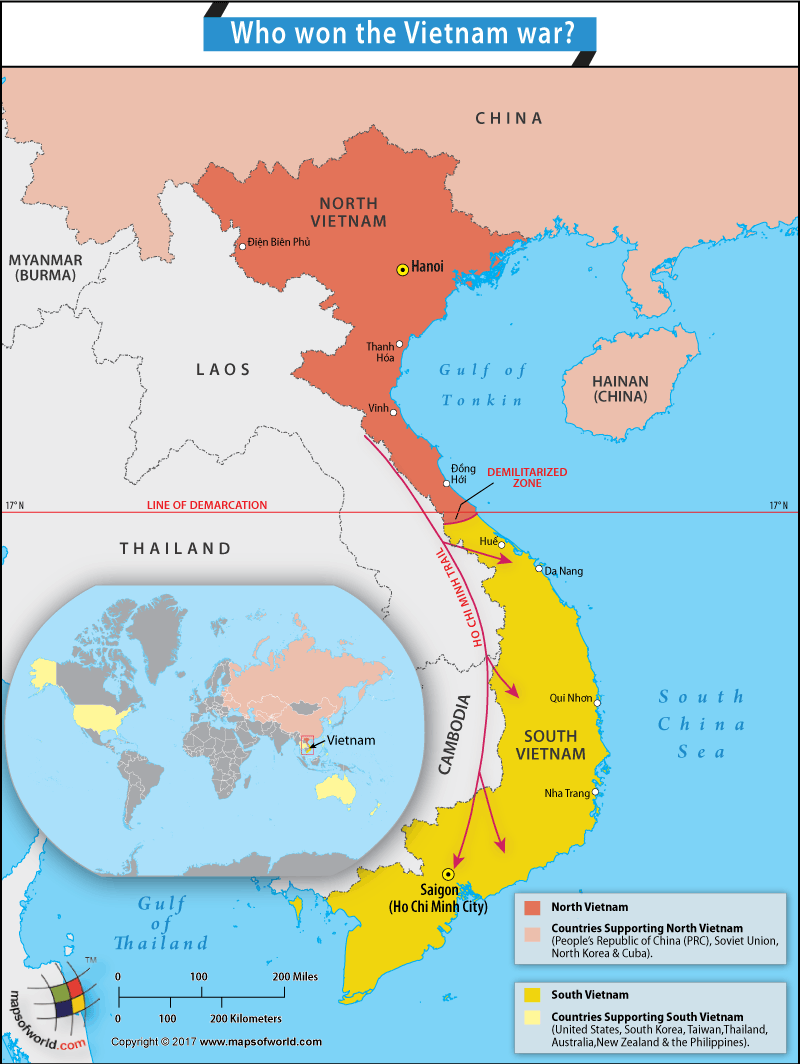
In a hastily arranged conference in Geneva Switzerland, Vietnam was formally divided at the 17th parallel. Pro-Western people gained the South, while Pro-nationalists took the North. In reality the boundary meant nothing. Operatives from the North easily infiltrated the South by way of the Ho Chi Minh Trail, while American presidents passed the buck on military action until 1965. It was then that Lyndon Johnson deployed American Marines, and Americanized the conflict in Southeast Asia.

Thousands of America’s sons shipped over to Vietnam but the numbers did not seem to move the needle in terms of surrender. Military leaders and politicians claimed we were changing the hearts and minds of the Vietnamese people. Then came the Tet Offensive in January, 1968 exposing the Pentagon’s wishful thinking about ending the war. From the DMZ (demilitarized zone) southward to the Mekong Delta, Vietcong (Vietnamese Communists) fighters appeared out of the oppressive mist attacking American installations all at once. Hearts and minds had not been changed, the proof coming to living room televisions via news networks across the United States. 

Americans had been misled and were sacrificing our sons and our money for a lie.

Lyndon Johnson had believed he could ratchet up the pressure on North Vietnam, until finally Ho would acquiesce. That didn’t happen. Even after the death of Ho Chi Minh the North kept pounding away at American personnel especially at night, or in the deep darkness of the elephant grass. Our country has assumed the role of the British in the Revolution; high casualties, extensive supply lines, and millions of dollars.

(In a side note, at peace talks held in Paris, North Vietnamese delegates stalled meaningful  sessions for a year, by arguing about the shape and size of the negotiating table. You see, every day Northern delegates dragged their feet in Paris, the war grew more unpopular stateside. Fabius would have recognized the ploy).

To wrap this object lesson up, Mr Trump is now stuck in the Strait of Hormuz. He can throw around his John Wayne banter, and puff his baggy chest, but the dude has stepped on a giant rake. Like GW Bush in Iraq and Afghanistan, this mess with Iran will not end well for America. Trump is a bumbling aggressor detached from any understanding of military precedence, the country of Iran, nor its government or people.

He has inadvertently bestowed a great gift upon the Iranians. Tehran holds the moral high ground, and a home court advantage, controlling both the time and space. Once again the US has long supply lines expending American blood and treasure. In fact Trump is talking boots on the ground and reactivating the draft.

In his 1989 book From Beirut to Jerusalem, Tom Friedman shares a conversation he had with a Lebanese national. In essence Friedman was told that Americans fight like elephants and that is effective fighting other elephants. But in the Middle East (and every other country touched by colonialism) people fight like mice, much like Quintus Fabius Maximus. 

A cautionary tale to be sure.

Gail Chumbley is the author of the two-part memoir “River of January,” and “River of January: Figure Eight,” co-writer of the screenplay, “Dancing On Air” based on those books. She has penned three stage plays on history topics, “Clay” on the life of Senator Henry Clay, “Wolf By The Ears” examining the beginnings of American slavery, and “Peer Review” where 47 is confronted by specters of four past presidents.

A Fabricated War

It was early August in 1964 when two American ships cruised into the Tonkin Gulf near the coastline of North Vietnam. The long narrow country facing the South China Sea had been divided following World War Two as had Germany and Korea. The demilitarized zone bisecting Vietnam lay somewhere near 17th parallel with the French controlling the South and Nationalist Chinese in the North.

From 1946 until 1954 the French and the Northern army, the Vietminh, jockeyed to unify the country, culminating with the Battle of Dien Bien Phu where the French got their clocks cleaned and arbitration in Geneva formalized the 17th parallel boundary. The US took an active interest in the fate of Vietnam because this was the Cold War Era. It was as if a global chess match shaped foreign policy with Soviet and Chinese Communism, and western democracies calculating strategic moves. As the preeminent post war power, the United States took the forefront in limiting Communist aggression, first in Korea, and then Vietnam.

By 1964 President Lyndon Johnson set his sites on Vietnam to limit the threat of Communist influence. To the President this was a backward country and people, and an overwhelming American force would easily conclude any resistance from Vietnamese Communists. After all how could people in black pajamas defeat the greatest nation in the world? President Johnson only needed a pretense, or provocation to commit American forces south of the demilitarized zone.

And that provocation cruised into the Gulf of Tonkin in early August of 1964. First the US destroyer, Maddox followed by another destroyer, the Turner Joy reported receiving fire from North Vietnamese forces. The ‘Gulf of Tonkin Incident’ as it became known resulted with President Johnson deploying Marines to Vietnam in March of 1965.

And that my friends was how the United States blundered into a land war in Southeast Asia.

Unknown to Johnson or his Warhawk cabinet was the character of their foe. Ho Chi Minh had been a Vietnamese Nationalist from his earliest days. Educated in France, Ho Chi Minh, as a student, bought a suit in Paris and made his way to the Hall Of Mirrors in Versailles. World War One had ended and he had hoped to plead Vietnam’s desire for relief from French Colonial occupation to President Wilson. But of course racism prohibited his entrance and embittered, Ho bided his time returning to Vietnam in 1941. He and his Vietminh worked with the Americans fighting Japan believing independence would come at the hands of the United States.

That didn’t happen.

Over time Ho Chi Minh became the indispensable man in freeing Vietnam. A George Washington if you will, of the Vietnamese people. President Johnson ought to have understood that.

But no.

The American land war escalated and the bombing raids under “Operation Rolling Thunder” and Nixon’s “December Bombing” did nothing to bring the North Vietnamese to heel.

From President’s Johnson to Nixon to Gerald Ford the conflict dragged on until in 1973 all American forces came home. Over 58 thousand Americans died in Vietnam and the truth was the provocation that sparked the war never happened. The Gulf of Tonkin Incident. For real. The so-called incident had been fabricated.

Now we again are under the knuckle of a completely vacuous man who believes he can bomb a nation and culture centuries old. Ramping up force garners nothing from a proud people, in this case the Persians, to quit. Like the deadbeat he is, Trump believes he can wear down the Iranians like a window installer he’s refused to pay. But he doesn’t know who he is dealing with, and he can’t sue or counter sue or in anyway wait out Iran until they tire and give up. That will never happen, like it never happened in Vietnam.

A greedy, hateful, racist goomba from Queens cannot win this fabricated war. Reality doesn’t work like that.

Gail Chumbley is the author of the two-part memoir “River of January,” and “River of January: Figure Eight,” co-writer of the screenplay, “Dancing On Air” based on those books. She has penned three stage plays on history topics, “Clay” on the life of Senator Henry Clay, “Wolf By The Ears” examining the beginnings of American slavery, and “Peer Review” where 47 is confronted by specters of four past presidents.
Beyond The Symbols

Patriotic symbols, music, and the Pledge of Allegiance recited at a solemn ceremony can be deeply moving. A simple presentation of the flag at a formal function can be awe-inspiring. The lone, austere notes of Taps played at a military funeral elevates a moment into sacred reverence.

The sounds and symbols of American devotion are powerful.

Still, as commanding as recitations, patriotic colors, and America the Beautiful can feel, deeper symbols in our shared history can reveal so much more.

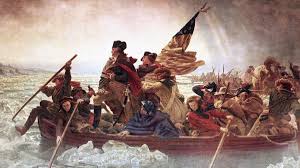
In his book, Washington’s Crossing, historian David Hackett Fischer introduces his volume with a discussion of Emmanuel Leutze’s famous painting of the same name. Fischer guides the reader through elements in the painting, noting passengers figure by figure as they frantically navigate the frozen Delaware River on that long ago Christmas night. 

Why is this particular work especially moving? Because at that juncture, December 25, 1776, the Revolutionary War looked to be flaming out after barely a start. Defeat had dogged Washington’s Continentals after being chased off of Long Island, and driven out of New York City the previous summer. As Washington planned his surprise Christmas attack, victorious Redcoats had settled into winter camp in New York City.

Humiliated, Washington knew he had to strike hard and he had to win.

Viewing his situation with the “clarity of desperation” the General ordered an assault on Hessian (German mercenary) held Trenton, New Jersey. The Continental army would have to use the element of surprise fighting against a better armed and better fed opponent. Risky to the extreme, Washington knew we, meaning America, for all time, was dependent upon his actions that night.

As for the painting, the artist depicts freezing soldiers huddled in a boat with more watercraft in the backdrop. From the starboard side, (to the right of General Washington) sits an oars-man, distinctly Black, putting his back into his strokes, ploughing through dangerous ice floes. Behind him, facing forward at the bow, is another swarthy figure, perhaps a Native American. He is desperately kicking ice with his left boot while handling a sharpened pole to break open a passage through the impossible crust. To the foreground an immigrant (a Scot by the look of his hat) studies the river’s surface closely as he pulls forward to port, while another behind him, in fisherman gear, studies the treacherous water. Others are made up of rustics, one at the tiller, along with a wounded passenger.

General Washington centers the painting as he is the central figure of the drama. Behind the General is Major James Monroe, and another rugged frontiersman by the looks of his garb. Both men are grasping a 13-star (Betsy Ross) flag, in a grip that elicits an attitude of determination and desperation, with perhaps a bit of warmth. Below both flag bearers sits a WOMAN, yes, a woman pulling her oar with an analytic eye upon the clotting water.

Black, Native, white, immigrant, the highborn, the humble, men and women, yesterday, today, and the future: all of our American lives balanced on the gamble played that night in 1776.

The point I believe Leutze is trying to convey is that we all don’t have to be the same. No one has to agree on the details of our beliefs to ride on that boat. The truth is Americans all have and had different realities and ambitions: differing views of liberty. Still, all onboard had to carefully respect each other’s space and not overturn that fragile vessel, Liberty, for we must stay afloat and row in the same direction. It is in all our interests to do so.

And that metaphor of America, that boat, tested our resolve on one of the nation’s most critical nights. Inspiration doesn’t come any better than from Leutze’s allegorical Washington’s Crossing.

Gail Chumbley is the author of the two-part memoir, River of January, and River of January: Figure Eight. Chumbley has also penned two stage plays, Clay, and Wolf By The Ears, concerning the life of Senator Henry Clay, and an in-depth examination of the beginnings of American slavery. Gail is currently working on another piece, Peer Review, best described as Dickens A Christmas Carol meets presidential history.

Indie Everyday

A4904C51-3483-49D0-8D64-E022F045510C

With apologies to Nathanial Hawthorne, this shirt is my version of the Scarlett Letter.  “Hello, my name is Gail, and I’m an Indie author . . . the process is hard, but very gratifying (even while pulling weeds in the garden).

This weekend I invite you to pick up River of January, and the sequel, River of January: Figure Eight.  If in Boise, check out Rediscovered Books, in Salt Lake, Sam Weller’s in Trolley Square, and Spokane’s Aunties Books. Also available on Amazon.com.

Gail Chumbley is the author of the two-part memoir, River of January.

Ouch?

bonvoyagecard10001So I just read a scathing review of my first book, “River of January.” This reader really hated it, and made a real effort to express her distaste. To say she went out of her way to revile the story doesn’t do justice to the term ‘condemnation,’ and continued to blast me as the author.

So how exactly does a writer react to such a scorcher of a reprimand?

I’d like to get upset and obsess over the two measly stars and every berating word in the post. But I can’t seem to throw myself on that grenade. And much as I’d like to feel mortified and humiliated, I don’t. All that reacting is just too much work–takes too much energy. Besides, if the aim of a book is to elicit an emotional response, then, I suppose, my book has found a kind of success.

Three years ago this review would have destroyed me, almost as if someone had pointed out that my beautiful new baby is actually ugly, and that I’m a blind fool. But as a writer I’ve let go of that kind of perfectionism, and any illusion that I fart roses.

This true story is what it is, and I happen to think it’s damn good, and count myself lucky that it came into my life.

So what now?

I turn on my laptop and compose this blog. Writing is what I do. And some will connect to my  voice and identify with this quandary. Others have already clicked cancel.

I suppose that’s why cars come in different colors.

Gail Chumbley is the author of the two-part memoir River of January and River of January: Figure Eight.


Christmas in Algeria, 1932

Dearest Mother,
I have read your letter and I want you to know that Miss has given us that warning already. We never go out alone. Earl Leslie and the other boys keep a close eye on us. There, that should relieve your concern.
North Africa is very strange, but I like it here. Una bought a guidebook and we have, as a group, toured Tunis and Algiers on foot. The buildings are a mix of the past here. The book calls the style “Ottoman-French. I guess that means both Middle Eastern and European.
Every morning we wake up to a public call to prayer. The people are mostly Muslim and the calls are part of their customs. I think it sounds soothing—usually the sound of the caller lulls me back to sleep. Curious, isn’t it?
The heat here is dry, and the sun blinding white. We stroll through the narrow streets (in groups) where the sun can’t reach us, making for darker, cooler shade. Nameless women veiled from head to toe pull their children along dressed all in white. It’s such an exotic world.
Silly as this sounds, I tried to buy you Christmas gifts in the market, but found nothing. You’ll have to settle for a telegram, because this is a Muslim country and they don’t celebrate Christmas. And, Mother, please have a happy Christmas.
We girls have all decided to do our own gift exchange and sing Christmas carols. We’ve hung paper chains on a palm tree in the lobby of the Algiers Hotel! The hotel managers gave us permission.
Merry Christmas Mother. I love you and Eileen very much. The young man I mentioned is not serious. His name is Elie, (Jewish, I know) and he has kindly showed us all around tourist sites.
Helen

River of January, page 165-166.

Indie writer, Gail Chumbley is the author of the memoir, River of January and River of January: Figure Eight. Available at www.river-of-january.com and on Amazon.com.

Denouement-update!!

This giveaway is postponed due to flawed data. As soon as we sort it out, the giveaway offer will resume.

Stay tuned!!.

Gail Chumbley is the author of River of January and River of January: Figure Eight, due out soon.

A New Musical Icetravaganza

ithappenspink0001

Seventeen Days and counting until the release of “River of January: Figure Eight.” Books will be available at http://www.river-of-january.com.

Days of Future Past

rickenbaker0001

Mont Chumbley with Eastern Airlines Chair, Captain Eddie Rickenbacker

Let the countdown begin! Eighteen days until the release of “River of January: Figure Eight.” Watch for book talks in your area! Visit www.river-of-january.com.

The River Runs in November

mock3

My friends, book two, “River of January: Figure Eight,” is on it’s way. The book will officially launch November 1st, with public presentations in Idaho and Washington.

Catch “Figure Eight”in the following locations . . .

November 2, 2016: The McCall Library in McCall, Idaho, 218 E Park St, McCall, ID · (208) 634-5522 at 7pm

November 3, 2016: Aunties Book Store, 402 W. Main Ave. Spokane, WA 99201. (509)838-0206, 7pm

November 13, 2016: Garden Valley Library, 85 Old Crouch Rd. Garden Valley, ID 83622  (208)462-3317, 3:30pm

November 15, 2016: Eagle Public Library, 100 N Stierman Way, Eagle, Idaho 8361 (208) 939-6814, 7pm

Get ready to complete the saga of Helen and Chum in “River of January: Figure Eight.”

chuminfixedwinghelenla0001

honeymoon0001

Gail Chumbley is the author of the two volume, “River of January,” and “River of January: Figure Eight,” out in November.

Volume one is available at www.river-of-january.com and on Kindle