Blind Dates

If I were to pick up the thread that eventually led to River of January and retrace the steps, the book actually began with a blind date.

A good friend of mine, a fellow teacher, introduced me to my husband.  She was originally from Miami and had moved west to get away from the crime and congestion.  My husband-to-be had followed them out on a visit and it was during that visit that we got together.

He came to my house with stories of his parents and their adventures.  Mostly he talked of his father, Mont Chumbley and “Chum’s” exploits in flight.  From his wallet my gentleman caller produced a couple of pictures proving his claims.  Next he told of his mother and her career as a dancer before and during WWII.   He knew less of her story, but shared it with the same enthusiasm as Chum’s.  My beau was careful to add that his father was still alive and that I would enjoy meeting him. (And that part was true, I did meet him and was charmed.)

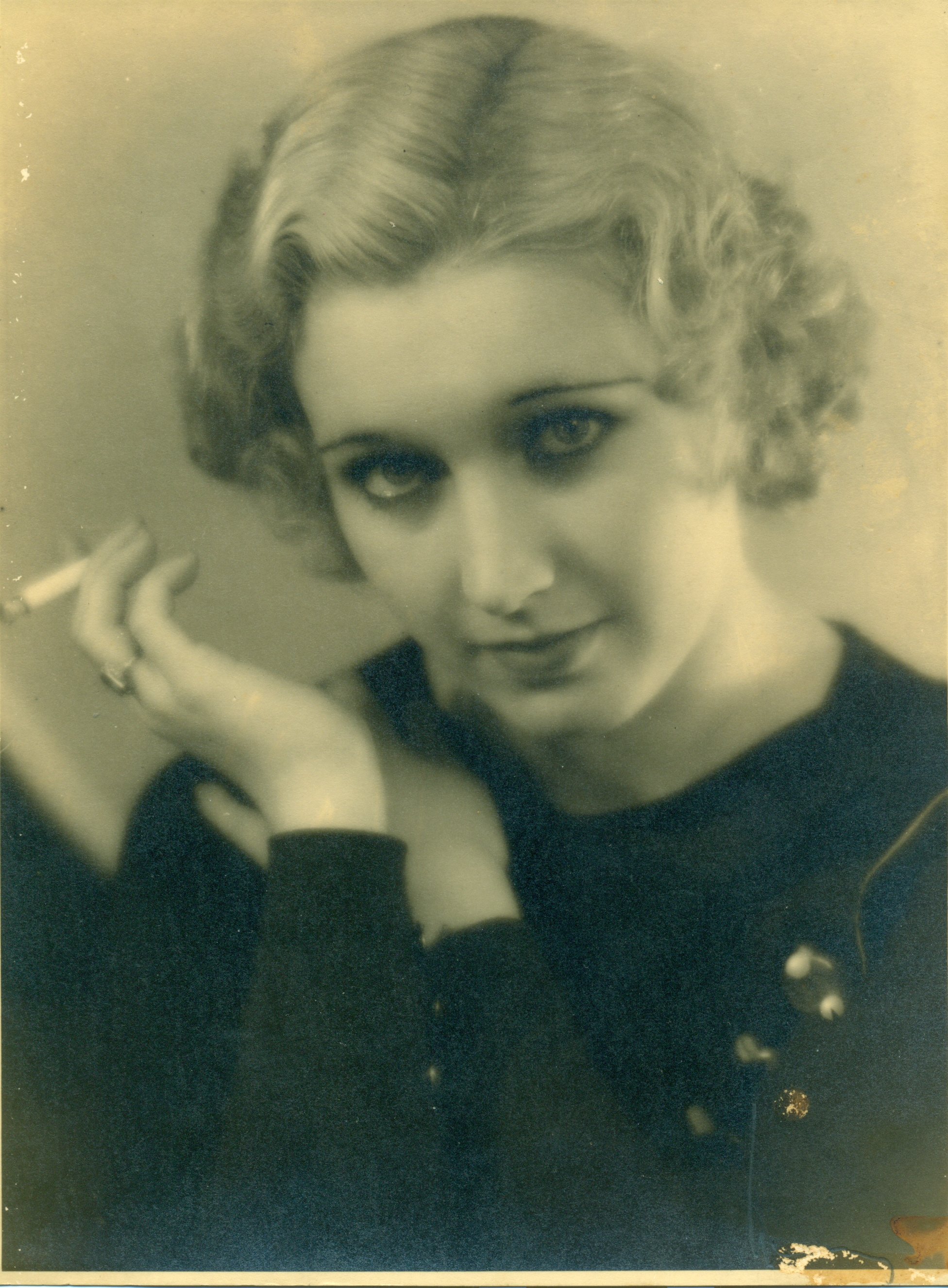
Each time we met, following that first date, he brought more and more mementos to show me.  Photo stills of a handsome man posing proudly before his airplane, and of a girl with smoky mascara-smudged eyes, smoking a cigarette.  I grew increasingly curious with each new find.

Eventually, we married and his father, Chum, died.  By that time I had a large closet filled to capacity with his family mementos.  All of those letters, pictures, playbills, air show programs, were saved, in my opinion, for a reason, and perhaps that was to piece them all together into a book.

My husband courted me, a history teacher with historic materials, and sifting through those stacks made the decision to write obvious.  The responsibility fell to me and hopefully I have done their fascinating lives justice.
Angels

Image

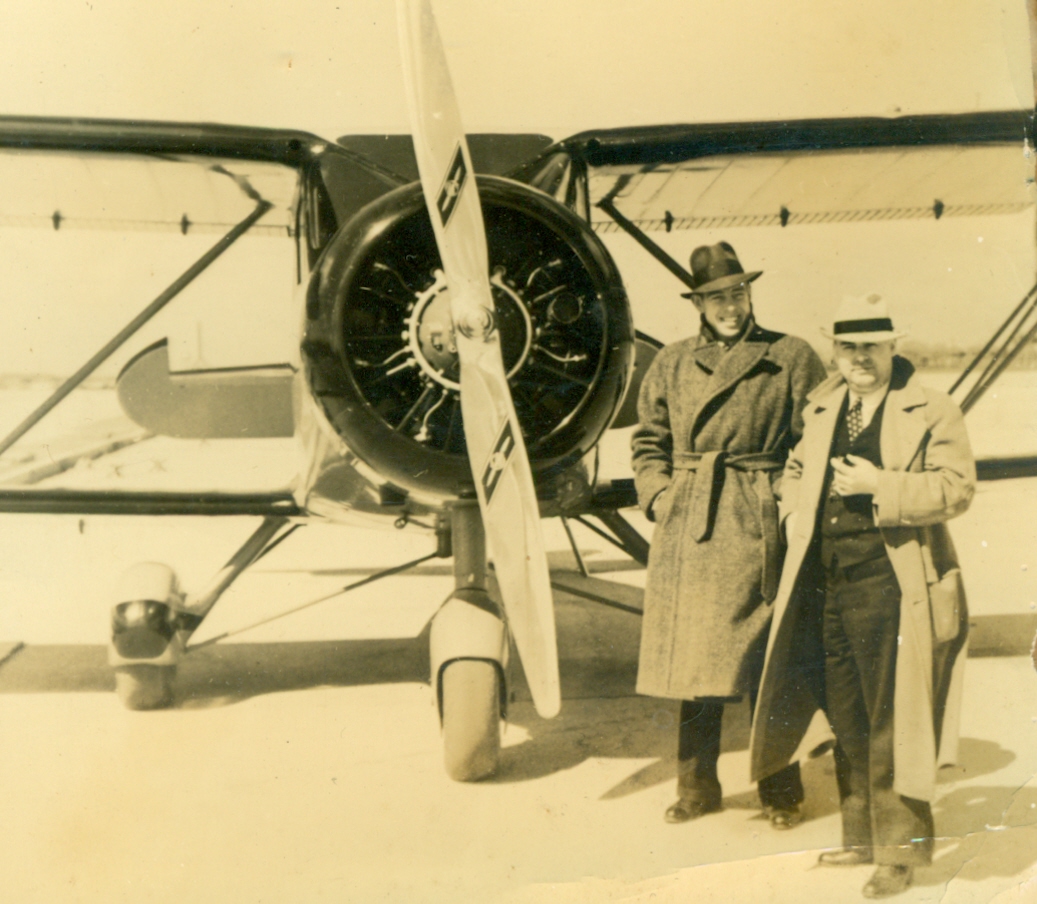
Today is Chum’s turn.  He’s the smiling, handsome fellow.  The man he is standing with is Howard Ailor, the New York distributor for Waco Aircraft Company, out of Troy, Ohio.  I chose to post this picture because of Ailor’s important role in young Mont’s start.

Some believe we all have angels who arrive when we need them, and set us in our life’s direction.  Howard Ailor was just such a man for Chum.

Following Chum’s discharge from the Navy in 1933, little opportunity–actually no opportunity beckoned in Depression-era New York City.  Enter Howard Ailor.  After making the rounds of all the existing air carriers in the city, Chum paid his last call out at Roosevelt Field, on Long Island.  A smiling, all-knowing, Ailor took one look at the young pilot and told him he’d have to make his own luck.  America was fresh out.

Crazy at it may seem, Howard convinced Chum to buy his own plane, start his own business, and for good measure moved stuff around in the Waco office, so the young man could have office space, too.  And that act of kindness made all the difference in Mont Chumbley’s life.

When I was a kid we played “Blind Man’s Bluff,” a game that began by spinning the person who was “IT.”  Blindfolded, the kid had to find everyone scattered around without looking.  In that same vein, Chum couldn’t see.  He was blinded by his uncertainty, a devastated economy, and no network of friends.  Howard Ailor stopped the spinning and sent the young man into the right direction.

Out of Bounds

Image

This beautiful girl is the subject of my new book, River of January.  Her name was Helen Thompson, and as is evident in the photo, she was a beauty.  As a little girl, Helen began dance lessons, specializing in ballet.  Her repertoire expanded over time, training professionally in tap, with acrobatic, and gymnastic embellishments.  

When she became the breadwinner, following her father’s death, her professional career grew to include performing on three continents with a stint in Hollywood.  The stage became her home, and she knew her business.  Helen was an artist and her canvas was the beauty expressed under the spotlights.  From what I have gathered in my research, she still respected auditions, and took no job for granted. 

However, it was off the stage that Helen faced her limits.

Some of her shortcomings were honest, for example she never learned to cook.  But many of her limits were imposed by others, especially her mother who wanted to keep her daughter dependent and needy, convincing the girl that she would never succeed at marriage, or any pursuit other than dancing.

If I had been told that I would write a book in three years, I would have answered, “A huh, on my voyage to Mars with Elvis.”  But unlike Helen, my family and friends could say nothing but wonderful, supportive things, encouraging me to spread my horizons. 

While her support system failed her for selfish agendas, mine has believed in my abilities outside of my career as a history instructor.

Helen was bound by her mother, while my dear one’s have kindly set no boundaries.

Folding Fitted Sheets


Folding fitted sheets is a pain.  Sometimes I can match those rounded corners fairly well and the rest of the sheet folds up reasonably.  Other wash days those stupid bottom sheets just bundle impossibly.  More than once I’ve settled for winding that cotton mess into a roll and stuffing it in the closet. 

I have spent over three years sweating over my manuscript, River of January, endeavoring to get the book right.   The first draft back in May of 2010 was, well, horrible.  I am aware that a few copies of that version are floating around, and the knowledge of those drafts out there makes me want to reach for a bag to put over my head. 

However, over time, with the help of some very nice and patient people–my family, friends and legions of my students who listened, helped my style improve. 

It will never be perfect.  The book will probably end up with some goofs that no one picks up on, until it is printed.  But I cannot rewrite forever, fit those corners to perfection.  The process has to move forward.

Hit Replay

Oddly, my brain is adept at remembering shards of events and conversations from years ago.  At least I think that I remember them.  But in the summer of 2011 my old high school gang descended for an old girls weekend at my mountain house. 

While the pushing sixty gal-pals became comfortable on the deck, catching up, laughing, and telling stories about each other from the old days, I grew uncomfortable.  What struck me from this swapping of anecdotes, was my memory maybe wasn’t so accurate.  Perhaps our shared events not exactly the way I remembered them.  So to use a Carrie Bradshaw moment, “What makes up our past as friends?” 

Is it my friend, Mary’s construction of events?  Is it Jamie’s, Ona’s or Heidi’s?  Now we delve into the metaphysical–what is and what was real?

Perhaps the writing process allows our memories to shape themselves to reflect our own temperaments,  our own psychic fingerprints, experiences processed through individual channels.  So if I don’t remember life events the same as my old friends, siblings or my spouse, I don’t think anyone is keeping score.

I’ll tell my stories the way I remember them.  Even if I’m wrong.

I Choose Door Number Three

I know the story that I wish to tell.  All of the story, leaving nothing out.  However, over the course of the writing process, the manuscript has grown to well over 350 pages.  I cannot hope to publish such a large tome as a first time writer.  The dilemma has, at times, left me down and hopeless.

Again, communicating my anxiety has been a source of great solace and solution.  Friends and family can sure help–and sometimes from people I’ve never met. 

The River of January, at this moment is undeniably too long.  So, after much anguish and talk, and a new writing friend’s kind ear, the editing scissors came out.  I have lopped off the first 50 pages for use perhaps, later, in another work.  Also eliminated was the story, in the story, examining the evolution of the book.  The files are available, and the content unharmed.  Certainly the length has finally become reasonable. 

This time, compromise seems to have moved the project ahead.  And though I tend to over tell the story, that perhaps isn’t necessary, at least not today.  I could have chosen to hold my ground, only removed the personal narrative, or take the third route.

As repeated on the old game show, “Let’s Make a Deal,”  I choose door number three.  I need to go forward.

Ethical Story-Telling

One of the toughest obstacles I faced writing River of January, was assuming I knew the family story best.  These people were real and left a rich paper trail of their dramatic lives.  I was lucky enough have recorded interviews, stories graciously shared by family members, and volumes of letters, mementos, and photographs. The internet, too, has been helpful.

Still, I struggled with the presumptuous notion of interpreting Helen and Chum’s lives through my understanding.  After agonizing for a good year over the arrogance of committing their lives to paper, I experienced a moment of clarity.

These two deserve to be remembered.  If that task was placed in my novice hands, so be it.

I have since spent the last three years learning how to write, because this story must be told, their adventures pieced together into a more coherent picture.

I hope to share more regarding the events that led to this book in future blogs.

River of January, how it happened when I wasn’t looking

I never saw this book coming.  I certainly didn’t go looking for such an ordeal, either.  But life assigned custody of the tale into my inexperienced hands and there began my challenge.  I’ve never written before.

This story concerns the lives of two ambitious individuals, born in the early years of the 20th Century, Mont Chumbley and his love Helen Thompson Chumbley.  This first volume examines their lives from childhood to excellence in the fields of aviation and show business, and how both attained success.

However, River is a true story and not all was elegance and achievement.  Both hailed from difficult families and beginnings.  Though Helen and Chum enjoyed adulation separately, together the issues of family, especially Helen’s mother, threatened their bond.

How the story came to me, in all it’s unlikely circumstances is covered in the pages of the book.  However, I do plan to explain the background details and examples from the narrative in later blogs.