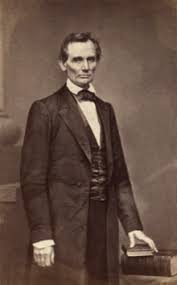
“The philosophy of the schoolroom
in one generation
will be the philosophy of government in the next.”
President Abraham Lincoln
GAIL CHUMBLEY is a history educator and writer. chumbleg.blog
“The philosophy of the schoolroom
in one generation
will be the philosophy of government in the next.”
President Abraham Lincoln
GAIL CHUMBLEY is a history educator and writer. chumbleg.blog

When reflecting on my career as a public classroom teacher I hold on to many fond memories. The subject, American History, provided a lot of fascinating stories to share with teenagers coming of age in America. The kids came from varying backgrounds and abilities but once the door closed we focused on a subject that linked us together as one people.
One memorable lesson concerned the Second Continental Congress and adoption of the Declaration of Independence. Together we unpacked the document, followed by guided questioning to clarify the contents. Thomas Jefferson lists the extraordinary circumstances that brought about the decision to split with Britain. Part of the substance listed the abuses of the King and measures colonials had to take to be heard. Toward the end of the lesson I asked the class who they thought Jefferson might be addressing with his lengthy explanation. One boy cautiously raised his hand, an astonished expression on his face, and in a surprised voice he answered “me.”
Indeed.
Toward the end of the academic year the kids were assigned to sit down with an elder and interview the person about their recollections of life in an earlier time. Students had studied a lot of decades which prepared them for those recordings. In a particularly powerful interview a boy contacted his uncle, a Vietnam veteran, and asked him to tell about his tour of duty in that bygone war. This veteran had not spoken of his service to anyone since returning in the late 1960’s. And although this poor man wept through the recording he apparently cleansed his soul for after decades of self-imposed isolation the uncle began to join family get-togethers.
My student said it was a miracle.
Lessons from the past such as these are vital to understanding America’s present. Though the course required a great deal of writing and analysis, a sense of accomplishment filled the room with an aura of confidence, and national belonging.
Today, over a decade has passed since my retirement, and much has changed in American classrooms. Rather than sanctuaries of learning classrooms have become battle fronts in the culture wars. A small, but loud minority has succeeded in chipping away at the foundation of public education, ironically something Mr. Jefferson promoted as vital to freedom. Sadly those misguided assaults imperil our nation’s ability to survive intact.
The underlying cause appears to concern social class, power, and money. To educate all requires tax dollars, dollars fewer want to pay. Further, education implies looking toward the future, providing hope that the promise of America will pass on to new generations. Making money now and keeping it is more important than any investment in other people’s kids. Besides the upper classes can afford to educate their children, and believing they must shelter them from the lower classes. That attitude runs counter to America’s motto: E Pluribus Unum, Out of Many, One. Education is a promise that opens up a world of possibilities. That power and possibilities the well-heeled wish to hoard.
Take, for example, Betsy DuVos appointed by Trump 1.0. She took the job as Secretary of Education for the sole purpose of defunding and dismantling public schools. This is not hyperbole. As Secretary of Education, she made no secret of her contempt for public education. In her official role she pushed for school vouchers, charter schools, private institutions, all designed to ensure gated-community education. Stripping down federal education statutes and funding marked her time in Washington.
With Trump 2.0 even the Department of Education is gone. Critics attacking public education lack serious understanding of our public system, and that threatens our national viability.
History could not be more clear regarding the obligation to America’s youth. After the Revolutionary War as land opened up in the Great Lakes area, Congress passed the Northwest Ordinance (1787). This law organized a numbered survey grid mandating revenue from section 16 of the survey be earmarked for public education.
In the years after the Civil War waves of immigrants from Eastern and Southern Europe flooded upon America’s shores. To aid the newcomers settlement houses, such as the Neighborhood Guild in New York City, and Chicago’s Hull House, children attended classes to learn to be American. Too bad we can’t rally the same enthusiasm for all our kids today.
Now self-appointed curriculum experts pack local school board meetings, demanding removal of books, blaming and bullying over-worked teachers which isn’t helpful. Understandably many educators leave after only a few years, while the rest bravely persevere. What our teachers need is meaningful support as they shoulder the duty of classroom instruction plus all the distractions of behavior problems, lockdown drills, bomb threats, and active shooter protocols.
This is an issue of national self interest. There is nothing sentimental or saccharine about how it takes a village. It does take all of us. We all bear responsibility to all of our kids, for they cannot do this for themselves.
Leave teachers alone and let them continue to weave that same magic I experienced for all of our students. We have and will continue to turn potential into reality.
Whether a parent or an educator, or a retired senior, we are depending on you all to protect the patriotic long game.
Gail Chumbley is the author of the two-part memoir “River of January,” and “River of January: Figure Eight,” co-writer of the screenplay, and “Dancing On Air” based on those books. She has penned three stage plays on history topics, “Clay” on the life of Senator Henry Clay, “Wolf By The Ears” examining the beginnings of American slavery, and “Peer Review” where 47 is confronted by specters of four past presidents.
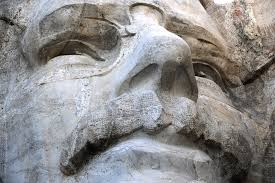
Marines manned numerous doorways along the wide hallway, as clusters of tourists wandered through colorful rooms. Upstairs the President listened to the public commotion with satisfaction, not for the house, not for the job, which, in truth, had become tiresome, but for the knowledge he could drop down and set all their bourgeois hearts aflutter.
After a moment, he made his decision, slipping down an interior stair case, stepping into the Blue Room.
As his hands automatically fluffed his hair, the President sidled up beside a class of wiggly school children snapping cell phone pictures.
“And where are you from?,” the president teased with pleasure, anticipating an excited response. He half closed his eyes, and paused, waiting for the gratifying answer.
But he heard nothing.
Bemused, the President opened one eye, then the other. The chatty children paid him no mind, in fact were moving away, following their guide into the hallway.
“Wait,” he found himself calling. “It’s me, your President. I’m here.”
He repeated, “The President of the United States.”
But the children didn’t hear. He remained alone in the Blue Room, his hair acceptably coiffed.
No further tourists entered, though dozens drifted past the doorway. He didn’t understand and he thought very hard, seeking a rational explanation.
It was at that moment that he heard a voice, quite close, and quite annoyed.
“Am I to understand you are a New Yorker?”
The President wheeled around toward the sound. Before him, no more than an arm’s length away stood a mustachioed gentleman, wearing pinz nez spectacles, sporting a shiny top hat. The man’s eyes blazed behind the thick round lenses, and the astonished President detected a trickle of cold sweat trace down the back of his thick neck.
“I say, are you, or are you not, a New Yorker?” The stern man spoke in a nasally, patrician voice.
“Ahh. How did you get in here,” the President stammered. “Where is my secret service protection?”
“Supercilious pup,” the man in the top hat snapped. “They tell me that YOU are from New York, and are president! A common side show huckster, President.”
The President, though alarmed, replied reflexively, “I’m in real estate. I . . .made my fortune in New York real estate.” Only the muffled din of passing tourists kept the President from panic.
“Real Estate!” The man in spectacles scornfully shouted. “I’d say you are just another scoundrel from the wealthy criminal class. In New York, swindlers like you are a dime a dozen. I made a career of exposing rascals like you.”
The man, attired in a three-piece suit, a watch fob draping his ample waist, bore a deep scowl. “And you found your way into this office of trust. Intolerable.”
Though bewildered, the President, unaccustomed to such personal insults, felt his pique rising. “I was elected President by the largest margin in American Hist . . .”
“Poppycock,” the specter interrupted. “It is my understanding the decision rested upon a mere tilt in the Electoral system, and that outsiders interfered to make certain of your victory.”
The strange visitor moved closer. “I’d say that you are a compromised pawn of foreign meddlers, and give not one damn for the American people.”
At this point the President had heard enough, and attempted to move his legs. He wanted very much to escape the Blue Room, but his feet remained rooted.
“I have important things to do, you need to go,” the President’s voice trembled, trying to sound more confident than he felt.
The apparition narrowed his intense eyes, and took another step toward the unnerved President.
“I claim more authority to this revered House and Office than your mercenary greed could ever comprehend. You belong with Tweed, Plunkitt, Fisk, Conkling, and the rest of New York’s good-for-nothings. Dishonor has followed you to the Presidency, what, with your womanizing, graft, and unsavory business connections.” The fierce apparition fixed an intense, menacing gaze. “You do not belong here, nor your parade of lackeys and opportunists.
The buzz of foot traffic grew louder, and when the President again glanced toward his unwelcome visitor, he found him gone, the Blue Room empty.
Gail Chumbley is the author of the two-volume memoir, “River of January” and “River of January: Figure Eight,” both available on Kindle.
Hard copies are available at http://www.river-of-january.com
I submitted this short note to my State Senator. Feel free to copy and send to yours.
This email is in regard to the library controversy. As an educator the notion of deciding what is acceptable portends bad things to follow. Using one incident of a child’s book isn’t a full picture. Not one of us read the same thing, and that is true for children. I shudder to contemplate legal censorship as a slippery slope to authoritarianism. I know the far right is attempting to control our community, and that should be enough of a red flag to stop this bill in its tracks. Our libraries are one of the last institutions that bind us together as Americans and Idahoans. To speak plainly the bill is just a bad idea and isn’t workable. If the titles under scrutiny become public, those books sell like hotcakes. It has been since the days of Lady Chatterly’s Lover, or currently The Absolutely True Diary of a Part-Time Indian by Sherman Alexi.
As stated by Isaac Asimov “Any book worth banning is a book worth reading.”
Sincerely,
Gail Chumbley

A radical change in imperial policy between Great Britain and her American Colonies marked the beginning of the Revolutionary Era.
Well before the American Revolution an amiable, and profitable arrangement existed between the Colonials and Parliament. This mutually profitable connection quickly terminated after the French and Indian War, 1754-1763. That conflict, though a victory for the British, had cost the Royal Treasury plenty, and the Crown abandoned friendly relations by coercing Americans to share in settling that war debt .
Parliament began by imposing a number of taxes, all designed to force Americans to pay up. The Sugar Act, Stamp Act, and Townshend Duties, among other measures, had been designed to force Americans to cover the royal debt. Once proud to be British, Colonials were shocked to realize the Crown viewed them as a source of revenue, and nothing more.
Colonials had a long running smuggling network, importing cheaper commodities from the French islands, thus evading British tariffs. Those caught and arrested found fast acquittal by colonial juries of their peers, as locals were also customers of the accused. In Boston, tensions soon turned to bloodshed, followed later with tea spilled into the Harbor. The Crown, not amused, soon forbade traditional trials, and transported accused Americans to military courts, in particular to Nova Scotia. Next, British Red Coats were deployed to the New England colonies to impose martial law, and Parliament decreed American’s had to house and feed their own oppressors.
These matters were met with vehement dissent, Colonials protesting they had no representative in Parliament, and would not tolerate taxation without their consent. “No Taxation Without Representation” and “Resistance to Tyranny is Obedience to God,” rang throughout Colonial America.
Tensions ripened, finally coming to a bloody confrontation in April of 1775, and the rest we mostly remember from school.
Tasked with scribing a Declaration of Independence at the Second Continental Congress, Thomas Jefferson vented American grievances through his quill. Working alone, Jefferson defended the violent actions carried out by Americans, and took pains to explain the radicalism. . . . “a decent respect to the opinions of mankind requires that they should declare the causes which impel them to the separation.” And for six years the Continental Army persevered.
In 1787, the subsequent creation and ratification of the U.S. Constitution set an enduring national blueprint of settled law. The Framers designed a government derived from the people, meaning we all are equal, and guaranteed representation in shaping law.
That brings this story to today.
The election of a president from an opposing party is not a radical, nor sudden change of policy. Rather, this cyclic American ritual is as normal as the singing the Star Spangled Banner before a game. American voters have chosen our leaders in this manner since George Washington’s name first appeared on the ballot.
To all of you who attacked our Capitol, it’s well past time for you to catch up. Put away those symbols of rebellion; of coiled snakes, hangmen gallows, and Viking horns. The Revolution ended two and a half centuries ago. The story of America is well underway.
In point of fact, those January 6th insurrectionists themselves attempted a radical change in American tradition. In pursuit of violence and chaos, these terrorists attempted a savage disruption of our deepest democratic traditions. Now that is unAmerican. In point of fact, we all have political representatives, and a right to a jury of our peers, and nary a soldier is found lounging on the couch.
Grow up and stand down.
Gail Chumbley is the author of the two-part memoir “River of January” and “River of January: Figure Eight.”
Chumbley has also penned two plays, “Clay” exploring the life of Henry Clay, and “Wolf By The Ears,” an examination of American slavery and racism.
chumbleg.blog
“He has created a false public sentiment, by giving to the world a different code of morals for men and women, by which moral delinquencies which exclude women from society, are not only tolerated but deemed of little account in man.”Elizabeth Cady Stanton, Declaration of Sentiments 1848.
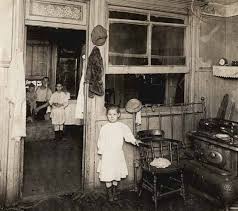
Nurse Margaret Sanger related an experience that inspired her career in family planning. Called to a dilapidated tenement building, Sanger found a pre-teen immigrant girl writhing in the throes of childbirth.
Attempting to assist the child, Sanger soon recognized the girl was slipping away, bleeding out on a filthy mattress. Indifferent, the girl’s family crowded nearby in a small parlor seemingly resigned to the life and death drama in the next room.
Soon the bloody battle ceased, as both girl and infant were no more.
A mother herself, Sanger built her life’s work in promoting a woman’s right to choose if, or when to bear a child.
As for Sanger, she found herself under arrest in 1916 for advocating sex education and birth control through the mail. The charge sheet read that her actions were indecent. Despite that legal setback, a determined Sanger founded Planned Parenthood later that same year.
June 24th, 2022 the Supreme Court ruled women no longer have physical autonomy. The government claims an overriding interest in American women’s reproduction. Plainly females are once again set aside as second-class citizens, leaving men free of any culpability for their actions. For one moment think if men were required a reversible vasectomy at age 16. No male would tolerate such a law, and this is the same invasion of privacy women are forced to obey.
Justice Alito, in his majority opinion, stressed moral judgement over legal arguments when the issue is reproduction.
In fact, in overturning Roe, women are stripped of the most consequential of life decisions, reinforcing Mrs Stanton’s phrase in 1848, that “a different code” is still alive and well. Women cannot be trusted with their own bodies.
That Planned Parenthood offers so many other services is not the point. That neonatal disorders portend a fatal, and agonizing death for newborns isn’t the point, either.
One of the most precious American underpinnings is the right to privacy. And remember that Prohibition, too, attempted to police private practices. That fiasco resulted in an uptick of violent crime, and corruption because like it or not, people drink. The same is true of abortion. The procedure has not been halted in the country, but made more risky.
The Supreme Court has not ended abortion in America.
This isn’t over.
*Justice Thomas indicates he would go after birth control next. Does he realize he opens a pandora’s box that could threaten overturning Loving V. Virginia?
After the 1929 Market Crash the world fell into regional, nearly feudal isolation, and international trade quickly dried up. America, too, focused inward largely due to the nation’s earlier participation in the Great War in Europe.
Across the Pacific the Japanese Empire aimed to take advantage of global disinterest promoting its own national interests. Sold to other Asian countries as the “Co-prosperity Sphere,” hyper-nationalistic Japan intended to expand across the region, especially toward vulnerable, resource rich China.
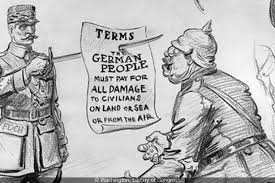
Great Britain as well, struggled alone in a financial malaise, as did the French across the channel; both nations saddled with debt to American banks from the previous war. Germany, the defeated nation struggled with their own war debt demanded by the British and French.
The shroud of economic depression hung like a millstone over Europe and the rest of the world.
As the financial, and political fallout grew wildly unstable, regimes hunkered down and hoped for better times. However the climate instead became chaotic, bringing anti-democratic demagogues to power.
The Italians were first, producing a Fascist strongman, Benito Mussolini. El Duce, as he was known suppressed political diversity, harnessed economic efficiency, and soon, like the Japanese, pursued colonial inroads into Libya, and later the conquest of Ethiopia.
Germany soon flirted with its own style of fascism, with a meaner, violent credo. In a reaction to impossible debts, and national pride, Adolf Hitler, a feckless dreamer, stood on beer hall tables, and passionately spoke of national betrayal. Hitler revealed his malicious intentions by blaming Bolsheviks, Capitalists, and Jews for the hated Armistice of 1918, and war debt owed to the Allies.
Yet America, unlike the rest of the world, clung with all their might to the national system of Constitutional norms. At the same time Germany elected Hitler in 1932, the U.S. found their champion in Franklin Roosevelt.
A popular Roosevelt Coalition steered the country through those hard years holding America together. FDR’s New Deal and Fireside Chats broadcasts kept at bay the fears of a nation. That’s not to say there weren’t kooks, to borrow Lindsay Graham’s phrase, but Americans faced the long haul together, believing better days had to be ahead.
The current President is no Franklin Roosevelt. And his autocratic tendencies, strongly echo those in the 1930’s.
In Project 2025 Trump aims to raise tariffs, shut down borders, all done to economically and politically isolate America. Using the same playbook of past despots specific groups are targeted as the problem. The guilty include immigrants, the LGBTQ community, liberals, educators, women, and the rule of law all in the crosshairs. All done to divert and distract while he lines his pockets.
And his tactics, so far have succeeded making half of the electorate real mean.
So, here is the question. Can America survive?
Can Americans remain bound to the framework of our 238 year old republic as it did in the Great Depression? Or will this nation forsake our financial, social, and political traditions and turn to petty retribution and scapegoating?
Will we, as a nation withdraw from the world and exchange our democracy for a strong man who insists he has all the answers?
The signs are clear. When this national crisis has passed will there be enough of us left who stood resolute for our democracy? That is the question of this historic moment.
Gail Chumbley is a writer and history educator.

Before the 1974 Expo in my hometown of Spokane, Washington, the city’s downtown area was divided by social class. Riverside Avenue ran east to west, crossed by an arterial called Division, that ran north to south. That intersection literally cut the area in half. West of Division the downtown looked like the shopping scene in “A Christmas Story.” Magical tableaus filled each department store window, creating an elegant still-life to allure shoppers. To the east of Division sat run down bars, a rescue mission, and adult-only theaters dotting the grim sidewalks of despair. Consumerism connected both worlds.
In my senior year of high school, I worked at an ice cream shop situated smack dab on the dividing line. Attempting to capture the “good old days” ragtime music looped endlessly in the shop, and we all wore white dresses, and plastic skimmer hats. The clientele largely represented the reality of Riverside. Affluent shoppers, and business owners rolled in for lunch during the day, and the dispossessed wandered in at night.
The lunch rush is where the shop made money, and all waitresses were on the floor. Each day I left my high school around 11:00am arriving about 30 minutes before the onslaught. By noon we rushed table to table, chatting with the regulars, and earning pretty healthy tips.
Weekends were different, unpredictable, and the Saturday night shift catered to a different world. After dark, homeless men asked for water, while others scrounged up change to buy a cup of soup. Heartbreaking.
A late spring night in particular, stands out in my memory. Warm, with a light breeze, the shop felt like summer, leaving me restless, and anxious for graduation. The glass door facing Riverside opened, and a clutch of young women poured in, chatting and giggling like school girls. Sex workers all.
Preparing for their night, these girls crowded around the ice cream freezer, more like teenagers than high risk ladies of the night. The group was close, sharing a camaraderie that spoke of strong ties.
In the middle of the party towered a long, bronze, African-American woman. God, she was gorgeous, honestly runway material. Fascinated I watched her among her peers, laughing with the rest, while she gracefully perused the glass covered ice cream selections.
Honestly, this beauty could out Grace Jones, Grace Jones.
The starkness of her night’s work vaguely crossed my mind, but I was in the moment. Oblivious, unapologetic, she and her friends had no shit’s to give.
Weeks later I graduated, and at the end of summer headed off to college. The memory of that lithe beauty and her friends faded. The following summer, when I returned to Spokane, the face of downtown had been completely transformed. The railroad tracks, the bums, the skin flicks, and the girls had all vanished. The exciting facelift for Expo ‘74 displaced the rundown skid row of my childhood.
It’s now that I’m retired that that ice creamery, and the beautiful girl again live in my memory. I know now that I had choices, I had support, and a college education. But those residents of east Riverside, those belles of the street? It is impossible to know how life played out for them. Surely these people of the night were displaced, migrating where rail tracks, and sex workers could ply their trade, out of site, and away from the gentry.
I hope life turned out better than it probably did for these marginalized folk. But that warm spring night still holds a magical quality; one of beauty and of bleakness. A grim reality of a life I never lead.
Gail Chumbley is the author of the two-part memoir “River of January,” and “River of January: Figure Eight. She has authored two plays, “Clay,” about the life of Senator Henry Clay, and “Wolf By The Ears,” a narrative of slavery in America.
gailchumbley@gmail.com

For teachers who are poor, but like to travel, nothing is better than hosting student tours. Truth is these trips are a lot of fun. Really. The kids make it fun. I led a number of tours over the years and still hold wonderful memories of the historic sites, our numerous guides, the bus drivers, my students, and the bustling itineraries that delivered us everywhere.
Out of the classroom, and away from home, students encountered much of what we had covered in history class, up close. On one stop at the US Capitol a guide opened a small door off a corridor revealing a narrow, circular stairway. Bygone soot and some damage remained down that steep passage, evidence of the War of 1812, when invading Brits set fire to the building. Our docent elaborated. A redcoat on horseback had urged his horse up those cramped stairs, only to be shot by American defenders waiting at the top. That anecdote caused a bit of a stir, as we all absorbed the horror.
Peeking into the Old Senate chamber, (much smaller than today’s grand affair) prompted another story of another clash, from another era. In this original legislative hall Massachusetts Senator, Charles Sumner had suffered a severe beating at the hands of a furious South Carolina Congressman. At issue, the fiery debate over the spread of slavery.
Bus drivers sometimes got into act, and added a few gems of their own. Before leaving the Capitol, he grabbed the microphone and shared a story.
George Washington had been inaugurated as America’s first president in New York City. But a site for a permanent national capitol had been selected. And it was President Washington, himself who laid the first cornerstone for the structure on a rise called Jenkins Hill. Why, the driver asked, did Washington turn the first spade, and set that brick of sandstone? Of course we all thought the honor went to Washington as the President. Wrong.
The President had been asked to set the stone, because he was a stone mason.
Who’d a thought!
On the bus we loudly debriefed, the chatter sounding much like gossiping about Justin Bieber, or the Kardashians. The narrative may have been a century or two old, but still very much alive–resurrected by students in the Twenty-first Century.
There are many such stories of American school kids touching our collective past, and many adults who made that happen. Somehow we all came away better people. Perhaps we’re all reminded we are part of a much bigger picture, and we all fit somewhere within the frame.
On January 6, 2021, Americans across the nation watched domestic terrorists violate the inner sanctum of democracy. I wondered what thoughts crossed the minds of those same former students to witness this tarnishing of democratic majesty.
Not everyone can afford to send their kids on trips like these. I couldn’t. But understand this, every public school in the country teaches American History. The public must understand this story tells of a unique nation, and democracy grows fragile when ignorance rules the times.
Gail Chumbley is the author of the two-part memoir “River of January,” and “River of January: Figure Eight.” Both titles are available on Kindle. Chumbley has written two historic plays, “Clay,” “Wolf By The Ears,” and “Peer Review.”
 Gail Chumbley