chumbleg.blog/2021/03/05/an-america-to-believe-in/
#ItsPersonal
#SeparationOfChurchAndState

Before the 1974 Expo in my hometown of Spokane, Washington, the city’s downtown area was divided by social class. Riverside Avenue ran east to west, crossed by an arterial called Division, that ran north to south. That intersection literally cut the area in half. West of Division the downtown looked like the shopping scene in “A Christmas Story.” Magical tableaus filled each department store window, creating an elegant still-life to allure shoppers. To the east of Division sat run down bars, a rescue mission, and adult-only theaters dotting the grim sidewalks of despair. Consumerism connected both worlds.
In my senior year of high school, I worked at an ice cream shop situated smack dab on the dividing line. Attempting to capture the “good old days” ragtime music looped endlessly in the shop, and we all wore white dresses, and plastic skimmer hats. The clientele largely represented the reality of Riverside. Affluent shoppers, and business owners rolled in for lunch during the day, and the dispossessed wandered in at night.
The lunch rush is where the shop made money, and all waitresses were on the floor. Each day I left my high school around 11:00am arriving about 30 minutes before the onslaught. By noon we rushed table to table, chatting with the regulars, and earning pretty healthy tips.
Weekends were different, unpredictable, and the Saturday night shift catered to a different world. After dark, homeless men asked for water, while others scrounged up change to buy a cup of soup. Heartbreaking.
A late spring night in particular, stands out in my memory. Warm, with a light breeze, the shop felt like summer, leaving me restless, and anxious for graduation. The glass door facing Riverside opened, and a clutch of young women poured in, chatting and giggling like school girls. Sex workers all.
Preparing for their night, these girls crowded around the ice cream freezer, more like teenagers than high risk ladies of the night. The group was close, sharing a camaraderie that spoke of strong ties.
In the middle of the party towered a long, bronze, African-American woman. God, she was gorgeous, honestly runway material. Fascinated I watched her among her peers, laughing with the rest, while she gracefully perused the glass covered ice cream selections.
Honestly, this beauty could out Grace Jones, Grace Jones.
The starkness of her night’s work vaguely crossed my mind, but I was in the moment. Oblivious, unapologetic, she and her friends had no shit’s to give.
Weeks later I graduated, and at the end of summer headed off to college. The memory of that lithe beauty and her friends faded. The following summer, when I returned to Spokane, the face of downtown had been completely transformed. The railroad tracks, the bums, the skin flicks, and the girls had all vanished. The exciting facelift for Expo ‘74 displaced the rundown skid row of my childhood.
It’s now that I’m retired that that ice creamery, and the beautiful girl again live in my memory. I know now that I had choices, I had support, and a college education. But those residents of east Riverside, those belles of the street? It is impossible to know how life played out for them. Surely these people of the night were displaced, migrating where rail tracks, and sex workers could ply their trade, out of site, and away from the gentry.
I hope life turned out better than it probably did for these marginalized folk. But that warm spring night still holds a magical quality; one of beauty and of bleakness. A grim reality of a life I never lead.
Gail Chumbley is the author of the two-part memoir “River of January,” and “River of January: Figure Eight. She has authored two plays, “Clay,” about the life of Senator Henry Clay, and “Wolf By The Ears,” a narrative of slavery in America.
gailchumbley@gmail.com

For teachers who are poor, but like to travel, nothing is better than hosting student tours. Truth is these trips are a lot of fun. Really. The kids make it fun.
I led a number of tours over the years and still hold wonderful memories of the historic sites, our numerous guides, the bus drivers, my students, and the bustling itineraries that delivered us everywhere.
Out of the classroom, and away from home, students encountered much of what we had covered in history class up close. On one stop at the US Capitol a guide opened a small door off a corridor revealing a narrow, circular stairway. Bygone soot and some damage remained down that steep, winding passage, evidence of the War of 1812, when invading Brits set fire to the building. Our docent elaborated. A redcoat on horseback had urged his horse up those cramped stairs, only to be shot by American defenders waiting at the top. That anecdote caused a bit of a stir, as we all absorbed the horror.
Peeking into the Old Senate chamber, (much smaller than today’s grand affair) prompted another story of another clash, from another era. In this original legislative hall Massachusetts Senator, Charles Sumner had suffered a severe beating at the hands of a furious South Carolina Congressman. At issue, the fiery debate over the spread of slavery.
Bus drivers sometimes got into act, and added a few gems of their own. Before leaving the Capitol, he grabbed the microphone and shared a story.
George Washington had been inaugurated as America’s first president in New York City. But a site for a permanent national capitol had been selected. And it was President Washington, himself who laid the first cornerstone for the structure on a rise called Jenkins Hill. Why, the driver asked, did Washington turn the first spade, and set that brick of sandstone? Of course we all thought the honor went to Washington as the President. Wrong.
The President had been asked to set the stone, because he was a stone mason.
Who’d a thought!
On the bus we loudly debriefed, the chatter sounding much like gossiping about Justin Bieber, or the Kardashians. The narrative may have been a century or two old, but still very much alive–resurrected by students in the Twenty-first Century.
There are many such stories of American school kids touching our collective past, and many adults who made that happen. Somehow we all came away better people. Perhaps we’re all reminded we are part of a much bigger picture, and we all fit somewhere within the frame.
On January 6, 2021, Americans across the nation watched domestic terrorists violate the inner sanctum of democracy. I wondered what thoughts crossed the minds of those same former students to witness this tarnishing of democratic majesty.
Not everyone can afford to send their kids on trips like these. I couldn’t. But understand this, every public school in the country teaches American History. The public must understand this story tells of a unique nation, and democracy grows fragile when ignorance rules the times.
Gail Chumbley is the author of the two-part memoir “River of January,” and “River of January: Figure Eight.” Both titles are available on Kindle. Chumbley has written two historic plays, “Clay,” “Wolf By The Ears,” and “Peer Review.”
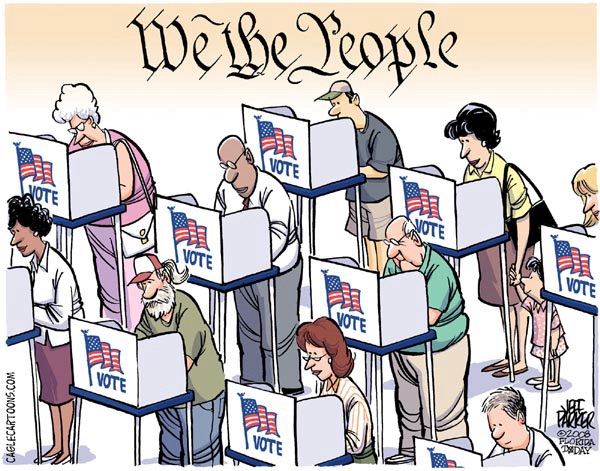
Way back when, during my high school years, our English class read “Lord of the Flies.” And though too young to grasp the power of the story then, it’s bothered me plenty in recent years.
Permit me a refresher on the plot. During World War Two a group of English school boys are evacuated from England by air, and the plane crashes over water. The pilot is killed, leaving only the boys alive. Finding themselves on a deserted island, the kids try to organize into a functioning unit.
The wheels come off almost as once, as two groups emerge. One faction agrees to cooperate, while the other descends into depravity. Those favoring cooperation seek (through logic and science) a way to be rescued. Those choosing muscle undermine that effort, reveling in bloodsport, killing wild pigs, and intimidating weaker boys.
The novel reads as an allegory of disintegrating humanity, pitting good order against savagery. Though published in 1954, William Golding’s book has taken on a prophetic urgency made evident by the lawlessness of both Trump administrations.
In a haunting parallel to the breakdown of order on the island, Trump’s mob attacking the Capitol came as an inevitable outcome of law breaking. Riffing irrational diatribes, this flawed man chooses to incite violence to maintain power. That his misinformed followers eagerly climbed on the bandwagon proves how fragile democracy can be when infected by evil. The physical fury of that day seemed an aphrodisiac for his private thugs as they stormed America’s Altar of Reason.
And it’s no wonder the mob chose to vandalize our sanctuary of law. This guy disdains law, indifferent to the sacrifices made by generations before to preserve it.
Good government rests on an educated, committed electorate. Mindless violence is the tool of the lazy and weak minded. Blind fury only destroys, and in truth that savagery lives in all of us. It is up to each one of us to make that choice, to awaken the “better angels of our nature” for the good of us all. It is well past time for America’s trial by mob to end.
Unlike the school boys in “Lord” no one is coming to our rescue. And that reality leaves no alternative but to discipline ourselves to preserve the gift of democracy.
Update 2025
He is back and this time it is blitzkrieg against the rule of law. He had a plan equal to any conqueror, compliant judges, and a servile, opportunistic majority in Congress.
The result? A fog of war has blanketed the country as we rush from here to there to challenge the ongoing damage.
As in Lord of the Flies a childish bully has acquired power which he uses to terrorize all. He will not stop until the adults step in.
Friends, we are those adults.
Gail Chumbley is the author of “River of January,” and “River of January : Figure Eight,” a two-part memoir. Both titles are available on Kindle. Gail has also written stage plays, “Clay,” “Wolf By The Ears,” exploring antebellum America, and “Peer Review,” a look at Trump’s first presidency through the eyes of four former presidents.
The first time a parent challenged my teaching in history class, took place my first year. The topic concerned the creation of the Constitution, and the era of the Early Republic. I introduced the three branches, and separation of powers, census, representation, and that type of basic information. Definitely the bare bones of Civics.
During that lesson I explained how Electors were determined, and role the Electoral College played in choosing the president. End of lesson. The following day the topic moved to ratification and the addition of the Bill of Rights. From out of nowhere a hand shot up, and an upset student blurted, “My dad says you’re a liar!”
Yep, a liar.
That was my baptism into the sliding scale of historic facts, and that initial chill of suppression stopped me in my tracks. Following that episode, censorship never strayed far from my thoughts. It was the beginning of a caution that lasted the whole of my career.
Fast forward 30 years in history education, when a similar event repeated.
The topic this time concerned the Reagan Revolution, and the events surrounding those years.
Students learned about the Evil Empire, “Mr. Gorbachev, Tear Down This Wall,” Perestroika, Glasnost, Reaganomics, Laffer Curve, Trickle Down, etc . . .
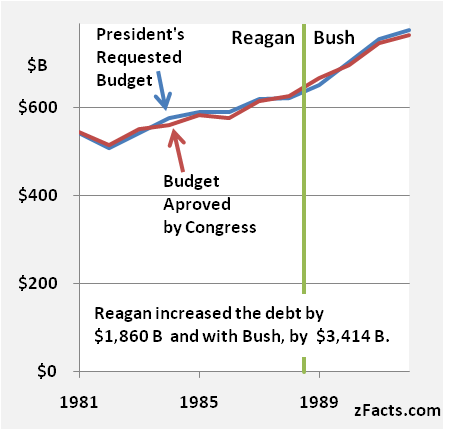
Foreign policy topics covered Central America and the Middle East, particularly Nicaragua and Iran. Reagan officials were selling weapons to America’s enemy Iran, using the funds to put down a Marxist insurgency in Nicaragua. A privatized foreign policy if you will.
The calls came the following day. “How could I teach such nonsense in a public school! My student came home and shared her notes, textbook and graphs. This is not right, Ronald Reagan is the beloved champion of conservatism!”
The principal called me in and wanted to know what caused the dust-up. Flustered, I didn’t know where to start. Quickly I explained the general outline of the unit, and, well, he didn’t have the time to listen to the details. And he shouldn’t have. He hired me to do that job.
The episode sort of blew over, though that parent did call me at home a number of times over that summer. Weird behavior for sure, like the dad couldn’t let it go.
For me the matter became philosophical; either educators prepare kids for the path, or parents attempt to manipulate that path for their kids.
Touchy parents revising America’s story to force their current politics on schools does nothing less than highjack education. Talented people leave the classroom endangering the US’s most essential institution. Worse, the exertions and sacrifice of those who came before, are papered over to suit today’s furor.
America’s lifeblood is our shared story, it’s what defines us as a distinct people. We must understand those central principles from our past to move forward as a healthy nation.
To those students whose parents challenged the historic record, it’s unfortunate they cannot let go just a little, and trust public education. This is our kids birthright.
And know this-I wasn’t lying.
Gail Chumbley is the author of the two-part memoir, “River of January,” and “River of January: Figure Eight.” Both titles are available on Kindle. Chumbley has also written three stage plays, “Clay,” regarding the life of Senator Henry Clay, “Wolf By The Ears,” an exploration into American slavery, and Peer Review where 47 meets four earlier presidents.
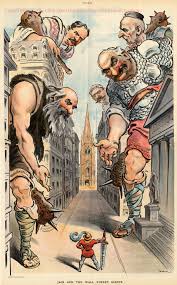
In the post-Civil War era. John D Rockefeller, Andrew Carnegie, JP Morgan and others rose to wield unparalleled financial power. Emerging industries in oil, steel, and mining had grown into monolithic trusts, using innovative banking practices that fed an explosion of wealth. Titled “The Gilded Age,” these and other industrial giants earned another moniker “Robber Barons,” for not only the fortunes they built, but the ruthless practices that bred those millions.
The American public both admired and loathed these magnates. Critics argued the nature of such concentrated treasure was damaging to the lower rungs of American society. In pushback, journalists and economists lay bare the cruel tactics these industrialists utilized. Notable critics included Ida Tarbell, who investigated Rockefeller’s shady dealings in creating Standard Oil, Upton Sinclair did much the same through his novel, “The Jungle,” leaving readers both outraged and nauseous. And social reformer, essayist, Henry George, argued Carnegie had in no way improved the quality of American life, despite Carnegie’s philanthropic efforts.
President Theodore Roosevelt found no friendship on either side. “Muckrakers,” he called these journalists, while still pursuing legal action against the excesses of what he termed the “wealthy criminal class.”
In response, Andrew Carnegie published a work titled, “The Gospel of Wealth.” Centered upon the principles of 18th Century economist, Adam Smith, Carnegie argued that his success was no more than God’s will, and a gift to mankind. To Carnegie’s way of thinking, the Almighty himself, had conferred upon each certain gifts, and Mr Carnegie’s talent lay in getting rich. Left unmentioned were the unmet talents of those condemned to labor in the fiery pits of Carnegie Steel, and other factories.
Confident in his beliefs, the tycoon believed he stood in God’s favor. And Americans swallowed the Gospel of Wealth, hook, line, and sinker, rendering reforms nearly impossible.
After World War One America went on an unfettered spending spree. Throughout the Twenties President Coolidge rejected T. Roosevelt’s moral crusade, holding firm that “The Business of America is Business.” Then in October, 1929, at the beginning of Herbert Hoover’s administration the bottom fell out of the New York Stock Market.
And somehow the rich no longer seemed quite as godly.
The 1932 Presidential Election issued a mandate for a “New Deal.” Desperate Americans were struggling, going hungry, losing their homes, writing the Franklin Roosevelt administration pleading for a hand up. And FDR acted quickly. Harnessing the power of the Federal Government, the President championed deficit spending, stimulating buying power to the underclasses. No longer would Americans tolerate the unregulated thievery of the past. By the 1960’s Lyndon Johnson’s “Great Society,” extended aid even further, so regular people could tap into the financial support to get ahead.
By 1980 the pendulum had swung to the right once again, regulation falling into disfavor. Laissez faire policies returned under Ronald Reagan. In turn, deficits blossomed, and the market crashed again in 1987 under the weight of the DotCom boom, and savings and loan scandals. Under GW Bush a scarier crash occurred in 2008, following the fallout of the mortgage market.
American laws, passed in the heart of crises, need to be remembered and embraced, not discarded during better times.
Much like America during and after World War Two, private, public, and global financial institutions cooperated for just and equitable progress. Enlightened self-interest with carefully crafted guardrails enhance prosperity, and promotes financial stability.
Those lessons in economic policy made the 20th Century, America’s Century. This isn’t a lesson we have to relearn, the path has been paved.
In case anyone else is interested, here’s a little editorial piece I wrote about Critical Race Theory for my community. Gail Olson Chumbley, I didn’t expect it to go where it did, but I mean every word of that last part – but I’m sure you already know that because all of us students already do 
I would like to share something that’s been on my mind a lot lately, and I am hoping that those who are interested can engage in a way that promotes understanding on all sides as well as help dispel concerns. The topic is Critical Race Theory and what it means to have it “taught in schools.”
First, I am a teacher, though not in Kalama school district. I say this because I want to be transparent as well as reassure you that, if you do not agree with what I have to say, I also have no control over what is taught to your children either. I’m just here to chat. I also have my PhD in Educational Leadership and administration license.
——-
So, what is Critical Race Theory? Well, We need to understand what each of these words means in their original context, which is a widely accepted (non-controversial) area of scholarship, specifically legal scholars and practitioners:
Critical = Ask questions and analyze. It doesn’t mean to criticize, but rather is used in the same sense as teaching “critical thinking skills” and encouraging youth to think for themselves – even if their conclusions are different than our own.
Race = People who receive benefits or disadvantages due to race or ethnicity. This is not limited to black and white and does not villainize anyone. Rather, it’s looking at the factors that race MAY play in the way benefits are distributed through different communities.
Theory = A perspective. It isn’t about whether this is an idea, but rather one way of looking at things. Scholars, experts, and practitioners usually use multiple perspectives (theories) to analyze (critical analysis) certain phenomena. Essentially, theories are a framework for asking questions and understanding phenomena, not a conclusion in and of itself.
So, Critical Race theory, in a sentence, is a perspective for considering history, including the systems such as government and legal systems that were built in the context of our history, in a way that asks “What role might race have played here, and how does that inform issues we face today?” It is an intentional effort to ask those questions and seek out answers based on historical events and research.
———
What does this mean for teachers?
For teachers, this is nothing new. Understanding issues of equity is something that is covered in the most basic educator preparation courses, which includes understanding how to help ALL children access equitable learning opportunities regardless of location, income, disability, language, race, gender, orientation, etc. This is a basic and constitutionally guaranteed right (WA state constitution, Article 9, Sections 1 and 2; this is what “without distinction or preference on account of race, color, caste, or sex” and “general and uniform system of public schools” means). I attended a Nazarene university in a very, very conservative area and we were talking about these issues 10 years ago and continue to do so today. I promise you, this is not a new or left-leaning movement.
———-
What does this mean for school districts?
While the State can establish general standards, the actual curriculum and practices are determined at the local district level. Curriculum adoption involves the teachers in that subject area getting together with the district office to look at a variety of curricula and analyze which ones best fit their school’s needs. They then make a recommendation to the school board (including their analysis of the curriculum and why they chose it) who then votes on whether or not to approve the recommended curriculum. You, as citizens, get involved in this process by showing up to school boards (and voting for board members in the first place!) and letting them know how you feel about the curriculum. In sum, ALL stakeholders (students, parents, teachers, community members, board members, administration) have a voice and a part to play when it comes to adopting the curriculum. The ultimate decision, though, lies with the school board on whether or not to adopt a particular curriculum.
Of course, then, individual decisions about how to teach the curriculum, including what to focus on, how to focus on it, and what students are asked to do, are largely in control of the teacher. Teachers do have rights in making these decisions, though you are always welcome to voice any concerns. It is ideal to talk to the teacher first, then the principal or counselor if the issue doesn’t get resolved, and you can also contact the district. The district will then follow through with due process to ensure the rights of parents, students, and teachers are all protected.
————-
What does this mean for students?
Students in classrooms where Critical Race Theory is taught (largely social studies) will learn about history in a way that intentionally includes parts of history that have often been left out. They are NOT told what to think about it by the teacher (or at least shouldn’t be told – that would be grounds for a complaint), but rather would be encouraged to analyze the information and come to their own conclusions. Discourse is an important part of these topics, so they would likely be encouraged to discuss these topics with their peers (and with guidance by their teachers to ensure the class stays productive, on topic, and prevent hostility).
This is a TALL order, especially in classrooms with 30+ opinionated students, so not all teachers will get it right, especially if this is new for them. For many, though, it isn’t – again, I grew up in a conservative area and I feel as though I was exposed to this by my favorite teacher of all time BECAUSE she encouraged us to explore and think for ourselves. She never once told us what to believe, but rather taught us to ask questions, seek out facts to inform our opinions, and then develop and defend our opinions, regardless of what those opinions might have been. My sister and I both had her as a teacher and, 20 years later, we have opposite opinions on just about everything, especially politics. But the one thing we can agree on is that this teacher changed our lives and inspired us both to become teachers ourselves. Countless students across all beliefs and perspectives have named her as their most influential teacher. I truly believe that this type of teaching made us better people as we learned to consider perspectives that may be different from our own, ask questions, and seek out answers that we can defend with solid evidence. Here’s to you Mrs. Chumbley, who students affectionately referred to as “Chumbledore” because she was just that magical for literally generations of students
gailchumbley@gmail.com

Balkanize: Division of a place or country into several small political units, often unfriendly to one another.
America’s founders meant education to flourish, as a vital part of our country’s longevity.
Designed to advance literacy, American public schools also curbed the rougher aspects of an expanding country. Since the earliest days of the Republic, centers of learning not only taught content, but other lessons like cooperation, and self control. Ultimately schools have instilled in all of us a shared baseline of behavior, supported by foundational facts necessary to find consensus.
Today, technology and social media have endangered our ability to reach common ground. The distracting noise of extremists, splintering, and Balkanizing our nation threatens American institutions. Elections, government agencies, city and state government, and yes, schools are all targeted. Navigating through a culturally diverse society is inevitably stormy, and a closed American mind isn’t helpful.
Public education has traditionally been one of the ligaments that bind us all together as one people. Years ago a president encouraged us to ask “what (we) can do for (our) country,” but that’s over. Today it’s “Sorry losers and haters, but my IQ is one of the highest – and you all know it!”
Patriotism and literacy evolved together hand in hand. In 1787 Congress, under the Articles of Confederation, passed an Ordinance for settling western land. This law devised a survey system, to organize states around the Great Lakes region. This is important because sales of one plat of the survey, (you guessed it,) funded public schools.
Thomas Jefferson affirmed the practice by insisting, ”Educate and inform the whole mass of the people… They are the only sure reliance for the preservation of our liberty.”
President Lincoln, a figure who deeply lamented his own lack of formal education, pushed to establish land grant universities across the growing nation. The 1862 Morrill Land Grant Act, in particular, financed colleges through Federal funding.These universities today are located in every state of the Union.
America’s erosion of unity is tied directly to the erosion of public education. Our kids are increasingly sequestered into alternative settings; online, magnet, charter, home, and private schools. Missing is the opportunity to experience democracy at its most basic. Students grow familiar with each other, softening our own edges, renewing the energy and optimism of the nation’s promise.
We are all taxpayers, but your local public school isn’t supposed to be Burger King, where every citizen can have it “their way.” We have a system that, regardless of money, race, ability, and social class, all have a seat at the table of democracy.
Gail Chumbley is a history instructor and author. Her two-part memoir, “River of January,” and “River of January: Figure Eight,” are available on Kindle.
gailchumbley@gmail.com
I didn’t care what my students thought. Their opinions were no business of mine. That they knew how to express those ideas, using factual information, was my business.
To introduce point of view, and critical thinking a quick textbook analysis did the trick. In groups (I assigned) students researched various history texts to spot biases in the presentation of historic facts.
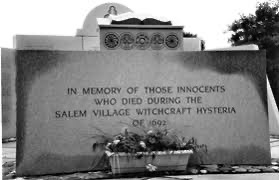
Over the years, a collection of comped survey books had accumulated on my classroom shelf. I used them for my own preparation, but decided to teach the same techniques to the kids. The task was pretty simple. All groups were asked to look up the two same topics: The Salem Witch Trials of 1692, and John Brown’s Raid at Harpers Ferry in 1859. They noted the title of the text, the authors, the publication date, and any particular word choices used to explain or describe each episode.
This was the first day of school, mind you, and holy cow the results rocked these 15-year-olds orderly world.
When each group reported their conclusions, skewed viewpoints abounded. In other words the same facts drew decidedly different conclusions.
One book blamed the Witch Trials on tensions stemming from continuous Native attacks. Another blamed simmering resentment over social class, inheritance disputes, and property ownership. Moldy grain was to blame according to the Prentice Hall book. The good people living north of Boston were tripping on ergot fungus, a hallucinogen spreading on damp wheat baked into bread.
Nearly all texts made use of the terms “fear,” and “hysteria.”
The John Brown case provided even more interesting results. If the book had been published before 2001, Brown generally came off a saint. If after, the language use grew more sinister. In pre-911 America, fighting slavery had a righteous, noble language, that justified the violence. Something to the effect that, in the name of the mighty Jehovah, Brown martyred himself to strike a blow against evil. By contrast, books published after the collapse of the Twin Towers dismiss Brown’s means as unfortunate, though slavery was still bad.
By the end of this exercise students often seemed flummoxed asking “who can we believe?”
“Yourself, of course, and your analysis skills,” I always replied.
Gail Chumbley is the author of the two-part memoir “River of January,” and “River of January: Figure Eight.” Both titles available on Kindle.
For more explanation on this lesson email at gailchumbley@gmail.com
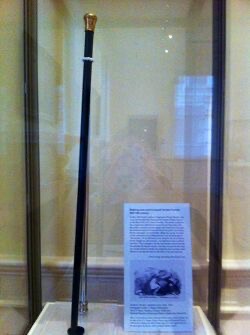
The American system of government requires reasonable, motivated legislators. And no, there is nothing quick about lawmaking. That a Congressman or Senator will get all they want is another no. The legislative process requires willingness, study, and compromise. It is little wonder citizens become frustrated with the pace, but that is American lawmaking. And despite the drawbacks, our frame of government is the best that exists in the world. Period.
When factions choose violence, know this, insurrection is no solution. Never has been. Acts of brutality, in fact, mangle the fabric of our society. The Far Right, along with their gutless congressional enablers will, sooner or later, reap the consequences of their lawless behavior.
As Tom Petty aptly titled the mindset, these are Rebels Without a Clue.
South Carolina Congressman Preston Brooks, in 1856, felt much the same. This impetuous “gentleman” possessed a velcro sensibility to perceived slights, and could lash out unexpectedly. Raised in the Southern canon of the code duello, Brooks believed physical retribution a mandatory response in defense of reputation and honor. Years earlier young Brooks had traveled to Washington DC in order to challenged another he believed had insulted his father, Whitfield Brooks. For this impulsive action young Preston hobbled on a cane, limping for the rest of his short life.
Hate was in the very air of Capitol Hill during the 1856 session of Congress. The “irrepressible conflict,” of slavery, weighed as heavily as the damasked draperies in the US Capitol.
The question at that moment concerned the extension of slavery into expanding territories. One law after another had either permitted, or limited the peculiar institution onto the western prairies. This was also when Brooks arrived to take his new seat in the House of Representatives.
The admission of Kansas cut from Nebraska Territory drove the headlines of that moment. Would the Nebraska Territory split into two new states, one free, and one slave? The decision weighed heavily, challenging the delicate equilibrium in the Senate.
Into this tinderbox stepped Senator Charles Sumner of Massachusetts, and his powerful speech that gripped not only Congress but the whole, volatile nation. Titled “The Crime Against Kansas,” this fiery abolitionist and orator cursed the institution of slavery belittling southern defenders as enamored with the “harlot slavery.”
That oratory lit the spark igniting Congressman Preston Brooks.
Following Senator Sumner’s two-day denunciation, the chamber quieted, and members wandered in and out, chatting or working at their fixed desks. Charles Sumner himself, was seated on the Senate floor, focusing on the papers before him. That was the moment Representative Brooks sidled up behind the preoccupied lawmaker.
Brooks made some remarks at the Senator’s desk, then lifted his cane and came down hard on Sumner’s head. Over and over the enraged South Carolinian beat his quarry, Sumner struggled, trapped halfway between his chair and bolted-down desk. Finally the cane cracked, and Brooks strolled out of the Senate Chamber.
Sumner lay groaning on the Senate floor, a bloody mess.
In the days following, Preston Brooks was both reviled and feted by enemies and compatriots. As a point of order, the young Congressman resigned his seat and left for home.
Gifts of canes were sent to this Southern hero who had taught those Yankees the physical price of loose talk.
This episode accomplished nothing of substance. A mini Civil War exploded on the Kansas Prairie, and Brooks died from some ailment. And Charles Sumner? He survived the assault, later to lead a Jehovah-like revenge on the Reconstructed South.
Why does this matter? How does this concern today? Because America is a nation of laws, the same slow, thoughtful process designed by the Framers. When agitators choose the path of violence, the recoil whipsaws uncontrollably. The Sumner Brooks episode provided a prelude to Civil War. Lasting stability rests on methodical lawmaking through thought, analysis, and compromise.
Take it from me, the past does portend the future.
Gail Chumbley is the author of the two-part memoir, River of January and River of January: Figure Eight. Both titles are available on Kindle. Chumbley is also the author of two plays, “Clay” on the life of Henry Clay, and “Wolf By The Ears,” exploring the beginnings of American racism and slavery.
gailchumbley@gmail.com

