A Rendezvous

One central  philosophy guided my years of American history instruction. The story had to feel personal to each student, after all it is their country. For the unit on World War Two, I aimed to act as a bridge between my grandparents generation to the kids seated before me. While growing up, my grandparents played a large part in shaping my world view, as the old folks often shared their life experiences. Each had a unique tale on how they committed to fight totalitarianism abroad in the 1940’s, and defend democracy at home. 

All the following accounts involved inconvenience, sacrifice, and interruptions to family life. At that singular moment all they knew was to serve their country, and defeat foreign tyranny. 

A new dark age lay in America’s defeat.
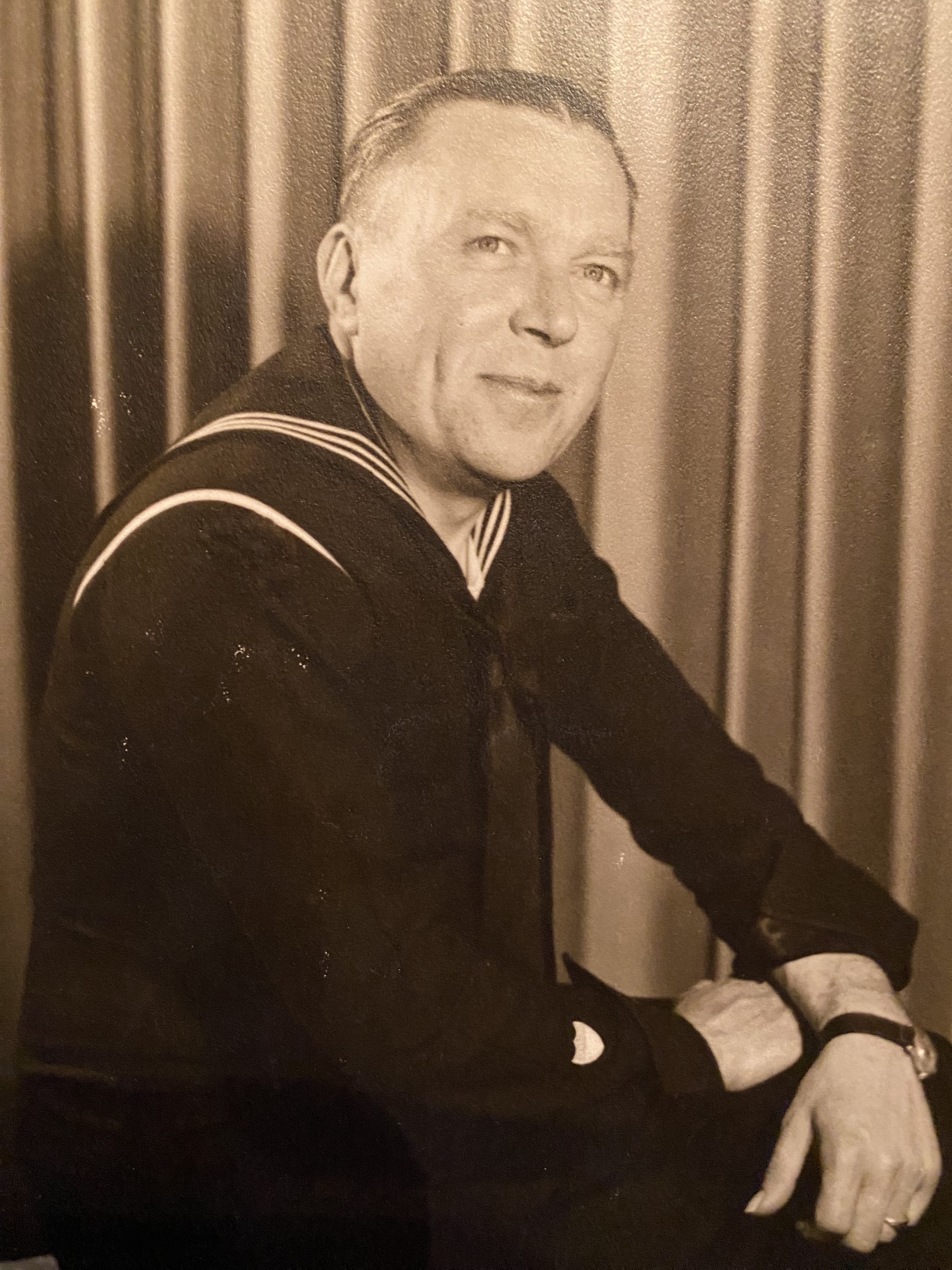
This is Ray Turner, born in 1905 in Hammond, Illinois. This young man migrated west, joining family members in Northern Idaho. Ray soon found his way to Spokane, Washington, where he found work as a postal carrier. Stopping for lunch along his mail route he met a waitress in a downtown cafe, Ailene Peterson, a single mother of one, and after a while they fell in love. Marrying in the fall of 1941, the newly weds, while on a Sunday drive caught a breaking news bulletin on the car radio that the Japanese had attack on Pearl Harbor in Hawaii. Ray turned his automobile around, motored back to Spokane, and joined the Coast Guard the next morning. Stationed out of Willapa Bay in Tokeland, Washington, Ray and the crew of the USS Manzanita patrolled the extensive, rugged Pacific coastline of Washington and Oregon monitoring for Japanese vessels. And it was aboard the Manzanita that Ray remained until August,1945 when he mustered out of the service and returned to Spokane. After a life of grandkids, holidays, and fun on his lake property, he retired from the US Postal Service, passing away in 1974.
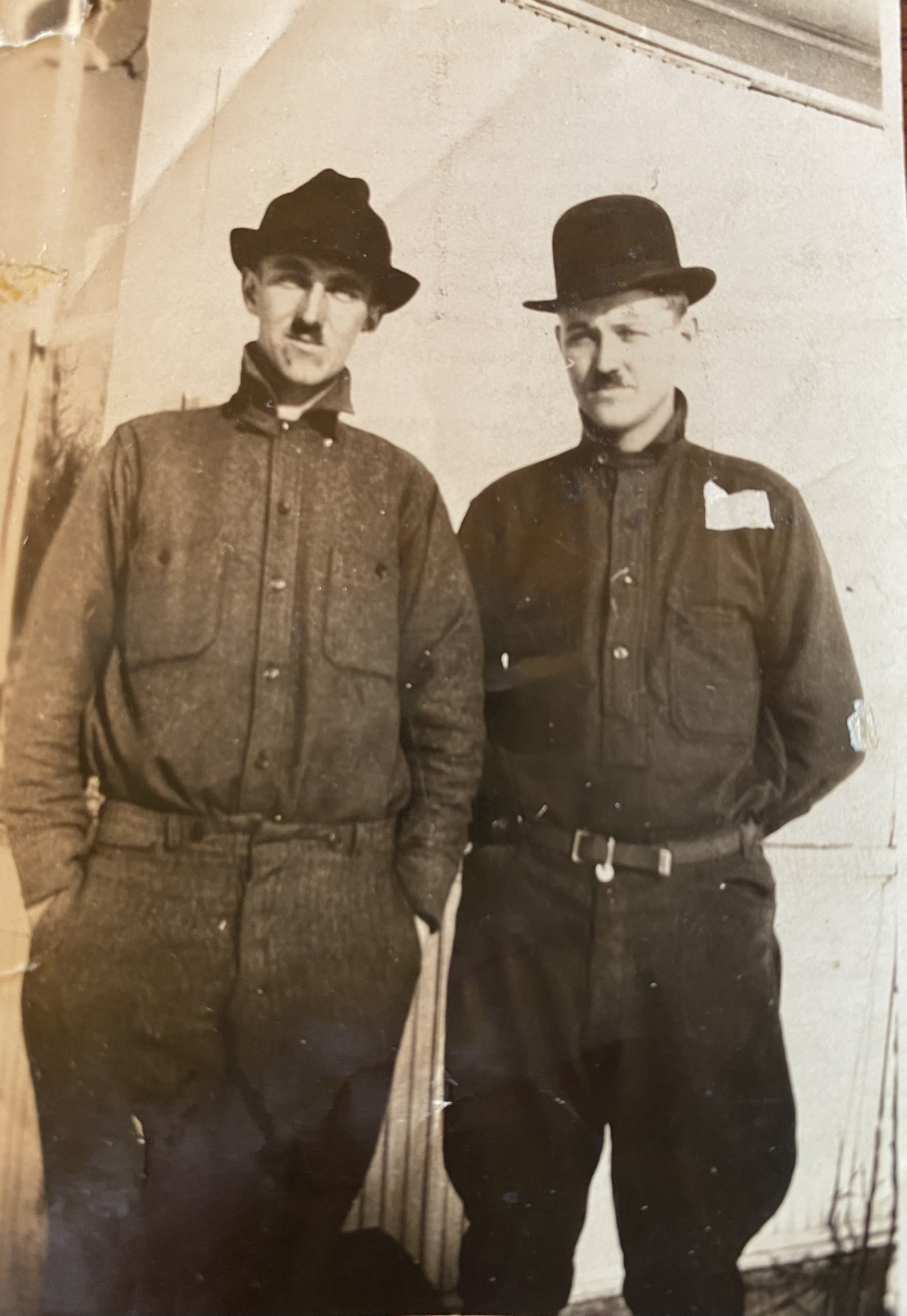
Kurtz Olson hailed from Wing River, Minnesota, born on a frigid day in January, 1905. Kurtz, as the youngest of seven children took up welding as a young man, and made a fair living during the difficult Depression years. This photo, take in the 1930’s, (Kurtz on the left) indicates that Hitler was considered harmless and laughable. That certainly changed in 1939, and after the Pearl Harbor attack brought America into the war, Kurtz packed up his wife and family and traveled west to Tacoma, Washington in search of war work. Kurtz spent his days dismantling scrap metal in a welding yard preparing the steel for conversion to ships, planes, tanks, and other war materiel. After the war Kurtz moved his family to Spokane, where he welded, owned a series of mutts, cut firewood with his son, and grandson’s. Kurtz passed on in 1989. 

IMG_0791

This GI is Joe Tucker, this snapshot taken somewhere in France around 1944. Born in Craig County, Oklahoma in 1907, Joe found himself back in uniform at the ripe old age of 37, much older than the 18 and 19 year-olds in his outfit. Joe had actually been in the army until 1939, receiving his first discharge before the war. Making his way to the Pacific Northwest he too, settled in Spokane where he met and married a widow with three children. His daughter from his first marriage lived in the city, as well, and he wanted to remain near her. Working for the Northern Pacific Railroad, with his new, larger family, Joe joined the Washington National Guard for the extra pay guard duty brought in. After Pearl Harbor the US Government nationalized the Washington Guard, and off he went to war. After training stateside, then stationed in the south of England, Joe found himself on Normandy Beach on June 7, 1944, D+1. Surviving those first days he and his fellow Guardsmen suffered through the Battle of the Bulge, finally winding their way to Germany. On one particular night, Joe stood guard duty somewhere in Germany. He heard his sergeant grouse was the soldier on duty asleep? The reply was no, it’s Tucker, and he’s awake alright. (Joe liked telling that story). Eventually Joe shipped home to reunite with his family in 1945.
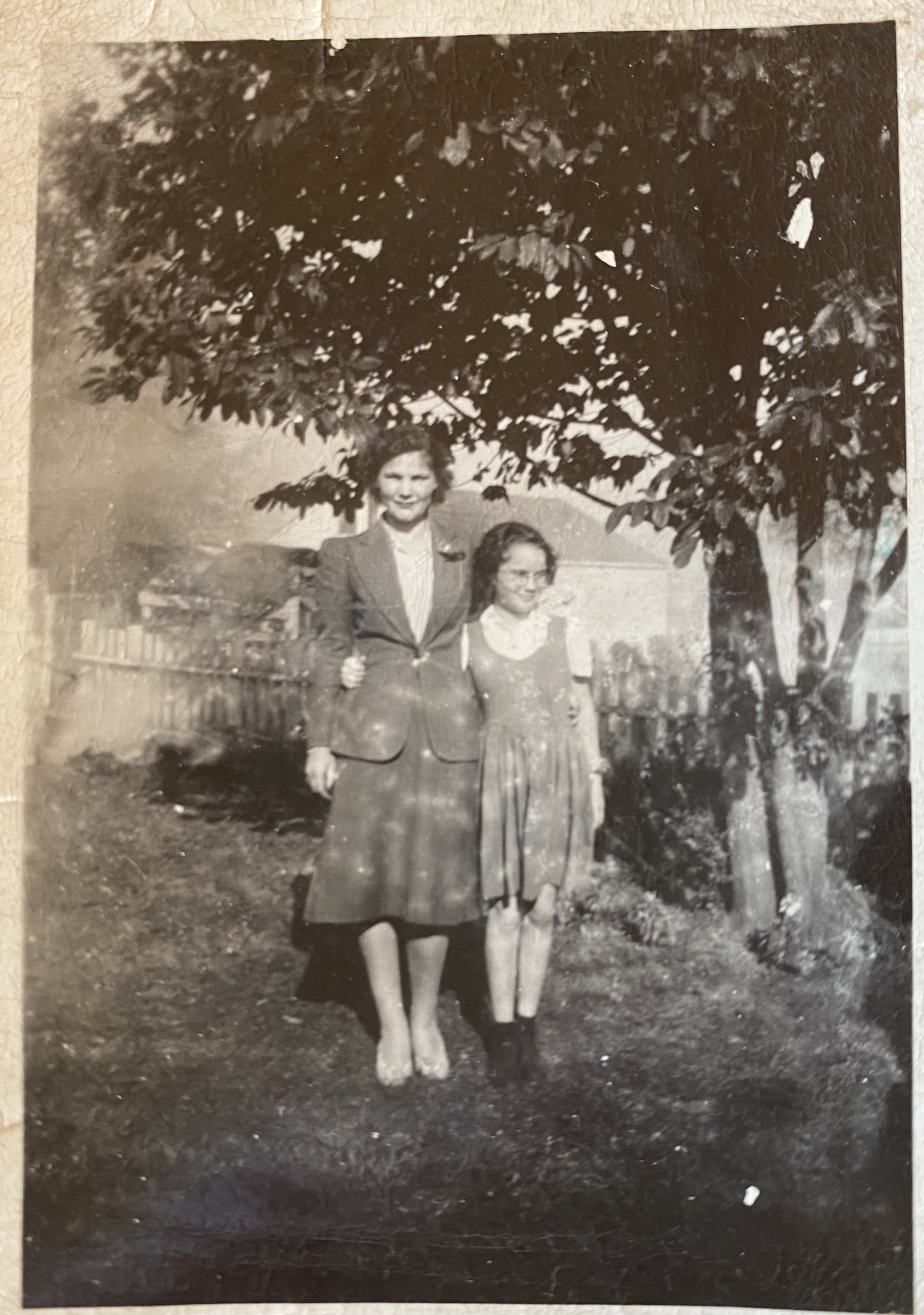
From her waitressing job, Ailene Peterson, turned Ailene Turner followed her new husband Ray to the Washington coast. Traveling with her young daughter Ailene looked for war work as well. Born in 1914, in Clinton, Minnesota, Ailene had married quite young, desperate to leave her father’s stump farm in North Dakota. Husband #1, Joe Tucker had failed her, and with her young daughter in tow, sought refuge with family members in Spokane. It was in Bremerton, Washington that she found employment wiring mine sweepers for America’s Russian allies, (she said they were very rude). In later life, Ailene proudly mentioned that her work never had to be redone. She always wired it right the first time. In an operators cab of a crane, Ailene noticed the girls below waving their arms and jumping about. Shutting down the motor she heard them yell that the Japanese had surrendered, and the war was over. Ailene scrambled down from her seat, and joined the victory celebration. She, too, along with Ray returned to Spokane until her death in 1990.

Besides being my grandparent’s, and generously sharing their remarkable stories with me, what else did these people share in common? They put aside their personal lives to step up in defiance of fascism and authoritarianism. They knew that service to America, to our democracy, was their first duty.

Retelling my grandparent’s war-time sacrifices to my history students added a vividness to the coursework that encouraged the kids to do the same with their elders. That, once again is how I bridged the war years to now, making it personal for students. 

President Roosevelt had characterized that moment as America’s “Rendezvous with Destiny,” and those people rose masterfully to the challenge. And despite all the hostility to democracy today, we cannot surrender to those forces, and betray our forebears who stood up to defend our way of life.

Perhaps now is our “Rendezvous with Destiny,” and this time all we have to do is vote for the Democrat over the wannabe dictator.

Once again, a new dark age lay in America’s defeat. 

Gail Chumbley is the author of the two-part memoir, “River of January,” and “River of January: Figure Eight.” Both are available on Kindle. Chumbley has also penned two history stage plays, “Clay,” and “Wolf By The Ears.” She is the co-author of “Dancing On Air,” and feature length screenplay, and is working on “Peer Review,” for the stage, a series of short plays where DJT meets real presidents from the past.

gailchumbley@gmail.com

Stay The Course

1864 was an election year, and an apprehensive President Lincoln believed he faced certain defeat. Despite victories at Gettysburg and Vicksburg the endless lists of casualties had left Northern families weary of war. Two years prior the Democrats gained 27 seats in the House, as critics bashed emancipation and the draft riots in New York. As the President privately despaired, “The bottom is out of the tub.” 

Lincoln’s greatest frustration centered on finding a general who could and would defeat General Robert E. Lee and his Army of Northern Virginia. A series of Union generals, all lackluster, had failed the President repeatedly. Irvin McDowell’s troops ran at Bull Run, Ambrose Burnside presided over a bloodbath at Fredericksburg, and “Fighting Joe Hooker” was roundly flanked at Chancellorsville. But the most troublesome of this difficult brood was General George Brinton McClellan.

On paper General McClellan had all the attributes of a winner. Studious, McClellan graduated 2nd in his class at West Point, joined the Army Corps of Engineers, and served in the Mexican War. Following a brief stint in the private sector McClellan returned to service when the war thundered to life at Ft. Sumter. Following a couple of minor victories in western Virginia, President Lincoln brought McClellan to the Capitol appointing him commander of the Army of the Potomac.

In Washington McClellan did whip his army into fine condition, and his men loved him in return. The difficulty the President faced was that McClellan would not fight. Over many months, with growing frustration at the army’s inaction, Lincoln stooped to sarcasm, composing a request to borrow McClellan’s army to go south, since the General wasn’t using them. McClellan returned the rancor referring to Lincoln as a “well meaning baboon,” and rudely rebuffing the President when Lincoln paid a house call. 

Other McClellan gems include:

“By some strange operation of magic I seem to have become the power of the land.”

“Who would have thought, when we were married, that I should so soon be called upon to save my country?” (To his wife.)

and, reminiscent of a current blowhard candidate,

“I can do it all.”

During the greatest national emergency since the Revolutionary War, Mr. Lincoln, with so many other demands, had to cope with a difficult, obstinate officer. As the nation watched, the President could not get the man to budge. In one instance McClellan, in Virginia, argued he couldn’t move his forces as the horses were fatigued. Lincoln asked what could the horses have done to be fatigued?

McClellan needed to be replaced, but Lincoln hesitated to do so. Considering the love the Army of the Potomac held for “Little Mac” may have stayed the President’s hand. And there were no other officers suitable to replace him. 

Later, after the Battle of Antietam in 1862, Lincoln fired the reluctant warrior after he permitted General Lee and his army to slip away.

As for the election of 1864, the President fully understood he was growing quite unpopular. He had spoken with General Grant on how to tie up the war before inauguration day when he would surely have to leave the White House. In an unexpected twist of irony Northern Democrats convening in Chicago, nominated their candidate to challenge Mr. Lincoln. They chose George Brinton McClellan.

Defeating the rebels grew even more urgent if that imperative was possible, for McClellan made clear his intention to negotiate a peace with slavery intact. 

It is difficult to imagine the President’s anguish in such an impossible situation.

So it is a remarkable thing that Abraham Lincoln emerged from the contest victorious. Severe Northern opinion hadn’t softened, the press relentlessly criticized Lincoln’s war policies, so how did this miracle happen?

Credit the Army of the Potomac.

Though the men did admire their former commander, they knew President Lincoln remained committed to the cause they shared: freedom and Union. Oceans of blood had been spilled, uncountable hardships endured, and still Union forces and the President stayed the course. These comrades-in-arms kept the faith with their president, in a war for America’s future. 

Lincoln had their backs, and these men fully understood their duty.

Today, as America approaches the election of 2024 Americans of good will must also vote for the President who solidly supports their interests. Mr. Biden’s successes include The American Rescue Plan, a stimulus bill, Build Back Better, an infrastructure spending act, and a bill lowering drug costs, such as capping insulin for diabetics, demonstrates Biden’s priorities. Like 1864, the opposition party has nothing to offer but a self-deluded windbag who has proven himself more ineffectual, and delusional than General McClellan, who at least had a real resume. Nonsense is nonsense.

An advocate for all we hold dear, voters must remain as faithful to our ideals as Joe Biden, our Chief Executive. Today the task of preserving America is as crucial as the crucible of the Civil War

We have an obligation to defend our national laws, and the ideals that shaped them. Americans, yet unborn are counting on us.

Gail Chumbley is the author of the two-part memoir River of January, and River of January: Figure Eight, both available on Kindle. Chumbley has also authored “Clay,” and “Wolf By The Ears,” two historically-set plays.

Reading Tea Leaves

Elections belong to the people. It’s their decision.

Abraham Lincoln

From 1790 to now, American midterm elections have functioned as an effective gauge of public opinion. 

Despite southern secession, and the subsequent war of rebellion, President Lincoln viewed national elections as the indispensable foundation of a free government. There were dissenting voices calling for cancellation of the 1862 midterms due to the war, but Lincoln did not hold to that. 

After two years in office, Lincoln needed to know where he stood with the people. The Republican Party kept majorities in Congress, but a significant shift among unhappy voters surfaced. 

Democrats (those still in the Union) picked up 27 seats in the House. Though the Senate did remain in Republican hands, Lincoln understood the first two years of war had cost him plenty. Bloody defeats on the field of battle at Bull Run, the Peninsular Campaign, plus the massive casualties at Antietam had cost his administration.

In the Twentieth Century, the bi-election in 1934 delivered a powerful message of support to Franklin Roosevelt and his administration. Not only did the public approve of his New Deal, they added nine more members to the House majority, and an additional nine to the Senate. Clearly Roosevelt’s economic measures had grown in popularity across the stricken nation. Conversely, by 1938, Democrats lost 72 House seats with 81 gains for the GOP.  FDR took those results to heart changing course on some of his policies.

Harry Truman, FDR’s successor inherited a more divided America. The Democrats had enjoyed nearly fourteen years in power, but Truman’s presidency faced a shifting change. In the midterm election of 1946 the GOP secured majorities in both the House and the Senate. Fifty-five seats changed hands in the lower chamber, and seated twelve more in the Senate. The public did not view Harry Truman in the same light as his predecessor.

There are other illustrative bi-elections to examine. For example, 1982, where the Democrats picked up 26 seats in the House, and seven in the Senate after two years of the Reagan Administration. And in 1994 Newt Gingrich’s “Contract With America,” where the GOP picked up 54 House seats, and eights seats in the Senate. With that majority, Republicans worked to undermine the Clinton Administration. 

The midterms do act as a barometer of America’s political winds. A great deal is to be learned by analyzing voter turnout and the winners and losers. Political Parties can find where they stand with the people, and adjust accordingly.

In that light this last 2022 midterm spoke volumes as well. In a most unlikely scenario, where inflation and high gas prices, plus low poll numbers for our sitting president, the public rejected the GOP’s crazy MAGA’s. Yes a hand full of seats did shift the House, but barely. The former guy has clearly worn out his welcome, and voters have had enough of that sideshow. 

That he and his followers are oblivious to the temperament of the people makes no difference. The numbers don’t lie.

If this half-dozen, or so reelected extremists believe they have a mandate from the American people they are seriously mistaken. For next the two years the country will be forced to watch the same tiresome, noisy political antics they rejected at the polls.

You all are going to overplay your hands, and sink your party.

Don’t believe me? Just ask Newt Gingrich. He’s out of office and has time for your call.

Gail Chumbley is the author of the two-part memoir “River of January,” and “River of January: Figure Eight.” Chumbley has also penned two historical plays, “Clay” on the life of statesman, Henry Clay, and “Wolf By The Ears,” an exploration of racism and slavery in America.

Fight Club

A biography of Lyndon B. Johnson, (by Robert A. Caro) presents an in-depth look at LBJ’s Senate career. Aptly titled “Master of the Senate,” Caro describes the future president’s considerable ability to push bills he championed through the US Senate.

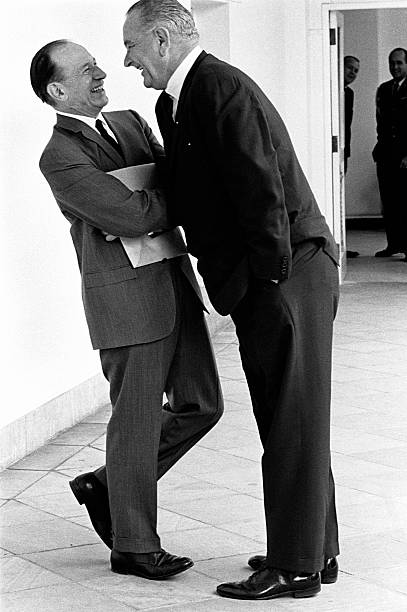
Using his boundless energy to cajole, intimidate, and hound opponents, Senator Johnson proved remarkably effective. When candidate John F Kennedy selected LBJ to serve as his running mate, Johnson’s reputation as a political wheeler dealer sealed his selection. 

A look at the backgrounds of all 46 American Presidents, only one-third rose from Congress’s upper chamber. From 1900 to today only seven Chief Executives began in the Senate. Perhaps as candidates, these politicians carry controversial voting records, or personal foibles leaving too much baggage for a successful run. In spite of inherent liabilities, most modern Senators-turned-President, bring an effective array of skills to the White House.

For both Truman with his Fair Deal, and John F Kennedy’s New Frontier, legislative wins were scarce. Truman did enjoy a moment with passage of the Marshall Plan to rebuilt war-torn Europe, and Kennedy with the ratification of the Nuclear Test Ban Treaty in 1963.

Following JFK’s murder Lyndon Johnson seized that tragic moment initiating his Great Society program, and then showed America how to get things done. Public Television, highway beautification, Medicare, Medicaid, and both the Civil Rights Act of 1964, and the Voting Rights Act of 1965. Johnson’s achievements were many, and important. 

Richard Nixon served in the Senate, as well. Once President, Nixon promoted the Environmental Protection Agency, and the passage of Title IX for women in sports. It wasn’t all evil in that White House, the guy had skills.

In 2010, single-term Senator from Illinois, turned President, Barack Obama signed into law The Affordable Care Act. Standing near, watching was Obama’s Vice-President, Joe Biden, himself a 36 year veteran of the Senate. 

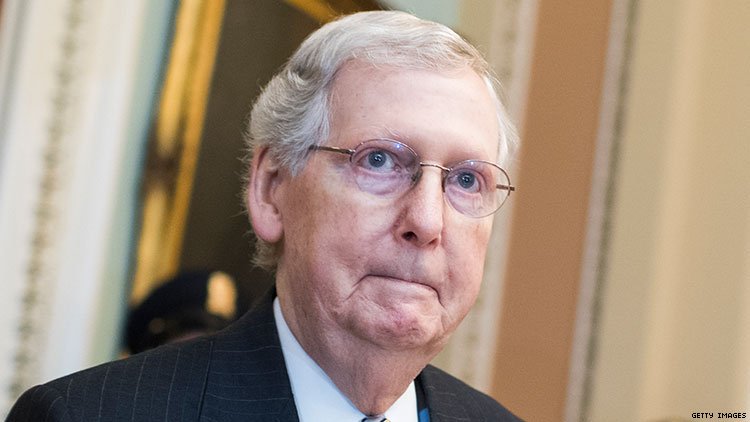
The thing is Mitch McConnell lobbed every counterpunch in the rules to stop Obamacare. But he failed in the face of three wily tacticians, Barack Obama, Nancy Pelosi in the House, and, of course, Joe Biden.

Now Joe has entered the White House in his own right.

The supposition that legislative cunning ensures a successful presidency is only an interesting thought. But Truman did see reelection, while LBJ collapsed under the weight of Vietnam, not his legislative magic. Nixon sabotaged himself, but the Biden presidency appears to be chugging along on a steady course. 

In the Senate since 1973, this 46th President cut his political teeth on Capitol Hill. Senate rules, cloture, floor privileges, and more are some of the lethal weapons in his political arsenal. For example, when Senator Manchin suddenly came on board with the Inflation Reduction Act, Mitch McConnell, another sly dog, staggered, blindsided.

The point remains. There is a lot more to Joe Biden than meets the eye. This is not a President to dismiss for superficial reasons, like his grandpa appearance, and folksy demeanor. If anything, Biden’s Senate career has forged him into a political shark. The Infrastructure package, Covid Relief, and College Debt Forgiveness have largely passed, allowing his opponents no time to breathe.

And Joe’s VP? She’s a former Senator, too.

Gail Chumbley is the author of the two-part memoir “River of January,” and “River of January: Figure Eight.” Both titles are on Kindle. Chumbley has written two historical plays, “Clay” regarding the life of Senator Henry Clay, and “Wolf By The Ears,” an exploration of American racism and slavery.

Catch Up

A radical change in imperial policy between Great Britain and her American Colonies marked the beginning of the Revolutionary Era.

Well before the American Revolution an amiable, and profitable arrangement existed between the Colonials and Parliament. This mutually profitable connection quickly terminated after the French and Indian War, 1754-1763. That conflict, though a victory for the British, had cost the Royal Treasury plenty, and the Crown abandoned friendly relations by coercing Americans to share in settling that war debt .

Parliament began by imposing a number of taxes, all designed to force Americans to pay up. The Sugar Act, Stamp Act, and Townshend Duties, among other measures, had been designed to force Americans to cover the royal debt. Once proud to be British, Colonials were shocked to realize the Crown viewed them as a source of revenue, and nothing more.

Colonials had a long running smuggling network, importing cheaper commodities from the French islands, thus evading British tariffs. Those caught and arrested found fast acquittal by colonial juries of their peers, as locals were also customers of the accused. In Boston, tensions soon turned to bloodshed, followed later with tea spilled into the Harbor. The Crown, not amused, soon forbade traditional trials, and transported accused Americans to military courts, in particular to Nova Scotia. Next, British Red Coats were deployed to the New England colonies to impose martial law, and Parliament decreed American’s had to house and feed their own oppressors.  

These matters were met with vehement dissent, Colonials protesting they had no representative in Parliament, and would not tolerate taxation without their consent. “No Taxation Without Representation” and “Resistance to Tyranny is Obedience to God,” rang throughout Colonial America.

Tensions ripened, finally coming to a bloody confrontation in April of 1775, and the rest we mostly remember from school. 

Tasked with scribing a Declaration of Independence at the Second Continental Congress, Thomas Jefferson vented American grievances through his quill. Working alone, Jefferson defended the violent actions carried out by Americans, and took pains to explain the radicalism. . . . “a decent respect to the opinions of mankind requires that they should declare the causes which impel them to the separation.” And for six years the Continental Army persevered.

In 1787, the subsequent creation and ratification of the U.S. Constitution set an enduring national blueprint of settled law. The Framers designed a government derived from the people, meaning we all are equal, and guaranteed representation in shaping law.

That brings this story to today. 

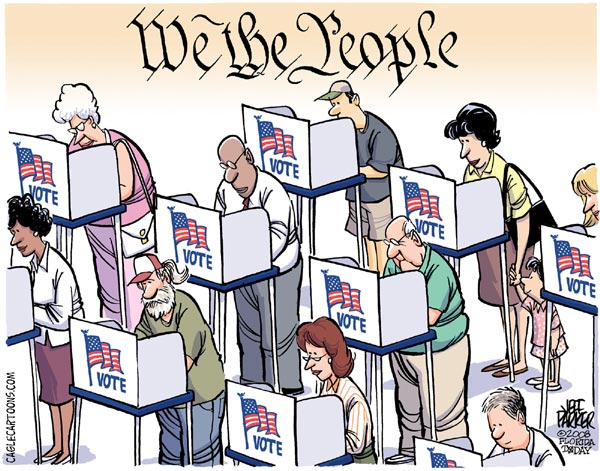
The election of a president from an opposing party is not a radical, nor sudden change of policy. Rather, this cyclic American ritual is as normal as the singing the Star Spangled Banner before a game. American voters have chosen our leaders in this manner since George Washington’s name first appeared on the ballot. 

To all of you who attacked our Capitol, it’s well past time for you to catch up. Put away those symbols of rebellion; of coiled snakes, hangmen gallows, and Viking horns. The Revolution ended two and a half centuries ago. The story of America is well underway.

In point of fact, those January 6th insurrectionists themselves attempted a radical change in American tradition. In pursuit of violence and chaos, these terrorists attempted a savage disruption of our deepest democratic traditions. Now that is unAmerican. In point of fact, we all have political representatives, and a right to a jury of our peers, and nary a soldier is found lounging on the couch.

Grow up and stand down.  

Gail Chumbley is the author of the two-part memoir “River of January” and “River of January: Figure Eight.”

Chumbley has also penned two plays, “Clay” exploring the life of Henry Clay, and “Wolf By The Ears,” an examination of American slavery and racism.

chumbleg.blog

A Scandalous Life

And I didn’t include GW Bush

A video blog. Forgive the quality, but the point is clear.

Gail Chumbley is the author of the two-part memoir “River of January,” and “River of January: Figure Eight.” Both titles available on Kindle. In addition Chumbley has complete two plays, “Clay,” on the life of Senator Henry Clay, and “Wolf By The Ears” exploring the beginnings of racism and slavery.

A Scandalous Life

Through open doors down a long hallway, reminiscent of The Shining, a cacophony of noisy televisions competed. Soap operas, news reports, and talkshows spilled from empty uncleaned guest rooms. It was the summer of 1974 that I began a brief stint as a hotel maid in Spokane, Washington. Through the course of that summer I began to notice each maid had different approaches to their routine. Some girls stripped the beds, or beelined for the bathroom, but all, to the last dust mop, first switched on the television. 

And the biggest news that summer, outside of Expo ‘74, was the Watergate hearings. Chairman Sam Ervin, Senator Howard Baker, Congressman Pete Rodino, and others became my new favorite TV personalities. Watergate Burglar, Alexander Butterfield spilled the beans on Nixon’s White House taping system, and John Dean spoke of a ‘cancer on the presidency.” For me these hearings were riveting as I placed fresh towels on the rack, and changed toilet paper rolls.

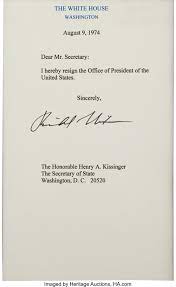
By the end of that summer, August 9, 1974 Richard Nixon resigned the presidency. 

Fast forward 13 years later, and I had just given birth to my second baby, a girl, and she and I cuddled as the television introduced a whole new set of “off the books” operatives. This time the scandal concerned the Reagan Administration’s convoluted plot known as the Iran-Contra Affair. American arms were illegally sold to Iran, our sworn enemy, to continue their war against Iraq. The proceeds from those sales were funneled to anti-Communists fighters battling in Nicaragua. Both efforts violated the Boland Amendment, passed by Congress, explicitly prohibiting American meddling in Central America.

Reagan operatives had hoped that selling Iranians weapons would soften them up because the White House needed a favor. Would the Ayatollah Khomeini help encourage Lebanon’s jihadists to release American hostages secreted around Beirut? The Reagan people gambled that trading illegal arms would secure Tehran’s help. 

While rocking my infant I learned a litany of new names: NSA chief, Robert McFarland, Marine, Oliver North, North’s secretary, Fawn Hall, and the recently deceased mastermind, CIA director, William Casey. My take, as I patted my girl’s little back, was that the Reagan White House had privatized foreign policy in defiance of Congress through renegade agents.

In 1988 Ronald Reagan, in a video deposition, admitted he had done just that, but due to his failing memory, couldn’t recall. 

That brings me to my golden years. I tuned in to the January 6th hearings, as a retired grandma. My husband and I watched and listened to the evidence regarding the violent attack on our nation’s capitol. To say this hearing was electric would be an understatement. Proud Boys, Oath Keepers, Capitol Police Officers, particularly Caroline Edwards, left me spell bound. Representative Liz Cheney owned the evening, making clear the person responsible for the attempted coup-the former guy. 

Donald Trump is the first sitting president in American History to be impeached twice.

So what element ties all three scandals together? For one, the course of a single life-from college kid, to motherhood, to grandmother. And I suppose one could conclude I’ve watched a helluva lot of television. 

But for me the message means something else. 

The modern Republican Party has undergone a long death spiral marked by greed, rot and decay. As Liz Cheney said, “there will come a day when Donald Trump is gone, but your dishonor will remain.”

For nearly 50 years, from 1974 to 2020 the Grand Old Party has cast off its once, principled moorings, slowly imploding before our eyes. As my generation grew from young students to senior citizens the party of Lincoln silently died. 

And like Jack Nicholson’s character in The Shining, there is no redemption, nor any future, only relief these mercenaries can do no more harm.

Gail Chumbley is the author of a two-part memoir, “River of January,” and “River of January: Figure Eight.” Chumbley had also completed to historic plays, “Clay,” regarding the life of Senator Henry Clay, and “Wolf By The Ears,” an examination of slavery and racism in America.

The Little Things

If you love . . .

Protecting a dim-witted, would-be dictator from legal consequences,

Suppressing a woman’s right to self-actuation and privacy,

Expediting white, unqualified patriarchs to the Supreme Court,

Rendering the US Senate inert,

Legislating so the wealthy have no tax burden,

The open targeting of Americans of color to brutality and murder,

The whole-sale destruction of the planet, and the rape of natural resources 

Abetting political misinformation and conspiracies through social media,

Targeting those of differing sexuality 

Pushing religion into American government,

Aligning apportionment and voter suppression to disenfranchise the poor, and people of color,

Withholding health care to the few with means,

The wholesale flood of firearms into civilian hands,

Cruelty dispensed upon desperate immigrants,

Coddling of white offenders over those of color,

Predatory treatment of consumers,

Blocking legislation to meet the dangers of the above list, and otherwise accomplishing nothing,

Vote for today’s Republican Party

Gail Chumbley, frustrated American History Educator.

The Long Haul

After the 1929 Market Crash the world fell into regional, nearly feudal isolation, and international trade quickly dried up. America, too, focused inward largely due to the nation’s earlier participation in the Great War in Europe.

Across the Pacific the Japanese Empire aimed to take advantage of global disinterest promoting its own national interests. Sold to other Asian countries as the “Co-prosperity Sphere,” hyper-nationalistic Japan intended to expand across the region, especially toward vulnerable, resource rich China.

Great Britain as well, struggled alone in a financial malaise, as did the French across the channel; both nations saddled with debt to American banks from the previous war. Germany, the defeated nation struggled with their own war debt demanded by the British and French.

The shroud of economic depression hung like a millstone over Europe and the rest of the world.

As the financial, and political fallout grew wildly unstable, regimes hunkered down and hoped for better times. However the climate instead became chaotic, bringing anti-democratic demagogues to power.

The Italians were first, producing a Fascist strongman, Benito Mussolini. El Duce, as he was known suppressed political diversity, harnessed economic efficiency, and soon, like the Japanese, pursued colonial inroads into Libya, and later the conquest of Ethiopia.

Germany soon flirted with its own style of fascism, with a meaner, violent credo. In a reaction to impossible debts, and national pride, Adolf Hitler, a feckless dreamer, stood on beer hall tables, and passionately spoke of national betrayal. Hitler revealed his malicious intentions by blaming Bolsheviks, Capitalists, and Jews for the hated Armistice of 1918, and war debt owed to the Allies.

Yet America, unlike the rest of the world, clung with all their might to the national system of Constitutional norms. At the same time Germany elected Hitler in 1932, the U.S. found their champion in Franklin Roosevelt. 

A popular Roosevelt Coalition steered the country through those hard years holding America together. FDR’s New Deal and Fireside Chats broadcasts kept at bay the fears of a nation. That’s not to say there weren’t kooks, to borrow Lindsay Graham’s phrase, but Americans faced the long haul together, believing better days had to be ahead.

The current President is no Franklin Roosevelt. And his autocratic tendencies, strongly echo those in the 1930’s.

In Project 2025 Trump aims to raise tariffs, shut down borders, all done to economically and politically isolate America. Using the same playbook of past despots specific groups are targeted as the problem. The guilty include immigrants, the LGBTQ community, liberals, educators, women, and the rule of law all in the crosshairs. All done to divert and distract while he lines his pockets.

And his tactics, so far have succeeded making half of the electorate real mean.

So, here is the question. Can America survive?

Can Americans remain bound to the framework of our 238 year old republic as it did in the Great Depression? Or will this nation forsake our financial, social, and political traditions and turn to petty retribution and scapegoating?

Will we, as a nation withdraw from the world and exchange our democracy for a strong man who insists he has all the answers?

The signs are clear. When this national crisis has passed will there be enough of us left who stood resolute for our democracy? That is the question of this historic moment. 

Gail Chumbley is a writer and history educator.

Why We Try

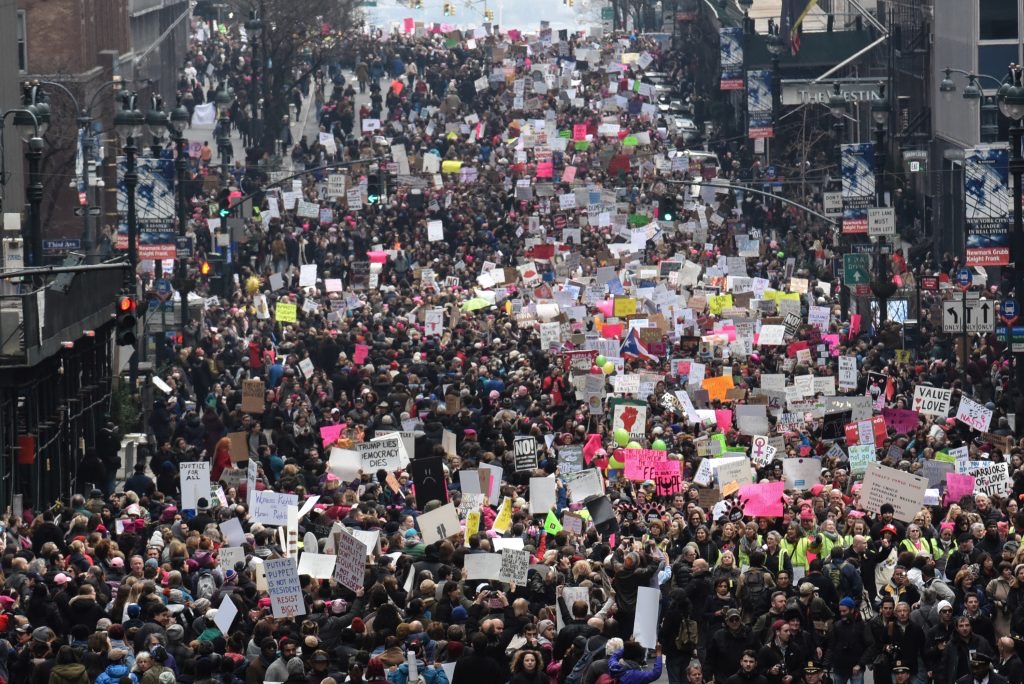
2017 Women’s March

When I first began this essay it ripened to nearly five hundred words to share one idea. Why I am a life-long Democrat. 

The original essay discussed the New Deal, the creation of the United Nations, the Marshall Plan, the GI Bill, and how strengthening Labor Unions evoked a sense of common purpose; how the economy boomed, and the middle class flourished.

Now all I want to impart is that Ronald Reagan was wrong. Big government is not the problem. Big government checked by regulations works remarkably well. 

I am a Democrat because with all its flaws, we stand equal in the eyes of Constitutional Law.* People made the Constitution, and we must preserve it. In general, States’ Rights is no more than a distraction perpetrated by selfish insiders who legislate their own interests. Residents are convinced through a wink and a nod, that the enemy (Big Government) must be defied, using catch phrases like “our values,” and “real conservative.”

In truth, the Federal Government can do more for all of us than any individual state, or any individual citizen can do for themselves. As I write, Idaho’s governor has asked for, and been granted federal funds for drought aid. Talk about biting the hand that feeds the State.

I am a Democrat because I’m inspired by the nobility of America’s past champions; the persistence of General George Washington, the compassion of Abraham Lincoln, the purpose of Alice Paul, and the articulate vision of Barack Obama. I am a Democrat because James Madison instructed us to create “A More Perfect Union.” Without that persistence, compassion, purpose, and vision America cannot continue as “the world’s last best hope,” as Lincoln also described us.

At bottom I am a Democrat because I know not one of us is perfect. We just keep trying. 

*Just heard the headline regarding the reversing of the Roe decision. Time to gather 4,600,00 of my best friends (2017 Women’s March) and organize.