You’ve Been Played

Strains between North and South had reached critical mass by November, 1860. Escalating tensions burst with the election of America’s first Republican President, Abraham Lincoln of Illinois. The South Carolina legislature reacted by voting their state out of the Union on December 20th, a mere month later. By Spring 1861, the Confederate States of America consolidated, and on April 9th cannons fired upon a Union fort in Charleston Harbor. So began a bloody fraternal war. 

A longstanding question is how in the world did Planters, a small slice of the southern population, convince a mass of their social inferiors to risk life and limb, defending their aristocracy? The answer is rather simple, and lamentable. Folks from the lower rungs lived by the social rules fixed by the wealthy elite. The Planter Class established the rituals of polite society, and every white man below the Mason-Dixon hoped to someday to join their ranks (acquiring land and slaves).

The lower classes defended a minority they ached to join.

A small middle class of land holding farmers, and city professionals, also labored to reach the same social summit. In other words, acquiring the trappings of wealth, punched one’s ticket to ride.

Beneath this merchant-landholding tier massed poor whites. These desperate souls were left to precariously scratch out some kind existence as itinerant tenants. Contempt for this hardscrabble class is still evident through pejoratives that are still in use. Belittling terms like crackers, trash, hillbillies, and rednecks linger on in our lexicon.    

The Old South, in general, also distrusted the outside world. Foreigners, Yankees, Catholics, Jews, and immigrants, meaning anyone who might challenge rigorous, aristocratic formalities. The consequences for this delicate arrangement were profound. As the North industrialized, innovated, and modernized, Southern society languished, governed by reactionaries, more interested in public manners and bloodlines.

Outraged and insulted by Yankee ways, the wealthy roused the lower classes to defend Southern traditions, while in reality, barring any real opportunity of upward mobility.

This dynamic remains modern American politics. The GOP, in our time, is requiring the same fidelity. Party leadership honestly does not wish to serve you. All candidates want is your money and your vote to protect their interests, (especially the guy at the top). These characters are happy to rile voters through exhibitionism, and scapegoating whatever grievance you wish, especially piling it on minorities, the poor and the dispossessed.

But remember this, the traffic is one way only, and you are serve them, not the other way around. Keep delivering cash and power to the top, and nothing changes.

In short, you’ve been played by your chosen betters.

Gail Chumbley is the author of the two-part memoir, “River of January,” and “River of January: Figure Eight.” Both are available on Kindle.

gailchumbley@gmail.com
Humiliated, Angry, and Hurt

After losing reelection, he left Washington early. Humiliated, angry, and hurt, John Adams boarded a morning coach leaving the Capitol.

The prevailing issue in the campaign of 1800 concerned France, and that nation’s ongoing, and bloody revolution. Moreover, the French had declared war on England, and both belligerents  meddled in American domestic politics to turn public opinion.

As President, Federalist John Adams, had skillfully steered America clear of the European conflict, avoiding the danger of being ensnared between the two superpowers. Proud of his diplomatic accomplishments, Adams still brooded, unhappy with his lack of support from the country. His detractors belittled him, disparaging Adams as a pale substitute to the legendary George Washington.

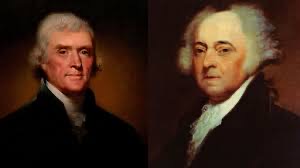
His political challenger in 1800? The clever and calculating Thomas Jefferson. 

An outspoken critic of the Adams Administration, Jefferson had been hurling plenty of invective toward the sitting President. What had once been a warm friendship between the two men quickly soured. Petulant and  thin-skinned, Adams had lashed out by pushing laws that restricted the free press and cracked down on immigration. Outraged by these policies, Jefferson, and his growing cadre of supporters, challenged the clear violations of the Constitution. 

In only the nation’s third presidential election the moment appeared volatile and uncertain. On one side was the defensive and testy incumbent, and on the other, a political foe intent on replacing him.  

Adding to the turbulence, a political wildcard entered the fray; New Yorker, Aaron Burr.

Burr, like Jefferson, had opposed unpopular and heavy handed Federalist policies, and Jefferson knew the ticket needed an electoral-rich northern state for strength. As party leader, Jefferson assumed Burr understood his lesser place, and only when the electors met did he learned just how wrong he had been. 

In the final tally, poor John Adams not only lost the election, but came in a distant third behind both challengers. Thomas Jefferson garnered 73 Electoral votes, followed by Burr with 73 of his own. Adams came in last with 65. (That tie is another story.)

Humiliated, Adams left Washington DC in a huff, but made no move to challenge the outcome. And though the former President did not greet the President-Elect, and pointedly skipped the inauguration, John Adams did not put his interests above the nation’s. 

He conceded in silence because he valued our country over his own interests. 

There is no precedent for false assertions from the clear loser in 2020.

Gail Chumbley is the author of the two-part memoir, “River of January,” and “River of January: Figure Eight.” Both titles available on Kindle, or at http://www.river-of-january.com.

gailchumbley@gmail.com

Heartfelt Objections

We couldn’t find a seat on the Washington Metro. In truth, we couldn’t see the Metro station, just a mass of humanity.

This gathering challenged the notion of enormous. The moment was historic.

Dumb luck came to our aid. A city bus hissed to a stop at the curb, and my friend and I hopped aboard, joined by a couple hundred of our new best friends. The atmosphere crackled with joy, solidarity and diesel fumes. I nearly busted out with “99 Bottles of Beer on the Wall.”

The driver seemed to catch our enthusiasm and peppered us with questions about the Women’s March. What time, where, how long would it last? She smiled realizing her shift would end before the speakers began, and I still wonder if she made it.

Nearly five hundred thousand of us convened on the National Mall, and expressed our heart-felt objections concerning the newly elected president. We marched as one.

By the way, no one violently attacked the halls of government. Though, if memory serves, I did flip off the Trump Hotel.

In October, 1969, 250,000 opponents of the Vietnam War descended upon Washington DC. In an event called Moratorium Day no one violently attacked the halls of government.

In the swelter of a 1963 Washington summer, Dr King convened the “Poor People’s” March on Washington. 250,000 Americans petitioned their government for a voting rights bill. No one even considered attacking the halls of government.

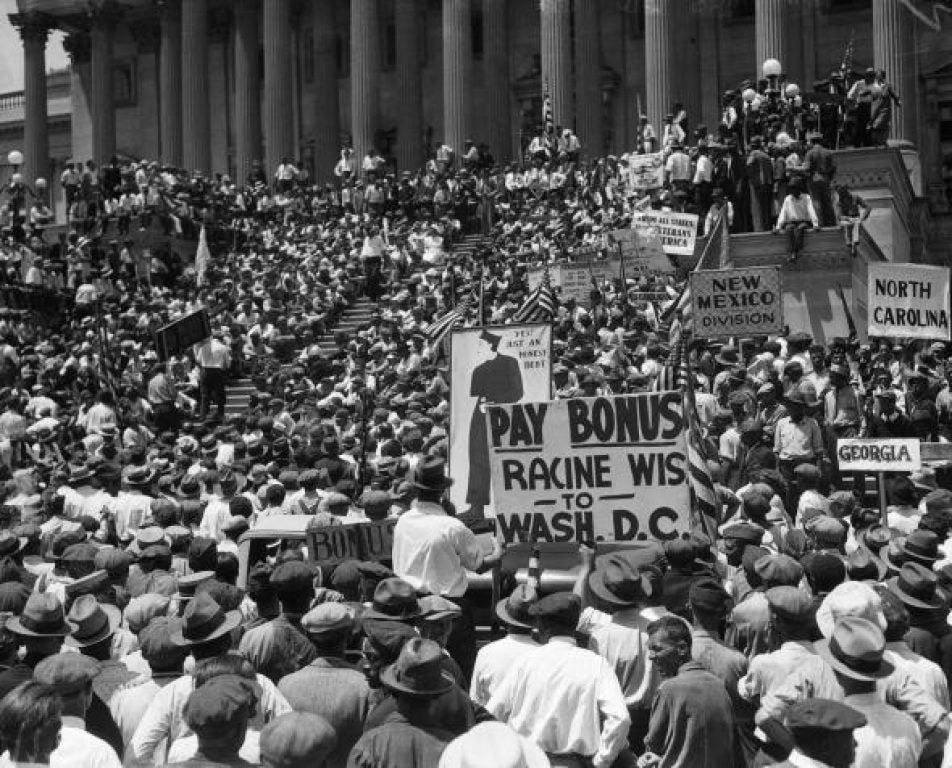
In the Spring and Summer of 1932 during the depth of the Great Depression, somewhere around 20,000 desperate men, some with their families in tow, marched on Washington DC as part of the Depression-era Bonus Army. For their trouble the marchers were attacked by Douglas McArthur, and an army detachment, who instead, burned out the shanties of the desperate. Again, no one attacked the halls of government.

On March 3, 1913, the day before the inauguration of Woodrow Wilson, nearly 10,000 women paraded down Pennsylvania Avenue promoting women’s suffrage. Though they were attacked by angry men along the route, not one woman attacked the halls of government.

Nearly 10,000 American’s joined Jacob Coxey’s Army in May of 1894. An extended economic depression caused mass unemployment, and the “Army,” demanded a public works bill to create jobs. Though the marchers reached the Capitol, and Coxey, himself leaped up the stairs to read his public works bill, the police opened up some heads, and the crowd dissolved. No one entered the Capitol.

Public protest is as American as baseball. The difference lies in our use of free speech. On January 6, 2021 a mindless, misguided, and dangerous mob hijacked the right to assemble, instead escalating into a violent attack on our center of government. There is no middle ground; this was an attempted coup to seize power.

We were correct in 2017, as were those in 1894, 1932, 1963, and 1968. Marchers were seeking “the blessings of liberty” within the rule of law. None of us ignored nor defiled the spirit of protest.

And that sense of heart-felt objection, to that president proved accurate.

Gail Chumbley is the author of the two-part memoir, “River of January,” and “River of January: Figure Eight.” Both titles available on Kindle.

gailchumbley@gmail.com
Breaking Point

The American system of government requires reasonable, motivated legislators. And no, there is nothing quick about lawmaking. That a Congressman or Senator will get all they want is another no. The legislative process requires willingness, study, and compromise. It is little wonder citizens become frustrated with the pace, but that is American lawmaking. And despite the drawbacks, our frame of government is the best that exists in the world. Period.

When factions choose violence, know this, insurrection is no solution. Never has been. Acts of brutality, in fact, mangle the fabric of our society. The Far Right, along with their gutless congressional enablers will, sooner or later, reap the consequences of their lawless behavior.

As Tom Petty aptly titled the mindset, these are Rebels Without a Clue.

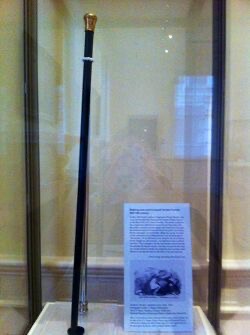
South Carolina Congressman Preston Brooks, in 1856, felt much the same. This impetuous “gentleman” possessed a velcro sensibility to perceived slights, and could lash out unexpectedly. Raised in the Southern canon of the code duello, Brooks believed physical retribution a mandatory response in defense of reputation and honor. Years earlier young Brooks had traveled to Washington DC in order to challenged another he believed had insulted his father, Whitfield Brooks. For this impulsive action young Preston hobbled on a cane, limping for the rest of his short life.

Hate was in the very air of Capitol Hill during the 1856 session of Congress. The “irrepressible conflict,” of slavery, weighed as heavily as the damasked draperies in the US Capitol.

The question at that moment concerned the extension of slavery into expanding territories. One law after another had either permitted, or limited the peculiar institution onto the western prairies. This was also when Brooks arrived to take his new seat in the House of Representatives.

The admission of Kansas cut from Nebraska Territory drove the headlines of that moment. Would the Nebraska Territory split into two new states, one free, and one slave? The decision weighed heavily, challenging the delicate equilibrium in the Senate.

Into this tinderbox stepped Senator Charles Sumner of Massachusetts, and his powerful speech that gripped not only Congress but the whole, volatile nation. Titled “The Crime Against Kansas,” this fiery abolitionist and orator cursed the institution of slavery belittling southern defenders as enamored with the “harlot slavery.”

That oratory lit the spark igniting Congressman Preston Brooks.

Following Senator Sumner’s two-day denunciation, the chamber quieted, and members wandered in and out, chatting or working at their fixed desks. Charles Sumner himself, was seated on the Senate floor, focusing on the papers before him. That was the moment Representative Brooks sidled up behind the preoccupied lawmaker.

Brooks made some remarks at the Senator’s desk, then lifted his cane and came down hard on Sumner’s head. Over and over the enraged South Carolinian beat his quarry, Sumner struggled, trapped halfway between his chair and bolted-down desk. Finally the cane cracked, and Brooks strolled out of the Senate Chamber.

Sumner lay groaning on the Senate floor, a bloody mess.

In the days following, Preston Brooks was both reviled and feted by enemies and compatriots. As a point of order, the young Congressman resigned his seat and left for home.

Gifts of canes were sent to this Southern hero who had taught those Yankees the physical price of loose talk.

This episode accomplished nothing of substance. A mini Civil War exploded on the Kansas Prairie, and Brooks died from some ailment. And Charles Sumner? He survived the assault, later to lead a Jehovah-like revenge on the Reconstructed South.

Why does this matter? How does this concern today? Because America is a nation of laws, the same slow, thoughtful process designed by the Framers. When agitators choose the path of violence, the recoil whipsaws uncontrollably. The Sumner Brooks episode provided a prelude to Civil War. Lasting stability rests on methodical lawmaking through thought, analysis, and compromise.

Take it from me, the past does portend the future.

Gail Chumbley is the author of the two-part memoir, River of January and River of January: Figure Eight. Both titles are available on Kindle. Chumbley is also the author of two plays, “Clay” on the life of Henry Clay, and “Wolf By The Ears,” exploring the beginnings of American racism and slavery.

gailchumbley@gmail.com

The Crime Against America

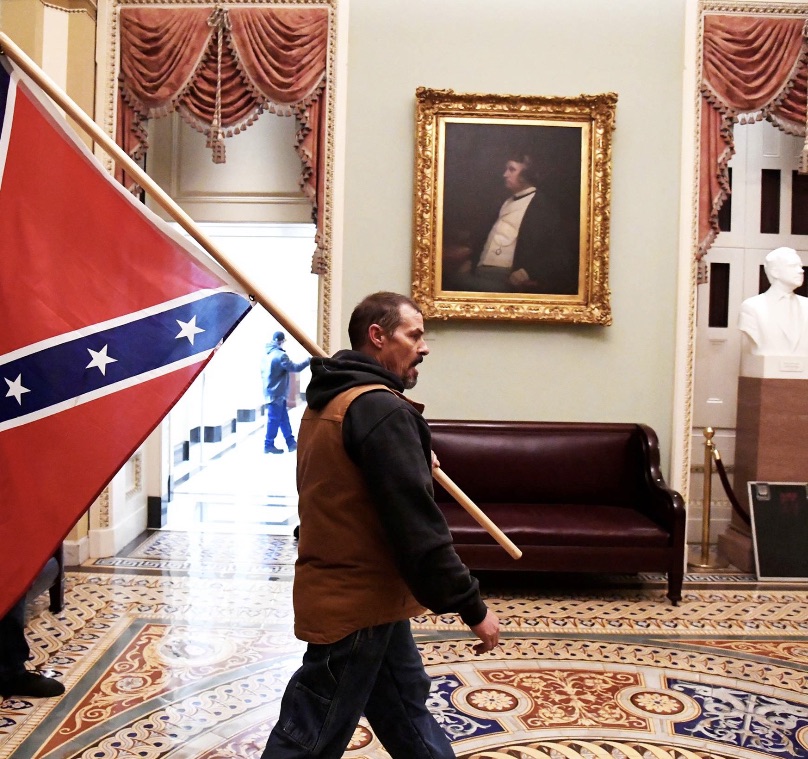
Photo, NBC News.

The man in the portrait is mid-19th Century Senator Charles Sumner of Massachusetts.

A fierce opponent of slavey, Sumner delivered a scathing speech titled, “The Crime Against Kansas,” denouncing the proposed addition of a new slave state from Nebraska Territory. After his two-day denunciation of the “peculiar institution” the Senator was beaten in the Senate chamber, nearly to death, by a defender of slavery.

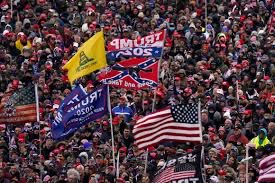
This symbol of slavery, waved by a domestic terrorist is especially repulsive.

And this Judas has no idea.

Gail Chumbley is the author of the two-part memoir, “River of January,” and “River of January: Figure Eight.” Both titles available at http://www.river-of-january.com, or on Kindle. Chumbley has penned three plays, Clay, Wolf By the Ears, and Peer Review. These works examine critical moments in American History.

gailchumbley@gmail.com

Marking Time

2020.

Are the awful events of these last twelve months a once-off, bad patch of misfortune? Or is there a deeper explanation for the emergence of Trump, Covid, economic disaster, and civil unrest?

American History is steeped in a collection of pivotal moments, episodes that molded the nation’s continuing path. Can the events of 1776 stand alone as a turning point, or of 1865? 

A long metaphoric chain links one scenario to the next, marked by momentary decisions, government policies, or beliefs, that surface at one point in time, and voila, America’s story fleshes out to the future.

Add chance circumstances to the narrative and predictability flies out the window. 

Does 2020 stand alone as a singular event, or an inevitable outcome seeded somewhere in the past? Surely the march of history can be much like a chicken-egg proposition.

Mention 1776 and thoughts gravitate to the Continental Congress, the Declaration of Independence, and the emergence of General George Washington. But that struggle for freedom actually began at the end of the French and Indian War. 

As for 1865, when the guns silenced at Appomattox Courthouse, Robert E Lee’s surrender affirmed America as a nation-state. But thirty years earlier, President Andrew Jackson’s administration had sparked the eventual war over the issue of slavery. Thinly disguised as the doctrine of states’ rights, the intractable argument of slavery festered. The “Peculiar Institution” is, was, and always be the cause of that bloodbath. In point of fact the fury of one man, John C Calhoun, South Carolina Senator, and former vice president, lit the fuse of war thirty years before Fort Sumpter.

As to the folly of Trumpism, arguably the roots are deeply burrowed in America’s collective past. Author, and historian Bruce Catton, wrote about a “rowdyism” embedded in the American psyche. Though Catton used that term in the context of the Civil War, his sentiment still resonates in the 21st Century, i.e., Proud Boys, and the like. 

Closer to today, the Cold War seems to have honed much of the Far Right’s paranoia. The John Birch Society, for example, organized in the late 1950’s escalating anti-Communist agitation. Senator Joe McCarthy rode to fame on that same pall of fear, (with Roy Cohen at his elbow) only to fail when he went too far.

But the presidential election of 1964 seems to mark the most distinct shift toward the defiant opposition that fuels Trump-land.

Vietnam, in 1964 had not blown up yet. JFK had been murdered the previous fall, and his Vice President, turned successor, Lyndon Johnson was the choice of a grieving Democratic Party. The GOP fielded four major candidates in the primaries: three moderates and the ultra conservative, Barry Goldwater of Arizona. Senator Goldwater gained the nomination that summer with help from two men, conservative writer Richard Viguerie and actor Ronald Reagan.

Viguerie broke political ground through his use of direct mailing, and target advertising (what today is right wing news outlets). Reagan, once a New Deal Democrat, crossed the political divide and denounced big government in “The Speech,” delivered on behalf of Senator Goldwater. These two men believed Conservatism, and Laissez Faire Capitalism had been wrongly cast aside for liberal (lower d) democratic causes. 

Their efforts struck a cord with legions of white Americans who felt the same resentment. The Liberal Media and Big Government from the Roosevelt years were Socialistic and anti-capitalistic. No urban problem, or racial strife or poverty appeared in their culdesacs or country clubs. And taxes to support Federal programs squandered and wasted personal wealth.

So many other issues shaped the modern New Right. Communism, the Cold War, Civil Rights, Vietnam, and progressive politics alienated the wealthy class. 

But here’s the rub. Ultra conservative ideology is unworkable, an ideal that awards only a small, exclusive few, (today’s 1%). So 2020, and 2016 both have roots running deep in the core of the American experience. 

2020 isn’t about this moment, not really.  

Gail Chumbley is the author of “River of January,” and “River of January: Figure Eight,” a two-part memoir available at http://www.river-of-january.com and on Kindle. Also the stage plays, “Clay,” and “Wolf By The Ears” (the second in progress.)

gailchumbley@gmail.com

Steal This Letter #2

Let me be brief. What the GOP is attempting with this frivolous lawsuit concerning the 2020 election is dangerous and cynical. Party fidelity is certainly an American hallmark, but not at the cost of our political system. This dangerous precedent, pursued in a moment of expediency chips away at the foundation of our traditions.

The Constitution quite clearly established the rules on elections, and has endured since 1788. This moment of danger is more crucial to our nation than any excuse for undermining the transfer of power. 

Clearly the steps taken by the Republican Party reveals an organization with nothing to offer.  Ruthless partisanship is as much an epidemic as any virus. 

Each state has verified no irregularities in voting exist, choosing instead to act on one fallible man’s loose talk. The Framers did not dedicate their lives and fortunes to establish a government that dissolves on the whims of any person or moment. The United States relies on people of good will to respectfully honor election results. 

As reluctant as I feel about using this analogy, Adolf Hitler was elected chancellor in 1933 in a free election, only to turn around and outlaw free elections.

Stop this now. Your party will lay in ruins if you forget who we are as a people. The process in presidential elections could not be clearer than stated in Article 1. 

Gail Chumbley is the author of the two-part memoir, “River of January,” and “River of January: Figure Eight,” and the stage play, “Clay.”

Steal This Letter

If you feel like contacting your Republican Senators copy and paste this one. Tweak it for your own state and issues.

Senator,

Donald Trump’s stubborn refusal to face the reality of his election loss is as dangerous an assault on our nation as 911, and much more damaging than Pearl Harbor.

This election fiasco flies in the face of American traditions. General Washington sacrificed much of his personal happiness to found our nation. As America’s first president, he placed our republic above any personal comfort, and Washington’s legacy bears that out. When his officers suggested he take the reins of power, the general declined and went home to Mt Vernon.

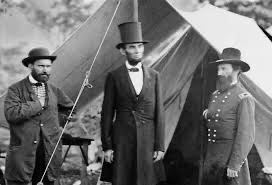
In 1860 Abraham Lincoln preserved what Washington had begun, our Union. And though it cost him his life, the United States was Lincoln’s primary concern.

Both men, a founding father, and the savior of the Union, counted their interests as secondary, because America mattered more than any one man. Now, through a series of events, that responsibility has fallen to you. The GOP majority in the Senate can end this assault on our heritage, and you can make that happen. 

Your forebears would be proud.

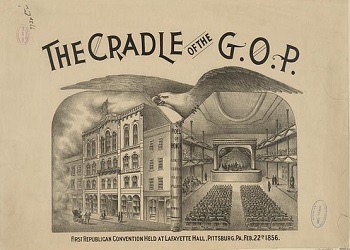
The Republican Party came into being on a noble, decent premise. It is the Party of Lincoln, not a lout from Queens.

*Please don’t patronize me with excuses.

Gail Chumbley is the author of the two-part memoir, “River of January,” and “River of January: Figure Eight.

gailchumbley@gmail.com

The Unforgivable Curse

Many of us have read JK Rowling’s Harry Potter books and/or watched the films. The author created a wondrous world of spells, incantations, and even included law and order via three unforgivable curses. 

There are guardrails in this tale, and a bit of a messiah storyline. Harry willingly sacrifices himself, as had his parents and many others before. However, the “Boy Who Lived,” does, and returns to fight and vanquish wickedness. 

Love, too, permeates the storyline, and the righteous power of good over evil. 

But that’s not my take.

As a career History educator I came to a different conclusion; Harry Potter told me that failing to understand our shared past can be lethal. And that was the metaphor I preached to my History students.

Harry rises to the threat and defends all that is good and valuable in his world. If he didn’t, Harry could have been killed and his world destroyed.

It’s so apropos at this moment in our history to grasp our collective story as Americans.

Honest differences within the confines of our beliefs is one thing. Obliterating the tenants of democracy is quite another. 

Americans cannot surrender our country to this would-be dictator, the things that have cost our people so dearly. Freezing soldiers at Valley Forge did not languish to enable DJT to trademark his brand to hotels, steaks or a failed university. The fallen at Gettysburg, and the suffering in Battle of the Bulge was not to pave the way for DJT to get us all killed from a ravaging plague. The girls who perished in the Triangle Shirtwaist Fire, the miners murdered in the Ludlow Massacre, or humiliated Civil Rights workers beaten at the Woolworth’s lunch counter was not for Donald Trump to validate racism and sexism and undo labor laws. 

He doesn’t know our nation’s history, and as George Santayana warned us, we are condemned to sacrifice all over again. 

Vote. 

Gail Chumbley is the author of the two-part memoir, “River of January,” and “River of January: Figure Eight.

gailchumbley@gmail.com