A Bright Side

Donald Trump, without a doubt has answered the centuries old question of the worst president in American history. His standing as the biggest moron lends Harding, Buchanan, Pierce, and other lackluster presidents a step up from the cellar. 

Is there a bright side to the bedlam unleashed by 45’s insanity? I believe so. Americans have witnessed how not to preside over our democracy in real time. Now that’s a powerful civics lesson. 

Once misunderstood, most American’s were reminded how the Electoral College functions—a big deal demonstrating how a candidate can win the Electoral College, but not the popular vote. From irregularities identified in the 2016 race, shocked citizens across the country wonder if this election procedure has a purpose in the 21st Century. 

The legal tradition of checks and balances took a rough bruising with Congressmen and Senators scurrying to the Oval Office to kiss the ring of their messiah. Two clearly illegal actions by the President; pressing Volodymyr Zelensky of Ukraine to open an inquiry on Hunter Biden, and Trump would offer an invitation to Washington.The second came after the January 6th insurrection using violence to disrupt the ceremonial certification of Electoral College. The House impeached both times, and the Senate refused to convict. The moral of that story? The Executive Branch went rogue and the upper chamber of the Legislative Branch failed in their duty. However, both branches somehow remained intact and horrified voters learned what they didn’t want. 

That elections and voting truly matter may be the most profound lesson of the Trump years. The right to vote is power, and denying citizens of that power became the GOP’s endgame. Even now, the far right longs to deprive many of us, especially minorities from exercising that power. The lawsuits are still flying to undermine our most sacred right under the law.

Another teachable moment touched on the Supreme Court. The 2020 death of Ruth Bader Ginsburg, and the retirement of Anthony Kennedy in 2018 shed light on manipulating the Judiciary. Senate Majority Leader, Mitch McConnell lobbed the first volley through the customary practice of filling Supreme Court vacancies. Before 2016 the sitting president had the privilege to put forth judicial nominees. That had been a long tradition. But the sitting President happened to be Barack Obama. So of course McConnell blew that up. Obama’s choice for the court was Merrick Garland, and McConnell would not hear of it.

Following the 2016 election that tradition resumed. Trump put forth Amy Coney Barrett, and later Brett Kavanaugh. Both lied in hearings to the Senate Judiciary Committee, Barrett testified she would allow Roe to remain, and Kavanaugh was a reputed date raper. The clause allowing lifetime terms for judges added gravity to Trump and McConnell’s shenanigans. 

Perhaps the Trump fiasco holds a silver lining. Americans have become more aware of the workings of our democracy, what functions under the hood, so to speak. Perhaps democracy is indeed fragile, but our near collapse into tyranny has forced us all to wake up and pay attention.

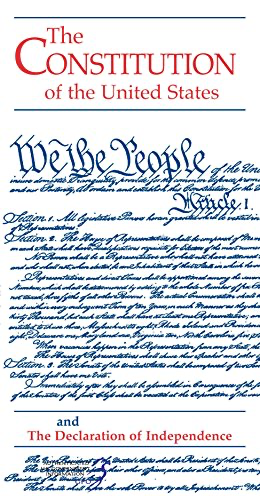
PS contact your Representative in Congress. Request a hand pamphlet of the Constitution like the one above. They have them in their DC office or their home office. We’ll show ’em.

Gail Chumbley is the author of the two-part memoir River of January, and River of January: Figure Eight. Chumbley has written two plays, Clay about 19th Century Statesman Henry Clay, and Wolf By The Ears exploring the genesis of racism and slavery in America.


The only thing new in the world is the history you don’t know

Harry Truman
Peer Review #1

Marines manned numerous doorways along the wide hallway, as clusters of tourists wandered through colorful rooms. Upstairs the President listened to the public commotion with satisfaction, not for the house, not for the job, which, in truth, had become tiresome, but for the knowledge he could drop down and set all their bourgeois hearts aflutter. 

After a moment, he made his decision, slipping down an interior stair case, stepping into the Blue Room.

As his hands automatically fluffed his hair, the President sidled up beside a class of wiggly school children snapping cell phone pictures.

“And where are you from?,” the president teased with pleasure, anticipating an excited response. He half closed his eyes, and paused, waiting for the gratifying answer.

But he heard nothing.

Bemused, the President opened one eye, then the other. The chatty children paid him no mind, in fact were moving away, following their guide into the hallway.

“Wait,” he found himself calling. “It’s me, your President. I’m here.”

He repeated, “The President of the United States.”

But the children didn’t hear. He remained alone in the Blue Room, his hair acceptably coiffed.

No further tourists entered, though dozens drifted past the doorway. He didn’t understand and he thought very hard, seeking a rational explanation.

It was at that moment that he heard a voice, quite close, and quite annoyed. 

“Am I to understand you are a New Yorker?” 

The President wheeled around toward the sound. Before him, no more than an arm’s length away stood a mustachioed gentleman, wearing pinz nez spectacles, sporting a shiny top hat. The man’s eyes blazed behind the thick round lenses, and the astonished President detected a trickle of cold sweat trace down the back of his thick neck.

“I say, are you, or are you not, a New Yorker?” The stern man spoke in a nasally, patrician voice.

“Ahh. How did you get in here,” the President stammered. “Where is my secret service protection?”

“Supercilious pup,” the man in the top hat snapped. “They tell me that YOU are from New York, and are president! A common side show huckster, President.”

The President, though alarmed, replied reflexively, “I’m in real estate. I . . .made my fortune in New York real estate.” Only the muffled din of passing tourists kept the President from panic.

“Real Estate!” The man in spectacles scornfully shouted. “I’d say you are just another scoundrel from the wealthy criminal class. In New York, swindlers like you are a dime a dozen. I made a career of exposing rascals like you.” 

The man, attired in a three-piece suit, a watch fob draping his ample waist, bore a deep scowl. “And you found your way into this office of trust. Intolerable.”

Though bewildered, the President, unaccustomed to such personal insults, felt his pique rising. “I was elected President by the largest margin in American Hist . . .”

“Poppycock,” the specter interrupted. “It is my understanding the decision rested upon a mere tilt in the Electoral system, and that outsiders interfered to make certain of your victory.” 

The strange visitor moved closer. “I’d say that you are a compromised pawn of foreign meddlers, and give not one damn for the American people.”

At this point the President had heard enough, and attempted to move his legs. He wanted very much to escape the Blue Room, but his feet remained rooted. 

“I have important things to do, you need to go,” the President’s voice trembled, trying to sound more confident than he felt.

The apparition narrowed his intense eyes, and took another step toward the unnerved President. 

“I claim more authority to this revered House and Office than your mercenary greed could ever comprehend. You belong with Tweed, Plunkitt, Fisk, Conkling, and the rest of New York’s good-for-nothings. Dishonor has followed you to the Presidency, what, with your womanizing, graft, and unsavory business connections.” The fierce apparition fixed an intense, menacing gaze. “You do not belong here, nor your parade of lackeys and opportunists.

The buzz of foot traffic grew louder, and when the President again glanced toward his unwelcome visitor, he found him gone, the Blue Room empty.

Gail Chumbley is the author of the two-volume memoir, “River of January” and “River of January: Figure Eight,” both available on Kindle.

Hard copies are available at http://www.river-of-january.com


They Were Wrong

“Slave owners and white racists were afraid that the world they had always known was slipping away from them. Fear was a great motivator—fear of change, fear of losing power, fear being that they were wrong. The roots of white anxiety over threats to enslavement and to legalize white supremacy ran deep.”

John Meacham, And There was Light. Random House, 2022, page 55.

Reading this passage last night stunned me. A myriad of thoughts rushed at once, promptly crystallizing into one central truth; racial dynamics in America have not changed. Not. One. Bit.

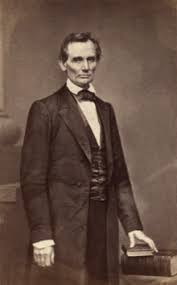
Meacham’s book, a biography of Lincoln, focuses on the shaping events that made Lincoln arguably America’s greatest President. However, those same circumstances left the Southern slave power angry, and lethally dangerous. This metastasizing rancor ultimately exploded into Civil War, and to Lincoln’s 1865 murder.

The Missouri Compromise triggered the first alarm below the Mason-Dixon Line. That slavery could be limited through any federal legislative act left slavers touchy and suspicious. Sensitive to any criticism Southern owners  (as Mr. Meacham pointed out), viewed any outside opposition to their standing as a dishonorable insult.

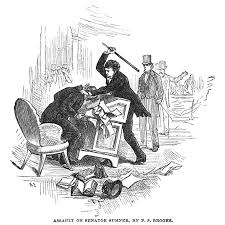
Congressmen and Senators frequently squared off years before soldiers manned battle lines. A Massachusetts Senator suffered a severe beating on the Senate floor for an anti-slavery address. So volatile became the rhetoric that the House chamber finally adopted a “gag rule” prohibiting any mention of slavery in any deliberations.

As Northern abolitionists grew more strident, Southerners grew more militant. A flash of arms became only a matter of time.

Any abolitionists tracts, or books, such as Uncle Tom’s Cabin quickly landed in the trash bin, tossed out by local Southern officials.

The politics of race entered houses of worship with church leaders twisting the Bible inside out to oppose or justify slavery. Today the Southern Methodist and Southern Baptists churches are evidence of the war before the war.

After the guns silenced, into the Reconstruction era the newly emancipated found protection only through Yankee bayonets. Outraged and unrepentant Southern whites waged guerrilla warfare with violence and terror. The Ku Klux Klan, the Knights of the White Camelia, and the White League galloped through the night spreading fear and intimidation to any black-man who dared claim the blessings of liberty. 

Contrasting the 21st Century to the 19th provides strikingly similar dynamics.

In 2008 Barack Obama became 44th President of the United States, and white power interests again lost their minds.

Though at first it appeared that America had turned a positive corner in race relations, Senator Mitch McConnell quickly reacted decreeing the GOP would not work with the new president. Soon after the Congressional Republicans sunsetted a clause in the 1965 Voting Rights Act. Signed into law by Lyndon Johnson, the act protected black voters from discrimination at the polls. McConnell’s handy work placed the onus on the voter to prove they were illegally denied. (Much like the old poll tax and literacy tests days.)

Once again white supremacist perceive their alpha-position slipping away, and they, too, are suspicious and lethally dangerous. The hate group names have changed, but not the mission. Proud Boys, Oath Keepers, neo-Nazi’s, MAGA, and Christian Nationalists gallop now through the internet on the dark web, surfacing to attack as was done on January 6th, 2021.

The signs are all there, fear of a changing America, fear of being wrong, and fearful of losing control.

Those who witnessed the dissolution of the Union believed their blood-soaked sacrifice had settled for all time the issue of race in America. But that is clearly false.

But then is now. Now is then. Eras are intricately and forever intertwined. This nation has remembered nothing and again defaulted to the same old norms of hate and boastful ignorance.

And though those same feelings run deep, and they are still wrong.

The only thing new in the world is the history you don’t know. Harry Truman

Chumbley is the author of the two-part memoir, River of January, and River of January: Figure Eight. She has penned two stage plays, “Clay,” exploring the life of Henry Clay, “Wolf By the Ears,” a study of racism in America, and “Peer Review,” where 47 is confronted by four past presidents.

Fighting Bees

Young Abraham Lincoln came of age, politically speaking, during the administration of Andrew Jackson. And the rough, aspiring frontier politician did not approve of the Democratic Party and their blind, cult-like dedication to “Old Hickory.” Speaking first in New Salem, Illinois, then in Springfield, Lincoln held forth on the subject of Jackson’s arbitrary and autocratic style compared to his man, Senator Henry Clay of Kentucky.

Young Mr. Lincoln viewed Henry Clay as a true statesman. He admired Senator Clay for his rational, stable economic plans to nurture a growing America bursting with potential.

Central to Clay’s program was a bank, a central depository to finance new infrastructure projects like roads, canals, and railroads. Senator Clay championed the Federal Government as the best instrument to plan and carry out public works, improving commercial activity across the young nation.

To Lincoln scratching out a life in a muddy, stump-ridden western wilderness, Clay’s American System of improvements was welcome. Clay’s platform would bring order, jobs, prosperity, and hope to Lincoln’s own rough-hewn region.

Young Lincoln also shared Clay’s conviction that slavery did not belong in new western territories. All Lincoln wanted was a fair chance for all Americans, and that slavery impeded human talent, and he believed, like Clay, that slavery also devalued free labor. Free market capitalism and slavery could not co-exist.

To Lincoln, President Jackson’s mercurial style of leadership did not serve America’s future either. Jackson not only vetoed many improvement bills, arguing one state benefiting from federal funds was unfair to others, he in one instance vetoed a road bill because the project lay entirely in Kentucky, Henry Clay’s home state.

Excessive emotional discord in politics caused more problems than it remedied, and impeded national growth. Nation building wasn’t a sectional competition, a personal challenge, nor a game to pit political egos.

At the time of Jackson a religious revival burned hot across the country. Known today as the Second Great Awakening this movement, foaming over with emotion, had drenched politics as well, with candidates often taking on an evangelical, absolute tones.

Lincoln’s once joked he didn’t much like these stump orators unless they looked like they were “fighting bees.” To Lincoln, such emotional public displays had no value in advancing America.

So what did Lincoln believe? In the founders ideals of the United States of America. Embracing presidents as religious, messianic manifestations had no purpose, and produced only the tainted fruit of extremism.

Lincoln was, above all else, a moderate, logical, and measured man. His inspiration, his convictions, centered on a secular faith in the ideals of America.

Mr. Lincoln like to think of the Declaration of Independence as a golden apple, (equality and rights) set in the silver frame of the Constitution (the law). In other words certain inalienable rights protected by We the People.

Former President Obama exemplified Lincoln’s America in so many ways; relying on his cabinet, advisors, or his own formidable intellect to govern. And Lincoln’s Jackson nightmare repeated when a dumber version of Old Hickory proclaimed America is a terrible place.

Today the United States’ perpetual election cycle keeps emotions raw, but accomplishes little else. Mr. Lincoln would take a dim view of today’s constant political turmoil, arguing that we need to keep our wits about us and vote with our heads.

More infrastructure needs attention as well as national security, civil rights, and climate change. Instead a thin-skinned ego maniac welcomes billionaires to pilfer and taint good government. And the computer age has presented a complicated network neither Lincoln nor Clay could have imagined. We rely on those cooler heads to prevail, making policy, and conducting the people’s business, or we end up paying homage to wannabe dictator who is as arbitrary as he is vacuous.

Today, at this moment, in a country full of pointless Jacksons, be a thoughtful Lincoln. There is no need to fight bees all of the time, over and over, when the real work of America needs to be done.

Gail Chumbley is the author of “River of January,” and “River of January: Figure Eight.” Chumbley also penned two stage plays, “Clay,” examining the life of Senator Henry Clay, and “Wolf By The Ears,” a study of racism and slavery in America. Currently Chumbley is working on “Peer Review.” This piece is a cross of Dickens A Christmas Carol converges with presidential history.

chumbleg.blog

Nothing Happened

A small article about Kevin McCarthy caught my eye yesterday. Apparently the Speaker, with a perceived mandate from the country is looking to expunge at least one of Trump’s impeachments. 

To expunge means to remove the vote from the Congressional Record as though it never happened.

And this isn’t the first time a president has forced his will on the legislative branch.

The first candidate to manipulate Congress, Andrew Jackson lived with a perennial chip on his shoulder. The frontrunner of the Democratic-Republican Party, he knew he had won the popular vote in 1824, yet lost in the Electoral count. The explanation is complicated, but suffice it to say Jackson was pissed off.

Crying Corrupt Bargain Jackson stewed until 1828, then won the presidency with a decisive victory in both the popular and electoral vote.  

In 1832 Jackson stood for reelection, campaigning with the precision of a military operation. Long smoldering fury stoked Jackson’s rage—after all he was General Andrew Jackson, Indian fighter, victor over the English, and slave master. 

Jackson believed he championed the American people.

The Second Bank of The United States stood in the crosshairs of Jackson’s second term. This half Federal, half private institution contained all government receipts, making loans to states, to individuals, and issuing paper money. Truth be told, Jackson, especially detested the Bank’s director, Philadelphia patrician, Nicholas Biddle.

In a remark at the time, Jackson told his Vice President, “The bank, Mr. Van Buren, is trying to kill me, but I will kill it.” And the President’s word was his bond. Political opponents in Congress were aghast, convinced that Jackson wouldn’t dare carry out such a disastrous act. But, Jackson did dare. He promptly vetoed the recharter of the Second Bank of the United States before election day.

As for the election of 1832? Andrew Jackson, enormously popular, again received a mandate from the electorate.This victory he interpreted as approval for destroying the Bank.

Promptly, Federal funds were removed from the Philadelphia Bank, then distributed among state banks termed “pet banks.” Over time, these small, unregulated operations made high risk loans and when faced with a 1836 monetary contraction, were forced to call in those loans. Debtors could not repay, paper money dried up, and gold bullion grew scarce. The economy bottomed out into a long depression called the Panic of 1837.

Opponents in the Senate accused Jackson as behaving like an autocrat, King Andrew I. Outraged, Senators passed a resolution that officially censured Jackson for his misguided policies regarding the Bank. 

For four years Jackson allies in the Senate worked to expunge that censure. By 1837, with only months until the end of Jackson’s administration, partisans in the Senate finally succeeded. A black line crossed out the censure as if it never happened. 

People suffered due to nothing. Never happened.

America has witnessed a similar calamity these past few years. But instead of Corrupt Bargain, the rallying cry became Stop The Steal, or as it’s better known the Big Lie

The lesson between past and present boils down to this: blind allegiance to one man is dangerous, and no substitute for competency and even-handed governance. 

Kevin McCarthy does no service to the country because the former guy wants his crimes officially erased. Our country teetered on the edge of a fascist regime, but Kevin and his cronies want it forgotten.

One other thing, you have no mandate.

“There is nothing new in the world except the history you do not know.” Harry Truman

gailchumbley@chumbleg

Author of two books, “River of January,” and “River of January: Figure Eight,” Chumbley has also written two stage plays, “Clay”and “Wolf By The Ears.” Both works concern historical figures and their times.

A Theory

He proclaimed “it’s morning in America,” in a political commercial reassuring citizens the country’s best days still lay ahead. Responding to four gloomy years of oil shortages and the American hostage taking in Iran, the nation, in 1980, enthusiastically turned from Jimmy Carter’s malaise to genial Ronald Reagan’s magnetic smile.

Reagan had campaigned hard against what he viewed as an intrusive and bloated Federal bureaucracy. After his landslide victory in November of that year, President Reagan, repeated that theme in his inaugural address remarking, “it is no coincidence that our present troubles . . .are from . . .the growth of government.” The new president added that “government is not the solution to our problems, government is the problem.” Conservatives and Blue Dog Democrats were giddy to see federal entitlement programs cut, or at least significantly pared down. 

In the spirit of shrinking domestic spending, the Reagan Administration shepherded Congressional bills to cut services to poor and disabled Americans. Federal education programs went under the ax, as well as reductions of Medicaid, and Social Security. These entitlements suffered steep cuts by restricting eligibility, and removing many from the federal rolls. 

Mr. Reagan operated under the theory of “trickle down economics,” a belief that tax cuts for the rich would naturally benefit lower income brackets. New economic opportunities would emerge as reinvested wealth would find its way to employing the lower classes. Also known as “supply-side” economics, Reagan proceeded to slash not only taxes on the rich, but also loosened federal regulations on businesses, environmental protection, and opening federal lands to private interests. 

As Reagan’s personal hero, Calvin Coolidge, once stated, “the business of America is business.” And this President catered to business.

However cut and slash as he might, the anticipated economic outcomes didn’t quite pan out. Though social programs saw budgets diminished, military spending at the same time spiked, diverted to high ticket stealth technology development, and the fated Strategic Defense Initiative. The rich did become richer, but no benefit managed to trickle down.

With relaxed oversight the New York Stock Exchange finally crashed in 1987 through eased SEC regulations, and a myriad of shady practices that benefitted Wall Street insiders. One of the more egregious examples of this malfeasance concerned the Savings and Loan fiasco of 1986.

And the real cost for Americans? Middle class taxes bailed out insolvent, shady S&L’s, while at the same time reduced social programs inflicted real hardship upon the least among us. Congressional passage of the Mental Health Systems Act of 1981 was one such law. This bill mirrored one implemented earlier in California when Reagan served as governor of that state. The law essentially “streeted” mental health patients residing in psychiatric hospitals across the country. That type of direct care was not within the provenance of government support.

In explanation, the Reagan Administration argued that newer and better psychotropic drugs would offset the need for in-patient treatment, and those who still needed in-patient mental health care could be looked after by local communities and families.

However, that assumption never worked out as local communities and families did not, or could, not step up.

Today we see the fallout of the Mental Health Systems Act in real time. Among the homeless are those hardest hit by financial trouble, both the mentally ill, and the dispossessed. The victims collect throughout urban areas, housed in tent encampments, huddled under bridges, seeking refuge in hospital emergency rooms, or public buildings, or sleeping in parks and alleys. Many are veterans, addicts, and untreated victims of assorted psychiatric disorders.

Left uncomfortable and angry, America doesn’t seem able to understand how this massive uptick in homeless populations exploded across the nation.

In the richest country in the world citizens seem unable and/or unwilling to demand our political leaders find solutions. No one seems keen to fight the disdain, and stigma of permitting homeless shelters anywhere, particularly near residential areas. The failure is visible in every urban area in the nation. And if there is anyone to blame for this slow-motion humanitarian disaster, look no further than the so-called “Reagan Revolution.” 

The kicker is that the Reagan Administration did not save a cent despite entitlement cuts. Instead of reducing expenditures the federal deficit tripled from $930 billion in 1981 to $2.8 trillion by 1989.

So much for theories.

Gail Chumbley is the author of the two-part memoir, “River of January,” and “River of January: Figure Eight.” Both titles are available on Kindle. Chumbley also has written three historical plays: “Clay” exploring the life of Senator Henry Clay, “Wolf By The Ears” a study of American slavery and racism, and Peer Review, a fanciful piece where 47 converses with past presidents.

gailchumbley@ymail.com

Broken

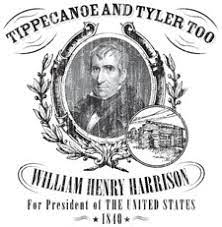
This was the situation in April, 1841. Newly inaugurated president, William Henry Harrison died after only a month in office. The 68-year-old Harrison apparently succumbed to pneumonia after delivering an exceptionally long inaugural address in foul weather. Harrison, the first Whig to win the presidency, was also the first chief executive to die in office, and the Constitutional protocol of succession had never before been exercised.

Harrison’s Vice President, John Tyler, moved quickly upon learning of the President’s demise. He located a judge to administer the oath of office, and moved into the Presidential Mansion (White House). When members of Harrison’s cabinet informed Tyler they would take care of the daily business of governing, he cooly responded that they could either cooperate, or resign.

Tyler had been an odd choice for Vice President. The Whig Party had gelled during the Jackson administration, proposing financial and internal developments over sectionalism and states rights. The Whigs further found slavery not only inconsistent with liberty, but also an obstacle to the growth of a modern economy.

Foremost among the Whigs was the Party’s greatest voice, Senator Henry Clay of Kentucky. Clay had first been a presidential candidate in 1824, and again in 1836. However, in 1840 when the Whigs met in Harrisburg, PA to nominate their candidate, Clay failed to gain the top spot, and then declined the offer of the vice-presidency. Clay later regretted his momentary pique.

Though John Tyler had been a Virginia Democrat, he had publicly broken with Andrew Jackson over Jackson’s misuse of presidential power. In particular, Tyler objected to Jackson’s threats against South Carolina in the Nullification Crisis, leading Tyler to forsake the Democrats, but not the philosophy of states’ rights, or the institution of slavery.

The Whigs decided that Tyler’s opposition to Jackson was good enough to offer him the second spot on the Whig ticket, and Tyler accepted. Then a month into his term, Harrison died, and this Southern Democrat, a wall-to-wall sectionalist assumed the presidency. 

From there, Whig policies quickly unraveled.

If the Whig’s aimed to realize their platform of national economic growth, their hopes died under President Tyler’s veto pen. Predictably, the Whig cabinet soon grew frustrated, then disgusted with presidential obstruction. Members began to resign. Only Secretary of State Daniel Webster hung on, as he was in the middle of Canadian boundary discussions with the British. Then he, too, submitted his resignation. Shortly after the cabinet fled, the Whigs formally expelled Tyler from the party.

To their credit the Whig leadership didn’t excuse Tyler, or defend his contrary actions. No one said ‘let Tyler be Tyler.’ They publicly broke and denounced the President’s antics, though the cost, for the Whigs, came due ten years later when they disbanded. 

Yet, the story doesn’t end with the demise of the Whigs, but begins anew with a stronger and more principled political movement. For from the ashes came the birth of the Republican Party, much like a rising phoenix.

But today that party has soured. No longer guided by principle the GOP has submerged their once decent name in the cesspool that is Trumpism. 

*This post appeared in 2019. And now, in 2022, the GOP has formally forsaken all that was decent in the Republican Party. They now publicly support a coup attempt through silence and excuses, abandoning leadership of their party to propagandized fanatics.  

Gail Chumbley is the author of the two-part memoir, “River of January,” and “River of January:Figure Eight,” “Clay,” a play chronicling the life of Senator Henry Clay, followed by another, “Wolf By The Ears,” a study of racism and slavery. “Peer Review” is her third work imagining 47 meeting four earlier presidents, and a screenplay, “Dancing on Air” based on her books.

gailchumbley@ymail

Infinity Clause

In the fall of 1789 recently inaugurated President, George Washington called for a National day of Thanksgiving. Under the previous frame of government, the unworkable Articles of Confederation, such proclamations had customarily been sent to the governors of each state. However, Washington abandoned that practice. As the first US President, Washington instead issued the proclamation to the American People.

This President deliberately bypassed state governments.

The new Constitution, practically wet with ink, had been intentionally addressed to “We The People,” and Washington aimed through his administration to join every citizen, regardless of state, to the national government. This proclamation, seemingly banal, clearly signaled a dramatic reset of power in the new Republic.

Two years prior, in Philadelphia, the framers turned attention to composing a Preamble, otherwise understood as a mission statement. Preambles were not unusual, each state government began with them, but in that hot, humid chamber of Constitution Hall work commenced to define America’s mission. Gouverneur Morris, a delegate from New York, most probably authored the statement, and it was Morris who set out the language.

We the people of the United States, in order to form a more perfect union, establish justice, insure domestic tranquility, provide for the common defense, promote the general welfare, and secure the blessings of liberty to ourselves and our posterity, do ordain and establish this Constitution for the United States of America.

The heart of these guiding principles begin with the phrase “The People,” followed by the active verb, “To Form.”

The Preamble rests upon this infinitive clause, implying America is a work in constant progress. This mission is a founding legacy fixed upon enduring bedrock.

Susan B Anthony sought justice voting in the Election of 1872. Arrested for casting her ballot, Anthony faced a Federal judge, and received a verdict of guilty. The 19th Amendment, ratified nearly fifty years later extended the vote to women. Hounded by settlers from the 17th Century onward, Native Americans sought survival and the tranquility to peacefully co-exist with whites. It’s ironic that indigenous Americans were not citizens until 1924.The United States in 1860, teetered on a knife point of dissolution. President, Abraham Lincoln, could not stand by and watch democracy die under the threat of secession. Preparing for the common defense Lincoln mobilized northern forces to defend the Union. From Jane Addam’s Hull House, a Chicago settlement center for immigrants, promoting the general welfare, to Dred Scott, and Homer Plessy’s struggle to reap the blessings of liberty, each generation stood tall in their historic moments.

To honor the principles of the document, and as heirs of Constitutional law, our charge, like those before, is weightier than our private comfort. We The People have no choice but to continue Gouverneur Morris, and President Washington’s wishes To Form A More Perfect Union.

Modern America’s mini tyrants must not prevail. Make your voice heard at the ballot box on Tuesday, November 8, 2022.

Gail Chumbley is the author of the two-part memoir, “River of January,” and “River of January: Figure Eight.” Both titles are available on Kindle. Chumbley has written two historical plays, “Clay” regarding the life of Senator Henry Clay, and “Wolf By The Ears,” an exploring the roots of slavery and racism.

Fight Club

A biography of Lyndon B. Johnson, (by Robert A. Caro) presents an in-depth look at LBJ’s Senate career. Aptly titled “Master of the Senate,” Caro describes the future president’s considerable ability to push bills he championed through the US Senate.

Using his boundless energy to cajole, intimidate, and hound opponents, Senator Johnson proved remarkably effective. When candidate John F Kennedy selected LBJ to serve as his running mate, Johnson’s reputation as a political wheeler dealer sealed his selection. 

A look at the backgrounds of all 46 American Presidents, only one-third rose from Congress’s upper chamber. From 1900 to today only seven Chief Executives began in the Senate. Perhaps as candidates, these politicians carry controversial voting records, or personal foibles leaving too much baggage for a successful run. In spite of inherent liabilities, most modern Senators-turned-President, bring an effective array of skills to the White House.

For both Truman with his Fair Deal, and John F Kennedy’s New Frontier, legislative wins were scarce. Truman did enjoy a moment with passage of the Marshall Plan to rebuilt war-torn Europe, and Kennedy with the ratification of the Nuclear Test Ban Treaty in 1963.

Following JFK’s murder Lyndon Johnson seized that tragic moment initiating his Great Society program, and then showed America how to get things done. Public Television, highway beautification, Medicare, Medicaid, and both the Civil Rights Act of 1964, and the Voting Rights Act of 1965. Johnson’s achievements were many, and important. 

Richard Nixon served in the Senate, as well. Once President, Nixon promoted the Environmental Protection Agency, and the passage of Title IX for women in sports. It wasn’t all evil in that White House, the guy had skills.

In 2010, single-term Senator from Illinois, turned President, Barack Obama signed into law The Affordable Care Act. Standing near, watching was Obama’s Vice-President, Joe Biden, himself a 36 year veteran of the Senate. 

The thing is Mitch McConnell lobbed every counterpunch in the rules to stop Obamacare. But he failed in the face of three wily tacticians, Barack Obama, Nancy Pelosi in the House, and, of course, Joe Biden.

Now Joe has entered the White House in his own right.

The supposition that legislative cunning ensures a successful presidency is only an interesting thought. But Truman did see reelection, while LBJ collapsed under the weight of Vietnam, not his legislative magic. Nixon sabotaged himself, but the Biden presidency appears to be chugging along on a steady course. 

In the Senate since 1973, this 46th President cut his political teeth on Capitol Hill. Senate rules, cloture, floor privileges, and more are some of the lethal weapons in his political arsenal. For example, when Senator Manchin suddenly came on board with the Inflation Reduction Act, Mitch McConnell, another sly dog, staggered, blindsided.

The point remains. There is a lot more to Joe Biden than meets the eye. This is not a President to dismiss for superficial reasons, like his grandpa appearance, and folksy demeanor. If anything, Biden’s Senate career has forged him into a political shark. The Infrastructure package, Covid Relief, and College Debt Forgiveness have largely passed, allowing his opponents no time to breathe.

And Joe’s VP? She’s a former Senator, too.

Gail Chumbley is the author of the two-part memoir “River of January,” and “River of January: Figure Eight.” Both titles are on Kindle. Chumbley has written two historical plays, “Clay” regarding the life of Senator Henry Clay, and “Wolf By The Ears,” an exploration of American racism and slavery.