Pull of the Past

The Ukraine is located north of the Black Sea

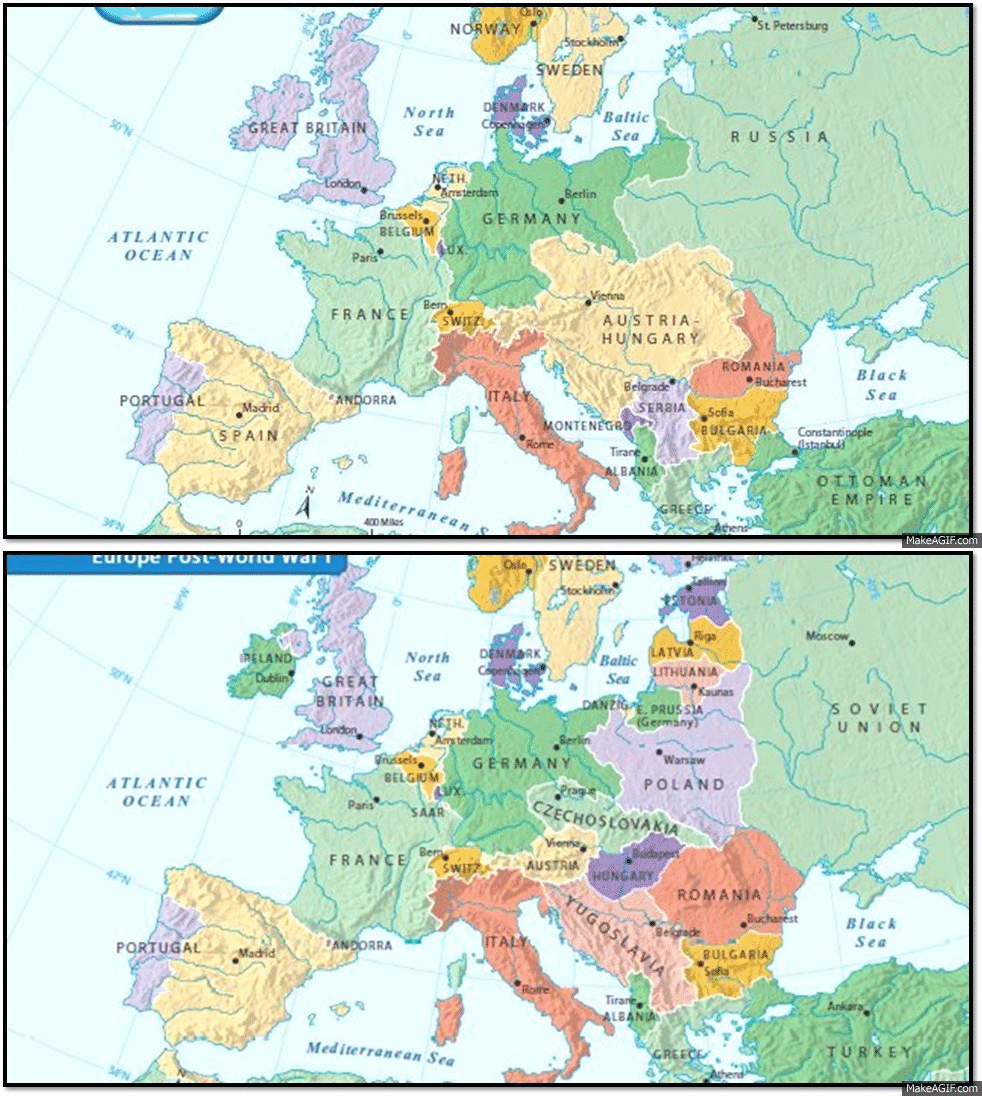
Three monarchies ruled Central and Eastern Europe in the years leading to World War One. The Hohenzollern of roughly present day Germany, the Hapsburgs of nearly all the lands between Germany and Russia, where the Romanov dynasty ruled for hundreds of years. Modern republics carved from these three long ago kingdoms still feel a dynastic pull, as if prisoners of the past.

After WWI, and the forthcoming Treaty of Versailles the major kingdoms disappeared, replaced by new countries drawn by the hands of the victors. The objective of those redrawing the face of Europe was to give each language group the dignity of self rule. With few exceptions monarchies were gone, replaced by self-governing democracies.

1919 produced a validating moment for ethnic-language groups, resurrecting national flags and reveling in their distinctive cultures. But historically speaking independence lasted only a twinkling. 

Throughout the 1930’s the Germans tried democracy, only to discard the system in favor of autocracy under Adolf Hitler. The last Hohenzollern, Wilhelm II had been deposed and lived in exile, clearing Hitler’s path of impediments. Engaged in revitalizing Germany, the Fuhrer proceeded to annex nearby lands, reversing that moment of democratic freedom. 

The German Fuhrer set his sights on reoccupying the Rhineland, a resource, and industrially rich region to the west. That the German’s were not, by treaty, permitted to seize that area, Hitler waited for the protests, but the western allies did nothing. Later Hitler sent forces to Austria, the site of his birth, and absorbed that country into his Third Reich. Crickets. Then after a pause, he made a play for the Czech region of the Sudetenland. These acquisitions were German-speaking populations, and to Hitler a part of Germany’s destiny.

This time the West did take notice.

In September, 1938, the German Fuhrer hosted England’s Neville Chamberlain, and France’s Edouard Daladier to discuss the fate of the Sudeten. The conference was a cynical sham. As the political leaders admired the Berchtesgaden view of the Tyrolian Alps, German troops amassed on the Czech border. A secret “incident” was in the works as a pretext to invade as soon as possible. Part of Hitler’s scheme included informing his guests that German nationals in western Czechoslovakia were persecuted, and his duty lay in rescuing them.

Both Chamberlain and Daladier, fearful of a new war, agreed to Hitler’s aggression, as he assured them after the Sudetenland, Nazi expansion would conclude. But of course he was lying. World War Two erupted the following year.

At this writing Vladimir Putin is playing the same game as Herr Hitler. In 2014 Putin sent forces into the Crimea, with one eye on the Western democracies. There were protests, and economic sanctions, but no ultimatums. 

As Russian soldiers amass at the border of the Ukraine, President Putin pretends none of the aggression means anything. But this Russian autocrat means plenty, and is implementing a play to return the Ukraine back to where he believes it belongs-Russia. 

 Does the west have the will or consensus to allow this modern-day dictator to lie to the world and invade Ukraine? Will the Americans, and other European Allies look the other way, as did Chamberlain and Daladier? 

I’m no expert on European History, but finding patterns has become second nature. The pull of the past is strong, and would-be dictators care nothing about national boundaries. For a tyrant like Putin entitlement to the Ukraine is much the same as breathing. So the onus falls on the NATO Alliance to hold the line. A line that President Putin is doing his best to challenge.

Gail Chumbley is the author of River of January, and River of January: Figure Eight. Both books are available on Kindle.

gailchumbley@gmail.com

Two Witnesses

“I began to think that all was not right. He said that with two hundred men he could drive congress, with the president at its head, into the river Potomac, . . .and he said with five hundred men he could take possession of New York….”

Colonel John Morgan, written testimony, 1807, the Burr Conspiracy

In grade school we watched a film titled, “The Man Without A Country.” Taken from a story by Edward Everett Hale, the tale tells of an American soldier named Philip Nolan. Nolan, a fictitious character had been arrested as a conspirator in a scheme to seize a chunk of the Louisiana Purchase and secede from the Union. At his trial an angry Nolan pitched a fit and shouted “Damn the United States! I wish I may never hear of the United States again!”

The presiding judge agreed with Nolan’s outburst and sentenced him to never hear of, nor set foot in the United States again. Serving his time, Nolan spends the rest of his days transferred from one Naval vessel to another, never permitted to see the shoreline again. By the end of this sad tale, Nolan grieves his error, and Hale has him express his regrets, and the majesty of our democracy.

Though just a little kid, that film struck me as a nightmare, a true horror story. (I was a history-geek before I knew I was a history-geek). The sadness remains with me now.

Hale set his patriotic tale against an actual event, the Burr Conspiracy, (1805-1807). Aaron Burr, Thomas Jefferson’s rival and Vice President had killed Alexander Hamilton in 1804, and resigned as Vice President in 1805. Heading west beyond the Appalachians, Burr allegedly hatched a plot to capture a southern piece of the Louisiana Purchase, and Mexican Texas. It was said Burr planned to install himself as a sovereign of a new nation, with New Orleans as his capital. A co-conspirator, General James Wilkinson, turned on Burr, and spilled the beans to President Jefferson. The outraged President promptly dispatched soldiers to apprehend Colonel Burr.

In a Virginia court Burr was indicted for treason, and soon put on trial in Richmond. The Judge, Chief Justice John Marshall presided. 

Burr remained serene throughout the trial, and denied the charges against him. Jefferson, meanwhile breathed fire, demanding Justice Marshall convict. Marshall, a brilliant student of American Law, subpoenaed the President to testify, and that pissed off Jefferson even more. 

In a letter to the court Jefferson insisted British Common Law sufficed for conviction. That advice would place Burr in the vicinity of a seditious act, and lead to a quick guilty verdict. Marshall, however, relied on the recent Constitutional definition.

Article III, Section 3, Clause 1,

Treason against the United States, shall consist only in levying War against them, or in adhering to the Enemies, giving them Aid and Comfort. No Person shall be convicted of Treason unless on the testimony of two Witnesses to the same overt Act, or on Confession in open Court.

At the end of this saga Burr was acquitted, Jefferson’s opinion irrelevant to US Law. Without fear nor favor Marshall abided by the Constitution. Lacking eyewitness testimony to the act, Burr walked. Neither Wilkinson’s nor Colonel Morgan’s letters proved relevant.

This case, complicated, and circumstantial, tested the new Constitution, and the Constitution prevailed. Fictitious Nolan should perhaps have held his temper in check, but then there wouldn’t be a story.

For MAGA insurrectionists, inculpatory evidence is stacking up. We all  bore  witness to the ransacking of the Capitol, and the rest of the plot is coming to light. Archival documents, emails, phone conversations, sticky notes, fake electoral papers, and incompetent lawyers litter the January 6 landscape. 

This time, under the language of Article III, there is no doubt of treason. 

As Philip Nolan lay dying aboard a Navy vessel, he tells his comforter “Here, you see, I have a country!” A map of the United States is pinned to a wall at the foot of his bed. Nolan begs his visitor to draw in new states admitted since his long ago trial. A tragic yarn of regret to be sure.

In the end Aaron Burr faded into the fog of time. Due to a certain Broadway musical he has resurfaced. Did Burr engaged in treason? We’ll never know for certain. That he faded is important. America is more resilient than any one of us.

Though Philip Nolan is a character of fiction, and Burr an enduring mystery, the January 6th hoard will not fade. You aided another would-be tyrant, and you failed. Like Pearl Harbor, and 911, your treason will live in infamy, to borrow a phrase. 

Gail Chumbley is the author of the two-part memoir, “River of January,” and “River of January: Figure Eight. Both titles are available on Kindle. Chumbley has also penned two plays, “Clay,” regarding the life of Senator Henry Clay, and “Wolf By The Ears” a look at American slavery and it beginnings.

gailchumbley@chumbleg

chumbleg.blog

Animal House Meets the GOP

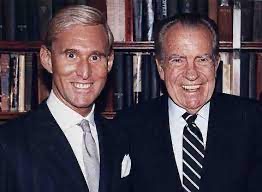
What do you get when you cross Animal House with the GOP? Roger Stone. He holds the dubious distinction of dragging Republican moral decay on, that first festered in the 1970’s. The product of Stone’s current efforts? The January 6th insurrection.

That young Stone cut his teeth orbiting around the Nixon disaster, and later lent a hand to the Reagan campaign, and even later aided the “Brooks Brother Riot” of 2000, his role as a covert agent of chaos lives on. “Conservative Values” a long running catch phrase is no more than an oxymoron, the national party undercut by a list of career dirty tricksters, including Stone.

Think Donald Segretti, of Watergate fame. Segretti hired a girl to run naked at a hotel shouting she was in love with Edmund Muskie, Nixon’s chief rival in 1972. In 1970, even Karl Rove interfered and sabotaged Democratic fund raising efforts by publishing false event information, ie . . . free beer, free food, girls, everyone welcome, etc. Rove’s work turned the event into a fiasco. Then there was Ken Clawson’s Canuck Letter. Clawson, a Nixon operative, published a fraudulent note dropping in phrases like “illegitimate babies,” and “homosexuality,” among Democratic leaders. (Homosexuality still a taboo.) And of course the most famous dirty trick of all, the burglary of the DNC at the Watergate Office Complex.

What this brief evidence has made clear is Republicans can’t win any other way, at least not nationally, without deception and disinformation campaigns. During the Reagan years, men like Oliver North, Admiral John Poindexter, and CIA Director William Casey privatized foreign policy in the Iran Contra Affair. Ronald Reagan haplessly confessed the crimes were real, though he didn’t understand how. The George W. Bush administration outed a CIA operative, Valerie Plame, via Scooter Libby, and Libby was convicted of his crime. But don’t cry for Scooter, Donald Trump pardoned him because it’s true, there is no honor among thieves.

Any pretense of “conservative values” is a myth, carefully advertised by party insiders, but hasn’t existed since President Dwight Eisenhower. 

Stone’s lies to Congress, and to the FBI reveals the state of the party. Any means to win.  Underhanded tactics indicate business as usual.

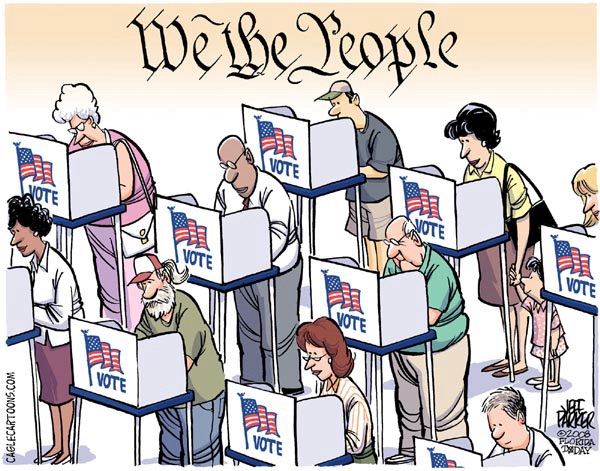
The harm? My vote doesn’t count, and neither does anyone else’s. The cry of States’ Rights echoing around the country is simply a cover to intensify efforts to deprive the people of good government. Stone, Trump, and the rest of the party has rejected an even playing field; they cannot win in an open, fair vote.  

This blog in no way implies that Dems are blameless, but short of Bill Clinton’s dalliances and others taking bribes, the crimes have hurt the individual, not the American people. Decent folks abandon the GOP daily because of such flagrant misuse of power. 

In a side note, Richard Nixon ran for Congress in 1946 smearing his opponent, Jerry Voorhees as “soft on Communism,” and in 1950 aimed for the Senate, insinuating his opponent, Helen Gahagan Douglas was “pink right down to her underwear.”

We all know who the patron saint of the modern GOP is, and Stone, not to forget Trump, are his most astute disciples.

Gail Chumbley is the author of “River of January,” and “River of January: Figure Eight.” Both titles available on Kindle. Chumbley has written two plays, “Clay,” exploring the life of Senator Henry Clay, and “Wolf By The Ears” regarding the establishment of American Slavery.

gailchumbley@gmail.com

Redundant

The last five years bear proof that voting is a precious right, made real through two centuries of courage, and bloody violence. The extension of the vote, the collective voice of our political will, did not expand without difficulty or sacrifice. 

In the early days of the Republic, the founders struggled to strike a balance between their own political interests, and those of the public. The founders considered citizens as too mercurial, too easily swayed, to be trusted with the vote. Only men of standing, knowledge, and property were qualified to cast ballots.

As populations moved westward, new states allowed all white males voting rights. Making use of “poll taxes,” farmers and tradesmen paid a fee to participate in elections. The money indicated that the voter had some means, and a stake in the community. Still, voting at that time was a boisterous affair, as men publicly announced their choices to officials. That practice, combined with hard liquor guaranteed election day ended with a bloody fight or two.

Political machines, like New York’s Tammany Hall, lined up voters like soldiers each election day. Bosses such as William Marcy “Boss” Tweed maintained power manipulating elections like clockwork, assuring outcomes before the votes were ever counted.

Women labored long and fruitlessly for the vote. Seeking rights of citizenship, women wanted not only the franchise, but the equal legal standing before the law. The forces of inertia and sexism held fast, believing ladies must stay home where they “belonged.” Politics was seen as too complex an issue for the female brain, as they were smaller, (I kid you not). More custom than written law, the practice of “coverture” considered the call for women’s suffrage as redundant. Women, as dependents, like their children, were legally “covered” by their husbands’ vote. He, as head of the family voted for the entire household.

Not until 1919, after a century of ridicule and abuse, did women earn the right to vote. And even then just barely. Once the 19th Amendment reached the Tennessee legislature for ratification, the bill passed by a single representative’s vote, making the state the 36th and last state to approve.

The path to black suffrage provides the most perilous story. Considered property in antebellum America, branded 3/5’s of a human being in the Constitution, these people faced impossible hurdles after the Civil War. While Union soldiers remained in the South as occupiers, black men voted, per the 13th, 14th, and 15th Amendments. However, once the blue coats with their bayonets left, that moment of possibilities passed.

Black codes, a carryover from pre-war slave codes, and violence at the hands of homegrown terrorist (KKK, and the Knights of the White Camelia), a black man risked his life attempting to cast a ballot. After 1876, marking the end of Reconstruction, Southern society returned to “normal” with blacks clutching the lowest rung.

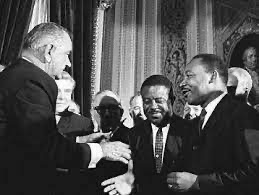
It took a World War to breathe life into the Civil Rights Movement. Even then white resistance pushed back against the movement. Through the courts, the NAACP argued that case law favored black suffrage. Falling back on the 14th and 15th Amendments, attorneys like Thurgood Marshall jousted against white supremacy at all levels of society. In 1964, Freedom Summer introduced a massive voter registration drive, garnering enough leverage to pass the 1965 Voting Rights Act.

Old school Redeemers, like today’s Senator Mitch McConnell watched and waited to gut the law after the election of President Obama. McConnell argued with a black president, no need remained for the ’65 Act.

So where does that leave black and brown Americans today? Outraged. States, largely in the South are once again purging black voters from precinct rosters. Why? Because white supremacists in the South still feel they must suppress those voters to maintain white power.

Now that is redundant.

Gail Chumbley is the author of “River of January,” and “River of January: Figure Eight.” Both titles are available on Kindle. Chumbley also penned two history plays, “Clay” and “Wolf By The Ears.”

gailchumbley@gmail.com

Jenkins Hill

For teachers who are poor, but like to travel, nothing is better than hosting student tours. Truth is these trips are a lot of fun. Really. The kids make it fun. I led a number of tours over the years and still carry wonderful memories of the historic sites, our numerous guides, the bus drivers, my students, and the bustling itineraries that delivered us everywhere.

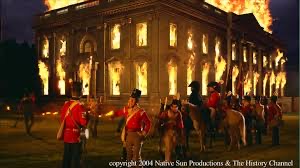
Out of the classroom, and away from home, students encountered much of what we had covered in history class, up close. On one stop at the US Capitol a guide opened a small door off a corridor revealing a narrow, circular stairway. Bygone soot and some damage remained down that steep passage, evidence of the War of 1812, when invading Brits set fire to the building. Our docent elaborated. A redcoat on horseback had urged his horse up those cramped stairs, only to be shot by American defenders waiting at the top. That anecdote caused a bit of a stir, as we all absorbed the horror.

Peeking into the Old Senate chamber, (much smaller than today’s grand affair) prompted another story of another clash, from another era. In this original legislative hall Massachusetts Senator, Charles Sumner had suffered a severe beating at the hands of a furious South Carolina Congressman. At issue, the fiery debate over the spread of slavery.

Bus drivers sometimes got into act, and added a few gems of their own. Before leaving the Capitol, he grabbed the microphone and shared a story.

George Washington had been inaugurated as America’s first president in New York City. But a site for a permanent national capitol had been selected. And it was President Washington, himself who laid the first cornerstone for the structure on a rise called Jenkins Hill. Why, the driver asked, did Washington turn the first spade, and set that brick of sandstone? Of course we all thought the honor went to Washington as the President. Wrong.

The President had been asked to set the stone, because he was a stone mason.

Who’d a thought!

On the bus we loudly debriefed, the chatter sounding much like gossiping about Justin Bieber, or the Kardashians. The narrative may have been a century or two old, but still very much alive–resurrected by students in the Twenty-first Century.

There are many such stories of American school kids touching our collective past, and many adults who made that happen. Somehow we all came away better people. Perhaps we’re all reminded we are part of a much bigger picture, and we all fit somewhere within the frame.

On January 6, 2021, Americans across the nation watched domestic terrorists violate the inner sanctum of democracy. I wondered what thoughts crossed the minds of those same former students to witness this tarnishing of democratic majesty.

Not everyone can afford to send their kids on trips like these. I couldn’t. But understand this, every public school in the country teaches American History. The public must understand this story tells of a unique nation, and democracy grows fragile when ignorance rules the times.

Gail Chumbley is the author of the two-part memoir “River of January,” and “River of January: Figure Eight.” Both titles are available on Kindle. Chumbley has written two historic plays, “Clay,” and “Wolf By The Ears.”

gailchumbley@gmail.com

A Fine Line

Way back when, during my high school years, our English class read “Lord of the Flies.” And though too young to grasp the power of the story then, it’s bothered me plenty in recent years.

Permit me a refresher on the plot. During World War Two a group of English school boys are evacuated from England by air, and the plane crashes over water. The pilot is killed, leaving only the boys alive. Finding themselves on a deserted island, the kids try to organize into a functioning unit.

The wheels come off almost as once, as two groups emerge. One faction agrees to cooperate, while the other descends into depravity.  Those favoring cooperation seek (through logic and science) a way to be rescued. Those choosing muscle undermine that effort, reveling in bloodsport, killing wild pigs, and intimidating weaker boys. 

The novel reads as an allegory of disintegrating humanity, pitting good order against savagery. Though published in 1954, William Golding’s book has taken on a prophetic urgency made evident by the lawlessness of both Trump administrations.

In a haunting parallel to the breakdown of order on the island, Trump’s mob attacking the Capitol came as an inevitable outcome of law breaking. Riffing irrational diatribes, this flawed man chooses to incite violence to maintain power. That his misinformed followers eagerly climbed on the bandwagon proves how fragile democracy can be when infected by evil. The physical fury of that day seemed an aphrodisiac for his private thugs as they stormed America’s Altar of Reason. 

And it’s no wonder the mob chose to vandalize our sanctuary of law. This guy disdains law,  indifferent to the sacrifices made by generations before to preserve it.

Good government rests on an educated, committed electorate. Mindless violence is the tool of the lazy and weak minded. Blind fury only destroys, and in truth that savagery lives in all of us. It is up to each one of us to make that choice, to awaken the “better angels of our nature” for the good of us all. It is well past time for America’s trial by mob to end.

Unlike the school boys in “Lord” no one is coming to our rescue. And that reality leaves no alternative but to discipline ourselves to preserve the gift of democracy.

Update 2025

He is back and this time it is blitzkrieg against the rule of law. He had a plan equal to any conqueror, compliant judges, and a servile, opportunistic majority in Congress.

The result? A fog of war has blanketed the country as we rush from here to there to challenge the ongoing damage.

As in Lord of the Flies a childish bully has acquired power which he uses to terrorize all. He will not stop until the adults step in.

Friends, we are those adults.

Gail Chumbley is the author of “River of January,” and “River of January : Figure Eight,” a two-part memoir. Both titles are available on Kindle. Gail has also written stage plays, “Clay,” “Wolf By The Ears,” exploring antebellum America, and “Peer Review,” a look at Trump’s first presidency through the eyes of four former presidents.

Inheritance

Harry Truman understood the gravity of his duty right off. When FDR died in April, 1945, the newly installed Vice President got the word he was now president. And what a Herculean task he had before him. A world war to end, conferences abroad, shaping a new post-war world, and grappling with the human rights horrors in both Europe and in the Pacific. Add to all of that, he alone could order use of the newly completed Atomic Bomb.

On his White House desk, President Truman placed a sign, “The Buck Stops Here.” With that mission statement Harry Truman stepped up to his responsibilities despite the formidable challenges he faced.

Did Truman inherit the worst set of circumstances of any new president? Maybe? But it is open to debate.

America’s fourth President, James Madison, found himself  in one god-awful mess. His predecessor, Thomas Jefferson had tanked the US economy by closing American ports to all English and French trade. Those two powerful rivals had been at war a long time, and made a practice of interfering with America’s neutrality and transatlantic shipping. Despite Jefferson’s actions the issue of seizing US ships and kidnapping sailors never stopped. By 1812 President Madison asked for a declaration of war against England that, in the end accomplished nothing but a burned out White House and defaced Capitol.

Following the lackluster administrations of Franklin Pierce, then James Buchanan, Abraham Lincoln stepped into a firestorm of crisis. Divisions over the institution of slavery had reached critical mass, and Lincoln’s election was enough for Southern States to cut ties with the North. So hated was Lincoln, that his name did not appear on the ballot below the Mason-Dixon. And the fiery trial of war commenced.

The Election of 1932 became a referendum on Herbert Hoover, and the Republican presidents who had served since 1920. Poor Hoover happened to be in the White House when the economic music stopped, and the economy bottomed out. And that was that for Hoover. His name remained a pejorative until his death. 

Franklin Roosevelt prevailed that 1932 election, in fact won in a landslide victory. Somehow Roosevelt maintained his confident smile though he, too, faced one hell of a national disaster. 

In his inaugural address the new President reassured the public saying fear was all we had to fear. FDR then ordered a banking “holiday,” coating the dismal reality of bank failures in less menacing terms-a holiday. From his first hundred days the new President directed a bewildered Congress to approve his “New Deal.” 

The coming of the Second World War shifted domestic policies to foreign threats as the world fell into autocratic disarray. FDR shifted his attention to the coming war. When President Roosevelt died suddenly, poor Harry Truman was in the hot seat. But that is where I want to end the history lesson.

If any new President has had a disaster to confront, it is Joe Biden. Without fanfare or showboating Biden, too, has stepped up to the difficulties testing our nation. 

Much like Truman and Lincoln before, 46 is grappling with a world in chaos, and a divided people at home. In another ironic twist, like Madison, Biden witnessed, a second violent desecration of the US Capitol.

To his credit, though his predecessor left a long trail of rubble, Biden understands the traditional role of Chief Executive, while clearly many Americans have forgotten, or worse, rejected. Biden is addressing the issues testing our country, not only for those who elected him, but those who did not. An American President can do no less.

Gail Chumbley is the author of the two-part memoir “River of January,” and “River of January: Figure Eight.” Both titles are available on Kindle. She has completed her second play, “Wolf By The Ears.”

gailchumbley@gmail.com

Custodians of Now

Gratitude underpins America’s oldest quasi-secular holiday,Thanksgiving. In the 21st Century it is rather easy to scoff at a quaint observance that predates the founding of the country, and today’s America is a bit too cynical, busy, and self involved for meaningful reflection.

Separatists in 1621 Plymouth had risked all to worship freely in the New World. Suffering starvation and disease, the Mayflower survivors managed a successful harvest with the essential aid of local Natives. In an outpouring of gratitude the newcomers organized a potluck of sorts, and invited their benefactors to pause, count their blessings, savoring both the moment and the food.

General Washington announced a day of Thanksgiving after the fortuitous American victory over the British at Saratoga, and again after the Constitutional Convention in 1787. Moments of mutual gratitude implied a common bond, and an acknowledgment of common sacrifice. 

Later, in 1863, America, once again, faced a crisis of unity.

A grisly Civil War had raged for two years, when emboldened Confederate forces crossed north into Pennsylvania. Soldiers of the Blue and the Gray clashed at the crossroads town of Gettysburg. After a three-day struggle, the tide shifted in favor of the Union, and soon after Confederate troops retreated back into Virginia.

In the aftermath, President Lincoln delivered his Gettysburg Address, and shortly after called for a national day of Thanksgiving. Lincoln set aside Thursday, November 26th for the observance, calling for contemplation and gratitude. Later, in the aftermath of the Pearl Harbor attack, President Franklin Roosevelt signed into law a permanent observance of Thanksgiving to the fourth Thursday of November. 

Aside from roasted turkey, televised parades, football, relatives, and tryptophan-induced naps, this day is meant for reflection; a national respite from other distractions. As Americans we remember those who struggled through their American moment, and refresh our personal obligation to our communities, and to our nation. 

Whatever spirit guides our personal devotion, on this day we place ourselves second to something much greater-the United States of America. We recommit to our highest aspirations as a fortunate and free people; a people who respect what came before, and resolve to protect our democracy for the future.

This Thursday remember we are the custodians of now, and unity is not easy with such diverse and noisy citizens. Still the responsibility remains, carried forward from earlier generations. We Americans have an obligation to nurture solidarity over discord, amity over selfishness. 

All Americans can resolve to preserve this hard-won gift of democracy to those not yet born.   

Gail Chumbley is the author of the two-part memoir, “River of January,” and “River of January: Figure Eight.” Both titles are available on Kindle. She has also completed the play, “Wolf By The Ears,” a historic look on the advent of American Slavery.

gailchumbley@gmail.com

Insulting The Past

The first time a parent challenged my teaching in history class, took place my first year. The topic concerned the creation of the Constitution, and the era of the Early Republic. I introduced the three branches, and separation of powers, census, representation, and that type of basic information. Definitely the bare bones of Civics.

During that lesson I explained how Electors were determined, and role the Electoral College played in choosing the president. End of lesson. The following day the topic moved to ratification and the addition of the Bill of Rights. From out of nowhere a hand shot up, and an upset student blurted, “My dad says you’re a liar!”

Yep, a liar. 

That was my baptism into the sliding scale of historic facts, and that initial chill of suppression stopped me in my tracks. Following that episode, censorship never strayed far from my thoughts. It was the beginning of a caution that lasted the whole of my career.

Fast forward 30 years in history education, when a similar event repeated.

The topic this time concerned the Reagan Revolution, and the events surrounding those years. 

Students learned about the Evil Empire, “Mr. Gorbachev, Tear Down This Wall,” Perestroika, Glasnost, Reaganomics, Laffer Curve, Trickle Down, etc . . .

Foreign policy topics covered Central America and the Middle East, particularly Nicaragua and Iran. Reagan officials were selling weapons to America’s enemy Iran, using the funds to put down a Marxist insurgency in Nicaragua. A privatized foreign policy if you will.

The calls came the following day. “How could I teach such nonsense in a public school! My student came home and shared her notes, textbook and graphs. This is not right, Ronald Reagan is the beloved champion of conservatism!”

The principal called me in and wanted to know what caused the dust-up. Flustered, I didn’t know where to start. Quickly I explained the general outline of the unit, and, well, he didn’t have the time to listen to the details. And he shouldn’t have. He hired me to do that job.

The episode sort of blew over, though that parent did call me at home a number of times over that summer. Weird behavior for sure, like the dad couldn’t let it go. 

For me the matter became philosophical; either educators prepare kids for the path, or parents attempt to manipulate that path for their kids.

Touchy parents revising America’s story to force their current politics on schools does nothing less than highjack education. Talented people leave the classroom endangering the US’s most essential institution. Worse, the exertions and sacrifice of those who came before, are papered over to suit today’s furor.

America’s lifeblood is our shared story, it’s what defines us as a distinct people. We must understand those central principles from our past to move forward as a healthy nation.

To those students whose parents challenged the historic record, it’s unfortunate they cannot let go just a little, and trust public education. This is our kids birthright.

And know this-I wasn’t lying.

Gail Chumbley is the author of the two-part memoir, “River of January,” and “River of January: Figure Eight.” Both titles are available on Kindle. Chumbley has also written three stage plays, “Clay,” regarding the life of Senator Henry Clay, “Wolf By The Ears,” an exploration into American slavery, and Peer Review where 47 meets four earlier presidents.

The Forgotten Cause

In 1938, old men aided by young volunteers shuffled off of trains and cars arriving from both sides of the Mason-Dixon Line. For the most part these gents were in their early 90’s, and looked forward to reminiscing, comradeship, and scheduled ceremonies.

Organizers had planned three full days of tours, music, and ceremony, complete with a flyover and fireworks. The Battle of Gettysburg’s 75th commemoration had begun.

There had been an earlier anniversary event, in 1913, but this time visitors knew this gathering would be the last. Those in attendance understood, as did the elderly guests of honor, that those who hadn’t fallen on that Pennsylvania battlefield in 1863, would soon join the brethren who had. 

After this commemoration, the narrative would pass from eye witness accounts into America’s collective memory.  

No longer wielding rifles, many maneuvered the grounds pushed about in wheel chairs, walkers, and canes. Old men brandished ear trumpets to catch the orations of the many visiting dignitaries. The men listened as President Franklin Roosevelt delivered remarks dedicating the Eternal Light Memorial, located near the “Bloody Angle.” Battlefield tours transported veterans, and well-wishers from Cemetery Hill, to Seminary Ridge, Little Round Top, the Devils Den, and finally the exposed fields of Picketts Charge.

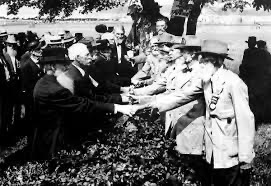
There, at the stone fence, gray old men in blue, and others in gray and butternut, shook hands in reconciliation.

Ironically, left uninvited were the scores of African Americans who had harbored such hope for new lives after emancipation and the war’s end. Unfortunately, the era of Reconstruction left little to show for racial progress or Civil Rights. Instead Freedmen found a new enslavement, recognizable in every aspect, but iron chains.

Forty Acres and a Mule had never materialized, as promised by victorious Union commanders. Now relegated to tenant farming, Freedmen struggled in the same conditions as before, but now as sharecroppers. Stuck in a never-ending cycle of poverty, black farmers found insufficient harvests debited into the next season, and then the next, in an endless cycle of debt.

The Supreme Court’s 1896 ruling in Plessy V Ferguson legalized segregation by insisting any negative correlation attached to feelings of inferiority lived only in the minds of Blacks. Separate water fountains, parks, transportation, and schools worked just fine for the elderly veterans from the North and South.

The moral force of the Civil War had died as thoroughly as the nearly 7 million who had perished upon the scattered battlefields of that bloody conflict. Those veterans who reunited in 1938 Pennsylvania found white identity and brotherhood far outweighed any new birth of freedom envisioned by President Lincoln 75 years earlier.

The current occupant of the White House has made it his mission to once again assert white supremacy in an effort to rewrite American history. His feelings had been hurt by our first black President and now he seeks revenge. Of course this foolish attempt will fail, as is his custom in all things, because we know the truth of equality and this time will never forget.

Gail Chumbley is the author of the two-part memoir “River of January,” and “River of January: Figure Eight.” Both titles available on Kindle. Ms Chumbley recently completed her second stage play, “Wolf By The Ears.”

gailchumbley@gmail.com