Masterpiece

Russia and the US didn’t have much contact in the 19th Century. A rumor had once circulated insisting presidential candidate, John Quincy Adams had procured American virgins for the Russian Czar when a young diplomat in Moscow. Not true, but there it is.

Still, the political tyranny of Russia has been widely understood in America as early as the 19th Century. When Abraham Lincoln condemned racism and intolerance stateside, he remarked that Russia’s oppression was, at least, less hypocritical than practiced in the United States. Lincoln’s Secretary of State, William Henry Seward later had his moment with the Czar when he negotiated the purchase of Alaska from Russia. Seward’s Ice Box, 1867 newspapers scoffed.

Some sixty years later, during World War One, revolutionaries deposed the Czar, and the last Romanov abdicated his throne. Bolsheviks arrested the former Czar, eventually shooting him, and the rest of the royal family in July, 1918. That same year President Wilson dispatched American forces to Archangel, to aid the White Russians to defeat Vladimir Lenin’s Bolsheviks, and stabilize democracy. The Whites failed, surrendering all of the vast Russian landmass into the hands of the Communists.

In the newly founded USSR, Premier Vladimir Lenin established the Comintern, the Communist International, publicly pronouncing the Soviet aim of exporting Communism worldwide, prompting in America our first domestic Red Scare.

In the following years, economic depression shrouded the globe, only dispelled by the horror of World War Two. Josef Stalin, Lenin’s cruel, and ruthless successor, struck a nonaggression pact with equally ruthless Adolf Hitler, dividing Poland as a buffer to buy time for both dictators. It comes as no surprise that neither trusted the other, and in 1941, Hitler launched Operation Barbarossa, invading the Soviet Union, bringing an abrupt, bloody end to that alliance.

After Pearl Harbor, the the Russians found themselves, by default, allied to Britain and the United States. Stalin trusted Washington about as much as he had Hitler, and in return Washington didn’t trust Stalin. Both Churchill and FDR remembered the Russians had cut and run during WWI, and the recent treaty with Hitler. Still, the two leaders went out of their way to appease their new Soviet ally.

In the last months of the European war, Stalin signaled his intentions to dominate by billeting the Red Army throughout Eastern Europe. Western allies acquiesced to Stalin’s aggression, and allowed Red forces to enter Berlin first, where the Communists didn’t leave until 1989.

A second Red Scare hit America much harder than the first. Stalin’s operatives managed to purloin atomic and hydrogen bomb intelligence, successfully delivering them to Soviet physicists to replicate. During the Kennedy Administration, the Berlin Wall sprouted up nearly overnight, and the entire Soviet Sphere of Influence made for an intense, dangerous Cold War. Conflict burned hot in America, the government attempting to flush out possible subversives, and ruining the lives of many innocent citizens. Julius and Ethel Rosenberg were executed for espionage, and Joe McCarthy accused the State Department and Army of harboring Communists. Soviet satellite Sputnik orbited the globe in 1957, the U2 spy plane crashed inside the Soviet Union in 1960, while at school we practiced ‘duck and cover’ drills. Proxy wars increased American foreign aid and deployed US forces to our allies across the free world, from Greece to Vietnam. 

Some of America’s greatest Cold Warriors included President Eisenhower, JFK, Richard Nixon, and Ronald Reagan. President Reagan, in particular, while speaking in Berlin, demanded the Soviets “tear down this wall.” These Chief Executives understood that any agreements with the Kremlin required stringent verification before any closure. America’s Soviet rivals were seasoned operatives, and were, in no way, friends of the west.

So where does this story leave us? Clearly the Kremlin has not changed. Spy networks, election hackers, and embedded operatives are perpetual threats. Maria Butina, the little Red darling of the NRA, and the GOP is an example of Russia’s recent relentless efforts. So, when an American President smiles and pays court to Vladimir Putin something serious is amiss.  

Update: At a Conway South Carolina campaign stop on February 10, 2024, Trump remarked concerning NATO, “”If we don’t pay and we’re attacked by Russia, will you protect us? No, I would not protect you. In fact, I would encourage them to do whatever the hell they want.”

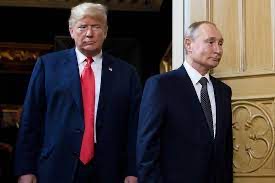
The Russian government is patient, and that patience has appeared to pay off. Putin’s masterpiece? He elevated a Russian asset to the White House, and convinced GOP voters to look the other way. 

At this writing the entire Republican Party still remains steadfast to their Russian operative as he remains the presidential frontrunner for nomination.

Gail Chumbley is a history educator, and the author of the two-part memoir, “River of January,” and “River of January: Figure Eight,” Both available on Kindle. Chumbley has also penned three stage plays, “Clay,” “Wolf By The Ears, and “Peer Review.” In addition, Gail has co-written “Dancing on Air” a film script centered on a true 20th Century tale of Depression and War.

gailchumbley@gmail.com
Vision

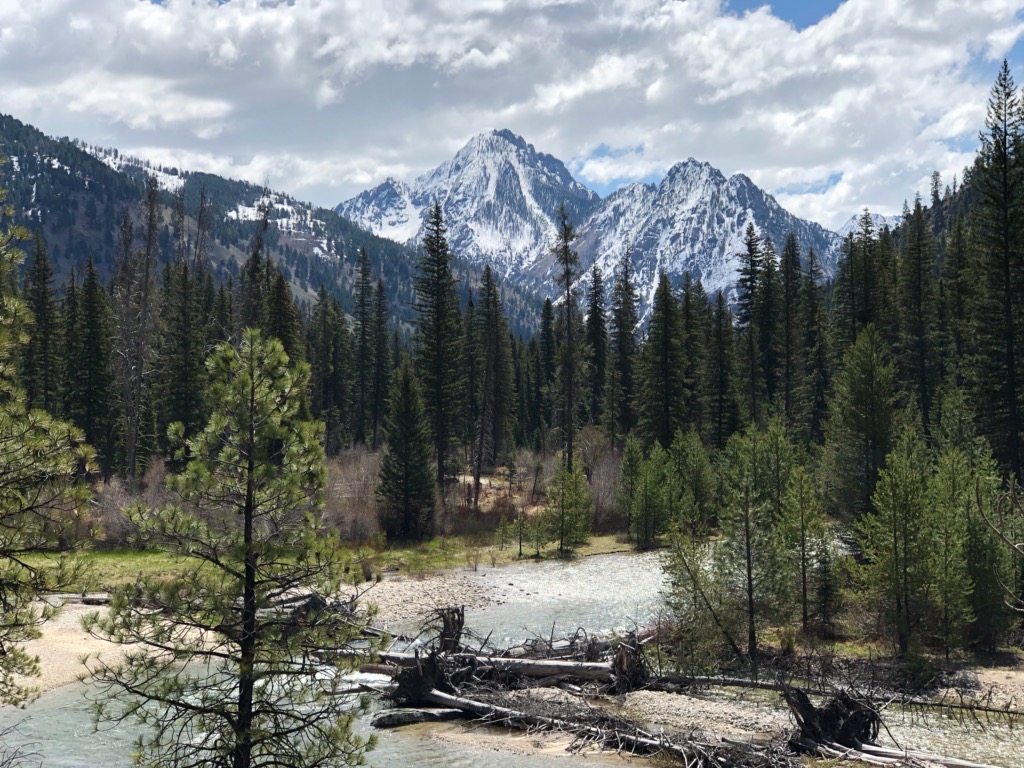
Along Highway 55, northwest of McCall, Idaho, lies a stretch of highway winding through breathtaking mountains. The terrain tinges a powdery blue, set against traces of white from the previous winter, while the Payette River churns beside the roadway. This route isn’t fast, but the scenery more than compensates for the slow pace. 

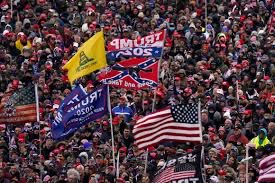
After a steep descent from the mountain town, the highway straightens and a number of cabins and trailers are visible. Trump signs abound, (not unusual) along with flags emblazoned with Don’t Tread On Me or, the black, blue, and white version of the Stars and Stripes.

One particular double-wide sits near the highway’s edge, where bikes and snowmobiles sit forgotten in the tall grass. Passing that property always catches my eye. Cemented between the gravel shoulder and the dirt driveway stands a mailbox bearing the Confederate flag.

The irony of that dated symbol on a rural mailbox, is that the Confederate mail system had actually broken down by the end of the Civil War. Any Rebel correspondence between battle front and home became haphazard at best. Often soldiers, who were able, walked letters home for their comrades still fighting in the field.

At the same time, the Northern mail system witnessed an important innovation. The grim number of Union dead, posted publicly in northern town squares, grew too long for privacy and decency. Families had been forced by circumstance to endure their devastating losses in the company of an entire community, an unseemly breach of 19th Century etiquette. Congress responded to this situation by requiring mail delivery to be private, sent to each home.

Needless to say, that stenciled mailbox, standing along the highway struck me as absurdly ironic. Those in our state, who peddle in conspiracy and fan contempt for the Federal Government, would collect no mail, nor enjoy any other public-funded service.

An expansion bridge those residents must cross to reach Boise, was constructed by agencies of FDR’s New Deal back in the 1930’s. The forest fires that increasingly threaten that little enclave of homes, are fought through funds from the Department of the Interior. 

More national programs underscore the paradox of that small protest of painted aluminum. Flood control, WIC nutrition, Title 1 Education funds, Medicare and Medicaid, all making life better for those residing in that remote, road-side residence. 

The South lost the Civil War because intractable people and their leaders lacked both organization, unity, and vision. These “dissatisfied fellow countrymen” to use Lincoln’s phrase, understood only grievance and fury. For example, hard-pressed Jefferson Davis in Virginia could not persuade the Governor of Georgia to dispatch fresh reinforcements to stave off Robert E. Lee’s ultimate defeat. 

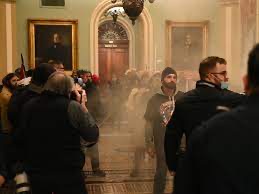
In the end, the politics of simmering outrage and division is unfocused and unproductive. State leaders who promote incendiary hogwash for short-term gain, leave followers pointlessly aggrieved, and easily manipulated, exactly where agenda-driven politicians want them. And this pressure-cooker style of propaganda and defiance quickly deteriorates into blind violence, destroying much of what Americans wish to preserve. (January 6, 2021 comes to mind.)

So express yourselves, my fellow Idahoans, let your freak flags fly. Though emotions and symbols do not violate federal law. However, if political leaders agitate an overthrow of the system, that is treason. And we all would all lose more amenities than you realize.

Including an empty mailbox.

Gail Chumbley is a history educator and author. Her works include “River of January” and “River of January: Figure Eight,” both available on Kindle. Chumbley has also written three historical plays, “Clay,” “Wolf By The Ears,” and “Peer Review.”

gailchumbley@ymail.com

Richer Than Myth

We all closed our eyes and directed to imagine a stage play. The lights dim to darkness and the curtains open revealing a maid busy at a fireplace feather dusting the mantel.

I dutifully shut my eyes envisioning white marble and busts of philosophers as the servant did her thing.The instructor asked us to further imagine the play’s star dramatically entering from the wings. She asked what would we do as an audience? Clap of course, because the story is about to begin.

Right?

And that dear reader is the model history educators have employed for eons. America was just waiting for white folks to appear, so the story could begin. The implication is that nothing of significance had yet happened. Just the maid dusting the mantel.

To accept that John Wayne or James Arness won the west is but a myth for films and television. American history in noway resembles an episode of The Waltons. The reality of the narrative, stripping away the fiction is much richer when including the whole story.

Mining and ranching customs in America are largely of Spanish origin. Standard size horses spread northward from Mexico as escapees from Hernan Cortes and other conquistadors. The rendezvous system came to be under the French, and their Huron fur-trading partners. From totems, to kivas, to longhouses indigenous people developed distinct cultures. New World foods like corn and potatoes conquered Europe, and African exploitation introduced American traditions in music, food and language.

In short, the story of America didn’t start with Plymouth Rock, nor Jamestown. It isn’t sunbonnet madonnas, bravely trudging west, or white hatted heroes saving the day.

No clear lines separate villains from heroes. If the myth makes you feel good, watch “Lonesome Dove,” or “The Alamo.” Keep in mind both are works of fiction. If it’s accuracy you’re after, crack a history book, or catch a Ken Burns documentary.

Gail Chumbley is the author of the two-part memoir River of January, and River of January: Figure Eight. Both available on Kindle.

gailchumbley@gmail.com

No Fooling

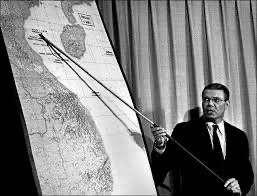
Secretary of Defense Robert McNamara, 1964

“. . .the best test of truth is the power of the thought to get itself accepted in the competition of the market, and that truth is the only ground upon which their wishes safely can be carried out.”

Oliver Wendell Holmes.

Short run or long run, popular beliefs seem to ebb and flow, ever changing. One idea gains traction in one generation then is cast off with time and deeper understanding. The quality that sustains any belief must rest upon a moral high ground; an affirming principle.

Hear me out.

On April 12, 1861, the opening shots of Civil War thundered over Charleston Harbor. The South Carolina legislature had already voted to secede from the Union, and President Lincoln issued a clear statement in his first inaugural address. Assuring Southerners he had no intention of interfering in state matters, meaning slavery, but warned that any state uprising was his business, and that fateful step rested solely in Southern hands.

The President kept his word. 

Once shots were fired on Fort Sumter, the Union rapidly mobilized to put down the rebellion. 

Lincoln’s policy rang firm and clear. The Union would defend the Constitution against illegal aggression.

A century later President Lyndon Johnson attempted to orchestrate a similar scenario in Southeast Asia. In August of 1964, the American people were told North Vietnamese torpedo boats had fired upon two American destroyers in the Gulf of Tonkin. There was no real evidence of the incident, apart from heavy weather and the distracting fog of war. From that event the United States began feeding ground troops to hold the line against Communism. Officially dated from 1959 until 1975, the Vietnam War expended 58,000 young men, and countless Vietnamese nationals.

Today Vietnam is a Communist country. Johnson’s gung-ho attempt backfired because his policy had been built on a lie. 

Likewise, George W Bush squandered world-wide goodwill after the attack on 911. With America in mourning from the terrorist assault on our soil, this president redirected righteous ire to the nation of Iraq. Afghanistan, where the actual culprits were hiding out, came later. 

In the end, nothing of value came from that lie, except uncorking anarchy in Iraq.

This last January another massive presidential lie duped hundreds into thinking an election had been stolen. No proof of the deception existed, because nothing sneaky happened. To the contrary, abundant truth refuted the the claim. 

A self-absorbed swindler convinced hundreds of followers to act upon his interests. Citizens mobilized themselves and attacked our nation’s Capitol. No proof, no moral high ground, no affirmation of our democratic system, just puppets exploited by a very sick man.

Mr Lincoln understood the power of truth.

Kindred Spirit?

Sen Henry Clay portrait (left of door.)

The word from a Kentucky acquaintance is that Mitch McConnell fancies himself a Henry Clay scholar. That probably means little to most, but Senator Clay (1777-1852) nearly single-handedly held the US together, postponing Civil War for over 40 years.

With a name that epitomizes progress and compromise, it feels odd Mitch McConnell proclaims a kindred spirit in Senator Clay. This earlier Kentucky Senator bent over backwards to protect and promote the vitality of our young republic.

Clay rolled up his sleeves and cultivated coalitions among his fellow law makers to keep the nation from fracturing. He orchestrated the passage of the Missouri Compromise in 1820, the Compromise Tariff of 1833, and the Compromise of 1850; all crafted to maintain the Union. In fact, the Civil War erupted AFTER Clay’s death, as no other Senator possessed the talent and determination to keep Congress talking.

In the interest of full disclosure, yes, Henry Clay owned slaves. And yes, he believed in gradual emancipation, as slavery proved antithetical to economic progress. The Senator’s commitment to America drove his efforts, and Clay worked with all political factions, even those he opposed.

McConnell does nothing, and takes pride in doing nothing. Invoking Senator Clay, who did a lot, is poor cover for an old obstructing politician to presume. Clay did not dig in his heels to impede the opposition party’s efforts to govern.

Henry Clay served his country, McConnell serves himself.

Gail Chumbley is the author of the two-part memoir, “River of January,” and “River of January: Figure Eight,” and the stage play, “Clay.”

gailchumbley@gmail.com

Deathwatch

A new plan had been designed to unite political power from 13 squabbling fiefdoms, to one central government representing the people.

Statesman, James Madison fully intended his new national blueprint to quiet interstate turf wars. Until 1787 no central mediator had existed, and the constant turmoil looked to nearly finished off the fledgling nation. Madison’s remedy, his Virginia Plan would count population, and without fear or favor, allocate direct representation. However, once his proposal was disclosed to his peers, the forces of inertia nearly derailed the Constitutional Convention.

This is the short version of details:

America, though victorious over the British in the recent war, was falling apart. No money, no credit, no court system, and European enemies on a deathwatch of sorts.

Internal disputes wreaked havoc among citizens, as each former colony hustled to press state interests over national. This upheaval grew especially violent in Western Massachusetts when musket shots were exchanged in a tax uprising.

In September, 1786 only a handful of delegates reported to a Maryland convention summoned to deal with the mess. But with only a handful of states reporting, attendees couldn’t vote on any binding measure–too few were present.

Distressed by intensifying disorder, and no real authority to act, James Madison and his colleague, Alexander Hamilton agreed the time had come for a new framework of government. The two, a Virginian, and New Yorker called for another convention; one that promised to address the failing system. (See “Rope of Sand” on this blog site).

Arranged for May, 1787, in Philadelphia, Hamilton and Madison attracted participants by promising General Washington himself, would attend.  However, Washington declined at first, that is until the gunshots in Massachusetts changed his tune. He, along with fifty four other men gathered, and the process began.

In the run-up to the Philadelphia Convention, James Madison kept busy. Though this gathering had been advertised as tweaking the existing system, Madison’s plan actually abolished it, in favor of his new Virginia Plan

He and his allies clearly understood the historic risk they were taking.

In a panic, the states with fewer people balked at losing influence. A William Paterson of New Jersey, moved for recess to craft a counter plan, one that would preserve state interests against Madison’s people-based plan. 

Called the New Jersey Plan, this model would establish a one-chamber legislative branch, each state equally represented. 

Then more hell broke loose.

In another recess a middle ground was devised by Connecticut delegate, Roger Sherman. 

Called the Connecticut Compromise, or the Great Compromise, a solution emerged. Sherman brokered a lower house by representation, and the upper house of two Senators from each state. That calmed the small states, relieved they would not be diminished by population-heavy states.

There are so many more details to the development of the Constitution, but this agreement signified a start. 

That kind of goodwill and commitment to duty has sustained the United States through rough times. Granted, flaws remained regarding slavery, the slave trade, women’s rights, and Native American policy. Still, this ballast was enough to move the ship of state forward. 

Today the national GOP promotes chaos and gridlock as somehow virtuous, while our adversaries still maintain America’s deathwatch.

Perhaps 1787 produced a better caliber of political leadership, Americans who served the common good.

Gail Chumbley is the author of the two-part memoir, River of January, and River of January: Figure Eight. Both title are available on Kindle.

gailchumbley@gmail.com

You’ve Been Played

Strains between North and South had reached critical mass by November, 1860. Escalating tensions burst with the election of America’s first Republican President, Abraham Lincoln of Illinois. The South Carolina legislature reacted by voting their state out of the Union on December 20th, a mere month later. By Spring 1861, the Confederate States of America consolidated, and on April 9th cannons fired upon a Union fort in Charleston Harbor. So began a bloody fraternal war. 

A longstanding question is how in the world did Planters, a small slice of the southern population, convince a mass of their social inferiors to risk life and limb, defending their aristocracy? The answer is rather simple, and lamentable. Folks from the lower rungs lived by the social rules fixed by the wealthy elite. The Planter Class established the rituals of polite society, and every white man below the Mason-Dixon hoped to someday to join their ranks (acquiring land and slaves).

The lower classes defended a minority they ached to join.

A small middle class of land holding farmers, and city professionals, also labored to reach the same social summit. In other words, acquiring the trappings of wealth, punched one’s ticket to ride.

Beneath this merchant-landholding tier massed poor whites. These desperate souls were left to precariously scratch out some kind existence as itinerant tenants. Contempt for this hardscrabble class is still evident through pejoratives that are still in use. Belittling terms like crackers, trash, hillbillies, and rednecks linger on in our lexicon.    

The Old South, in general, also distrusted the outside world. Foreigners, Yankees, Catholics, Jews, and immigrants, meaning anyone who might challenge rigorous, aristocratic formalities. The consequences for this delicate arrangement were profound. As the North industrialized, innovated, and modernized, Southern society languished, governed by reactionaries, more interested in public manners and bloodlines.

Outraged and insulted by Yankee ways, the wealthy roused the lower classes to defend Southern traditions, while in reality, barring any real opportunity of upward mobility.

This dynamic remains modern American politics. The GOP, in our time, is requiring the same fidelity. Party leadership honestly does not wish to serve you. All candidates want is your money and your vote to protect their interests, (especially the guy at the top). These characters are happy to rile voters through exhibitionism, and scapegoating whatever grievance you wish, especially piling it on minorities, the poor and the dispossessed.

But remember this, the traffic is one way only, and you are serve them, not the other way around. Keep delivering cash and power to the top, and nothing changes.

In short, you’ve been played by your chosen betters.

Gail Chumbley is the author of the two-part memoir, “River of January,” and “River of January: Figure Eight.” Both are available on Kindle.

gailchumbley@gmail.com

Humiliated, Angry, and Hurt

After losing reelection, he left Washington early. Humiliated, angry, and hurt, John Adams boarded a morning coach leaving the Capitol.

The prevailing issue in the campaign of 1800 concerned France, and that nation’s ongoing, and bloody revolution. Moreover, the French had declared war on England, and both belligerents  meddled in American domestic politics to turn public opinion.

As President, Federalist John Adams, had skillfully steered America clear of the European conflict, avoiding the danger of being ensnared between the two superpowers. Proud of his diplomatic accomplishments, Adams still brooded, unhappy with his lack of support from the country. His detractors belittled him, disparaging Adams as a pale substitute to the legendary George Washington.

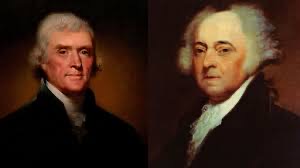
His political challenger in 1800? The clever and calculating Thomas Jefferson. 

An outspoken critic of the Adams Administration, Jefferson had been hurling plenty of invective toward the sitting President. What had once been a warm friendship between the two men quickly soured. Petulant and  thin-skinned, Adams had lashed out by pushing laws that restricted the free press and cracked down on immigration. Outraged by these policies, Jefferson, and his growing cadre of supporters, challenged the clear violations of the Constitution. 

In only the nation’s third presidential election the moment appeared volatile and uncertain. On one side was the defensive and testy incumbent, and on the other, a political foe intent on replacing him.  

Adding to the turbulence, a political wildcard entered the fray; New Yorker, Aaron Burr.

Burr, like Jefferson, had opposed unpopular and heavy handed Federalist policies, and Jefferson knew the ticket needed an electoral-rich northern state for strength. As party leader, Jefferson assumed Burr understood his lesser place, and only when the electors met did he learned just how wrong he had been. 

In the final tally, poor John Adams not only lost the election, but came in a distant third behind both challengers. Thomas Jefferson garnered 73 Electoral votes, followed by Burr with 73 of his own. Adams came in last with 65. (That tie is another story.)

Humiliated, Adams left Washington DC in a huff, but made no move to challenge the outcome. And though the former President did not greet the President-Elect, and pointedly skipped the inauguration, John Adams did not put his interests above the nation’s. 

He conceded in silence because he valued our country over his own interests. 

There is no precedent for false assertions from the clear loser in 2020.

Gail Chumbley is the author of the two-part memoir, “River of January,” and “River of January: Figure Eight.” Both titles available on Kindle, or at http://www.river-of-january.com.

gailchumbley@gmail.com

Heartfelt Objections

We couldn’t find a seat on the Washington Metro. In truth, we couldn’t see the Metro station, just a mass of humanity.

This gathering challenged the notion of enormous. The moment was historic.

Dumb luck came to our aid. A city bus hissed to a stop at the curb, and my friend and I hopped aboard, joined by a couple hundred of our new best friends. The atmosphere crackled with joy, solidarity and diesel fumes. I nearly busted out with “99 Bottles of Beer on the Wall.”

The driver seemed to catch our enthusiasm and peppered us with questions about the Women’s March. What time, where, how long would it last? She smiled realizing her shift would end before the speakers began, and I still wonder if she made it.

Nearly five hundred thousand of us convened on the National Mall, and expressed our heart-felt objections concerning the newly elected president. We marched as one.

By the way, no one violently attacked the halls of government. Though, if memory serves, I did flip off the Trump Hotel.

In October, 1969, 250,000 opponents of the Vietnam War descended upon Washington DC. In an event called Moratorium Day no one violently attacked the halls of government.

In the swelter of a 1963 Washington summer, Dr King convened the “Poor People’s” March on Washington. 250,000 Americans petitioned their government for a voting rights bill. No one even considered attacking the halls of government.

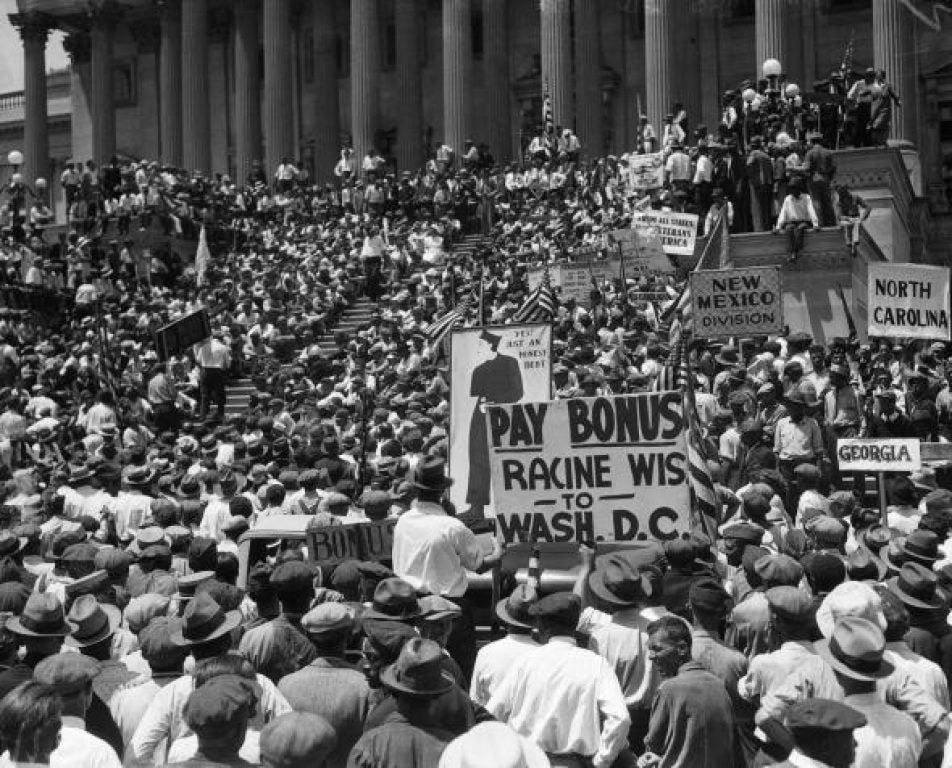
In the Spring and Summer of 1932 during the depth of the Great Depression, somewhere around 20,000 desperate men, some with their families in tow, marched on Washington DC as part of the Depression-era Bonus Army. For their trouble the marchers were attacked by Douglas McArthur, and an army detachment, who instead, burned out the shanties of the desperate. Again, no one attacked the halls of government.

On March 3, 1913, the day before the inauguration of Woodrow Wilson, nearly 10,000 women paraded down Pennsylvania Avenue promoting women’s suffrage. Though they were attacked by angry men along the route, not one woman attacked the halls of government.

Nearly 10,000 American’s joined Jacob Coxey’s Army in May of 1894. An extended economic depression caused mass unemployment, and the “Army,” demanded a public works bill to create jobs. Though the marchers reached the Capitol, and Coxey, himself leaped up the stairs to read his public works bill, the police opened up some heads, and the crowd dissolved. No one entered the Capitol.

Public protest is as American as baseball. The difference lies in our use of free speech. On January 6, 2021 a mindless, misguided, and dangerous mob hijacked the right to assemble, instead escalating into a violent attack on our center of government. There is no middle ground; this was an attempted coup to seize power.

We were correct in 2017, as were those in 1894, 1932, 1963, and 1968. Marchers were seeking “the blessings of liberty” within the rule of law. None of us ignored nor defiled the spirit of protest.

And that sense of heart-felt objection, to that president proved accurate.

Gail Chumbley is the author of the two-part memoir, “River of January,” and “River of January: Figure Eight.” Both titles available on Kindle.

gailchumbley@gmail.com