A Surreal Landscape

In a scene from Hitchcock’s The Birds locals are gathered in a cafe eating and chatting. An attractive blonde is on the telephone explaining that children at the local school were dive-bombed by attacking crows. An elderly lady in a beret and smoking cigarettes lectures the other diners that crows don’t behave in such an aggressive manner and that there has to be another explanation. The woman identifies herself as an ornithologist and holds forth explaining crows and even seagulls do not do such things. Immediately after her expert testimony all hell breaks loose outside the cafe window, with masses of birds swooping down on passersby. The scene is chaotic and bloody leaving no doubt these attacking birds are in fact lethal. As the nightmare scene ebbs, the camera catches the bird expert, her head bowed in grief and bewilderment, stunned everything she knew and believed no longer applied to any bird in her understanding.

That woman resembles this lifetime American history educator. I’m a fairly decent generalist in subjects ranging from PreColumbian America through today, give or take minutia. But I too, am stunned by the surreal landscape of what I believed about democracy has been easily undone by a vulgar man-child and a compromised and opportunistic Republican Party.

It feels like all my understandings of my country no longer apply. The epic and fraught-filled struggle of forging the Constitution, the furnace of Civil War, the reforms of the Progressive Age, the promise of the New Deal, and Great Society are gone, rapidly destroyed by sinister design. A totalitarian despot has seduced a once noble political party rendering the valiant patriotism of those whom came before moot. Simply writing this lament is difficult, as all I once believed and explored is no longer valid.

An online troll explained it as “no one cares about that anymore.”

That means the principled determination of General Washington to serve our nation doesn’t matter. The misguided genocide of the Five Civilized Tribes upon the Trail of Tears doesn’t matter. With nearly 700,000 deaths, the crucible of Civil War no longer matters. Those brave GI’s on Omaha Beach, (including my own grandfather) and at the Battle of The Bulge no longer matters. Those brave students who occupied lunch counter stools in the face of racial violence did so for nothing. Those boys who perished in the Vietnam War are irrelevant. In point of fact no veteran matters anymore.

American history and all the sacrifice of our forefathers and mothers doesn’t count.

That 47 can fly in a foreign “gift” aircraft with a classified budget is a good thing to do with our tax money. That he remodels a room in the White House in a golden gilt is a good thing. Who really cares if former medicaid recipients suffer.

Suck it up buttercup, these are the new rules of Trump’s America.

That he has done away with investments in the Arts and Humanities is a positive. That he has placed incompetent sycophants from Fox News in high Federal positions is good. Forget he stole top secret intelligence documents. The country elected him anyway. That he has drastically shifted the tax burden onto the middle class and off of the super wealthy is how God wants it, just ask today’s Christians.

That old white men rape girls is a good thing. 

The GOP bows at his feet and gleefully ratifies every stab-wound of domestic legislation is now to be celebrated, so pop a cork. In fact destroying America for profit is now simply wholesome and righteous. 

America’s heroes, like Sergeant Alvin York in the Argonne Forest, or Colonel Joshua Lawrence Chamberlain at Gettysburg endured their generations difficulties so that Trump can plow up Mrs Kennedy’s rose garden for a putting green. Suffragette Alice Paul who went on a hunger strike and endured the torture of forced feeding did so that the current president can manipulate votes is just fine. The murders of JFK, Dr King, Harvey Milk, or the murder of Minnesota State Senator Melissa Hortman is merely a part of the 24/7 news cycle.

Indeed nothing of our past story matters because Mr 47 has disqualified all of it to make money, and more money because that’s all that matters today. Plus of course he is a convicted felon and is terrified of going to jail where he belongs.

So when you see this disoriented American History educator with her forehead in her hand, much like the bird expert in the movie, please understand the gravitational pull of her entire life’s work is today rendered null and void. 

Gail Chumbley is the author of the two-part memoir “River of January,” and “River of January: Figure Eight,” co-writer of the screenplay, “Dancing On Air” based on those books. She has penned three stage plays on history topics, “Clay” on the life of Senator Henry Clay, “Wolf By The Ears” examining the beginnings of American slavery, and “Peer Review” where 47 is confronted by specters of four past presidents.
The Business of America

President Calvin Coolidge once famously proclaimed “The business of America is business,” which meant his administration would pursue a “hands off” approach toward the business sector over the interests of the American people. In office from 1923 to 1929 President Coolidge kept to his pro-business principles that, in turn charged the roar into the Roaring Twenties.

By the end of October 1929, six months into the new Hoover Administration, Coolidge’s lax policies came due dropping the Dow Jones Industrial into free fall. This financial catastrophe capped off a decade of easy money made through frenzied and unregulated trades, not only by wealthy holders, but by regular folks taking stock tips from friends or newspapers.

A large portion of these everyday newbies purchased shares “on-margin,” meaning 10% down with 90% on credit, usually borrowed from private banks. The only collateral required was the promise of certain and endless gains. And why not? The market had grown at an astounding rate from $27 billion in the mid-1920’s to $87 billion by 1929. 

Coolidge’s free-market detachment produced a carnival atmosphere with everyday people hot in the market game.

By 1932 the party was over. The now suffering nation had had enough of hands off and predatory money practices. Massive unemployment, thousands of bank failures, hunger, homelessness, and a Dust Bowl in the heartland brought America to its knees, and Democrat Franklin Delano Roosevelt to the White House.

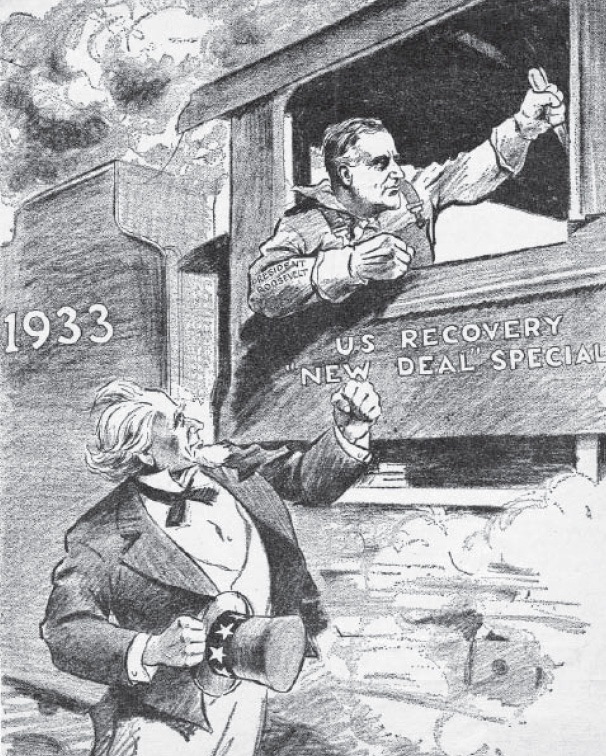
Seeing nothing beneficial for the American people in catering only to the rich, FDR brought an end to GOP policies. His administration instead offered a New Deal for economic revival. Through a massive legislative agenda Roosevelt and Congress intended to not only meet the emergency, but restore economic growth, and eliminate the conduct that led to the Depression in the first place.

One of the most popular New Deal relief programs was the Civilian Conservation Corps. Unemployed young men were put to work throughout the nation building trails and campsites in forests like the Great Smokey Mountain National Park, and urban building projects like the River Walk in San Antonio, Texas. (Consider that idle young men in Germany at the same time donned Black and Brown Shirts and broke heads for Hitler.)

Addressing the chaotic banking system FDR proposed systematic changes. Some 6000 banks had failed between 1930 and 1933 before the new president took office. Panicked depositors waited in long lines to demand their money until banks simply ran out of cash and locked their doors. Confidence collapsed. 

In his first days Mr Roosevelt announced a Bank Holiday where banks closed for four days to stop panic withdrawals. Auditors then inspected banking institutions across the country and surprisingly many banks were deemed solvent and reopened. Not finished with banking, FDR also took to the radio to explain the banking system, and with his cheerful confidence encouraged the public to take cash out of their mattresses, coffee cans, and backyard holes and return deposits to local banks. Thousands did just that. 

In order to prevent another such economic catastrophe the Glass-Steagall Act (1933), was passed by Congress to protect the public from high risk banking practices. One piece of the law was the Federal Deposit Insurance Corporation, FDIC, which is still in effect today. Depositors had the backing of the federal government to protect their funds from any loss. Moreover the Roosevelt Administration was determined to keep people in their homes, many of whom were facing foreclosure. The Home Owners Refinancing Act provided federal assistance to those who had paid their mortgages in good faith, but now faced eviction. 

In the first hundred days of Roosevelt’s New Deal 77 laws in total were passed by Congress, all aimed at restoring the health of the country. To the majority of Americans it felt like this president truly cared about their wellbeing. Roosevelt’s ascendency to the White House, next to Abraham Lincoln’s certainly stands as the most consequential in America’s continuing experiment in self government.

On a side note Franklin Roosevelt suffered from polio and could not walk, though he believed he’d walk again. FDR never gave up. And the truth of the matter is it took a man in a wheelchair to put the United States back on its feet. Franklin Roosevelt, unlike his predecessors knew that the business of America is “We The People.”

Gail Chumbley is a history educator, author, and playwright. Her work includes River of January, River of January: Figure Eight, both available on Kindle, plays Clay on the life of Senator Henry Clay, Wolf By The Ears a study of American slavery, and Peer Review where Donald Trump meets four past presidents.

If you like, please share this on social media.

Never Forget

Martin Niemoller

First they came for the socialists, and I did not speak out—because I was not a socialist.

Then they came for the trade unionists, and I did not speak out—because I was not a trade unionist.

Then they came for the Jews, and I did not speak out—because I was not a Jew.

Then they came for me—and there was no one left to speak for me.

—Martin Niemöller

German pastor and critic of Hitler and a concentration camp survivor.

A Rendezvous

One central  philosophy guided my years of American history instruction. The story had to feel personal to each student, after all it is their country. For the unit on World War Two, I aimed to act as a bridge between my grandparents generation to the kids seated before me. While growing up, my grandparents played a large part in shaping my world view, as the old folks often shared their life experiences. Each had a unique tale on how they committed to fight totalitarianism abroad in the 1940’s, and defend democracy at home. 

All the following accounts involved inconvenience, sacrifice, and interruptions to family life. At that singular moment all they knew was to serve their country, and defeat foreign tyranny. 

A new dark age lay in America’s defeat.

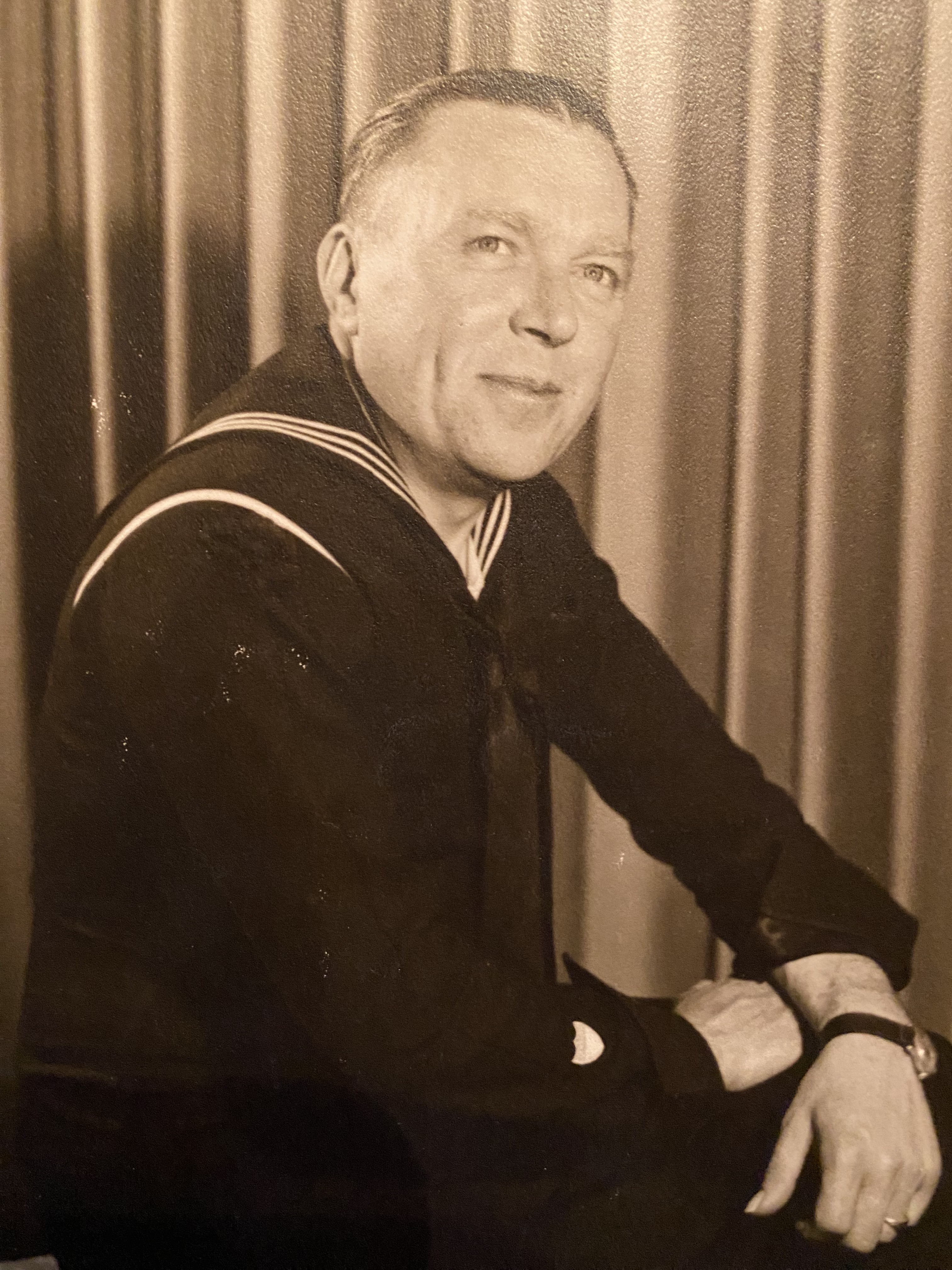
This is Ray Turner, born in 1905 in Hammond, Illinois. This young man migrated west, joining family members in Northern Idaho. Ray soon found his way to Spokane, Washington, where he found work as a postal carrier. Stopping for lunch along his mail route he met a waitress in a downtown cafe, Ailene Peterson, a single mother of one, and after a while they fell in love. Marrying in the fall of 1941, the newly weds, while on a Sunday drive caught a breaking news bulletin on the car radio that the Japanese had attack on Pearl Harbor in Hawaii. Ray turned his automobile around, motored back to Spokane, and joined the Coast Guard the next morning. Stationed out of Willapa Bay in Tokeland, Washington, Ray and the crew of the USS Manzanita patrolled the extensive, rugged Pacific coastline of Washington and Oregon monitoring for Japanese vessels. And it was aboard the Manzanita that Ray remained until August,1945 when he mustered out of the service and returned to Spokane. After a life of grandkids, holidays, and fun on his lake property, he retired from the US Postal Service, passing away in 1974.

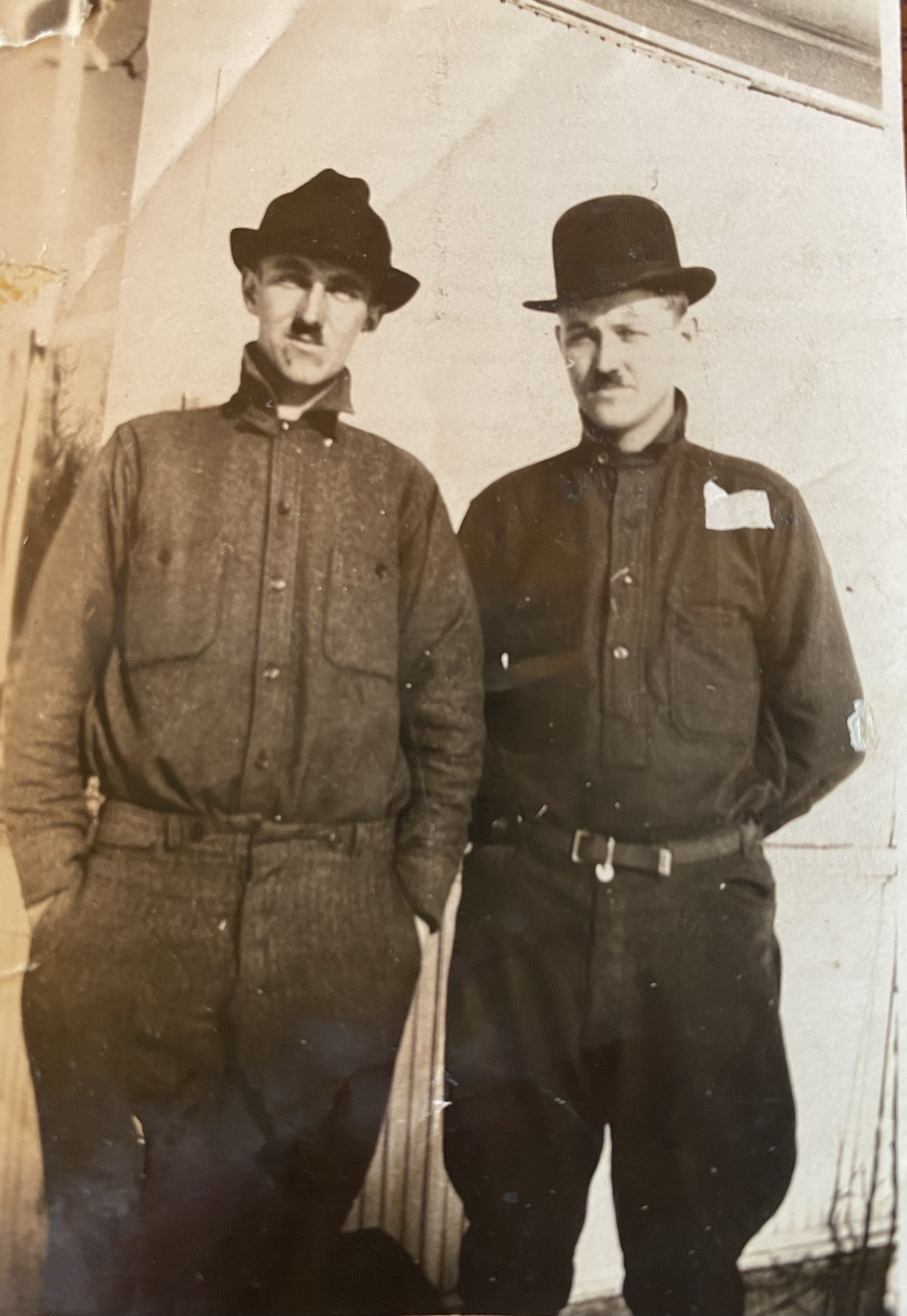
Kurtz Olson hailed from Wing River, Minnesota, born on a frigid day in January, 1905. Kurtz, as the youngest of seven children took up welding as a young man, and made a fair living during the difficult Depression years. This photo, take in the 1930’s, (Kurtz on the left) indicates that Hitler was considered harmless and laughable. That certainly changed in 1939, and after the Pearl Harbor attack brought America into the war, Kurtz packed up his wife and family and traveled west to Tacoma, Washington in search of war work. Kurtz spent his days dismantling scrap metal in a welding yard preparing the steel for conversion to ships, planes, tanks, and other war materiel. After the war Kurtz moved his family to Spokane, where he welded, owned a series of mutts, cut firewood with his son, and grandson’s. Kurtz passed on in 1989. 

IMG_0791

This GI is Joe Tucker, this snapshot taken somewhere in France around 1944. Born in Craig County, Oklahoma in 1907, Joe found himself back in uniform at the ripe old age of 37, much older than the 18 and 19 year-olds in his outfit. Joe had actually been in the army until 1939, receiving his first discharge before the war. Making his way to the Pacific Northwest he too, settled in Spokane where he met and married a widow with three children. His daughter from his first marriage lived in the city, as well, and he wanted to remain near her. Working for the Northern Pacific Railroad, with his new, larger family, Joe joined the Washington National Guard for the extra pay guard duty brought in. After Pearl Harbor the US Government nationalized the Washington Guard, and off he went to war. After training stateside, then stationed in the south of England, Joe found himself on Normandy Beach on June 7, 1944, D+1. Surviving those first days he and his fellow Guardsmen suffered through the Battle of the Bulge, finally winding their way to Germany. On one particular night, Joe stood guard duty somewhere in Germany. He heard his sergeant grouse was the soldier on duty asleep? The reply was no, it’s Tucker, and he’s awake alright. (Joe liked telling that story). Eventually Joe shipped home to reunite with his family in 1945.

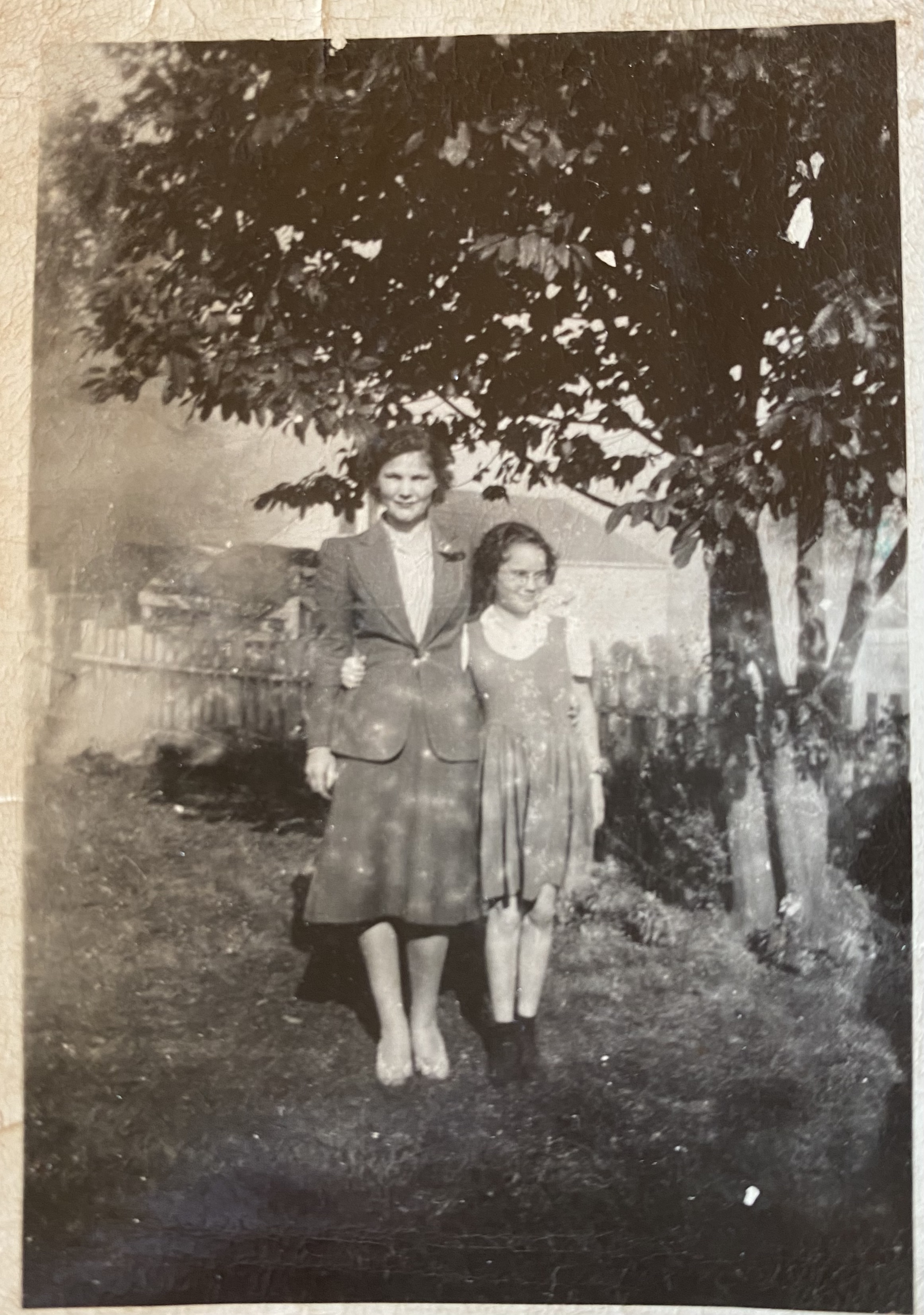
From her waitressing job, Ailene Peterson, turned Ailene Turner followed her new husband Ray to the Washington coast. Traveling with her young daughter Ailene looked for war work as well. Born in 1914, in Clinton, Minnesota, Ailene had married quite young, desperate to leave her father’s stump farm in North Dakota. Husband #1, Joe Tucker had failed her, and with her young daughter in tow, sought refuge with family members in Spokane. It was in Bremerton, Washington that she found employment wiring mine sweepers for America’s Russian allies, (she said they were very rude). In later life, Ailene proudly mentioned that her work never had to be redone. She always wired it right the first time. In an operators cab of a crane, Ailene noticed the girls below waving their arms and jumping about. Shutting down the motor she heard them yell that the Japanese had surrendered, and the war was over. Ailene scrambled down from her seat, and joined the victory celebration. She, too, along with Ray returned to Spokane until her death in 1990.

Besides being my grandparent’s, and generously sharing their remarkable stories with me, what else did these people share in common? They put aside their personal lives to step up in defiance of fascism and authoritarianism. They knew that service to America, to our democracy, was their first duty.

Retelling my grandparent’s war-time sacrifices to my history students added a vividness to the coursework that encouraged the kids to do the same with their elders. That, once again is how I bridged the war years to now, making it personal for students. 

President Roosevelt had characterized that moment as America’s “Rendezvous with Destiny,” and those people rose masterfully to the challenge. And despite all the hostility to democracy today, we cannot surrender to those forces, and betray our forebears who stood up to defend our way of life.

Perhaps now is our “Rendezvous with Destiny,” and this time all we have to do is vote for the Democrat over the wannabe dictator.

Once again, a new dark age lay in America’s defeat. 

Gail Chumbley is the author of the two-part memoir, “River of January,” and “River of January: Figure Eight.” Both are available on Kindle. Chumbley has also penned two history stage plays, “Clay,” and “Wolf By The Ears.” She is the co-author of “Dancing On Air,” and feature length screenplay, and is working on “Peer Review,” for the stage, a series of short plays where DJT meets real presidents from the past.

gailchumbley@gmail.com

Behind the Smiles

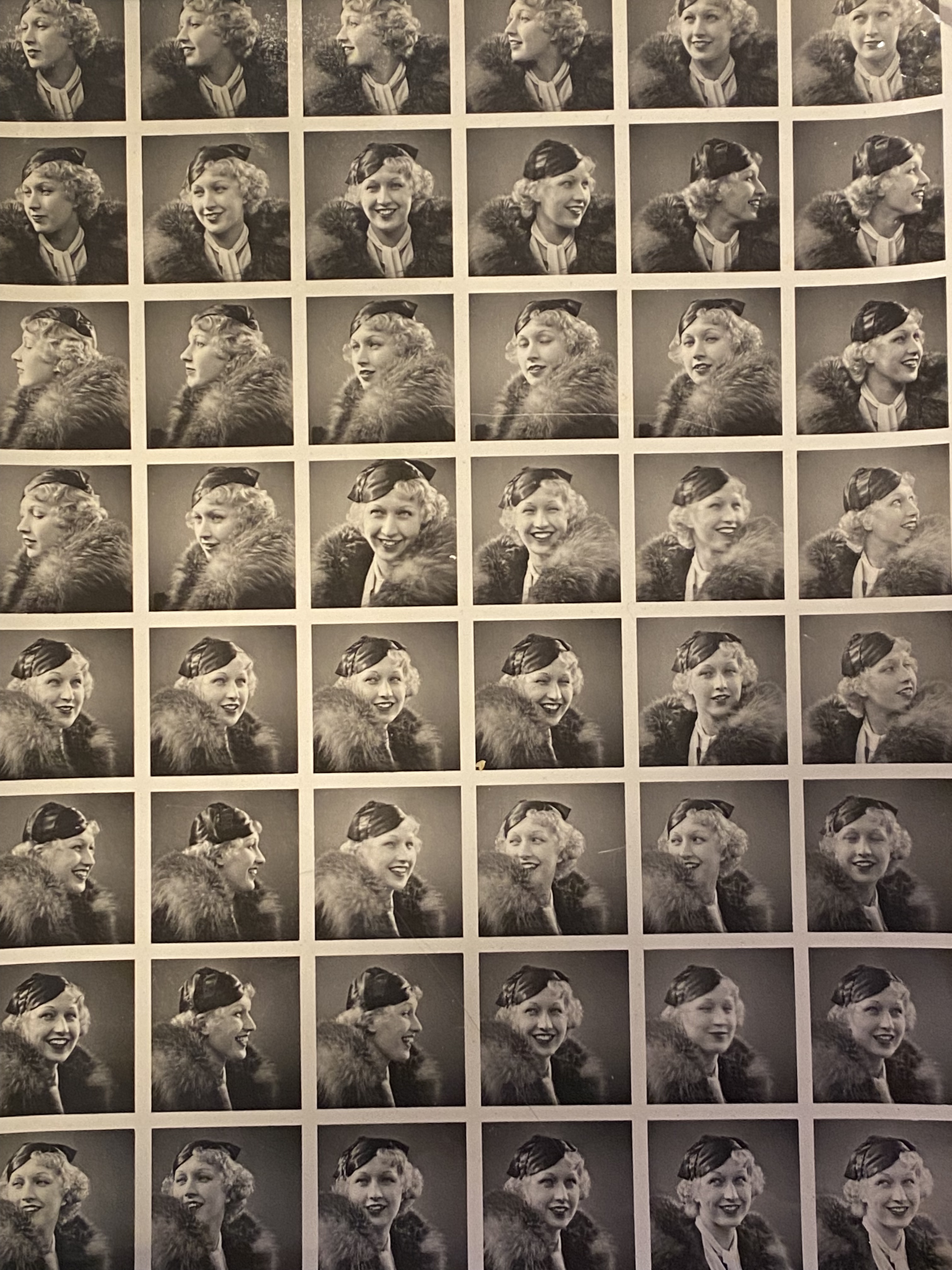
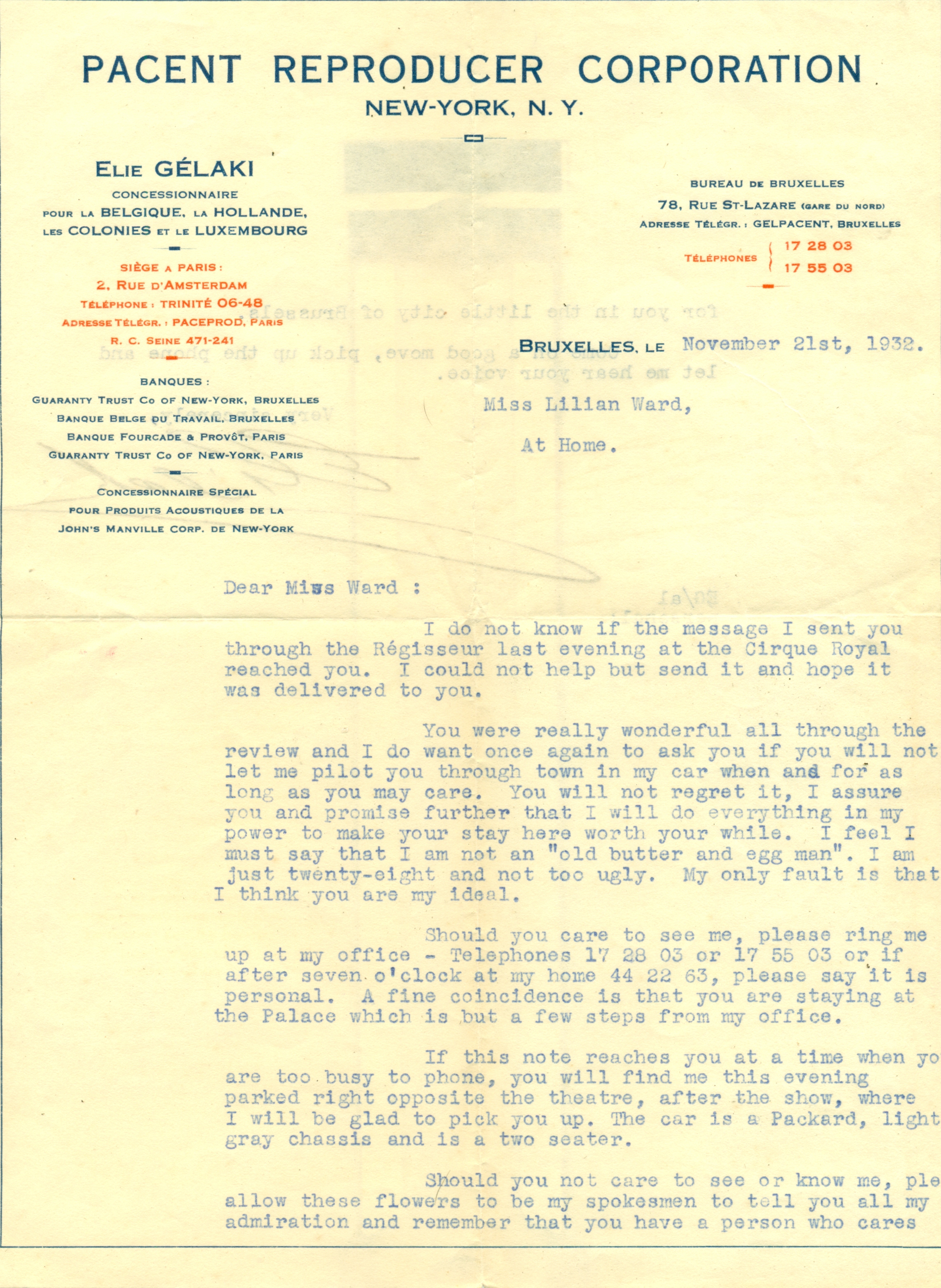
This, of course, is Ann Frank. She sat for this photo montage in Brussels, Belgium, probably just before the war. The studio’s name was Polyphoto International and it was owned by a gentleman named Elie Gelaki.

Six years earlier Elie had established another studio across the Atlantic, in New York City, and evidence indicates he aimed to do the same across Canada, and Japan. Whether those offices actually opened is hard to determine, especially in Japan as war with China had erupted. However, the New York studio did open for business and Elie got to work.

The subject of this session was the reason Elie had traveled to New York. Her name was Helen Thompson and she was a professional dancer. Though at first he had mistaken her name, Elie fell in love with the Helen, eventually following her to New York, seeking marriage. But the wedding never came about.

The 1930’s was a perilous time, especially for people like Ann Frank and Elie Gelaki, both Jewish, living their lives under the growing shadow of Nazism. And though Helen never married the Belgian she worried about his fate as the European war blitzed to life, and of course she knew nothing of Ann Frank until later. You see Helen was my mother-in-law, and though we never met, my husband told me she occasionally shared her anxiety regarding Elie’s fate.

It is evident that behind the smiles, and the momentary pleasure of picture taking, an epic story of three individuals played out in a dramatic chronicle of the 20th Century.

For more of this story read “River of January,” and River of January: Figure Eight” both available on Kindle.

Chumbley has also penned a feature film script based on the books titled, “Dancing On Air,” and in addition two plays on American history topics-“Clay,” and “Wolf By The Ears.”

gailchumbley@gmail.com

The Gadget

FDR had an agreement with Winston Churchill. Though the Japanese had hit Pearl Harbor in the Pacific, the two leaders prioritized the European theater. Meeting on the HMS Prince of Wales, the two men met face to face (for the first time) agreed defeating Hitler’s Germany was job number one.

The US economy transformed quickly. America took the position as the arsenal of democracy for our allies. Jeeps, halftracks, Higgins boats, aircraft, and munitions were produced, largely, all largely produced by thousands of women on assembling lines. The United States was in full warfare mode. Some of these wartime innovations are still around today; ranging from radar to M&M’s to penicillin.

One such innovation came from the work of refugee physicists, Enrico Fermi and Leo Szilard. Both refugees had escaped Hitler’s antisemitic reach. Fermi was a pioneer in nuclear fission, Hungarian-born Szilard, embraced Fermi’s calculations. But Szilard knew he needed assistance to get this theory into the hands of President Roosevelt. Enlisting the help of a former colleague, Szilard contacted Albert Einstein. Though a pacifist, Hitler’s treatment of Jews, moved Einstein to use his celebrity to reach out to the White House. 

Events moved quickly after FDR read Einstein’s communication, and that was the genesis of the Manhattan Project. J. Robert Oppenheimer, a physics professor at UC Berkeley was tapped to head the program. He had argued that a remote central laboratory was essential for security and secrecy. New Mexico’s Los Alamos had been a childhood haven for his family and the US Army agreed to the proposed site. Subsequently, universities across the country began to noticed colleagues disappearing from science departments. Gone in secrecy these people were sent by rail to New Mexico.

The horror of Hitler and the Nazi regime fueled the furnace of urgency in the New Mexican desert. The pace itself became a force of its own. The work never ceased. A genocidal German dictator controlled Europe and this weapon became essential to end the war. Eventually in July, 1945 the “Gadget” as the device was nicknamed, stood ready for a test.

Of course the detonation was successful in a culminating in a horrific, frightening cataclysm. 

But by July 1945 the war in Europe was over, and Hitler dead.

FDR too had passed, and Churchill would soon no longer serve as Prime Minister of Great Britain. Suddenly the vice president, Harry Truman found himself President. Inundated with intelligence and war measures, Truman, later remarked he felt as if the moon and stars had fallen upon him. That briefing included the status of the Manhattan Project still frantically underway in Los Alamos.

The rest of the story is known. A new film has been released on the project and on Oppenheimer. To speak plainly the atom bomb was intended for Germany, but dropped upon Japan-twice. And this weapon certainly proved effective in ending the war in the Pacific. 

But bombs did not go away. Along with synthetic rubber, flu vaccines, and even computers, the atomic bomb still looms large. Science melded with military matters into what Eisenhower would call “the military industrial complex.” This Cold War triggered an arms race as the bombs grew in scope and in size, leaving all of America in a state of frightened readiness.

As for Oppenheimer, he lingered the rest of his life a tormented man. The why of the effort was never considered during the frenzied development of the weapon. However, once witnessed, in all of its glorious horror, the physicist lived in perpetual agony 

In his own words the physicist anguished “I have become death.”

Gail Chumbley is the author of the two part memoir, “River of January,” and “River of January: Figure Eight.” In addition Chumbley has penned two plays, “Clay” a study of Statesman Henry Clay, and “Wolf By The Ears,” exploring the underpinnings of racism.

The Long Haul

After the 1929 Market Crash the world fell into regional, nearly feudal isolation, and international trade quickly dried up. America, too, focused inward largely due to the nation’s earlier participation in the Great War in Europe.

Across the Pacific the Japanese Empire aimed to take advantage of global disinterest promoting its own national interests. Sold to other Asian countries as the “Co-prosperity Sphere,” hyper-nationalistic Japan intended to expand across the region, especially toward vulnerable, resource rich China.

Great Britain as well, struggled alone in a financial malaise, as did the French across the channel; both nations saddled with debt to American banks from the previous war. Germany, the defeated nation struggled with their own war debt demanded by the British and French.

The shroud of economic depression hung like a millstone over Europe and the rest of the world.

As the financial, and political fallout grew wildly unstable, regimes hunkered down and hoped for better times. However the climate instead became chaotic, bringing anti-democratic demagogues to power.

The Italians were first, producing a Fascist strongman, Benito Mussolini. El Duce, as he was known suppressed political diversity, harnessed economic efficiency, and soon, like the Japanese, pursued colonial inroads into Libya, and later the conquest of Ethiopia.

Germany soon flirted with its own style of fascism, with a meaner, violent credo. In a reaction to impossible debts, and national pride, Adolf Hitler, a feckless dreamer, stood on beer hall tables, and passionately spoke of national betrayal. Hitler revealed his malicious intentions by blaming Bolsheviks, Capitalists, and Jews for the hated Armistice of 1918, and war debt owed to the Allies.

Yet America, unlike the rest of the world, clung with all their might to the national system of Constitutional norms. At the same time Germany elected Hitler in 1932, the U.S. found their champion in Franklin Roosevelt. 

A popular Roosevelt Coalition steered the country through those hard years holding America together. FDR’s New Deal and Fireside Chats broadcasts kept at bay the fears of a nation. That’s not to say there weren’t kooks, to borrow Lindsay Graham’s phrase, but Americans faced the long haul together, believing better days had to be ahead.

The current President is no Franklin Roosevelt. And his autocratic tendencies, strongly echo those in the 1930’s.

In Project 2025 Trump aims to raise tariffs, shut down borders, all done to economically and politically isolate America. Using the same playbook of past despots specific groups are targeted as the problem. The guilty include immigrants, the LGBTQ community, liberals, educators, women, and the rule of law all in the crosshairs. All done to divert and distract while he lines his pockets.

And his tactics, so far have succeeded making half of the electorate real mean.

So, here is the question. Can America survive?

Can Americans remain bound to the framework of our 238 year old republic as it did in the Great Depression? Or will this nation forsake our financial, social, and political traditions and turn to petty retribution and scapegoating?

Will we, as a nation withdraw from the world and exchange our democracy for a strong man who insists he has all the answers?

The signs are clear. When this national crisis has passed will there be enough of us left who stood resolute for our democracy? That is the question of this historic moment. 

Gail Chumbley is a writer and history educator.

Pull of the Past

The Ukraine is located north of the Black Sea

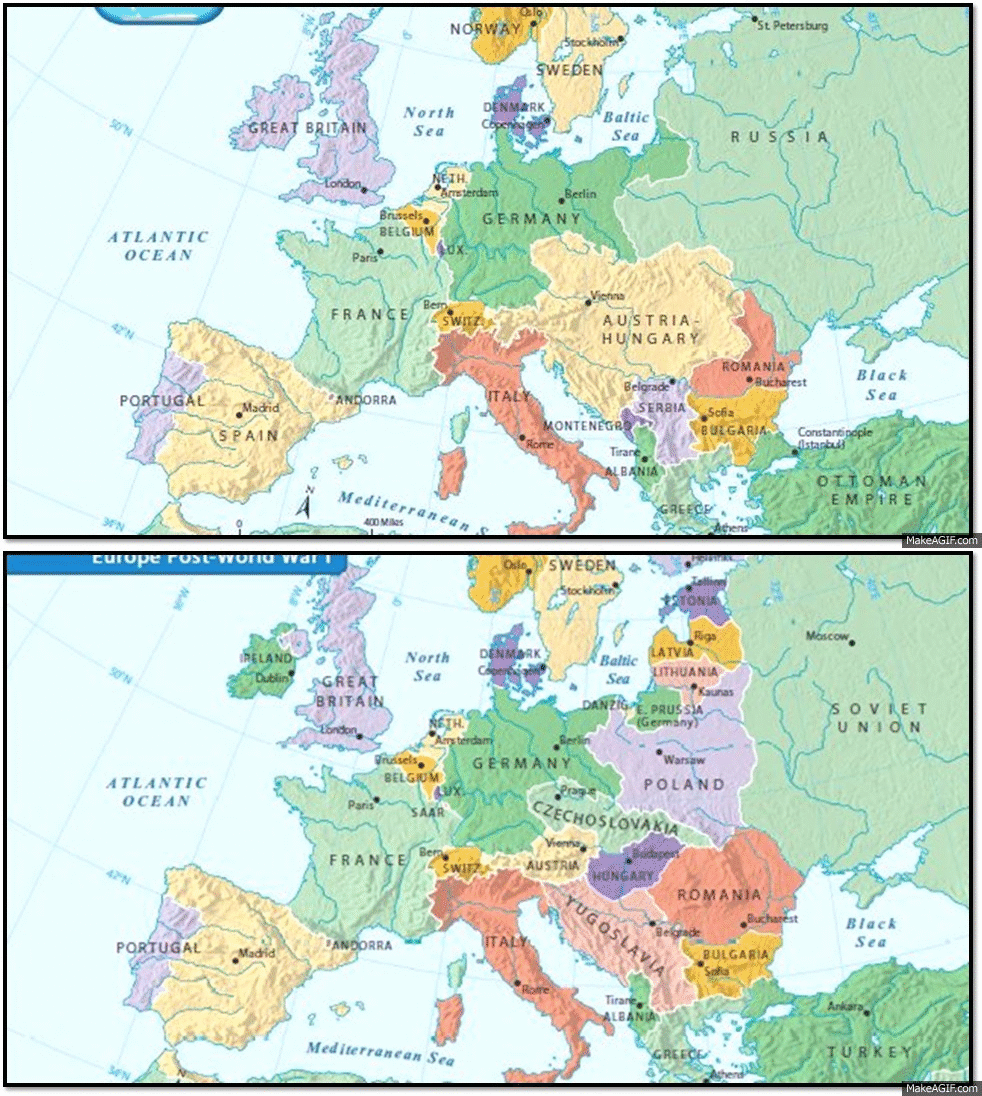
Three monarchies ruled Central and Eastern Europe in the years leading to World War One. The Hohenzollern of roughly present day Germany, the Hapsburgs of nearly all the lands between Germany and Russia, where the Romanov dynasty ruled for hundreds of years. Modern republics carved from these three long ago kingdoms still feel a dynastic pull, as if prisoners of the past.

After WWI, and the forthcoming Treaty of Versailles the major kingdoms disappeared, replaced by new countries drawn by the hands of the victors. The objective of those redrawing the face of Europe was to give each language group the dignity of self rule. With few exceptions monarchies were gone, replaced by self-governing democracies.

1919 produced a validating moment for ethnic-language groups, resurrecting national flags and reveling in their distinctive cultures. But historically speaking independence lasted only a twinkling. 

Throughout the 1930’s the Germans tried democracy, only to discard the system in favor of autocracy under Adolf Hitler. The last Hohenzollern, Wilhelm II had been deposed and lived in exile, clearing Hitler’s path of impediments. Engaged in revitalizing Germany, the Fuhrer proceeded to annex nearby lands, reversing that moment of democratic freedom. 

The German Fuhrer set his sights on reoccupying the Rhineland, a resource, and industrially rich region to the west. That the German’s were not, by treaty, permitted to seize that area, Hitler waited for the protests, but the western allies did nothing. Later Hitler sent forces to Austria, the site of his birth, and absorbed that country into his Third Reich. Crickets. Then after a pause, he made a play for the Czech region of the Sudetenland. These acquisitions were German-speaking populations, and to Hitler a part of Germany’s destiny.

This time the West did take notice.

In September, 1938, the German Fuhrer hosted England’s Neville Chamberlain, and France’s Edouard Daladier to discuss the fate of the Sudeten. The conference was a cynical sham. As the political leaders admired the Berchtesgaden view of the Tyrolian Alps, German troops amassed on the Czech border. A secret “incident” was in the works as a pretext to invade as soon as possible. Part of Hitler’s scheme included informing his guests that German nationals in western Czechoslovakia were persecuted, and his duty lay in rescuing them.

Both Chamberlain and Daladier, fearful of a new war, agreed to Hitler’s aggression, as he assured them after the Sudetenland, Nazi expansion would conclude. But of course he was lying. World War Two erupted the following year.

At this writing Vladimir Putin is playing the same game as Herr Hitler. In 2014 Putin sent forces into the Crimea, with one eye on the Western democracies. There were protests, and economic sanctions, but no ultimatums. 

As Russian soldiers amass at the border of the Ukraine, President Putin pretends none of the aggression means anything. But this Russian autocrat means plenty, and is implementing a play to return the Ukraine back to where he believes it belongs-Russia. 

 Does the west have the will or consensus to allow this modern-day dictator to lie to the world and invade Ukraine? Will the Americans, and other European Allies look the other way, as did Chamberlain and Daladier? 

I’m no expert on European History, but finding patterns has become second nature. The pull of the past is strong, and would-be dictators care nothing about national boundaries. For a tyrant like Putin entitlement to the Ukraine is much the same as breathing. So the onus falls on the NATO Alliance to hold the line. A line that President Putin is doing his best to challenge.

Gail Chumbley is the author of River of January, and River of January: Figure Eight. Both books are available on Kindle.

gailchumbley@gmail.com

Inheritance

Harry Truman understood the gravity of his duty right off. When FDR died in April, 1945, the newly installed Vice President got the word he was now president. And what a Herculean task he had before him. A world war to end, conferences abroad, shaping a new post-war world, and grappling with the human rights horrors in both Europe and in the Pacific. Add to all of that, he alone could order use of the newly completed Atomic Bomb.

On his White House desk, President Truman placed a sign, “The Buck Stops Here.” With that mission statement Harry Truman stepped up to his responsibilities despite the formidable challenges he faced.

Did Truman inherit the worst set of circumstances of any new president? Maybe? But it is open to debate.

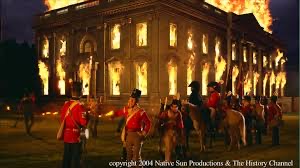
America’s fourth President, James Madison, found himself  in one god-awful mess. His predecessor, Thomas Jefferson had tanked the US economy by closing American ports to all English and French trade. Those two powerful rivals had been at war a long time, and made a practice of interfering with America’s neutrality and transatlantic shipping. Despite Jefferson’s actions the issue of seizing US ships and kidnapping sailors never stopped. By 1812 President Madison asked for a declaration of war against England that, in the end accomplished nothing but a burned out White House and defaced Capitol.

Following the lackluster administrations of Franklin Pierce, then James Buchanan, Abraham Lincoln stepped into a firestorm of crisis. Divisions over the institution of slavery had reached critical mass, and Lincoln’s election was enough for Southern States to cut ties with the North. So hated was Lincoln, that his name did not appear on the ballot below the Mason-Dixon. And the fiery trial of war commenced.

The Election of 1932 became a referendum on Herbert Hoover, and the Republican presidents who had served since 1920. Poor Hoover happened to be in the White House when the economic music stopped, and the economy bottomed out. And that was that for Hoover. His name remained a pejorative until his death. 

Franklin Roosevelt prevailed that 1932 election, in fact won in a landslide victory. Somehow Roosevelt maintained his confident smile though he, too, faced one hell of a national disaster. 

In his inaugural address the new President reassured the public saying fear was all we had to fear. FDR then ordered a banking “holiday,” coating the dismal reality of bank failures in less menacing terms-a holiday. From his first hundred days the new President directed a bewildered Congress to approve his “New Deal.” 

The coming of the Second World War shifted domestic policies to foreign threats as the world fell into autocratic disarray. FDR shifted his attention to the coming war. When President Roosevelt died suddenly, poor Harry Truman was in the hot seat. But that is where I want to end the history lesson.

If any new President has had a disaster to confront, it is Joe Biden. Without fanfare or showboating Biden, too, has stepped up to the difficulties testing our nation. 

Much like Truman and Lincoln before, 46 is grappling with a world in chaos, and a divided people at home. In another ironic twist, like Madison, Biden witnessed, a second violent desecration of the US Capitol.

To his credit, though his predecessor left a long trail of rubble, Biden understands the traditional role of Chief Executive, while clearly many Americans have forgotten, or worse, rejected. Biden is addressing the issues testing our country, not only for those who elected him, but those who did not. An American President can do no less.

Gail Chumbley is the author of the two-part memoir “River of January,” and “River of January: Figure Eight.” Both titles are available on Kindle. She has completed her second play, “Wolf By The Ears.”

gailchumbley@gmail.com