A Bright Side

Donald Trump, without a doubt has answered the centuries old question of the worst president in American history. His standing as the biggest moron lends Harding, Buchanan, Pierce, and other lackluster presidents a step up from the cellar. 

Is there a bright side to the bedlam unleashed by 45’s insanity? I believe so. Americans have witnessed how not to preside over our democracy in real time. Now that’s a powerful civics lesson. 

Once misunderstood, most American’s were reminded how the Electoral College functions—a big deal demonstrating how a candidate can win the Electoral College, but not the popular vote. From irregularities identified in the 2016 race, shocked citizens across the country wonder if this election procedure has a purpose in the 21st Century. 

The legal tradition of checks and balances took a rough bruising with Congressmen and Senators scurrying to the Oval Office to kiss the ring of their messiah. Two clearly illegal actions by the President; pressing Volodymyr Zelensky of Ukraine to open an inquiry on Hunter Biden, and Trump would offer an invitation to Washington.The second came after the January 6th insurrection using violence to disrupt the ceremonial certification of Electoral College. The House impeached both times, and the Senate refused to convict. The moral of that story? The Executive Branch went rogue and the upper chamber of the Legislative Branch failed in their duty. However, both branches somehow remained intact and horrified voters learned what they didn’t want. 

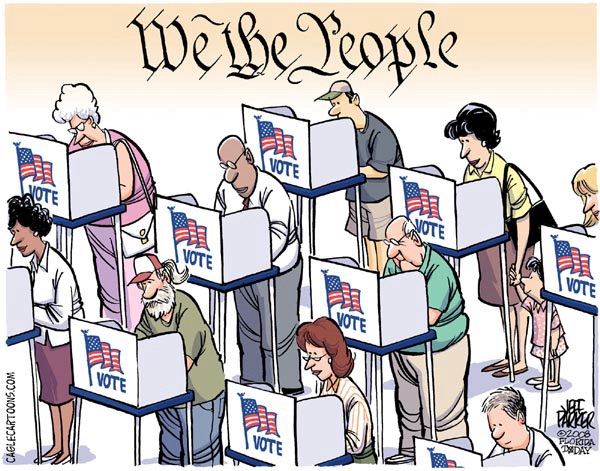
That elections and voting truly matter may be the most profound lesson of the Trump years. The right to vote is power, and denying citizens of that power became the GOP’s endgame. Even now, the far right longs to deprive many of us, especially minorities from exercising that power. The lawsuits are still flying to undermine our most sacred right under the law.

Another teachable moment touched on the Supreme Court. The 2020 death of Ruth Bader Ginsburg, and the retirement of Anthony Kennedy in 2018 shed light on manipulating the Judiciary. Senate Majority Leader, Mitch McConnell lobbed the first volley through the customary practice of filling Supreme Court vacancies. Before 2016 the sitting president had the privilege to put forth judicial nominees. That had been a long tradition. But the sitting President happened to be Barack Obama. So of course McConnell blew that up. Obama’s choice for the court was Merrick Garland, and McConnell would not hear of it.

Following the 2016 election that tradition resumed. Trump put forth Amy Coney Barrett, and later Brett Kavanaugh. Both lied in hearings to the Senate Judiciary Committee, Barrett testified she would allow Roe to remain, and Kavanaugh was a reputed date raper. The clause allowing lifetime terms for judges added gravity to Trump and McConnell’s shenanigans. 

Perhaps the Trump fiasco holds a silver lining. Americans have become more aware of the workings of our democracy, what functions under the hood, so to speak. Perhaps democracy is indeed fragile, but our near collapse into tyranny has forced us all to wake up and pay attention.

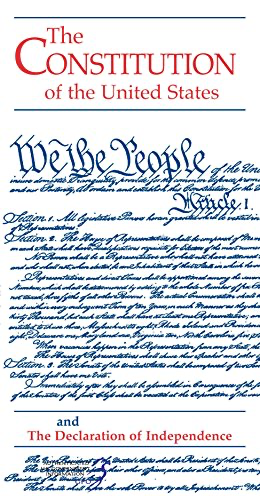
PS contact your Representative in Congress. Request a hand pamphlet of the Constitution like the one above. They have them in their DC office or their home office. We’ll show ’em.

Gail Chumbley is the author of the two-part memoir River of January, and River of January: Figure Eight. Chumbley has written two plays, Clay about 19th Century Statesman Henry Clay, and Wolf By The Ears exploring the genesis of racism and slavery in America.


The only thing new in the world is the history you don’t know

Harry Truman
They Were Wrong

“Slave owners and white racists were afraid that the world they had always known was slipping away from them. Fear was a great motivator—fear of change, fear of losing power, fear being that they were wrong. The roots of white anxiety over threats to enslavement and to legalize white supremacy ran deep.”

John Meacham, And There was Light. Random House, 2022, page 55.

Reading this passage last night stunned me. A myriad of thoughts rushed at once, promptly crystallizing into one central truth; racial dynamics in America have not changed. Not. One. Bit.

Meacham’s book, a biography of Lincoln, focuses on the shaping events that made Lincoln arguably America’s greatest President. However, those same circumstances left the Southern slave power angry, and lethally dangerous. This metastasizing rancor ultimately exploded into Civil War, and to Lincoln’s 1865 murder.

The Missouri Compromise triggered the first alarm below the Mason-Dixon Line. That slavery could be limited through any federal legislative act left slavers touchy and suspicious. Sensitive to any criticism Southern owners  (as Mr. Meacham pointed out), viewed any outside opposition to their standing as a dishonorable insult.

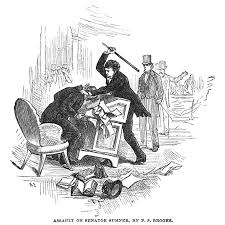
Congressmen and Senators frequently squared off years before soldiers manned battle lines. A Massachusetts Senator suffered a severe beating on the Senate floor for an anti-slavery address. So volatile became the rhetoric that the House chamber finally adopted a “gag rule” prohibiting any mention of slavery in any deliberations.

As Northern abolitionists grew more strident, Southerners grew more militant. A flash of arms became only a matter of time.

Any abolitionists tracts, or books, such as Uncle Tom’s Cabin quickly landed in the trash bin, tossed out by local Southern officials.

The politics of race entered houses of worship with church leaders twisting the Bible inside out to oppose or justify slavery. Today the Southern Methodist and Southern Baptists churches are evidence of the war before the war.

After the guns silenced, into the Reconstruction era the newly emancipated found protection only through Yankee bayonets. Outraged and unrepentant Southern whites waged guerrilla warfare with violence and terror. The Ku Klux Klan, the Knights of the White Camelia, and the White League galloped through the night spreading fear and intimidation to any black-man who dared claim the blessings of liberty. 

Contrasting the 21st Century to the 19th provides strikingly similar dynamics.

In 2008 Barack Obama became 44th President of the United States, and white power interests again lost their minds.

Though at first it appeared that America had turned a positive corner in race relations, Senator Mitch McConnell quickly reacted decreeing the GOP would not work with the new president. Soon after the Congressional Republicans sunsetted a clause in the 1965 Voting Rights Act. Signed into law by Lyndon Johnson, the act protected black voters from discrimination at the polls. McConnell’s handy work placed the onus on the voter to prove they were illegally denied. (Much like the old poll tax and literacy tests days.)

Once again white supremacist perceive their alpha-position slipping away, and they, too, are suspicious and lethally dangerous. The hate group names have changed, but not the mission. Proud Boys, Oath Keepers, neo-Nazi’s, MAGA, and Christian Nationalists gallop now through the internet on the dark web, surfacing to attack as was done on January 6th, 2021.

The signs are all there, fear of a changing America, fear of being wrong, and fearful of losing control.

Those who witnessed the dissolution of the Union believed their blood-soaked sacrifice had settled for all time the issue of race in America. But that is clearly false.

But then is now. Now is then. Eras are intricately and forever intertwined. This nation has remembered nothing and again defaulted to the same old norms of hate and boastful ignorance.

And though those same feelings run deep, and they are still wrong.

The only thing new in the world is the history you don’t know. Harry Truman

Chumbley is the author of the two-part memoir, River of January, and River of January: Figure Eight. She has penned two stage plays, “Clay,” exploring the life of Henry Clay, “Wolf By the Ears,” a study of racism in America, and “Peer Review,” where 47 is confronted by four past presidents.

Broken

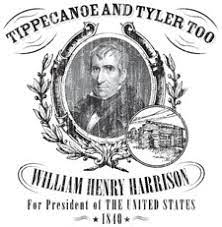
This was the situation in April, 1841. Newly inaugurated president, William Henry Harrison died after only a month in office. The 68-year-old Harrison apparently succumbed to pneumonia after delivering an exceptionally long inaugural address in foul weather. Harrison, the first Whig to win the presidency, was also the first chief executive to die in office, and the Constitutional protocol of succession had never before been exercised.

Harrison’s Vice President, John Tyler, moved quickly upon learning of the President’s demise. He located a judge to administer the oath of office, and moved into the Presidential Mansion (White House). When members of Harrison’s cabinet informed Tyler they would take care of the daily business of governing, he cooly responded that they could either cooperate, or resign.

Tyler had been an odd choice for Vice President. The Whig Party had gelled during the Jackson administration, proposing financial and internal developments over sectionalism and states rights. The Whigs further found slavery not only inconsistent with liberty, but also an obstacle to the growth of a modern economy.

Foremost among the Whigs was the Party’s greatest voice, Senator Henry Clay of Kentucky. Clay had first been a presidential candidate in 1824, and again in 1836. However, in 1840 when the Whigs met in Harrisburg, PA to nominate their candidate, Clay failed to gain the top spot, and then declined the offer of the vice-presidency. Clay later regretted his momentary pique.

Though John Tyler had been a Virginia Democrat, he had publicly broken with Andrew Jackson over Jackson’s misuse of presidential power. In particular, Tyler objected to Jackson’s threats against South Carolina in the Nullification Crisis, leading Tyler to forsake the Democrats, but not the philosophy of states’ rights, or the institution of slavery.

The Whigs decided that Tyler’s opposition to Jackson was good enough to offer him the second spot on the Whig ticket, and Tyler accepted. Then a month into his term, Harrison died, and this Southern Democrat, a wall-to-wall sectionalist assumed the presidency. 

From there, Whig policies quickly unraveled.

If the Whig’s aimed to realize their platform of national economic growth, their hopes died under President Tyler’s veto pen. Predictably, the Whig cabinet soon grew frustrated, then disgusted with presidential obstruction. Members began to resign. Only Secretary of State Daniel Webster hung on, as he was in the middle of Canadian boundary discussions with the British. Then he, too, submitted his resignation. Shortly after the cabinet fled, the Whigs formally expelled Tyler from the party.

To their credit the Whig leadership didn’t excuse Tyler, or defend his contrary actions. No one said ‘let Tyler be Tyler.’ They publicly broke and denounced the President’s antics, though the cost, for the Whigs, came due ten years later when they disbanded. 

Yet, the story doesn’t end with the demise of the Whigs, but begins anew with a stronger and more principled political movement. For from the ashes came the birth of the Republican Party, much like a rising phoenix.

But today that party has soured. No longer guided by principle the GOP has submerged their once decent name in the cesspool that is Trumpism. 

*This post appeared in 2019. And now, in 2022, the GOP has formally forsaken all that was decent in the Republican Party. They now publicly support a coup attempt through silence and excuses, abandoning leadership of their party to propagandized fanatics.  

Gail Chumbley is the author of the two-part memoir, “River of January,” and “River of January:Figure Eight,” “Clay,” a play chronicling the life of Senator Henry Clay, followed by another, “Wolf By The Ears,” a study of racism and slavery. “Peer Review” is her third work imagining 47 meeting four earlier presidents, and a screenplay, “Dancing on Air” based on her books.

gailchumbley@ymail

The Past Isn’t Past

The above diagram, or other similar images frequently pop up in American history textbooks. The purpose of the image is to represent Southern society in the years up to the Civil War. A quick look reveals that this system was top down and not in any way democratic.

Small scale farmers and poor whites near the bottom pose some interesting questions regarding antebellum (before the war) social class interactions. How much authority did small farmers actually wield in this ordered system? How did customs and rules shape relations between poor whites and slaves? The most pressing question asks why would lower class whites risk all to do battle for the lofty Planter class? After all, these same aristocrats strictly associated within their own circle, and would not give the time of day to any social inferiors.

So again why did the lower rungs answer the call to battle?

One explanation must touch upon race and identity. Small land holders and poor whites, as hard as they struggled to survive somehow believed or wanted to believe they shared more in common with the aristocrats at the top. Identifying with the enslaved below, despite living in similar adversity was unthinkable.

And these sons of the South fought hard. Some 300,000 Confederate soldiers died of shot, disease, or returned home maimed to preserve a culture that held them down.

Let’s put a pin there.

Keeping in mind the above image fast forward to the 2008 victory of Barack Obama. For many of us the election of our first black president marked a high point in racial history, seemingly proof that America had finally faced and redeemed the violent legacy of injustice.

And despite President Obama’s two successful terms in office, (Obama is somewhere among the top ten presidents of all time) the persistent legacy of racial hatred roared back to life as virulent as any year in old Dixie.

Like demons summoned from the dead, the ugly ghosts of white supremacy rose, once again fueled by a latter day white aristocracy. America is witnessing in real time DJT and his plutocrats purposely riling up lower class whites to again man their battle fronts.

A black president, a very popular and effective black president united malicious forces of hubris, greed, and malignant hate.

This toxic furnace of racism has honestly emerged as something of a shock. For those of us who bore witness to the Civil Rights movement, applauded affirmative action policies, and celebrated landmark legislation in housing and voting rights, led us to believe a A More Perfect Union was underway. But we were wrong.

Stunningly wrong.

47”s first administration emboldened a Klan-style march in Charlottesville, where he remarked there were “good people on both sides.” Left unmentioned was the fate of Heather Heyer, a counter protestor, who was deliberately targeted and killed in the melee. In 2021 47 groomed his working class foot soldiers to “stand back and stand by.” When the order came, these emboldened thugs sacked the US Capitol toting Confederate and Nazi flags. Neither Robert E Lee or Hitler ever got that close to our center of government.

In both cases MAGA militia in red caps waving blue flags proved that America has made no racial progress at all. Hate, especially racial hate has been simmering all along. Forget that 47 and his GOP are gutting social safety nets and services (Medicaid and FEMA come to mind) that support many of his minions (and the rest of us). Effectively manipulated MAGA enthusiasts proudly, defiantly, swill the poison of grievance.

Planter society would easily recognize this tried and true method of cultural conditioning. Working class whites once again believe they share the same interests as the ruling elite. After all they are all white. However, that same elite has no further use for those who elected them. And this resurrected aristocracy doesn’t think much of democracy either. Utah Senator Mike Lee publicly said as much.

The 21st Century rallying cry echoes that of an earlier century. The worst white man is still better than the best man of color. (And I don’t mean Joe Biden.)

And that is how those with little to nothing are schooled to preserve those who have everything.

Gail Chumbley is the author of the two-part memoir River of January, and River of January; Figure Eight. Chumbley has authored three stage plays, Clay, a look at the life of Henry Clay, Wolf By The Ears, an examination of racism and slavery, and Peer Review, where Donald Trump meets four former presidents.

gailchumbley@ymail.com

Catch Up

A radical change in imperial policy between Great Britain and her American Colonies marked the beginning of the Revolutionary Era.

Well before the American Revolution an amiable, and profitable arrangement existed between the Colonials and Parliament. This mutually profitable connection quickly terminated after the French and Indian War, 1754-1763. That conflict, though a victory for the British, had cost the Royal Treasury plenty, and the Crown abandoned friendly relations by coercing Americans to share in settling that war debt .

Parliament began by imposing a number of taxes, all designed to force Americans to pay up. The Sugar Act, Stamp Act, and Townshend Duties, among other measures, had been designed to force Americans to cover the royal debt. Once proud to be British, Colonials were shocked to realize the Crown viewed them as a source of revenue, and nothing more.

Colonials had a long running smuggling network, importing cheaper commodities from the French islands, thus evading British tariffs. Those caught and arrested found fast acquittal by colonial juries of their peers, as locals were also customers of the accused. In Boston, tensions soon turned to bloodshed, followed later with tea spilled into the Harbor. The Crown, not amused, soon forbade traditional trials, and transported accused Americans to military courts, in particular to Nova Scotia. Next, British Red Coats were deployed to the New England colonies to impose martial law, and Parliament decreed American’s had to house and feed their own oppressors.  

These matters were met with vehement dissent, Colonials protesting they had no representative in Parliament, and would not tolerate taxation without their consent. “No Taxation Without Representation” and “Resistance to Tyranny is Obedience to God,” rang throughout Colonial America.

Tensions ripened, finally coming to a bloody confrontation in April of 1775, and the rest we mostly remember from school. 

Tasked with scribing a Declaration of Independence at the Second Continental Congress, Thomas Jefferson vented American grievances through his quill. Working alone, Jefferson defended the violent actions carried out by Americans, and took pains to explain the radicalism. . . . “a decent respect to the opinions of mankind requires that they should declare the causes which impel them to the separation.” And for six years the Continental Army persevered.

In 1787, the subsequent creation and ratification of the U.S. Constitution set an enduring national blueprint of settled law. The Framers designed a government derived from the people, meaning we all are equal, and guaranteed representation in shaping law.

That brings this story to today. 

The election of a president from an opposing party is not a radical, nor sudden change of policy. Rather, this cyclic American ritual is as normal as the singing the Star Spangled Banner before a game. American voters have chosen our leaders in this manner since George Washington’s name first appeared on the ballot. 

To all of you who attacked our Capitol, it’s well past time for you to catch up. Put away those symbols of rebellion; of coiled snakes, hangmen gallows, and Viking horns. The Revolution ended two and a half centuries ago. The story of America is well underway.

In point of fact, those January 6th insurrectionists themselves attempted a radical change in American tradition. In pursuit of violence and chaos, these terrorists attempted a savage disruption of our deepest democratic traditions. Now that is unAmerican. In point of fact, we all have political representatives, and a right to a jury of our peers, and nary a soldier is found lounging on the couch.

Grow up and stand down.  

Gail Chumbley is the author of the two-part memoir “River of January” and “River of January: Figure Eight.”

Chumbley has also penned two plays, “Clay” exploring the life of Henry Clay, and “Wolf By The Ears,” an examination of American slavery and racism.

chumbleg.blog

Two Witnesses

“I began to think that all was not right. He said that with two hundred men he could drive congress, with the president at its head, into the river Potomac, . . .and he said with five hundred men he could take possession of New York….”

Colonel John Morgan, written testimony, 1807, the Burr Conspiracy

In grade school we watched a film titled, “The Man Without A Country.” Taken from a story by Edward Everett Hale, the tale tells of an American soldier named Philip Nolan. Nolan, a fictitious character had been arrested as a conspirator in a scheme to seize a chunk of the Louisiana Purchase and secede from the Union. At his trial an angry Nolan pitched a fit and shouted “Damn the United States! I wish I may never hear of the United States again!”

The presiding judge agreed with Nolan’s outburst and sentenced him to never hear of, nor set foot in the United States again. Serving his time, Nolan spends the rest of his days transferred from one Naval vessel to another, never permitted to see the shoreline again. By the end of this sad tale, Nolan grieves his error, and Hale has him express his regrets, and the majesty of our democracy.

Though just a little kid, that film struck me as a nightmare, a true horror story. (I was a history-geek before I knew I was a history-geek). The sadness remains with me now.

Hale set his patriotic tale against an actual event, the Burr Conspiracy, (1805-1807). Aaron Burr, Thomas Jefferson’s rival and Vice President had killed Alexander Hamilton in 1804, and resigned as Vice President in 1805. Heading west beyond the Appalachians, Burr allegedly hatched a plot to capture a southern piece of the Louisiana Purchase, and Mexican Texas. It was said Burr planned to install himself as a sovereign of a new nation, with New Orleans as his capital. A co-conspirator, General James Wilkinson, turned on Burr, and spilled the beans to President Jefferson. The outraged President promptly dispatched soldiers to apprehend Colonel Burr.

In a Virginia court Burr was indicted for treason, and soon put on trial in Richmond. The Judge, Chief Justice John Marshall presided. 

Burr remained serene throughout the trial, and denied the charges against him. Jefferson, meanwhile breathed fire, demanding Justice Marshall convict. Marshall, a brilliant student of American Law, subpoenaed the President to testify, and that pissed off Jefferson even more. 

In a letter to the court Jefferson insisted British Common Law sufficed for conviction. That advice would place Burr in the vicinity of a seditious act, and lead to a quick guilty verdict. Marshall, however, relied on the recent Constitutional definition.

Article III, Section 3, Clause 1,

Treason against the United States, shall consist only in levying War against them, or in adhering to the Enemies, giving them Aid and Comfort. No Person shall be convicted of Treason unless on the testimony of two Witnesses to the same overt Act, or on Confession in open Court.

At the end of this saga Burr was acquitted, Jefferson’s opinion irrelevant to US Law. Without fear nor favor Marshall abided by the Constitution. Lacking eyewitness testimony to the act, Burr walked. Neither Wilkinson’s nor Colonel Morgan’s letters proved relevant.

This case, complicated, and circumstantial, tested the new Constitution, and the Constitution prevailed. Fictitious Nolan should perhaps have held his temper in check, but then there wouldn’t be a story.

For MAGA insurrectionists, inculpatory evidence is stacking up. We all  bore  witness to the ransacking of the Capitol, and the rest of the plot is coming to light. Archival documents, emails, phone conversations, sticky notes, fake electoral papers, and incompetent lawyers litter the January 6 landscape. 

This time, under the language of Article III, there is no doubt of treason. 

As Philip Nolan lay dying aboard a Navy vessel, he tells his comforter “Here, you see, I have a country!” A map of the United States is pinned to a wall at the foot of his bed. Nolan begs his visitor to draw in new states admitted since his long ago trial. A tragic yarn of regret to be sure.

In the end Aaron Burr faded into the fog of time. Due to a certain Broadway musical he has resurfaced. Did Burr engaged in treason? We’ll never know for certain. That he faded is important. America is more resilient than any one of us.

Though Philip Nolan is a character of fiction, and Burr an enduring mystery, the January 6th hoard will not fade. You aided another would-be tyrant, and you failed. Like Pearl Harbor, and 911, your treason will live in infamy, to borrow a phrase. 

Gail Chumbley is the author of the two-part memoir, “River of January,” and “River of January: Figure Eight. Both titles are available on Kindle. Chumbley has also penned two plays, “Clay,” regarding the life of Senator Henry Clay, and “Wolf By The Ears” a look at American slavery and it beginnings.

gailchumbley@chumbleg

chumbleg.blog

Animal House Meets the GOP

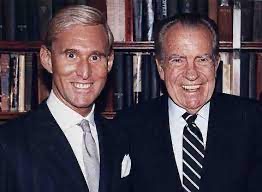
What do you get when you cross Animal House with the GOP? Roger Stone. He holds the dubious distinction of dragging Republican moral decay on, that first festered in the 1970’s. The product of Stone’s current efforts? The January 6th insurrection.

That young Stone cut his teeth orbiting around the Nixon disaster, and later lent a hand to the Reagan campaign, and even later aided the “Brooks Brother Riot” of 2000, his role as a covert agent of chaos lives on. “Conservative Values” a long running catch phrase is no more than an oxymoron, the national party undercut by a list of career dirty tricksters, including Stone.

Think Donald Segretti, of Watergate fame. Segretti hired a girl to run naked at a hotel shouting she was in love with Edmund Muskie, Nixon’s chief rival in 1972. In 1970, even Karl Rove interfered and sabotaged Democratic fund raising efforts by publishing false event information, ie . . . free beer, free food, girls, everyone welcome, etc. Rove’s work turned the event into a fiasco. Then there was Ken Clawson’s Canuck Letter. Clawson, a Nixon operative, published a fraudulent note dropping in phrases like “illegitimate babies,” and “homosexuality,” among Democratic leaders. (Homosexuality still a taboo.) And of course the most famous dirty trick of all, the burglary of the DNC at the Watergate Office Complex.

What this brief evidence has made clear is Republicans can’t win any other way, at least not nationally, without deception and disinformation campaigns. During the Reagan years, men like Oliver North, Admiral John Poindexter, and CIA Director William Casey privatized foreign policy in the Iran Contra Affair. Ronald Reagan haplessly confessed the crimes were real, though he didn’t understand how. The George W. Bush administration outed a CIA operative, Valerie Plame, via Scooter Libby, and Libby was convicted of his crime. But don’t cry for Scooter, Donald Trump pardoned him because it’s true, there is no honor among thieves.

Any pretense of “conservative values” is a myth, carefully advertised by party insiders, but hasn’t existed since President Dwight Eisenhower. 

Stone’s lies to Congress, and to the FBI reveals the state of the party. Any means to win.  Underhanded tactics indicate business as usual.

The harm? My vote doesn’t count, and neither does anyone else’s. The cry of States’ Rights echoing around the country is simply a cover to intensify efforts to deprive the people of good government. Stone, Trump, and the rest of the party has rejected an even playing field; they cannot win in an open, fair vote.  

This blog in no way implies that Dems are blameless, but short of Bill Clinton’s dalliances and others taking bribes, the crimes have hurt the individual, not the American people. Decent folks abandon the GOP daily because of such flagrant misuse of power. 

In a side note, Richard Nixon ran for Congress in 1946 smearing his opponent, Jerry Voorhees as “soft on Communism,” and in 1950 aimed for the Senate, insinuating his opponent, Helen Gahagan Douglas was “pink right down to her underwear.”

We all know who the patron saint of the modern GOP is, and Stone, not to forget Trump, are his most astute disciples.

Gail Chumbley is the author of “River of January,” and “River of January: Figure Eight.” Both titles available on Kindle. Chumbley has written two plays, “Clay,” exploring the life of Senator Henry Clay, and “Wolf By The Ears” regarding the establishment of American Slavery.

gailchumbley@gmail.com

A Fine Line

Way back when, during my high school years, our English class read “Lord of the Flies.” And though too young to grasp the power of the story then, it’s bothered me plenty in recent years.

Permit me a refresher on the plot. During World War Two a group of English school boys are evacuated from England by air, and the plane crashes over water. The pilot is killed, leaving only the boys alive. Finding themselves on a deserted island, the kids try to organize into a functioning unit.

The wheels come off almost as once, as two groups emerge. One faction agrees to cooperate, while the other descends into depravity.  Those favoring cooperation seek (through logic and science) a way to be rescued. Those choosing muscle undermine that effort, reveling in bloodsport, killing wild pigs, and intimidating weaker boys. 

The novel reads as an allegory of disintegrating humanity, pitting good order against savagery. Though published in 1954, William Golding’s book has taken on a prophetic urgency made evident by the lawlessness of both Trump administrations.

In a haunting parallel to the breakdown of order on the island, Trump’s mob attacking the Capitol came as an inevitable outcome of law breaking. Riffing irrational diatribes, this flawed man chooses to incite violence to maintain power. That his misinformed followers eagerly climbed on the bandwagon proves how fragile democracy can be when infected by evil. The physical fury of that day seemed an aphrodisiac for his private thugs as they stormed America’s Altar of Reason. 

And it’s no wonder the mob chose to vandalize our sanctuary of law. This guy disdains law,  indifferent to the sacrifices made by generations before to preserve it.

Good government rests on an educated, committed electorate. Mindless violence is the tool of the lazy and weak minded. Blind fury only destroys, and in truth that savagery lives in all of us. It is up to each one of us to make that choice, to awaken the “better angels of our nature” for the good of us all. It is well past time for America’s trial by mob to end.

Unlike the school boys in “Lord” no one is coming to our rescue. And that reality leaves no alternative but to discipline ourselves to preserve the gift of democracy.

Update 2025

He is back and this time it is blitzkrieg against the rule of law. He had a plan equal to any conqueror, compliant judges, and a servile, opportunistic majority in Congress.

The result? A fog of war has blanketed the country as we rush from here to there to challenge the ongoing damage.

As in Lord of the Flies a childish bully has acquired power which he uses to terrorize all. He will not stop until the adults step in.

Friends, we are those adults.

Gail Chumbley is the author of “River of January,” and “River of January : Figure Eight,” a two-part memoir. Both titles are available on Kindle. Gail has also written stage plays, “Clay,” “Wolf By The Ears,” exploring antebellum America, and “Peer Review,” a look at Trump’s first presidency through the eyes of four former presidents.

The More They Stay The Same

This poem surfaced after the end of the Civil War. The sentiment speaks for itself. Despite the passage of time, America is again dealing with those who still cling to grievances held for nearly a century and a half.

(*Note The Freedman’s Bureau was a government agency that aided newly freed people of color. **Pardons were granted to those who swore an oath of loyalty to the Union after the war.)

The past is rather instructive, as we find ourselves still dealing with the same raw hate.

Play the link at the bottom of this post, and follow along with the words.

O I’m a good old rebel,
Now that’s just what I am.
For this “fair land of freedom”
I do not care a damn.
I’m glad I fit against it,
I only wish we’d won,
And I don’t want no pardon
For anything I done.

I hates the Constitution,
This great republic too,
I hates the Freedmans’ Buro,
In uniforms of blue.
I hates the nasty eagle,
With all his braggs and fuss,
The lyin’ thievin’ Yankees,
I hates ’em wuss and wuss.

I hates the Yankees nation
And everything they do,
I hates the Declaration,
Of Independence, too.
I hates the glorious Union-
‘Tis dripping with our blood-
I hates their striped banner,
I fit it all I could

I rode with Robert E. Lee,
For three year near about,
Got wounded in four places
And starved at Point Lookout
I caught the rheumatism
A campin’ in the snow,
But I killed a chance o’Yankees
I’d like to kill some mo’.

Three hundred thousand Yankees
Is still in Southern dust,
We got three hundred thousand
Before they conquered us.
They died of Southern fever
And Southern steel and shot,
I wish they was three million
Instead of what we got.

I can’t take up my musket
And fight ’em now no more,
But I ain’t going to love ’em,
Now that is sarten sure,
And I don’t want no pardon
For what I was and am.
I won’t be reconstructed,
And I don’t care a damn.

Gail Chumbley is the author of the two-part memoir, “River of January,” and “River of January: Figure Eight.” Both titles are available on Kindle. Gail also has penned “Wolf By The Ears,” a play in two acts.

gailchumbley@gmail.com

Don’t They Realize?

A debt we owe and can never repay.

The attack did not come until almost 5:00pm on July 2, 1863. The Yankees under the command of General George Meade held on to both Cemetery Hill, and Cemetery Ridge, south of the town of Gettysburg. Situated across an open ground of boulders, orchards, wheat and corn fields, waited invading Confederates commanded by Robert E Lee.

Issued vague orders the day before by General Lee the boys in grey had failed to capture the vital high ground on the northern end of the Union lines, and were forced to deploy upon less desirable ground called Seminary Ridge. Imagine an irregular stadium from north to south, with foes facing one another across a lethal killing zone.

On that second day, Lee had ordered fresh assaults on the southern end of the Yankee lines. Fierce fighting commenced in the Wheat Field, and upon the boulders of Devil’s Den, culminating in a main assault on a rise called Little Round Top.

The lower of two southern summits, Little Round Top appeared vulnerable to the Rebs massing below. Alabamians were ordered to angle around to their right, and cut to the rear of Union lines. However, their movements were detected by Union Colonel Strong Vincent, and Vincent acted at once.

Issuing orders boys from Pennsylvania, New York, Michigan, and Maine units were to double-quick to defend rubble-strewn, steep, Little Round Top. Holding the end of that hastily formed line stood Colonel Joshua Lawrence Chamberlain and his 20th Maine. And as many readers know, Colonel Chamberlain held off three assaults by the Alabamians scrambling up the steep terrain. Finally out of ammunition, Colonel Chamberlain in desperation ordered a bayonet charge, sweeping down the hill against another attack. And miraculously that bladed downhill charge worked. 

A less known story concerns the Yankee soldiers assigned to guard that hard-won hill that night. Under orders to detect any further Confederate threats, these sentries could hear the moans and piteous cries of their brothers wounded and dying below them in the darkness.

Distressed by the audible suffering and with no way to help, the guards kept to their orders. Somewhere in that endless night one sentry was said to have cried, “Don’t they know they saved the country today?”

And those words echo to us today, on this July 2.

Those of us who serve honorably in public office we stand for America.

Those of us who get involved in community action, or contribute to candidates and causes stand for America.

Those of us who rally for freedom in good and bad weather stand for America.

Those of us who believe in fair play and government by the people stand for America.

To those of us that will never submit to authoritarianism stand for America.

And we will save our country.

Gail Chumbley is the author of the two-volume memoir, “River of January,” and “River of January: Figure Eight.” Both titles are available on Kindle. Chumbley has also written three stage plays. “Clay” regarding the life of statesman Henry Clay, “Wolf By The Ears” a study of slavery and racism, and “Peer Review” where 47 converses with four past presidents. In addition Chumbley has co-authored a screenplay, “Dancing on Air,” based on her two books.

gailchumbley@ymail.com