Don’t They Realize?

A debt we owe and can never repay.

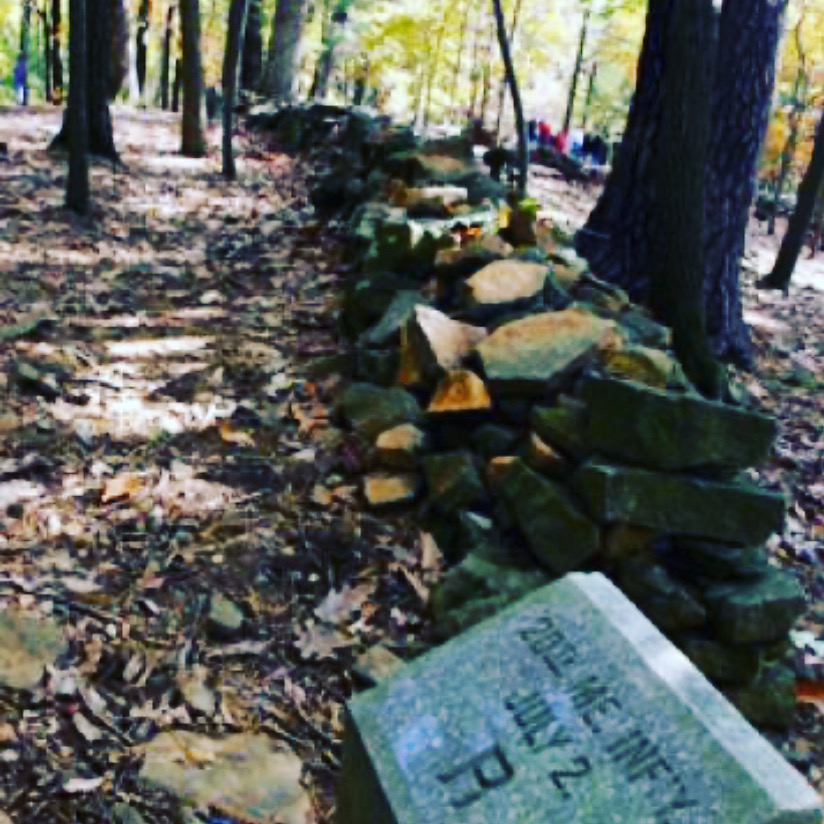
The attack did not come until almost 5:00pm on July 2, 1863. The Yankees under the command of General George Meade held on to both Cemetery Hill, and Cemetery Ridge, south of the town of Gettysburg. Situated across an open ground of boulders, orchards, wheat and corn fields, waited invading Confederates commanded by Robert E Lee.

Issued vague orders the day before by General Lee the boys in grey had failed to capture the vital high ground on the northern end of the Union lines, and were forced to deploy upon less desirable ground called Seminary Ridge. Imagine an irregular stadium from north to south, with foes facing one another across a lethal killing zone.

On that second day, Lee had ordered fresh assaults on the southern end of the Yankee lines. Fierce fighting commenced in the Wheat Field, and upon the boulders of Devil’s Den, culminating in a main assault on a rise called Little Round Top.

The lower of two southern summits, Little Round Top appeared vulnerable to the Rebs massing below. Alabamians were ordered to angle around to their right, and cut to the rear of Union lines. However, their movements were detected by Union Colonel Strong Vincent, and Vincent acted at once.

Issuing orders boys from Pennsylvania, New York, Michigan, and Maine units were to double-quick to defend rubble-strewn, steep, Little Round Top. Holding the end of that hastily formed line stood Colonel Joshua Lawrence Chamberlain and his 20th Maine. And as many readers know, Colonel Chamberlain held off three assaults by the Alabamians scrambling up the steep terrain. Finally out of ammunition, Colonel Chamberlain in desperation ordered a bayonet charge, sweeping down the hill against another attack. And miraculously that bladed downhill charge worked. 

A less known story concerns the Yankee soldiers assigned to guard that hard-won hill that night. Under orders to detect any further Confederate threats, these sentries could hear the moans and piteous cries of their brothers wounded and dying below them in the darkness.

Distressed by the audible suffering and with no way to help, the guards kept to their orders. Somewhere in that endless night one sentry was said to have cried, “Don’t they know they saved the country today?”

And those words echo to us today, on this July 2.

Those of us who serve honorably in public office we stand for America.

Those of us who get involved in community action, or contribute to candidates and causes stand for America.

Those of us who rally for freedom in good and bad weather stand for America.

Those of us who believe in fair play and government by the people stand for America.

To those of us that will never submit to authoritarianism stand for America.

And we will save our country.

Gail Chumbley is the author of the two-volume memoir, “River of January,” and “River of January: Figure Eight.” Both titles are available on Kindle. Chumbley has also written three stage plays. “Clay” regarding the life of statesman Henry Clay, “Wolf By The Ears” a study of slavery and racism, and “Peer Review” where 47 converses with four past presidents. In addition Chumbley has co-authored a screenplay, “Dancing on Air,” based on her two books.

gailchumbley@ymail.com
Vision

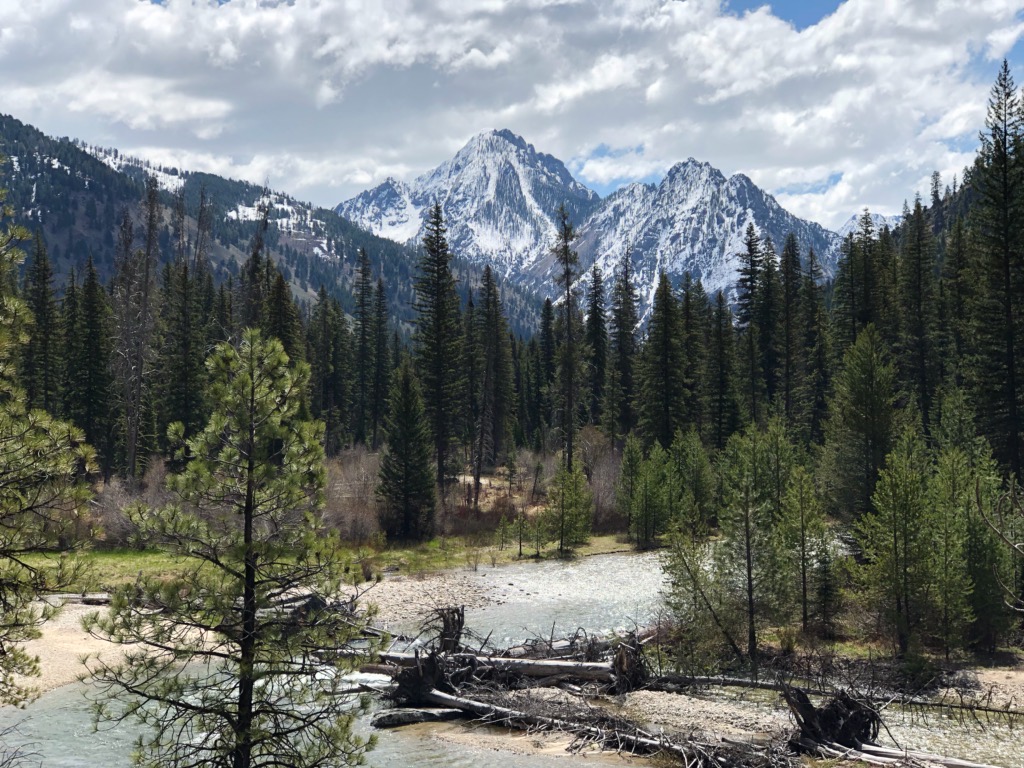
Along Highway 55, northwest of McCall, Idaho, lies a stretch of highway winding through breathtaking mountains. The terrain tinges a powdery blue, set against traces of white from the previous winter, while the Payette River churns beside the roadway. This route isn’t fast, but the scenery more than compensates for the slow pace. 

After a steep descent from the mountain town, the highway straightens and a number of cabins and trailers are visible. Trump signs abound, (not unusual) along with flags emblazoned with Don’t Tread On Me or, the black, blue, and white version of the Stars and Stripes.

One particular double-wide sits near the highway’s edge, where bikes and snowmobiles sit forgotten in the tall grass. Passing that property always catches my eye. Cemented between the gravel shoulder and the dirt driveway stands a mailbox bearing the Confederate flag.

The irony of that dated symbol on a rural mailbox, is that the Confederate mail system had actually broken down by the end of the Civil War. Any Rebel correspondence between battle front and home became haphazard at best. Often soldiers, who were able, walked letters home for their comrades still fighting in the field.

At the same time, the Northern mail system witnessed an important innovation. The grim number of Union dead, posted publicly in northern town squares, grew too long for privacy and decency. Families had been forced by circumstance to endure their devastating losses in the company of an entire community, an unseemly breach of 19th Century etiquette. Congress responded to this situation by requiring mail delivery to be private, sent to each home.

Needless to say, that stenciled mailbox, standing along the highway struck me as absurdly ironic. Those in our state, who peddle in conspiracy and fan contempt for the Federal Government, would collect no mail, nor enjoy any other public-funded service.

An expansion bridge those residents must cross to reach Boise, was constructed by agencies of FDR’s New Deal back in the 1930’s. The forest fires that increasingly threaten that little enclave of homes, are fought through funds from the Department of the Interior. 

More national programs underscore the paradox of that small protest of painted aluminum. Flood control, WIC nutrition, Title 1 Education funds, Medicare and Medicaid, all making life better for those residing in that remote, road-side residence. 

The South lost the Civil War because intractable people and their leaders lacked both organization, unity, and vision. These “dissatisfied fellow countrymen” to use Lincoln’s phrase, understood only grievance and fury. For example, hard-pressed Jefferson Davis in Virginia could not persuade the Governor of Georgia to dispatch fresh reinforcements to stave off Robert E. Lee’s ultimate defeat. 

In the end, the politics of simmering outrage and division is unfocused and unproductive. State leaders who promote incendiary hogwash for short-term gain, leave followers pointlessly aggrieved, and easily manipulated, exactly where agenda-driven politicians want them. And this pressure-cooker style of propaganda and defiance quickly deteriorates into blind violence, destroying much of what Americans wish to preserve. (January 6, 2021 comes to mind.)

So express yourselves, my fellow Idahoans, let your freak flags fly. Though emotions and symbols do not violate federal law. However, if political leaders agitate an overthrow of the system, that is treason. And we all would all lose more amenities than you realize.

Including an empty mailbox.

Gail Chumbley is a history educator and author. Her works include “River of January” and “River of January: Figure Eight,” both available on Kindle. Chumbley has also written three historical plays, “Clay,” “Wolf By The Ears,” and “Peer Review.”

gailchumbley@ymail.com