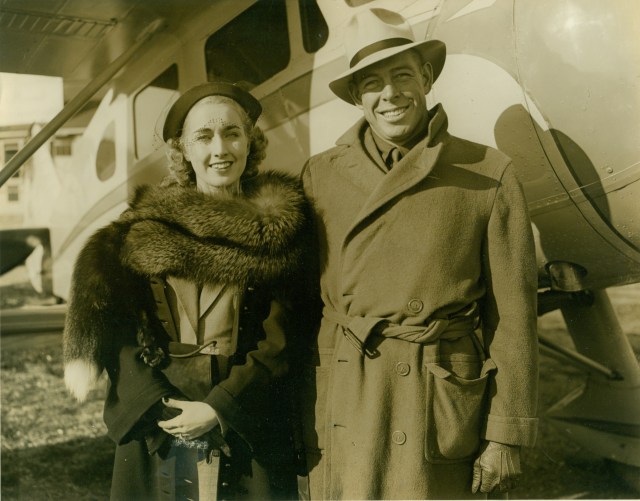
I Choose Door Number Three

I know the story that I wish to tell.  All of the story, leaving nothing out.  However, over the course of the writing process, the manuscript has grown to well over 350 pages.  I cannot hope to publish such a large tome as a first time writer.  The dilemma has, at times, left me down and hopeless.

Again, communicating my anxiety has been a source of great solace and solution.  Friends and family can sure help–and sometimes from people I’ve never met. 

The River of January, at this moment is undeniably too long.  So, after much anguish and talk, and a new writing friend’s kind ear, the editing scissors came out.  I have lopped off the first 50 pages for use perhaps, later, in another work.  Also eliminated was the story, in the story, examining the evolution of the book.  The files are available, and the content unharmed.  Certainly the length has finally become reasonable. 

This time, compromise seems to have moved the project ahead.  And though I tend to over tell the story, that perhaps isn’t necessary, at least not today.  I could have chosen to hold my ground, only removed the personal narrative, or take the third route.

As repeated on the old game show, “Let’s Make a Deal,”  I choose door number three.  I need to go forward.

Between Risk and Control

In my book River of January, a main figure, “Chum” Chumbley challenged the Navy’s flight school, with no assurances he would make the cut.  The regimen was designed for failure, single elimination, so the Navy could function under severe budget cuts.  Chum didn’t bother himself with the odds of survival, he simply had nothing to lose.

Once in flight school, not all was wonderful.  As a lowly Seaman Recruit it seemed everybody in his midst told him what to do.  As happy as he was to have reached the door to his highest ambition, stepping through cost him personal autonomy.  That is life in the military service.

Sitting down three years ago to begin this book, I, too, experienced a liberation, transferring this story from my thoughts through my fingers, to the keyboard.  However, though most friends and family have supported me, read the manuscript, listened to my doubts, some haven’t been so kind.  I’ve been told that I can’t write worth a damn, and that my inattention to sentence mechanics render the book unreadable.  Maybe so.  But I have plowed on, seeking help, and trying to gain control over those pesky nods to standard English.

He wanted to fly, I want to tell his story.  Who would have believed taking risks could open up a whole new set of restrictions? 

How Much is Too Much

In my first draft of River of January, I spent a lot of time explaining or telling about the historical backdrop of the book.  It was easy to do because I have been an American History teacher for thirty three years.  I felt I couldn’t tell enough about the impact of World War One on Americans, or how greed brought about the Crash of 1929.  It was boring.  One deadly, long, dreadful lecture.

Fast forward three years.  Since those early efforts the blah-blah factor has been chopped back significantly.  Still some nod to the era is needed to demonstrate how significant the achievements of Chum and Helen actually were.  For example, Chum burned to join the Navy in 1927, but he had no support from his extended family.  If I hadn’t explained the prejudices of the time, his difficulties enlisting would make no sense.

It was a tough pill to swallow when I realized my audience didn’t need to know everything I know.  Even more so, all that detail becomes tedious, I can hear a reader complain, –enough crap, get on with the story!  So I did.  But, without the historical background some of the episodes would be incomplete.  And some of the details are fascinating.

Women-Relying on the Kindness of Others

Sifting through the stacks of Chumbley mementos, especially scrapbooks and journals, I sensed a distinct female flavor to the materials.  Women, arms around each other, posed in front of fences, on steps, on porches, at the beach, waiting it seems for a man to lead them home. 

In my book, River of January, a California relative married a physician, presiding over a grand home.  The rootless women in her family gravitated west to live with her, and it appears there were no questions asked.  Women without husbands found sanctuary with married family members, as a matter of course. 

Helen, the protagonist in River supported her mother from childhood on, performing across stages in North America, South America, and Europe.  This reverse support system, the daughter financially carrying her parent raised no eyebrows.  The mother expected care.  

Once Helen married, the arrangement became a problem for her new husband. 

Times were changing.     

Ethical Story-Telling

One of the toughest obstacles I faced writing River of January, was assuming I knew the family story best.  These people were real and left a rich paper trail of their dramatic lives.  I was lucky enough have recorded interviews, stories graciously shared by family members, and volumes of letters, mementos, and photographs. The internet, too, has been helpful.

Still, I struggled with the presumptuous notion of interpreting Helen and Chum’s lives through my understanding.  After agonizing for a good year over the arrogance of committing their lives to paper, I experienced a moment of clarity.

These two deserve to be remembered.  If that task was placed in my novice hands, so be it.

I have since spent the last three years learning how to write, because this story must be told, their adventures pieced together into a more coherent picture.

I hope to share more regarding the events that led to this book in future blogs.

River of January, how it happened when I wasn’t looking

I never saw this book coming.  I certainly didn’t go looking for such an ordeal, either.  But life assigned custody of the tale into my inexperienced hands and there began my challenge.  I’ve never written before.

This story concerns the lives of two ambitious individuals, born in the early years of the 20th Century, Mont Chumbley and his love Helen Thompson Chumbley.  This first volume examines their lives from childhood to excellence in the fields of aviation and show business, and how both attained success.

However, River is a true story and not all was elegance and achievement.  Both hailed from difficult families and beginnings.  Though Helen and Chum enjoyed adulation separately, together the issues of family, especially Helen’s mother, threatened their bond.

How the story came to me, in all it’s unlikely circumstances is covered in the pages of the book.  However, I do plan to explain the background details and examples from the narrative in later blogs.