Richer Than Myth

We all closed our eyes and directed to imagine a stage play. The lights dim to darkness and the curtains open revealing a maid busy at a fireplace feather dusting the mantel.

I dutifully shut my eyes envisioning white marble and busts of philosophers as the servant did her thing.The instructor asked us to further imagine the play’s star dramatically entering from the wings. She asked what would we do as an audience? Clap of course, because the story is about to begin.

Right?

And that dear reader is the model history educators have employed for eons. America was just waiting for white folks to appear, so the story could begin. The implication is that nothing of significance had yet happened. Just the maid dusting the mantel.

To accept that John Wayne or James Arness won the west is but a myth for films and television. American history in noway resembles an episode of The Waltons. The reality of the narrative, stripping away the fiction is much richer when including the whole story.

Mining and ranching customs in America are largely of Spanish origin. Standard size horses spread northward from Mexico as escapees from Hernan Cortes and other conquistadors. The rendezvous system came to be under the French, and their Huron fur-trading partners. From totems, to kivas, to longhouses indigenous people developed distinct cultures. New World foods like corn and potatoes conquered Europe, and African exploitation introduced American traditions in music, food and language.

In short, the story of America didn’t start with Plymouth Rock, nor Jamestown. It isn’t sunbonnet madonnas, bravely trudging west, or white hatted heroes saving the day.

No clear lines separate villains from heroes. If the myth makes you feel good, watch “Lonesome Dove,” or “The Alamo.” Keep in mind both are works of fiction. If it’s accuracy you’re after, crack a history book, or catch a Ken Burns documentary.

Gail Chumbley is the author of the two-part memoir River of January, and River of January: Figure Eight. Both available on Kindle.

gailchumbley@gmail.com
No Fooling

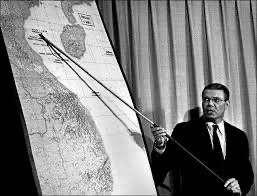
Secretary of Defense Robert McNamara, 1964

“. . .the best test of truth is the power of the thought to get itself accepted in the competition of the market, and that truth is the only ground upon which their wishes safely can be carried out.”

Oliver Wendell Holmes.

Short run or long run, popular beliefs seem to ebb and flow, ever changing. One idea gains traction in one generation then is cast off with time and deeper understanding. The quality that sustains any belief must rest upon a moral high ground; an affirming principle.

Hear me out.

On April 12, 1861, the opening shots of Civil War thundered over Charleston Harbor. The South Carolina legislature had already voted to secede from the Union, and President Lincoln issued a clear statement in his first inaugural address. Assuring Southerners he had no intention of interfering in state matters, meaning slavery, but warned that any state uprising was his business, and that fateful step rested solely in Southern hands.

The President kept his word. 

Once shots were fired on Fort Sumter, the Union rapidly mobilized to put down the rebellion. 

Lincoln’s policy rang firm and clear. The Union would defend the Constitution against illegal aggression.

A century later President Lyndon Johnson attempted to orchestrate a similar scenario in Southeast Asia. In August of 1964, the American people were told North Vietnamese torpedo boats had fired upon two American destroyers in the Gulf of Tonkin. There was no real evidence of the incident, apart from heavy weather and the distracting fog of war. From that event the United States began feeding ground troops to hold the line against Communism. Officially dated from 1959 until 1975, the Vietnam War expended 58,000 young men, and countless Vietnamese nationals.

Today Vietnam is a Communist country. Johnson’s gung-ho attempt backfired because his policy had been built on a lie. 

Likewise, George W Bush squandered world-wide goodwill after the attack on 911. With America in mourning from the terrorist assault on our soil, this president redirected righteous ire to the nation of Iraq. Afghanistan, where the actual culprits were hiding out, came later. 

In the end, nothing of value came from that lie, except uncorking anarchy in Iraq.

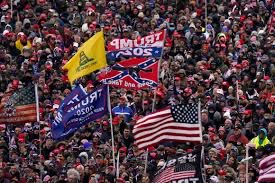
This last January another massive presidential lie duped hundreds into thinking an election had been stolen. No proof of the deception existed, because nothing sneaky happened. To the contrary, abundant truth refuted the the claim. 

A self-absorbed swindler convinced hundreds of followers to act upon his interests. Citizens mobilized themselves and attacked our nation’s Capitol. No proof, no moral high ground, no affirmation of our democratic system, just puppets exploited by a very sick man.

Mr Lincoln understood the power of truth.

You’ve Been Played

Strains between North and South had reached critical mass by November, 1860. Escalating tensions burst with the election of America’s first Republican President, Abraham Lincoln of Illinois. The South Carolina legislature reacted by voting their state out of the Union on December 20th, a mere month later. By Spring 1861, the Confederate States of America consolidated, and on April 9th cannons fired upon a Union fort in Charleston Harbor. So began a bloody fraternal war. 

A longstanding question is how in the world did Planters, a small slice of the southern population, convince a mass of their social inferiors to risk life and limb, defending their aristocracy? The answer is rather simple, and lamentable. Folks from the lower rungs lived by the social rules fixed by the wealthy elite. The Planter Class established the rituals of polite society, and every white man below the Mason-Dixon hoped to someday to join their ranks (acquiring land and slaves).

The lower classes defended a minority they ached to join.

A small middle class of land holding farmers, and city professionals, also labored to reach the same social summit. In other words, acquiring the trappings of wealth, punched one’s ticket to ride.

Beneath this merchant-landholding tier massed poor whites. These desperate souls were left to precariously scratch out some kind existence as itinerant tenants. Contempt for this hardscrabble class is still evident through pejoratives that are still in use. Belittling terms like crackers, trash, hillbillies, and rednecks linger on in our lexicon.    

The Old South, in general, also distrusted the outside world. Foreigners, Yankees, Catholics, Jews, and immigrants, meaning anyone who might challenge rigorous, aristocratic formalities. The consequences for this delicate arrangement were profound. As the North industrialized, innovated, and modernized, Southern society languished, governed by reactionaries, more interested in public manners and bloodlines.

Outraged and insulted by Yankee ways, the wealthy roused the lower classes to defend Southern traditions, while in reality, barring any real opportunity of upward mobility.

This dynamic remains modern American politics. The GOP, in our time, is requiring the same fidelity. Party leadership honestly does not wish to serve you. All candidates want is your money and your vote to protect their interests, (especially the guy at the top). These characters are happy to rile voters through exhibitionism, and scapegoating whatever grievance you wish, especially piling it on minorities, the poor and the dispossessed.

But remember this, the traffic is one way only, and you are serve them, not the other way around. Keep delivering cash and power to the top, and nothing changes.

In short, you’ve been played by your chosen betters.

Gail Chumbley is the author of the two-part memoir, “River of January,” and “River of January: Figure Eight.” Both are available on Kindle.

gailchumbley@gmail.com
Humiliated, Angry, and Hurt

After losing reelection, he left Washington early. Humiliated, angry, and hurt, John Adams boarded a morning coach leaving the Capitol.

The prevailing issue in the campaign of 1800 concerned France, and that nation’s ongoing, and bloody revolution. Moreover, the French had declared war on England, and both belligerents  meddled in American domestic politics to turn public opinion.

As President, Federalist John Adams, had skillfully steered America clear of the European conflict, avoiding the danger of being ensnared between the two superpowers. Proud of his diplomatic accomplishments, Adams still brooded, unhappy with his lack of support from the country. His detractors belittled him, disparaging Adams as a pale substitute to the legendary George Washington.

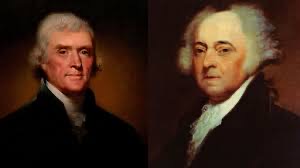
His political challenger in 1800? The clever and calculating Thomas Jefferson. 

An outspoken critic of the Adams Administration, Jefferson had been hurling plenty of invective toward the sitting President. What had once been a warm friendship between the two men quickly soured. Petulant and  thin-skinned, Adams had lashed out by pushing laws that restricted the free press and cracked down on immigration. Outraged by these policies, Jefferson, and his growing cadre of supporters, challenged the clear violations of the Constitution. 

In only the nation’s third presidential election the moment appeared volatile and uncertain. On one side was the defensive and testy incumbent, and on the other, a political foe intent on replacing him.  

Adding to the turbulence, a political wildcard entered the fray; New Yorker, Aaron Burr.

Burr, like Jefferson, had opposed unpopular and heavy handed Federalist policies, and Jefferson knew the ticket needed an electoral-rich northern state for strength. As party leader, Jefferson assumed Burr understood his lesser place, and only when the electors met did he learned just how wrong he had been. 

In the final tally, poor John Adams not only lost the election, but came in a distant third behind both challengers. Thomas Jefferson garnered 73 Electoral votes, followed by Burr with 73 of his own. Adams came in last with 65. (That tie is another story.)

Humiliated, Adams left Washington DC in a huff, but made no move to challenge the outcome. And though the former President did not greet the President-Elect, and pointedly skipped the inauguration, John Adams did not put his interests above the nation’s. 

He conceded in silence because he valued our country over his own interests. 

There is no precedent for false assertions from the clear loser in 2020.

Gail Chumbley is the author of the two-part memoir, “River of January,” and “River of January: Figure Eight.” Both titles available on Kindle, or at http://www.river-of-january.com.

gailchumbley@gmail.com

Peer Review #3

The military choir filed out of the Entrance Hall in a precise formation, trailed with a warm wave of applause. The President had enjoyed the evening performance, and bristled that no reporter had stayed to detail the concert for the public. “This is the kind of story real Americans would like to see on the news,” he complained, as he shook hands and chatted with departing well-wishers. 

The grand chamber soon emptied and the White House staff swept in, quickly stacking chairs, breaking down risers, and disconnecting sound equipment. The President turned from the racket, and headed toward the white Doric columns separating the hall and staircase. And it was there, beside an alabaster column, that the President stumbled upon a most unexpected visitor.

Lounging against the smooth white marble leaned a tall, lanky gentleman dressed in an antiquated silk dressing gown, white hose, and embroidered slippers. The man cooly assessed the stunned President.

“Are you familiar with the story of John Peter Zenger” the intruder murmured in a soft drawl. 

“Why are you still here? The entertainment left that way,” the President snapped, thumbing toward the side entrance.

“Zenger, a German immigrant, edited and printed a newspaper in New York,” the visitor continued, calmly shifting his position against the pillar. “Zenger had published an unflattering editorial of New York’s Colonial Governor, and the testy royal had the journalist jailed, charged with libel.”

The President, annoyed by the imposition, wanted to hurry up the stairs to his living quarters, but his legs remained stubbornly rooted in place. 

“Well, that Zenger character deserved it, he barked, unable to control his tongue. “Reporters need to watch what they write, and who they offend—like me. I’m the President, and they say terrible things about me, all lies and more lies.”

The tall figure crossed his arms and looked evenly at the President. “A jury of Zenger’s peers acquitted him, opining that if truth was stated, there is no libel,” the stranger subtly smiled. “That particular case established freedom of the press in this country, a principle I later insisted appear in the Bill of Rights.” 

“Do you understand how much I could accomplish if . . .”

The apparition spoke quietly over the President. “I, too criticized a president bent on stifling  free expression” the visitor thoughtfully paused. “President John Adams supported passage of the Sedition Act in 1798 to silence critical voices such as mine.” 

The oddly dressed gentleman began drifting through the pillars into the Entrance Hall, as if floating on a sudden breeze. Unwillingly, the President followed. “I’m particularly fond of this room,” the visitor whispered, “it was the only finished room in my time.”

“The press wants to destroy my administration,” this time the President spoke over his visitor. “With their unlimited snooping, the constant leaks, and the treasonous things they say about me on cable tv.”

The apparition appeared indifferent to the President’s complaints. “A particular writer, James Callender, cast enough aspersions upon Mr. Hamilton and Mr. Adams, that he found himself jailed under the Sedition Act. Once I moved into this House, I pardoned Callender, and hired him to again take up his poison pen.” The spirit seemed sadly amused, “when I refused to appoint Callender to a government post, his pen turned full force upon me, exposing my deepest, most safeguarded secret.”

“The Sedition Act. I like that,” the President beamed, indifferent to the visitor’s revelation. “What’s the matter with my lawyers. They never told me we have that law.”

Instantly the apparition jutted his face directly into the startled President’s. “You must not respond,” he breathed.  “You must ignore what is written and reported regarding your administration. Never, never challenge the freedom of the press, to do so diminishes the office of chief executive, exposing you as petty and small.”

“But the Sedition Act says . . .” the President squeaked, unnerved.

“Is unconstitutional,” the visitor finished the sentence. “I, too, resented what appeared in the press, besmirching my personal life, and my family. However, I resolutely remained aloof to the reports. And so must you.” 

The visitor began to sound weary, worn by the conversation. “I once stated that if I had to choose among the freedoms enumerated in the First Amendment, I would preserve Freedom of the Press. With that liberty secure, all others are assured.

As the visitor finished his statement, he lifted his eyes to some mysterious point above, and vanished. 

Dismayed by the experience, the President scrambled up the stairs.

Gail Chumbley is the author of the two-part memoir “River of January,” and “River of January: Figure Eight.” Both books available on Kindle, or at http://www.river-of-january.com.

gailchumbley@gmail.com

Marking Time

2020.

Are the awful events of these last twelve months a once-off, bad patch of misfortune? Or is there a deeper explanation for the emergence of Trump, Covid, economic disaster, and civil unrest?

American History is steeped in a collection of pivotal moments, episodes that molded the nation’s continuing path. Can the events of 1776 stand alone as a turning point, or of 1865? 

A long metaphoric chain links one scenario to the next, marked by momentary decisions, government policies, or beliefs, that surface at one point in time, and voila, America’s story fleshes out to the future.

Add chance circumstances to the narrative and predictability flies out the window. 

Does 2020 stand alone as a singular event, or an inevitable outcome seeded somewhere in the past? Surely the march of history can be much like a chicken-egg proposition.

Mention 1776 and thoughts gravitate to the Continental Congress, the Declaration of Independence, and the emergence of General George Washington. But that struggle for freedom actually began at the end of the French and Indian War. 

As for 1865, when the guns silenced at Appomattox Courthouse, Robert E Lee’s surrender affirmed America as a nation-state. But thirty years earlier, President Andrew Jackson’s administration had sparked the eventual war over the issue of slavery. Thinly disguised as the doctrine of states’ rights, the intractable argument of slavery festered. The “Peculiar Institution” is, was, and always be the cause of that bloodbath. In point of fact the fury of one man, John C Calhoun, South Carolina Senator, and former vice president, lit the fuse of war thirty years before Fort Sumpter.

As to the folly of Trumpism, arguably the roots are deeply burrowed in America’s collective past. Author, and historian Bruce Catton, wrote about a “rowdyism” embedded in the American psyche. Though Catton used that term in the context of the Civil War, his sentiment still resonates in the 21st Century, i.e., Proud Boys, and the like. 

Closer to today, the Cold War seems to have honed much of the Far Right’s paranoia. The John Birch Society, for example, organized in the late 1950’s escalating anti-Communist agitation. Senator Joe McCarthy rode to fame on that same pall of fear, (with Roy Cohen at his elbow) only to fail when he went too far.

But the presidential election of 1964 seems to mark the most distinct shift toward the defiant opposition that fuels Trump-land.

Vietnam, in 1964 had not blown up yet. JFK had been murdered the previous fall, and his Vice President, turned successor, Lyndon Johnson was the choice of a grieving Democratic Party. The GOP fielded four major candidates in the primaries: three moderates and the ultra conservative, Barry Goldwater of Arizona. Senator Goldwater gained the nomination that summer with help from two men, conservative writer Richard Viguerie and actor Ronald Reagan.

Viguerie broke political ground through his use of direct mailing, and target advertising (what today is right wing news outlets). Reagan, once a New Deal Democrat, crossed the political divide and denounced big government in “The Speech,” delivered on behalf of Senator Goldwater. These two men believed Conservatism, and Laissez Faire Capitalism had been wrongly cast aside for liberal (lower d) democratic causes. 

Their efforts struck a cord with legions of white Americans who felt the same resentment. The Liberal Media and Big Government from the Roosevelt years were Socialistic and anti-capitalistic. No urban problem, or racial strife or poverty appeared in their culdesacs or country clubs. And taxes to support Federal programs squandered and wasted personal wealth.

So many other issues shaped the modern New Right. Communism, the Cold War, Civil Rights, Vietnam, and progressive politics alienated the wealthy class. 

But here’s the rub. Ultra conservative ideology is unworkable, an ideal that awards only a small, exclusive few, (today’s 1%). So 2020, and 2016 both have roots running deep in the core of the American experience. 

2020 isn’t about this moment, not really.  

Gail Chumbley is the author of “River of January,” and “River of January: Figure Eight,” a two-part memoir available at http://www.river-of-january.com and on Kindle. Also the stage plays, “Clay,” and “Wolf By The Ears” (the second in progress.)

gailchumbley@gmail.com

The Clarity of Desperation

With only days until Christmas 1776, General Washington watched the snow fall and the ice thicken as his suffering army melted away. Earlier that year, in July, that same Army had been humiliated by the Red Coats, chased off Long Island, pursued through Manhattan, barely escaping across the Hudson River into New Jersey. 

The General had been flanked by overwhelming British forces and his inexperienced Patriot army simply panicked and ran. Furious at their conduct Washington threatened to lead another assault himself, however, cooler heads prevailed as his staff convinced him otherwise. 

Amongst King George’s red coated regulars were legions of Hessians, hired guns from the German kingdom of Hesse-Cassel. Their presence on the field infuriated the Americans, as if the King couldn’t bother to keep the conflict British. These mercenaries were especially brutal, taking a psychological toll on Washington’s volunteer army by making use of flashing, saber-like bayonets. 

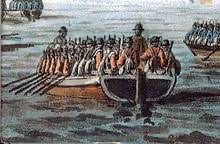
But Washington had a few cards of his own to play. Contemplating retreat while still on Long Island General Washington had ordered Colonel John Glover, a New England mariner, to collect enough vessels to ferry his surviving soldiers west to Manhattan, then over the Hudson into New Jersey. With campfires blazing to fool the redcoats, Washington successfully evacuated his army waiting to board for the last boat.

The inexperienced American army was preserved.

Still, demoralized, and outgunned, the Continental Army appeared defeated and despondent. The general consensus among all was the war was hopeless, a lost cause, the Patriots esprit de corps vanished. 

By winter, Washington’s command appeared to be unraveling. Inadequate food, too few supplies, and support sapped the army’s endurance. Worse the Brits, flush with currency, settled into cozy New York accommodations and enjoyed the hospitality of the city’s loyalists community. 

With circumstances conspiring against him-the weather, scarcity of supplies, and outgunned by enemy Hessians, Washington had to act as he faced a critical moment. Writing to his cousin, Lund, the General poured out his anguish. 

. . .your immagination can scarce extend to a situation more distressing than mine—Our only dependance now, is upon the Speedy Inlistment of a New Army; if this fails us, I think the game will be pretty well up . . .

Out of desperation Washington confessed what he termed as the “clarity of despair.” He had to act.

First Washington sent for an operative who sold provisions to the nearby Hessians. This Patriot spy came into camp and apprised Washington on the disposition of King George’s contracted killers billeted in nearby Trenton. These Germans were settled in for a Christmas celebration, assured that the Americans were all but defeated. 

In his second order, Washington commanded Colonel John Glover, once again, to requisition every boat the yankee seafarer could find. Between the intelligence report and vessels secured, his men were mobilized for a surprise Christmas morning assault on Trenton. 

Once again, Glover pulled off a miracle amphibious operation. And once again, General Washington was the last man on the last boat. In two files the suffering Continental Army marched, braving more than just the weather.

His forces arrived by first light. 

The unsuspecting Hessians were throughly routed in the surprise assault, that in the end provided the Patriot cause with a desperately needed victory.

The revolutionary cause again breathed life. 

So as you enjoy the warmth of the season, remember those who struggled before that the people could have a new nation. On Christmas in 1776 Washington’s army marched through the inky, icy cold, hungry, fretting for their families, yet committed to the long game of founding a nation. 

We have done this before. Much like General Washington our desperation makes our choices clear. Recent scholarship estimates that during the Revolutionary War only 1/4 of the American population supported independence. There are more of us holding to Constitutional norms today. Stay the course this moment isn’t the last.

Merry Christmas.

Gail Chumbley is the author of the two-part memoir, “River of January,” and “River of January: Figure Eight.” Both titles available on Kindle. Gail has recently completed a stage play, Clay, on the life of Henry Clay, Peer Review, where four former presidents meet 47, and Wolf By The Ears, an examination of the events leading to chattel slavery.

Steal This Letter #2

Let me be brief. What the GOP is attempting with this frivolous lawsuit concerning the 2020 election is dangerous and cynical. Party fidelity is certainly an American hallmark, but not at the cost of our political system. This dangerous precedent, pursued in a moment of expediency chips away at the foundation of our traditions.

The Constitution quite clearly established the rules on elections, and has endured since 1788. This moment of danger is more crucial to our nation than any excuse for undermining the transfer of power. 

Clearly the steps taken by the Republican Party reveals an organization with nothing to offer.  Ruthless partisanship is as much an epidemic as any virus. 

Each state has verified no irregularities in voting exist, choosing instead to act on one fallible man’s loose talk. The Framers did not dedicate their lives and fortunes to establish a government that dissolves on the whims of any person or moment. The United States relies on people of good will to respectfully honor election results. 

As reluctant as I feel about using this analogy, Adolf Hitler was elected chancellor in 1933 in a free election, only to turn around and outlaw free elections.

Stop this now. Your party will lay in ruins if you forget who we are as a people. The process in presidential elections could not be clearer than stated in Article 1. 

Gail Chumbley is the author of the two-part memoir, “River of January,” and “River of January: Figure Eight,” and the stage play, “Clay.”

Steal This Letter

If you feel like contacting your Republican Senators copy and paste this one. Tweak it for your own state and issues.

Senator,

Donald Trump’s stubborn refusal to face the reality of his election loss is as dangerous an assault on our nation as 911, and much more damaging than Pearl Harbor.

This election fiasco flies in the face of American traditions. General Washington sacrificed much of his personal happiness to found our nation. As America’s first president, he placed our republic above any personal comfort, and Washington’s legacy bears that out. When his officers suggested he take the reins of power, the general declined and went home to Mt Vernon.

In 1860 Abraham Lincoln preserved what Washington had begun, our Union. And though it cost him his life, the United States was Lincoln’s primary concern.

Both men, a founding father, and the savior of the Union, counted their interests as secondary, because America mattered more than any one man. Now, through a series of events, that responsibility has fallen to you. The GOP majority in the Senate can end this assault on our heritage, and you can make that happen. 

Your forebears would be proud.

The Republican Party came into being on a noble, decent premise. It is the Party of Lincoln, not a lout from Queens.

*Please don’t patronize me with excuses.

Gail Chumbley is the author of the two-part memoir, “River of January,” and “River of January: Figure Eight.

gailchumbley@gmail.com