A Surreal Landscape

In a scene from Hitchcock’s The Birds locals are gathered in a cafe eating and chatting. An attractive blonde is on the telephone explaining that children at the local school were dive-bombed by attacking crows. An elderly lady in a beret and smoking cigarettes lectures the other diners that crows don’t behave in such an aggressive manner and that there has to be another explanation. The woman identifies herself as an ornithologist and holds forth explaining crows and even seagulls do not do such things. Immediately after her expert testimony all hell breaks loose outside the cafe window, with masses of birds swooping down on passersby. The scene is chaotic and bloody leaving no doubt these attacking birds are in fact lethal. As the nightmare scene ebbs, the camera catches the bird expert, her head bowed in grief and bewilderment, stunned everything she knew and believed no longer applied to any bird in her understanding.

That woman resembles this lifetime American history educator. I’m a fairly decent generalist in subjects ranging from PreColumbian America through today, give or take minutia. But I too, am stunned by the surreal landscape of what I believed about democracy has been easily undone by a vulgar man-child and a compromised and opportunistic Republican Party.

It feels like all my understandings of my country no longer apply. The epic and fraught-filled struggle of forging the Constitution, the furnace of Civil War, the reforms of the Progressive Age, the promise of the New Deal, and Great Society are gone, rapidly destroyed by sinister design. A totalitarian despot has seduced a once noble political party rendering the valiant patriotism of those whom came before moot. Simply writing this lament is difficult, as all I once believed and explored is no longer valid.

An online troll explained it as “no one cares about that anymore.”

That means the principled determination of General Washington to serve our nation doesn’t matter. The misguided genocide of the Five Civilized Tribes upon the Trail of Tears doesn’t matter. With nearly 700,000 deaths, the crucible of Civil War no longer matters. Those brave GI’s on Omaha Beach, (including my own grandfather) and at the Battle of The Bulge no longer matters. Those brave students who occupied lunch counter stools in the face of racial violence did so for nothing. Those boys who perished in the Vietnam War are irrelevant. In point of fact no veteran matters anymore.

American history and all the sacrifice of our forefathers and mothers doesn’t count.

That 47 can fly in a foreign “gift” aircraft with a classified budget is a good thing to do with our tax money. That he remodels a room in the White House in a golden gilt is a good thing. Who really cares if former medicaid recipients suffer.

Suck it up buttercup, these are the new rules of Trump’s America.

That he has done away with investments in the Arts and Humanities is a positive. That he has placed incompetent sycophants from Fox News in high Federal positions is good. Forget he stole top secret intelligence documents. The country elected him anyway. That he has drastically shifted the tax burden onto the middle class and off of the super wealthy is how God wants it, just ask today’s Christians.

That old white men rape girls is a good thing. 

The GOP bows at his feet and gleefully ratifies every stab-wound of domestic legislation is now to be celebrated, so pop a cork. In fact destroying America for profit is now simply wholesome and righteous. 

America’s heroes, like Sergeant Alvin York in the Argonne Forest, or Colonel Joshua Lawrence Chamberlain at Gettysburg endured their generations difficulties so that Trump can plow up Mrs Kennedy’s rose garden for a putting green. Suffragette Alice Paul who went on a hunger strike and endured the torture of forced feeding did so that the current president can manipulate votes is just fine. The murders of JFK, Dr King, Harvey Milk, or the murder of Minnesota State Senator Melissa Hortman is merely a part of the 24/7 news cycle.

Indeed nothing of our past story matters because Mr 47 has disqualified all of it to make money, and more money because that’s all that matters today. Plus of course he is a convicted felon and is terrified of going to jail where he belongs.

So when you see this disoriented American History educator with her forehead in her hand, much like the bird expert in the movie, please understand the gravitational pull of her entire life’s work is today rendered null and void. 

Gail Chumbley is the author of the two-part memoir “River of January,” and “River of January: Figure Eight,” co-writer of the screenplay, “Dancing On Air” based on those books. She has penned three stage plays on history topics, “Clay” on the life of Senator Henry Clay, “Wolf By The Ears” examining the beginnings of American slavery, and “Peer Review” where 47 is confronted by specters of four past presidents.

Peer Review Excerpt 2

This post comes from a full stage play titled Peer Review. It was composed during DJT’s first term and serves to illuminate the contrast to earlier presidencies.

SCENE TWO

The stage lightens in a mix of gold and white. A bed and two arm chairs made in the same colors sit center stage, The New York City skyline is projected on the back curtain. The sound of papparazzi and cameras snapping is heard offstage. An elevator dings. After a moment the President enters stage right with two men in suits wearing earpieces. The men walk around the area and bed. The President turns and speaks.

THE PRESIDENT
Call maintenance, that damn elevator shouldn’t stall between floors. That was a good ten minutes, dammit. I’m gone a few weeks and the building goes to hell. There’s nothing in here. Get out.

The men exit. The President removes his jacket, and walks to the dresser. He peers down in a drawer, then finds what he is looking for. A file of yellow and red.

Except this little gem and it’s really something.

He lies on the bed reading and chuckles happily. His cell phone plays “Hail To The Chief.” The President answers.

Where are you? I just got here, great crowd outside. Yeah, I’ll get it done. Hey, I said I’d do it. What do you mean you don’t trust me? Give me a break, That whole Stormy Daniels garbage is . . . No. Don’t hang up. We’ll sit down with the lawyers and renegotiate the whole deal. But then you will join me in DC, and the boy, too. This staying in New York is no good, makes me look bad to the country. Yeah, yeah, I’ll get Reince on it today. Hey, I said I will.

He tosses the phone on the bed and resumes reading.
Huh. Erdogan didn’t tell me this. How does the CIA find this crap out? I need some Putin-Ukraine stuff. Who woul’da thought I’d read something?

He chuckles, and soon grows sleepy. The President drops the open file and closes his eyes. After a moment a spot rises on a figure entering the stage.

He is tall, wearing a 18th Century blue and buff military uniform, knee breeches, white stockings and carries a sheathed saber. His white hair is combed back, and tied with a black ribbon at the nape of his neck. Standing near the bed, he speaks slowly with elegance.

THE GENERAL
I am very fond of New York City. During the War for Independence I maintained camp nearby for much of the duration.

The President sits upright, and reaches for a pillow to shield himself. He squeaks.

THE PRESIDENT

Shit!

THE GENERAL
Congress had directed me to burn Manhattan ahead of invading British Regulars. You see, Congress wished to leave nothing of use for the Redcoats. Destroying the city left me conflicted, and alas, that order I could not obey. As fate would have it, a fire did erupt in the chaos, demolishing vast tracts of the city. A very regrettable situation.

The General poses regally, glancing at the president. He continues.

Sometime later I returned to serve as President here in New York.

He gestures with his saber to the skyline.

Concerning the demands made upon me as I served those first critical years, none resolved easily, nor without great cost. But our fledgling nation teetered on dissolution and we, as the first government under new Constitution, had to stand resolute.

The President lowers his pillow to speak in a forced, but faltering menacing tone.

THE PRESIDENT
I don’t know who you are, or how you got in here, but this is my room, and my 30,000 square foot apartment, in my extremely valuable building. So clear out!

The General appears not to hear, serenely seating himself in an arm chair. He levels his gaze at The President.

THE GENERAL
My colleague said you were tiresome, however, I am staying.

THE PRESIDENT
Who said that? What colleague . . .oh, jeez, him. Well I’m important NOW. So you and that other fossil can beat it back to central casting.

THE GENERAL (Untroubled)

I, too struggled with grandiosity. In my youth I pined for the advantages of wealth and status that surrounded me. Stately mansions dotted the inlets and vast river systems of Tidewater Virginia, the place of my birth. I longed for a life of importance, gentility, and of wealth. I would be an English gentleman residing in elegance upon his landed estate.

THE PRESIDENT
The English are wusses, and you’ve blah blah’d enough. I’m in New York to get away from all that history garbage. That old dump where I have to stay is filled with that crap. So goodbye Rambo.

The General waits, then rises and un-sheaths his blade. The President again grasps his pillow. The General resumes his story.

THE GENERAL
Born the first son of a second family, I fell heir to nothing but my father’s name. Augustine and Lawrence, my older brothers, received all the honors of a gentleman’s life. I loved them, idolized them, especially dear Lawrence, and begrudged him nothing of his inheritance. However, I cannot deny the depth of my anguish as a second class Virginian.

THE PRESIDENT (To himself)

When my Father died I stuck it to my brother. He couldn’t handle money, the guy was a drunk.

THE GENERAL
Another temptation concerned a young matron, the wife of my best friend. Sally was her name, and I loved her very much. Our correspondence, especially while I served in the war against the French was perhaps too forward, and flirtatious. I longed for Sally, but she was not, nor ever could be mine.

The General sighs, deep in thought.

THE PRESIDENT
I never let any marriage license stop me. Mine or any available broad. That’s all they’re good for, arm candy and a roll.

THE GENERAL
We are all too aware of your misogyny, and absence of propriety. Even Mr. Kennedy said he attempted more discretion in his dalliances. I’m reminded of a letter from the Marquis de Lafayette informing me of his wife’s passion for me. Amused, I replied youthful women are inclined to youthful men, not those of graying hair. And still it is so.

The president sits up with his pillow on his lap.

THE PRESIDENT
Younger women love me. They really do. I’ve dated some beauties, too. You should see some of the pageant contestants I’ve bagged-and Playboy bunnies, too.

From the wing a soldier in Continental uniform approaches the General handing him a dispatch. The General reads the parchment, and marks it with a quill pen. The soldier leaves.

THE GENERAL
Sir, I do not believe ‘love’ is quite the term for what you’re describing. unbridled debauchery perhaps is more precise?

THE PRESIDENT

What the hell? How did he . . .?

THE GENERAL
It is the disciplined man who owns his passions. Decorum is what separates us from animals, wouldn’t you agree?

The president sits mouth agape at the soldier. The General continues.

THE GENERAL
Elegant balls were quite popular venues for young people to meet. I don’t mind saying that I may have been one of the finer dancers in the Tidewater. Those evenings were grand; dinners, music, and refinement in abundance. Oh, how I yearned to rise in social rank.

THE PRESIDENT
I hear ya. Those Manhattan snobs, that artsy-fartsy Met crowd, boxed me out. Treat my kids that way, too. Jerks.

THE GENERAL
Envy did little to further my integrity as a gentleman. In the war against the French the royal governor entrusted me to offer land patents to volunteers willing to join the Virginia militia. Over the course of the conflict I made many of those acres my own. You see land was the mark of a gentleman, but I was an imposter. That villainy has troubled me for an eternity. I pray my service to my nation has polished away some of the tarnish.

THE PRESIDENT
Don’t sweat it, business is business. Regulations are a pain in the ass. If you have an opening take it. Never hesitate. I’d a done the same thing.

The soldier-courier again appears on stage carrying more documents and a feather pen. The general agains peruses the contents, and marks the paper. The president raises his hands in a questioning gesture. The courier disappears.

THE PRESIDENT
There is a squadron of Secret Service out in that living room! How does that guy just walk in here?

THE GENERAL
Colonel Hamilton? He is a very clever young man. A great mind, that one. (Pauses) I disagree with your assessment of regulations. Had it not been for the rigor used to organize the army, particularly at Valley Forge, America would not exist. Good order was the key to eventual victory.

THE PRESIDENT
But you were the boss, right? You made the rules. Everyone I brought in has stabbed me in the back, didn’t follow my rules. Bunch of lowlife. Tillerson, Bolton, Mulvaney.

THE GENERAL
Perhaps those staff members possessed standards and realized you were not a leader worth following.

The president stands up outraged, the general stares him back down.

THE GENERAL
Those of my staff earned positions through merit. Tallmadge, Knox, and Hamilton, here, were gentlemen I trusted with my life. The hangers-on, the men who conspired for my command eventually revealed their ineptitude, and villainy. Those characters fell by the wayside.

THE PRESIDENT
A lot of people don’t realize this, but I don’t know American history. How did you win that war?

THE GENERAL
I never confronted the Regulars unless I had an advantage, like at Trenton, though I detested avoiding any fight. (Pauses) I kept the Continental Army together, and out of British hands. I knew the King could not fight forever. And I knew history was watching our every move, and we owed the future to never give up.

THE PRESIDENT
What the hell does that even mean? History watching! I could care less what happened before me, or when I go out.

THE GENERAL
And I am sorry for that, as will be your grandchildren. The family name is disgraced for all time. The rest of us, those whom I am representing, all understand this. Each chief executive found inspiration in taking part in something greater than ourselves. This, (he gestures toward the window) the United States of America has never been attempted before, a people’s government. The world is housed with predictable despots stealing from, and brutalizing the powerless.

THE PRESIDENT
Oh, come on, give me a break, everybody cheats and steals. Especially here in America.

THE GENERAL
Indeed. But we try to be better. We all have tried. President Chester Arthur felt you ought to know that he, too, served the monied interest. But once president, Mr. Arthur left the grift behind. Like the rest of us he found humility understanding all citizens, for all time would weigh his executive stewardship. He treasured America more than money and power.

The president slumps into a chair. He jabs a finger at the general, changes his mind and lowers his hand.

THE PRESIDENT
I didn’t take a salary. My people liked that, makes me look like a good guy.

THE GENERAL
All the while, behind the scenes, you pilfer on a grand scale. (The General glares) The Continental Army did not suffer want and cold at Valley Forge and Morristown for you to overcharge the federal government for lodging Secret Service at your resorts. Nor did they starve so guests at your Washington hotel could be egregiously overcharged.

The general continues to glare for a long moment and slowly cools down.

THE GENERAL
After Yorktown, and the surrender of Lord Cornwallis, hostilities slowly began to quiet. Royal ships, loaded with Redcoats set sail for England and our land stood liberated. Many difficulties remained such as discharging soldiers, and securing their long overdue pay for services nobly rendered.

The general again looks out at the New York skyline.

THE GENERAL
Word arrived that officers, also unpaid, had set into motion a plot to overthrow the slow-moving Congress and make me king. The ring leaders, encamped north of here in Newburg, awaited my arrival to complete the conspiracy.

THE PRESIDENT

King, huh? I like the sound of that.

THE GENERAL
As I had hoped the plot came to nothing, and that is when I resigned my commission and returned home to Mount Vernon.

THE PRESIDENT
Resigned? Went home! What is wrong with you? You had the whole deal on a plate!

THE GENERAL
Why? Because I am an American. We have no need of kings here, and I longed for home, longed for my wife and family. I’d been away for seven years and I yearned for my farm.

THE PRESIDENT
You could’a had the whole country at your feet and you went home to your farm? Gave up power for cowpies and dirt?

THE GENERAL
“’Tis not in mortals to command success. But we’ll do more, Sempronius, we’ll deserve it. When vice prevails, and impious men bear sway, the post of honor is a private station.”

The general sits down on the edge of the bed. The president, in his bed again clutches his pillow closer.

THE GENERAL
It’s a quote from my favorite stage play, Addison’s “Cato.” As Julius Caesar amassed growing power in the Roman empire, Cato the Younger, a lover of Republican virtue, stood in opposition to Caesar’s tyrannical grasp. When Cato could not accept life under extravagance and corruption he took his own life rather than submit to depravity.

The president stifles a yawn, shakes his head to clear it then speaks.

THE PRESIDENT

I liked the musical, “Cats.”

THE GENERAL
This work had a deep impact upon me and upon my generation. Patrick Henry’s “Give me liberty” quote reflects lines from the play, as does poor Nathan Hale’s last words regretting to have “only one life to give for his country.” During our miserable winter camp at Valley Forge I saw to it the play was performed for the men. We too, were confronting an extravagant and tyrannical empire.

The general rises and returns to the window.

THE GENERAL
And that is why I returned home. My duty had been fulfilled, and my services were no longer required.

The courier returns, this time in civilian garb, the general removes his hat, pistol, and sword. He examines the paperwork, scribbles, and the courier departs. The president stands, holding his pillow, watching the courier, then shrugs. He moves back to his bed.

THE PRESIDENT
Now just hold on. You, I mean, you’re the guy who became president, right? The first one?

THE GENERAL

Yes.

THE PRESIDENT
You should’a just grabbed power in the first place. People wouldn’t have cared. I can say or do anything, and my people love me for it. They’re a sad bunch of losers, really.

THE GENERAL
America did not, and does not now, need a king. I only returned to the public arena because my country called. An uprising in Western Massachusetts pitted war veterans against the state legislature in Boston. Vessels exchanged gunfire on rivers over navigation rights-Americans were battling Americans, again.

The general approaches the president who places his pillow over his face.

THE GENERAL
In Philadelphia a convention was set by Mr. Madison, and Colonel Hamilton to strengthen the national government. Though I was weary, short of funds, and reluctant to leave Mount Vernon, I eventually consented to join the assemblage.

The president lowers his pillow and speaks.

THE PRESIDENT

That sounds boring. But farming sounds boring, too.

THE GENERAL
America’s future rested upon what you term as boring. (He pauses) Though stifling hot that Philadelphia summer, with tempers running high, all members resolved to see the convention through. Unrest across this new country lent a sense of urgency, and we could not fail.

The president appears to not listen, fusses with his hair, staring at the ceiling.

THE GENERAL
Listen when I am speaking. Incorrigible halfwit. Leadership requires listening.

THE PRESIDENT
I’m listening. I give myself an A+ on listening. By the way, do you put powder or something on your hair? I worry mine doesn’t look natural in some light.

THE GENERAL
Addle pated oaf! Colonel Roosevelt cautioned me of your conceit. But I will not depart until I have spoken my piece. The Constitutional Convention labored from May, 1787 until September, and in all those sessions only one day concerned the role of the president, Article Two to be precise. And the reason so little time was allocated to this subject? Because I was, whether I wished it or not, the model for the chief executive.

THE PRESIDENT

One day?

THE GENERAL

One day.

The general pauses, then steps over to the bed. He leans over the intimidated president.

Delegates determined the age requirement, the rule for candidates being native born, with four year terms.

THE PRESIDENT

One day, huh. How come so short?

THE GENERAL
Please listen the first time! Because the office was designed for me. I gave up rank, and returned to civilian life, I could be trusted with power. My successor, later wrote, “May none but Honest and Wise Men ever rule under This Roof.” Since that blessing, with one exception, men of political restraint have served as Commander In Chief. Until you. A greedy, self-deluded dunce. Your infamy will never be forgotten, becoming instead a catchphrase for colossal incompetence.

The general rises, adjusts his hat, retrieves his gun and sword, then turns to the president.

THE GENERAL

When my dearest Martha died after my own passing, she was interred beside me, not in a New Jersey sporting green for a tax deduction.

As the general steps offstage an elevator ding is heard again, then a knock on the president’s door. A voice calls out.

SECRECT SERVICEMAN

The elevator issue is fixed, sir. We can go now.

The president adjusts his hair, and straightens his tie. He rushes off stage. A moment later a spotlight catches him hurrying back, picking up the security file, and placing it under his jacket, and again scurries offstage.

The stage goes dark.

END OF SCENE

Gail Chumbley is the author of the two part memoir River of January, and River of January: Figure Eight. She has also authored three stage plays, Clay, Wolf By The Ears, and Peer Review. Chumbley is the co-writer of Dancing On Air a screenplay based on her River books.

If interested in developing any of these pieces reach out at chumbleg.blog

Beyond The Symbols

Patriotic symbols, music, and the Pledge of Allegiance recited at a solemn ceremony can be deeply moving. A simple presentation of the flag at a formal function can be awe-inspiring. The lone, austere notes of Taps played at a military funeral elevates a moment into sacred reverence.

The sounds and symbols of American devotion are powerful.

Still, as commanding as recitations, patriotic colors, and America the Beautiful can feel, deeper symbols in our shared history can reveal so much more.

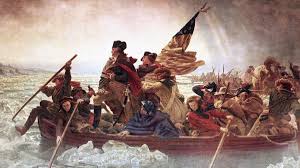
In his book, Washington’s Crossing, historian David Hackett Fischer introduces his volume with a discussion of Emmanuel Leutze’s famous painting of the same name. Fischer guides the reader through elements in the painting, noting passengers figure by figure as they frantically navigate the frozen Delaware River on that long ago Christmas night. 

Why is this particular work especially moving? Because at that juncture, December 25, 1776, the Revolutionary War looked to be flaming out after barely a start. Defeat had dogged Washington’s Continentals after being chased off of Long Island, and driven out of New York City the previous summer. As Washington planned his surprise Christmas attack, victorious Redcoats had settled into winter camp in New York City.

Humiliated, Washington knew he had to strike hard and he had to win.

Viewing his situation with the “clarity of desperation” the General ordered an assault on Hessian (German mercenary) held Trenton, New Jersey. The Continental army would have to use the element of surprise fighting against a better armed and better fed opponent. Risky to the extreme, Washington knew we, meaning America, for all time, was dependent upon his actions that night.

As for the painting, the artist depicts freezing soldiers huddled in a boat with more watercraft in the backdrop. From the starboard side, (to the right of General Washington) sits an oars-man, distinctly Black, putting his back into his strokes, ploughing through dangerous ice floes. Behind him, facing forward at the bow, is another swarthy figure, perhaps a Native American. He is desperately kicking ice with his left boot while handling a sharpened pole to break open a passage through the impossible crust. To the foreground an immigrant (a Scot by the look of his hat) studies the river’s surface closely as he pulls forward to port, while another behind him, in fisherman gear, studies the treacherous water. Others are made up of rustics, one at the tiller, along with a wounded passenger.

General Washington centers the painting as he is the central figure of the drama. Behind the General is Major James Monroe, and another rugged frontiersman by the looks of his garb. Both men are grasping a 13-star (Betsy Ross) flag, in a grip that elicits an attitude of determination and desperation, with perhaps a bit of warmth. Below both flag bearers sits a WOMAN, yes, a woman pulling her oar with an analytic eye upon the clotting water.

Black, Native, white, immigrant, the highborn, the humble, men and women, yesterday, today, and the future: all of our American lives balanced on the gamble played that night in 1776.

The point I believe Leutze is trying to convey is that we all don’t have to be the same. No one has to agree on the details of our beliefs to ride on that boat. The truth is Americans all have and had different realities and ambitions: differing views of liberty. Still, all onboard had to carefully respect each other’s space and not overturn that fragile vessel, Liberty, for we must stay afloat and row in the same direction. It is in all our interests to do so.

And that metaphor of America, that boat, tested our resolve on one of the nation’s most critical nights. Inspiration doesn’t come any better than from Leutze’s allegorical Washington’s Crossing.

Gail Chumbley is the author of the two-part memoir, River of January, and River of January: Figure Eight. Chumbley has also penned two stage plays, Clay, and Wolf By The Ears, concerning the life of Senator Henry Clay, and an in-depth examination of the beginnings of American slavery. Gail is currently working on another piece, Peer Review, best described as Dickens A Christmas Carol meets presidential history.

The Patriotic Long Game

When reflecting on my career as a public classroom teacher I hold on to many fond memories. The subject, American History, provided a lot of fascinating stories to share with teenagers coming of age in America. The kids came from varying backgrounds and abilities but once the door closed we focused on a subject that linked us together as one people.

One memorable lesson concerned the Second Continental Congress and adoption of the Declaration of Independence. Together we unpacked the document, followed by guided questioning to clarify the contents. Thomas Jefferson lists the extraordinary circumstances that brought about the decision to split with Britain. Part of the substance listed the abuses of the King and measures colonials had to take to be heard. Toward the end of the lesson I asked the class who they thought Jefferson might be addressing with his lengthy explanation. One boy cautiously raised his hand, an astonished expression on his face, and in a surprised voice he answered  “me.”

Indeed.

Toward the end of the academic year the kids were assigned to sit down with an elder and interview the person about their recollections of life in an earlier time. Students had studied a lot of decades which prepared them for those recordings. In a particularly powerful interview a boy contacted his uncle, a Vietnam veteran, and asked him to tell about his tour of duty in that bygone war. This veteran had not spoken of his service to anyone since returning in the late 1960’s. And although this poor man wept through the recording he apparently cleansed his soul for after decades of self-imposed isolation the uncle began to join family get-togethers.

My student said it was a miracle.

Lessons from the past such as these are vital to understanding America’s present. Though the course required a great deal of writing and analysis, a sense of accomplishment filled the room with an aura of confidence, and national belonging.

Today, over a decade has passed since my retirement, and much has changed in American classrooms. Rather than sanctuaries of learning classrooms have become battle fronts in the culture wars. A small, but loud minority has succeeded in chipping away at the foundation of public education, ironically something Mr. Jefferson promoted as vital to freedom. Sadly those misguided assaults imperil our nation’s ability to survive intact. 

The underlying cause appears to concern social class, power, and money. To educate all requires tax dollars, dollars fewer want to pay. Further, education implies looking toward the future, providing hope that the promise of America will pass on to new generations. Making money now and keeping it is more important than any investment in other people’s kids. Besides the upper classes can afford to educate their children, and believing they must shelter them from the lower classes. That attitude runs counter to America’s motto: E Pluribus Unum, Out of Many, One. Education is a promise that opens up a world of possibilities. That power and possibilities the well-heeled wish to hoard.

Take, for example, Betsy DuVos appointed by Trump 1.0. She took the job as Secretary of Education for the sole purpose of defunding and dismantling public schools. This is not hyperbole. As Secretary of Education, she made no secret of her contempt for public education. In her official role she pushed for school vouchers, charter schools, private institutions, all designed to ensure gated-community education. Stripping down federal education statutes and funding marked her time in Washington.

With Trump 2.0 even the Department of Education is gone. Critics attacking public education lack serious understanding of our public system, and that threatens our national viability.

History could not be more clear regarding the obligation to America’s youth. After the Revolutionary War as land opened up in the Great Lakes area, Congress passed the Northwest Ordinance (1787). This law organized a numbered survey grid mandating revenue from section 16 of the survey be earmarked for public education.

In the years after the Civil War waves of immigrants from Eastern and Southern Europe flooded upon America’s shores. To aid the newcomers settlement houses, such as the Neighborhood Guild in New York City, and Chicago’s Hull House, children attended classes to learn to be American. Too bad we can’t rally the same enthusiasm for all our kids today.

Now self-appointed curriculum experts pack local school board meetings, demanding removal of books, blaming and bullying over-worked teachers which isn’t helpful. Understandably many educators leave after only a few years, while the rest bravely persevere. What our teachers need is meaningful support as they shoulder the duty of classroom instruction plus all the distractions of behavior problems, lockdown drills, bomb threats, and active shooter protocols.

This is an issue of national self interest. There is nothing sentimental or saccharine about how it takes a village. It does take all of us. We all bear responsibility to all of our kids, for they cannot do this for themselves.

Leave teachers alone and let them continue to weave that same magic I experienced for all of our students. We have and will continue to turn potential into reality.

Whether a parent or an educator, or a retired senior, we are depending on you all to protect the patriotic long game.

Gail Chumbley is the author of the two-part memoir “River of January,” and “River of January: Figure Eight,” co-writer of the screenplay, and “Dancing On Air” based on those books. She has penned three stage plays on history topics, “Clay” on the life of Senator Henry Clay, “Wolf By The Ears” examining the beginnings of American slavery, and “Peer Review” where 47 is confronted by specters of four past presidents.

Catch Up

A radical change in imperial policy between Great Britain and her American Colonies marked the beginning of the Revolutionary Era.

Well before the American Revolution an amiable, and profitable arrangement existed between the Colonials and Parliament. This mutually profitable connection quickly terminated after the French and Indian War, 1754-1763. That conflict, though a victory for the British, had cost the Royal Treasury plenty, and the Crown abandoned friendly relations by coercing Americans to share in settling that war debt .

Parliament began by imposing a number of taxes, all designed to force Americans to pay up. The Sugar Act, Stamp Act, and Townshend Duties, among other measures, had been designed to force Americans to cover the royal debt. Once proud to be British, Colonials were shocked to realize the Crown viewed them as a source of revenue, and nothing more.

Colonials had a long running smuggling network, importing cheaper commodities from the French islands, thus evading British tariffs. Those caught and arrested found fast acquittal by colonial juries of their peers, as locals were also customers of the accused. In Boston, tensions soon turned to bloodshed, followed later with tea spilled into the Harbor. The Crown, not amused, soon forbade traditional trials, and transported accused Americans to military courts, in particular to Nova Scotia. Next, British Red Coats were deployed to the New England colonies to impose martial law, and Parliament decreed American’s had to house and feed their own oppressors.  

These matters were met with vehement dissent, Colonials protesting they had no representative in Parliament, and would not tolerate taxation without their consent. “No Taxation Without Representation” and “Resistance to Tyranny is Obedience to God,” rang throughout Colonial America.

Tensions ripened, finally coming to a bloody confrontation in April of 1775, and the rest we mostly remember from school. 

Tasked with scribing a Declaration of Independence at the Second Continental Congress, Thomas Jefferson vented American grievances through his quill. Working alone, Jefferson defended the violent actions carried out by Americans, and took pains to explain the radicalism. . . . “a decent respect to the opinions of mankind requires that they should declare the causes which impel them to the separation.” And for six years the Continental Army persevered.

In 1787, the subsequent creation and ratification of the U.S. Constitution set an enduring national blueprint of settled law. The Framers designed a government derived from the people, meaning we all are equal, and guaranteed representation in shaping law.

That brings this story to today. 

The election of a president from an opposing party is not a radical, nor sudden change of policy. Rather, this cyclic American ritual is as normal as the singing the Star Spangled Banner before a game. American voters have chosen our leaders in this manner since George Washington’s name first appeared on the ballot. 

To all of you who attacked our Capitol, it’s well past time for you to catch up. Put away those symbols of rebellion; of coiled snakes, hangmen gallows, and Viking horns. The Revolution ended two and a half centuries ago. The story of America is well underway.

In point of fact, those January 6th insurrectionists themselves attempted a radical change in American tradition. In pursuit of violence and chaos, these terrorists attempted a savage disruption of our deepest democratic traditions. Now that is unAmerican. In point of fact, we all have political representatives, and a right to a jury of our peers, and nary a soldier is found lounging on the couch.

Grow up and stand down.  

Gail Chumbley is the author of the two-part memoir “River of January” and “River of January: Figure Eight.”

Chumbley has also penned two plays, “Clay” exploring the life of Henry Clay, and “Wolf By The Ears,” an examination of American slavery and racism.

chumbleg.blog

King of the Hill

General Washington had not yet been appointed commander of the Continental Army. Nonetheless, the conflict against Great Britain, though running hot after Lexington and Concord, remained an informal, isolated brushfire in the eyes of the Crown. Still, the very presence of soldiers grated Bostonians, enough that outraged patriots plotted retaliation.

June 16th, after dark, these Sons of Liberty acted, digging in on Breeds Hill located near Bunker Hill, north of the city in Charles Town. All that night these newly minted Minutemen stacked preloaded-muskets, entrenched, and waited for sunrise. At first light, the startled Redcoats scrambled to form lines and launch an offensive against the rebels. Though holding the line through three assaults, the Bostonians, low on gunpowder, were forced to melt away into the surrounding area. The shocked Brits decided to call the contest a victory.

But as one royal officer candidly admitted, “if we win anymore like this, we’ll lose this war.”

That is the lesson of Bunker Hill, hold the high ground, and draw the fight uphill to a well-defended position.

General George Washington arrived in Boston the next month, taking command of the motley Continental Army. Positioning his inexperienced troops on the heights surrounding the city, Washington bluffed his military strengths. When actual heavy guns finally reached Washington, the Redcoats had had enough, and on March 17, 1776, all the King’s men evacuated to Canada.

Two philosophers on warfare, China’s Sun Tzu, and Prussian, Carl von Clauswitz had committed to paper their respective views on the value of the high ground. Sun Tzu in the 6th Century, and Clausewitz in the early 19th Century argued its significance. Much like that game, “King of the Hill,” we played as kids, the advantage belongs to the person on top. That essentially defines both tacticians principles.

Yet, physically holding a hill doesn’t go far enough. Both philosophers argued that a moral high ground is equally essential, an armed force must be clad with a virtuous cause. 

A higher moral purpose fills the sails to victory.

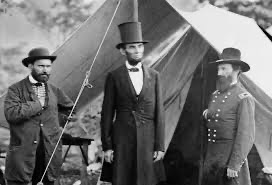
In 1860, Republican candidate Abraham Lincoln won the presidency, becoming America’s 16th President. That moment weighed with foreboding, as Southern States, one by one, chose to secede from the United States. The new President viewed this idea as impossible–statehood was not a revolving door. In his inaugural address. Lincoln spoke plainly, “In your hands, my dissatisfied fellow-countrymen, and not in mine, is the momentous issue of civil war.”

Then Lincoln, and the the rest of the nation watched and waited. On April 12, 1861 guns thundered from Charleston, South Carolina, smashing into Fort Sumter, a federal installation in the harbor.

Boom, done and done.

The Rebs drew first blood, and Lincoln, by default, seized the moral high ground. After a duration of four long, bloody years, the rebellion collapsed, and slavery ended.

Both the attack on Pearl Harbor in December 1941, and the terrorist attack on September 11, 2001, elevated America’s retaliation as morally justified, drawing the nation into both World War Two, and the War on Terror.

Everyone around the world is watching the Ukrainian people standing tall against a mystifying invasion by Russia. Ukrainian President Zelensky has brilliantly executed the lessons of Sun Tzu and von Clausewitz. His articulate, moral leadership, and courage has more than won the moral high ground test. In contrast, Vladimir Putin has proven his lack of preparation, and barbarity, assuring the Russian President an international pariah.

These principles are timeless and universal, not only in America, but in past conflicts like Thermopylae in the 5th Century, and the Warsaw Ghetto uprising in 1940.

Whether the Ukrainian President, is aware or not, he has benefitted from the teachings of Sun Tzu and von Clausewitz, and this is Ukraine’s finest hour.

The possession of high ground may decide a battle, war or the fate of a nation.

Carl von Clausewitz

Gail Chumbley is a history educator, and writer.

gailchumbley@chumbleg

Custodians of Now

Gratitude underpins America’s oldest quasi-secular holiday,Thanksgiving. In the 21st Century it is rather easy to scoff at a quaint observance that predates the founding of the country, and today’s America is a bit too cynical, busy, and self involved for meaningful reflection.

Separatists in 1621 Plymouth had risked all to worship freely in the New World. Suffering starvation and disease, the Mayflower survivors managed a successful harvest with the essential aid of local Natives. In an outpouring of gratitude the newcomers organized a potluck of sorts, and invited their benefactors to pause, count their blessings, savoring both the moment and the food.

General Washington announced a day of Thanksgiving after the fortuitous American victory over the British at Saratoga, and again after the Constitutional Convention in 1787. Moments of mutual gratitude implied a common bond, and an acknowledgment of common sacrifice. 

Later, in 1863, America, once again, faced a crisis of unity.

A grisly Civil War had raged for two years, when emboldened Confederate forces crossed north into Pennsylvania. Soldiers of the Blue and the Gray clashed at the crossroads town of Gettysburg. After a three-day struggle, the tide shifted in favor of the Union, and soon after Confederate troops retreated back into Virginia.

In the aftermath, President Lincoln delivered his Gettysburg Address, and shortly after called for a national day of Thanksgiving. Lincoln set aside Thursday, November 26th for the observance, calling for contemplation and gratitude. Later, in the aftermath of the Pearl Harbor attack, President Franklin Roosevelt signed into law a permanent observance of Thanksgiving to the fourth Thursday of November. 

Aside from roasted turkey, televised parades, football, relatives, and tryptophan-induced naps, this day is meant for reflection; a national respite from other distractions. As Americans we remember those who struggled through their American moment, and refresh our personal obligation to our communities, and to our nation. 

Whatever spirit guides our personal devotion, on this day we place ourselves second to something much greater-the United States of America. We recommit to our highest aspirations as a fortunate and free people; a people who respect what came before, and resolve to protect our democracy for the future.

This Thursday remember we are the custodians of now, and unity is not easy with such diverse and noisy citizens. Still the responsibility remains, carried forward from earlier generations. We Americans have an obligation to nurture solidarity over discord, amity over selfishness. 

All Americans can resolve to preserve this hard-won gift of democracy to those not yet born.   

Gail Chumbley is the author of the two-part memoir, “River of January,” and “River of January: Figure Eight.” Both titles are available on Kindle. She has also completed the play, “Wolf By The Ears,” a historic look on the advent of American Slavery.

gailchumbley@gmail.com

Cannon of Extremism

I often exit the FaceBook expressway because of the absurd misuse of the American past. And it’s not just history. Politics have abscessed into a free for all, and scientific/medical reality into FaceBook insanity. This verbal dysentery is loaded into into a cannon of extremism, where the unschooled righteously blast irrational conclusions. 

Case in point, an old friend of my husband’s posted, “Those who would give up liberty for security deserve neither.” It’s Benjamin Franklin’s sentiment, but incomplete. Franklin wrote, “Those who would give up essential Liberty, to purchase a little temporary safety, deserve neither liberty nor safety.” 

The quote is from a 1775 letter written by Dr. Franklin on behalf of the Pennsylvania Assembly. He addressed this (very long) correspondence to the Deputy Governor at the time, Robert Hunter Morris. Governor Morris had irritated the Assembly by demanding new militia for protecting western land from the Shawnee and Delaware Natives who, according to rumor were attacking settlers. To keep this episode simple, Morris wanted the lands of wealthy landowners protected, but the rest of the colony to cover the costs. Exempt were the Proprietary landowners who were earning rents from settlers, with a kickback percentage figured in for the deputy governor.

Franklin essentially called Morris out for an egregious conflict of interest, and the Assembly wasn’t financing graft. This was, by the way, four months after Lexington and Concord, and relations between colonials and redcoats tense.

What this misquoted post implied on FaceBook, defended refusing the Covid vaccine. So apparently it’s virtuous somehow to be a cyber Paul Revere spouting Franklin, calling for vaccine resistance in a pandemic. 

The irony of playing fast and loose with the past, is presuming Dr. Franklin would agree with this nonsense. Every founder did what they did for the gravest of reasons; not some oppositional hype to reject public health interests, in bumper-sticker brevity. 

The irony of the post lay with the man. By faith, Franklin counted himself a Deist–that God was the creator of a precise universe; to discover that precision is to find God. In pursuit of those truths, Franklin took on the life of an empirical, data-driven scientist. (Remember his kite-electricity experiment?)

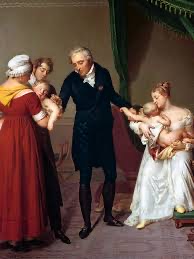
“God Helps Those Who Help Themselves,” is another quote that ought to be repeated on FaceBook and everywhere else. When his child, Francis Folger Franklin died of small pox at age four, Dr. Franklin made an enlightened decision—he inoculated himself and his family from that deadly disease. And an inoculation was no easy nor guaranteed procedure. But as a man of science, he had the sense to take a reasonable path.

Remembering Dr. Franklin means to further our understanding of this moment in time, and follow his example of open minded curiosity, and trust in empirical solutions. Today, that task has been muddied by the misguided, destabilizing all that is good in our America.

Franklin worked hard to make the United States an opened-minded conduit of democracy, not of electronically delivered bedlam.

As Dr. Franklin reminded us, (And I mean us) “Avoid extremes; forbear resenting injuries so much as you think they deserve.” And this gem, “Never go to excess, but let moderation be your guide.”

Gail Chumbley is the author of the two-part memoir, “River of January,” and “River of January: Figure Eight.” Both titles are available on Kindle.

gailchumbley@gmail.com

Deathwatch

A new plan had been designed to unite political power from 13 squabbling fiefdoms, to one central government representing the people.

Statesman, James Madison fully intended his new national blueprint to quiet interstate turf wars. Until 1787 no central mediator had existed, and the constant turmoil looked to nearly finished off the fledgling nation. Madison’s remedy, his Virginia Plan would count population, and without fear or favor, allocate direct representation. However, once his proposal was disclosed to his peers, the forces of inertia nearly derailed the Constitutional Convention.

This is the short version of details:

America, though victorious over the British in the recent war, was falling apart. No money, no credit, no court system, and European enemies on a deathwatch of sorts.

Internal disputes wreaked havoc among citizens, as each former colony hustled to press state interests over national. This upheaval grew especially violent in Western Massachusetts when musket shots were exchanged in a tax uprising.

In September, 1786 only a handful of delegates reported to a Maryland convention summoned to deal with the mess. But with only a handful of states reporting, attendees couldn’t vote on any binding measure–too few were present.

Distressed by intensifying disorder, and no real authority to act, James Madison and his colleague, Alexander Hamilton agreed the time had come for a new framework of government. The two, a Virginian, and New Yorker called for another convention; one that promised to address the failing system. (See “Rope of Sand” on this blog site).

Arranged for May, 1787, in Philadelphia, Hamilton and Madison attracted participants by promising General Washington himself, would attend.  However, Washington declined at first, that is until the gunshots in Massachusetts changed his tune. He, along with fifty four other men gathered, and the process began.

In the run-up to the Philadelphia Convention, James Madison kept busy. Though this gathering had been advertised as tweaking the existing system, Madison’s plan actually abolished it, in favor of his new Virginia Plan

He and his allies clearly understood the historic risk they were taking.

In a panic, the states with fewer people balked at losing influence. A William Paterson of New Jersey, moved for recess to craft a counter plan, one that would preserve state interests against Madison’s people-based plan. 

Called the New Jersey Plan, this model would establish a one-chamber legislative branch, each state equally represented. 

Then more hell broke loose.

In another recess a middle ground was devised by Connecticut delegate, Roger Sherman. 

Called the Connecticut Compromise, or the Great Compromise, a solution emerged. Sherman brokered a lower house by representation, and the upper house of two Senators from each state. That calmed the small states, relieved they would not be diminished by population-heavy states.

There are so many more details to the development of the Constitution, but this agreement signified a start. 

That kind of goodwill and commitment to duty has sustained the United States through rough times. Granted, flaws remained regarding slavery, the slave trade, women’s rights, and Native American policy. Still, this ballast was enough to move the ship of state forward. 

Today the national GOP promotes chaos and gridlock as somehow virtuous, while our adversaries still maintain America’s deathwatch.

Perhaps 1787 produced a better caliber of political leadership, Americans who served the common good.

Gail Chumbley is the author of the two-part memoir, River of January, and River of January: Figure Eight. Both title are available on Kindle.

gailchumbley@gmail.com

Rope of Sand

The creed of States’ Rights is all smoke and mirrors; a cover for the selfish interests of local napoleons, and the politicians they bankroll. When claimed as the only answer to the country’s problems, beware, States’ Rights never solved a thing.

Not in America.

Ours is a one of a kind, federal system of concurrent powers. Centralized authority layers and folds, meshing with state and local governments.This dynamic has functioned for over two hundred years and the bonds are subtle and sometimes conflicting. The most lethal confrontation between state and federal powers clashed in the Civil War, 1861-65. But that particular catastrophe was certainly not the first.

During the Revolution, state delegations, in an attempt to unify the embattled nation, drafted a national blueprint called the Articles of Confederation. Attending representatives squabbled endlessly to defend their own local interests, rejecting any language that bound state autonomy. So jealous were the original Thirteen of one another, political leaders dragged ratification out, while barely a step ahead of pursuing Redcoats. The Continental Congress dashed across Pennsylvania, into Maryland, and back, still resistant to real, national authority.

John Dickinson of Delaware, drafted some elements into this fledgling plan, but his model wasn’t helpful. General Washington still had to beg Congress for recruits and soldier pay, and Congress, in turn, had to beg States to fill those needs. One bright note is Congress did agree to dispatch diplomats, like Franklin and Adams, who continued the begging game across the Atlantic.

Meanwhile States such as New Jersey, and Pennsylvania, happily traded with coin-rich Brits, filling their personal coffers, while ignoring the needs of the war effort. The prospects of an American victory grew grim, as each state dug in, defending their own turf. In fact, the Confederation Congress was so toothless, the document itself failed ratification until a month before Yorktown.

Historians often use the term “rope of sand,” to describe the deficiencies and impotence of this early attempt at self governance. Lacking any real prestige, inevitable bloodshed quickly ensued among these thirteen quarreling kingdoms. Navigation rights, interstate trade, and clashes over currency, nearly ended the budding union. At that critical moment Alexander Hamilton and James Madison jointly called for a new convention to “revise” the Articles. Both men, in reality, intended to dump them for a different, stronger plan. Recently retired George Washington agreed with both men, and chaired this new convention, assembling in Philadelphia the summer of 1787, and a determined Constitutional Convention worked hard to remedy many of the new nation’s ills.

This lesson from the past remains relevant. My state, for example could never bear the seasonal costs of road construction, nor of fire fighting. The former administration’s Covid-19 policies have proven, again the futility, and folly of every state scrambling for themselves.

The events of January 6, 2021, and now with the Texas legislature attacking both voting rights, and a woman’s right to choose, similar concerns arise. Is American law no more than a vulnerable rope of sand in the hands of the states?

Fellow Americans, do not buy into the so called advantages of States’ Rights. Hidden interests cloaked in virtuous words distract us from national needs, while the favored few push their political agendas. It’s not an overstatement to say States’ Rights again threatens the good order the Framers labored to establish.

Gail Chumbley is the author of the two-part memoir, “River of January,” and “River of January: Figure Eight.” Both titles available on Kindle or at http://www.river-of-january.com.

gailchumbley@gmail.com