Who Takes The Blame?

Yesterday my car was totaled.  True story.  I don’t think it has quite sunk in that my familiar, comfortable, Sirius radio equipped car will never move again.  And I didn’t cause the demise, either.  And I can’t even really blame my husband, though he was behind wheel at the time.  The actual culprit was mother nature.  I need to explain.

We live in the mountains.  There is a small grocery store in our little town, but for real shopping we have to drive to the city.  The highways we use were cut out years ago from the granite walls of the Northern Rockies.  The rivers below the road and the hot springs alongside maintains a perpetual cloud of steam, that quickly sets up into ice when the temperature hovers around 20 degrees.  The canyon itself is so narrow that the sun’s rays rarely touch many sections of route.  The point is that the highway is a damn treacherous roller coaster ride.  My husband lost control on a particularly slick curve, though his speed was slowly cautious.  He hit another oncoming truck, and the impact destroyed both vehicles.  The two drivers are okay.  One broken arm, lots of bruises and scrapes.

The state troopers wrote a ticket placing the blame on my husband and my poor smashed up car.  They explained that though the accident couldn’t quite have been helped, someone had to assume responsibility.  The blame game in this case feels unjustified, but the trooper explained that with the damage and injuries blame has to be assigned to someone.

Her explanation has set me to thinking about assessing blame for damages and injuries that cannot be seen.  In River of January hurt abounds among the main characters.  Pain plays an instrumental part in moving the characters emotionally and geographically throughout the pages.  Death, all kinds of abuse, fear, and manipulation steer my central figures as they move through their lives.  Where is blame to be assigned for all that type of damage?  The father who abused the son?  The mother who died abandoning a lone and sensitive child?  The daughter who attempted to live her own life apart from her overbearing mother?  Where did the legacy of hurt begin?  When exactly did it start?  Who’s name would appear on the ticket that initiated all that multi-generational sorrow?

The police have their set definitions assessing blame and culpability for inevitable, unpreventable collisions on the road.  But where do we as members of a family pinpoint where our unhappiness began?  How many generations must we trace back to isolate the first fateful hurt?

Perhaps we all live on figurative ice, and cannot place blame on any other soul.  There are no traffic tickets for operating a life while bearing inevitable injuries.
Time and Words

Image

Written records have provided a wealth of information for my book, River of January.  It’s rather interesting that I have carefully read and analyzed these letters composed in ink and soft lead, and they have taken me into vibrant lives, flowing with adventure and color.  So much feeling lives in those envelopes–devotion, pain, fear, reassurance all scribed into hand written correspondence.

A character in the story, Elie Gelaki, a Belgian boy who pines for Helen, produced volumes of letters and postcards.  Just picking up a handful of his letters are vivid proof of his perpetual love.  Helen’s letters to her mother bear updates, stories, and news (and promises of money) filling 4 plastic containers.  I can see that her mother was important to her, just by looking at her blizzard of correspondence.  In the same vein, Chum’s letters to Helen, are steeped in longing, with loving language that reached her from across hemispheres, time zones and war zones, placing the reader directly into the deepest reaches of his heart.

Sadly, today, personal letters exist somewhere in the same black hole as slide rules, floppy discs and cassette tapes.

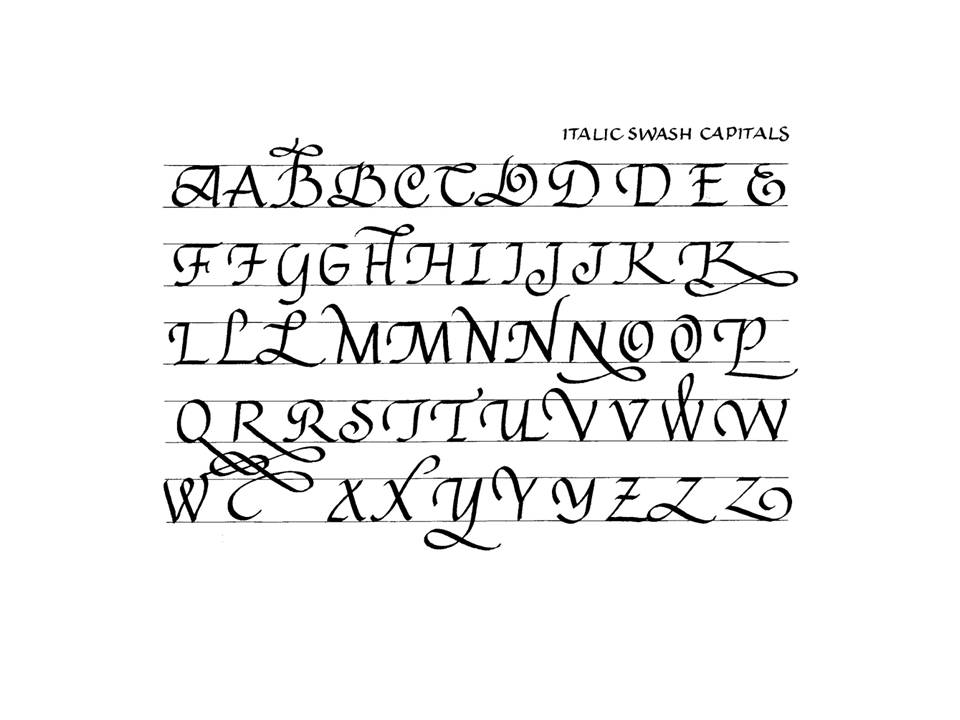
The beauty of cursive writing, the artful style has disappeared.  Take a look at the Declaration of Independence, or the Constitution and notice the intricate flourishes that embellish the words.  People made their living writing script, and the hands that penned these two documents were skilled for sure.

And another feature of handwriting is what it reveals about the writer.  A former student became enthralled with handwriting analysis, fascinated by the personality traits exposed in cursive writing.  I’m not sure I buy all that hocus pocus, but the change of Richard Nixon’s signature from his heyday to his resignation is remarkable.  He signed his name at the end of his presidency in an almost straight line.  Nixon’s signature looks pissed-off.

I would argue that a person’s handwriting is as unique as their fingerprints.  It is a shame that most informal communication between any two people today is through cryptic, brief electronic texts.  I won’t argue that electronic communication can reveal a story too.  It certainly can.  I think that was how Martha Stewart got caught violating SEC regulations and ended up in jail.

But in the realm of the heart, the messy, dramatic, embarrassing human heart, driven by love to hemorrhage passion on stationary has sadly become a casualty of neat, quick technology.

Logging

Creative Non-Fiction.  That is the category that River of January will market under.  I am comfortable writing in that genre because of the latitude I have in stringing together the story.  I don’t know exactly who said what to whom, through all those years, except for the letters that have been left for my keeping.  And those letters concern limited stretches of time.  So the story outcome is a combination of actual episodes and creative glue to keep the story cohesive

This approach has worked well . . .until now.  The major difference for writing in book two (yes, there is a second volume) are Chum’s logbooks.  The ramifications of possessing some twenty-odd logbooks, is that I know exactly where he was, and when he arrived and departed.  That exactness poses a problem for the creative side of composition.  Let me explain.

I placed my protagonists in Virginia at Thanksgiving, 1936.  But Chum’s logbook doesn’t put them there until the next month–Christmas of 1936.  I had to ask myself, ‘How anal is this process?’  And the answer was, Creative Non-Fiction.  I can place them loosely where I need them to keep the flow of the narrative moving.  But those damn logbooks really like to argue with me, demanding things that they are.

His literal trail is fascinating to read.  Chum carefully noted each flight he flew, the equipment, passengers, time in the air, where and when he landed.  He or should I say I can account for his whereabouts from the time he boarded his first aircraft in 1928.  The war years offer a particularly revealing journal of wartime aviation.  Added to his own notations are his official Navy orders, which are neatly attached together in a vertical file.

In so many ways Chum’s logbooks provide a connect-the-dots composition of his adult life.  Where he landed on any given day, where he was when big events took place around the globe, where he was the day I was born.  His notations provide a fine straightedge where his life took measure.

By the way there are mysteries in those logs.  He and his crew had some hush-hush missions during the war, and the logbook reflects that security.  For destinations he scribbled in some cryptic nonsense.  The only reason that I know the nature of those flights was because he told me later in taped interviews.  Thank Goodness for that.

There are some pretty cool names of places that I’d never heard of before.  Nanty Glo, Pennsylvania, Havre de Grace, Maryland, Fitler, Mississippi–FITLER!  And the war years mention islands beyond my geographic knowledge; Espirito Santo, Suva, and Numea.

I guess we would all benefit from a life logbook tracing where we have been, how long we stayed and when we left.  A picture would assuredly materialize, accounting a good deal for who we are now.

What Can I Do For You?

For inexplicable reasons there are individuals in my life that I need, to assess my quality as a person.  A thousand more people, family, friends, acquaintances breeze into and out of my days, leaving a pleasant warmth in their wake.  But somehow a tiny few slip under my shield, and inflict deep and lingering pain.

Now, I’m no expert on interpersonal relations, but I know enough to see my part in the dynamic.  I can see enough to watch myself set up for another emotional blast.  Perplexing as it seems, I continue to come back for more, with this miniscule group of perpetrators.  And what annoys me most is that I’m so pleasant in return, because I don’t want to escalate any rows.

Well, enough about me.  We all know that taking crap from loved ones is just one more inevitable, invisible gift under the tree.

Unraveling family interplay in River of January forced me to fall back on my own experiences with loved ones.  My female protagonist, Helen, was helpless to change her relationships with family members, so ingrained was her role.  The unthinkable pain of even trying to declare independence from her mother made the act impossible.  She simply could not see herself outside her position as daughter, trusting her mother’s judgement without question.  Any defiance was impossible, because Helen had no identity or definition without her mother. This matriarch was the center of her universe.

Manifesting her predicament, Helen trusted her mother’s decisions and directions, believing those decisions were for her own good.  As is true for the rest of us, she was blind to the manipulation behind her mother’s choices, such as keeping away suitors because Helen was to dance, not marry.  The girl never had the perspective to see that she was more a pawn, moved about by a stage mother who was equally blind to any harm she inflicted.

I often try to apply resolution to these postings, but when it comes to family interaction I’m not sure that exists.  We begin our lives together, mothers, fathers, children, and build from that starting point.  Most of us have no notion of the bad decisions or actions we take that hurt other members of the household.  None of us start out with a pain inflicting agenda.  It’s as though we fall into roles, behave as we read others expectations.  Helen acted in a way that pleased her mother.  She grew to please audiences, and tried to please her husband.  All that pleasing backfired, and in that there must be some kind of life lesson.

I’ll let you know when I’ve discovered the secret to perfect interpersonal relationships.  Happy Holidays.

Rhythm in My Nursery Rhymes sung by Dinah Miller

Another Song Helen performed in Rio.
Merry Christmas
(lyrics vary in this version)
(IF I HAD) RHYTHM IN MY NURSERY RHYMES
——————————————–
I could learn my ABC’s, Bring home A’s instead of D’s
And my Mom and Dad I’d please if I had rhythm in my nursery rhyme

In the corner on a stool I sat ’cause I broke a rule
But I’d show them that I’m no fool If I had rhythm in my nursery rhyme

Tra-la-la-la-la won’t get me far — Lately I’ve been thinkin’
If I had a little bit of rhythm, I’d could be a Washington or a Lincoln

Simple Simon at the fair Met a Pie man who was there
About those two guys I don’t care
‘Cause I need rhythm in my nursery rhyme
__________________________________________________

Lullabies were all OK, when my Mama sang ‘em in her day
But I’d rather hear them in a swingin’ way
‘Cause I need rhythm in my nursery, rhythm in my nursery,
Rhythm in my nursery rhymes – boo dah beep

Before War Was Cool

Image

The protagonist in River of JanuaryMont Chumbley, or “Chum,” as we called him, pined to join the Navy in 1927.  In fact Chum knew that the Navy was his destiny from the time he witnessed a barn-stormer, (stunt pilot) fly miracles across the rural Virginia sky.  What the boy didn’t count on in his hopes was the resistance he met from his own family.

The Chumbley’s were not alone in their disgust with the military.  All of America suffered from a giant hangover after the Great War (World War One), convinced Americans that their participation had been a horrible mistake.  Though not fully true, the US still viewed itself as a simple republic, not an empire builder bound for global influence.  That policy came later, after World War Two, in the Cold War.

President Wilson staked his own presidency on his Treaty of Versailles and League of Nations, which would have bound the country to Europe in a forerunner to the United Nations.  The public, through their Senators voted the Treaty down, killing it as dead as the soldiers who would never come home.  Books were written after 1919 that discredited war as nothing but a fools errand.  “Johnny Got His Gun” was one such novel, and Erich Maria Remarque‘s “All Quiet on the Western Front” was another.

Folks stateside strongly regretted sending Doughboys across the Atlantic to battle the Kaiser and his evil Hun army.  By the year Chum pushed to join the Navy, the US had negotiated a treaty with the French, called the Kellogg Briand Pact, which outlawed war as an alternative in international conflict.  (“Don’t plant that mine, if you can’t do the time?”  Seriously?)

The Nye Commission, a House investigating committee was charged to find out why America joined the war.  In the end these law makers judged money was the culprit.  War manufacturers, such a poison gas producers the Dupont Corporation and financiers,The House of Morgan, were condemned for their roles in fanning the flames while counting their profits.

It was in this cultural/political atmosphere that Chum wanted to join the Navy.  When his father and aunt objected, they simply parroted the opinion of a nation that believed the military was only for scoundrels and suckers.  If Chum succeeded in enlisting he would draw shame on the family’s name.

Now, I am a child of the Vietnam era and understand the power of public opinion concerning war.  Too many young men came home to condemnation for rendering their duty to their country.  Many were already angry from their combat experiences, especially if they were drafted in the first place.  War protestors vented their fury on those boys who did nothing more than complete their mission.

Still for many young people, such as Chum in the 1920’s, the service still offers training and opportunity.  Perhaps it would benefit us all to remember to separate the advantages of military training, from the poor use of young people deployed for uncertain, poorly planned political agendas.

Chum did meet his service obligations, later after Pearl Harbor.  But he would agree, I think, that he gained more from his service in the Navy, than he returned.

Servicemen have never been suckers, and decision makers must never lightly treat them as such.

Requiem For A Beauty

Image

This is part of a snapshot taken in Rome in 1932.  Helen, the subject of my book, River of January stands above wearing the white fur-collared coat.  Posing next to her, in the white cap is dancer, Carmen Morales, another member of the “American Beauties,” an American ballet company.  The two girls met when both were cast in this troupe booked to dance across the cities of Europe.  They remained the closest of friends until Helen’s death in 1993.

I have perused countless pictures of Helen’s European tour, closely, (close as with a magnifying glass) the faces of her fellow dancers.  And I have decided that of all the girls in the show Carmen, next to Helen of course, was a classic  American Beauty.

From the little I could find on the internet Carmen was born in the Spanish Canary Islands around 1914, and came to the US where her father had business interests.  She trained in ballet, and after an audition was booked to tour with dance mistress, Maria Gambarelli.  On the ship’s crossing to Le Havre the girls fused together into a solid little unit, and to trouble one meant facing the wrath of all.

During their travels, Carmen met a fellow American dancer, Earl Leslie and the two fell in love.  Earl and Carmen soon married in Marseilles, and left the show when Earl received a better offer.  A German businessman wanted him to manage a string of nightclubs out of Berlin.  They took the job to give their new life together a chance.  But history was conspiring against Carmen and her new husband when Nazi authorities harassed the two and pressured them out of the country.  That was in 1934.

The couple again joined their old dance company, but by that point Helen had returned to New York.  Meanwhile Earl, Carmen and the rest of their company signed contracts to play in Argentina into 1935-36.  It was in Buenos Aires that Earl Leslie began an open love affair with another dancer and broke Carmen’s heart.

Carmen returned to New York, divorced Leslie and moved to Los Angeles to resume her show business career.  Her big break came in 1940 when she was cast by director John Ford to play in “The Long Voyage Home,” starring John Wayne.  I’m not sure how many films Carmen made, but she quickly fell into a type-cast, that of the femme fatale–a far cry from her sweet, sensitive nature.

Making her home in Sherman Oaks, California by the 1950’s, Carmen began the transition to television.  Well into the 1960’s she appeared in minor roles on a number of prime time dramas, still taking the time to step on local stages for live productions.

Through all those decades, Carmen and Helen remained great friends.  If Helen didn’t travel to Los Angeles for a visit,Carmen flew to Miami.  My husband recalls the fun his mother had entertaining her good friend, sitting around the little kitchen table, drinking bourbon on the rocks, jangling charm bracelets emphasizing the light spirits, and smoking cigarettes.

I am not sure when Carmen died.  I don’t know if it was before or after Helen.  But Carmen truly deserves to be remembered for her own journey through the twentieth century.  She lived an epic life and had stories to tell.  Sadly we will never hear them.  Except for those few with an encyclopedic knowledge of film, Carmen Morales has been left to disappear into the past.

So, when you hoist one tonight, make the toast in the memory of a real American Beauty, the lovely Carmen Morales.

Gail Chumbley is the author of River of January, available now.

Exploitation?

My husband and I have talked a lot about how his mother and aunt supported their own mother when they were girls.  By the time Helen’s father died in 1925, Helen was forced by circumstances to become a professional dancer.  She would have followed that path anyway, but had to make the decision sooner than any of them expected.  The fatherless little family desperately needed the income and the mother didn’t work outside the home.

The City of New York enforced what were called the “Gerry Laws,” age restrictions for children in show business.  The minimum age for child performers was set at 16, though Helen danced plenty before legally permissable.  With the right application of make-up and her mother along at auditions, confirming the girl was of age, she landed two contracts  still closer to 14 years-old than 16.  Helen did a little modeling for romance magazines, too, costumed in lingerie more suitable for a 20 year old.

It felt easy to judge her mother for exploiting Helen’s talent for her own financial benefit.  But after more research for the book, River of January, I found the practice of pushing children on to the stage was more common and egregious than anything concocted by Helen’s mother.

Many small children acts crossed the vaudeville stage.  These precocious kids forfeited an ordinary childhood to support their ambitious parents.  Some of the more famous child acts included Sammy Davis Jr, “Baby” June Havoc from Gypsy fame, Bobby Short, and  “Baby” Rose Marie.   These children were no more than preschoolers and unable to say no, or make any of their own decisions.  And the laws were on the books in most cities to protect children from these exploitative adults.

For the parents of these children violations meant jail time, if they were caught.  And mothers or fathers spent  as much effort dodging law enforcement as they did in promoting their little ones’ careers.

I started out this piece to honor those champions of child welfare.  I believed these reformers battled for vulnerable children, who had no one looking out for their best interests.  Then it hit me that other small children at the exact same time were more brutalized in other sectors of the economy.  These same “Gerry Laws” did nothing to spare those little kids from the hazardous mines and mills of America.

I’ve decided that these “do-gooders” chose to target theaters because the stage was so visible.  While these so-called reformers made names for themselves crusading in the theater district, other children faced greater threats laboring as virtual slaves.  Young children suffered perilous dangers, becoming victims of accidents, crushed below ground in coal mines, or mangled in the machinery of filthy factories.  Those abuses were committed out of the public eye.

The city fathers looked quite virtuous to the public, as did the police in ferreting out vaudeville’s exploitation of young children.  Bad, self-serving parents either paid big fines, or served time, satisfying the community’s outrage.

It may appear at first glance that Helen was misused by her widowed mother by going to work so young.  But in comparison to say, 4-year-old Baby Rose Marie, or the multitudes of tiny children facing 60-hour weeks in textile mills, Helen’s experience was more a joy than a sacrifice for her family.

Talent On Paper

The last time that I job searched Ronald Reagan was in the White House.  At that time, long long ago, assembling a coherent resume, wracking my brain to identify personal strengths, and figuring out what to wear was a self-flagellating ordeal.  The first district that called me led to a chatty, comfortable interview which after a few days landed me a position I soon loved.  In the meantime, while waiting,  I interviewed with a neighboring district who essentially informed me that I was so lucky to have even secured an interview with them, I needn’t expect anything else to materialize.  The two interviews left me confused–I certainly was the same person sitting before each interviewer, so what subtleties created such contrasting experiences?

Flash forward to now.  The young people in my family have all finished their educations and have entered the job market in various occupations.  They’ve described to me today’s method of the hunt.  All had to monitor various websites for employment openings, apply on-line for each posting, a telephone interview hopefully followed, an initial personal interview and, if lucky a second interview.  Even in my field, education, the process has come to involve an empirical, impersonal, but fair, aptitude test for job fitness.

And seeking employment does appear more fair.  But the process has certainly eliminated the immeasurable.  And I do understand that past abuses concerning skin color, ethnic affinity, and gender, skewed employment which explains the complexity of finding a position.  But it seems job hunting has evolved where blind equity has trumped human potential and trust.

How much of us transcends a resume?

Could Helen or Chum have excelled in their fields under today’s rules?  How spiffy would their talents look on paper?  Was it better for them that the ink was still wet writing down the qualifications for dancing or flying?  Could you or I achieve the same heights waiting for that second interview?

For both of these ambitious people, the differences came from their persistence, crossing paths with pivotal figures and providential situations.  Neither Helen, nor Chum were held back by corporate rules limiting their goals.  They took each opportunity life offered up, and by pluck, or by intuition seized the chance.

She danced in the New York Subway!  He babysat officer’s children on base in Norfolk!

Has the remedy of a faceless, genderless driven employment process improved the workforce?  Could Helen or Chum have done today what they did in the 1930’s?

Is fair really all that fair?