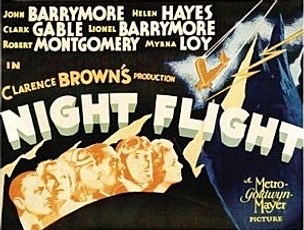
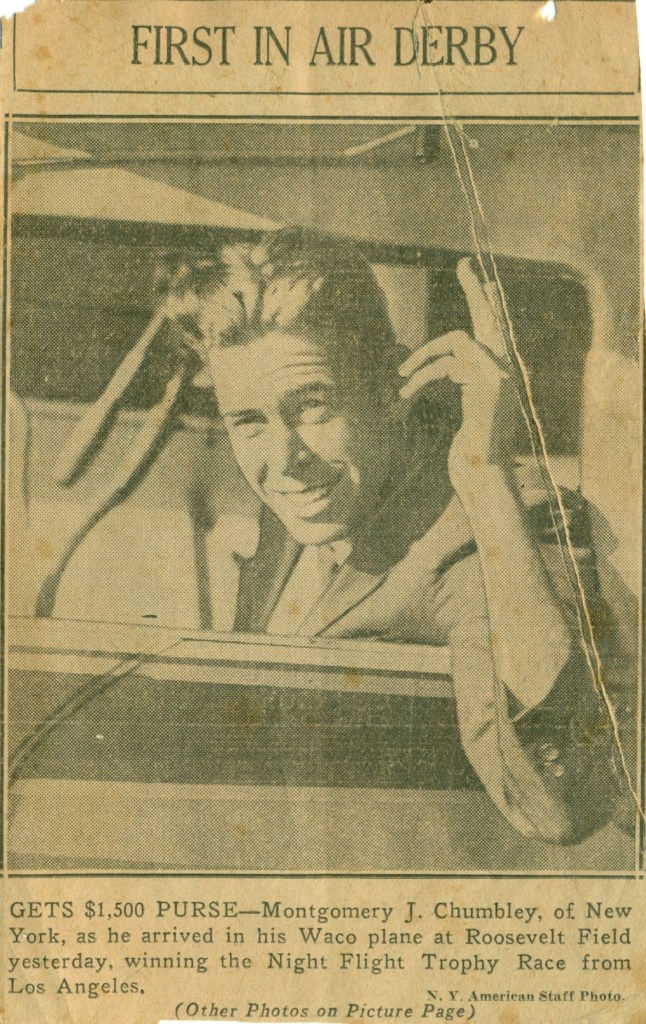
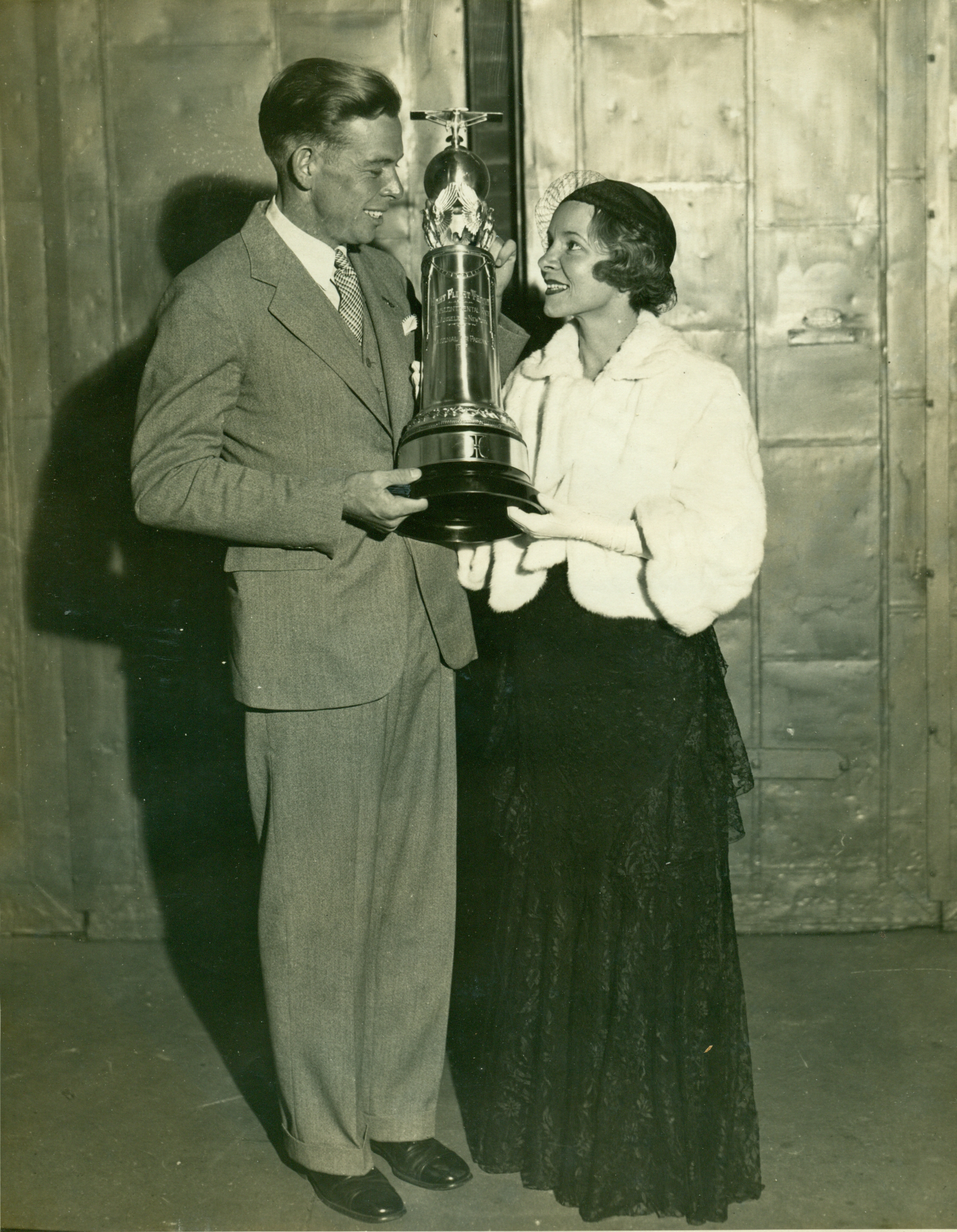
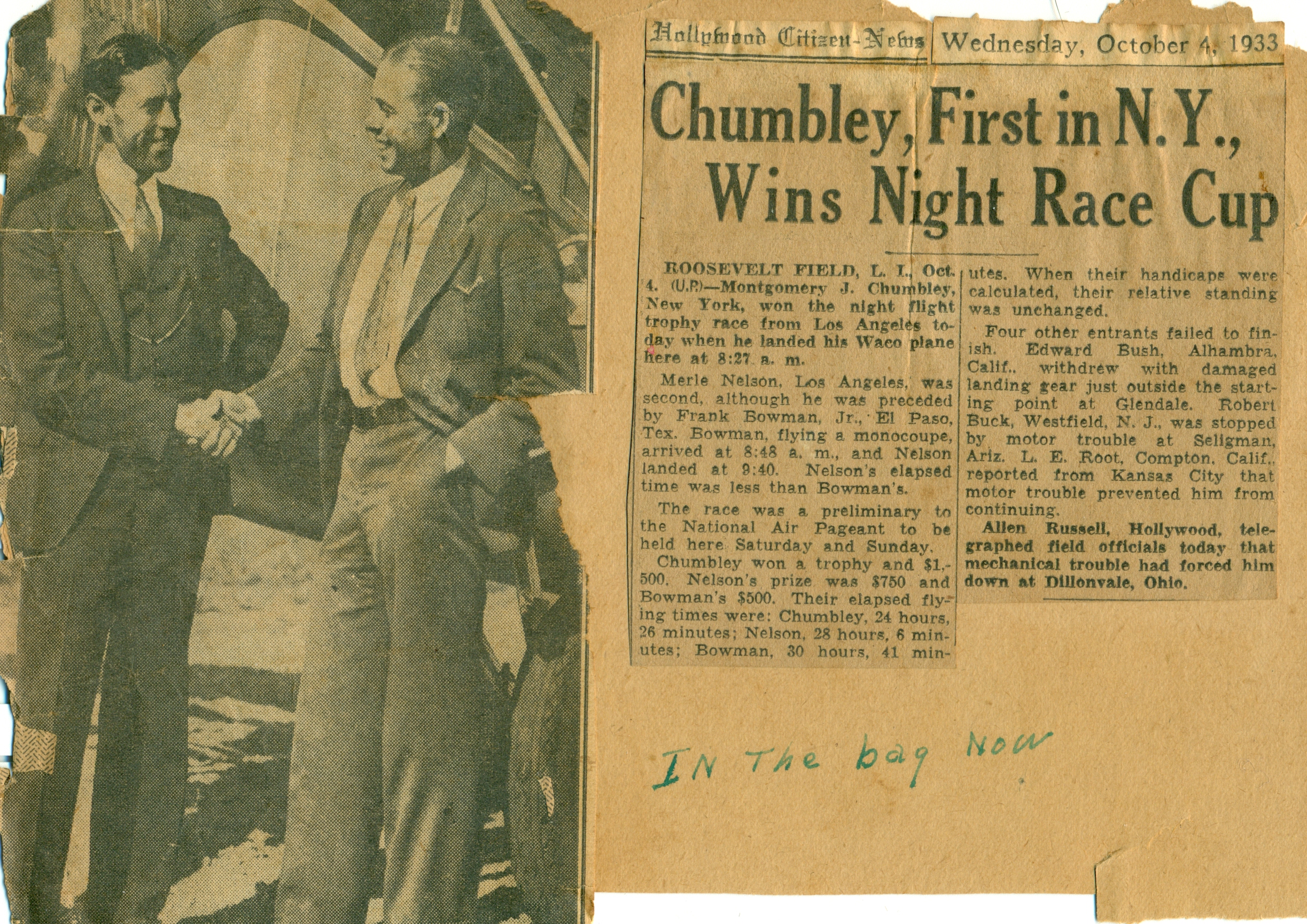
The night race kicked off “Roosevelt Field’s “National Air Pageant.” The event, chaired by First Lady, Eleanor Roosevelt, celebrated aviation and also raised funds for Mrs Roosevelt’s special charities. In addition, the Darkness Derby, competition, promoted “Night Flight” a new Metro Goldwyn Mayer film. The movie premiered at the Capitol Theater the following evening, and leading lady, Helen Hayes emceed the opening. And it was on the Capitol stage that Chum received his trophy from the actress.
This 1933 Transcontinental Air Race/Darkness Derby/Air Pageant/Film Premier, combined to make the moment a heady one for 24-year-old Mont “Chum” Chumbley. Armed with new friends and clients, and other air enthusiasts from the City, a promising future in flight lay before him.
Gail Chumbley is the author of the two-part memoir, “River of January,” and “River of January: Figure Eight.” Both titles available on Kindle.
Many of us have read JK Rowling’s Harry Potter books and/or watched the films. The author created a wondrous world of spells, incantations, and even included law and order via three unforgivable curses.
There are guardrails in this tale, and a bit of a messiah storyline. Harry willingly sacrifices himself, as had his parents and many others before. However, the “Boy Who Lived,” does, and returns to fight and vanquish wickedness.
Love, too, permeates the storyline, and the righteous power of good over evil.
But that’s not my take.
As a career History educator I came to a different conclusion; Harry Potter told me that failing to understand our shared past can be lethal. And that was the metaphor I preached to my History students.
Harry rises to the threat and defends all that is good and valuable in his world. If he didn’t, Harry could have been killed and his world destroyed.
It’s so apropos at this moment in our history to grasp our collective story as Americans.
Honest differences within the confines of our beliefs is one thing. Obliterating the tenants of democracy is quite another.
Americans cannot surrender our country to this would-be dictator, the things that have cost our people so dearly. Freezing soldiers at Valley Forge did not languish to enable DJT to trademark his brand to hotels, steaks or a failed university. The fallen at Gettysburg, and the suffering in Battle of the Bulge was not to pave the way for DJT to get us all killed from a ravaging plague. The girls who perished in the Triangle Shirtwaist Fire, the miners murdered in the Ludlow Massacre, or humiliated Civil Rights workers beaten at the Woolworth’s lunch counter was not for Donald Trump to validate racism and sexism and undo labor laws.
He doesn’t know our nation’s history, and as George Santayana warned us, we are condemned to sacrifice all over again.
Vote.
Gail Chumbley is the author of the two-part memoir, “River of January,” and “River of January: Figure Eight.
Cloud cover continued to dog the exhausted flyer. Though dawn light saturated the sky, visibility hadn’t improved.
Whirring through the gauzy gray, he weighed his options. If the weather didn’t improve, he would navigate out over open ocean and look for a break in the misty gloom. This contingency plan set, Chum streamed eastward, nervously checking and rechecking his wristwatch.
From the corner of his eye, he spied a shifting break in the cover, and Chum didn’t hesitate. He pushed the yoke and slipped through the sudden gap.
A panorama of chalk-gray spindles greeted him. Automobiles the size of insects, inched along among the spires.The Waco soared above the Manhattan skyline.
Exhilarated and exhausted, Chum beelined over the East River, and on to Roosevelt Field.
Thundering down landing strip number 1, Chum slowed his Waco to a full stop, tired but satisfied he had prevailed.
But the race had not ended.
Officials rushed the tarmac, urgently shouting and waving. Concerned about the commotion, he reached to turn the throttle off, and that was when he heard a chorus of NO above the din. Frantic hands pointed in the direction to another landing strip. If he shut down the motor he would be disqualified. Without a word, Chum promptly taxied to landing strip number 2, then shut down his biplane.
He had won.
Seven planes had ascended into darkening California skies. Of the seven only three found their way to Roosevelt Field. Chum’s Waco cabin had journeyed above the sleeping nation in 24 hours and 26 minutes; two minutes added by his last minute dash across the field. His victory award-$1,500, enough to reimburse the stock broker, and pay off his airplane. Not bad for a young man struggling through the worst year of the Great Depression.
Gail Chumbley is the author of the two-pat memoir, “River of January,” and “River of January: Figure Eight.” Both titles available on Kindle.
Building his own charter service at Roosevelt Field, Mont Chumbley got right to work building a clientele. Though 1933 marked the low point of the Great Depression, photographers and reporters from the Associated Press, United Press International, continued to work, beating a path from Manhattan to hire his Waco. Adding student-pilots to his schedule, plus weekends barnstorming around the countryside, Chum made ends meet.
Friendships with other aviation boosters included Amelia Earhart, Broadway producer Leland Haywood, wealthy philanthropist Harry Guggenheim, and his first sweetheart, pilot Frances Harrel Marsalis. In a later interview Chum referred to a long ago passenger, Katharine Hepburn, as a ‘nice girl.’
By Autumn of 1933 Chum unexpectedly found himself a contender in a transcontinental night race, though it hadn’t been his idea. A prominent client who held a seat on the New York Stock Exchange believed Chum was New York’s answer to Lindbergh, funding needed modifications to his Waco C, if only the young man would enter. Chum, weighing his chances. finally agreed.
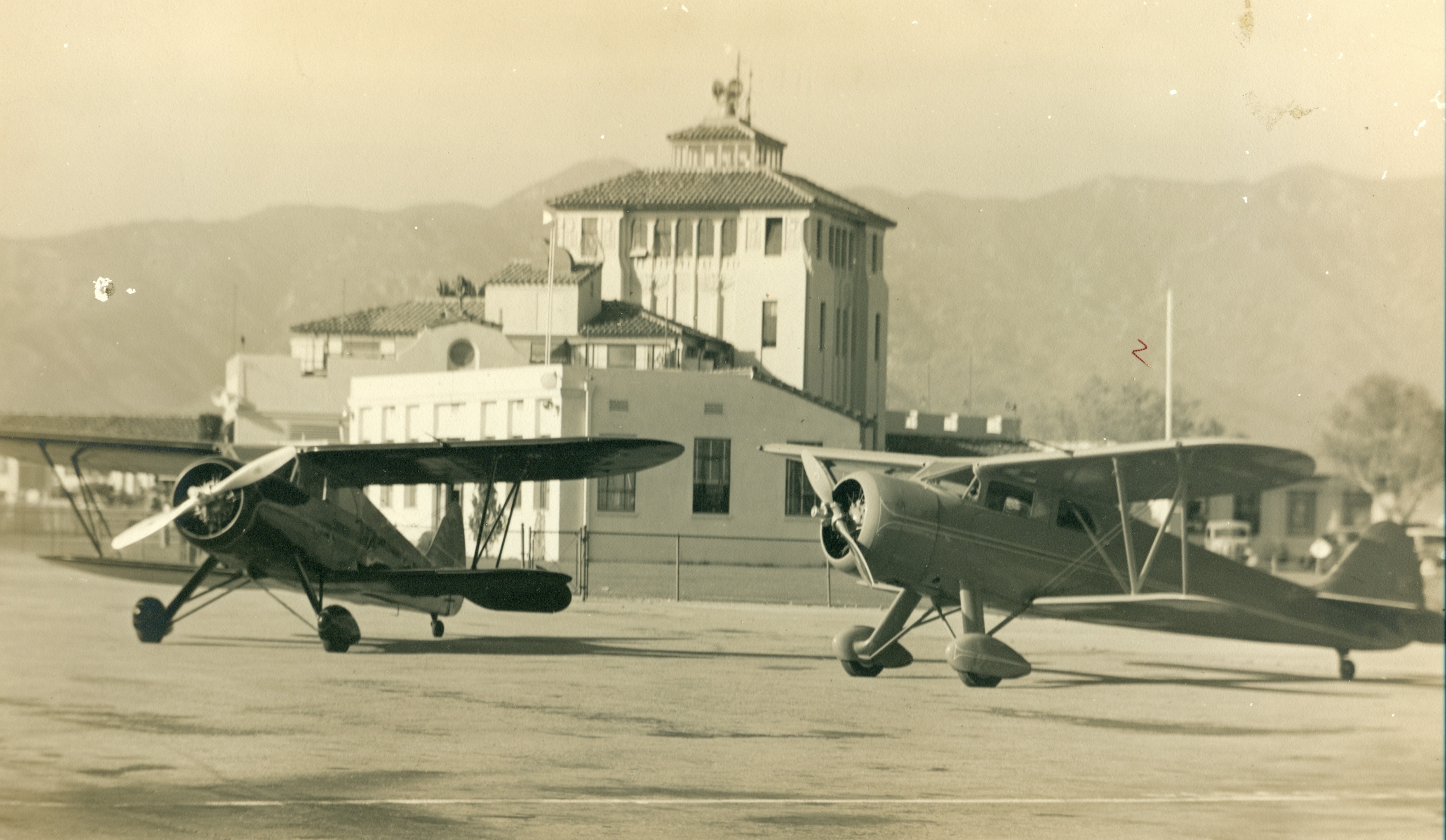
His biplane soon readied, Chum winged his way from Long Island to Glendale, California, flying much of the trip west by moonlight for practice. Resting in Los Angeles much of October 2, 1933, Chum was told he was seeded third for take off, and finally lifted his Waco into dusky eastern skies.
At his first stop, taxiing across a dark air field in Albuquerque, a fueler informed him another plane had already been and gone. A bit panicked, sure he was lagging behind, the young flyer hustled into the night sky, opening the throttle full bore to catch up. Just before dawn, the lights of Wichita appeared, where the spent pilot learned he was, in fact, the first entrant to arrive.
Weary as Chum felt, he couldn’t sleep. Keyed up by the excitement, he had to wait on those planes yet to arrive. And by late morning only two aircraft had cleared Albuquerque, a Monocoupe and a Stinson.
This night derby narrowed to a three-man contest.
Awarded 2 hours and 10 minutes for his first place in Wichita, Chum coaxed his Waco upward against the lengthening shadows of a Kansas sky. Hours later, at his last checkpoint in Indianapolis, Chum pushed on for New York.
However, the weather wasn’t cooperative.
Through western Pennsylvania, the bi-plane’s windshield began to pierce thickening clouds. Growing anxious, he thought he might be off course, or even worse, lost. But luck remained his co-pilot, when he glimpsed a small break in the inky mist. A lone light flickered below in the blackness, and he slipped down through the pocket.
Executing a bumpy landing on a farm field, the young flyer stumbled through darkness and dirt, making his way toward the light pole, and a modest farmhouse. Urgently thumping on the door, Chum roused a farmer and his wife, breathlessly apologizing for his intrusion.
Explaining his predicament the bewildered couple kindly let him in. As the wife perked coffee, and laid out food, the farmer got out his maps and showed Chum his location. With heartfelt thanks, he apologized once again, then returned to the night sky, righting his direction toward New York and hopes for victory.
Gail Chumbley is the author of the two-part memoir, “River of January,” and “River of January: Figure Eight.” Both titles are available on Kindle.
The President fumed, crushing buttons on his cell phone, as if each tab detonated an explosion. On the big screen Wolf Blitzer, voice flat and controlled, droned on how the President continued to lag in the polls.
“Fake news,” he muttered out of habit, and switched the channel.
Perched on the edge of an upholstered armchair, he clutched his remote in one hand, and his cellphone in the other, seething at the unfairness of the coverage.The broadcast cut to a political commercial; a carefully spliced montage of his public faux pas, ending with an endorsement from his adversary.
“Ukraine,” he muttered, “Got to talk to Mitch and Kevin about a new Ukraine investigation.”
“You cannot coerce them, you know.” The voice came from behind. “The people. They cannot all be manipulated, much as you might try. Most are not fools, and any goodwill must be earned.”
Not accustomed to direct insolence, the President twisted around in his chair snapping, “Just who the hell are . . .,” then trailed off. A tall, painfully angular man stood near a richly paneled door. Attired in a long black coat with tails, the visitor sported whiskers along his jawline.
“And they will never all love you. Ever. Such is the raucous nature of American democracy.”
The apparition paused a long moment. “Sowing divisions through fear and vitriol is not governing, and you shall surely fail.” The visitor stepped closer as he spoke, prompting the President to spring out of his chair, phone and remote forgotten on the carpet.
“I recognize you . . .,” the President sputtered.
“We, all of us, sought this office fueled with purpose and ambition,” the visitor continued in a prairie twang. “However, once under oath, the campaign is over. A president faces the duty of serving all Americans, a challenge in the best of circumstances.
From the flickering screen a news anchor admonished, “Aides have confirmed that the President knew of the virus as early as February.”
“It’s those hacks,” the President stabbed his finger accusingly at the big screen. The press is out to. . .”
His visitor laughed without humor. “Criticism of elected officials is as natural as the sun rising, and as perpetual. ‘Baboon’ was the nicest insult slung my way . . .by a serving general, no less. Then he up and ran against me in 1864.” The visitor chuckled lightly. “Still, the truth is we are all better with free speech than without. In our differing views we discover our deepest truths.”
By now the President began tuning out much of what the visitor was saying, his irritation making him bold. “You need to leave,” he snapped. “I have a busy schedule.”
Unruffled, the unwelcome guest studied the President intently. “In my time an entire section of the nation disputed the results of my election.”
“You lost the popular vote, but won the Electoral?” The President couldn’t help but ask.
“Indeed. Eleven southern states chose the battlefield over a peaceful transfer of power.”
“What did you do?”
“I defended the Republic.”
His visitor continued sadly. “However the butcher’s bill for this unity came dearly; 700,000 American lives.” The visitor heaved a weary sigh. “And that delicate balance has endured through all national crises, preserved only through considerable effort and executive leadership. A unity you undermine at every opportunity. ”
“Wrong, wrong, wrong. My supporters all love me. You should see the crowds at my rallies.”
“And the rest of America?” The visitor peered intently at the President. “Remember sir, we are friends, not enemies. We must not be enemies.” His voice quietly trailed off in an echo, and he was gone.
Gail Chumbley is the author of the two-part memoir, “River of January,” and “River of January: Figure Eight.” Both titles are available on Kindle.
On Twitter, Senator Ted Cruz, R-Texas, and Congressman Louis Gohmert, R-Texas have been been busy disseminating political fiction.
Both have tweeted on the Democratic Party as the perpetrators of the Civil War, racism, and other misleading accusations.
Were these two guilty of sleeping through their history classes, or purposefully spreading propaganda to other former classroom snoozers?
The Democratic Party evolved from Thomas Jefferson’s opposition to the US Constitution. Jefferson had been abroad during the Constitutional Convention and upon his return quickly made his objections known. A planter and slave master, this “natural aristocrat” resisted any higher form of government that checked his own authority.
Jefferson rejected the notion that a distant power knew better than he, the master of Monticello. He favored a small, disinterested government that coordinated foreign affairs, trade, and not much more. Men such as himself could better govern localities than any distant political power.
As America’s third president, Jefferson envisioned a Republic of “farmers,” like himself, running their own fiefdoms across the continent. (That is until he bought Louisiana, where he stretched the Constitution plenty).
That’s about it. That was the essence of the 18th, and early 19th Century philosophy supporting the Democratic Party. Oh, and the party shuffled names over that time, as well, though never wavering from the belief that local government served democracy best.
First, called Antifederalists, for opposing the Constitution, then Jeffersonian-Republicans, opposing Hamilton’s Federalists. Later, after the War of 1812, the name became Democratic-Republicans, then simply Democrats under Andrew Jackson. Still the philosophy endured; curb centralized economic, and other domestic investments and maintain local control.
The late 20th Century’s Civil Rights movement and the Vietnam War brought about yet another rebranding of the party. Ronald Reagan’s election moved the Solid South from Democratic to Republican.
Reagan’s famously asserted that big government wasn’t the solution, but the problem. And that suited former southern Democrats just fine. Less government, less in taxes, and more local control. Relaxing economic regulations, and starving domestic programs rounded out the 1980 agenda.
When Ted Cruz and Louis Gohmert spout off on the villainy of the Democratic Party, don’t be fooled. Remember that these sons of the South embrace the same old Jeffersonian ideology today, neatly packaged under the now-eroding GOP.
Gail Chumbley is the author of the two-part memoir, “River of January,” and “River of January: Figure Eight.” Both titles are available on Kindle.
His political career was none too stellar, except for that one moment he seized history.
This dapper-looking fellow is President Chester Alan Arthur, (1881-1885). Arthur was considered a dandy, pursuing an opulent lifestyle filled with fine food, drink, and expensive suits; largely paid for from the public trough.
Arthur came of political age in the post-Civil War Gilded Age, a world of political machines, graft and corruption. When a supporter helped their man get elected, position and profit rained down in return.
This dubious system functioned rather well for victorious elective candidates through countless election cycles. The political universe of Chet Arthur and his band of Republican cronies became expert skimmers from the public trough and the public trust. In the Republican Party this faction was christened Stalwarts, and Stalwarts liked their well-oiled approach to public service very much, indeed.
Arthur, himself, had been named Collector for the New York Customs House during the Grant Administration, and money from this lucrative Customs House flowed to Arthur’s friends and political operatives. His particular patron was the powerful New York Senator, Roscoe Conkling, a master in Senate handiwork.
Opposing this Old Guard of money changers were the crudely titled, Half-breeds. This oddly pejorative moniker (too common in that era) represented a growing group of reformers in the GOP who aimed to clean up the corrupt practice of patronage. Senator James G. Blaine of Maine believed government jobs should be based on merit, not connections, and Blaine promoted the use of Civil Service Exams. In other words, Half-breeds endorsed qualified government workers over payola for their friends. The Stalwarts were horrified.
In the 1880 Presidential Election the Republicans, in a heated convention, split the ticket with candidates of both wings. For President, James Garfield, a Half-breed, and for Vice President, Stalwart, Chester Arthur, crony of Sen. Conkling. The Party felt it had fused the differences between the two factions, and the fat cats believed they could continue to prey. Then came the Garfield assassination.
In July, 1881, President Garfield, a distinguished Union general, and a former member of the House of Representatives, appeared at the Baltimore and Potomac Rail Station in Washington DC. In the crowd waited Charles Guiteau, an unhinged, office-seeking Stalwart. Guiteau approached the President in the crowd, shooting him at close range. Garfield died two months later from his infected wounds.
Guiteau had shouted, after opening fire, that he was a Stalwart, and would now get a government job. He didn’t. In fact, all Guiteau received was a date with the hangman, carried out in June, 1882.
And what of Chester A. Arthur? He assumed the presidency in a charged atmosphere of national grief. So changed was Arthur, that he promoted passage of the Pendleton Act of 1883. This act created the Civil Service Commission, and mandated written exams for classes of government jobs. The Stalwarts were horrified, but politically could do nothing. Garfield had been made a martyr for reform, and Arthur took the high road, making that reform real.
Oh, and by the way, the Mugwumps were another reforming splinter of the GOP. So appalled by the legacy of bribery and corruption, they bolted the party in 1884 for Democrat, Grover Cleveland.
Wonder how the 2020 Election will reshape the current GOP?
Gail Chumbley is the author of the two-part memoir, “River of January,” and “River of January: Figure Eight.” Both books are available on Kindle.
George Washington came of age immersed in the culture of Tidewater Virginia. To join the higher echelons of society there were set requirements, in particular vast property holdings.
This lust for land had crossed the Atlantic with the first ships from Great Britain. Only gentlemen of the highest social station possessed “parks” to use the British term; bucolic sanctuaries where aristocrats, and their guests could hunt, and fish, with enough acreage left for tenancy. Landed Cavaliers to Virginia immediately assumed a sense of equality to any aristocrat residing in Old England. (The “All Men Are Created Equal,” passage in the Declaration of Independence affirms Jefferson’s sentiment.)
Washington’s older, half-brother, Lawrence, the heir of their deceased father’s estate, had the land, the title, the rank, and the education that George could never realize. But, Lawrence did try to help the twenty-year-old establish himself. Lawrence first tried to secure a naval commission for his younger brother. But that didn’t work out.* With no money or prospects, young Washington settled on a career as a land surveyor, a noble calling for the time.
Making use of his father’s instruments, and with help from a neighbor, Lord Fairfax, George gained an appointment to the Virginia Militia, and a chance to put his vocation to use.
The year was 1754 and a fateful clash awaited the untested soldier-surveyor.
Virginia’s original charter claimed virtually all western lands, north by northwest of the colony, theoretically to the Pacific. At roughly the same time the French too, had staked claim to that same interior region. At a site known now as Jumonville Glen, in the Ohio River Valley, Washington and his party detected then attacked an encampment of French Canadiens. In the melee a Native scout with Washington, called Half King, killed a Frenchman, who, as it turned out was a diplomatic courier. That was, and still is, an international no-no.
In retaliation soon after, French reinforcements from Fort Duquesne, (Pittsburgh) pressed down on Washington’s party, where the untested and panicked militia officer made a colossally poor decision. In the ensuing “Battle of Fort Necessity,” Washington was easily whipped and forced to surrender when his hastily erected stockade filled with rain, making defense impossible.
Thoroughly humiliated, Washington surrendered to the French on July 4, 1754. In the capitulation treaty, young George unwittingly admitted he had allowed a French diplomat to be assassinated at Jumonville Glen. His lack of education was exposed. Washington couldn’t read French and didn’t know what he had signed. His humiliation was complete, his blunder igniting the French and Indian War.
Fast forward forty years to 1794 and a return to the site of old Fort Duquesne, the scene of Washington’s infamous disgrace. For Washington much had changed. As Commander of the Continental Army, Washington had nobly defeated the British in the Revolutionary War, and became the first President of the United States.
The once awkward Virginian was fully redeemed in the eyes of the new nation. Despite his rough start, Washington had grown up. Still, his misadventures decades earlier still stung. Despite universal accolades, the nods and winks of those who remembered Jumonville Glen remained.
As for old Fort Duquesne? The settlement had become the growing commercial center of Pittsburgh.
And it was in the proximity of Pittsburgh, near the site of his former humiliation, that President Washington faced a new conflict.
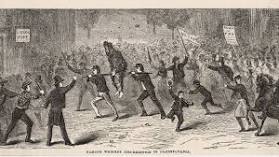
The new Congress has passed an excise bill on distillers of whiskey, as a means for the federal government to settle war debt. Secretary of the Treasury, Alexander Hamilton had proposed this tax on spirits as a way for the Treasury to settle its financial difficulties. But distillers around Pittsburgh stubbornly refused to pay. In fact Whiskey Rebels rose up, and attacked tax officials who attempted to collect. By summer of 1794, one collector had been tarred and feathered, and another was burned out of his home by a violent mob.
The Revolution was over, and President Washington had had enough. No more domestic violence, especially not from the Ohio Valley. He requested Congress to raise an army, placed Hamilton at the head, and sent them to the site of his earlier disgrace. These agitators melted away like snow in April.
Washington flexed federal power in what was the Constitution’s real first challenge. That Washington felt some sense of personal absolution, considering his military history is understandable.
And what does this episode mean to us in the long run? Don’t piss off George Washington? Maybe. But more importantly the new Constitution was the law, and as chief executive, he enforced that law.
Washington had grown up, and the country needed to do likewise.
*Washington’s mother said no.
Gail Chumbley is the author of the two-part memoir, “River of January” and “River of January: Figure Eight.” Both available on Kindle.
Following his celebrated success in the Darkness Derby, Chum found his charter business more hectic than ever. Student pilots, passengers, and acquaintances from the nearby press office, particularly from United Press International, and International News Photos, crowded the Waco Office looking to hire Chum.
In early September, 1933, a reporter tasked with covering a train derailment near Elmira, New York, hired Chum for a middle of the night flight. It was dark, and a wet, thick fog had settled over Roosevelt Field. Filled with doubt, Chum only reluctantly agreed to take the fare from the desperate reporter, and very soon regretted his decision to fly.
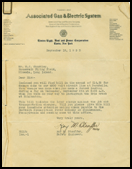
An impenetrable cloak of fog, blending into a thick darkness, confronted the pilot as he prepared to land near Elmira. Probing his way down, Chum set down hard and immediately slid across the drenched airstrip. Slipping over the edge of the field his Waco thudded hard against a power pole, damaging one side his biplane. The reporter had a waiting automobile at the airfield, and sped away to the train derailment, leaving Chum to sort out the accident. He deduced his Waco was still airworthy, and later in the morning returned with his passenger to Long Island facing an expensive fix. Ten days later, adding insult to injury, he opened a letter from Associated Gas & Electric charging him $16.30 for repairs to the power pole. Lesson learned . . .almost.
Two weeks after the mishap in Elmira, Chum took another risky flight. His friend and patron from the Stock Exchange, (see part one of this article) had given notice that Chum was to keep Monday, September 25th open for passenger trip. This wealthy investor was an avid horse enthusiast, and Chum had shuttled the gent to various racetracks around the northeast. On this particular day a last minute phone call sent Chum hurrying from Roosevelt Field to Red Bank, New Jersey, and his waiting client.
Three men climbed aboard Chum’s Waco Cabin near Newark, breathlessly directing him to aim for Havre de Gras’ Racetrack, near Baltimore. These men had a horse on the race card, and were anxious to reach their destination before post time. As the Waco neared the track his passengers grew increasingly impatient. Chum’s patron insisted that instead of landing on a nearby rural field, the pilot needed to land directly on the infield of the horse track. Chum balked at the idea, but his client insisted, vowing to pay for any damage or fines that might result. Folding under pressure, the pilot threw good sense to the wind, and again lowered the nose of his aircraft for a risky landing.
Connecting with the grassy infield, the Waco bumped down the entire length of the infield. By the time Chum rolled to a stop, track officials and the police had surrounded the Waco. In the end, with a lot of fast talking from his influential friend, and perhaps a little cash changing hands, the biplane was allowed to remain. In fact, he and his passengers spent a glorious day enjoying the races. Later, after the stands were emptied of spectators, Chum rolled up the length of the racetrack returning to the sky and home
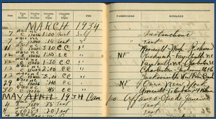
For Chum night flying became a particular pleasure. He mentioned in a later interview how peaceful he found the experience. In March, 1934, when Howard Ailor asked him to deliver a new Waco C to West Palm Beach, Chum gladly took the overnight job. Coursing through the twilight he made his way south from New York. Landing in Richmond, Fayetteville, Charleston, and Jacksonville, Chum eventually touched down in West Palm Beach by late morning.
A bit worn, the pilot unbuckled and completed his log of the flight. Still seated in the cockpit, he noticed a tall gentleman come out of a hangar and head toward the biplane. Chum instantly recognized the man, as he was a famous aviator in his own right. It was Howard Hughes, and the millionaire was not happy.
Hughes wasted no time in telling Chum that the engine in this biplane was used, and that he wouldn’t buy it. For his part, the young pilot assured Hughes that that simply wasn’t the case, but that Hughes would have to take it up with Howard Ailor back at Roosevelt Field. With that, the exchange of telephone calls between Florida and New York ensued. Back and forth the two businessmen squabbled. As the war of long distance calls heated up, Chum repeatedly requested a ride to the train station. He told Hughes that he, too, had a business to run, and needed to return to New York. After a day of back and forth, Hughes informed Chum he wouldn’t buy the Waco Cabin, but he would hire Chum to come work for him. Astonished, Chum agreed with the unexpected offer, lured by Hughes prominence and by the good salary.
For two weeks Chum worked at Hughes West Palm hangar. The other mechanics were easy to know, and he enjoyed watching Hughes and his entourage come and go. The only sticking point to this new job was that there was nothing to do, except watch Hughes. The new Waco Cabin sat inside Hughes hangar without any resolution.
After two weeks of inactivity, salvation arrived in the form of a long distance phonecall. Called to take the call in Hughes empty office, Chum issued a polite hello. The voice on the other end belonged to Hugh Perry from the Waco Factory in Troy, Ohio. Momentarily taken aback, the young pilot discovered that Perry wanted him for a sales position in South America. Pleased, Chum couldn’t say yes fast enough. And not waiting around to give Hughes notice, Chum simply walked to the train station and bought a ticket for New York.
He never knew the fate of that Waco Cabin. (#NC 13402)
Chum set sail on the Munson Cruise Liner The Western World in April of 1934. To say Chum was thrilled doesn’t do justice to his excitement. The farm boy from the foothills of the Allegheny’s, caught in the worst economic crash in memory, boarded a luxury ship for Brazil. He felt on top of the world.
After two weeks at sea, the pilot arrived in Rio de Janeiro and set to work at once. The Brazilian Air Ministry had shown some interest in the Waco CTO, complete with Browning machine guns mounted on the wings. He later said he couldn’t understand why the country needed such armaments, but the customer was always right, and Brazil was the customer.
Mont Chumbley took his first flight over Rio on May 4, 1934, piloting another Waco C. By the 7th he was testing and demonstrating other models, including the CTO. Becoming acquainted with officers from the ministry, he learned the government was determined to develop the vast jungle interior of the country, answering his unspoken question of why machine guns might be needed. Obstacles stood in the way deep in Amazonia. In the end the ministry opted not to make the purchase, though other biplanes met their approval.
Chum did very well in sales to the government of Brazil, and also in Argentina.
Chum lived and worked in Rio for almost three years. In that time he earned his reputation as one of the most successful Waco sales representative in the company’s history. However, by spring of the 1936 he had met, and become engaged to a beautiful American dancer, Helen Thompson and decided to leave South America. Chum later said he left Waco in the fall of 1936 to find a more predictable job in aviation, one more suitable for a married man.
By the end of October, 1936, Chum returned to New York for good. He had considered a job offer from Pan American, but declined when he learned he’d have to train at Dinner Key, Florida, Pan Am headquarters for a year.
The next month Chum returned to Waco, but this time stateside.
Gail Chumbley is the author of River of January and River of January: Figure Eight. Both available on Kindle.
His was a storied life of potential and opportunity.
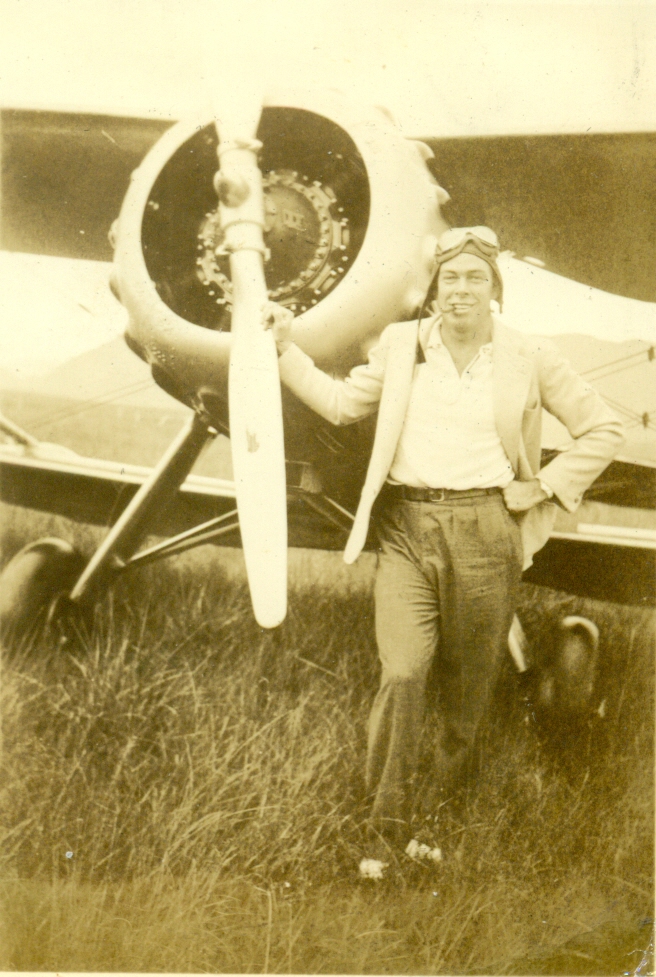
With damn good luck and perseverance Mont Chumbley forged a career in the earliest days of aviation. And that he became a pilot at all stood in stark contrast to his rustic, Virginia beginnings.
Born in 1909, young Mont spent his childhood on a farm more 19th Century than 20th. As the eldest son of the eldest son, Mont, as a matter of custom, was expected to follow his father as the next heir of the operation—as had scores of Chumbleys in prior generations. But to the patriarch’s displeasure, the son showed little interest in tending fields.
Instead young Mont discovered other passions; school, sports, girls, and the excitement of town. This lack of enthusiasm for farming generated enough animosity, that the boy had to run away from the farm in 1924.
Mont was 14.
Following a horrifying ordeal in the depths of a West Virginia coal mine, the shaken young teen caught a train back to Virginia, but not the farm. Rather he found sanctuary in his aunt’s opulent home in town. Grateful for his unexpected deliverance, Mont blossomed, graduating from Pulaski High School in 1927, lettering in football and class valedictorian.
Through his academic and athletic achievements, Mont’s opportunities appeared endless, and he knew exactly what he wanted.
While still a little tyke Mont had witnessed a barnstormer set down a biplane in nearby fields. Hearing the roar of the plane’s engine, glimpsing the spinning prop as the aircraft winged above the fields, Mont discovered his calling. Inspired with this childhood memory, Mont set his cap on entering the United States Naval Academy in 1928.
However, he couldn’t crack admission exams, so his hopes for Annapolis vanished, leaving Mont only one option–enlisting as a seaman recruit.
As straightforward as that path appeared, the young man ran into an immediate hurdle; his father had to sign his enlistment papers, and that the old man would not do. If the heir did not want to farm, the father would not help.
This family impasse did not resolve until Mont’s mother stepped in and threatened her husband with legal action. Mont’s mother, sure to her word hired a lawyer and prepared to seek consent from a judge. The father stunned by her defiance knew he was beat, and reluctantly endorsed his son’s enlistment papers, allowing Mont to enter the US Navy in 1928.
A hardy boy, the rigors of Naval training proved no problem for Seaman Recruit Mont Chumbley. He easily adapted to drilling and training, initially pleased with the life he had chosen. What he didn’t expect was his first assignment below deck aboard a Navy collier, (coal-burning vessel). Shoveling endless black filth wasn’t what he had envisioned. Mont aimed for the sky.
The Navy of the 1920’s had no regulations excluding enlisted men from flight, but still the odds were daunting. How the young man earned a spot in Naval aviation beggars belief. Through a series of chance encounters, Mont soon served as a babysitter for the Commander of Schools at Norfolk Naval Station. Through tending this officer’s children, Mont developed a son-like attachment to the Commander, and felt courageous enough to ask for help. That single connection made all the difference, and Mont, now called “Chum” by his fellow enlistees, progressed to flight elimination exercises at Hampton Roads.
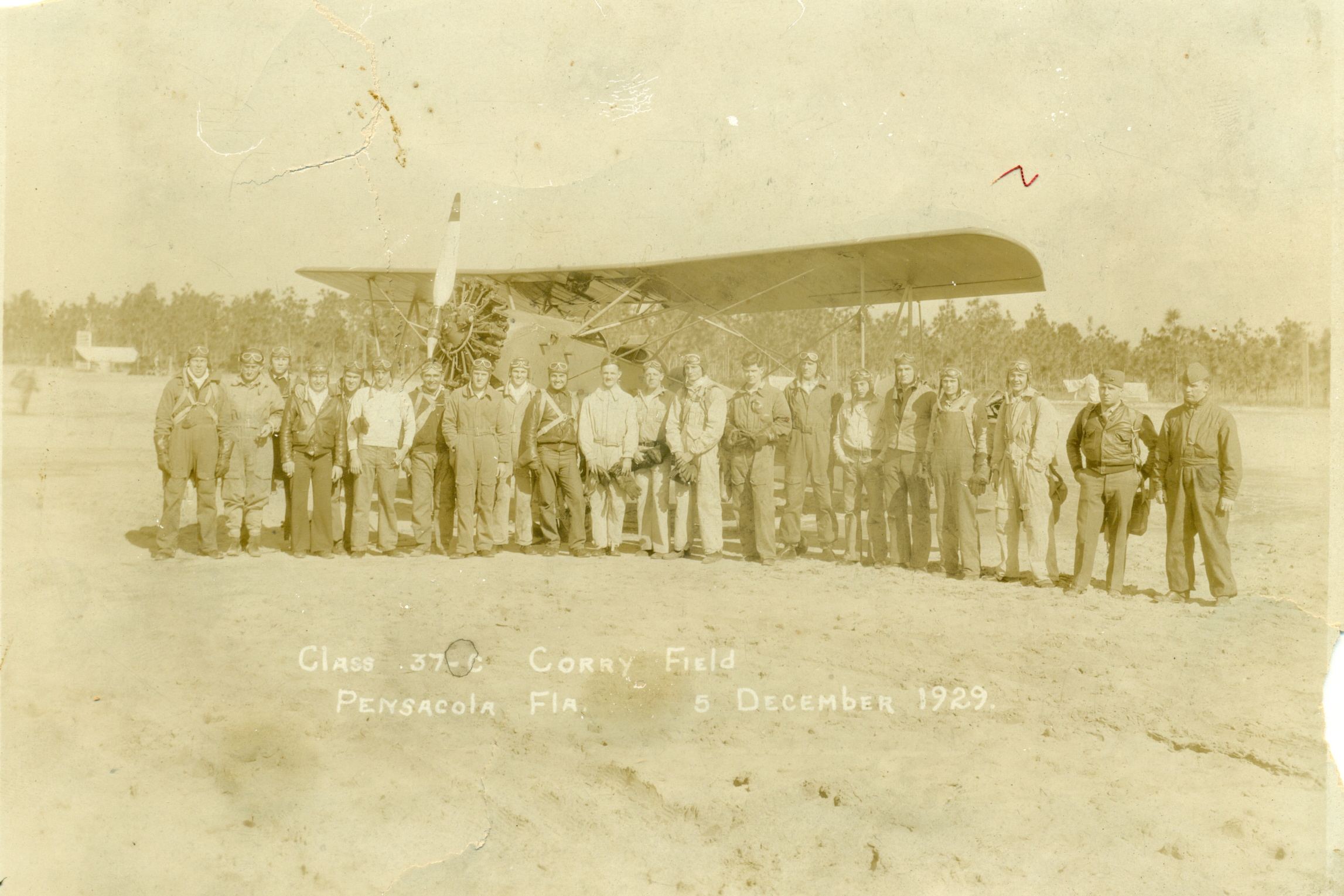
The short version of this tale is Chum survived flight-elimination trials competently handling amphibious Curtiss NC4’s. The next year, he and his compatriots, Class 37C, found themselves soaring over the Gulf in Pensacola, this time in wheeled aircraft. Later his class received their first assignment, shipping out to Coco Solo, Panama.
Life in the Canal Zone was a jungled universe of its own. Military bases dotted the nearly 50 mile stretch of canal, in a mix of both Naval and Army installations. Coco Solo, anchored by the Navy, commanded the Atlantic side, and trained largely in T3M’s, Martin Torpedo Bombers. In simulated war games, the pilots descended until parallel with the sea, then Chum and his fellow pilots would release virtual “payloads” into surface vessels.
In later interviews, an elderly Chum expressed his reservations about the maneuver as far too hazardous for aircraft.
Suddenly, in 1933, Chum up and decided to leave the Navy, though he remained in the Reserves. When asked why, after so much trouble to join, he admitted, “I didn’t much like taking orders.”
Shipping an old Chevy he had purchased in Panama, Chum steamed into New York Harbor in May, 1933. Optimistic and eager to find work, he paid calls on various air carriers from Eastern Transport to National Airways. But no one was hiring. No one. The country and the world, deep in Depression had nothing to offer the young pilot.
Disappointed, Chum rumbled out to Roosevelt Field on Long Island, for a chance meeting with a figure who would change his life.
Howard Ailor, sales representative for Waco Aircraft, took a shine to the young pilot. Repeating the same gloomy job forecast Chum heard elsewhere, Ailor counseled him to make his own luck. The silver-tongued salesman, said what Chum needed was his own equipment, and talked him into buying a brand new Waco C cabin biplane.
And that purchase transformed young Mont’s life.
Next time the Transcontinental Air Race.
Class 37-C, Mont Chumbley is on the far left
Gail Chumbley is the author of River of January, and River of January: Figure Eight. Both titles are available at http://www.river-of-january.com and on Kindle.

 Gail Chumbley