Mischlinge

When Mexico sends its people, they’re not sending their best. They’re not sending you. They’re not sending you. They’re sending people that have lots of problems, and they’re bringing those problems with us. They’re bringing drugs. They’re bringing crime. They’re rapists. DJT, June 15, 2015

Government-sponsored horrors aimed at the vulnerable require planning. The target group is first identified, their deficiencies propagandized, then malignant operations begin to remove that group. This age old pattern is a how-to for witch-hunts from 1692 Salem, to Native American extermination, to slavery, and to Joe McCarthy in the 1950’s Red Scare. Other examples in history abound as well, most notoriously the rise of German National Socialism following World War One.

Embittered by the 1918 Armistice, former Corporal Adolf Hitler founded his National Socialist movement in Bavaria. After organizing two para-military gangs, the Brown Shirts and Black Shirts, he led a failed coup attempt in 1923 Munich. This act of revolt landed him in jail, where he penned his infamous tract “Mein Kampf.” The substance of the book raked over grievances, particularly against Jewish people and other “so-called” betrayers of Germany. Hitler was clear in his writing, only genocide would root out Germany’s traitors.

Granted an early parole by a sympathetic judge Hitler quickly resumed leadership of his growing Nazi movement. By January, 1933 he had attained power as Chancellor under German President Paul von Hindenburg. Hitler efficiently made use of his expanding influence in the Reichstag, (German Parliament) to fulfill his unholy mission. Taking incremental steps the Nazi leader began with boycotts of Jewish businesses, then removal of Jewish and other undesirables from employment as civil servants. Soon Jewish students were forced from public schools, permitting only a small quota each year to enroll. By May of 1933 Hitler ordered book burnings of Jewish authors and others he viewed as subversive.

Events accelerated.

When President von Hindenburg died in 1934, Adolf Hitler seized absolute power over Germany. And he wasted no time in dialing up the violence against people he considered vile.

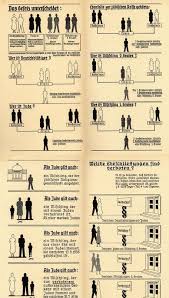
At a 1935 Nazi Party rally in Nuremberg the Fuhrer issued formal classifications of who was Aryan (pure German) and who was Jewish. Known as the Nuremberg Laws, marriages in particular were outlawed between Jewish and Aryan couples. The image above is one document reflecting that Nazi framework, outlining which marriages were permitted by the state and those “verboten” (forbidden).

Hitler insisted these laws were necessary to protect German blood, but the laws also served to isolate not only Jews, but Gypsies, Homosexuals, Jehovah Witnesses, and others. In truth one man defined which human lives were valuable, and those that were expendable.

The ground was prepared for the genocide that would follow.

Dachau was the first extermination camp built in 1933. From that beginning until 1945 the railcars rumbled nonstop to thousands of ash-strewn death camps, while Hitler’s SS liquidated Jewish ghettos of thousands of men, women, and children. By May of 1945 somewhere around 11 million victims perished in a region historians refer to as the “Bloodlands,” including 6 million Jews.

Euphemistically referred to as Racial Hygiene, the Holocaust unfolded gradually and in relative secrecy. However, by the end of the European war and Germany’s defeat the world wondered how this horror could have happened.

We are watching how at this moment.

In Trump’s America that pattern is repeating. The founding of the United States according to Thomas Jefferson insisted that people are born with natural rights, life, liberty, and the pursuit of happiness. But from the George Floyd murder to Trump publicly announcing brown people traffic drugs and are rapists, that assumption has been ignored. This administration has taken racial profiling to a criminal level, as this tyrant harnesses the might of the federal government to carry out warrantless abductions.

Even if American citizens are caught up in sweeps, many insist that this is different, and that those taken deserve it. The pieces of evil are all there.

Racial exceptionalism has been the cause of mass suffering from the Armenian genocide in World War One, to Cambodia’s killing fields in the late 1970’s. The signs are all too familiar.

Trump’s makes no pretense of his intentions stating on 60 Minutes that his ICE goons haven’t gone far enough in terrorizing and kidnapping civilians. The sanctioned ongoing violation of civil and human rights has been grinding away as you’ve read this essay.

The United States was meant to be different–a land with freedom from fear, where people are secure in their places and property. This tradition does not rely on one man’s racism and deliberate cruelty. A cautionary tale is replaying, and we cannot escape that past, nor avoid the sinister outcome.

Mischlinge was used by the Nazi’s as a derogatory legal term. Literally mischlinge means mongrel, a person of mixed blood.

Gail Chumbley is the author of the two-part memoir “River of January,” and “River of January: Figure Eight,” co-writer of the screenplay, “Dancing On Air” based on those books. She has penned three stage plays on history topics, “Clay” on the life of Senator Henry Clay, “Wolf By The Ears” examining the beginnings of American slavery, and “Peer Review” where 47 is confronted by specters of four past presidents.

A Surreal Landscape

In a scene from Hitchcock’s The Birds locals are gathered in a cafe eating and chatting. An attractive blonde is on the telephone explaining that children at the local school were dive-bombed by attacking crows. An elderly lady in a beret and smoking cigarettes lectures the other diners that crows don’t behave in such an aggressive manner and that there has to be another explanation. The woman identifies herself as an ornithologist and holds forth explaining crows and even seagulls do not do such things. Immediately after her expert testimony all hell breaks loose outside the cafe window, with masses of birds swooping down on passersby. The scene is chaotic and bloody leaving no doubt these attacking birds are in fact lethal. As the nightmare scene ebbs, the camera catches the bird expert, her head bowed in grief and bewilderment, stunned everything she knew and believed no longer applied to any bird in her understanding.

That woman resembles this lifetime American history educator. I’m a fairly decent generalist in subjects ranging from PreColumbian America through today, give or take minutia. But I too, am stunned by the surreal landscape of what I believed about democracy has been easily undone by a vulgar man-child and a compromised and opportunistic Republican Party.

It feels like all my understandings of my country no longer apply. The epic and fraught-filled struggle of forging the Constitution, the furnace of Civil War, the reforms of the Progressive Age, the promise of the New Deal, and Great Society are gone, rapidly destroyed by sinister design. A totalitarian despot has seduced a once noble political party rendering the valiant patriotism of those whom came before moot. Simply writing this lament is difficult, as all I once believed and explored is no longer valid.

An online troll explained it as “no one cares about that anymore.”

That means the principled determination of General Washington to serve our nation doesn’t matter. The misguided genocide of the Five Civilized Tribes upon the Trail of Tears doesn’t matter. With nearly 700,000 deaths, the crucible of Civil War no longer matters. Those brave GI’s on Omaha Beach, (including my own grandfather) and at the Battle of The Bulge no longer matters. Those brave students who occupied lunch counter stools in the face of racial violence did so for nothing. Those boys who perished in the Vietnam War are irrelevant. In point of fact no veteran matters anymore.

American history and all the sacrifice of our forefathers and mothers doesn’t count.

That 47 can fly in a foreign “gift” aircraft with a classified budget is a good thing to do with our tax money. That he remodels a room in the White House in a golden gilt is a good thing. Who really cares if former medicaid recipients suffer.

Suck it up buttercup, these are the new rules of Trump’s America.

That he has done away with investments in the Arts and Humanities is a positive. That he has placed incompetent sycophants from Fox News in high Federal positions is good. Forget he stole top secret intelligence documents. The country elected him anyway. That he has drastically shifted the tax burden onto the middle class and off of the super wealthy is how God wants it, just ask today’s Christians.

That old white men rape girls is a good thing. 

The GOP bows at his feet and gleefully ratifies every stab-wound of domestic legislation is now to be celebrated, so pop a cork. In fact destroying America for profit is now simply wholesome and righteous. 

America’s heroes, like Sergeant Alvin York in the Argonne Forest, or Colonel Joshua Lawrence Chamberlain at Gettysburg endured their generations difficulties so that Trump can plow up Mrs Kennedy’s rose garden for a putting green. Suffragette Alice Paul who went on a hunger strike and endured the torture of forced feeding did so that the current president can manipulate votes is just fine. The murders of JFK, Dr King, Harvey Milk, or the murder of Minnesota State Senator Melissa Hortman is merely a part of the 24/7 news cycle.

Indeed nothing of our past story matters because Mr 47 has disqualified all of it to make money, and more money because that’s all that matters today. Plus of course he is a convicted felon and is terrified of going to jail where he belongs.

So when you see this disoriented American History educator with her forehead in her hand, much like the bird expert in the movie, please understand the gravitational pull of her entire life’s work is today rendered null and void. 

Gail Chumbley is the author of the two-part memoir “River of January,” and “River of January: Figure Eight,” co-writer of the screenplay, “Dancing On Air” based on those books. She has penned three stage plays on history topics, “Clay” on the life of Senator Henry Clay, “Wolf By The Ears” examining the beginnings of American slavery, and “Peer Review” where 47 is confronted by specters of four past presidents.

Symmetry

This reactionary-looking gent is Marylander Roger Brooks Taney, an Andrew Jackson appointee to the Supreme Court. History remembers Justice Taney as the author of the Court’s most infamous ruling in Scott V Sandford (1857).  

Before his rise to the Court, Taney had made no secret of his opinion on slavery and citizenship, insisting that blacks in the country had no rights white men were bound to respect. A free black had requested documents for overseas travel that Roger Taney, as then US Attorney General, rejected. Taney declared his view that blacks were not citizens, and never would be. Travel documents for this man of color were denied.

Another important element in this story concerns the Missouri Compromise of 1820. Settled eight years prior to the election of Andrew Jackson, this legislation directed that, with the exception of the new state itself, slavery would be forbidden westward along Missouri’s southern border. Most Americans hoped that this Compromise Line would endure forever, clearly delineating for posterity new slave states from free.

By the time the Scott case wound its way to the highest court, violence and bloodshed had erupted on those very western lands, on the Kansas prairie. Emigrants raced from both northern and southern states, dead set to vote upon the status of slavery in the new state’s pending constitution. A volatile mix of invading, pro-slave Missouri Ruffians assaulted Free-State Jayhawkers near Lawrence, sparking deadly violence across the region. Unrepentant slaveholders demanded their 5th Amendment property rights (meaning slaves) be allowed any place slaveholders settled. At the same time, equally fervent opponents contended the “peculiar institution” would remain only where it existed, never to pollute new territories, or America’s future.

Justice Taney, as Chief Justice, took umbrage at these incessant attacks, and at those Northern rabble rousers who would not obey the law. When the Dred Scott case entered deliberations it appears Taney intended to settle the question for all time, silencing forever those interfering, and self-righteous Yankees. When the Court finally issued its ruling in 1857, Justice Taney’s opinion rang out with certainty, and finality.

Taney wrote

I Despite Dred Scott once residing in free territory with his master, he was still a slave.

II As a slave, Dred Scott was not a citizen and had no standing in court.

With those two main points established, Taney could have ended his decree, but the Chief Justice had some personal venom to add.

III Congress had exceeded its authority in legislating the Missouri Compromise in 1820, and the 1820 law was unconstitutional. 

IV Movable property, (slaves) could not be restricted by boundary lines or by popular vote. Property was protected by law.

Believing he had settled the dispute, Justice Taney had, in fact, only stoked a more massive inferno.

Indeed the Civil War exploded within four years of Taney’s ruling, and blazed for four bloody years. In the aftermath, an interesting turn of symmetry, the Fourteenth Amendment was submitted for adoption, flipping all of Taney’s arguments, provision by provision. 

I By virtue of birth in the United States, one was a citizen. 

II As a citizen a person was due all rights and immunities, with equal protection under the law. 

This amendment reads as if the Scott Decision acted as a template for reversal.

Fast forward to 2008. 

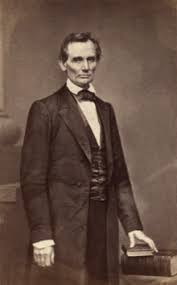
President-Elect, Barack Obama, in a conscious effort to mirror the sequence of fellow Illinoisan, Abraham Lincoln’s inaugural, deliberately followed the 1861 Lincoln festivities. The Obamas rode the same train route as had the Lincoln’s, breakfasted on the same meal inauguration day, and when the moment came for the swearing in, President Obama chose the same Bible as touched by Abraham Lincoln’s right hand in 1861.

In this last twist of symmetry that Bible belonged to Justice Roger B Taney, the man who decreed blacks were not citizens and never would be. A very satisfying turn, indeed.

Gail Chumbley is the author of the two-part memoir, “River of January,” and “River of January: Figure Eight.” Both are available on Kindle. Chumbley has also penned three stage plays, “Clay,” “Wolf By The Ears,” and “Peer Review.” She has cowritten “Dancing On Air,” a film script.

gailchumbley@ymail.com

Stay The Course

1864 was an election year, and an apprehensive President Lincoln believed he faced certain defeat. Despite victories at Gettysburg and Vicksburg the endless lists of casualties had left Northern families weary of war. Two years prior the Democrats gained 27 seats in the House, as critics bashed emancipation and the draft riots in New York. As the President privately despaired, “The bottom is out of the tub.” 

Lincoln’s greatest frustration centered on finding a general who could and would defeat General Robert E. Lee and his Army of Northern Virginia. A series of Union generals, all lackluster, had failed the President repeatedly. Irvin McDowell’s troops ran at Bull Run, Ambrose Burnside presided over a bloodbath at Fredericksburg, and “Fighting Joe Hooker” was roundly flanked at Chancellorsville. But the most troublesome of this difficult brood was General George Brinton McClellan.

On paper General McClellan had all the attributes of a winner. Studious, McClellan graduated 2nd in his class at West Point, joined the Army Corps of Engineers, and served in the Mexican War. Following a brief stint in the private sector McClellan returned to service when the war thundered to life at Ft. Sumter. Following a couple of minor victories in western Virginia, President Lincoln brought McClellan to the Capitol appointing him commander of the Army of the Potomac.

In Washington McClellan did whip his army into fine condition, and his men loved him in return. The difficulty the President faced was that McClellan would not fight. Over many months, with growing frustration at the army’s inaction, Lincoln stooped to sarcasm, composing a request to borrow McClellan’s army to go south, since the General wasn’t using them. McClellan returned the rancor referring to Lincoln as a “well meaning baboon,” and rudely rebuffing the President when Lincoln paid a house call. 

Other McClellan gems include:

“By some strange operation of magic I seem to have become the power of the land.”

“Who would have thought, when we were married, that I should so soon be called upon to save my country?” (To his wife.)

and, reminiscent of a current blowhard candidate,

“I can do it all.”

During the greatest national emergency since the Revolutionary War, Mr. Lincoln, with so many other demands, had to cope with a difficult, obstinate officer. As the nation watched, the President could not get the man to budge. In one instance McClellan, in Virginia, argued he couldn’t move his forces as the horses were fatigued. Lincoln asked what could the horses have done to be fatigued?

McClellan needed to be replaced, but Lincoln hesitated to do so. Considering the love the Army of the Potomac held for “Little Mac” may have stayed the President’s hand. And there were no other officers suitable to replace him. 

Later, after the Battle of Antietam in 1862, Lincoln fired the reluctant warrior after he permitted General Lee and his army to slip away.

As for the election of 1864, the President fully understood he was growing quite unpopular. He had spoken with General Grant on how to tie up the war before inauguration day when he would surely have to leave the White House. In an unexpected twist of irony Northern Democrats convening in Chicago, nominated their candidate to challenge Mr. Lincoln. They chose George Brinton McClellan.

Defeating the rebels grew even more urgent if that imperative was possible, for McClellan made clear his intention to negotiate a peace with slavery intact. 

It is difficult to imagine the President’s anguish in such an impossible situation.

So it is a remarkable thing that Abraham Lincoln emerged from the contest victorious. Severe Northern opinion hadn’t softened, the press relentlessly criticized Lincoln’s war policies, so how did this miracle happen?

Credit the Army of the Potomac.

Though the men did admire their former commander, they knew President Lincoln remained committed to the cause they shared: freedom and Union. Oceans of blood had been spilled, uncountable hardships endured, and still Union forces and the President stayed the course. These comrades-in-arms kept the faith with their president, in a war for America’s future. 

Lincoln had their backs, and these men fully understood their duty.

Today, as America approaches the election of 2024 Americans of good will must also vote for the President who solidly supports their interests. Mr. Biden’s successes include The American Rescue Plan, a stimulus bill, Build Back Better, an infrastructure spending act, and a bill lowering drug costs, such as capping insulin for diabetics, demonstrates Biden’s priorities. Like 1864, the opposition party has nothing to offer but a self-deluded windbag who has proven himself more ineffectual, and delusional than General McClellan, who at least had a real resume. Nonsense is nonsense.

An advocate for all we hold dear, voters must remain as faithful to our ideals as Joe Biden, our Chief Executive. Today the task of preserving America is as crucial as the crucible of the Civil War

We have an obligation to defend our national laws, and the ideals that shaped them. Americans, yet unborn are counting on us.

Gail Chumbley is the author of the two-part memoir River of January, and River of January: Figure Eight, both available on Kindle. Chumbley has also authored “Clay,” and “Wolf By The Ears,” two historically-set plays.

Splintered

This post is part of an essay from May, 2016.

So what can we make of this 1860 fiasco today, after 2016? If I could attempt a bit of divination I would suggest that the political party that can present the most united front will prevail in the general election. If current Republican candidates continue to employ such wide-ranging, and scorching tones to their rhetoric, and stubbornly defend the innocence of their loose talk, the party may run head long into oblivion, as did the Democrats of 1860. If the roaring factions, currently represented by each GOP aspirant goes too far, the fabric of unity will shred, crippling the Republican’s ability to field serious candidates in the future.

Looking at the past as prelude much is at stake for the unity of the GOP. In 1860 party divisions nearly destroyed the Democrats, propelling the nation into a bloody civil war. And though Republicans at that time elected our greatest Chief Executive, Abraham Lincoln, the Democrats suffered for decades, marginalized as the party of rebellion. And even the best lessons left by the past are still forgotten in the heat of passion, by those who know better. (The Democrats shattered their party unity once again a hundred years later, splintered by the Vietnam War.) This is truly a cautionary tale for today’s turbulent Republican Party.

Zealots do not compromise, and leading GOP candidates are spouting some pretty divisive vitriol. As southern Democrats self righteously rejected their national party 1860, certain it no longer represented them, and ultimately silenced the party of Jefferson and Jackson for decades. The lesson is clear for today’s Republicans. By tolerating demagoguery, extremism, and reckless fear-mongering in their field of contenders, the RNC may indeed face a similar demise.

Though it is true that no party can be all things to all citizens, malignant splinter groups should not run away with the party.

The American public demands measured and thoughtful candidates—and both parties are expected to field candidates of merit and substance.

We deserve leaders worth following.

Gail Chumbley is the author of the two-part memoir, River of January, and River of January: Figure Eight, both on Kindle. Chumbley has written two plays, “Clay” regarding the life of Henry Clay, and “Wolf By The Ears,” a study of racism and slavery.

They Were Wrong

“Slave owners and white racists were afraid that the world they had always known was slipping away from them. Fear was a great motivator—fear of change, fear of losing power, fear being that they were wrong. The roots of white anxiety over threats to enslavement and to legalize white supremacy ran deep.”

John Meacham, And There was Light. Random House, 2022, page 55.

Reading this passage last night stunned me. A myriad of thoughts rushed at once, promptly crystallizing into one central truth; racial dynamics in America have not changed. Not. One. Bit.

Meacham’s book, a biography of Lincoln, focuses on the shaping events that made Lincoln arguably America’s greatest President. However, those same circumstances left the Southern slave power angry, and lethally dangerous. This metastasizing rancor ultimately exploded into Civil War, and to Lincoln’s 1865 murder.

The Missouri Compromise triggered the first alarm below the Mason-Dixon Line. That slavery could be limited through any federal legislative act left slavers touchy and suspicious. Sensitive to any criticism Southern owners  (as Mr. Meacham pointed out), viewed any outside opposition to their standing as a dishonorable insult.

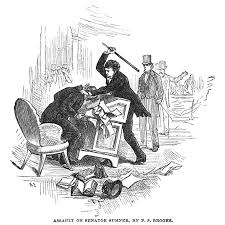
Congressmen and Senators frequently squared off years before soldiers manned battle lines. A Massachusetts Senator suffered a severe beating on the Senate floor for an anti-slavery address. So volatile became the rhetoric that the House chamber finally adopted a “gag rule” prohibiting any mention of slavery in any deliberations.

As Northern abolitionists grew more strident, Southerners grew more militant. A flash of arms became only a matter of time.

Any abolitionists tracts, or books, such as Uncle Tom’s Cabin quickly landed in the trash bin, tossed out by local Southern officials.

The politics of race entered houses of worship with church leaders twisting the Bible inside out to oppose or justify slavery. Today the Southern Methodist and Southern Baptists churches are evidence of the war before the war.

After the guns silenced, into the Reconstruction era the newly emancipated found protection only through Yankee bayonets. Outraged and unrepentant Southern whites waged guerrilla warfare with violence and terror. The Ku Klux Klan, the Knights of the White Camelia, and the White League galloped through the night spreading fear and intimidation to any black-man who dared claim the blessings of liberty. 

Contrasting the 21st Century to the 19th provides strikingly similar dynamics.

In 2008 Barack Obama became 44th President of the United States, and white power interests again lost their minds.

Though at first it appeared that America had turned a positive corner in race relations, Senator Mitch McConnell quickly reacted decreeing the GOP would not work with the new president. Soon after the Congressional Republicans sunsetted a clause in the 1965 Voting Rights Act. Signed into law by Lyndon Johnson, the act protected black voters from discrimination at the polls. McConnell’s handy work placed the onus on the voter to prove they were illegally denied. (Much like the old poll tax and literacy tests days.)

Once again white supremacist perceive their alpha-position slipping away, and they, too, are suspicious and lethally dangerous. The hate group names have changed, but not the mission. Proud Boys, Oath Keepers, neo-Nazi’s, MAGA, and Christian Nationalists gallop now through the internet on the dark web, surfacing to attack as was done on January 6th, 2021.

The signs are all there, fear of a changing America, fear of being wrong, and fearful of losing control.

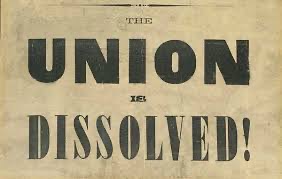
Those who witnessed the dissolution of the Union believed their blood-soaked sacrifice had settled for all time the issue of race in America. But that is clearly false.

But then is now. Now is then. Eras are intricately and forever intertwined. This nation has remembered nothing and again defaulted to the same old norms of hate and boastful ignorance.

And though those same feelings run deep, and they are still wrong.

The only thing new in the world is the history you don’t know. Harry Truman

Chumbley is the author of the two-part memoir, River of January, and River of January: Figure Eight. She has penned two stage plays, “Clay,” exploring the life of Henry Clay, “Wolf By the Ears,” a study of racism in America, and “Peer Review,” where 47 is confronted by four past presidents.

Fighting Bees

Young Abraham Lincoln came of age, politically speaking, during the administration of Andrew Jackson. And the rough, aspiring frontier politician did not approve of the Democratic Party and their blind, cult-like dedication to “Old Hickory.” Speaking first in New Salem, Illinois, then in Springfield, Lincoln held forth on the subject of Jackson’s arbitrary and autocratic style compared to his man, Senator Henry Clay of Kentucky.

Young Mr. Lincoln viewed Henry Clay as a true statesman. He admired Senator Clay for his rational, stable economic plans to nurture a growing America bursting with potential.

Central to Clay’s program was a bank, a central depository to finance new infrastructure projects like roads, canals, and railroads. Senator Clay championed the Federal Government as the best instrument to plan and carry out public works, improving commercial activity across the young nation.

To Lincoln scratching out a life in a muddy, stump-ridden western wilderness, Clay’s American System of improvements was welcome. Clay’s platform would bring order, jobs, prosperity, and hope to Lincoln’s own rough-hewn region.

Young Lincoln also shared Clay’s conviction that slavery did not belong in new western territories. All Lincoln wanted was a fair chance for all Americans, and that slavery impeded human talent, and he believed, like Clay, that slavery also devalued free labor. Free market capitalism and slavery could not co-exist.

To Lincoln, President Jackson’s mercurial style of leadership did not serve America’s future either. Jackson not only vetoed many improvement bills, arguing one state benefiting from federal funds was unfair to others, he in one instance vetoed a road bill because the project lay entirely in Kentucky, Henry Clay’s home state.

Excessive emotional discord in politics caused more problems than it remedied, and impeded national growth. Nation building wasn’t a sectional competition, a personal challenge, nor a game to pit political egos.

At the time of Jackson a religious revival burned hot across the country. Known today as the Second Great Awakening this movement, foaming over with emotion, had drenched politics as well, with candidates often taking on an evangelical, absolute tones.

Lincoln’s once joked he didn’t much like these stump orators unless they looked like they were “fighting bees.” To Lincoln, such emotional public displays had no value in advancing America.

So what did Lincoln believe? In the founders ideals of the United States of America. Embracing presidents as religious, messianic manifestations had no purpose, and produced only the tainted fruit of extremism.

Lincoln was, above all else, a moderate, logical, and measured man. His inspiration, his convictions, centered on a secular faith in the ideals of America.

Mr. Lincoln like to think of the Declaration of Independence as a golden apple, (equality and rights) set in the silver frame of the Constitution (the law). In other words certain inalienable rights protected by We the People.

Former President Obama exemplified Lincoln’s America in so many ways; relying on his cabinet, advisors, or his own formidable intellect to govern. And Lincoln’s Jackson nightmare repeated when a dumber version of Old Hickory proclaimed America is a terrible place.

Today the United States’ perpetual election cycle keeps emotions raw, but accomplishes little else. Mr. Lincoln would take a dim view of today’s constant political turmoil, arguing that we need to keep our wits about us and vote with our heads.

More infrastructure needs attention as well as national security, civil rights, and climate change. Instead a thin-skinned ego maniac welcomes billionaires to pilfer and taint good government. And the computer age has presented a complicated network neither Lincoln nor Clay could have imagined. We rely on those cooler heads to prevail, making policy, and conducting the people’s business, or we end up paying homage to wannabe dictator who is as arbitrary as he is vacuous.

Today, at this moment, in a country full of pointless Jacksons, be a thoughtful Lincoln. There is no need to fight bees all of the time, over and over, when the real work of America needs to be done.

Gail Chumbley is the author of “River of January,” and “River of January: Figure Eight.” Chumbley also penned two stage plays, “Clay,” examining the life of Senator Henry Clay, and “Wolf By The Ears,” a study of racism and slavery in America. Currently Chumbley is working on “Peer Review.” This piece is a cross of Dickens A Christmas Carol converges with presidential history.

chumbleg.blog

Symmetry

This is one of my favorite twists in American history.

Gail Chumbley is the author of the two-part memoir “River of January,” and “River of January: Figure Eight.” Chumbley has penned two plays, as well. “Clay” on the life of Senator Henry Clay, and “Wolf By The Ears,” exploring the beginnings of racism and slavery.

The Past Isn’t Past

The above diagram, or other similar images frequently pop up in American history textbooks. The purpose of the image is to represent Southern society in the years up to the Civil War. A quick look reveals that this system was top down and not in any way democratic.

Small scale farmers and poor whites near the bottom pose some interesting questions regarding antebellum (before the war) social class interactions. How much authority did small farmers actually wield in this ordered system? How did customs and rules shape relations between poor whites and slaves? The most pressing question asks why would lower class whites risk all to do battle for the lofty Planter class? After all, these same aristocrats strictly associated within their own circle, and would not give the time of day to any social inferiors.

So again why did the lower rungs answer the call to battle?

One explanation must touch upon race and identity. Small land holders and poor whites, as hard as they struggled to survive somehow believed or wanted to believe they shared more in common with the aristocrats at the top. Identifying with the enslaved below, despite living in similar adversity was unthinkable.

And these sons of the South fought hard. Some 300,000 Confederate soldiers died of shot, disease, or returned home maimed to preserve a culture that held them down.

Let’s put a pin there.

Keeping in mind the above image fast forward to the 2008 victory of Barack Obama. For many of us the election of our first black president marked a high point in racial history, seemingly proof that America had finally faced and redeemed the violent legacy of injustice.

And despite President Obama’s two successful terms in office, (Obama is somewhere among the top ten presidents of all time) the persistent legacy of racial hatred roared back to life as virulent as any year in old Dixie.

Like demons summoned from the dead, the ugly ghosts of white supremacy rose, once again fueled by a latter day white aristocracy. America is witnessing in real time DJT and his plutocrats purposely riling up lower class whites to again man their battle fronts.

A black president, a very popular and effective black president united malicious forces of hubris, greed, and malignant hate.

This toxic furnace of racism has honestly emerged as something of a shock. For those of us who bore witness to the Civil Rights movement, applauded affirmative action policies, and celebrated landmark legislation in housing and voting rights, led us to believe a A More Perfect Union was underway. But we were wrong.

Stunningly wrong.

47”s first administration emboldened a Klan-style march in Charlottesville, where he remarked there were “good people on both sides.” Left unmentioned was the fate of Heather Heyer, a counter protestor, who was deliberately targeted and killed in the melee. In 2021 47 groomed his working class foot soldiers to “stand back and stand by.” When the order came, these emboldened thugs sacked the US Capitol toting Confederate and Nazi flags. Neither Robert E Lee or Hitler ever got that close to our center of government.

In both cases MAGA militia in red caps waving blue flags proved that America has made no racial progress at all. Hate, especially racial hate has been simmering all along. Forget that 47 and his GOP are gutting social safety nets and services (Medicaid and FEMA come to mind) that support many of his minions (and the rest of us). Effectively manipulated MAGA enthusiasts proudly, defiantly, swill the poison of grievance.

Planter society would easily recognize this tried and true method of cultural conditioning. Working class whites once again believe they share the same interests as the ruling elite. After all they are all white. However, that same elite has no further use for those who elected them. And this resurrected aristocracy doesn’t think much of democracy either. Utah Senator Mike Lee publicly said as much.

The 21st Century rallying cry echoes that of an earlier century. The worst white man is still better than the best man of color. (And I don’t mean Joe Biden.)

And that is how those with little to nothing are schooled to preserve those who have everything.

Gail Chumbley is the author of the two-part memoir River of January, and River of January; Figure Eight. Chumbley has authored three stage plays, Clay, a look at the life of Henry Clay, Wolf By The Ears, an examination of racism and slavery, and Peer Review, where Donald Trump meets four former presidents.

gailchumbley@ymail.com

Rebellions

The Republican Party emerged in 1854 as a voice for liberty, and of opportunity. Forged in sectional controversy, members dedicated themselves to one overriding priority, no slavery in America’s western territories. On that point the fledgling party stood firm.

A lawyer in Springfield, Abraham Lincoln, joined the growing party early concerned, as were others, with escalating tensions between the North and South.

In 1860, Lincoln threw his very tall hat into the ring, and declared his candidacy for President. Defying considerable odds, Lincoln prevailed over other, more prominent Republicans at the GOP Convention in Chicago. Lincoln grasped the nomination. 

The South responded as one. If Lincoln won the Presidency, they would bolt the Union. He did win, and tried to reason with Southern States through his inaugural address. “In your hands, my dissatisfied fellow-countrymen, and not in mine, is the momentous issue of civil war.”

The sticking point of course, slavery. 

By the time Lincoln took the oath of office, eight Southern States had voted to secede from the Union. This president understood the fears of the South, and knew what drove the secessionists. He didn’t hate them, he did not want them punished. During the last year of the war Lincoln, in his second inaugural address gently offered an olive branch stating, “With malice toward none; with charity for all.”

Lincoln’s lasting legacy held that the Civil War meant more than reunification of the states. His  “new birth of freedom” implied a higher ideal, the turmoil meant something more honorable, and timeless: the cause of humanity. The Emancipation Proclamation came first, then the 13th Amendment, forever freeing those held in bondage. This president took no credit for prevailing over the Rebels, hoping only to heal the divisions that fueled the rage.

His martyrdom on April 15,1865 left the GOP imprinted with Lincoln’s goodness, modesty, and nobility. This first Republican President endured four years of national hell, and never forgot his mission.

Lincoln met the Rebellion, and vanquished it.

America today hears no soaring rhetoric from the GOP, nor elegant prose, only hate speech and bellyaching. The GOP has severed the cords of duty to country, replacing patriotic obligation with an unapologetic lust for power, and self interest. 

For four years the taxpayers have been fleeced, and minorities targeted, the kind of intolerance Lincoln abhorred. Long standing alliances were cast aside as a self-serving dunce cozied up to America’s enemies. The Republican members of Congress have forsaken their obligation to country first, pretending and excusing that all was normal in the turbulent White House. 

The greatest harm perpetrated by, and enabled by the current GOP, is the violent attack on the heart of our democracy: the United States Capitol on January 6, 2021.

The irony is rich. As the Republican Party grew from a rebellion, it will now perish from another.