Mischlinge

When Mexico sends its people, they’re not sending their best. They’re not sending you. They’re not sending you. They’re sending people that have lots of problems, and they’re bringing those problems with us. They’re bringing drugs. They’re bringing crime. They’re rapists. DJT, June 15, 2015

Government-sponsored horrors aimed at the vulnerable require planning. The target group is first identified, their deficiencies propagandized, then malignant operations begin to remove that group. This age old pattern is a how-to for witch-hunts from 1692 Salem, to Native American extermination, to slavery, and to Joe McCarthy in the 1950’s Red Scare. Other examples in history abound as well, most notoriously the rise of German National Socialism following World War One.

Embittered by the 1918 Armistice, former Corporal Adolf Hitler founded his National Socialist movement in Bavaria. After organizing two para-military gangs, the Brown Shirts and Black Shirts, he led a failed coup attempt in 1923 Munich. This act of revolt landed him in jail, where he penned his infamous tract “Mein Kampf.” The substance of the book raked over grievances, particularly against Jewish people and other “so-called” betrayers of Germany. Hitler was clear in his writing, only genocide would root out Germany’s traitors.

Granted an early parole by a sympathetic judge Hitler quickly resumed leadership of his growing Nazi movement. By January, 1933 he had attained power as Chancellor under German President Paul von Hindenburg. Hitler efficiently made use of his expanding influence in the Reichstag, (German Parliament) to fulfill his unholy mission. Taking incremental steps the Nazi leader began with boycotts of Jewish businesses, then removal of Jewish and other undesirables from employment as civil servants. Soon Jewish students were forced from public schools, permitting only a small quota each year to enroll. By May of 1933 Hitler ordered book burnings of Jewish authors and others he viewed as subversive.

Events accelerated.

When President von Hindenburg died in 1934, Adolf Hitler seized absolute power over Germany. And he wasted no time in dialing up the violence against people he considered vile.

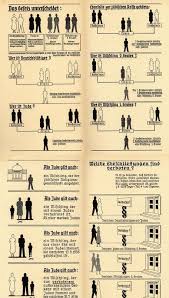
At a 1935 Nazi Party rally in Nuremberg the Fuhrer issued formal classifications of who was Aryan (pure German) and who was Jewish. Known as the Nuremberg Laws, marriages in particular were outlawed between Jewish and Aryan couples. The image above is one document reflecting that Nazi framework, outlining which marriages were permitted by the state and those “verboten” (forbidden).

Hitler insisted these laws were necessary to protect German blood, but the laws also served to isolate not only Jews, but Gypsies, Homosexuals, Jehovah Witnesses, and others. In truth one man defined which human lives were valuable, and those that were expendable.

The ground was prepared for the genocide that would follow.

Dachau was the first extermination camp built in 1933. From that beginning until 1945 the railcars rumbled nonstop to thousands of ash-strewn death camps, while Hitler’s SS liquidated Jewish ghettos of thousands of men, women, and children. By May of 1945 somewhere around 11 million victims perished in a region historians refer to as the “Bloodlands,” including 6 million Jews.

Euphemistically referred to as Racial Hygiene, the Holocaust unfolded gradually and in relative secrecy. However, by the end of the European war and Germany’s defeat the world wondered how this horror could have happened.

We are watching how at this moment.

In Trump’s America that pattern is repeating. The founding of the United States according to Thomas Jefferson insisted that people are born with natural rights, life, liberty, and the pursuit of happiness. But from the George Floyd murder to Trump publicly announcing brown people traffic drugs and are rapists, that assumption has been ignored. This administration has taken racial profiling to a criminal level, as this tyrant harnesses the might of the federal government to carry out warrantless abductions.

Even if American citizens are caught up in sweeps, many insist that this is different, and that those taken deserve it. The pieces of evil are all there.

Racial exceptionalism has been the cause of mass suffering from the Armenian genocide in World War One, to Cambodia’s killing fields in the late 1970’s. The signs are all too familiar.

Trump’s makes no pretense of his intentions stating on 60 Minutes that his ICE goons haven’t gone far enough in terrorizing and kidnapping civilians. The sanctioned ongoing violation of civil and human rights has been grinding away as you’ve read this essay.

The United States was meant to be different–a land with freedom from fear, where people are secure in their places and property. This tradition does not rely on one man’s racism and deliberate cruelty. A cautionary tale is replaying, and we cannot escape that past, nor avoid the sinister outcome.

Mischlinge was used by the Nazi’s as a derogatory legal term. Literally mischlinge means mongrel, a person of mixed blood.

Gail Chumbley is the author of the two-part memoir “River of January,” and “River of January: Figure Eight,” co-writer of the screenplay, “Dancing On Air” based on those books. She has penned three stage plays on history topics, “Clay” on the life of Senator Henry Clay, “Wolf By The Ears” examining the beginnings of American slavery, and “Peer Review” where 47 is confronted by specters of four past presidents.

Peer Review One: A Play

Peer Review One

__________________________

10 Minute Play

By Gail Chumbley

SCENE 1

The stage lights rise. Two wingback chairs sit closely on the stage, and a table. Two men, both marines, stand on either side of the stage apron. The sounds of voices are heard off stage. The stage lights shift to blue as a man, The President, steps onstage. The Marines salute, and the president salutes impatiently. The guards disappear in darkness.

THE PRESIDENT
I can hear them. Tourists. Here to see where I, their President lives.

Three girls enter giggling and taking cell phone pictures. The president fusses with his hair.

THE PRESIDENT

And where are you girls from?

The girls move on without noticing him.
Wait! I’m here. Your president. I’m here.

A couple appear looking about, pointing toward “walls,” chatting quietly. The president straightens his tie, and again touches his hair.

THE PRESIDENT
Welcome to my White House. Wanna a picture with your President?

The couple murmurs quietly, indifferently looking around. They turn and stroll offstage. The president follows a few steps.

THE PRESIDENT

You people deaf? What is wrong with you? This is disgraceful. I’m President of the United States, for god’s sake.

A man appears on stage left. He wears a top hat, mustache, pince-nez spectacles and cutaway jacket with tails. He carries a cane. The man approaches the president from behind. He speaks in a patrician voice.

THE MAN

Am I to understand that you are a New Yorker?

The president startles.

THE PRESIDENT
Um, hello. Are you here with a tour group? Bet you want a picture with me, your president.

THE MAN
I ask a simple question, and you reply with a question. I understand you are a New Yorker. Are you or are you not?

The President attempts to walk to no avail. The man stands uncomfortably close.

THE PRESIDENT (Looking around)

I can’t move! My feet are frozen to the floor! Where is my security detail! Where are my marines?

THE MAN
We have all been watching you, and even Mr. Nixon is appalled. Once again, are you a New Yorker? Speak up when I’m addressing you.
THE PRESIDENT

Mr. Nixon? How did you get in here? Are you a re-enactor?

The muted sound of tourists continues off stage.

Yes. Yes. Everybody knows me. I made my fortune in New York real estate, if you must know. I’ve heard many people say I’m the best businessman ever . . .

The man begins to pace and speak at the same time.

THE MAN
From my understanding you are nothing beyond a scoundrel from the wealthy criminal class. I made a career of exposing popinjays like you.

THE PRESIDENT
Well, you’re a nasty piece of work. I am the President of the United States. I won the election by the biggest margin in American hist . . .

THE MAN
Poppycock! We have come to find that result came about due a mere tilt in the electoral count, and foreign interference. Russians, no less. After the revolutionary stirrings in 1905, I feared Russian unrest would spread to the United States. Conditions in mines, shops and factories here were inexcusable. Strikers shot down in the Pullman Rail Strike, vile conditions in Chicago’s meatpacking industry, sweatshops forcing 12 hour work days. Labor agitators pushed for reform, and I agreed. In Russia, Bolsheviks never did extend justice to the working class, only more oppression. They were not, and are not America’s friend, and intend only to destabilize this nation. Through your absence of character, and love of money they have succeeded.

THE PRESIDENT

You are wrong. That’s a lie. A lie.

THE MAN
You foolish pip. Inviting Russians into the West Wing? Unacceptable! Never should foreign adversaries be permitted to enter the inner sanctum, nor rioters in the Capitol. Mr. Lincoln will have more to say on that particular travesty.

The President appears shocked. He mouths “Lincoln.”
You have besmirched America before the world. I’d say you are a compromised pawn of foreign meddlers, and their graft. You give not one whit for America.

THE PRESIDENT
You can’t talk to me like that. My security will be back and you’ll be thrown out.

THE MAN

Sergey Witte.

THE PRESIDENT

What? Who? Just get out!

THE MAN

Hold your tongue! When you are in the presence of a gentlemen, behave accordingly. Witte was a Russian, so you will approve. The Japanese inflicted the most impressive defeats upon the Tsar’s navy in 1904-05. America then had no quarrel with Japan or Russia, however, I was asked to arbitrate peace negotiations. My view of the Russians changed with Witte. What a crude, unmannered man, unlike the thoroughly well- mannered Japanese delegation who comported themselves so gracefully! This so-called “diplomat” grew belligerent during peace talks insisting Russia be awarded more largess from the treaty. That villain stalled and argued for adding more claims, despite losing the war. I gave that knave a piece of my mind.

The man removes his top hat and sets it on a table, and checks his pocket watch.

Good I have time.

THE PRESIDENT
Time? Don’t stay on my account. I’m a busy man. Meetings, briefings.

THE MAN

Sit down this instant.

The president instantly sits. Looks alarmed.

Witte is the point! The Russians only look out for Russia, not you, the bankrupt fool who fell backward into the presidency.

THE PRESIDENT
I’m being pranked. Some a-hole is filming this. Where is the camera? I hate pranks. Meadows is going to hear about this.

The muffled sound of passersby continues. The president sits uncomfortably, and shuts his eyes.

I’m dreaming. That’s it, I’m asleep. When I open my eyes he’ll be gone.

To the man.

I’m opening my eyes now and you better not be here.

The man leans over the sitting president. He opens his eyes face to face with the man. The president startles again.

THE MAN

I am not finished.

The man again paces and speaks.
Bribery does not belong in foreign policy. And America still has a grand future on the world stage. We show strength through integrity–not by shaking down America’s allies for political favors.

THE PRESIDENT

Stop right there, that was a perfect phone call . . .

THE MAN
In foreign affairs we must make up our minds that we are a great people and must play a great part in the world. Nothing less.

The man turns toward an imaginary window. The president attempts to stand, but only succeeds in moving the chair a little. He utters a grunt.

THE PRESIDENT
I have great knowledge of foreign policy. And despite what some people say, I was always against the war in Iraq, and a lot of people weren’t.

The man shakes his head in disbelief. The President continues.
Look, Obama left a foreign policy of one disaster after another. We don’t win anymore. . .We’re going to win big now.

The man looks around the Blue Room.

THE MAN
Talleyrand, Napoleon’s minister once remarked that though President Jefferson loved France, he was still an American first. I do not believe you are first loyal to America, only to your feral, financial instincts.

THE PRESIDENT

TalleyWho? Everyone knows I am the greatest Americ. . .

The man sighs, and with a turn of his hand silences the President.

THE MAN
It appears you have no pets. Quite revealing that-regarding a man. We moved into this house with dogs, cats, and other pets, including a pony. How the boys loved their animals. Our pets were considered part of the family. They and the children’s presence made the White House feel like home.

The man returns his gaze to the president, and smiles.
I would play a bear, and my two youngest would hide under the bed. I pawed and growled, and they giggled and shrieked for joy.

The president is defensive. He speaks.

THE PRESIDENT
Kid’s. The hardest thing about raising kids is time. I know men who leave their businesses so they can spend more time with their children, and I say, ‘Gimme a break!’ My children couldn’t love me more if I spent fifteen times more time with them.

The man watches the president doubtfully.

THE MAN
No pets. Not even for your youngest. And it appears the boy and his mother live separate lives. Your adult children keep their distance, as well. You have squandered a man’s real treasure for an artificial image.

The president wiggle-walks his chair still stuck.

THE PRESIDENT
First of all, I would feel like a phony having a dog. I don’t like dogs. And, so you know, my children love me, and my wife, too. They are so proud of me, so proud. I’m President. And most Americans love me. Those liberals are the problem.

The man snaps, waving his cane.

THE MAN
Is that why thousands of migrant children were separated from their families? Caged? Liberals are not, as you say, the problem!

The man clears his throat, and quietly speaks.

President Grant requested I touch upon the subject of military service. My father did not serve in the War between the States, leaving me a confused boy. I could not understand why. For me soldiering is the highest service a patriot can perform.

THE PRESIDENT
And now you’re going to tell me how great the military is. I really don’t care. Look, Sean Hannity is calling my office.

THE MAN
His decision concerned my mother. Lovely woman, my mother, she hailed from Georgia, and her brothers were serving the Confederacy. You see, my father loved her–simply loved her. He hired a substitute in his place, and aided President Lincoln in other ways.

The man taps his cane and smiles.

Still. I idolized him. He believed so much in public service. He cared about children, orphans living on the streets. Father founded the Newsboys Lodge, the Children’s Aid Society, and the American Museum of Natural History. The last he did for me.

The man strokes his mustache lost in thought.

THE PRESIDENT

On Central Park West?

The man nods.
Been there. Your father had it built? Seems like a big waste of money to me. Bunch of bones and dead animals.

THE MAN
Serving others is our obligation to the less fortunate. To me bad trusts exploited the poor for profits. We regulated fair rail rates for farmers, passed the Meat Inspection Act, and the Pure Food and Drug Act, to make all Americans safer.

The president looks bewildered.

THE PRESIDENT

Why? There’s a lot of money in big pharma.

THE MAN

Not listening.
As president, I never made a decision without wondering what my father would think.

THE PRESIDENT

Yeah, me too.

The president chuckles. The man shakes his head.

THE PRESIDENT
Still, I don’t care. Times have changed. Gotta get what you can when you can.

The man whips around.

THE MAN

Which is why I am here.

The President’s smile disappears.

THE MAN
All four of my sons served in the Great War, and fulfilled their duty. We paid the ultimate cost-our youngest, Quentin, in an aerial fight over Germany. So difficult to lose such a dear, sweet boy.

The man draws close to the president.
And Quentin was neither a sucker nor a loser! He believed in America, they all believed. Quentin held fast to the tenets of our noble land and answered the call.

The man flashes disgust toward the President, then becomes thoughtful.
In 1898, I, too, served as soon as I could. President McKinley named me under-secretary in the Department of the Navy, until I resigned to join the war against Spain. That decision led me to assemble the Rough Riders and ship out to Cuba. Most exhilarating. My father would be proud, of that I’m certain.

THE PRESIDENT
I’d like to do my duty too. But the political establishment trying to stop us is the same swamp responsible for our disastrous foreign policies.

The man frowns, then and continues.

THE MAN
We were on foot in Cuba, a cavalry without horses. We lined up at the base of Kettle Hill, and charged. The moment jolted electric, and my crowded hour began. Lifting my carbine in the air, I rallied from the front, showing the men they had nothing to fear.

THE PRESIDENT
And see, that’s the problem. That is why the military is a chump’s game.

The man shakes his head.
And who needs soldiers? I can do foreign policy, it’s easy. I know because I have a very good brain. I am very rich, people admire me.

The man gives the President an incredulous glance.

THE MAN
Are you deranged? Tossing about words, making no sense? And as for rich, I understand your father earned the fortune, and you have frittered away much of it.

THE PRESIDENT

Wrong. Lies.

THE MAN
Nouveau riche, new money. Gaudy, vulgar, pretentious, and hungry for the validation and acceptance that you will never receive.

The president audibly snores. The man continues to speak over the noise.

When I held office I used my “bully pulpit” in the best sense of the term. Once I believed as you, that the natural world existed to enrich man. But that is false. In my administration Congress approved five new national parks, protected bird sanctuaries, and game preserves. The intrinsic value of our land cannot be found in stock indices or business transactions.

The president snorts
Nowhere else in any civilized country is there to be found such a tract of veritable wonderland made accessible to all visitors, not only the scenery, but wild creatures of the parks are scrupulously preserved.

THE PRESIDENT
Well mister tree hugger I have gutted much of your precious protection and opened land for logging, mining, and drilling. Say goodbye to the Grand Staircase in Utah, well, half of it, anyway. Roads are being cleared as we speak, and off-road vehicles are roaring in. And that goody two shoes, Barack Hussein Obama created the Bears Ears National Monument. I chopped it up for developers. Because that is profit. Profit is real.

THE MAN
You are nothing new, but the only plunderer to reach the presidency. New York City has produced a long line of blackguards such as yourself, criminals like Boss Tweed, and George Washington Plunkitt. Driven by greed and power these men fleeced the public.

The man walks around the chairs still looking about. He speaks.

For the benefit and enjoyment of the people.

THE PRESIDENT

I’d enjoy getting the hell out of here.

He snores louder

THE MAN
Quiet you insolent twit. Those words are inscribed on the arch at Yellowstone Park. Now you shall no longer interrupt.

The man gestures, watching the president who is now unable to speak.
I, too enjoyed a life of affluence. However, with that wealth came obligations to the less fortunate. Doors down from our home on 57th Street the poor struggled in wretched poverty. And much like my father I possessed a troubled conscience.

The man strolls with his cane, and continues.

As Commander in Chief, our charge is to work for the people. All the people. Withholding aid to states you did not carry is a dishonorable breach of that trust.

The man touches the president’s chest with his cane, then resumes his pacing.

My love of justice and fair play may sound naive to you. But your blatant cheating, while pretending you haven’t, is shameless.

The man strikes the president’s chair with his cane. The president sits straighter.
My administration was known as the “Square Deal,” and we, my cabinet and I, kept that promise.

The man taps his cane on the floor again.

My father once counseled me to look after my morals, my health, and my scholarship. And that, I did. And your father? Raised you to love money and value nothing. Had you not been desperate to become president, you might have continued to lead this predatory life of grift and debauchery.

The president fixes his eyes on the man. Angry.

Much like King Midas, or a Greek tragedy, this fatal flaw, your infinite vanity, will now cost you your liberty.

The president struggles, mutely hopping his chair a bit.
You should not have run for office, where dignity and tight scrutiny are the norm. Unable to resist the lure of power, you are the catalyst of your own downfall.

The man puts on his top hat, and gestures. The president bursts free from his chair.

It’s time for me to leave, the others will join you presently.

THE PRESIDENT

Others?

THE MAN
Most assuredly. And the name of that national park is pronounced Yo-sem-i-tee.

As the man stroll off in one direction, the President runs off the other. The stage goes dark.

The Dramatists Guild of America was established over 80 years ago, and is the only professional association which advances the interests of playwrights, composers and lyricists writing for the living stage. The Guild has over 6,000 members nationwide, from beginning writers to the most prominent authors represented on Broadway, Off-Broadway and in regional theaters. To learn more about the Dramatists Guild of America, please visit http://www.dramatistsguild.com

Gail Chumbley is the author of the two-part memoir, “River of January,” and “River of January: Figure Eight.” Both are available on Kindle. In addition Chumbley has written two full-length plays, “Clay,” and “Wolf By The Ears.”
Peer Review #1

Marines manned numerous doorways along the wide hallway, as clusters of tourists wandered through colorful rooms. Upstairs the President listened to the public commotion with satisfaction, not for the house, not for the job, which, in truth, had become tiresome, but for the knowledge he could drop down and set all their bourgeois hearts aflutter. 

After a moment, he made his decision, slipping down an interior stair case, stepping into the Blue Room.

As his hands automatically fluffed his hair, the President sidled up beside a class of wiggly school children snapping cell phone pictures.

“And where are you from?,” the president teased with pleasure, anticipating an excited response. He half closed his eyes, and paused, waiting for the gratifying answer.

But he heard nothing.

Bemused, the President opened one eye, then the other. The chatty children paid him no mind, in fact were moving away, following their guide into the hallway.

“Wait,” he found himself calling. “It’s me, your President. I’m here.”

He repeated, “The President of the United States.”

But the children didn’t hear. He remained alone in the Blue Room, his hair acceptably coiffed.

No further tourists entered, though dozens drifted past the doorway. He didn’t understand and he thought very hard, seeking a rational explanation.

It was at that moment that he heard a voice, quite close, and quite annoyed. 

“Am I to understand you are a New Yorker?” 

The President wheeled around toward the sound. Before him, no more than an arm’s length away stood a mustachioed gentleman, wearing pinz nez spectacles, sporting a shiny top hat. The man’s eyes blazed behind the thick round lenses, and the astonished President detected a trickle of cold sweat trace down the back of his thick neck.

“I say, are you, or are you not, a New Yorker?” The stern man spoke in a nasally, patrician voice.

“Ahh. How did you get in here,” the President stammered. “Where is my secret service protection?”

“Supercilious pup,” the man in the top hat snapped. “They tell me that YOU are from New York, and are president! A common side show huckster, President.”

The President, though alarmed, replied reflexively, “I’m in real estate. I . . .made my fortune in New York real estate.” Only the muffled din of passing tourists kept the President from panic.

“Real Estate!” The man in spectacles scornfully shouted. “I’d say you are just another scoundrel from the wealthy criminal class. In New York, swindlers like you are a dime a dozen. I made a career of exposing rascals like you.” 

The man, attired in a three-piece suit, a watch fob draping his ample waist, bore a deep scowl. “And you found your way into this office of trust. Intolerable.”

Though bewildered, the President, unaccustomed to such personal insults, felt his pique rising. “I was elected President by the largest margin in American Hist . . .”

“Poppycock,” the specter interrupted. “It is my understanding the decision rested upon a mere tilt in the Electoral system, and that outsiders interfered to make certain of your victory.” 

The strange visitor moved closer. “I’d say that you are a compromised pawn of foreign meddlers, and give not one damn for the American people.”

At this point the President had heard enough, and attempted to move his legs. He wanted very much to escape the Blue Room, but his feet remained rooted. 

“I have important things to do, you need to go,” the President’s voice trembled, trying to sound more confident than he felt.

The apparition narrowed his intense eyes, and took another step toward the unnerved President. 

“I claim more authority to this revered House and Office than your mercenary greed could ever comprehend. You belong with Tweed, Plunkitt, Fisk, Conkling, and the rest of New York’s good-for-nothings. Dishonor has followed you to the Presidency, what, with your womanizing, graft, and unsavory business connections.” The fierce apparition fixed an intense, menacing gaze. “You do not belong here, nor your parade of lackeys and opportunists.

The buzz of foot traffic grew louder, and when the President again glanced toward his unwelcome visitor, he found him gone, the Blue Room empty.

Gail Chumbley is the author of the two-volume memoir, “River of January” and “River of January: Figure Eight,” both available on Kindle.

Hard copies are available at http://www.river-of-january.com


Catch Up

A radical change in imperial policy between Great Britain and her American Colonies marked the beginning of the Revolutionary Era.

Well before the American Revolution an amiable, and profitable arrangement existed between the Colonials and Parliament. This mutually profitable connection quickly terminated after the French and Indian War, 1754-1763. That conflict, though a victory for the British, had cost the Royal Treasury plenty, and the Crown abandoned friendly relations by coercing Americans to share in settling that war debt .

Parliament began by imposing a number of taxes, all designed to force Americans to pay up. The Sugar Act, Stamp Act, and Townshend Duties, among other measures, had been designed to force Americans to cover the royal debt. Once proud to be British, Colonials were shocked to realize the Crown viewed them as a source of revenue, and nothing more.

Colonials had a long running smuggling network, importing cheaper commodities from the French islands, thus evading British tariffs. Those caught and arrested found fast acquittal by colonial juries of their peers, as locals were also customers of the accused. In Boston, tensions soon turned to bloodshed, followed later with tea spilled into the Harbor. The Crown, not amused, soon forbade traditional trials, and transported accused Americans to military courts, in particular to Nova Scotia. Next, British Red Coats were deployed to the New England colonies to impose martial law, and Parliament decreed American’s had to house and feed their own oppressors.  

These matters were met with vehement dissent, Colonials protesting they had no representative in Parliament, and would not tolerate taxation without their consent. “No Taxation Without Representation” and “Resistance to Tyranny is Obedience to God,” rang throughout Colonial America.

Tensions ripened, finally coming to a bloody confrontation in April of 1775, and the rest we mostly remember from school. 

Tasked with scribing a Declaration of Independence at the Second Continental Congress, Thomas Jefferson vented American grievances through his quill. Working alone, Jefferson defended the violent actions carried out by Americans, and took pains to explain the radicalism. . . . “a decent respect to the opinions of mankind requires that they should declare the causes which impel them to the separation.” And for six years the Continental Army persevered.

In 1787, the subsequent creation and ratification of the U.S. Constitution set an enduring national blueprint of settled law. The Framers designed a government derived from the people, meaning we all are equal, and guaranteed representation in shaping law.

That brings this story to today. 

The election of a president from an opposing party is not a radical, nor sudden change of policy. Rather, this cyclic American ritual is as normal as the singing the Star Spangled Banner before a game. American voters have chosen our leaders in this manner since George Washington’s name first appeared on the ballot. 

To all of you who attacked our Capitol, it’s well past time for you to catch up. Put away those symbols of rebellion; of coiled snakes, hangmen gallows, and Viking horns. The Revolution ended two and a half centuries ago. The story of America is well underway.

In point of fact, those January 6th insurrectionists themselves attempted a radical change in American tradition. In pursuit of violence and chaos, these terrorists attempted a savage disruption of our deepest democratic traditions. Now that is unAmerican. In point of fact, we all have political representatives, and a right to a jury of our peers, and nary a soldier is found lounging on the couch.

Grow up and stand down.  

Gail Chumbley is the author of the two-part memoir “River of January” and “River of January: Figure Eight.”

Chumbley has also penned two plays, “Clay” exploring the life of Henry Clay, and “Wolf By The Ears,” an examination of American slavery and racism.

chumbleg.blog

Two Witnesses

“I began to think that all was not right. He said that with two hundred men he could drive congress, with the president at its head, into the river Potomac, . . .and he said with five hundred men he could take possession of New York….”

Colonel John Morgan, written testimony, 1807, the Burr Conspiracy

In grade school we watched a film titled, “The Man Without A Country.” Taken from a story by Edward Everett Hale, the tale tells of an American soldier named Philip Nolan. Nolan, a fictitious character had been arrested as a conspirator in a scheme to seize a chunk of the Louisiana Purchase and secede from the Union. At his trial an angry Nolan pitched a fit and shouted “Damn the United States! I wish I may never hear of the United States again!”

The presiding judge agreed with Nolan’s outburst and sentenced him to never hear of, nor set foot in the United States again. Serving his time, Nolan spends the rest of his days transferred from one Naval vessel to another, never permitted to see the shoreline again. By the end of this sad tale, Nolan grieves his error, and Hale has him express his regrets, and the majesty of our democracy.

Though just a little kid, that film struck me as a nightmare, a true horror story. (I was a history-geek before I knew I was a history-geek). The sadness remains with me now.

Hale set his patriotic tale against an actual event, the Burr Conspiracy, (1805-1807). Aaron Burr, Thomas Jefferson’s rival and Vice President had killed Alexander Hamilton in 1804, and resigned as Vice President in 1805. Heading west beyond the Appalachians, Burr allegedly hatched a plot to capture a southern piece of the Louisiana Purchase, and Mexican Texas. It was said Burr planned to install himself as a sovereign of a new nation, with New Orleans as his capital. A co-conspirator, General James Wilkinson, turned on Burr, and spilled the beans to President Jefferson. The outraged President promptly dispatched soldiers to apprehend Colonel Burr.

In a Virginia court Burr was indicted for treason, and soon put on trial in Richmond. The Judge, Chief Justice John Marshall presided. 

Burr remained serene throughout the trial, and denied the charges against him. Jefferson, meanwhile breathed fire, demanding Justice Marshall convict. Marshall, a brilliant student of American Law, subpoenaed the President to testify, and that pissed off Jefferson even more. 

In a letter to the court Jefferson insisted British Common Law sufficed for conviction. That advice would place Burr in the vicinity of a seditious act, and lead to a quick guilty verdict. Marshall, however, relied on the recent Constitutional definition.

Article III, Section 3, Clause 1,

Treason against the United States, shall consist only in levying War against them, or in adhering to the Enemies, giving them Aid and Comfort. No Person shall be convicted of Treason unless on the testimony of two Witnesses to the same overt Act, or on Confession in open Court.

At the end of this saga Burr was acquitted, Jefferson’s opinion irrelevant to US Law. Without fear nor favor Marshall abided by the Constitution. Lacking eyewitness testimony to the act, Burr walked. Neither Wilkinson’s nor Colonel Morgan’s letters proved relevant.

This case, complicated, and circumstantial, tested the new Constitution, and the Constitution prevailed. Fictitious Nolan should perhaps have held his temper in check, but then there wouldn’t be a story.

For MAGA insurrectionists, inculpatory evidence is stacking up. We all  bore  witness to the ransacking of the Capitol, and the rest of the plot is coming to light. Archival documents, emails, phone conversations, sticky notes, fake electoral papers, and incompetent lawyers litter the January 6 landscape. 

This time, under the language of Article III, there is no doubt of treason. 

As Philip Nolan lay dying aboard a Navy vessel, he tells his comforter “Here, you see, I have a country!” A map of the United States is pinned to a wall at the foot of his bed. Nolan begs his visitor to draw in new states admitted since his long ago trial. A tragic yarn of regret to be sure.

In the end Aaron Burr faded into the fog of time. Due to a certain Broadway musical he has resurfaced. Did Burr engaged in treason? We’ll never know for certain. That he faded is important. America is more resilient than any one of us.

Though Philip Nolan is a character of fiction, and Burr an enduring mystery, the January 6th hoard will not fade. You aided another would-be tyrant, and you failed. Like Pearl Harbor, and 911, your treason will live in infamy, to borrow a phrase. 

Gail Chumbley is the author of the two-part memoir, “River of January,” and “River of January: Figure Eight. Both titles are available on Kindle. Chumbley has also penned two plays, “Clay,” regarding the life of Senator Henry Clay, and “Wolf By The Ears” a look at American slavery and it beginnings.

gailchumbley@chumbleg

chumbleg.blog

Inheritance

Harry Truman understood the gravity of his duty right off. When FDR died in April, 1945, the newly installed Vice President got the word he was now president. And what a Herculean task he had before him. A world war to end, conferences abroad, shaping a new post-war world, and grappling with the human rights horrors in both Europe and in the Pacific. Add to all of that, he alone could order use of the newly completed Atomic Bomb.

On his White House desk, President Truman placed a sign, “The Buck Stops Here.” With that mission statement Harry Truman stepped up to his responsibilities despite the formidable challenges he faced.

Did Truman inherit the worst set of circumstances of any new president? Maybe? But it is open to debate.

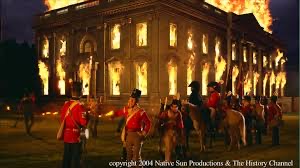
America’s fourth President, James Madison, found himself  in one god-awful mess. His predecessor, Thomas Jefferson had tanked the US economy by closing American ports to all English and French trade. Those two powerful rivals had been at war a long time, and made a practice of interfering with America’s neutrality and transatlantic shipping. Despite Jefferson’s actions the issue of seizing US ships and kidnapping sailors never stopped. By 1812 President Madison asked for a declaration of war against England that, in the end accomplished nothing but a burned out White House and defaced Capitol.

Following the lackluster administrations of Franklin Pierce, then James Buchanan, Abraham Lincoln stepped into a firestorm of crisis. Divisions over the institution of slavery had reached critical mass, and Lincoln’s election was enough for Southern States to cut ties with the North. So hated was Lincoln, that his name did not appear on the ballot below the Mason-Dixon. And the fiery trial of war commenced.

The Election of 1932 became a referendum on Herbert Hoover, and the Republican presidents who had served since 1920. Poor Hoover happened to be in the White House when the economic music stopped, and the economy bottomed out. And that was that for Hoover. His name remained a pejorative until his death. 

Franklin Roosevelt prevailed that 1932 election, in fact won in a landslide victory. Somehow Roosevelt maintained his confident smile though he, too, faced one hell of a national disaster. 

In his inaugural address the new President reassured the public saying fear was all we had to fear. FDR then ordered a banking “holiday,” coating the dismal reality of bank failures in less menacing terms-a holiday. From his first hundred days the new President directed a bewildered Congress to approve his “New Deal.” 

The coming of the Second World War shifted domestic policies to foreign threats as the world fell into autocratic disarray. FDR shifted his attention to the coming war. When President Roosevelt died suddenly, poor Harry Truman was in the hot seat. But that is where I want to end the history lesson.

If any new President has had a disaster to confront, it is Joe Biden. Without fanfare or showboating Biden, too, has stepped up to the difficulties testing our nation. 

Much like Truman and Lincoln before, 46 is grappling with a world in chaos, and a divided people at home. In another ironic twist, like Madison, Biden witnessed, a second violent desecration of the US Capitol.

To his credit, though his predecessor left a long trail of rubble, Biden understands the traditional role of Chief Executive, while clearly many Americans have forgotten, or worse, rejected. Biden is addressing the issues testing our country, not only for those who elected him, but those who did not. An American President can do no less.

Gail Chumbley is the author of the two-part memoir “River of January,” and “River of January: Figure Eight.” Both titles are available on Kindle. She has completed her second play, “Wolf By The Ears.”

gailchumbley@gmail.com

The Die was Cast

The threat of disunion appeared long before either the Civil War, or the insurrection on January 6, 2021. The architects laying the chaotic cornerstone? President John Adams, and his Vice President, Thomas Jefferson.

David McCullough in his celebrated biography, John Adams, portrayed this Founding Father as a brilliant man, and that is true. However, his self righteous streak succeeded in undercutting his talent and better judgement. As the second president of the United States, John Adams, proved to be a prickly, and thin-skinned chief executive. A dour Yankee, Adams could not tolerate public criticism, and as many later presidents, came to view the press as an adversary—enemies of the government.

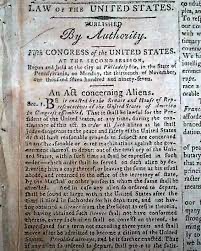
In a rage over newspapers excoriating his administration, Adams shepherded the Sedition Act through Congress in 1798. Opposition editors soon found themselves in the President’s cross hairs, and some were actually jailed. The Alien Act, also passed in 1798, aimed to delay new voters, by lengthening time for naturalization, as immigrants were certain to vote against Adams and his Federalist Party. (Hmm. The press, immigrants, and voting rights. Imagine that).

Jefferson, (still Adams’ Vice President), promptly took action to counter Adams’ wrong-headed legislation.

Launching a full out, but anonymous denunciation of the Adams Administration, Vice President Jefferson published tracts vilifying Adams, and emphasized the sovereignty of the states guaranteed under 10th Amendment.

Returning from France, where he had served as American ambassador, Jefferson had been appalled by the powerful Federal Constitution created in his absence. As a ‘natural aristocrat,’ and slave master, Jefferson was unwilling to cede power to any higher authority than himself, and his fellow patricians. Instead the “Sage of Monticello,” asserted the right of states not to obey laws they didn’t like.

Two state legislatures agreed to debate Jefferson’s counter measures, Virginia and Kentucky. Penned secretly by Jefferson, and Madison, these resolutions insisted the states were the final arbiters of what was legally binding. A new term emerged from this controversy—Nullification.

The die was cast, the seeds of disunion sown. In the years following, nullification intensified, fertilized particularly in 1832 by John C. Calhoun, a South Carolina Senator. That that state became the first to secede in 1861, sparking the US Civil War, is no coincidence.

The traitors who invaded the halls of Congress last January took their cue from Jefferson, as if they, too, battled the evils of John Adams. Scapegoating the media, immigrants and the Federal government has left a long, bloody stain on American history. As I write, the States of Georgia, and Texas among others, are attempting to limit voting rights once again. Texas has also taken a nullifying stance, limiting a woman’s right to her own body, despite Federal protections.                        

No government has a self-destruct button, none. John Adam’s pique, and Thomas Jefferson’s reaction stamped an incompatibility that still, today, inflames American politics. 

Gail Chumbley is the author of the two-part memoir, “River of January,” and “River of January: Figure Eight.”

gailchumbley@gmail.com

Divisions

Balkanize: Division of a place or country into several small political units, often unfriendly to one another.

America’s founders meant education to flourish, as a vital part of our country’s longevity. 

Designed to advance literacy, American public schools also curbed the rougher aspects of an expanding country. Since the earliest days of the Republic, centers of learning not only taught content, but other lessons like cooperation, and self control. Ultimately schools have instilled in all of us a shared baseline of behavior, supported by foundational facts necessary to find consensus.  

Today, technology and social media have endangered our ability to reach common ground. The distracting noise of extremists, splintering, and Balkanizing our nation threatens American institutions. Elections, government agencies, city and state government, and yes, schools are all targeted. Navigating through a culturally diverse society is inevitably stormy, and a closed American mind isn’t helpful.

Public education has traditionally been one of the ligaments that bind us all together as one people. Years ago a president encouraged us to ask “what (we) can do for (our) country,” but that’s over. Today it’s “Sorry losers and haters, but my IQ is one of the highest – and you all know it!”

Patriotism and literacy evolved together hand in hand. In 1787 Congress, under the Articles of Confederation, passed an Ordinance for settling western land. This law devised a survey system, to organize states around the Great Lakes region. This is important because sales of one plat of the survey, (you guessed it,) funded public schools. 

Thomas Jefferson affirmed the practice by insisting, ”Educate and inform the whole mass of the people… They are the only sure reliance for the preservation of our liberty.”

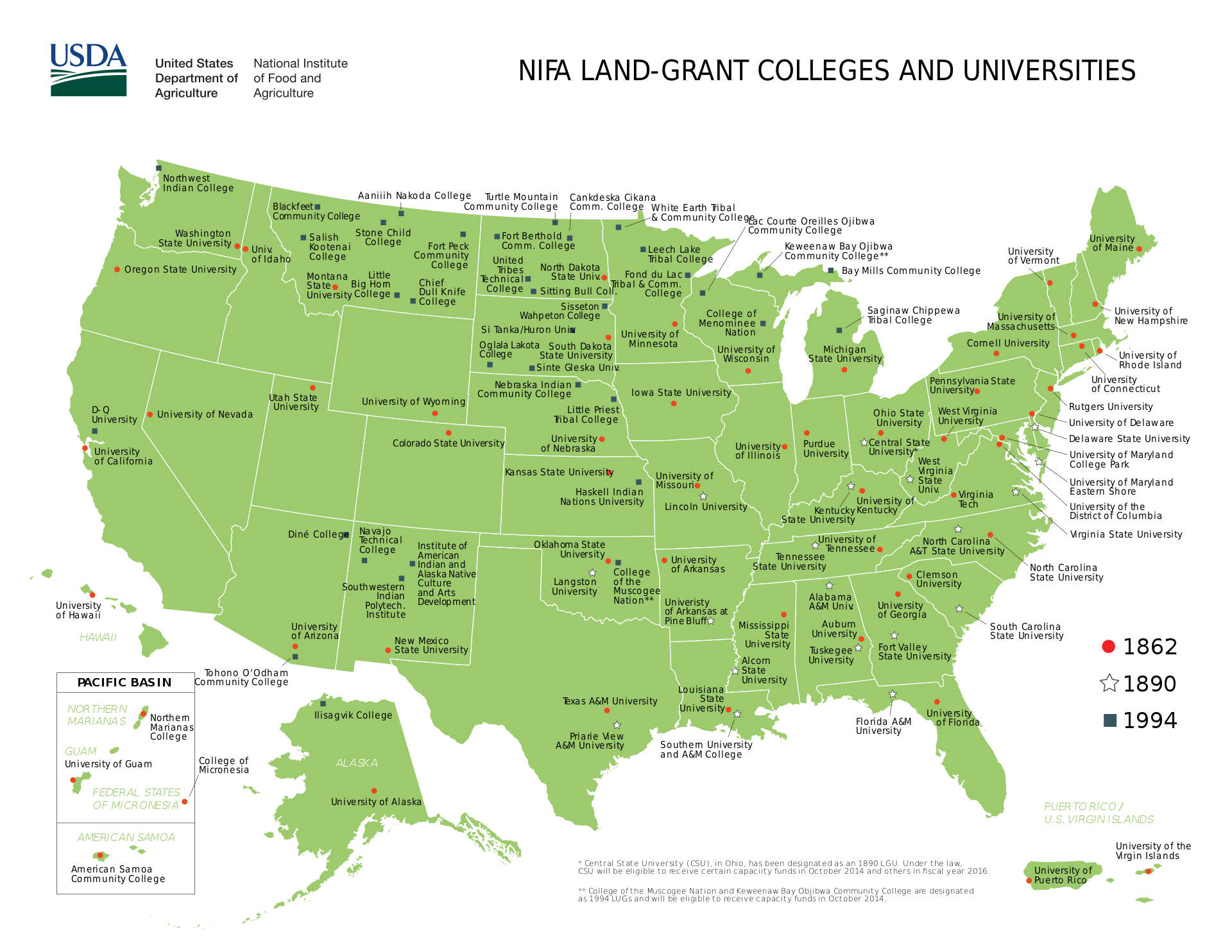
President Lincoln, a figure who deeply lamented his own lack of formal education, pushed to establish land grant universities across the growing nation. The 1862 Morrill Land Grant Act, in particular, financed colleges through Federal funding.These universities today are located in every state of the Union. 

America’s erosion of unity is tied directly to the erosion of public education. Our kids are increasingly sequestered into alternative settings; online, magnet, charter, home, and private schools. Missing is the opportunity to experience democracy at its most basic. Students grow familiar with each other, softening our own edges, renewing the energy and optimism of the nation’s promise. 

We are all taxpayers, but your local public school isn’t supposed to be Burger King, where every citizen can have it “their way.” We have a system that, regardless of money, race, ability, and social class, all have a seat at the table of democracy.

Gail Chumbley is a history instructor and author. Her two-part memoir, “River of January,” and “River of January: Figure Eight,” are available on Kindle.

gailchumbley@gmail.com