Peer Review #2

Strutting through the broad, gilded doors, bearing the black and gold insignia of his building, the President acknowledged well wishers, reporters, and staff. Happy to be back in New York, he looked forward to his familiar apartment and comfortable bed. The President felt it a hardship to live in such an old structure in Washington, though the prestige made it tolerable.

He aimed directly toward the elevator, his closest aides and Secret Service agents in tow. The Chief Executive marched into the lift, with a triumphant gait, gracing photographers with a last thumbs up, as the golden doors silently sealed.

Soon enough, the elevator car slowed to a silent halt, the opening doors revealing an opulent penthouse. His entourage emptied first into the golden rooms, Secret Service staff sweeping for any dangers that might threaten the Commander in Chief. After the officers cleared the master bedroom, the President loosened his tie, slipped off his suit jacket and kicked off his designer shoes. Exhaling onto his grand bed, a sudden movement caught his eye.  

A tall man, of regal bearing stood by the window, surveying Midtown from on high. Attired in a blue uniform, trimmed with buff lapels and cuffs, the man’s hair looked powdery white, and was bound in a queue at the nape of his neck. 

Stunned, gasping at this extraordinary vision, the President froze, too astonished and frightened to speak.

“I’m very fond of New York,” the officer began. “During the War for Independence I remained in the vicinity waiting to reclaim it from British occupiers.” He glanced at the frightened man, now burrowing under his bedclothes. “As Chief Executive, I served both terms of office here in New York.”

The President could hear his heart pounding, and idly worried about his blood pressure.

“I, too, struggled with temptation,” the officer continued. In my youth I pined for the advantages of wealth that surrounded me.” The apparition glanced at the President. “Land, military rank, social standing, . . . these were the empty ambitions I embraced as valuable.”

The President slowly began to feel his heart rate slow, the adrenaline somewhat dissipating, and found the courage to speak. “Ho, . . . how did you get in here?” 

But the soldier did not reply, turning again toward the view of Manhattan. 

“Over time, particularly once the war commenced, I discovered my assumptions slowly crumbling. The sacrifices endured by the fine men in my command taught me that there were more important ideals than fleeting treasure,” the apparition sighed, emotion emphasizing his revelation. “You must realize,” the officer turned again toward the President, eyes blazing with conviction, “all a man truly possesses is reputation. In the end, that is all that matters.” 

Dread again filled the President, clutching tightly his golden comforter, finding no comfort. He wished the specter gone, praying with all his might that a staffer would hear and rescue him.

“You must understand,” the visitor continued, “I, too, struggled to master my avarice and envy. It was through a determined practice of self-restraint, a mastering of my baser desires, that I learned to be of service to more than myself.” The soldier paused a moment, studying the frightened man grasping his bedding. “Did you know that Article Two in the Constitution was written for me?” 

Hearing this, the President forgot his fear for a moment. 

“For you?” he managed to murmur. 

“When I relinquished my command after the war, and returned to my home in Virginia, Congress judged my character upright. In truth I was weary, lonely for my family, and yearning for a peaceful life,” the General smiled sadly. “However, when I gave up power I earned honor, trust—a good name—and contentment.”

“Why are you bothering me? You should leave,” the President moaned, wishing he had flown instead to Florida. But his visitor seemed not to hear. 

“When the Constitutional Convention set to work, only one day was devoted to defining the role of president. One day,” the visitor repeated. “You see, the delegates wanted no more of arbitrary rule, believing only those of good character would occupy the office.” The apparition looked directly at the President,”

“Please go,” the President whimpered. “I’ll call my men . . .”

The General interrupted, “they are not yours, Sir. And therein lies the problem, and the purpose of my visit.” The soldier frowned deeply. “These deputies work for the American people, as do you, sir. The presidency is a position of service and trust.” He paused. “We have all noted your general deficiency in this aspect.”

“We all?” gasped the President, concerned with his pumping heart.

The General approached the vast bed, the President shrinking deeper with each step. “The President is entrusted with formidable powers, that must not be corrupted. In this you have fallen short.”

“As I am remembered in the annals of America for quiet dignity and fidelity to country, you will only be recalled as a cynical moneychanger who profited from foreigners and plutocrats.”

A knock at the bedroom door startled the cocooned President, breaking the spell. His elaborate, golden bedroom was empty.

Gail Chumbley is the author of the two-part memoir, “River of January,” and “River of January: Figure Eight.” Both are available on Kindle or in hardcopy at http://www.river-of-january.com.

gailchumbley@gmail.com


Peer Review #1

Marines manned numerous doorways along the wide hallway, as clusters of tourists wandered through colorful rooms. Upstairs the President listened to the public commotion with satisfaction, not for the house, not for the job, which, in truth, had become tiresome, but for the knowledge he could drop down and set all their bourgeois hearts aflutter. 

After a moment, he made his decision, slipping down an interior stair case, stepping into the Blue Room.

As his hands automatically fluffed his hair, the President sidled up beside a class of wiggly school children snapping cell phone pictures.

“And where are you from?,” the president teased with pleasure, anticipating an excited response. He half closed his eyes, and paused, waiting for the gratifying answer.

But he heard nothing.

Bemused, the President opened one eye, then the other. The chatty children paid him no mind, in fact were moving away, following their guide into the hallway.

“Wait,” he found himself calling. “It’s me, your President. I’m here.”

He repeated, “The President of the United States.”

But the children didn’t hear. He remained alone in the Blue Room, his hair acceptably coiffed.

No further tourists entered, though dozens drifted past the doorway. He didn’t understand and he thought very hard, seeking a rational explanation.

It was at that moment that he heard a voice, quite close, and quite annoyed. 

“Am I to understand you are a New Yorker?” 

The President wheeled around toward the sound. Before him, no more than an arm’s length away stood a mustachioed gentleman, wearing pinz nez spectacles, sporting a shiny top hat. The man’s eyes blazed behind the thick round lenses, and the astonished President detected a trickle of cold sweat trace down the back of his thick neck.

“I say, are you, or are you not, a New Yorker?” The stern man spoke in a nasally, patrician voice.

“Ahh. How did you get in here,” the President stammered. “Where is my secret service protection?”

“Supercilious pup,” the man in the top hat snapped. “They tell me that YOU are from New York, and are president! A common side show huckster, President.”

The President, though alarmed, replied reflexively, “I’m in real estate. I . . .made my fortune in New York real estate.” Only the muffled din of passing tourists kept the President from panic.

“Real Estate!” The man in spectacles scornfully shouted. “I’d say you are just another scoundrel from the wealthy criminal class. In New York, swindlers like you are a dime a dozen. I made a career of exposing rascals like you.” 

The man, attired in a three-piece suit, a watch fob draping his ample waist, bore a deep scowl. “And you found your way into this office of trust. Intolerable.”

Though bewildered, the President, unaccustomed to such personal insults, felt his pique rising. “I was elected President by the largest margin in American Hist . . .”

“Poppycock,” the specter interrupted. “It is my understanding the decision rested upon a mere tilt in the Electoral system, and that outsiders interfered to make certain of your victory.” 

The strange visitor moved closer. “I’d say that you are a compromised pawn of foreign meddlers, and give not one damn for the American people.”

At this point the President had heard enough, and attempted to move his legs. He wanted very much to escape the Blue Room, but his feet remained rooted. 

“I have important things to do, you need to go,” the President’s voice trembled, trying to sound more confident than he felt.

The apparition narrowed his intense eyes, and took another step toward the unnerved President. 

“I claim more authority to this revered House and Office than your mercenary greed could ever comprehend. You belong with Tweed, Plunkitt, Fisk, Conkling, and the rest of New York’s good-for-nothings. Dishonor has followed you to the Presidency, what, with your womanizing, graft, and unsavory business connections.” The fierce apparition fixed an intense, menacing gaze. “You do not belong here, nor your parade of lackeys and opportunists.

The buzz of foot traffic grew louder, and when the President again glanced toward his unwelcome visitor, he found him gone, the Blue Room empty.

Gail Chumbley is the author of the two-volume memoir, “River of January” and “River of January: Figure Eight,” both available on Kindle.

Hard copies are available at http://www.river-of-january.com


Free is Good

From the advent of aviation to the stages of Vaudeville–spanning continents by air and sea, comes “River of January.” Enjoy this true, epic story.

“River of January,” part one of a two-part memoir is available, free on Kindle, from Sunday, March 31, through Tuesday April 2.

Click the link below.

River of Januaryhttps://www.amazon.com/River-January-Gail-Chumbley-ebook/dp/B00N1ZLWZI/ref=sr_1_2?keywords=river+of+January&qid=1553962925&s=digital-text&sr=1-2

Gail Chumbley is the author of “River of January” and “River of January: Figure Eight.” http://www.river-of-january.com

gailchumbley@gmail.com
He Wrote for the Ages

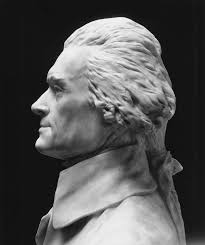
images.jpeg

For starters, I am not a fan of Thomas Jefferson. In fact, the more I know of this founding father, the less I like him. The Sage of Monticello routinely had young male slaves beaten for no better reason than custom, and lay the foundation for secession in 1798 with his Kentucky Resolution.

Thaddeus Kosciuszko, the Polish hero of the Revolutionary War, once offered to liquidate land holdings in the Northwest Territory to pay Jefferson to free some of his slaves, and Jefferson declined. Disillusioned, Kosciuszko condemned Jefferson as a fraud for once insisting “all men were created equal,” and not practicing that “truth.”

However, the reality remains that Jefferson did indeed, pen those words, and generations of Jeffersonian disciples have insisted those words are enough to maintain his venerated place in American history.

And I agree. His adulators are correct. Jefferson’s words are enough. His phrasing, painstakingly composed in 1776 has ignited the world on the ultimate quest to actualize Jefferson’s “unalienable” assertions. 

Abraham Lincoln took Jefferson’s sentiment to heart, and his devotion moved Lincoln to action. The foundation of the Republican Party rested partly upon removing artificial impediments restraining upward mobility, and Lincoln believed slavery such an obstacle, the most malignant bar to individual betterment. (Duh). In 1859 he stated in a speech, “We proposed to give all a chance; and we expected the weak to grow stronger, the ignorant, wiser; and all better.” And Lincoln made it his aim to realize that betterment, first with Emancipation, then the 13th Amendment.

There could be no better description for America than a people steadily discarding artificial barriers. Women, Native Americans, LGBTQ Americans, Latino Americans: all of us freed to reach our highest potential. Annoying bigotry places a drag on the process, but justice still manages to surge steadily on, inspired by the words of the Declaration of Independence–Jefferson’s words. 

In reality, Jefferson had meant to argue white wealthy Colonials were of equal standing to Great Britain’s landed aristocracy. Despite his original intent, the promise of those words have outlived that specific moment. 

Understandably, Thaddeus Kosciuszko gave up in the face of Jefferson’s outrageous duplicity. And this generation of fanatics desperately promote Jefferson’s original racism. But, kids, we have inherited an obligation to continue this journey, not only for ourselves but to light the way for our children’s children.

Gail Chumbley is the author of the World War Two-era memoir “River of January,” and “River of January: Figure Eight.” Both are available on Kindle, and hard copies at http://www.river-of-january.com

gailchumbley@gmail.com
 

A Reasonable Man

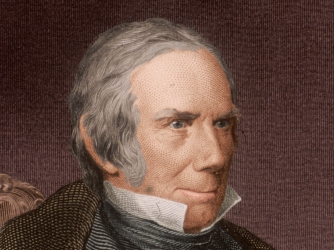
Henry-Clay-9250385-1-raw-res-AB.jpeg

The Senator visualized a clear future for America; a nation of groomed roadways, busy canals, sturdy bridges, and mighty iron railways. He believed America, in order to mature into a truly great nation, required the best in structural innovation. Despite his noble intentions, this practical statesman faced an insurmountable barrier impeding his work–Andrew Jackson.

Henry Clay first arrived in Washington City as a green Kentucky Congressman in 1803. Serving in the House for three years, Clay eventually moved over to the Senate, appointed by the Kentucky legislature to fill an unexpected vacancy.

Early in his legislative career young Clay committed his fair share of blunders. A fierce booster for war in 1812, Clay worked with other young ‘ War Hawks,’ who favored this second brawl against Great Britain. However, by the end of that conflict, Clay realized this do-over against England had generated nothing of real substance.

Fully embracing this epiphany, the young Senator turned his efforts to building America from within. Clay devised a long-range program of development he called The American System. Components of his plan were three-fold: a strong protective tariff to nurture America’s fledgling industrial base, a Second Bank of the United States to administer federal funds, that in turn would underwrite his ‘internal improvements,” (infrastructure projects). For Henry Clay this three-tiered plan would provide the solid foundation a mighty nation-state needed to prosper. And the Senator enthusiastically advanced his crusade in the spirit of a secular evangelical.

Henry Clay’s progressive program found considerable support among his fellow legislators, so much so, The American System seemed on the brink success. 

Unfortunately for Clay, a dashing war hero rose to thwart his vision. Tennessean, Andrew Jackson, the victor of New Orleans, among other military escapades had set his sights on becoming president.

In the beginning Clay thought little of the uneducated, volatile militiaman, believing voters would not take this uncouth hellion seriously. But Clay misread public sentiment. Jackson’s popularity soared among all classes, particularly among poor whites. Jackson successfully won not only a first term, but enjoyed reelection four years later.

Most ominous for Henry Clay, this formidable president did not like him, not one little bit.

Very quickly Congressional appetite for public works dissolved. New Jacksonian supporters filled the House, and to a lesser degree the Senate, leaving Clay hard pressed to pass any of his program. In fact, Jackson made fast work on Clay’s earlier successes by killing the Second Bank of the US, and vetoing countless internal improvement projects. The only portion of the American System Jackson defended was the Tariff, and merely because a separate Jackson enemy threatened to ignore the law.

Henry Clay found himself fighting tooth and nail for every economic belief he championed. And the harder he pushed, the harder the mercurial man in the (White House) blocked him. 

The intractable issue of slavery soon dwarfed all other political and economic conflicts. Clay, a slave owner himself, preached gradual emancipation, finding enemies in both the North and South. Northerners hated him because he was a slave owner, and Southerners because he believed in emancipation. This guy couldn’t win.

Sadly, Senator Henry Clay did not live to see his American System become a reality. But there is a silver lining to this tale. Abraham Lincoln, a staunch Clay-ite shepherded passage of the Pacific Railways Act, the Morrill Act, and a National Banking Act through Congress. These three laws built the Transcontinental Railroad, Land Grant Universities in the west, and funding the Union war effort in the Civil War.

Oh, and Clay’s desire to emancipate slaves became a reality in 1863.

The moral of the story transcends time: America stalls when irrational politics displaces thoughtful, reasonable policies and the legislators who promote them.

Note-I have co-authored a new play celebrating the life of this remarkable, essential American simply titled “Clay.”

Gail Chumbley is the author of the two-part memoir, River of January and River of January: Figure Eight. Both are available on Kindle. Gail is the author of two stage plays, “Clay,” and “Wolf By The Ears.”

gailchumbley@gmail.com

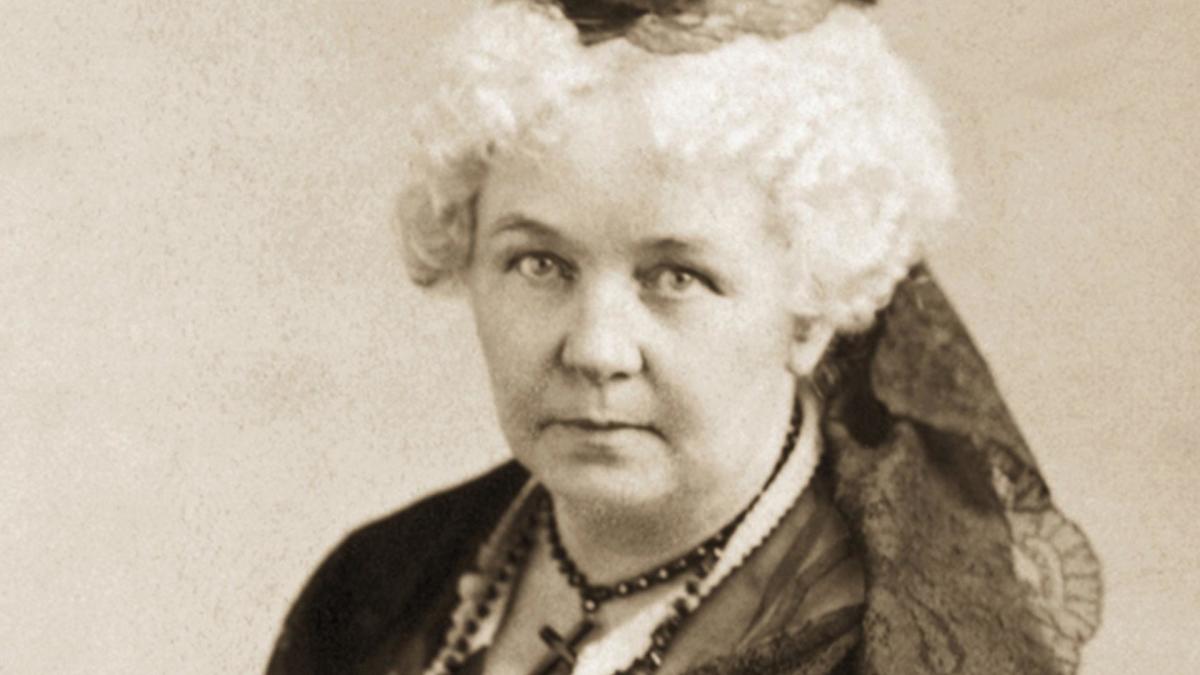
Mrs Stanton

elizabeth-cady-stanton---pioneer-for-womans-suffrage.jpg

I’ve begun initial research on a project concerning this woman, Elizabeth Cady Stanton.  She may be the most essential figure of the American and International Women’s Movement and arguably one of the most forgotten.

Generations of women are far more familiar with Stanton’s colleague,  and dear friend, Susan Brownell  Anthony, but that was by choice.  While Ms Anthony made an early and abiding decision to promote women’s suffrage over any other injustice facing females in the 19th Century, Cady Stanton, a more introspective person,  tended to explore, through study and thought, the profundity of patriarchal injustice.

Mrs Stanton’s analytic temperament often irritated the practical Ms Anthony,  who frequently cajoled Mrs Stanton to get out there and organize.

In a sense Ms Anthony married the suffrage movement, refusing to commit civil suicide by entering into a conventional marriage. Freed from domestic demands, she crisscrossed the nation assembling one of the most massive political movements in American History.  In contrast, Mrs Stanton married a man she passionately loved, raised a brood of seven,  all the while cultivating an interior life; a universe of analysis that evolved, questioning standards and beliefs relegating women to a subservient role.

These differences in style and aims, though the cause of many personal disputes, also somehow worked for these two strong personalities. While Mrs Stanton examined the absurdity of patriarchal traditions, and crafted sound positions on the innate equality between the sexes, Ms Anthony tirelessly toured the country, speaking to anyone who listened on the right of women to vote.

In a real sense Mrs Stanton sojourned through the metaphysical world in a search of truth, while Ms Anthony counted the miles of track to her next speaking engagement.

Happy International Women’s Day

Gail Chumbley is the author of the two-part memoir, River of January, and River of January: Figure Eight, http://www.river-of-january.com

Also available on Kindle.


99 Cents

The Kindle version of “River of January: Figure Eight” is on sale today for only 99 cents. Step right up and enjoy the flight.

Gail Chumbley is the author of the two-part memoir, “River of January” and “River of January: Figure Eight.” Both available at www.river-of-january.com.

And He Stood Up

th

This post is a reprint from a few years ago. The young men mentioned are now other phases of their respective careers. Their names are used with permission.

Asked by my old high school, I had the privilege of speaking to young people on the eve of Veterans Day. My remarks appear below.

Thank You for inviting me today—It’s good to be back at Eagle High.

On October 23rd, a few weeks ago, U.S. Master Sergeant Joshua Wheeler of Oklahoma was fatally wounded in a rescue mission freeing Isis-held hostages in Iraq. He died after rushing into a firefight to support the allied Kurdish soldiers he had trained and advised. Secretary of Defense, Asthon Carter, later described the chaotic events that cost this soldier’s his life.

“As the compound was being stormed, the plan was not for U.S. … forces to enter the compound or be involved in the firefight. However, when a firefight ensued, this American did what I’m very proud that Americans do in that situation . . . he ran to the sound of the guns and he stood up. All the indications are that it was his actions and that of one of his teammates that protected those who were involved in breaching the compound and made the mission a success.”

The death of Master Sergeant Wheeler spared the lives of 70 Isis prisoners scheduled for mass execution the following morning.

Wheeler ran to the sound of the guns. Now I can’t speak for our service men and women, and when I was asked to give this talk, I had to confer with those who have made that solemn commitment. My questions were misleadingly simple . . . why did you choose a military career? What persuaded you to risk yourself for potentially dangerous service?
I wanted to try and understand that burning force of purpose, of unquestioned focus to duty, detach from self preservation for the welfare of others. I wondered how personal fear could be swallowed when, as Secretary Carter explained, “Wheeler involved himself in the firefight.” Where does this nobility of character draw from? Where do these individuals come from—the few that can’t sit on the sideline when duty calls them from their homes?

The answer, strikingly enough, is right here, in this auditorium. Home. Here. No, not someone else from somewhere else. Here. And people, that is where America has always found It’s defenders, from every town and city.

A number of Eagle students have, from many graduating classes, chosen the disciplined military life. Once wiggly kids who, warming the same seats you now occupy, resisting, as you most surely are, the urge to check your cell phones, daydream about the newest version of Halo, or wonder if Bogus Basin ski hill will open before Thanksgiving. They were kids just like you.
Now I don’t pretend to know the name of every Eagle Mustang who has volunteered for service, but I’d like to mention a few.

After earning a college degree as a civilian, 2004 EHS graduate Captain Greg Benjamin was commissioned an Infantry Officer, sending him north to Ft. Wainwright in Fairbanks, Alaska. From this first posting, Greg has served, so far, two Central Asian tours, first in southern, then in eastern Afghanistan. He wants you to know that he loves the training opportunities he’s experienced so far–Ranger School, Airborne, and Air Assault Schools, and leadership training. When I asked Greg, now married with small children why he chose to place himself in harm’s way, he replied, “I want to take the fight to our country’s enemies, leading America’s finest young men and women in combat and training. And change the lives of people in some of the worst places on the planet.”

Captain Joe Peterson, EHS class of 2005, made his decision after high school too. “I had a number of teammates from Eagle’s Lacrosse team one year ahead of me go to a service academy . . . and this kicked-off my thought process in a serious manner. I’d always held the belief of service, but this made the choice tangible for me . . . I received an invitation to visit the University of San Francisco and their ROTC department. I decided to accept.” Joey was posted in installations ranging from Fort Sill, Oklahoma, to Ft. Lewis, Washington, across the Pacific to South Korea, and Central Asia as a platoon leader in Kandahar, Afghanistan overseeing all aircraft and artillery surrounding that area. Reflecting for this talk Joe added, “It was trying at times, but . . . I am proud of my service and it added a value and perspective to my life . . . it has opened doors that are unbelievable.”

Second year West Point Cadet, Colt Sterk described his heartfelt desire to be part of something he termed, “Larger than myself.” Cadet Sterk, EHS class of 2013 explained, “When I was 14 I was given the honor of presenting a wreath at the Tomb of the Unknown Soldier, (in Arlington Cemetery). The nameless soldier in that tomb willingly lay down his life for me, a stranger. I felt a debt of gratitude. Since then I’ve always felt I was called to serve. A senior cadet told me when I was a freshman, ‘Colt in everything you do leave a footprint.’ By that he meant make an impact even if it’s only a little bit. Is it hard? Absolutely. But I know it’s where I’m meant to be.” Colton wants you to know that he visited Israel last summer for ten days studying the Israeli Palestinian conflict, and the implications in that region for the United States, and for the US Army. This semester Colt is attending the US Air Force Academy in Colorado Springs, Colorado on cadet exchange—jumping out of airplanes, and on gliding tactics. He just earned his jump wings after completing the requisite five jumps.

Colby Hyde, EHS Class, 2010 shared a different response. He said, “We are fortunate in this country that military service is not an obligation. We are unfortunate, however, in that we do not often appreciate the sacrifice of those who volunteer on our behalf. Eventually I realized that I didn’t want to be comfortable. Comfort leads to boredom and ignorance, I thought, and life is too short to accept either of those. When someone suggested applying to West Point, I could not resist. I applied, was accepted, and have never left. My life now is not comfortable by any means, and I know the hardships are yet to come. That said, I am more satisfied with my life than I ever was before. I have taken part in New York City memorials for fallen 9/11 responders, and traveled with active duty units to the deserts of Death Valley to help them prepare for combat in Afghanistan. I have traveled across Southern China, can speak, read, and write Mandarin Chinese.

I am thankful for everyone who has served me along the way, from my parents to my teachers, and I only hope I can return the favor in the years to come.” At the end of his letter, Colby added, “I have not done anything for our country yet, but I promise I will. Cadet Colby Hyde graduates from the Military Academy at West Point in 2016.

Tomorrow is Veterans Day. Now I am not here to tell anyone to enlist in military service. Truly, the life of a soldier, marine, or sailor isn’t suited for everybody. At this point in your life you should be dreaming about double diamond ski runs, video games, and Harry Potter marathons with your best friends. And also, to be frank with you, that depth of courage and commitment to duty blooms in the hearts of only an extraordinary few.

What I do want you to reflect upon when you exit this auditorium is that Captain Greg Benjamin, Captain Joey Peterson, Second year Cadet, Colton Sterk, and third year Cadet, Colby Hyde, and many, many other Eagle High School alum have solemnly sworn to protect you. And consider as well, that this oath assures these few will run toward the sound of danger–for us—just as Master Sergeant Josh Wheeler of Oklahoma.

Gail Chumbley is the author of River of January, and River of January: Figure Eight, a memoir in two volumes. Available on Kindle. Chumbley has also penned to stage plays: “Clay” and “Wolf By the Ears.”

gailchhmbley@gmail.com

Beware Of Darkness

we-the-people

Vote, but don’t vote in fear. Ignore the thugs who intend to intimidate.

If alarm guides your trip to the polls, clarify what frightens you. Whether it’s authoritarianism, climate change, or even attacks on our democracy, pull yourself together and vote with thoughtful purpose.

The former president thrives on doubt, lies and chaos.

While the GOP points to crime, and minorities as a threat, understand this distraction provides cover for greed and incompetence. This crowd is motivated by power, not service to country.

Many high officials have been indicted for conspiring to hack the 2016 Presidential election. This is not theory, it is fact. Of those thirty-five, four convicted conspirators “flipped” and were cooperating with Federal Prosecutors to shorten their sentences. These scoundrels rescinded their agreements and the previous Attorney General supported that effort. At the end almost all were granted a presidential pardon.

That is a concern.

Russia, under Cold Warrior and former KGB operative, Vladimir Putin, has unleashed powerful ‘oligarchs’ to perpetrate cyber sabotage against the United States. Never forget that. This is treason-providing aid and comfort to America’s enemies. At this writing the GOP have declared if they retake Congress they will give Ukraine to Russia.

To silence his critics, Putin has quite publicly dispatched hit squads of assassins, at home in Russia, and abroad. For example, executioners brazenly used military grade nerve agents to silence opponents. Though the Russian leader has denied authorizing any such thing, the former president willfully refuses to accept that, all too, obvious fact.

That is a grave concern.

Friendship extended from that White House to other totalitarian regimes similar to Putin’s. Kim Jong Un, North Korea’s butcher of  not only family members, but masses of his own people, Rodrigo Deterte of the Philippines, who has pursued extralegal measures to kill “criminals,” and Tayyip Erdogan of Turkey who demanded Trump deport a  Turkish journalist, critical of the strong arm regime in Ankara.

The previous president’s family still maintains business ties with the Saudi Prince, MBS, despite the grisly murder of a Washington Post journalist by Saudi assassins.

That is a concern.

Then came January 6th, that violent crescendo of the Trump years. This party is a plague.

Fear is a powerful and toxic impulse to rush the polls on Election Day. However, we must all understand what we fear. Do we focus on the bedlam promoted by that defeated administration, or do we ignore the noise and pinpoint the real threat?

Vote like a boss.

Gail Chumbley is the author of the two-part memoir, “River of January” and “River of January: Figure Eight.” Both books are available on Kindle. Chumbley has also penned two historical plays, “Clay” concerning the life of Kentucky Senator Henry Clay, and “Wolf By The Ears,” and exploration of racism and slavery in America.

gailchumbley@gmail.com

Everybody’s Dad

IMG_0822

September, 1974.

When my dad said we were getting up at 5am, he wasn’t kidding. His morning schedule demanded we jump out of bed and climb into the truck, the back flanked with high wood racks. Two or three chainsaws are stored in the truck bed, along with cans of gasoline, rusty chains, a yard stick, chalk, and a cooler. This equipment is secured under a green canvas tarp that effuses an oily, pine scent from previous visits to the woods. 

Dad takes the wheel of his 1968 white Chevy pickup, my friend, Mary sits in the passenger seat. I wedge in the middle, straddling the stick shift, attempting to sip coffee as we motor our way out of town. The dawn is chilly and new, the traffic quite light.

Getting up that early on a Saturday renders us among the very few who had places to go. 

Eventually, clearing out the cobwebs of sleep from my brain, the morning feels electric. We were heading to the woods! Somewhere north of Spokane,  my father had discovered a secret tract of fallen timber the previous spring. My dad had a sharp eye for suitable firewood, especially if the trees were already down and dry, insuring a superior burn.

After an hour or so, the Chevy turns onto a dirt road, bumping along deep into the forest. The terrain is steep, and he assures us we are close to his remembered destination. The coffee is long gone, and we need to stop soon and wander into the trees for relief.

His truck rumbles to a halt on a lone logging trace. We’re out of the cab at once stretching our legs, breathing in the morning warmth. He has already dropped the tailgate and is tending to the gas and oil in his Stihl chainsaw. We help haul out the rest of the equipment, and donning leather gloves follow him to the downed trees, lying right where he scouted them, above the road.

I go first, chalking the cut-length with the yard stick, measuring out the entire tree. His chainsaw roars to life and my dad follows me, slicing tree rounds to fit the wood stove. Mary is rolling the sections to the flat, and righting each round for further splitting with an axe.

The day has grown quite hot. We toss our flannel shirts into the cab, drink some water from a canteen, and go back to it.

By 11:00am the trees are no more. Where logs had rested for a season, only skiffs of sawdust remain, the firewood secured in the truck-bed. It’s now that Dad lifts the lid of the cooler and we dine on bologna sandwiches and warm Shasta cola. Somehow the white bread tastes surprisingly good, though only lunchmeat and butter. We had worked up powerful appetites. 

My father relaxes now that the job is complete, and we rest on the tailgate. The three of us chitchat and laugh, sweating and smelling of pinesap. 

That he loves the woods is clear by his smile and satisfaction. And there, on the back of that truck we socialize–two teenaged girls and our genial guide, resting our backs against neatly even, stacked rows of wood.

July, 2018

My father is in the hospital. The ravages of Parkinson’s Disease, chronic blood clots and advanced age has faded his once vibrant presence. We don’t know how much time he has left, as he grows weaker by the hour. And perhaps this isn’t the best way to inform friends and acquaintances of his failing condition. Still, we can choose to remember him, as I have, during his halcyon days when he was everybody’s dad.  

June, 2019

Dad would have celebrated his 87th birthday on June 15th, but didn’t survive his illness. He has been sorely missed this last year since his passing.

To forget his generous character would be a second sort of death, so I will keep him alive in my writing, and my grandchildren will learn all about him. In that way my Dad’s spirit will carry on through their lives.

Happy Fathers’ Day.

Gail Chumbley is the author of the two-part memoir “River of January,” and “River of January: Figure Eight.” Both books are available at http://www.river-of-january.com and on Kindle.

gailchumbley@gmail.com