To Capture War

th

I came of age during the lengthy era of the Vietnam War.

This so called “police action” began quietly as a post-WWII policy challenging Communist expansion. Vietnam had been divided as had Germany, China, and Korea, leaving a divide of western leaning democracies pitted against Communist dominated systems. America’s commitment to the Vietnam conflict officially began in 1959, with US aid to the South, and officially ended with the Paris Peace Accords in 1973. Said another way, I was a preschooler when Ike dispatched advisers, and in my first year of college when Nixon ordered troops home.

Though almost moot today, opinions vary on why this war became so universally unpopular. One assessment claims the intense media coverage, particularly on American television, soured the public on the war, while others claim support declined when the draft expanded to middle class, college-bound sons. Not that it matters. In retrospect, whether soldiers were poor or affluent, the draft sent them hell in Southeast Asia.

The view that more affluent Americans across the country grew alienated, does hold some merit. the days, weeks, months, and years of guerrilla assaults, deadly fire fights in the jungle, and the daily tally of “body counts,”* drained public support for this sweltering nightmare.

I recall many evenings washing dishes from dinner, watching a little black and white Sony portable tv. The network didn’t seem to matter; Cronkite, Huntley-Brinkley, or Frank Reynolds, all showed the same harrowing footage. Sweating soldiers slogging through a blur of elephant grass, the wounded medevaced onto thundering Huey’s, then wrapping up with an updated casualty count.

The Vietnam War was not presented through paintings, photographs, or sanitized movie newsreels. Instead the American public, including this growing girl from Spokane, Washington, absorbed the unfolding drama as a grim reality program, years before that term was coined. And that little 10 inch window to the world told me, as young and unsophisticated as I was, that this war was awful. That war is altogether an awful ordeal.

Film crews exposed the jarring horror of  surgical personnel splattered with blood, fighting their own war to save lives. The desperate Marines being interviewed while under assault at a stone wall in the ancient Vietnamese capitol of Hue; the massacre at My Lai, all of it awful. Americans watched firsthand their native sons give what Lincoln called “the last full measure.”

So many years have passed, and this “little girl” is now officially a graying Grandmother. Yet, as I type, my  recollections of fifty years ago remains vivid. And I know that, at this very moment, young people in battle zones face the exact same hell as the lethal jungles of Vietnam. And current American commitments have dragged on far longer than my childhood.

Still, the human cost of war has not changed–not one bit. And though the the draft is inactive, and the American public distracted, the price of conflict remains the same for those young souls presently in harms way.

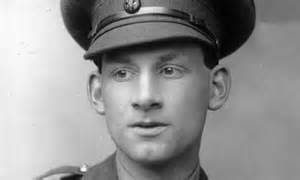
In the spirit of comforting the disturbed, and disturbing the comfortable, I would like to finish this piece by reprinting a poem by WWI soldier and poet, Siegfried Sassoon. With words alone, Sassoon captures the true degree of awful, using no film crew, photographer, or painter.

Dreamers

By Siegfried Sassoon

Soldiers are citizens of death’s grey land,
Drawing no dividend from time’s to-morrows.
In the great hour of destiny they stand,
Each with his feuds, and jealousies, and sorrows.
Soldiers are sworn to action; they must win
Some flaming, fatal climax with their lives.
Soldiers are dreamers; when the guns begin
They think of firelit homes, clean beds and wives.
I see them in foul dug-outs, gnawed by rats,
And in the ruined trenches, lashed with rain,
Dreaming of things they did with balls and bats,
And mocked by hopeless longing to regain
Bank-holidays, and picture shows, and spats,
And going to the office in the train.
 
*Covid 19 deaths are currently presented in the same visual manner. Grim statistics take a toll.
Gail Chumbley is the author of the two-part memoir, “River of January,” and “River of January: Figure Eight.” Both titles are available on Kindle.

I Want My GOP

th

A divided national party . . . voices of extreme rhetoric . . . an ugly, contentious primary season. Does this spell doom for two-party system?

Sounds modern, doesn’t it? But the year was 1860, and the party in question was founded by Thomas Jefferson, and shaped in the image of Andrew Jackson: The antebellum Democratic Party.

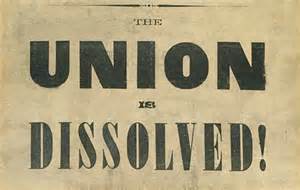
On the eve of Civil War, the future of the Union appeared in fatal doubt. Political leaders in the Deep South: South Carolina, Georgia, Alabama, Mississippi, and Florida had all but washed their hands of the centrally powerful United States. Adding to the precarious atmosphere, a faction of Democrats in the North promoted a policy to permit slavery into the western territories under the principle of Popular Sovereignty, or direct vote. Others voices in the northern branch of the Democratic Party believed the Southern States should depart the Union in peace. And these pro-secession advocates became the most worrisome threat for Senate leader, Stephen A. Douglas of Illinois, the leading Democratic candidate for the presidency in 1860.

Douglas found himself in a hell of a spot. He fervently burned to lead his party to the White House and save his nation, dangerously poised on the verge of civil war. As the principal heir to Senate leadership, Douglas had spent over twenty years in Congress working to stave off Southern secession, taking over when Kentucky Senator, Henry Clay, the “Great Compromiser” died. Clay had also spent most of his earlier career drawing up one concession after another in a noble attempt to preserve the nation. Eventually the effort wore him out, and Senator Douglas pick up the cause.

As far as Douglas was concerned, slavery wasn’t a moral issue, but a bump in the road. The issue could easily be decided by the good folks migrating west. Douglas believed if settlers didn’t want slavery, they would decline to establish laws necessary for supporting the “peculiar institution.” He was wrong—dead wrong. Slavery had, by 1860 become an issue impossible to solve. And it was here, underestimating the power of the slave issue, that the Illinois Senator imploded his party and his career.

The new Republican Party had formed six years earlier in Wisconsin, established on one central principle—slavery would not extend into the western territories, period. And this new party grew fast. Composed of splinter groups, this now fully unified party maintained that free labor was an integral component of free market capitalism. The presence of slavery in growing regions of the West would devalue free labor, and undermine future economic growth.

Now, don’t get me wrong, these Republicans did not sing Kumbaya or braid their hair. These men did not believe in equality between the races—they were not abolitionists. Economic principles drove their political platform, (Emancipation came later with the transformation of President Lincoln in the fire of war).

For Stephen Douglas the approaching 1860 election meant vindication for his support of popular sovereignty, and reward for his faithful political service. And Douglas was no political hack. He fully understood the solvency of the Union lay in the delicate art of sectional balance, and his ascendancy to the White House as a Democrat would go a long way to placate the Southern hotheads. But this Illinois Senator failed, once again, to fully comprehend the temper of the nation, or of his own party. The era of seeking middle ground had passed—America’s course had been set toward industrial modernity with no place for an antiquated, barbaric labor system.

Charleston, South Carolina, was selected as the site of the 1860 Democratic convention. Chaos immediately broke loose on the convention floor. While Southern Democrats demanded strict, exact language guaranteeing the extension of slavery in the territories, Northern Democrats and those from California and Oregon pushed for Douglas’ popular sovereignty. This tense deadlock forced the latter faction to walk out and reconvene in Baltimore where party business could move forward.

Southern Democrats moved on as well. In a separate Richmond, Virginia convention Southern Democrats nominated Kentuckian John C. Breckinridge.

In Baltimore, Douglas indeed gained the Democratic nomination, preserving his precious principle of local elections determining the western expansion of slavery. Bolting Democrats in Richmond went further adding an absolute protection of slavery to their platform. Middle ground vanished.

Though a long shot, a third faction of the Democratic Party broke ranks calling themselves the “Constitutional Union Party.” I’m not sure what they stood for, but clearly it wasn’t support for Douglas or Breckinridge. Convening in Baltimore as well, in May of 1860, this coalition nominated John Bell of Tennessee.

So what can we make of this 1860 fiasco today, in 2016? If I could attempt a bit of divination I would suggest that the political party that can present the most united front will prevail in the general election. If current Republican candidates continue to employ such wide-ranging, and scorching tones to their rhetoric, and stubbornly defend the innocence of their loose talk, the party may run head long into oblivion, as did the Democrats of 1860. If the roaring factions, so loudly represented by each GOP aspirant goes too far, the fabric of unity will shred, crippling the Republican’s ability to field serious candidates in the future.

Looking at the past as prelude much is at stake for the unity of the GOP. In 1860 party divisions nearly destroyed the Democratic Party, and launched the nation into a bloody civil war. And though Republicans at that time elected our greatest Chief Executive, Abraham Lincoln, the Democrats suffered for decades, marginalized as the party of rebellion. And even the best lessons left by the past are still forgotten in the heat of passion by those who know better. The Democrats shattered their party unity once again a hundred years later, splintered by the Vietnam War, social unrest, and racial strife. This is truly a cautionary tale for today’s splintering Republican Party.

Zealots do not compromise, and leading GOP candidates are spouting some pretty divisive vitriol. Southern Democrats self righteously rejected the national party certain it no longer represented them, and ultimately silenced the party of Jefferson and Jackson for decades. The lesson is clear for today’s Republicans. By tolerating demagoguery, extremism, and reckless fear-mongering in their field of contenders, the RNC may indeed face a similar demise. Now its true that no party can be all things to all citizens, nor should hardened splinter groups run away with the party.

The American public demands measured and thoughtful candidates—and both parties are expected to provide candidates of merit and substance.

We deserve leaders worth following.

As Senator Stephen Douglas refused to recognize that the political skies were falling around him, and his party, the modern Republican Party must not.

Gail Chumbley is the author of River of January, a memoir. Available on Kindle
Living Life Forward

It was the night of February 9, 1964, a Sunday, when my older brother and I had to make a crucial decision.  We were both over stimulated, frantic, not one of our four feet remaining long on the floor. The house vibrated with our excitement and the weight of our impossible dilemma. For starters our birthday was the following day–the 10th, (though we’re not twins–he’s a year older). Still, that pre-birthday fuse had already ignited and by the 9th the two of us were banking off the walls.

The quandary we faced that Sunday night was whether to watch “Davy Crockett at the Alamo,” starring Fess Parker on Disney (The Alamo!), or the Beatles on Ed Sullivan. This was that first historic Beatles broadcast, live on American television, and we agonized between the two choices.

In 1964 there were no video players, no DVD players, no home computers, or dvr’s, in fact televisions were the size of Volkswagen’s and transmitted in glorious, flickering black and white. This difficult decision counted because there was no rewind, there were no do-overs. One gain meant one loss.

We liked Davy Crockett an awful lot.  We had watched all the previous episodes, and Davy biting the dust in San Antonio was the much anticipated grand finale. But, oh, the Beatles! And the adoration was real, palpable, an injection of adrenaline without the needle. We worshiped at the warmth of our bedroom radios, perpetually tuned in to our local AM radio station. Reverent silence accompanied replays of “She Loves You,” and “I Want To Hold Your Hand.”

What could two grade schoolers, sick with anticipation do with such a weighty conundrum?  It was 1964 and we had to choose.

Before the proliferation of electronic media, this little girl of the 1960’s viewed momentous events as they beamed across the screen. MLK’s elocution at the Lincoln Memorial, President Kennedy’s inaugural address, his assassination, and the escalating war in Southeast Asia–all experienced as reported at that moment.

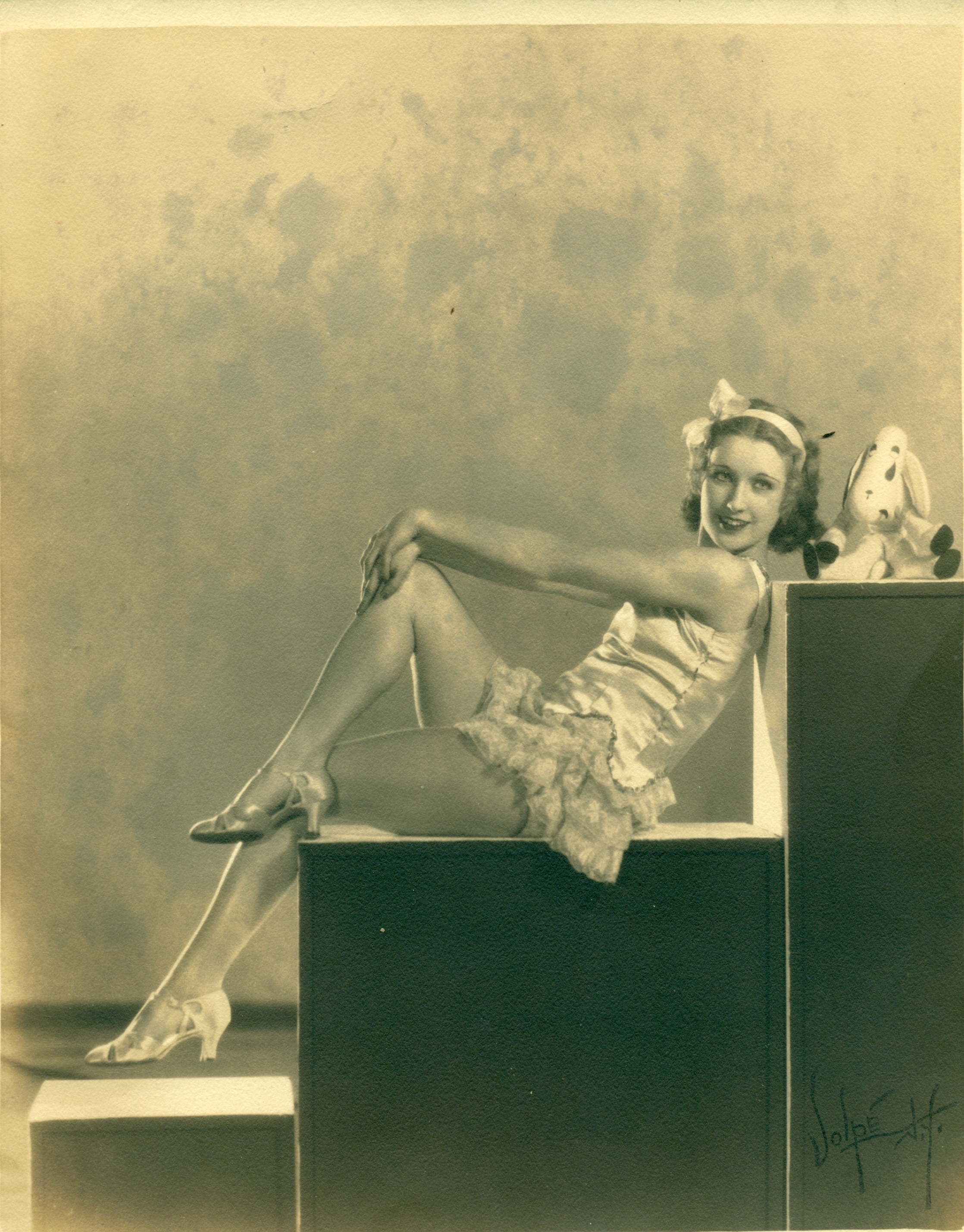
In an earlier era, when Chum flew in his air race, and Helen danced in Rio at the Copacabana, there were no camcorders or Iphones. His signature landing and Helen’s near disastrous opening night grew silent as the applause subsided, then faded in time. Much like my brother and myself in 1964, they lived life forward, one opportunity at a time.

Silent photos and written records are all that remain verifying Chum’s aerial dash through darkened skies, and Helen’s energetic dance routines. They lived life forward, embracing events as they unfolded–experienced once, then gone. I would love to see footage of Chum’s Waco airplane lifting off at dusk, or watch Helen spring across the stage. But those wishes are pipe dreams, never to happen. No vintage film or recording, (except one I found by accident) exist in the historic record. The best I can do for myself, and for readers, is try to recreate the magic of the first time around in the pages of my River of January.

Oh, by the way, I’ve never seen “Davy Crockett at the Alamo.”

ImageGail Chumbley is the author of the memoir, River of January. Also available on Kindle.