In order to be clearly understood one must write.
G Chumbley
In order to be clearly understood one must write.
G Chumbley

“For the Benefit and Enjoyment of the People.”
I’m finishing up the last of a series of Presidential talks, closing with an examination of the life of Theodore Roosevelt, our 26th President. TR’s formative years involved a great deal of outdoor activity, pursuing what he called the Strenuous Life. And that life dramatically shaped his later terms of office. Next to George Washington and Abraham Lincoln, subjects of previous presentations, TR might be one of most thoroughly decent chief executives in the series.
Theodore Roosevelt liked to hunt, a lot. As a boy, while on holiday, floating the Nile, young “Teedie” bagged literally hundred of birds, picking them off along the riverbank. Toting a new shot gun, a gift from his father, and a new pair of glasses, he combed the grasses along the ancient river searching for winged prey. Back on board the family’s rented houseboat, he promptly performed amateur taxidermy on his take, as bewildered Egyptian servants and crewman stood silently by, watching. The finished collection eventually went on display in young Roosevelt’s own natural history museum, located on the top floor of the family’s elegant Manhattan home.
As a young adult, Roosevelt tracked countless paths through forested mountains, the prairies, and even the Great Plains, shooting and crating home countless pelts and game trophies. TR climbed the Matterhorn on his honeymoon, returning to Long Island rowing and sailing near his home at Sagamore Hill. The Roosevelt fortune made for comfortable, and convenient travels.
However, TR, through his innate sense of fair play came to a more enlightened conclusion, scrutinizing the inequity of his privileged lifestyle. In 1903, after a two-week trek into Yellowstone National Park, America’s first park, President Roosevelt was requested to make remarks to a small crowd of local Montanans. He agreed and took the opportunity to extoll his new democratic philosophy of America’s natural wonders. TR told listeners that day:
“The only way that the people as a whole can secure to themselves and their children the enjoyment in perpetuity of what the Yellowstone Park has to give is by assuming the ownership in the name of the nation and by jealously safeguarding and preserving the scenery, the forests, and the wild creatures . . . the Park is simply being kept in the interest of all of us, so that every one may have the chance to see its wonders
with ease and comfort at the minimum of expense. This pleasure, moreover, can under such conditions be kept for all who have the love of adventure and the hardihood
to take advantage of it . . .”
This world-traveling aristocrat spoke of the essential equality of America’s public lands–open places tourists can all savor equally, rich or poor. Grasping the finite dimensions of land and wildlife, TR changed his earlier approach to hunting and camping. He came to embrace a classless ideology to accessing our mutual bounty. In spite of his famous name, wealth, and public prominence, President Roosevelt realized that natural wonders were meant to inspire us all.
Gail Chumbley is the author of the two-part memoir, River of January and River of January: Figure Eight. Available at http://www.river-of-january.com and at Amazon.com
We were in the midst of text book adoption some years ago when an unexpected snag brought the process to a halt.
The Social Studies Departments across our district were asked to pilot an array of textbooks for the Fall of 1994. Publishers had generously provided sample texts, and we spent hours previewing different titles, passing our preferences to our District Social Studies Coordinator.
Government teachers decided, unanimously, that they would replace their current text with the newer edition of the book they had used for some years. To a person, instructors agreed to readopt Magruders American Government; a trusty standard, and the hands-down favorite of most 12th grade teachers across the country. Our staff had ready-made units, lessons, speakers, ancillary materials,, film clips, debate resolutions, etc . . . only requiring the newer book with updated factual information. And their decision appeared to be resolved.
But in the last phase, presentation for final adoption, the Board of Trustees suddenly slammed on the brakes, visibly unhappy with the choice.
Magruders, as a tradition, had placed a photo of the current first lady inside the first page of their textbook. The old copies may have still been of Mamie Eisenhower by the tattered condition of the old copies. But no longer. The inside photo of this new edition featured First Lady, Hillary Rodham Clinton, and board members, reactionaries to the core, lost their minds.
I taught AP American History at that same time, and thought nothing of reordering Thomas Bailey’s American Pageant, another classic. We had used this text for some time, but needed an updated edition, too. However, in light of the fiasco over Magruders, I too, found my text in the crosshairs.
Wearing an understanding, sympathetic expression the district coordinator said I had to prepare a defense of my book, too. And it wasn’t that I minded touting the virtues of the book, I liked Pageant a lot, but I did mind the time lost in preparing my classroom work. Plus, it was so annoying that we all had to jump for the Board because Mrs. Clinton had the audacity to be the new First Lady.
I supposed, fair was fair, if one book was attacked for fallacious reasons, attack the rest-a convenient diversion to camouflage the real aim of thought suppression.
The central thrust is that Trump era of intolerance had been in the making for quite some years. The irrational politics of 2016 was clearly hardening across the nation years earlier. From School Boards, to City Halls, to library districts, restriction of free thought was under assault.
Nothing pisses off the far right more than a rational challenge from open-minded, articulate, and educated thinkers.
Gail Chumbley is a retired history educator, and author of the two-part memoir River of January, and River of January: Figure Eight.
gailchumbley@gmail.com
This is a reprint of an earlier post.

It’s been uncomfortable to watch the media coverage from Louisiana about the removal of General Robert E Lee’s statue in New Orleans. As a life-long student of the Civil War the idea of removing reminders of our nation’s past somehow feels misguided. At the same time, with a strong background in African American history, I fully grasp the righteous indignation of having to see that relic where I live and work. Robert E. Lee’s prominence as the Confederate commander, and the South’s aim to make war rather than risk Yankee abolitionism places the General right in the crosshairs of modern sensibilities. Still, appropriating the past to wage modern political warfare feels equally amiss.
Robert Edward Lee was a consummate gentlemen, a Virginia Cavalier of the highest order. So reserved and deliberate in his career was Lee, that he is one of the few cadets who graduated West Point without a single demerit. Married to a descendent of George and Martha Washington, Mary Anna Randolph Custis, Lee added stature to his already esteemed pedigree. (The Lee-Custis Mansion, “Arlington House” is situated at the top of Arlington National Cemetery. And yes, this General was a slave holder, however he appears to have found the institution distasteful).
When hostilities opened in April of 1861, the War Department tapped Lee first to lead Union forces, so prized were his leadership qualities. But the General declined, stating he could never fire a gun in anger against his fellow countryman, meaning Virginians.
On the battlefield Lee was tough to whip, but he also wasn’t perfect, despite his army’s thinking him so. Eventually, after four years of bloody fighting, low on fighting men and supplies–facing insurmountable odds against General Grant, the Confederate Commander surrendered at Appomattox Courthouse, Virginia.
Meeting Lee face-to-face for the first time to negotiate surrender terms, Ulysses Grant became a little star-struck himself in the presence of the General, blurting out something about seeing Lee once during the Mexican War.
After speaking with General Grant, in a letter addressed to his surrendering troops Lee instructed, By the terms of the agreement Officers and men can return to their homes. . .
But Robert E. Lee’s story doesn’t end there.
Despite outraged Northern cries to arrest and jail all Confederate leaders, no one had the nerve to apprehend Lee. And that’s saying a lot considering the hysteria following Lincoln’s assassination, and assassin John Wilkes Booth’s Southern roots. The former general remained a free man, taking an administrative position at Washington College, now Washington and Lee University, in Lexington, Virginia. It was in Lexington that exhausted Lee died in 1870, and was buried.
Robert E. Lee led by example, consciously moving on with his life after the surrender at Appomattox. He had performed his duty, as he saw it, and when it was no longer feasible, acquiesced. He was a man of honor. And from what I have learned regarding General Lee, he would have no problem with the removal of a statue he never wanted. Moreover, I don’t believe he would have any patience with the vulgar extremists usurping his name and reputation for their hateful agenda.
This current controversy isn’t about Robert E Lee at all. It’s about America in 2017.
Gail Chumbley is the author of the two part memoir, River of January and River of January: Figure Eight. Also available on Amazon.
A repost from 2016.

We all know the story.
On a mild April night, President and Mary Lincoln attended the final performance of the popular comedy, “Our American Cousin,” at Ford’s Theater. Lincoln, by all accounts was in a light, blissful mood. A week earlier Confederate forces commanded by Robert E. Lee had surrendered at Appomattox Courthouse, Virginia, and except for some dust ups, the Civil War had ceased. We also know that John Wilkes Booth, and fellow conspirators plotted to kill, not only the President, but the whole order of presidential succession; Vice President Andrew Johnson, Secretary of State William Seward, etc . . . but only Booth followed through with that night’s mayhem.
Andrew Johnson took office in a whirlwind of shifting circumstances. In the year up to President Lincoln’s death a notable power struggle had taken shape between the President and Congress. America had never before endured a civil war, and the path to reunion had never been trod. As President, Lincoln believed the power to restore the Union lay in the executive branch—through presidential pardon. But an emerging faction in the Republican Party, called the Radicals saw the issue differently. These men operated from the premise that the Confederate States had indeed left the Union—committed political suicide at secession—and had to petition Congress for readmission. (Congress approves statehood). And this new president, Andrew Johnson, was determined to follow through with Lincoln’s policies.
Unfortunately, Johnson was by temperament nothing like Abraham Lincoln. Where Lincoln had a capacity to understand the views of his opponents, and utilize humor and political savvy, Johnson could not. Of prickly character, Andrew Johnson entered the White House possessed by deeply-held rancor against both the South’s Planter Class, and newly freed blacks.
This new Chief Executive intended to restore the Union through the use of pardons, then govern through his strict interpretation of the Constitution. Johnson had no use for Radical Republicans, nor their extreme pieces of legislation. Every bill passed through the House and Senate found a veto waiting at Johnson’s desk, including the 1866 Civil Rights Act, and the adoption of the Freedmen’s Bureau.
Congress consistently overrode Johnson’s vetoes.
Reconstruction began in a vicious power struggle. And much of the tumult came from Andrew Johnson’s inability to grasp the transformation Civil War had brought to America. While the new president aimed to keep government limited, the Radicals and their supporters knew the bloody struggle had to mean something more—America had fundamentally changed. Nearly 700,000 Americans dead, the emancipation of slavery, the murder of Father Abraham, and a “New Birth of Freedom” had heralded a seismic change.
But Johnson was blind to this reality, seeing only an overreaching Congress, (google the Tenure of Office Act) and Constitutional amendments that had gone too far. And so it was a rigid and stubborn Andrew Johnson who eventually found himself impeached by a fed-up House of Representatives. Johnson only holding on to his broken presidency by a single Senate vote.
There have been other eras in America’s past that fomented rapid change. The Revolution to the Constitutional period, the First World War into American isolationism, and the Vietnam War stirring up protest and rapid social change. These moments all concluded with reactionary-leaning presidencies. No less transpired with the 2016 election of Donald Trump.
2008 to 2016 witnessed social change of a new order. Administered by America’s first African-American President, liberty stretched further bringing about change to Americans secretly oppressed.
Gay marriage became the law of the land, upheld by the Supreme Court in the landmark decision Obergefell V Hodges.
The trans community found a champion in Bruce, now Caitlin Jenner.
Health care became available to those trapped in grinding poverty and preexisting conditions.
Undocumented young people were transformed into “Dreamers.”
And though he didn’t ‘take yer guns,’ President Obama did successfully direct the mission to nab Osama bin Laden, America’s most wanted man.
So when former students began sending horrified texts to me, their old history teacher on election night, 2016, I provided the only explanation history offered. The Obama years instituted rapid changes that the reactionary right could not stomach. (And yes, racism is certainly the most evident part of the equation).
So now we deal with a Donald Trump presidency. But, Mr. Trump would be wise to acknowledge and accept what transpired through the Obama years. The stubborn truth about expanding the ‘blessings of liberty,’ is that no one is willing to give them back. When push comes to shove, the new president may find himself facing the fate of Andrew Johnson.
Update. The overturning of Roe was not merely an outrage, but folly of the highest order.
Gail Chumbley is the author of River of January and River of January: Figure Eight. Also on Amazon.
Sharing wonder.
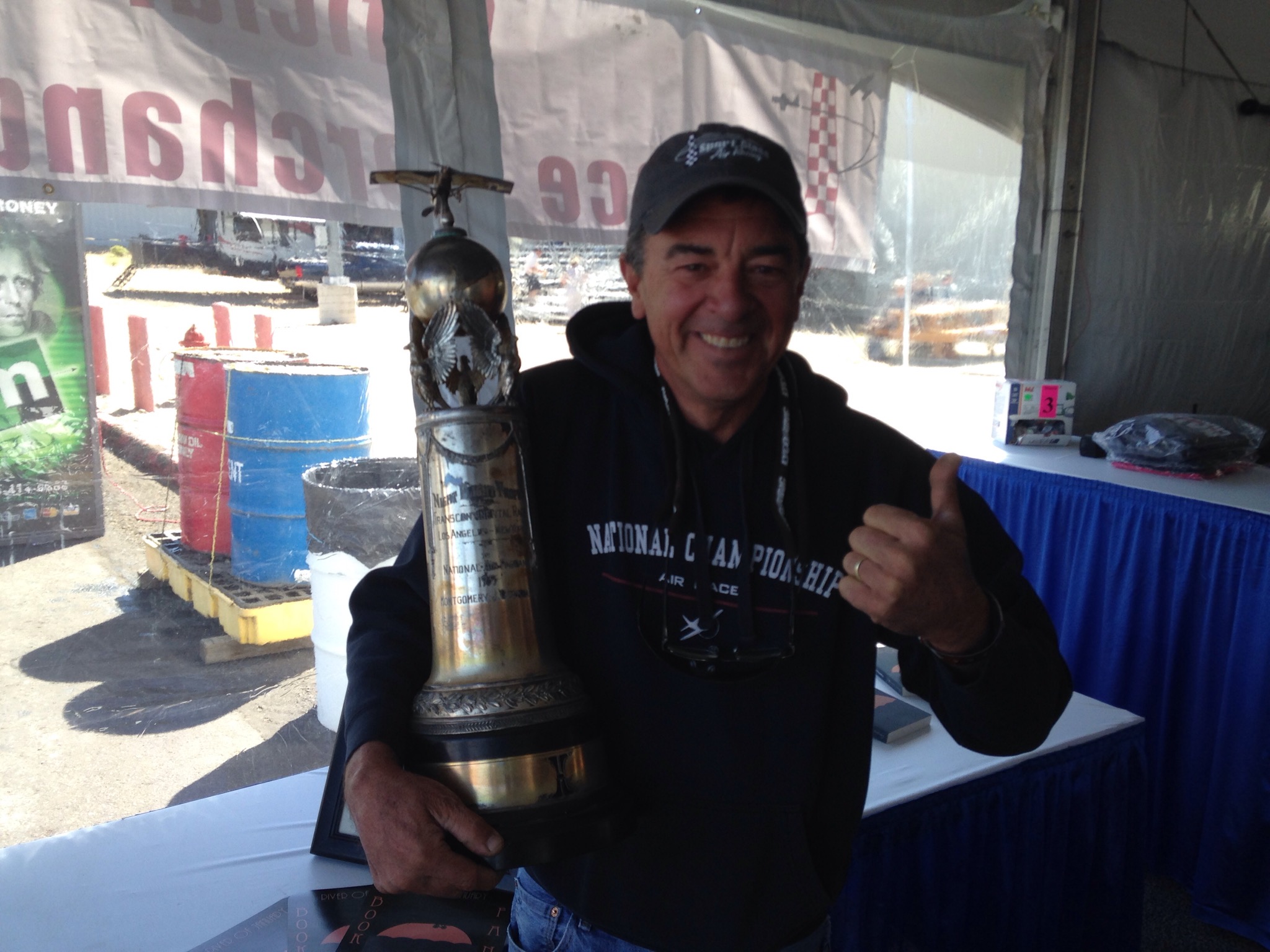
A visitor with the “Darkness Derby” trophy
Reno is situated in a golden bowl below mountains that separate Nevada from California. This enormous basin pulsates with life; upscale strip malls, flashy casinos, and relentless traffic following endless suburban growth.
To the north, off the beltway circling the “Biggest Little City,” sits Stead, Nevada, a locale clearly not touched by the same affluence as the rest of the region. A boarded up Catholic church, a Title-I elementary school and a Job Corps Center secured behind a grim, chain link fence, indicate that the very poor live world’s away from the prosperous south.
But at the end of this impoverished section of road, the world changes. Parachutists drift overhead in swatches of white, zigzagging through a deep blue autumn sky. Aircraft of every model and engine size wait, tied down on the asphalt, wing to wing. Vintage bi-planes, silvery jets, oddly shaped…
View original post 629 more words

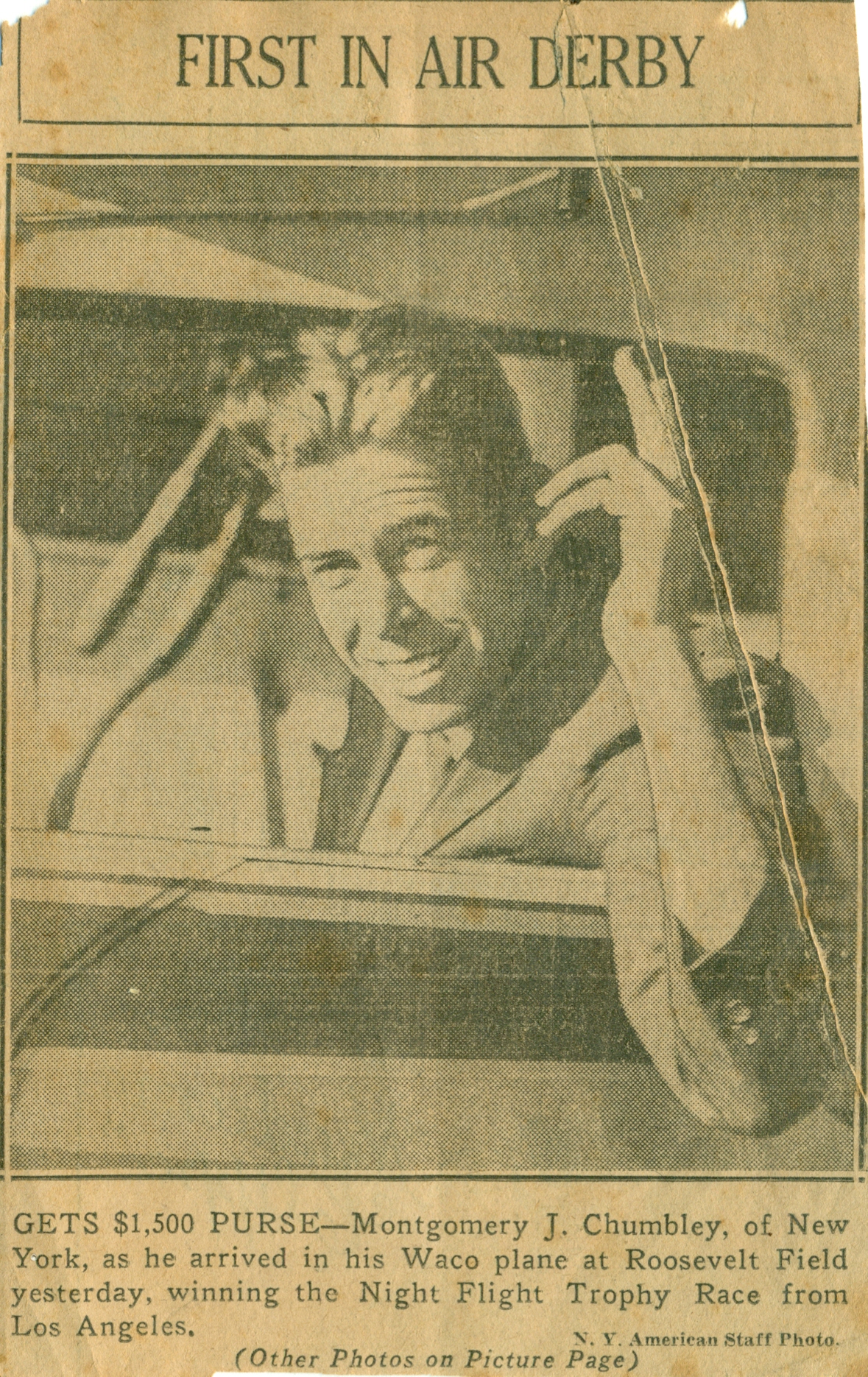
Sure he was far behind, Mont Chumbley pushed his Waco Cabin C through the night sky. Fresh from the Navy, the young aviator found himself wondering why in the world he’d agreed to enter this “Darkness Derby” competition in the first place.
Called “Chum” by his friends at Roosevelt Field, the pilot had begun a civilian career out of a Western Aircraft Company (Waco) hangar near Mineola, Long Island. Transporting press photographers and reporters to breaking news locations, plus teaching flight to the rich and famous, including Jaqueline Cochrane and Kathryn Hepburn, he found his niche. A 1933 flight to a horse track in Maryland set Chum’s course for the night race he now anxiously questioned.
Richard Ross, a financier who held a seat on the New York Stock Exchange, was the horse fancier who hired Chum. Ross needed a quick hop to Harve De Grace Track outside Baltimore, Maryland for a horse he had going on the afternoon card. Extremely impressed by the young pilot’s skill, (Chum landed his Waco in the track’s infield) Ross soon offered to pay for modifications to Chum’s Waco if the flyer would agree to enter the transcontinental Darkness Derby. Considering $1,500 in prize money that could really help him out, the young aviator agreed to enter.
Chum set off on September 29th, heading west, flying cross-country to his final destination—Glendale California’s Grand Central Terminal, the starting point for the air race.
Seeded second in a slate of seven planes, positions rated by horsepower and speed, Chum lifted into the growing dusk on October 1, 1933. Guided by a compass and tracking a full moon, the determined young pilot found conditions perfect, the clear night air permitting his Waco a smooth passage.
Before takeoff, Chum studied his competitors, becoming familiar with the pilots and aircraft he had to beat. Merle Nelson of Los Angeles flew a Stinson Cabin powered by a 200 hp Lycoming engine, and looked tough. Frank Bowman of El Paso, Texas in his 90 hp Lycoming engine Monocoupe appeared to be a contender as well. His own Waco Cabin purred with a 210 hp Continental engine, and Chum knew he could open it up to over 130 miles an hour, if necessary.
The moon as his guide, the Mojave Desert illuminated below, the little Waco pushed onward. Setting the aircraft down in Albuquerque, the pilot dutifully checked in with the ground judges, and then hurried to re-fuel. Making small talk with the teenager servicing his plane, Chum was told someone else had already landed and gone. Panic stricken, he cut the conversation short, and returned to the air as fast as he could. It was now that he pushed that plane full bore, resolved to catch up and beat any opponent.
At 9:37am, Mont Chumbley taxied onto the ground in Wichita, completing the first leg of the race in 12 hours and 17 minutes. There had been no other plane, at least not in this race. The kid in Albuquerque had been wrong. Four hours later Nelson arrived, and three other planes still in contention lagged far behind. Following a bit of rest at the field, then carefully inspecting the soundness of his equipment, the derby leader once again rolled down the runway, lifting off into the eastern sky.
Following another quick stop in Indianapolis to check in and fuel his Waco, the pilot learned he still held on to the lead. Satisfied, he returned to the darkness, fairly certain of a pending victory. However, that assurance evaporated when layers of cloud-cover compounded with darkness convinced the pilot that he had become utterly lost. Pushing on, buffeted about by worsening conditions, Chum began to worry he was squandering valuable time. Wracking his brains for deliverance, his aviator eyes suddenly spotted a break in the thick swirling mist. Not hesitating a moment, the Waco slipped through the hole that fortune had sent his way.
Underneath, clearly defined in the infinite blackness beamed a tiny, dim light. One. Chum decided to take his chances and try to figure out where he was. The landing didn’t go well. In swells of bumps, the Virginia farm boy realized his wheels were pounding on furrows of newly cleared fields. Drawing closer to that isolated light, Chum made out the side of a house, with an extended porch. Someone had to be inside.
He rapped on the weathered door, and waited. Sounds of scraping and thumping grew louder until the door opened revealing an equally weathered farmer, and his disheveled wife holding a candle. Chum smiled through the entryway, and in a friendly voice explained his dilemma. The farmer stared a moment, measuring the stranger’s sincerity, then decided to let him in.
As the wife poked the coals in the wood stove, and reached for the coffee pot, the farmer spread out maps on the table. Chum soon learned he had landed in western Pennsylvania, and wasn’t too far off course. Profoundly relieved, the young man stuffed cake in his mouth, downed a cup of coffee, and in a rush of heart-felt thanks again bumped over the dark fields back into the sky.
The darkness soon transformed to early morning, and Chum wondered again where his fellow competitors were located. He knew he hadn’t lost too much time with his unexpected stop, but still fretted, uncertain about the status of the other flyers. Worried about the constant cloud cover that didn’t want to clear, he decided, as a last resort, he’d head out over the Atlantic, look for another break, and duck through. But once again luck smiled, and in the perfect light of morning, a providential clearing appeared and Chum took advantage.
On October 4, 1933 Montgomery Chumbley landed on Roosevelt Field #2, seeming the winner of the 2006 miles long Darkness Derby. However, judges and spectators rushed the plane, arms waving, and clipboards flashing to warn him he’d landed on the wrong strip! Shutting down his plane would have meant disqualification. Without a pause, Chum quickly taxied to Field #1, then turned off his engine, and in 24 hours, 12 minutes (two added for the last minute taxi) won the transcontinental air race.
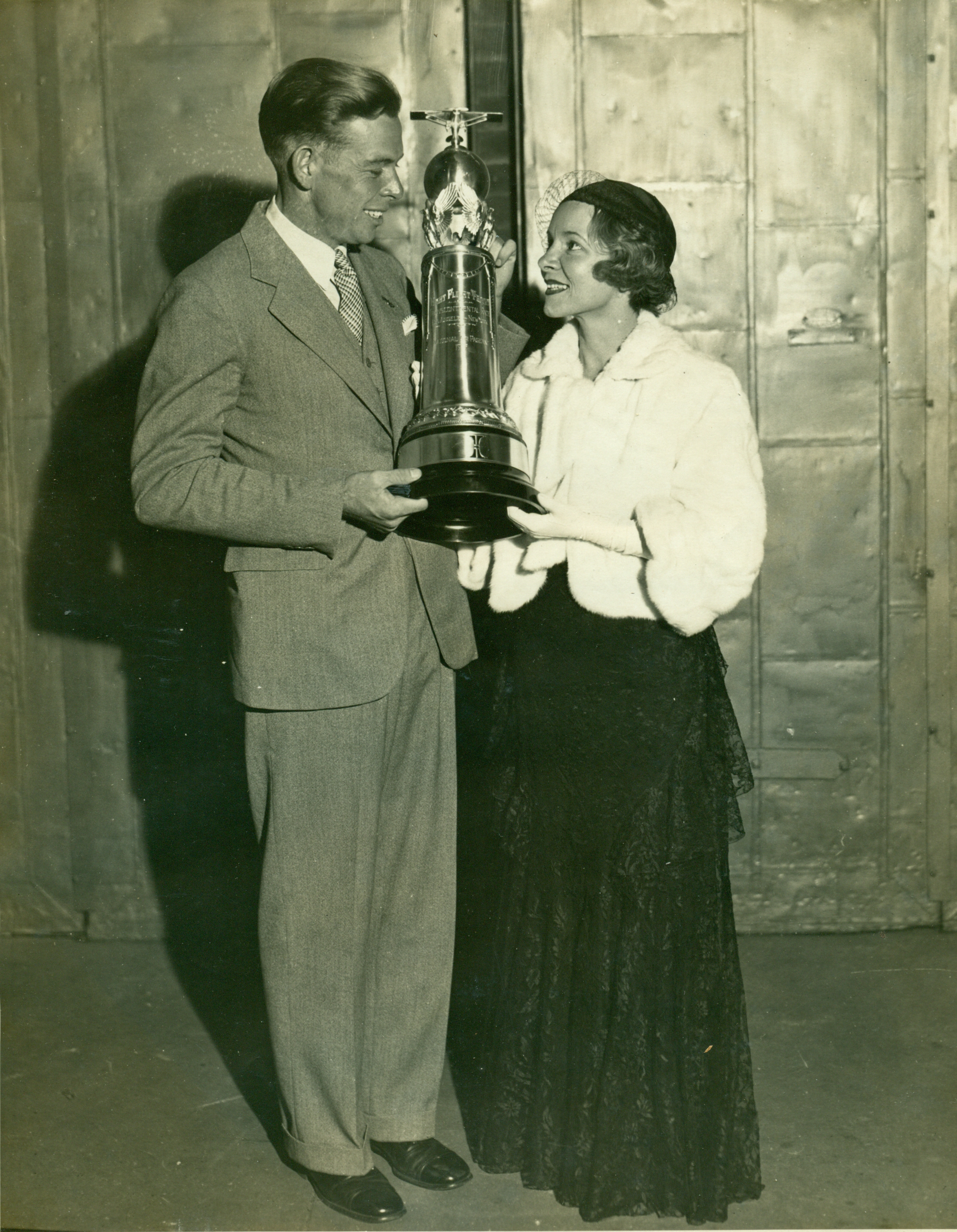
The competition had been set as a preliminary event leading to Roosevelt Field’s National Air Pageant. The widely lauded landing launched the festivities planned for the rest of the week, including an exhibition by German stunt pilot, Ernst Udet. Mrs. Eleanor Roosevelt chaired the pageant, with proceeds earmarked for her charities, and Warner Brothers shared by premiering their newest film “Night Flight,” starring Helen Hayes and Clark Gable. On the evening of October 5, in a theater filled with flyers, Miss Hayes presented Chum with a trophy and his winnings, before screening the film. (Merle Nelson received $750 for second place, and Bowman $500 for coming in third.)
As for Chum in the days and weeks after the race? He became a minor New York celebrity, with aspiring students and eager press lining up for his flying services. In 1934 Waco hired him sending him to Rio de Janeiro to sell equipment to the Brazilian, and Argentine air ministries. By the time the Night Flight winner returned to the States in 1936, Mont Chumbley was the most prolific overseas salesman Waco employed.
Gail Chumbley is the author of “River of January,” a memoir. Look for “River of January: Figure Eight” out in November, 2016. Visit “River’s: home page at http://www.river-of-january.com.
Below is a letter that I recently sent to the Idaho Senate. The upper house of the legislature was considering a bill to provide vouchers for private education. My thoughts centered on the role public schools play in ensuring an American identity.
Good Morning,
My name is Gail Chumbley, and I am a retired teacher now living in Garden Valley. Those of us who spent our careers working with children know we always remain teachers, and why I write to you this morning.
Public schools were established in early America as a place where children learned the tools of literacy; reading, writing, and computing numbers. The thinking behind these first American schools was to prepare contributing members of society, insurance for the continuity of the community. Enlightened self-interest guided public instruction, confident that the future rested in good, capable hands.
During the 19th and 20th Centuries schools spread across the growing nation to continue investing in the future, and curriculums added more courses that created citizenship. History provided a sense of belonging and common cause, while Civics added the structure of the political system, explaining the “how” of active participation. Students pledged the flag, sang patriotic songs, and shared in the remarkable story of our shared experiment in self-government.
Today this common foundation of America is crumbling. With so many choices for education, a crazy quilt of competing curriculums, home schooling, online classes, magnet schools, alternative schools, and private schools increasingly fray the fibers of our shared American experience. And this morning you have the option to approve another blow to all of us , vouchers for private schools.
HB590 has threatened not only legal problems, but ethical issues which concern not only our State but our Nation’s unity. Public schools have historically provided a vital link for students; our children find more that bind them together, than tear them apart. The growing exclusivity of “choice,” has had a dire outcome socially and economically.
As educators of America’s past have recognized, our kids deserve to learn what holds them together as a people, and in that understanding ensure Idaho’s and America’s future are left in steady hands.
Please vote no on HB590
Sincerely,
Gail Chumbley
Gail Chumbley is the author of the two-part memoir “River of January,” and “River of January: Figure Eight. Available at http://www.river-of-january, and at Amazon.com

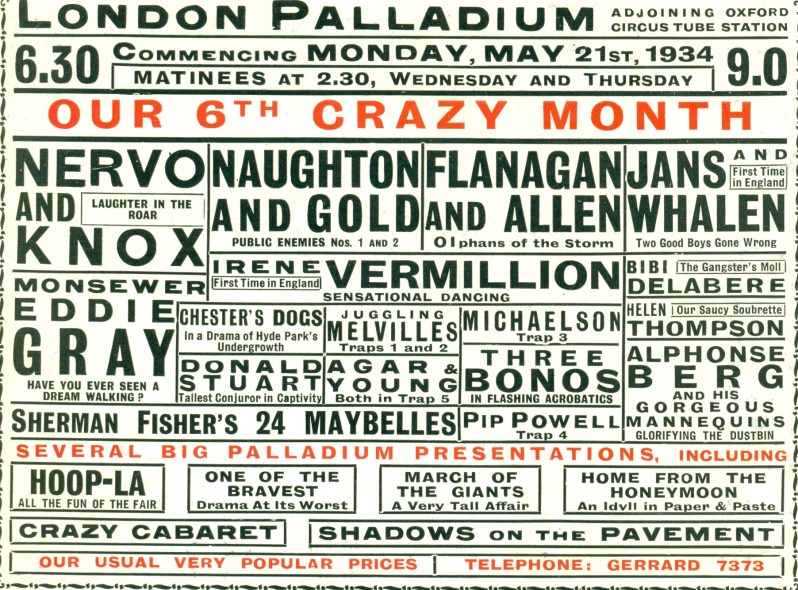
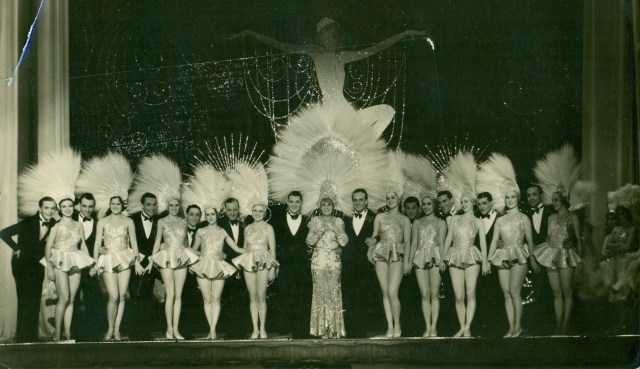
Dear Mother,
I hope that you aren’t too cross with me. We won’t be
gone long, and I will be home very soon. The three of us are
back in the lineup. Jans and Whalen play toreadors in the
opening number, and I am in a black and white feather
costume complete with white boots. The outfits are very snazzy.
We sing the show’s theme song, “Come Round London with
Me,” then “God Save the King.” We had to rehearse them
both, and the audience stands up and sings along when “God
Save the King” begins. Can you believe it?
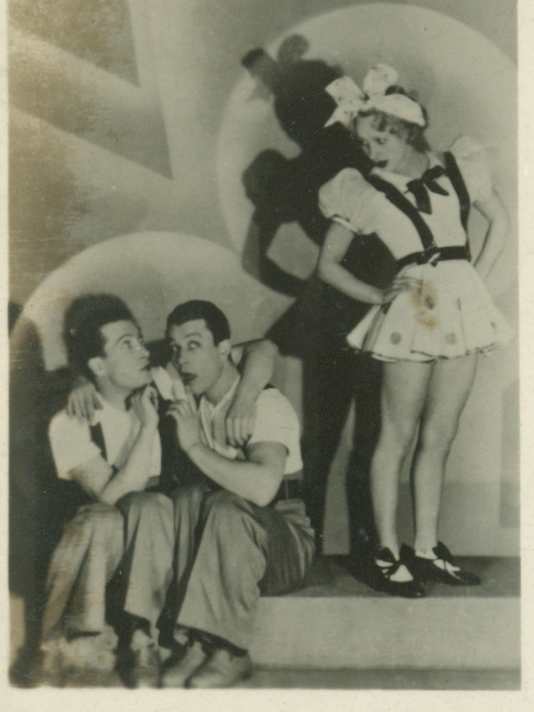
Jans and I finally are doing our own skit. I wear my tap
shoes, a short flared skirt with suspenders and a huge pink bow
in my hair. On cue I timidly step to center stage (everyone can
hear each tap). Under the spotlight Jans, says “Did you come
out to sing a song for the nice people?”
I point to my throat and croak out “l-a- r-y- n-g- i-t- i-s.”
Jans answers, “Oh, that’s a shame we all were looking
forward to your number.”
I lean over and whisper into Jans’ ear. Jans then says
loudly “You want to whisper the words to me, and I sing the
song? Yes, yes, a grand idea! I would love to!” He announces
“This song is called “Where on Earth could all the Fairies
Be?”
I whisper in his ear, he sings a line, next whisper, he sings,
and then Jans finishes, arms opened wide belting the out the
refrain, “Where on Earth could all the Fairies Be?”
A spotlight quickly hits Jimmy Naughton, (he’s a Brit)
planted up in the balcony who calls out in an effeminate voice,
“Oh, my, where aren’t they?” The lights cut to black and the
crowd roars with laughter. Cute, huh?

Gail Chumbley is the author of the two-part memoir, River of January and River of January: Figure Eight.
Available at http://www.river-of-january.com and on Amazon.com
The visuals seemed odd.
While researching my first book, River of January, I discovered that Helen, a professionally trained dancer, and central figure in the memoir, performed with a professional troupe in the opera, Faust. The 1932 engagement, in Erba, Italy had been booked back in New York through the William Morris Agency before the girls set sail.
What hung me up was Satan needing backup dancers, and I wrote the episode in that spirit. Grand jetes’ and Beelzebub made strange stage partners.
Then, out of nowhere, I heard the opera played on NPR–specifically the ballet piece, composed by Charles Gounod. Listening to the music piqued my interest in finding video footage of the ballet. And I got lucky thanks to YouTube. Below is a clip of the ballet with a central character, Marguerite, Faust’s love, who has taken vows in a convent. And the dancing is beautiful.
It is lovely.
Helen (lower left) and her mementos from the performance in Erba, September, 1932
Gail Chumbley is the author of the two-part memoir, River of January and River of January: Figure Eight, available at www.river-of-january, and also available on Amazon.com