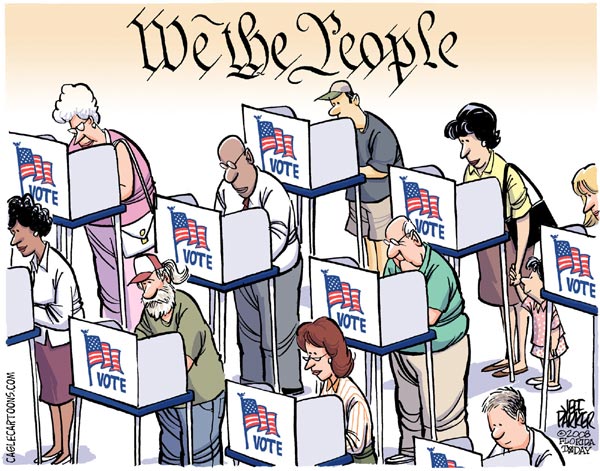
Elections belong to the people. It’s their decision.
Abraham Lincoln
From 1790 to now, American midterm elections have functioned as an effective gauge of public opinion.
Despite southern secession, and the subsequent war of rebellion, President Lincoln viewed national elections as the indispensable foundation of a free government. There were dissenting voices calling for cancellation of the 1862 midterms due to the war, but Lincoln did not hold to that.
After two years in office, Lincoln needed to know where he stood with the people. The Republican Party kept majorities in Congress, but a significant shift among unhappy voters surfaced.
Democrats (those still in the Union) picked up 27 seats in the House. Though the Senate did remain in Republican hands, Lincoln understood the first two years of war had cost him plenty. Bloody defeats on the field of battle at Bull Run, the Peninsular Campaign, plus the massive casualties at Antietam had cost his administration.
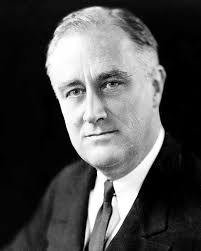
In the Twentieth Century, the bi-election in 1934 delivered a powerful message of support to Franklin Roosevelt and his administration. Not only did the public approve of his New Deal, they added nine more members to the House majority, and an additional nine to the Senate. Clearly Roosevelt’s economic measures had grown in popularity across the stricken nation. Conversely, by 1938, Democrats lost 72 House seats with 81 gains for the GOP. FDR took those results to heart changing course on some of his policies.
Harry Truman, FDR’s successor inherited a more divided America. The Democrats had enjoyed nearly fourteen years in power, but Truman’s presidency faced a shifting change. In the midterm election of 1946 the GOP secured majorities in both the House and the Senate. Fifty-five seats changed hands in the lower chamber, and seated twelve more in the Senate. The public did not view Harry Truman in the same light as his predecessor.
There are other illustrative bi-elections to examine. For example, 1982, where the Democrats picked up 26 seats in the House, and seven in the Senate after two years of the Reagan Administration. And in 1994 Newt Gingrich’s “Contract With America,” where the GOP picked up 54 House seats, and eights seats in the Senate. With that majority, Republicans worked to undermine the Clinton Administration.
The midterms do act as a barometer of America’s political winds. A great deal is to be learned by analyzing voter turnout and the winners and losers. Political Parties can find where they stand with the people, and adjust accordingly.
In that light this last 2022 midterm spoke volumes as well. In a most unlikely scenario, where inflation and high gas prices, plus low poll numbers for our sitting president, the public rejected the GOP’s crazy MAGA’s. Yes a hand full of seats did shift the House, but barely. The former guy has clearly worn out his welcome, and voters have had enough of that sideshow.
That he and his followers are oblivious to the temperament of the people makes no difference. The numbers don’t lie.
If this half-dozen, or so reelected extremists believe they have a mandate from the American people they are seriously mistaken. For next the two years the country will be forced to watch the same tiresome, noisy political antics they rejected at the polls.
You all are going to overplay your hands, and sink your party.
Don’t believe me? Just ask Newt Gingrich. He’s out of office and has time for your call.
Gail Chumbley is the author of the two-part memoir “River of January,” and “River of January: Figure Eight.” Chumbley has also penned two historical plays, “Clay” on the life of statesman, Henry Clay, and “Wolf By The Ears,” an exploration of racism and slavery in America.

 Gail Chumbley