Partly The Mob

sept291931

The room was hot, and humid, but the old man would not turn on the air. He said that it cost too much money.  The fact that this was Miami and July made no difference,that ancient swamp cooler remained silent in the living room window. To emphasize his granite determination to deny Florida Power and Light an extra penny, Chum dressed each morning in long pants, a belt, and a long sleeve shirt, cuffs buttoned. Mont Chumbley did not project the South Beach image favored by the city’s Chamber of Commerce.

However his strict rules of economy were cast aside the summer I flew down to record his story. And I do mean record, as in tape recorded interviews which lasted, in all, five days. And when I needed quiet the most (for quality purposes,) he decided to switch on that neglected, thundering swamp cooler, providing a Phil Specter-esque ‘wall of sound’ which muffled his fascinating story.

We were both nervous. I hadn’t been married to his son long, and my husband hadn’t come along on this trip. It was just the two of us: new father-in-law talking with new daughter-in-law. But I couldn’t let the awkwardness get in the way, I had traveled three time zones to get the story, and we had to soldier on despite our mutual jitters.

I hit record on the tape player, and immediately he began anxiously whacking a nearby phone book with a pencil. We now had a beat to the swamp cooler’s roar. And he did that for my comfort. How courteous.

I tried to play back the sessions right away to transcribe the contents. It’s safe to say that deciphering his voice from the background clatter grew to be a problem. Imagine the musical “Stomp,” with people trying to converse over crashing trashcan lids.

After a couple of days of this fidgeting he settled down, and to be completely honest, I did too. Chum even forgot to turn on the air once or twice. And his story in aviation began to unfold, carrying us away from noisy appliances; to days before there were such things as air conditioners–to the skies of another era.

Wow.

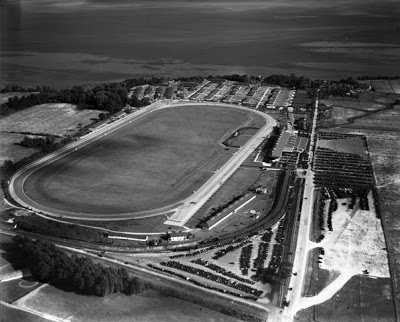
One story that made it into the book tells of his hair raising landing on the infield of a Maryland horse track. Later I had to hit the replay button a half dozen times to get the name right, listening hard to his phonetic pronunciation, buried beneath screeching layers of white noise. Shaped by his Virginia drawl, I deciphered, Har-Day-Graw.

I typed HardayGraw into a search engine. “Do you mean Havre de Grace?” quickly popped up . Hmm. Well, I guess I do. Maybe.

Lo and behold, Havre de Grace was a horse racing track between Washington DC and Philadelphia, tucked into the Maryland countryside. The web site indicated that this track evolved as a joint venture, owned partly by the town of the same name, and partly by the mob.

Partly by the Mob? Are you serious? And everybody knew? I had to look a little deeper.

Apparently in an agreement with the Governor of Maryland, and a former congressman, in a partnership with mobster, Arnold Rothstein, Havre de Grace came to life. And this was no small time nag fest, either. Among the thoroughbreds who graced, Havre de Grace were legends, Man ‘o War, his son, War Admiral, and the indomitable, Seabiscuit, You can’t make this stuff up.

That week in hot, sticky Miami has grown into one of the most pivotal of my life. I felt like Wendy clasping Peter’s hand for her flight to Neverland. But in my case Chum piloted the yoke to “Yesteryearland.”

This Havre de Grace anecdote, with Arnold Rothstein, and a hair raising unauthorized landing from the sky, merged with many, many other episodic rivulets that flowed into this fascinating river of narrative. This “River of January.”

Gail Chumbley is the author of the memoir, River of January

#riverofjanuary

The Great Silver Fleet

The Silver Fleet in a Golden Age!

gail chumbley's avatarGail Chumbley

The Great Silver Fleet

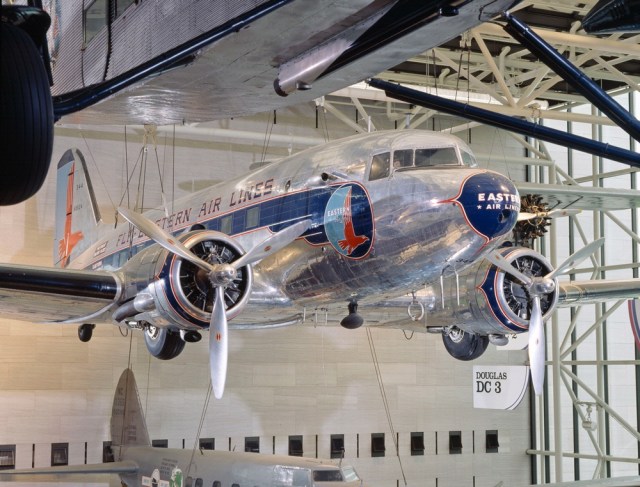
This photo is a DC3, part of Eastern Airlines “Great Silver Fleet” of passenger liners. The plane is on display in the Air and Space Museum at the Smithsonian. We had suspected that Chum had flown this aircraft, but weren’t quite certain. Finally, I had the chance to look over his logbooks and matched the tail number to this plane. Chum captained this particular aircraft in February, 1946, six months after the war ended. If you find yourself on the National Mall, you can duck into the Air and Space, where you’ll find this beauty still on exhibit.

View original post

I Couldn’t Help Myself

c&hrio0001

River of January

This wasn’t my idea. The completion of River of January has been as much a surprise to me as to anyone. I never presumed to be any kind of writer, ever. In fact, I spent my entire career as an American History teacher who told stories, not wrote them. But when River of January came into my life, the story took root, soon dogging my every step. Forget the fact that I didn’t know how to write, or understand the first thing about publishing–River of January made it clear that those deficiencies were my problem.

This project flowed into motion after meeting and coming to admire my story’s central figure. Mont Chumbley, one of two major characters in the River of January, was a real flesh-and-blood man full of irresistible charm. He was also my father-in-law, and as such generously shared hours of gripping storytelling, regaling tales of his fascinating life. His personal anecdotes exquisitely depicted the golden age of aviation, leaving me humbled and honored—in awe of his singular and astonishing career. Delightful episodes included flyers, Amelia Earhart and Howard Hughes, among many other colorful characters that populated Roosevelt Field. Chum became my own Peter Pan, guiding me on a magical journey to an America full of promise and opportunity.

Next a treasure trove of Chumbley memorabilia surfaced that verified his stories. This archive touched not only his life, but that of his wife, Helen Thompson Chumbley. An accomplished dancer, Helen preserved every memento related to her equally remarkable career. Steamship tags, playbills, performance reviews, baggage stickers, and photos of an eager, happy girl costumed in an array of attire for stage productions or film sets. Helen too, aimed to preserve her accomplishments saving pictures, lists of business contacts, and letters home to her mother–all depicting a clear narrative of Helen’s own artistic path. Her passport, for example tells of extended junkets to Europe in 1932, London, 1934, and Brazil in 1936. All journeys illustrated with glossies, more letters home, and snapshots of a young dancer having the time of her life.

Their lives unfolded before me only to shift and refocus with each new piece of evidence. This composition grew so immense that only one book became impossible. Inevitably I had to find a fitting close, and then resume the tale in a second volume. Chum’s early years, for example, required a deeper examination of the aviation industry; complete with the serious obstacles he met attaining his wings. It also became crucial to explore the larger story of America, understanding the national barriers Chum overcame to see through his goals.

The same hurdles held true for Helen. Readers had to be reminded that the decades presented in River of January were years of careless economic boom followed by a devastating bust, leaving her path that much more daunting. Moreover, her mother required financial support in an era with no Social Security or Medicare. The burden fell completely on young Helen and her sister. With talent and fortitude, Helen’s grit loomed large in this story, tinged by a real fear of devastating consequences.

This author had formidable obstacles to overcome, too. The most profound drawback, the greatest obstruction–I had absolutely no idea how to write– not in any vibrant or intimate style. If the truth be told, creating River of January felt much like building a car while driving it down the street. River’s first drafts were so awkward and flat, that my first editor fired me as a lost cause. Mortified, I wanted to crawl under my bed, and never write again. And worse, I couldn’t disagree with this editor because I honestly had no idea what I was doing. Still, the book didn’t care. River wasn’t interested in my shortcomings, and the story refused to go away. Despite feeling an amateur fool, I bravely soldiered on.

Every family has a story waiting to be unveiled. In this instance the flow of narrative arrived from three directions. First, and most significantly, was my marriage to Chad Chumbley, the eldest son of Mont and Helen Chumbley. It was he who initially conveyed there was a tale to tell. With what little Chad knew of his father’s career and his mother’s accomplishments, my husband was certain of an epic waiting to appear.

The abundance of primary documents sealed my fate as my in-laws biographer. And again, though I didn’t recognize the forces at work, sifting through each item from that vast collection boosted the project forward. And this couple saved EVERYTHING! Air show tickets, menus from European eateries, pressed flowers, telegrams, his logbook!

By 2005 we coaxed Chum to come west and take up residence in an assisted living facility. He soon became the most popular, most charming tenant in the place. And it was in his room, 18 months later that we sadly attended his death. A mighty Virginia pine had fallen, and the era of his extraordinary life died with him. For me, that could not stand—Chum’s story deserved to be remembered, and no one else was going to see that job through. Nor could Helen be forgotten. Her qualities of greatness cast as large a shadow as her husband’s. I had no choice but to ignore my doubts and get to work piecing together their lives–from youth to marriage.

Not all members of the family were keen with my project. And I am sensitive to their concerns. But, Chum and Helen lead such astonishing lives, and achieved such great accomplishments, that I decided to forge ahead and make River of January a reality.

Horizons

I was waiting for a flight to Portland yesterday, at the airport.  Watching my surroundings at the gate, I began to muse about the flight aspect of my book, River of January.  In the narrative, Chum left the Navy in 1933 finding there were only a handful of disparate companies that handled air cargo.  These businesses had  tried their hand at passenger travel in the 20’s, but costly overhead expenses put an end to that option.

Then Congress stepped in, underwriting airmail flights, and consolidating routes, that ended in the creation of the Federal Aviation Administration by the late 1950’s.  Travel after that boost, was best characterized by glamor and style.  People enjoyed spacious seating, formal dining on small white tablecloths, glass plates and silverware.  The food was fresh and hot–served by attentive stewardesses.

Now, I watch an over sized middle aged biker, sporting a wormy little ponytail pounding a pinball machine in an alcove.  He is clad in a loose, black t-shirt with the sleeves cut off, and his jeans riding on his butt crack.  Another woman is chattering loudly on her cell phone with great enthusiasm.  She’s clearly an open, affable lady.  Most of the other few folks booked on this flight are eating cold food, purchased from overpriced vendors dotted beyond the security gate.  The area feels more like a bus depot.

Then abruptly, out of the floor to ceiling windows, a small canary yellow biplane soars across the glass, piloted by a loan aviator.

It’s nice to know that for some, like Mont Chumbley, the wonder of flight has remained timeless.