New Name Same Party

Unknown-1.jpeg

On Twitter, Senator Ted Cruz, R-Texas, and Congressman Louis Gohmert, R-Texas have been been busy disseminating political fiction.

Both have tweeted on the Democratic Party as the perpetrators of the Civil War, racism, and other misleading accusations.

Were these two guilty of sleeping through their history classes, or purposefully spreading propaganda to other former classroom snoozers? 

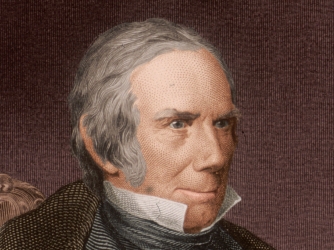
The Democratic Party evolved from Thomas Jefferson’s opposition to the US Constitution. Jefferson had been abroad during the Constitutional Convention and upon his return quickly made his objections known. A planter and slave master, this “natural aristocrat” resisted any higher form of government that checked his own authority.

Jefferson rejected the notion that a distant power knew better than he, the master of Monticello. He favored a small, disinterested government that coordinated foreign affairs, trade, and not much more. Men such as himself could better govern localities than any distant political power.

As America’s third president, Jefferson envisioned a Republic of “farmers,” like himself, running their own fiefdoms across the continent. (That is until he bought Louisiana, where he stretched the Constitution plenty).

That’s about it. That was the essence of the 18th, and early 19th Century philosophy supporting the Democratic Party. Oh, and the party shuffled names over that time, as well, though never wavering from the belief that local government served democracy best.

First, called Antifederalists, for opposing the Constitution, then Jeffersonian-Republicans, opposing Hamilton’s Federalists. Later, after the War of 1812, the name became Democratic-Republicans, then simply Democrats under Andrew Jackson. Still the philosophy endured; curb centralized economic, and other domestic investments and maintain local control.

The late 20th Century’s Civil Rights movement and the Vietnam War brought about yet another rebranding of the party. Ronald Reagan’s election moved the Solid South from Democratic to Republican.

Reagan’s famously asserted that big government wasn’t the solution, but the problem. And that suited former southern Democrats just fine. Less government, less in taxes, and more local control. Relaxing economic regulations, and starving domestic programs rounded out the 1980 agenda. 

When Ted Cruz and Louis Gohmert spout off on the villainy of the Democratic Party, don’t be fooled. Remember that these sons of the South embrace the same old Jeffersonian ideology today, neatly packaged under the now-eroding GOP.  

Gail Chumbley is the author of the two-part memoir, “River of January,” and “River of January: Figure Eight.” Both titles are available on Kindle.

gailchumbley@gmail.com
He Wrote for the Ages

images.jpeg

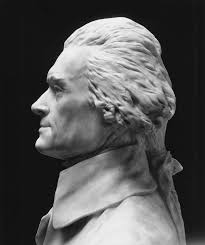
For starters, I am not a fan of Thomas Jefferson. In fact, the more I know of this founding father, the less I like him. The Sage of Monticello routinely had young male slaves beaten for no better reason than custom, and lay the foundation for secession in 1798 with his Kentucky Resolution.

Thaddeus Kosciuszko, the Polish hero of the Revolutionary War, once offered to liquidate land holdings in the Northwest Territory to pay Jefferson to free some of his slaves, and Jefferson declined. Disillusioned, Kosciuszko condemned Jefferson as a fraud for once insisting “all men were created equal,” and not practicing that “truth.”

However, the reality remains that Jefferson did indeed, pen those words, and generations of Jeffersonian disciples have insisted those words are enough to maintain his venerated place in American history.

And I agree. His adulators are correct. Jefferson’s words are enough. His phrasing, painstakingly composed in 1776 has ignited the world on the ultimate quest to actualize Jefferson’s “unalienable” assertions. 

Abraham Lincoln took Jefferson’s sentiment to heart, and his devotion moved Lincoln to action. The foundation of the Republican Party rested partly upon removing artificial impediments restraining upward mobility, and Lincoln believed slavery such an obstacle, the most malignant bar to individual betterment. (Duh). In 1859 he stated in a speech, “We proposed to give all a chance; and we expected the weak to grow stronger, the ignorant, wiser; and all better.” And Lincoln made it his aim to realize that betterment, first with Emancipation, then the 13th Amendment.

There could be no better description for America than a people steadily discarding artificial barriers. Women, Native Americans, LGBTQ Americans, Latino Americans: all of us freed to reach our highest potential. Annoying bigotry places a drag on the process, but justice still manages to surge steadily on, inspired by the words of the Declaration of Independence–Jefferson’s words. 

In reality, Jefferson had meant to argue white wealthy Colonials were of equal standing to Great Britain’s landed aristocracy. Despite his original intent, the promise of those words have outlived that specific moment. 

Understandably, Thaddeus Kosciuszko gave up in the face of Jefferson’s outrageous duplicity. And this generation of fanatics desperately promote Jefferson’s original racism. But, kids, we have inherited an obligation to continue this journey, not only for ourselves but to light the way for our children’s children.

Gail Chumbley is the author of the World War Two-era memoir “River of January,” and “River of January: Figure Eight.” Both are available on Kindle, and hard copies at http://www.river-of-january.com

gailchumbley@gmail.com


A Reasonable Man

Henry-Clay-9250385-1-raw-res-AB.jpeg

The Senator visualized a clear future for America; a nation of groomed roadways, busy canals, sturdy bridges, and mighty iron railways. He believed America, in order to mature into a truly great nation, required the best in structural innovation. Despite his noble intentions, this practical statesman faced an insurmountable barrier impeding his work–Andrew Jackson.

Henry Clay first arrived in Washington City as a green Kentucky Congressman in 1803. Serving in the House for three years, Clay eventually moved over to the Senate, appointed by the Kentucky legislature to fill an unexpected vacancy.

Early in his legislative career young Clay committed his fair share of blunders. A fierce booster for war in 1812, Clay worked with other young ‘ War Hawks,’ who favored this second brawl against Great Britain. However, by the end of that conflict, Clay realized this do-over against England had generated nothing of real substance.

Fully embracing this epiphany, the young Senator turned his efforts to building America from within. Clay devised a long-range program of development he called The American System. Components of his plan were three-fold: a strong protective tariff to nurture America’s fledgling industrial base, a Second Bank of the United States to administer federal funds, that in turn would underwrite his ‘internal improvements,” (infrastructure projects). For Henry Clay this three-tiered plan would provide the solid foundation a mighty nation-state needed to prosper. And the Senator enthusiastically advanced his crusade in the spirit of a secular evangelical.

Henry Clay’s progressive program found considerable support among his fellow legislators, so much so, The American System seemed on the brink success. 

Unfortunately for Clay, a dashing war hero rose to thwart his vision. Tennessean, Andrew Jackson, the victor of New Orleans, among other military escapades had set his sights on becoming president.

In the beginning Clay thought little of the uneducated, volatile militiaman, believing voters would not take this uncouth hellion seriously. But Clay misread public sentiment. Jackson’s popularity soared among all classes, particularly among poor whites. Jackson successfully won not only a first term, but enjoyed reelection four years later.

Most ominous for Henry Clay, this formidable president did not like him, not one little bit.

Very quickly Congressional appetite for public works dissolved. New Jacksonian supporters filled the House, and to a lesser degree the Senate, leaving Clay hard pressed to pass any of his program. In fact, Jackson made fast work on Clay’s earlier successes by killing the Second Bank of the US, and vetoing countless internal improvement projects. The only portion of the American System Jackson defended was the Tariff, and merely because a separate Jackson enemy threatened to ignore the law.

Henry Clay found himself fighting tooth and nail for every economic belief he championed. And the harder he pushed, the harder the mercurial man in the (White House) blocked him. 

The intractable issue of slavery soon dwarfed all other political and economic conflicts. Clay, a slave owner himself, preached gradual emancipation, finding enemies in both the North and South. Northerners hated him because he was a slave owner, and Southerners because he believed in emancipation. This guy couldn’t win.

Sadly, Senator Henry Clay did not live to see his American System become a reality. But there is a silver lining to this tale. Abraham Lincoln, a staunch Clay-ite shepherded passage of the Pacific Railways Act, the Morrill Act, and a National Banking Act through Congress. These three laws built the Transcontinental Railroad, Land Grant Universities in the west, and funding the Union war effort in the Civil War.

Oh, and Clay’s desire to emancipate slaves became a reality in 1863.

The moral of the story transcends time: America stalls when irrational politics displaces thoughtful, reasonable policies and the legislators who promote them.

Note-I have co-authored a new play celebrating the life of this remarkable, essential American simply titled “Clay.”

Gail Chumbley is the author of the two-part memoir, River of January and River of January: Figure Eight. Both are available on Kindle. Gail is the author of two stage plays, “Clay,” and “Wolf By The Ears.”

gailchumbley@gmail.com

New Birth of Freedom

th

We all know the story.

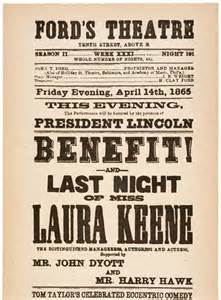
On a mild April night, President and Mary Lincoln attended the final performance of the popular comedy, “Our American Cousin,” at Ford’s Theater. Lincoln, by all accounts was in a light, blissful mood. A week earlier Confederate forces commanded by Robert E. Lee had surrendered at Appomattox Courthouse, Virginia, and except for some dust ups, the Civil War had ceased. We also know that John Wilkes Booth, and fellow conspirators plotted to kill, not only the President, but the whole order of presidential succession; Vice President Andrew Johnson, Secretary of State William Seward, etc . . . but only Booth followed through with that night’s violence.

Andrew Johnson took office in a whirlwind of shifting circumstances. In the year up to President Lincoln’s death a notable power struggle had taken shape between the President and Congress. America had never before endured a civil war, and the path to reunion had never been trod. As President, Lincoln believed the power to restore the Union lay in the executive branch—through presidential pardon. But an emerging faction in the Republican Party, called the Radicals saw the issue differently. These men operated from the premise that the Confederate States had indeed left the Union—committed political suicide at secession—and had to petition Congress for readmission. (Congress approves statehood). And this new president, Andrew Johnson, was determined to follow through with Lincoln’s policies.

Unfortunately, Johnson was by temperament, nothing like Abraham Lincoln. Where Lincoln had a capacity to understand the views of his opponents, and utilize humor and political savvy, Johnson could not. Of prickly character, Andrew Johnson entered the White House possessed by deeply-held rancor against both the South’s Planter Class, and newly freed blacks. This new Chief Executive intended to restore the Union through the use of pardons, then govern through his strict interpretation of the Constitution. Johnson had no use for Radical Republicans, nor their extreme pieces of legislation. Every bill passed through the House and Senate found a veto waiting at Johnson’s desk, including the 1866 Civil Rights Act, and the adoption of the Freedmen’s Bureau. Congress promptly overrode Johnson’s vetoes.

Reconstruction began with a vicious power struggle. And much of the tumult came from Andrew Johnson’s inability to grasp the transformation Civil War had brought to America. While the new president aimed to keep government limited, the Radicals and their supporters knew the bloody struggle had to mean something more—America had fundamentally changed. Nearly 700,000 dead, the emancipation of slavery, the murder of Father Abraham, and a “New birth of Freedom” had heralded an earthquake of change.

But Johnson was blind to this reality, seeing only an overreaching Congress, (Tenure of Office Act) and Constitutional amendments that had gone too far. And so it was a rigid and stubborn Andrew Johnson who eventually found himself impeached by a fed-up House of Representatives. Johnson holding on to his broken presidency by a single Senate vote.


There have been other eras in America’s past that fomented rapid changes. The Revolution to the Constitutional period, the First World War into American isolation, the Vietnam War stirring up protest and social change. All concluding with reactionary presidencies. No less occurred with the 2016 election of Donald Trump.

2008 to 2016 witnessed social change of a new order. Administered by America’s first African-American President, Barack Obama, liberty reached further, bringing about change where once-closeted American’s hid. Gay marriage became the law of the land, upheld by the Supreme Court in Obergefell V Hodges. The trans community found their champion in Bruce, now Caitlin Jenner. Health care became available to those caught in relentless poverty and preexisting conditions. Undocumented young people were transformed into “Dreamers.” And though he didn’t take the Right’s guns, President Obama did successfully direct the mission to nab Osama bin Laden, America’s most wanted man.

So when former students began sending horrified texts to me, their old history teacher on election night, 2016, I gave the only explanation history provided. The Obama years introduced change to America that reactionaries could not stomach. (And yes, racism is certainly a large part of the equation).

So now we deal with a Donald Trump presidency. But, Mr. Trump would be wise to acknowledge and accept what has transpired in the last eight years. The thing about expanding the ‘blessings of liberty,’ is no one is willing to give them back. When push comes to shove, the new president may find himself facing the fate of Andrew Johnson.

Gail Chumbley is the author of River of January and River of January: Figure Eight. Also on Amazon.

The Outside World

My mom took a job in the early sixties with the US Postal Service. At first it was part-time, mostly needed at Christmas, but by 1966 she hired on full time. 

There were four kids, a house, and a yard, and Mom probably was pretty overwhelmed—something today I fully understand. For help my parents decided to host a student each term who attended a secretarial school in Spokane, called Kinman Business University. Lord knows what kind of credential awaited these young ladies after completion, but students did acquire skills such as shorthand, typing, filing, and other tasks.

The first girl who who came to stay with us was named Corrine. I can’t remember exactly the year, most likely around 1965 or 1966. I was in fourth grade. 

Corrine came to us from Alaska, and I remember she told me she was part Filipino or Native American, or both. I thought that pretty cool, Corrine to me symbolized the wonder of the outside world. 

Our house was constantly in a state of chaos, with quarrels, messes, a blaring TV, with people coming and going—chaos. But to walk into Corrine’s small quarters felt like a completely different world. All of her things were neatly stowed away, her bed carefully made, and the space even smelled differently than the rest of the house. I loved visiting her room, as it felt like an oasis of tranquility in a sea of crazy disarray. And it was in her little sanctuary that serene Corrine shared her life with me just a little.

A picture sat on her dresser of a boy. When I asked who he was, she told me his name was Ty, and that they planned on getting married in a few years. Married! I never knew a girl who had plans to get married! The only people I knew who were married were parents, and they were boring. 

He was called Ty, short for Tyrone, and he was visiting Spokane soon. Ty had received his draft notice and following basic training in the Army, he would ship out to a country called Vietnam. Corrine clearly missed him very much, and was anxious to see Ty before he flew to Southeast Asia.

My memories of his first visit are a little vague. I do recall that they sat on the couch in our living room and held hands in front of my parents. That moment struck me as fascinatingly real. 

Looking back I am sure that there were much deeper emotions at play, but whatever vibes filled the room zoomed over my 10-year-old radar.

And then Ty was gone.

The school term ended, and Corrine packed up most of her things and returned to Cordova for the summer. I’m not sure of the details or decisions, but she did return to us the next fall. Once again her room became that wonderful respite from the anarchy of the rest of the house. Ty’s picture again graced her dresser. 

Letters began to arrive to our house written on onion-skin parchment, marked AIR MAIL, bearing Corrine’s name. I’d never seen stationary like that, and she explained that was the cheapest way she and Ty could exchange letters. The paper was light blue, and felt like stiff tissue, but held its shape without creasing. Corrine had stacks of it, both fresh and received—the only sign of clutter in her neat little world.

Finally Ty came back to our house, and this visit was very different from the first meeting. The couple did not sit on the couch and hold hands. Not this time. My pre-teen sensibilities were shocked to see a grown man lying across her lap on the couch sobbing like his heart had broken. 

Poor Corrine! She, too, was dissolved in tears; red, puffy eyes behind her glasses. Ty couldn’t seem to help himself,  or compose himself, and he wouldn’t let go of her. The whole situation felt very surreal. I didn’t understand. How could this orderly girl, and her once orderly fiancé come apart like this, and in front of all of us?

That chapter occurred a very long time ago. My mother still worked, and there were other girls we housed. Still sweet Corrine and Ty live on in my memory as if only yesterday.

I grew up, went away to college, earned a degree in American History, becoming a teacher. 

For years and years I taught a unit on the Vietnam War to high school juniors. I recited the facts surrounding America’s entrance into that long, long, conflict. But in all my experience with those lesson plans, the veterans who visited my class describing their personal war, the analysis by historians we studied, nothing affected me more than the tragic transformation of that broken young man from Alaska.

Gail Chumbley is the author of the two-part memoir “River of January,” and “River of January: Figure Eight.”

Chumbley has also authored two stage plays, “Clay” on the life of Statesman Henry Clay, and “Wolf By The Ears” an exploration of American racism and slavery.

gailchumbley@gmail.com