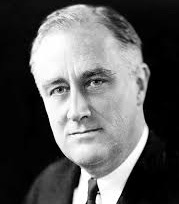
“No matter how long it may take us to overcome this premeditated invasion, the American people in their righteous might will win through to absolute victory.”
President Franklin D Roosevelt
“No matter how long it may take us to overcome this premeditated invasion, the American people in their righteous might will win through to absolute victory.”
President Franklin D Roosevelt

Religion in politics presumes all citizens essentially hold to the same beliefs. This premise also insists that religious conformity assures civic virtue and good order. However, in practice theocracies actually run counter to effective government because invoking God in public debate stymies any exchange of thoughts. Without a “free market of ideas,” our society cannot advance, condemning the nation to decline, (See Middle Ages).
The Constitution’s framers did not lightly pen any Article, Section, or Clause without study or debate, and that especially includes the later admission of the Bill of Rights. James Madison, in particular examined other government systems, from the Greek City States through the Age of Reason. What Madison discovered was politics combined with religion inevitably sows public conflict; damaging both political and religious institutions. Madison’s purposeful language in drafting the First Amendment, (free exercise and establishment clauses) signaled that the United States would not repeat those fruitless mistakes.
Lessons existed in America’s past as well. In Colonial New England Puritan dissenters, such as Roger Williams, and Anne Hutchinson publicly rejected mandatory church compliance. Williams, later exiled to Rhode Island, defended his religious principles writing,
Enforced uniformity confounds civil and religious liberty and denies the principles of Christianity and civility. No man shall be required to worship or maintain a worship against his will.
As the first Catholic-Presidential candidate, John F Kennedy later echoed the same idea stating,
. . .it is apparently necessary for me to state once again not what kind of church I believe in — for that should be important only to me — but what kind of America I believe in.
And that was the point. American citizens must choose to worship freely, or not. That is the essence of American liberty. Law cannot dictate conscience, as our individual thoughts are as unique as our finger prints.
Despite the secular legacy of American law, religious prerequisites still surface from one era to another. In the earliest years of the Republic a fervor of evangelism blazed hot, recognized today as the Second Great Awakening. Beginning around 1800, and lasting until the Civil War, endless, exhausting revivals criss-crossed the country.
Choosing a faith among many churches began early and today is an American tradition.
Loosely paralleling “The Age of (Andrew) Jackson,” politics followed a similar evangelicalism, giving every person a choice in both their faith and their vote. As Americans migrated west voting rights followed, extending to the lower classes. Increasing numbers of farmers and tradesmen could cast their ballots and follow their understanding of Jesus with the same passion.
Another unexpected outcome of the Second Great Awakening came in the form of countless spinoffs. Rural isolation cultivated a veritable Garden of Eden in new Protestant sects. For example William Miller of upstate New York forecasted the return of Christ as urgent and imminent. He, and his followers believed Jesus would reappear sometime between 1843-1844. After the dates passed with no rapture, the church regrouped becoming today’s Seventh Day Adventists.
Methodists dispatched “circuit riders” into America’s interior. Men like Peter Cartwright, the epitome of a frontier “stump speaker,” could preach the Word of God, while beating the hell out of any heckler.
Presbyterians split a couple of times before the Civil War. First regarding whether or not untrained missionaries could lead revivals, or only seminary-trained ministers. This controversy split churches and brought about schisms.
The most profound issue for Presbyterians and other denominations sprouted from the growing controversy over slavery. North of the Mason-Dixon Line believers felt their duty was to take action and cleanse America of this national sin. Southerners, however countered that God made no mistakes, and it was God who appointed masters, and placed the slaves beneath them. Rather a handy absolution, that. It took a war to change the politics of slavery, but churches first led the way.
Perhaps the best advice on separation of church and state came from Justice William O Douglas in the court’s ruling, Engel V Vitale, 1962.
“once government finances a religious exercise it inserts a divisive influence into our communities.”
Dictating conscience is a fools errand, and a liberated conscience is the essential foundation of America.
Oh, and Christian Nationalism is neither Christian nor national. Quite to the contrary, that brand of absolutism does not promote public virtue, nor good order, but does lead to national decline, (see Holy Roman Empire)
Gail Chumbley is a history educator, blogger, and author of the two-part memoir, “River of January,” and “River of January: Figure Eight. Both titles are available on Kindle. Chumbley has authored three stage plays, “Clay,” “Peer Review”, and Wolf ByTheEars.” examining America’s past and present.
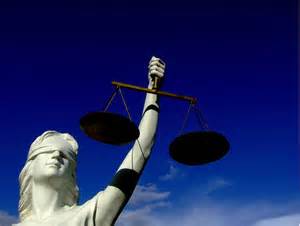
“Believing with you that religion is a matter which lies solely between man & his god, that he owes account to none other for his faith or his worship, that the legitimate powers of government reach actions only, and not opinions, I contemplate with sovereign reverence that act of the whole American people which declared that their legislature should make no law respecting an establishment of religion, or prohibiting the free exercise thereof, thus building a wall of separation between church and state.” Thomas Jefferson, January 1, 1802
President Jefferson did not mince his words. He drew a clear distinction between what is personal and sacred, and what remained secular and public. History had taught Jefferson that invoking the Almighty usually ended in bloody holy wars, rendering effective civil government unworkable. Of all the founders, President Jefferson grasped the importance of detaching faith from law.
If you follow my blog you already know I’m not a big fan of Jefferson. His actions, as well as his writings on race alone, provide a legacy of duplicitous thinking. For example the practice of beating young slaves daily was of no matter to the master of Monticello. But on the issue of natural rights, his Lockean take on the social contract– Jefferson’s views ring with authority.
This morning the Idaho Legislature killed a bill in committee that would “Add the Words,” (protecting the LGBT community) to the Human Rights Act in Idaho. Following three days of impassioned testimony from supporters and detractors, HB2 fell in a 13-4 vote. A significant amount of testimony came from various churches on both sides of the issue. The fearful tended toward the shrill, impassioned by their emotions. One fellow, in particular, ranted that his wife shouldn’t have to share a public bathroom with a transgender individual. He was so riled up the committee chair admonished him to control himself. His answer, “Well Praise the Lord.”
Now the Gay community in Idaho didn’t seek this fight. These folks have done their best get along in society. The term ‘closeted’ comes to mind here. The threat of eviction, job termination, and outright violence has demanded a covenant of silence. However, over time, the preponderance of social, economic, and political mistreatment has galvanized this movement for simple justice. These citizens have had enough. They ask for equal protection under the law in explicit, measurable language to deter the countless harms endured, that were so eloquently enumerated in this week’s testimony.
As a student of American History I understand this disconnect between contending factions. We are a nation founded under the tenants of the Enlightenment. Jefferson actually lifted John Locke’s language when he described ‘natural rights’ which he articulated as ‘certain unalienable rights.’ And at the same time America is one of the most religious nations in the world. Always has been. The trick is remembering to separate these two competing voices of law and of faith. Even my debate students were taught to keep God out of the tournaments. Once invoked, the open exchange of ideas is over. God has spoken.
For the longevity of the American Creed, our law makers must use their heads when shaping legislation. When kneeling to pray, worship with all of your heart. I do.
But please leave those competing, conflicting, diverse, religious convictions at the door of the halls of law. Contending voices achieve nothing but a counter productive cacophony of discord.
And next time . . . Add the Words.
Gail Chumbley is a retired history teacher and the author of the nonfiction work, River of January
 Gail Chumbley