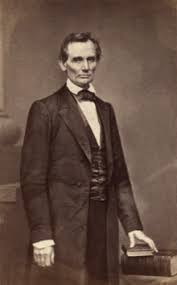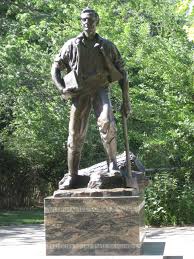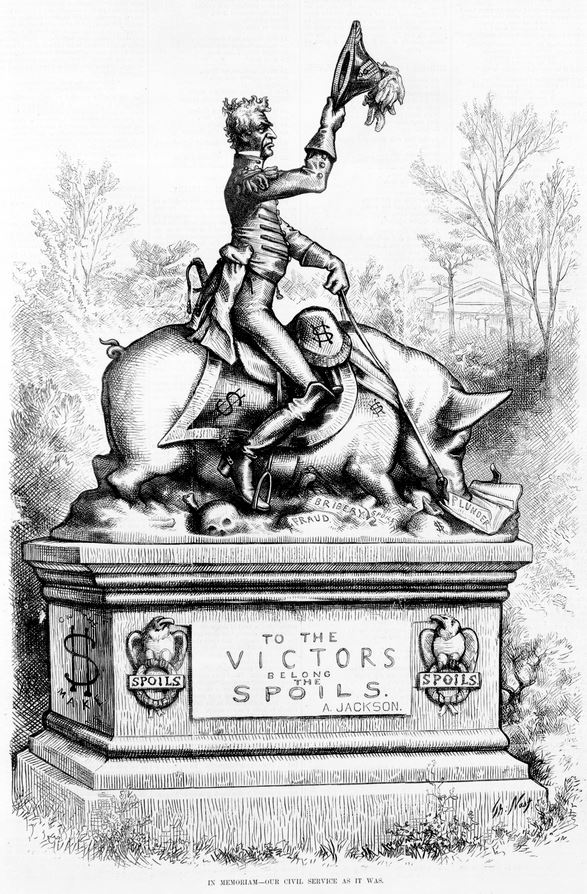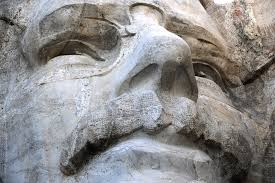
Peer Review #1

Marines manned numerous doorways along the wide hallway, as clusters of tourists wandered through colorful rooms. Upstairs the President listened to the public commotion with satisfaction, not for the house, not for the job, which, in truth, had become tiresome, but for the knowledge he could drop down and set all their bourgeois hearts aflutter. 

After a moment, he made his decision, slipping down an interior stair case, stepping into the Blue Room.

As his hands automatically fluffed his hair, the President sidled up beside a class of wiggly school children snapping cell phone pictures.

“And where are you from?,” the president teased with pleasure, anticipating an excited response. He half closed his eyes, and paused, waiting for the gratifying answer.

But he heard nothing.

Bemused, the President opened one eye, then the other. The chatty children paid him no mind, in fact were moving away, following their guide into the hallway.

“Wait,” he found himself calling. “It’s me, your President. I’m here.”

He repeated, “The President of the United States.”

But the children didn’t hear. He remained alone in the Blue Room, his hair acceptably coiffed.

No further tourists entered, though dozens drifted past the doorway. He didn’t understand and he thought very hard, seeking a rational explanation.

It was at that moment that he heard a voice, quite close, and quite annoyed. 

“Am I to understand you are a New Yorker?” 

The President wheeled around toward the sound. Before him, no more than an arm’s length away stood a mustachioed gentleman, wearing pinz nez spectacles, sporting a shiny top hat. The man’s eyes blazed behind the thick round lenses, and the astonished President detected a trickle of cold sweat trace down the back of his thick neck.

“I say, are you, or are you not, a New Yorker?” The stern man spoke in a nasally, patrician voice.

“Ahh. How did you get in here,” the President stammered. “Where is my secret service protection?”

“Supercilious pup,” the man in the top hat snapped. “They tell me that YOU are from New York, and are president! A common side show huckster, President.”

The President, though alarmed, replied reflexively, “I’m in real estate. I . . .made my fortune in New York real estate.” Only the muffled din of passing tourists kept the President from panic.

“Real Estate!” The man in spectacles scornfully shouted. “I’d say you are just another scoundrel from the wealthy criminal class. In New York, swindlers like you are a dime a dozen. I made a career of exposing rascals like you.” 

The man, attired in a three-piece suit, a watch fob draping his ample waist, bore a deep scowl. “And you found your way into this office of trust. Intolerable.”

Though bewildered, the President, unaccustomed to such personal insults, felt his pique rising. “I was elected President by the largest margin in American Hist . . .”

“Poppycock,” the specter interrupted. “It is my understanding the decision rested upon a mere tilt in the Electoral system, and that outsiders interfered to make certain of your victory.” 

The strange visitor moved closer. “I’d say that you are a compromised pawn of foreign meddlers, and give not one damn for the American people.”

At this point the President had heard enough, and attempted to move his legs. He wanted very much to escape the Blue Room, but his feet remained rooted. 

“I have important things to do, you need to go,” the President’s voice trembled, trying to sound more confident than he felt.

The apparition narrowed his intense eyes, and took another step toward the unnerved President. 

“I claim more authority to this revered House and Office than your mercenary greed could ever comprehend. You belong with Tweed, Plunkitt, Fisk, Conkling, and the rest of New York’s good-for-nothings. Dishonor has followed you to the Presidency, what, with your womanizing, graft, and unsavory business connections.” The fierce apparition fixed an intense, menacing gaze. “You do not belong here, nor your parade of lackeys and opportunists.

The buzz of foot traffic grew louder, and when the President again glanced toward his unwelcome visitor, he found him gone, the Blue Room empty.

Gail Chumbley is the author of the two-volume memoir, “River of January” and “River of January: Figure Eight,” both available on Kindle.

Hard copies are available at http://www.river-of-january.com
 

Worth Reading

I submitted this short note to my State Senator. Feel free to copy and send to yours.

This email is in regard to the library controversy. As an educator the notion of deciding what is acceptable portends bad things to follow. Using one incident of a child’s book isn’t a full picture. Not one of us read the same thing, and that is true for children. I shudder to contemplate legal censorship as a slippery slope to authoritarianism. I know the far right is attempting to control our community, and that should be enough of a red flag to stop this bill in its tracks. Our libraries are one of the last institutions that bind us together as Americans and Idahoans. To speak plainly the bill is just a bad idea and isn’t workable. If the titles under scrutiny become public, those books sell like hotcakes. It has been since the days of Lady Chatterly’s Lover, or currently The Absolutely True Diary of a Part-Time Indian by Sherman Alexi.

As stated by Isaac Asimov “Any book worth banning is a book worth reading.”

Sincerely,

Gail Chumbley

They Were Wrong

“Slave owners and white racists were afraid that the world they had always known was slipping away from them. Fear was a great motivator—fear of change, fear of losing power, fear being that they were wrong. The roots of white anxiety over threats to enslavement and to legalize white supremacy ran deep.”

John Meacham, And There was Light. Random House, 2022, page 55.

Reading this passage last night stunned me. A myriad of thoughts rushed at once, promptly crystallizing into one central truth; racial dynamics in America have not changed. Not. One. Bit.

Meacham’s book, a biography of Lincoln, focuses on the shaping events that made Lincoln arguably America’s greatest President. However, those same circumstances left the Southern slave power angry, and lethally dangerous. This metastasizing rancor ultimately exploded into Civil War, and to Lincoln’s 1865 murder.

The Missouri Compromise triggered the first alarm below the Mason-Dixon Line. That slavery could be limited through any federal legislative act left slavers touchy and suspicious. Sensitive to any criticism Southern owners  (as Mr. Meacham pointed out), viewed any outside opposition to their standing as a dishonorable insult.

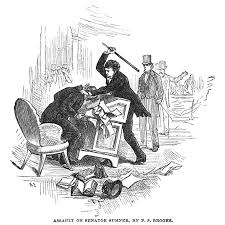
Congressmen and Senators frequently squared off years before soldiers manned battle lines. A Massachusetts Senator suffered a severe beating on the Senate floor for an anti-slavery address. So volatile became the rhetoric that the House chamber finally adopted a “gag rule” prohibiting any mention of slavery in any deliberations.

As Northern abolitionists grew more strident, Southerners grew more militant. A flash of arms became only a matter of time.

Any abolitionists tracts, or books, such as Uncle Tom’s Cabin quickly landed in the trash bin, tossed out by local Southern officials.

The politics of race entered houses of worship with church leaders twisting the Bible inside out to oppose or justify slavery. Today the Southern Methodist and Southern Baptists churches are evidence of the war before the war.

After the guns silenced, into the Reconstruction era the newly emancipated found protection only through Yankee bayonets. Outraged and unrepentant Southern whites waged guerrilla warfare with violence and terror. The Ku Klux Klan, the Knights of the White Camelia, and the White League galloped through the night spreading fear and intimidation to any black-man who dared claim the blessings of liberty. 

Contrasting the 21st Century to the 19th provides strikingly similar dynamics.

In 2008 Barack Obama became 44th President of the United States, and white power interests again lost their minds.

Though at first it appeared that America had turned a positive corner in race relations, Senator Mitch McConnell quickly reacted decreeing the GOP would not work with the new president. Soon after the Congressional Republicans sunsetted a clause in the 1965 Voting Rights Act. Signed into law by Lyndon Johnson, the act protected black voters from discrimination at the polls. McConnell’s handy work placed the onus on the voter to prove they were illegally denied. (Much like the old poll tax and literacy tests days.)

Once again white supremacist perceive their alpha-position slipping away, and they, too, are suspicious and lethally dangerous. The hate group names have changed, but not the mission. Proud Boys, Oath Keepers, neo-Nazi’s, MAGA, and Christian Nationalists gallop now through the internet on the dark web, surfacing to attack as was done on January 6th, 2021.

The signs are all there, fear of a changing America, fear of being wrong, and fearful of losing control.

Those who witnessed the dissolution of the Union believed their blood-soaked sacrifice had settled for all time the issue of race in America. But that is clearly false.

But then is now. Now is then. Eras are intricately and forever intertwined. This nation has remembered nothing and again defaulted to the same old norms of hate and boastful ignorance.

And though those same feelings run deep, and they are still wrong.

The only thing new in the world is the history you don’t know. Harry Truman

Chumbley is the author of the two-part memoir, River of January, and River of January: Figure Eight. She has penned two stage plays, “Clay,” exploring the life of Henry Clay, “Wolf By the Ears,” a study of racism in America, and “Peer Review,” where 47 is confronted by four past presidents.

Fighting Bees

Young Abraham Lincoln came of age, politically speaking, during the administration of Andrew Jackson. And the rough, aspiring frontier politician did not approve of the Democratic Party and their blind, cult-like dedication to “Old Hickory.” Speaking first in New Salem, Illinois, then in Springfield, Lincoln held forth on the subject of Jackson’s arbitrary and autocratic style compared to his man, Senator Henry Clay of Kentucky.

Young Mr. Lincoln viewed Henry Clay as a true statesman. He admired Senator Clay for his rational, stable economic plans to nurture a growing America bursting with potential.

Central to Clay’s program was a bank, a central depository to finance new infrastructure projects like roads, canals, and railroads. Senator Clay championed the Federal Government as the best instrument to plan and carry out public works, improving commercial activity across the young nation.

To Lincoln scratching out a life in a muddy, stump-ridden western wilderness, Clay’s American System of improvements was welcome. Clay’s platform would bring order, jobs, prosperity, and hope to Lincoln’s own rough-hewn region.

Young Lincoln also shared Clay’s conviction that slavery did not belong in new western territories. All Lincoln wanted was a fair chance for all Americans, and that slavery impeded human talent, and he believed, like Clay, that slavery also devalued free labor. Free market capitalism and slavery could not co-exist.

To Lincoln, President Jackson’s mercurial style of leadership did not serve America’s future either. Jackson not only vetoed many improvement bills, arguing one state benefiting from federal funds was unfair to others, he in one instance vetoed a road bill because the project lay entirely in Kentucky, Henry Clay’s home state.

Excessive emotional discord in politics caused more problems than it remedied, and impeded national growth. Nation building wasn’t a sectional competition, a personal challenge, nor a game to pit political egos.

At the time of Jackson a religious revival burned hot across the country. Known today as the Second Great Awakening this movement, foaming over with emotion, had drenched politics as well, with candidates often taking on an evangelical, absolute tones.

Lincoln’s once joked he didn’t much like these stump orators unless they looked like they were “fighting bees.” To Lincoln, such emotional public displays had no value in advancing America.

So what did Lincoln believe? In the founders ideals of the United States of America. Embracing presidents as religious, messianic manifestations had no purpose, and produced only the tainted fruit of extremism.

Lincoln was, above all else, a moderate, logical, and measured man. His inspiration, his convictions, centered on a secular faith in the ideals of America.

Mr. Lincoln like to think of the Declaration of Independence as a golden apple, (equality and rights) set in the silver frame of the Constitution (the law). In other words certain inalienable rights protected by We the People.

Former President Obama exemplified Lincoln’s America in so many ways; relying on his cabinet, advisors, or his own formidable intellect to govern. And Lincoln’s Jackson nightmare repeated when a dumber version of Old Hickory proclaimed America is a terrible place.

Today the United States’ perpetual election cycle keeps emotions raw, but accomplishes little else. Mr. Lincoln would take a dim view of today’s constant political turmoil, arguing that we need to keep our wits about us and vote with our heads.

More infrastructure needs attention as well as national security, civil rights, and climate change. Instead a thin-skinned ego maniac welcomes billionaires to pilfer and taint good government. And the computer age has presented a complicated network neither Lincoln nor Clay could have imagined. We rely on those cooler heads to prevail, making policy, and conducting the people’s business, or we end up paying homage to wannabe dictator who is as arbitrary as he is vacuous.

Today, at this moment, in a country full of pointless Jacksons, be a thoughtful Lincoln. There is no need to fight bees all of the time, over and over, when the real work of America needs to be done.

Gail Chumbley is the author of “River of January,” and “River of January: Figure Eight.” Chumbley also penned two stage plays, “Clay,” examining the life of Senator Henry Clay, and “Wolf By The Ears,” a study of racism and slavery in America. Currently Chumbley is working on “Peer Review.” This piece is a cross of Dickens A Christmas Carol converges with presidential history.

chumbleg.blog

A Letter

In my home state, Idaho, the legislature is considering a bill to approve vouchers for education. As a teacher, and student of history, I composed this letter of opposition to my state senator.

Dear Senator,

Abraham Lincoln struggled through a difficult childhood of hard physical labor and poverty. As a boy in Indiana, school was barely an option. There were ABC schools where Lincoln and other children learned rudimentary literacy. Sadly the teachers knew very little themselves making a real education a forlorn hope.

Childhood friends later reported that Abe’s head was always in a book. If he knew of other available books he would walk for miles to borrow from the community. Unfortunately Lincoln’s father, Thomas Lincoln, viewed reading as laziness, though his stepmother had sympathy for the boy’s self improvement.

As President, Lincoln promoted the Morrill Land Grant Act. This measure authorized establishing universities across the nation. The U of I is one such institution. 

And though he never lived to see the Act materialize, he firmly placed his imprint on American Education.

May we all commit to preserve our public schools and invest in Idaho’s future. 

Sincerely,

Gail Chumbley

“The philosophy of the in schoolroom in one generation will be the philosophy of government in the next.”  Abraham Lincoln.

Chumbley is the author of the two-part memoir, River of January and River of January: Figure Eight. She also has written two stage plays, Clay on the life of Henry Clay and Wold By The Ears examining racism and slavery.

There is nothing new in the world except the history you do not know. Harry Truman

A Mandate

Theodore Roosevelt endured a childhood haunted by ill health. Orphaned by age 15, Andrew Jackson struggled for survival in the Carolina back country. Born the first son of a second marriage, George Washington aspired to rise above his inferior social rank. Abraham Lincoln, a child of the frontier, transformed himself through sheer hard work, and perseverance.

Before they were men these four presidents encountered enormous obstacles in order to reach America’s highest office.

This is the topic of four programs I’m presenting this spring. The idea of exploring future presidents childhoods seemed an interesting approach to understanding the past. What I didn’t expect was the anxiety churned up researching Andrew Jackson. 

Rereading Chernow’s Washington A Life proved an enjoyable review. Washington was not perfect, and certainly a man of his time. But that he overcame his avarice and ambition makes Washington an affirming subject.

On Lincoln, Douglas Wilson’s Honor’s Voice did no less. The man’s goodness, compassion, and intelligence came directly from overcoming his rustic beginnings. The Rise of Theodore Roosevelt, by Edmund Wilson, plumbs the depths of Roosevelt’s chronic childhood illnesses, and the directive from his father to overcome his frail body through exercise and sports. 

Then there is Andrew Jackson. 

HW Brands work, Andrew Jackson His Life and Times, is an oldie but goody; a book I enjoyed a lot. But that was before Donald Trump. Picking up Andrew Jackson, American Lion has been an ordeal. Jon Meacham describes a man who honestly believed he alone could save America by consolidating all power in the White House. Only Jackson spoke for the people, not Congress and certainly not the Courts. And the most distressing element? The Seventh President got away with his autocratic coup because voters let him. 

How does his childhood figure into his administration? Jackson never had limits. The early demise of his family, left the boy unsupervised in the backcountry, shuttled from one relative to the next. Somehow his rootless beginnings left in Jackson a volatile temperament of him against the world. 

The General murdered scores of Native Americans, and brought home a Creek boy he’d made an orphan. Brutality and tenderness, compassion and racism, love or hate. 

For Jackson all issues of state were personal, and loyalty the foundation of all his relationships. In that vein Trump resembles Jackson, plus the vile racism. 

What separates Andrew Jackson from Trump is a numbers game. President Jackson, for better or worse did win 55.5% of the popular vote in 1828, 54.2% in 1832. (Each election included four or more candidates) Our seventh President did earn an actual mandate from the people. 

Trump did not, and loses more ground every day

Gail Chumbley is the author of the two-part memoir, “River of January,” and “River of January: Figure Eight.” Chumbley has written two plays, “Clay” about the life of Henry Clay, and Wolf By The Ears, an examination of slavery and racism.

Nothing Happened

A small article about Kevin McCarthy caught my eye yesterday. Apparently the Speaker, with a perceived mandate from the country is looking to expunge at least one of Trump’s impeachments. 

To expunge means to remove the vote from the Congressional Record as though it never happened.

And this isn’t the first time a president has forced his will on the legislative branch.

The first candidate to manipulate Congress, Andrew Jackson lived with a perennial chip on his shoulder. The frontrunner of the Democratic-Republican Party, he knew he had won the popular vote in 1824, yet lost in the Electoral count. The explanation is complicated, but suffice it to say Jackson was pissed off.

Crying Corrupt Bargain Jackson stewed until 1828, then won the presidency with a decisive victory in both the popular and electoral vote.  

In 1832 Jackson stood for reelection, campaigning with the precision of a military operation. Long smoldering fury stoked Jackson’s rage—after all he was General Andrew Jackson, Indian fighter, victor over the English, and slave master. 

Jackson believed he championed the American people.

The Second Bank of The United States stood in the crosshairs of Jackson’s second term. This half Federal, half private institution contained all government receipts, making loans to states, to individuals, and issuing paper money. Truth be told, Jackson, especially detested the Bank’s director, Philadelphia patrician, Nicholas Biddle.

In a remark at the time, Jackson told his Vice President, “The bank, Mr. Van Buren, is trying to kill me, but I will kill it.” And the President’s word was his bond. Political opponents in Congress were aghast, convinced that Jackson wouldn’t dare carry out such a disastrous act. But, Jackson did dare. He promptly vetoed the recharter of the Second Bank of the United States before election day.

As for the election of 1832? Andrew Jackson, enormously popular, again received a mandate from the electorate.This victory he interpreted as approval for destroying the Bank.

Promptly, Federal funds were removed from the Philadelphia Bank, then distributed among state banks termed “pet banks.” Over time, these small, unregulated operations made high risk loans and when faced with a 1836 monetary contraction, were forced to call in those loans. Debtors could not repay, paper money dried up, and gold bullion grew scarce. The economy bottomed out into a long depression called the Panic of 1837.

Opponents in the Senate accused Jackson as behaving like an autocrat, King Andrew I. Outraged, Senators passed a resolution that officially censured Jackson for his misguided policies regarding the Bank. 

For four years Jackson allies in the Senate worked to expunge that censure. By 1837, with only months until the end of Jackson’s administration, partisans in the Senate finally succeeded. A black line crossed out the censure as if it never happened. 

People suffered due to nothing. Never happened.

America has witnessed a similar calamity these past few years. But instead of Corrupt Bargain, the rallying cry became Stop The Steal, or as it’s better known the Big Lie

The lesson between past and present boils down to this: blind allegiance to one man is dangerous, and no substitute for competency and even-handed governance. 

Kevin McCarthy does no service to the country because the former guy wants his crimes officially erased. Our country teetered on the edge of a fascist regime, but Kevin and his cronies want it forgotten.

One other thing, you have no mandate.

“There is nothing new in the world except the history you do not know.” Harry Truman

gailchumbley@chumbleg

Author of two books, “River of January,” and “River of January: Figure Eight,” Chumbley has also written two stage plays, “Clay”and “Wolf By The Ears.” Both works concern historical figures and their times.